The Power of Your Voice- Trite but True

Disempowering Empowerment)

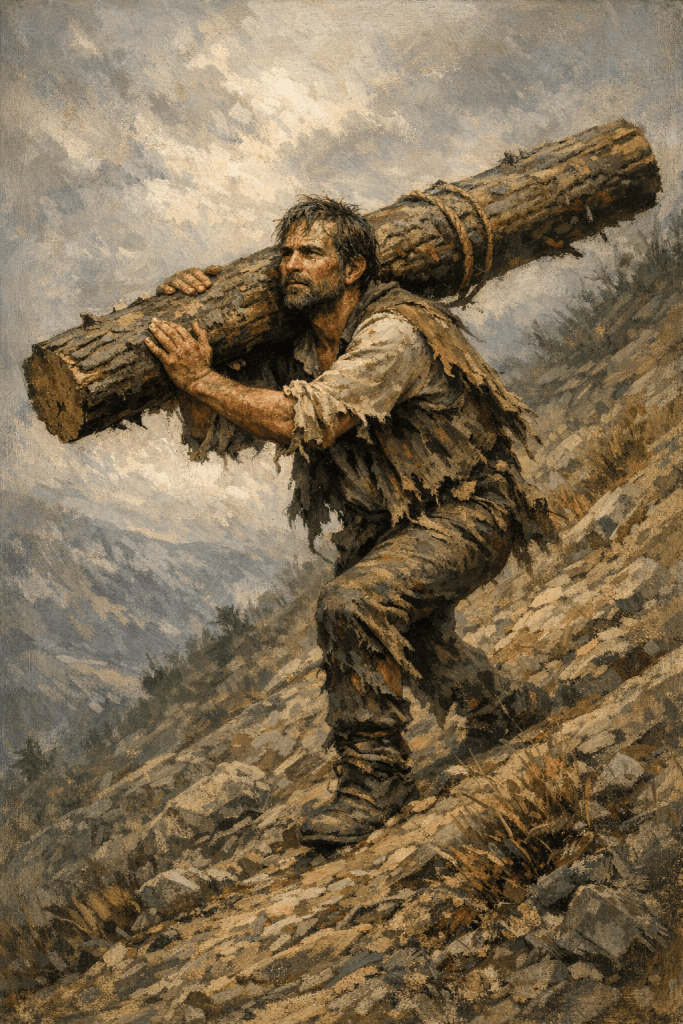
The expression, “the power of your voice,” is used so overused and misused, that I couldn’t help but cringe as I wrote it as the title to this series. Most of the time that we hear it the message is trite and vapid, meant to flatter the listener and assign them an unspecific power. All of that being said, there actually is some real truth to the expression, and it seems sinister that the phrase has been appropriated so as to hide the real depth of it.

I recently made a small post about how rare it is for a person to be their true, genuine self. More often we meet people who are empty puppets, parroting the ideas and beliefs of others. This same pattern continues with the use of our voice. Most of us use our speech to merely regurgitate words that are entirely unoriginal. In fact, the very people who tell us not to forget the power of our voice are usually the ones who are also telling us what to use it to say. We are expected to adopt their cause and priorities, then use the power of our voices to spread them. That isn’t empowering to the individual, only to the one giving orders.

Thus, most people don’t really have a voice; they are only an extension of someone else’s, a speaker to an activist’s microphone. Most people have not delved deep enough into themselves to find out who they really are. They haven’t found their true substance, and so they have nothing real to speak from. So yes, a person’s voice has power, but it isn’t their voice until they are a real person.

Over the next few days, I will try to delve a little deeper into the power of one’s voice, providing a clear basis for why I think the statement is actually true. I will also acknowledge biblical warnings of the danger in that power, and how we should be careful of it. I will begin tomorrow by examining the physical and literal power in the human voice. See you then!

Praying for an Enemy

It is only natural to desire ill for those who have hurt or betrayed us, but we know as Christians that we are called to a higher ideal. We are taught to actively pull our mind back when it tries to fantasize our enemies experiencing pain, and that is good, but we still may feel that we cannot honestly wish them well. We feel that seeking good for those that harmed us is part of our calling, but until God makes a transformation in our hearts, we can’t feel good and positive feelings towards a person just because we want to.

Fortunately, we do not have to wish someone well to pray for their good. We may not be able to say, “I hope that you have peace, I hope that things work out for you, I hope that all is well in your life,” but we can always say, “I pray that you have peace, I pray that things work out for you, I pray that all is well in your life.”

Prayer allows us to invoke that which our feelings are not yet in agreement to. By praying for our enemies, we surrender the course of their lives to whatever God deems right. And then, if it is God’s will for our enemies to face consequences, so be it, we at least have the clean conscience of knowing that we had nothing to do with it. Not even on a spiritual level.

And perhaps as we pray for the good for our enemy, God will work in our hearts so that we can hope for their good with genuine love. In either case, it is great wisdom in God to provide us a way that we may formally support the good, no matter the feelings of the heart.

Who Serves Whom?

John F. Kennedy famously said, “Ask not what your country can do for you—ask what you can do for your country.” With those words, he accurately identified one of the great problems we have in our modern Western culture: we invert who ought to be in service of whom. We get into painful situations because we constantly put ourselves above things when we are rightly beneath them.

Is my marriage serving my needs? Does this community match my preferences? Is my church supporting my beliefs? Does my conception of God align with my interests?

All of these are backward. Marriages languish because couples don’t submit themselves to the betterment of it. Society’s fracture because households don’t contribute to the whole. Churches go astray because parishioners rewrite its doctrine. God is lost because His children try to make Him in their own image.

Yes, the individual is important but never forget that some things are bigger than you, and you should be serving them, not the other way around.

Scriptural Analysis- Leviticus 4:32-35

32 And if he bring a lamb for a sin offering, he shall bring it a female without blemish.

33 And he shall lay his hand upon the head of the sin offering, and slay it for a sin offering in the place where they kill the burnt offering.

34 And the priest shall take of the blood of the sin offering with his finger, and put it upon the horns of the altar of burnt offering, and shall pour out all the blood thereof at the bottom of the altar:

35 And he shall take away all the fat thereof, as the fat of the lamb is taken away from the sacrifice of the peace offerings; and the priest shall burn them upon the altar, according to the offerings made by fire unto the Lord: and the priest shall make an atonement for his sin that he hath committed, and it shall be forgiven him.

In addition to the option for a common Israelite to offer a young goat as a sin offering, he could also offer a lamb. The next chapter might suggest that two turtledoves or pigeons would also be an option for the very poor, though on the other hand it might be referring to a trespass offering instead.

In any case, we have now come to the end of this chapter on sin offerings. We have seen how the same pattern was to be applied to an individual, a community, a priest, and a leader. In all cases, the offeror placed his/their hand(s) upon the sacrifice, the animal was slaughtered, blood was placed on the horns, fat and kidneys were burned on the altar, and the body and dirty parts of the animal were burned outside of the camp. The only difference was whether the animal was a bullock, a goat, or a lamb.

It is interesting to note that the offering was one single animal, no matter how many people it applied to. Whether the entire congregation or a single, solitary soul, the offering was just one animal. This frustrates our common tendency to quantify sin and forgiveness in measurable terms. We have an innate desire to reduce offense to a number and be able to apply good works of equal number to “pay” for the offense. But that’s not how the patterns of the Spirit work. If it were, we would quickly become too “indebted in sin” to ever pay it off.

If there are any measurements and debts and payments, all of that is resolved in the atonement of Jesus Christ. All that remains for us, and for the ancient Israelites, is a ritualistic return to the right path. When we view these offerings as a symbol of commitment, not as a payment for sin, it makes sense why a single offering could stand in for any number of offerors.

SacrificeEligible oblationStepsExplanation
Sin offeringBullock, young goat, lambSacrifice for sin
The same pattern for an individual, community, priest, or leaderAn equal path to God for all
Hands placed on head, slaughteredAnimal takes the place of us
Blood placed on horns of the altarA heartfelt plea to the Lord for mercy
Fat and kidneys burned on altarCleansing our behavior and desire
Skin, dung, and flesh burned beyond the campThe sinful behavior purged out of us

Full table.

Scriptural Analysis- Leviticus 4:27-31

27 And if any one of the common people sin through ignorance, while he doeth somewhat against any of the commandments of the Lord concerning things which ought not to be done, and be guilty;

28 Or if his sin, which he hath sinned, come to his knowledge: then he shall bring his offering, a kid of the goats, a female without blemish, for his sin which he hath sinned.

29 And he shall lay his hand upon the head of the sin offering, and slay the sin offering in the place of the burnt offering.

30 And the priest shall take of the blood thereof with his finger, and put it upon the horns of the altar of burnt offering, and shall pour out all the blood thereof at the bottom of the altar.

31 And he shall take away all the fat thereof, as the fat is taken away from off the sacrifice of peace offerings; and the priest shall burn it upon the altar for a sweet savour unto the Lord; and the priest shall make an atonement for him, and it shall be forgiven him.

Now we come to how the sin offering was performed for the common Israelite, following the same basic pattern as for the leader, the congregation, and the priest. Today let us focus on an element that has been in all of these repeated descriptions, but that we have not yet had time to touch on.

Notice in verse 27 how it says these offerings are for those that “sin through ignorance,” and it has said the same thing for each other instance. So that would mean ways that people trespassed against God’s law without knowing or meaning to. Perhaps they overlooked a ritual, or forgot a commandment, or were unsure of the moral rightness of an action and later regretted their decision.

This, of course, would be different from deliberate and serious sin. Later, in the book of Numbers, we will hear about “high-handed sin,” which means an act of willful defiance against the Lord. For these people, they were what Paul called “under the law,” meaning subject to the penalties of crime. Whether that meant exile, curses, or even death.

Thus, we are meant to understand that the tabernacle ordinances were meant for those who were actively trying to follow God. Yes, those that brought a sin offering had sinned, but they were still oriented towards doing what was right, and they just needed to correct the minor indiscretions common to life. However, if a person were living a deliberately sinful lifestyle, then they would not be taking part in rituals and sacrifices. They would first need to repent, return to the path of goodness, and then would take part in the rituals, now that they were sincerely trying to follow the Father.

SacrificeEligible oblationStepsExplanation
Sin offeringBullock, young goatSacrifice for sin
The same performance for an individual, community, priest, or leaderAn equal path to God for all
Hands placed on head, slaughteredAnimal takes the place of us
Blood placed on horns of the altarA heartfelt plea to the Lord for mercy
Fat and kidneys burned on altarCleansing our behavior and desire
Skin, dung, and flesh burned beyond the campThe sinful behavior purged out of us

Full table.

Scriptural Analysis- Leviticus 4:22-26

22 When a ruler hath sinned, and done somewhat through ignorance against any of the commandments of the Lord his God concerning things which should not be done, and is guilty;

23 Or if his sin, wherein he hath sinned, come to his knowledge; he shall bring his offering, a kid of the goats, a male without blemish:

24 And he shall lay his hand upon the head of the goat, and kill it in the place where they kill the burnt offering before the Lord: it is a sin offering.

25 And the priest shall take of the blood of the sin offering with his finger, and put it upon the horns of the altar of burnt offering, and shall pour out his blood at the bottom of the altar of burnt offering.

26 And he shall burn all his fat upon the altar, as the fat of the sacrifice of peace offerings: and the priest shall make an atonement for him as concerning his sin, and it shall be forgiven him.

We’ve already seen how the sin offering applied to a priest and to the congregation, now we read how it applies to a leader also. In this instance we see the same pattern play out exactly as before, except with one particular changed. While atonement was made for the priest and the congregation via a bullock, the leader would make his offering from a young goat.

A bullock was a more substantial offering than a goat. Thus, atonement for a congregation or for a priest was weightier than that for a leader. All Israelites engaged in the same sin offering, coming to the Lord equally and following the same pattern, but slight variances like these show that there was still a hierarchy in play. A leader, such as a king, was not weightier than the nation or a priest, something that has been forgotten at times in history.

SacrificeEligible oblationStepsExplanation
Sin offeringBullock, young goatSacrifice for sin
The same performance for an individual, community, priest, or leaderAn equal path to God for all
Hands placed on head, slaughteredAnimal takes the place of us
Blood placed on horns of the altarA heartfelt plea to the Lord for mercy
Fat and kidneys burned on altarCleansing our behavior and desire
Skin, dung, and flesh burned beyond the campThe sinful behavior purged out of us

Full table.

Scriptural Analysis- Leviticus 4:13-21

13 And if the whole congregation of Israel sin through ignorance, and the thing be hid from the eyes of the assembly, and they have done somewhat against any of the commandments of the Lord concerning things which should not be done, and are guilty;

14 When the sin, which they have sinned against it, is known, then the congregation shall offer a young bullock for the sin, and bring him before the tabernacle of the congregation.

15 And the elders of the congregation shall lay their hands upon the head of the bullock before the Lord: and the bullock shall be killed before the Lord.

16 And the priest that is anointed shall bring of the bullock’s blood to the tabernacle of the congregation:

17 And the priest shall dip his finger in some of the blood, and sprinkle it seven times before the Lord, even before the veil.

18 And he shall put some of the blood upon the horns of the altar which is before the Lord, that is in the tabernacle of the congregation, and shall pour out all the blood at the bottom of the altar of the burnt offering, which is at the door of the tabernacle of the congregation.

19 And he shall take all his fat from him, and burn it upon the altar.

20 And he shall do with the bullock as he did with the bullock for a sin offering, so shall he do with this: and the priest shall make an atonement for them, and it shall be forgiven them.

21 And he shall carry forth the bullock without the camp, and burn him as he burned the first bullock: it is a sin offering for the congregation.

The last verses described how the sin offering would apply to a priest who sinned. Now it describes how the same process applied when all the congregation would sin. The chapter will continue with this pattern, describing how the pattern applied to a ruler that sinned and to a common Israelite that sinned.

The message here is clear. All are under the law of the Lord. It is not a different set of rules for leaders or priests, groups or individuals. God’s commandments were the great equalizer, just as pertinent to the king as to the beggar in the streets. All would fall short at some point, and all would be expected to make an offering then. As we will see, the exact animal sacrificed could vary, but it was still the same sacrifice and the same ritual for all.

It may seem a remarkable thing for all of the congregation to go astray at once. But as we will see later in the Bible, there were times when the people would go off worshipping false gods and then return to the proper worship of the Lord. There was also the time when book of the law had been lost and forgotten, then rediscovered during temple renovations. When it was read to King Josiah, he realized how the entire people had unwittingly gone astray and restored the rituals and commandments of old. While the record does not explicitly mention the performance of a sin offering, one would expect that it occurred, as it was specifically prescribed for just such an occasion.

SacrificeEligible oblationStepsExplanation
Sin offeringBullockSacrifice for sin
The same performance for an individual, community, priest, or leaderAn equal path to God for all
Hands placed on head, slaughteredAnimal takes the place of us
Blood placed on horns of the altarA heartfelt plea to the Lord for mercy
Fat and kidneys burned on altarCleansing our behavior and desire
Skin, dung, and flesh burned beyond the campThe sinful behavior purged out of us

Full table.

Scriptural Analysis- Leviticus 4:5-12

5 And the priest that is anointed shall take of the bullock’s blood, and bring it to the tabernacle of the congregation:

6 And the priest shall dip his finger in the blood, and sprinkle of the blood seven times before the Lord, before the veil of the sanctuary.

7 And the priest shall put some of the blood upon the horns of the altar of sweet incense before the Lord, which is in the tabernacle of the congregation; and shall pour all the blood of the bullock at the bottom of the altar of the burnt offering, which is at the door of the tabernacle of the congregation.

8 And he shall take off from it all the fat of the bullock for the sin offering; the fat that covereth the inwards, and all the fat that is upon the inwards,

9 And the two kidneys, and the fat that is upon them, which is by the flanks, and the caul above the liver, with the kidneys, it shall he take away,

10 As it was taken off from the bullock of the sacrifice of peace offerings: and the priest shall burn them upon the altar of the burnt offering.

11 And the skin of the bullock, and all his flesh, with his head, and with his legs, and his inwards, and his dung,

12 Even the whole bullock shall he carry forth without the camp unto a clean place, where the ashes are poured out, and burn him on the wood with fire: where the ashes are poured out shall he be burnt.

As mentioned yesterday, the description for this ritual matches what we heard of it back in Exodus. I won’t retread all the steps and symbolism here, only refer you back to the previous commentary. There is one point that is elaborated more fully on these verses, though, that I’d like to discuss for today.

In the account in Exodus we knew that the priest was to place the blood upon the horns of the altar with his finger, today’s verses further emphasize the element of touch by describing that the priest dips his finger into the blood, and directly with his hands do the sprinkling and smearing. This requirement to get blood on the finger definitely captures attention.

If I were in the position of the priest, I would far prefer to have some ladle or brush as an instrument between me and the gore of the animal, but there were no instruments created for this. It would seem that God was very intentional about having his priests getting very personally involved in this work.

Compare this to how we deal with other people’s problems. Some of us might be open to lending a listening ear but still want to keep a safe distance from the sins and tragedy of others. We might rather not let them touch us with their mess. But that is not the approach that the Savior took, and that is not what his representatives are supposed to do either. Jesus showed us an example of getting right down into the darkness and heartbreak of the world, of touching the unclean, of getting hands messy. We are meant to be fully engaged with the worst, bringing the light of Christ to clean and heal that which hurts most.

This detail of the priest dipping his fingers into the blood is a very good bit of symbolism. It reminds us that we are called to touch the worst that others are dealing with, and by so doing help purify the world.

SacrificeEligible oblationStepsExplanation
Sin offeringBullockSacrifice for sin
Hands placed on head, slaughteredAnimal takes the place of us
Blood placed on horns of the altarA heartfelt plea to the Lord for mercy
Fat and kidneys burned on altarCleansing our behavior and desire
Skin, dung, and flesh burned beyond the campThe sinful behavior purged out of us

Full table.

Scriptural Analysis- Leviticus 4:1-4

1 And the Lord spake unto Moses, saying,

2 Speak unto the children of Israel, saying, If a soul shall sin through ignorance against any of the commandments of the Lord concerning things which ought not to be done, and shall do against any of them:

3 If the priest that is anointed do sin according to the sin of the people; then let him bring for his sin, which he hath sinned, a young bullock without blemish unto the Lord for a sin offering.

4 And he shall bring the bullock unto the door of the tabernacle of the congregation before the Lord; and shall lay his hand upon the bullock’s head, and kill the bullock before the Lord.

This chapter is dedicated to the ritual of the sin offering, something that we already heard of in Exodus, from which we have populated the table down below. The account here in Leviticus 4 confirms what we already heard in Exodus, though here it is given in longer detail.

The sin offering is arguably the most foundational of all the offerings. Sin is the greatest and most universal obstacle of all humanity. It is sin that divides us from peace, more than any affliction, misfortune, or disaster. In fact, the universality of sin is pointed out in verse 3, which reminds us that even the priest who had been set apart to be the holy servant of the Lord, would be besmirched by it and would require restitution, the same as any other Israelite.

Even our priests and vessels of purification require purification themselves. Our cleaning agents need cleaning. This shows a pattern of regress and suggests to us that there must be an endpoint somewhere. Sooner or later, for any of this purification to have any effect, it must be founded upon a purifier who is himself never soiled. The offering of Jesus, who was the perfect High Priest, would sanctify the entire temple enterprise, which would sanctify the priests and vessels, which would sanctify the common Israelite.

SacrificeEligible oblationStepsExplanation
Sin offeringBullockSacrifice for sin
Hands placed on head, slaughteredAnimal takes the place of us
Blood placed on horns of the altarA heartfelt plea to the Lord for mercy
Fat and kidneys burned on altarCleansing our behavior and desire
Skin, dung, and flesh burned beyond the campThe sinful behavior purged out of us

Full table.

You Believe Something False

There are so many different interpretations of scripture, so many opposing theological opinions, so many churches that have divided over incompatible beliefs. Is man saved by faith, or works? Are our fates predetermined, or dependent on free will? Should we believe in theosis true, and if so to what extent? Is God a trinity, or separate persons? Is the Bible a closed canon, or can there be new prophets and revelations? Is the rapture pre-tribulation, or post? What is the correct mode of baptism? Do any Old Testament traditions still apply today, and if so, which ones? Should women serve as pastors? Does God approve of same-sex relationships?

With so many different interpretations and opinions, the only way to assume that a certain church has the correct answer on all of them is to believe it is the one, true church, and that all others have gone astray. But even in that case, within the narrower scope of that single religion’s theology, there would still be room for a plethora of different personal beliefs, most of which would necessarily be false.

It is therefore unrealistic to assume that everything that you or I believe is correct. It is far more probably that as Isaiah said, “All we like sheep have gone astray; we have turned every one to his own way,” (Isaiah 53:6). Obviously that scripture applies to our sins, but surely also to our own misguided beliefs.

Each of us must reason as best we can, and obey as we see understand, but we must also have the humility to recognize that we are surely wrong in one way or another and be willing to make dramatic changes as needed. We must be open to ideas that before seemed impossible to us. We must always remain teachable. We must never be so sure of ourselves that we resist the corrections of the Lord. Ultimately, there is no belief that should be so precious that we would be unwilling to relinquish it if required by God.