Remembering Our Own Goodness

Sometimes we pine in the wilderness of our sin and shame, crying for some act of God to show us that we are still loved, even in spite of our wickedness. And, in some cases, maybe that really is what we need. But sometimes, in those situations, what we really need is to know that we can still love, even in spite of our wickedness.

I discovered this for myself recently, when I felt shut in a small room where I could not feel God’s light, even though all my past experiences told me that He still cared for and wanted me. As I prayed for Him to come and find me, I felt instead the urge to start singing. I was guided to a hymn I had never heard before, My Jesus, I Love Thee, and as I sang my redeclaration of love to my savior I felt my cold heart come back to life.

Knowing that God loves us is good, and is the first great testimony that we all require. But after that, the next great testimony is to know that there is an eternal goodness within us that we cannot kill. We need to remember our own spark of divinity, and have faith in ourselves to be better again. We need to learn, as I did that dark day turned bright, that even in the depths of our greatest shame we still have the ability to exclaim, “if ever I loved thee, my Jesus, ’tis now.”

Called to Wait

I have been guilty of being frustrated when God does not immediately answer the good desires of my heart. If I come to Him in faith, surrender my situation to His care, and believe in His power to do what is right, then why do I not receive the desired results?

And to be clear, I don’t mean going to God and asking Him to give me fame or fortune. I mean asking Him to change my heart, to cure my selfishness and addiction, to mend my brokenness so that I can be a better person. These are clearly good things, ones that I genuinely feel are in alignment with God’s will for me, so why wouldn’t the desire to change be answered with transformation?

Recently, though, I felt this impatience rebuked as I considered the precedent that is set for us in the word of God. I do not feel the scriptures justifies my opinion that God would immediately deliver every good thing that is sought for. Rather, the Bible is full of examples of waiting, sometimes for very long periods of time, before the realization of promised blessings are fulfilled.

Think of Abraham being promised that he would be the father of a great nation, but that not coming to pass for hundreds of years. Think of Jacob having to toil for seven years to marry the woman of his dreams, only to be deceived and committing to serving another seven years for her. Think of Joseph waiting long periods as a slave in Potiphar’s house and then in prison, even though he had done no wrong. Think of Moses trying to help the Israelites, failing, and then living decades in Midian before being called to try again. Think of the Israelites, freed from Egypt, but waiting in the wilderness 40 years before they would receive the Promised Land. Think of Job being left to wallow in his afflictions for a full measure before he was restored. Finally, think of those that Christ healed, and how many of them had been held by their afflictions for years before their deliverance. For the woman with the issue of blood it was twelve years, for the man at the pool of Bethesda it was thirty-eight!

In some of these examples there was a period of waiting because the people were not ready, such as the Israelites wandering in the wilderness. In others, however, there was no personal fault, such as with Joseph, it was simply not yet the right time for his deliverance. So why could not either of these cases be the same with me? Maybe I’m not ready for my deliverance, but if I trust the Lord to prepare me eventually I will be. Or maybe I am ready, but it is not the right time according to the Lord’s wisdom, so I should rest in Him and let the better things come when they may. In either case, the fact that I have not yet been healed is not, in-and-of-itself evidence that something is going wrong. It may still be going exactly right. I might be rightly waiting in the wilderness, just where I’m supposed to be.

Scriptural Analysis- Exodus 17:13-16

13 And Joshua discomfited Amalek and his people with the edge of the sword.

14 And the Lord said unto Moses, Write this for a memorial in a book, and rehearse it in the ears of Joshua: for I will utterly put out the remembrance of Amalek from under heaven.

15 And Moses built an altar, and called the name of it Jehovah-nissi:

16 For he said, Because the Lord hath sworn that the Lord will have war with Amalek from generation to generation.

At the end of the day, Joshua and the Israelite army prevailed and the Amalekites suffered a loss. However this was only a setback for the Amalekites, not an utter defeat. Nevertheless, the Lord used this opportunity to vow that He would, ultimately, “utterly put out the remembrance of Amalek.”

It is worth considering, has this vow been fulfilled? Referring to the Biblical record, it was almost accomplished in Saul’s military campaign, but Saul stopped short of the Lord’s mandate, and was sharply reproved for that, allowing the Amalekites to limp on, eventually becoming a thorn in the side of Israel once more.

We have no record that states the Amalekites were ever, completely eradicated, at least not by the Israelites. Perhaps they were conquered by the Assyrians or the Babylonians, or perhaps they were assimilated into other cultures, and the people have been “put out of remembrance” that way. Or, perhaps the people are still present to this day, and the Lord is biding His time before fulfilling His declaration.

A prophecy that we do know was fulfilled was the one given in verse 16. The Lord assured the Israelites that they would war with the Amalekites for generations, and as discussed yesterday, that most certainly did occur. Depending on whatever became of the Amalekites, perhaps in some form the feud still goes on even today.

Scriptural Analysis- Exodus 17:10-12

10 So Joshua did as Moses had said to him, and fought with Amalek: and Moses, Aaron, and Hur went up to the top of the hill.

11 And it came to pass, when Moses held up his hand, that Israel prevailed: and when he let down his hand, Amalek prevailed.

12 But Moses’ hands were heavy; and they took a stone, and put it under him, and he sat thereon; and Aaron and Hur stayed up his hands, the one on the one side, and the other on the other side; and his hands were steady until the going down of the sun.

Moses, Aaron, and Hur climbed to the top of a hill, presumably to have a view of the battle below, and Moses raised his hands, which corresponded with Israel prevailing against their enemy. However, keeping one’s hands elevated for a prolonged time is actually a very difficult physical feat, let alone for someone quite advanced in age, as Moses was. So his hands grew heavy, and when he let them down Israel began to fall to their enemies.

This raises the question of what is the connection between the position of Moses’s hands and the prevailing of the Israelite army? Much like his staff, it seems likely that this was a physical representation of an abstract concept. Perhaps God was using the connection between raised hands and prevailing in battle to teach a lesson that a nation is subject to the strength of its leader, and a church to the strength of its prophet. When our government and spiritual leaders are weak and flawed, we all suffer. When they lack the fortitude to stand for their flock, then wolves begin to sneak in among the sheep.

And what does it mean to be weak and flawed? To not have one’s hands, or one’s labor, directed heavenward. When we lower our hands to the lower, earthward things, that is the precursor to destruction. If our leaders are more concerned with worldly wealth or social trends than acts of righteousness, the people are left vulnerable to their enemies.

And this is where Aaron and Hur come in. Moses couldn’t keep his hands up forever, so they were there to lend him the strength that he lacked, to keep his hands heavenward. So, too, the future Israelite kings were meant to take counsel and direction from the prophet, having their focus raised heavenward so that the people would follow in the right path. Leaders today should also surround themselves with those who have as their primary concern what is right, what is true, and what is good, according to the Lord.

Scriptural Analysis- Exodus 17:8-9

8 Then came Amalek, and fought with Israel in Rephidim.

9 And Moses said unto Joshua, Choose us out men, and go out, fight with Amalek: to morrow I will stand on the top of the hill with the rod of God in mine hand.

The account makes a sudden and dramatic shift, telling us now of an army of Amalekites that came to fight with Israel, even while they were still in the wilderness. As we have already seen, Israel’s sojourn in the wilderness was a time for them to prepare for life in the Promised Land. They had already had several lessons on how to rely upon the Lord and obey His word exactly, and now they were rehearsing the art of war, something that they would become very familiar with when they strove against the Lord’s enemies in the land of Canaan, including the Amalekites.

This is not the first that we have heard of the Amalekites, either. We heard of their forebearer back in Genesis 36:16, Amalek, who was the grandson of Esau, who was the brother of Jacob, who was himself the forebearer of the Israelites. As noted at the time, many of the nations that Israel fought in Canaan were people that branched off from the covenant bloodline. These fallen-away nations were a perfect foil to the Israelites, because they were similar, with a shared root, but had been twisted in pagan ways. They represent the beast that is too familiar, the evil that is too close for comfort, the worst version of our own selves.

The coming fight with the Amalekites also foreshadows Israel’s future in another way. Moses chose Joshua to lead God’s people in this battle, just as he would be chosen to preside over all of Israel after Moses’s death. Moses explains that he will help Israel in their fight, but from afar, while Joshua would be down in the ranks with them. So, too, Moses’s law would continue to aid and guide Israel after his passing, while Joshua would continue in the ranks.

Scriptural Analysis- Exodus 17:5-7

5 And the Lord said unto Moses, Go on before the people, and take with thee of the elders of Israel; and thy rod, wherewith thou smotest the river, take in thine hand, and go.

6 Behold, I will stand before thee there upon the rock in Horeb; and thou shalt smite the rock, and there shall come water out of it, that the people may drink. And Moses did so in the sight of the elders of Israel.

7 And he called the name of the place Massah, and Meribah, because of the chiding of the children of Israel, and because they tempted the Lord, saying, Is the Lord among us, or not?

As with the story of the manna and the quail, the account given in today’s verses are repeated with more detail in Numbers. And, once again, there is a key difference between the account given here and the one in Numbers. Here God tells Moses “thou shalt smite the rock,” whereas in Numbers he is told only to “speak ye unto the rock.” This matters, because many people have read the Numbers account and interpreted Moses’s striking of the rock as the breach of faith for which God prohibited his entry to the Promised Land. Obviously that assumption would be inaccurate if today’s version of the story is the correct one, in which the Lord had actually instructed Moses to strike the rock. In that case, Moses’s failure must have been something else.

Personally, I see an argument from a narrative perspective as to why today’s account might be the correct one. In verse 5 God mentions that this is the rod “wherewith thou smotest the river,” referring to when Moses smote the river in Egypt and turned it to blood. The staff has a history of being used to smite, both literally and figuratively, and also working wonders upon the waters. It would therefore be thematically consistent for it to once again be used to smite the rock and miraculously bring forth water, all according to God’s wishes.

Moving on from the debate of which account is more accurate, though, let us note the clear symbolism in this verse. Moses smote the rock and water came out of it, providing life-sustenance to the people. In later references we will be told that the rock clave in two, causing a breach from which the water would flow. This immediately calls to mind the spear that pierced the side of Christ, creating the opening from which the water flowed out of his body. And this, of course, is symbolic of the spirit Christ is able to plant in all of our hearts through his sacrifice. This spirit is frequently referred to as a life-sustaining wellspring, constantly refreshing us, just as Israel was refreshed by this miracle in the desert.

Scriptural Analysis- Exodus 17:1-4

1 And all the congregation of the children of Israel journeyed from the wilderness of Sin, after their journeys, according to the commandment of the Lord, and pitched in Rephidim: and there was no water for the people to drink.

2 Wherefore the people did chide with Moses, and said, Give us water that we may drink. And Moses said unto them, Why chide ye with me? wherefore do ye tempt the Lord?

3 And the people thirsted there for water; and the people murmured against Moses, and said, Wherefore is this that thou hast brought us up out of Egypt, to kill us and our children and our cattle with thirst?

4 And Moses cried unto the Lord, saying, What shall I do unto this people? they be almost ready to stone me.

Hardship in the wilderness had already been solved twice for the Israelites, but clearly it wasn’t in their past. They had thirsted and God had provided, but now they thirsted again. Enduring trials and being tested were going to be an ongoing part of their journey, though God would always intervene for them before it was too late.

Notice from verse 1 that they camped in Rephidim, a place where there was no water, “according to the commandment of the Lord.” God was commanding them to halt their progression in this place, commanding them to be stuck somewhere that could not sustain them, commanding them to be in an untenable situation. I believe that most of our hardships arise as a result of our own sins or simply as a natural result of living in a fallen world, but sometimes, such as this time, the hardship was part of God’s own design.

And how did the people respond to this test? Well, according to Moses, they were about ready to stone him! They once again proved to be a people who sang praises when God saved them, but breathed threats when He did not. Their one great desire was not to follow God, but to have their needs met. Not only their needs, either, but as in the case of the quail, their preferences and desires. God was to be praised only so far as He gave them what they wanted, but to be reviled when He did not. In short, they really hadn’t submitted themselves to God at all. The fact that they still failed this test is the reason why they needed to have it.

The Shackles We Choose

Something I have been noticing while doing my study of Exodus is that Israel hated their enslavement in Egypt…but they also preferred it to being free. Though initially euphoric when God destroyed their enemies in the Red Sea, they repeatedly afterwards claimed that things were better for them when they were in captivity than free in the wilderness.

It seemed a strange behavior, until I examined my own life and realized that the same is true for me. As much as I may not like feeling subject to my boss, I cannot fathom living without the security he provides me. I think of all the projects I wish devoted my spare time to, but I’m afraid to cut out the movies and video games that receive most of my spare hours instead. I see my cluttered house and want to set it in order, but focus instead on the mess of emails I’m subscribed to. I say that I’m ready to live a self-controlled and honorable life, then I obey the will of my temptations instead.

From my birth I was blessed with great opportunity and freedom, given to me by the goodness of God and the sacrifices of my ancestors. But I have taken that freedom and given it right back to other masters. There is no locked gate keeping me captive, most of the prisons I have checked myself into I could leave any time that I wanted, but I choose to bind myself to these places of my own volition. I remain a prisoner because I am not ready to be truly free.

My conscience urges me to forge out into the wild. My Savior freed my soul two millennia ago. My ancestors provided the security to let my ambitions soar. I pray I find the courage to live as free as I could, to have no Master but my God, the one who calls me into deeper waters.

Shutting God Out

Sometimes when I converse with God I hear the kindest, warmest, and most loving voice I have ever heard. At other times, He seems clinical and formal, still telling me good things, but without His usual warmth. As I have examined those different experiences I have come to realize that it is not God who changes His manner, but I who change what tone I am willing to receive.

When God feels direct and cold to me, it is because I am not open to receiving His love. Sometimes I am frustrated with myself, unwilling to love myself, and so I set up a wall to keep His love out also. He speaks to me as kindly as I allow Him.

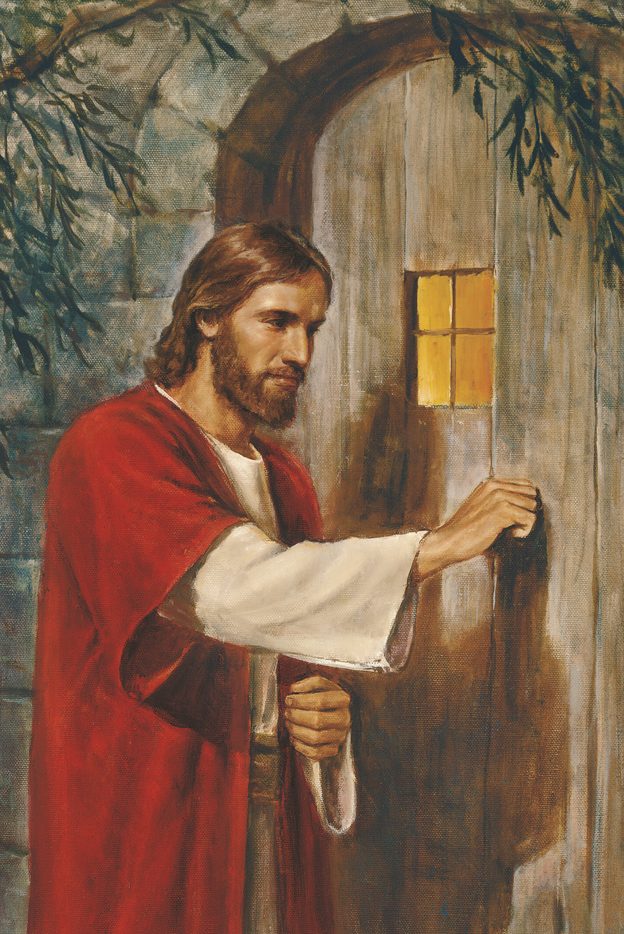
Sometimes He doesn’t just sound cold, though, sometimes I can’t even hear Him at all. But once again, it isn’t because He has abandoned me, but because I have gone and shut myself in a room without Him. Even then, though, “he stands at the door, and knocks: and if I will open the door, he will come in with me,” (Revelation 3:20).

And the fact that he will come in with me has been the most meaningful thing to me in those low moments. He doesn’t require me to break down my walls and come out into the open if I’m not yet willing to. He is content to come stay in the dark hovel with me. He will sit with me in the shadow, with only His presence for a light, until I’m finally ready to leave.

Scriptural Analysis- Exodus 16:35-36

35 And the children of Israel did eat manna forty years, until they came to a land inhabited; they did eat manna, until they came unto the borders of the land of Canaan.

36 Now an omer is the tenth part of an ephah.

Verse 35 pulls back from the linear narrative and provides commentary on the broader journey of Israel. We learn that the manna was not a temporary solution for the Israelites’ hunger, but that it would go on to sustain Israel through all their forty year sojourn in the wilderness.

Being in the wilderness represents a state of limbo for Israel. They had been evicted from Egypt’s womb, but they wouldn’t emerge fully reborn in the land of Canaan for decades. They were a people with a name, but without a home. This was therefore a time of great uncertainty and hardship, and the murmuring of the Israelites suggests that they saw this as an even lower low than their former captivity. How meaningful, then, that in this lowest of places God gave them a consistent, miraculous staple. The manna from heaven was a central pillar, supporting the people while they could not support themselves.

It is worth noting that after Israel leaves the wilderness we will never hear of the manna again. Today’s verse seems to confirm that the manna ceased just as soon as Israel came into fields where they could grow and harvest their own grain. God supported the people with just what they needed for as long as they needed it, then required them to let go of that crutch as soon as they were able to walk on their own.

Verse 36 is an interesting reminder that the books of Moses existed for many different audiences throughout history before us. It is assumed that it is a parenthetical statement meant to explain something to an ancient Israelite audience. The audience at that time presumably did not know what an “omer” was, as they had long since abandoned that unit of measurement, so the clerk explained that it was a tenth of an “ephah,” which was a more familiar unit of measurement at that time. It would be similar to me telling you that an “omer” was a little less than one US gallon.