
Addiction and the Angry Spouse: Part Eight

Different Commitments)

I have made the case that both the addict and his spouse have their individual work of recovery and that each of them needs to be active in it for their own sake. I have stated that this is the only way for them to become whole individually, which is already a worthwhile endeavor, but that this is also a prerequisite if they are ever again to be whole in their union together.

This brings up the question of what happens if both members of the relationship aren’t doing their work? Or what if only the addict is, or only the spouse? I thought it would be worth-while to consider all of the possible configurations and all of the different choices that they lead to. Like the branches of a tree, each individual decision splits into multiple possible futures. Today I will cover the most common and general options, which may manifest themselves in numerous ways.

No One is Doing Their Work)

The first option is that the addict isn’t really working on addiction recovery and the wife isn’t really working on trauma recovery. Perhaps they make an effort at first and burn out, or only ever go through the motions, or don’t even make any overtures towards getting better at all. Whether consciously or not, they decide that the effort of recovery isn’t worth it, and they would rather continue with things as they are.

There are two main ways that this situation might play out. The first is that the addict publicly continues to do behavior that is damaging and hurtful and the spouse continues to be incensed at his choices. Argument and self-justification will be constants in their household, thoughtless actions and harsh words will damage one another, creating great emotional scarring in them both. Either they will have a totally loveless union, or they will decide to part ways bitterly.

The other option is that each of them tries to deny the reality of what’s going on. The addict tries to hide his offensive behavior and the wife knows it is happening but turns a blind eye. For the sake of comfort or appearances they try to live as if there isn’t anything wrong at all, silently agreeing to just not bring the matter up anymore. Of course, no matter of pretend will take away the damage. They are living a lie, and the mutual disrespect will stretch a great hole in their hearts.

One is Working)

The next option is that only one member of the relationship is doing their work. It might be the addict sincerely striving to overcome his behavior, but his wife insists on holding onto hurt and anger, or it might be that the wife is working to heal her wounds and forgive, but her husband has no intention of ever changing.

Pretty soon this disjointed approach will separate the two into very different circles. One is trying to live a healthy and productive life, the other is constantly stuck in place. One outcome of this would be divorce. It might be that the healing partner seeks to move on to a relationship that is on more equal footing, or it might be that the complacent partner wants to stop feeling guilty for not trying.

Another outcome might be that they stay together, but start living totally different lives. Perhaps due to pressures of family or community, they feel that they have to hold the relationship together. Perhaps the member of the partnership who is actually trying feels that he/she must sacrifice his/her own interests to provide greater stability to the children. I believe the risk for unhealthy self-denial is very high here, but only you can judge your own situation.

Both Are Doing Their Work)

The final and best option is that both the addict and the wife are doing their work. The addict is overcoming his nature, the wife unburdening herself from the problems that don’t belong to her. Each of them is looking ahead to a life that is abundant and centered on truth.

An obvious outcome of this is that the addict and the wife find that they can rebuild their relationship. Or perhaps more accurately, they find that they can build a new one together. They sweep out the old and start anew. They will enjoy a union that exceeds any that they had before, for the first time they are building it on a foundation of truth.

It must be noted, though, that even in the situation where both parties do their work, it is possible that they find they are no longer compatible with one another. Perhaps they came together due to unresolved insecurities and encouraged the worst in one another. In this case, it might be to the benefit of both to let each other go with a full heart, hoping that they will find a union that is better fit to their healthy self.

The Ends)

Here we have multiple paths, but really there are only three outcomes. They are a dysfunctional relationship, a painful separation, or mutual wholeness. Each decision comes with a heavy cost. Making real change is expensive up front, but avoiding real change takes its toll over the rest of your life. Perhaps you had intended to spend your time and energy elsewhere in life, but believe me when I say that this is the only work that really matters. This is the work of the soul, and you owe it to yourself to do what is right, no matter what follows.

NOTE: Throughout this series I refer to the addict as “he” and the injured partner as his “wife.” This is merely a convenience for maintaining consistency. It is entirely possible for the addict to be a woman and the injured partner to be her husband. It is also entirely possible for the strained relationship to be between non-romantic partners, such as with a parent and a child.


Addiction and the Angry Spouse: Part Seven

The Reason to Heal)

In my last post I pointed out that many of our emotions are regulated by our subconscious mind, meaning that a spouse who has been hurt by her addict-husband’s behavior might have sudden bursts of tremendous anger, which unbeknownst to her is actually covering up the intense grief brimming just beneath the surface.

I’ve already mentioned that anger is often a secondary emotion, used to mask our fears or pain. Since anger is the side that gets presented publicly, it is what people typically address when interacting with us, either by appeasing to, or reasoning with, or arguing against it. But since the anger isn’t the real underlying issue, anything addressed towards it isn’t actually going to help. Interfacing with a wounded wife’s anger does nothing to help her grow past it.

Now an injured wife might feel upset at the notion that she needs to grow past her anger. She might say that her husband is deserving of her anger, that his actions have natural consequences. And while this is true, the reason for a wife to deal with her underlying issues is for her own sake, not her husband’s. Even if she has no intention to restore her relationship with her husband, it is still to her own benefit that she get past her mask of anger and process the pain hiding underneath.

Even if a wife felt like her husband needed to be punished for what he had done, it is a terrible fate to take upon oneself the role of executor. Staying in a place of rage only makes the wife a continual prisoner to the pain that her husband inflicted upon her. Shouting and berating might feel like she is claiming control of the situation, but needing to do these things only reveals that the wife still lives under the power of her addict-husband’s choices.

Just as surely as the addict needs to become free of his addiction, his spouse needs to be made free of his addiction also. They each have their own work to do here.

Doing Your Own Work)

It is inevitable that the path of healing for both spouses will involve one another. Even if they decide to go their separate ways, they each must resolve the idea of the other person in their mind. The addict must come to terms with the loved one he has hurt. The spouse must come to terms with the loved one that hurt her.

Some of this work can be done together with late-night conversations and couple’s therapy sessions, but much of this work is going to be individual. In fact, a key step in the recovery journey is for both parties to stop trying to manage the journey of the other. The husband needs to not set a timeline for his wife to stop hurting, and the wife needs to stop evaluating whether her husband is recovering in the “right” way. Obviously each needs to be active and sincere in their work and needs to seek out the best resources that they can, but so long as their efforts are genuine they should be trusted to progress at their own pace.

For my wife and I this meant meeting with our own therapists and working our own professional recovery program. It meant having our own homework, meeting with our own groups, and making our own plans of action. We would talk to each other about all the things we needed to talk about, we would update one another on our journey, but we each found healing in our own way and in our own time. After we had each come to a healthier, truer place, we were able to come together and decide what the relationship would be moving forward.

Of course, what I’m describing is not necessarily the process by which every marriage will be saved. There are couples who did their work and still decided that they didn’t have a future together, but they were able to part ways as whole individuals. And that is what this is really about, doing the work to process your own issues and make yourself whole, and that is prerequisite to having a meaningful life, whether together or apart. This process isn’t guaranteed to make your marriage whole, though it is the only way that your marriage even stands a chance.

NOTE: Throughout this series I refer to the addict as “he” and the injured partner as his “wife.” This is merely a convenience for maintaining consistency. It is entirely possible for the addict to be a woman and the injured partner to be her husband. It is also entirely possible for the strained relationship to be between non-romantic partners, such as with a parent and a child.

Addiction and the Angry Spouse: Part Six

The Wall)

In my last post I discussed the fact that we tend to mask our hurt and pain with anger. The spouse of an addict, for example, is going through incredible trauma, but she is also in close proximity to the very person who caused that trauma in the first place. It’s completely understandable that she’s wouldn’t feel safe breaking down and crying in front of the same person that made her cry. So instead she builds a wall of anger.

Something that every addict would do well to remembers is that the incredible height and width of his wife’s wall of anger is a testament to how massive the reservoir of grief being held behind it is. The more anger she is showing, the more hurt she is hiding. It is worth asking yourself whether you have truly allowed yourself to empathize with that magnitude of her pain.

Of course, whether you have direct access to empathize with that pain is entirely up to her. You can try to imagine that pain, but it would be far better if she could explain it to you. She may not be ready to do that yet, and one of the chief reasons why she may not be able to do that is because she has no idea that this is even going on.

The Unknown Self)

Something that we often forget is just how little consciousness we have of our own self. We assume that our conscious mind captures everything about ourselves, but this is demonstrably false. We have no control of our own beating heart, our own digestion, or our own body temperature. We can examine and measure each of these from an external perspective, but we cannot in our own mind observe the signals that we send to regulate each of these complex behaviors. These instructions and processes are unquestionably a very real part of ourselves, and yet we have no conscious knowledge of them.

The same is true of our reflexes. We do not have to consciously think through the process of withdrawing our hand from heat or throwing it out to catch us when we fall. Clearly there are mental processes and calculations behind these movements, but they occur in the subconscious. If asked how we knew how to move our hand we can give no intelligent answer.

And what does all of this have to do with the trauma suffered by the spouse of an addict? Well, the subconscious mind also reigns over our emotions. The spouse is most probably not even making a conscious decision to hide her hurt and respond in rage. She, herself, can be totally ignorant that this is the reason behind her aggressive behavior. If you ask her why she is screaming at you she probably isn’t going to say “because I am very close to revealing my overwhelming grief, and I don’t trust you enough to do that, so I’m going to shout to cover that all up instead!” She isn’t going to say that because all of that rationalization happened in her head reflexively without her ever observing its occurrence. All she knows is the minimal and direct output of all that subconscious calculation, which is to express anger.

Sometimes, though, in the midst of carrying out a subconscious reflex we can become aware of it happening and then override it with a conscious decision. After dropping a knife we might instinctively move to grab it, but if our conscious mind is quick, it might be able to halt that action so we don’t end up cutting ourselves. We can learn to externally monitor our reflexes and impose our higher reasoning upon them.

Similarly, it is possible to gradually become aware of our emotional reflexive actions after they have already begun, and then make a conscious choice to override them. With guidance and practice, the spouse can learn to understand her own self and process all the complex things that she is feeling.

Both she and her husband have to understand that this is a journey, though. Just as he is learning the subconscious processes that kick off his destructive behavior after encountering an addiction-trigger, she must learn the subconscious processes that kick off her rage after encountering grief. They both need to do this work, because they both need to have a greater awareness of truth and self if they are ever to find healing.

It’s hard work, and particularly for the wife it might seem to be unfair work, but there’s no going around it, under it, or over it. If you want to be happy and healthy as an individual, let alone as a couple, you have to go through it.

NOTE: Throughout this series I refer to the addict as “he” and the injured partner as his “wife.” This is merely a convenience for maintaining consistency. It is entirely possible for the addict to be a woman and the injured partner to be her husband. It is also entirely possible for the strained relationship to be between non-romantic partners, such as with a parent and a child.

Addiction and the Angry Spouse: Part Five

Why the Abuse?)

Yesterday I examined the situation of an addict and his spouse when she is abusing him for his wrongs. To be clear, I am not saying that all forms of anger are inherently abusive, at times anger is the right and proper reaction to a situation. But it absolutely possible for the wife to go off the deep end as well. This is never okay, and an addict in this situation should look to remove himself from such a situation. He shouldn’t fight back in kind, he should just get away to a place where he can be safe.

But it is worth considering, why is the wife behaving like this? From name calling to throwing plates, why does she feel like she has to explode in rage? She might have been a gentle, peaceful person up until this moment, so clearly she isn’t fundamentally hateful. What has possessed her, then, to be like this now?

We’ll spend the rest of today exploring those questions, but the short answer is this: the wife is showing outbursts of rage because she is terrified of showing her husband her inner suffering. Behind all that rage is a terrible, terrible sadness.

Secondary Emotions)

Psychology is the study of mental behavior and processes. It takes all of the outer attitudes that we exhibit and seeks to understand what happened inside of us to prompt those reactions. Many of us live our entire lives not even considering our emotional reactions, assuming that they are self-explanatory, but the reality is far more complex.

One concept that is discussed in psychology is that of “secondary emotions.” The idea here is that sometimes an inner, core emotion gets wrapped with a secondary, outer one. A common example of this is anger as a secondary emotion to fear. It is quite common for us to react with hostility to something that has scared us, and this behavior makes sense when it comes to dangers in nature. If we were to cross paths with a wild animal we would feel terrified, but rather than show that fear we might scream and throw rocks at it to chase it off.

But this same instinct applies to non-life-threatening social interactions as well. I’m sure we have all seen a person that has an angry outburst at a seemingly innocuous statement or question. Asking a friend what test score he got might get in a sharp response if he is insecure about his intelligence. Expressing a personal opinion on “rape culture” might elicit a tirade from your partner if your words have triggered a painful memory. Asking your boss to clarify his instructions might call down a strong reprimand if he is afraid of being seen as a poor leader. On the outside we’re seeing the anger, but inside is all manner of pain and fear.

These angry outbursts are therefore a self-defense mechanism, a warning that people should back off from a tender area. It’s very similar to the rattling of a snake’s tail or the baring of a lion’s teeth. Unfortunately, most of us employ this angry warning technique to our own detriment, using them as a way to avoid our problems rather than dealing with them. At some point in our lives we do need to have these defenses challenged, but probably not by someone who is ignorant and insensitive about what is happening inside.

The Hurt Behind the Anger)

And this is the important thing to understand when your wife comes at you with an angry tirade. Most likely, all her cutting, insulting remarks are a mask over the real issue. Her primary emotion is one of intense hurt and grief, but she doesn’t feel safe showing that to you. She doesn’t feel safe because that is a very intimate, very vulnerable part of her, and your actions have communicated to her that you are not a safe person to expose that side to. So when she feels the sadness overflowing and starting to spill over she instead surges out in anger, trying to shield you from seeing the brokenness that almost got out.

I’m not going to say that it’s okay for her to abuse you just to hide her hurt, but we must appreciate the fact that she probably doesn’t even know what else to do. She is trapped in a no-win situation. You, as the addict, have proven that you cannot be trusted with the most intimate parts of her soul, but those parts are bleeding out of open wounds. What exactly is she supposed to do with that?

Well, we’ll talk about what she is supposed to do with that in the following posts, but just for today I wanted to give proper appreciation for the reality of what the spouse is going through. It is in our nature to view those who are overly angry in a disdainful way, but in many cases they are the people most deserving of our pity.

NOTE: Throughout this series I refer to the addict as “he” and the injured partner as his “wife.” This is merely a convenience for maintaining consistency. It is entirely possible for the addict to be a woman and the injured partner to be her husband. It is also entirely possible for the strained relationship to be between non-romantic partners, such as with a parent and a child.

Addiction and the Angry Spouse: Part Four

Constructive Criticism)

All of us need constructive criticism in our lives. We all have blind spots around our personal flaws. An outside perspective helps to bring our subconscious attitudes in check and helps to mold ourselves into the best version of ourselves that we can be.

But not all criticism is “constructive” criticism. Indeed, much of the critique that we receive tends to be of the “destructive” variety, specifically intended to tear us down. It’s end goal is to make us fit another person’s flawed desires, or simply to make us hurt. This sort of criticism has no value to us, and we would do well to distance ourselves from it.

Further complicating matters, though, is the fact that there is also “mixed” criticism. This is criticism that really does have a good point, a revelation about ourselves that we would benefit from learning, but the speaker of this criticism has impure intentions. What they’re saying is right, but they’re saying it with the intention of hurting us.

Allowing another person to mistreat you isn’t appropriate, but neither is dismissing the fair points they are making about your character. Today I want to focus on a way that you can manage both of these sides at the same time. I’ll start off by illustrating it with an allegory.

The Shot)

Imagine for a moment that a piece of criticism is like getting a shot. Having a needle stuck in your arm, even when administered by a professional, is always going to sting. It’s exactly the same as when we’re being told that we’re doing something wrong, no matter the abundance of tact used, it will always sting a bit. How we respond to this prospect of pain depends on how mature we are.

Children might respond to a shot by resisting the person trying to administer it, or going limp and falling over so that the needle can’t pierce their skin, or even striking back. We do the same thing with criticism when we start dismissing it as incorrect, entering a depressive state where we tune out everything that has been said, or start hurling insults back at the person. We don’t care about the medicine that is being offered, we are exclusively focused on the pain that is associated with it.

A more mature person will sit upright and calmly receive the inoculation. They’ll accept the momentary discomfort as a necessary inconvenience, and the whole thing will be over much sooner because of their cooperation.

But so far we’ve been assuming a careful administrator of the shot/criticism. Now let us imagine that the person coming at us is enraged, and they’re swinging that needle wildly! That needle may still have some worthy medicine inside of it, but we’re going to suffer more damage than good by letting this person carve into our flesh with reckless abandon.

The ideal solution (and this is far easier said than done) would be to stop the would-be attacker, take the syringe into your own hands, and calmly administer its composition to yourself. In terms of dealing with abusive criticism, this means that you will not permit yourself to be insulted or screamed at, and if someone breaks this boundary you will leave the situation, but at the same time you will be sensitive and empathetic to the emotions that are behind the attack.

An Example)

Let us give a clear example of this. Imagine a lust addict in recovery who goes out one evening with his wife. An attractive woman passes them by and the wife starts to wonder if the husband is lusting for her. The wife feels hurt and insulted, and after getting home she lays into her husband, accusing him of having been emotionally unfaithful the entire evening. She brings up all the past wrongs that he has committed. She shouts, she insults and disparages, she swears, and she tries to push him back into the role of irredeemable cheater. Maybe she even starts to get physical!

And all the while, let’s assume that the husband in this case was having a perfectly innocent, sober-minded evening. Now he’s under attack, though, and his fight-or-flight instincts are kicking in. He wants to shout back, or to disappear into his shame, but that will only make the situation worse. Instead, he realizes that he needs to disarm the situation and acknowledge his wife’s justified hurt.

That doesn’t mean that the husband has to engage with any false narrative, though. He doesn’t have to take her insults to heart. He doesn’t have to say he was lusting that night if he really wasn’t. But he does need to speak up and admit that that he has betrayed his wife in the past and he can see that she is still hurting for it and he is sorry. He validates her underlying pain, but he does not condone her out-of-line behavior.

If his wife is able to come back to a calm place, then he can remain in her presence and work to understand more of that underlying pain. He takes ownership for past faults and meditates upon them. As a result, the wife sees how he has applied the syringe to himself and allowed himself to feel sad and emotional for the harm that he caused. If, on the other hand, the wife remains abusively hostile, and needs some space, then the husband moves somewhere else and has that moment of empathy and introspection in private. In either case, he has done his part to learn and grow from the constructive criticism that was hiding inside the abusive criticism. He has responded to the situation in a way that is respectful and honest.

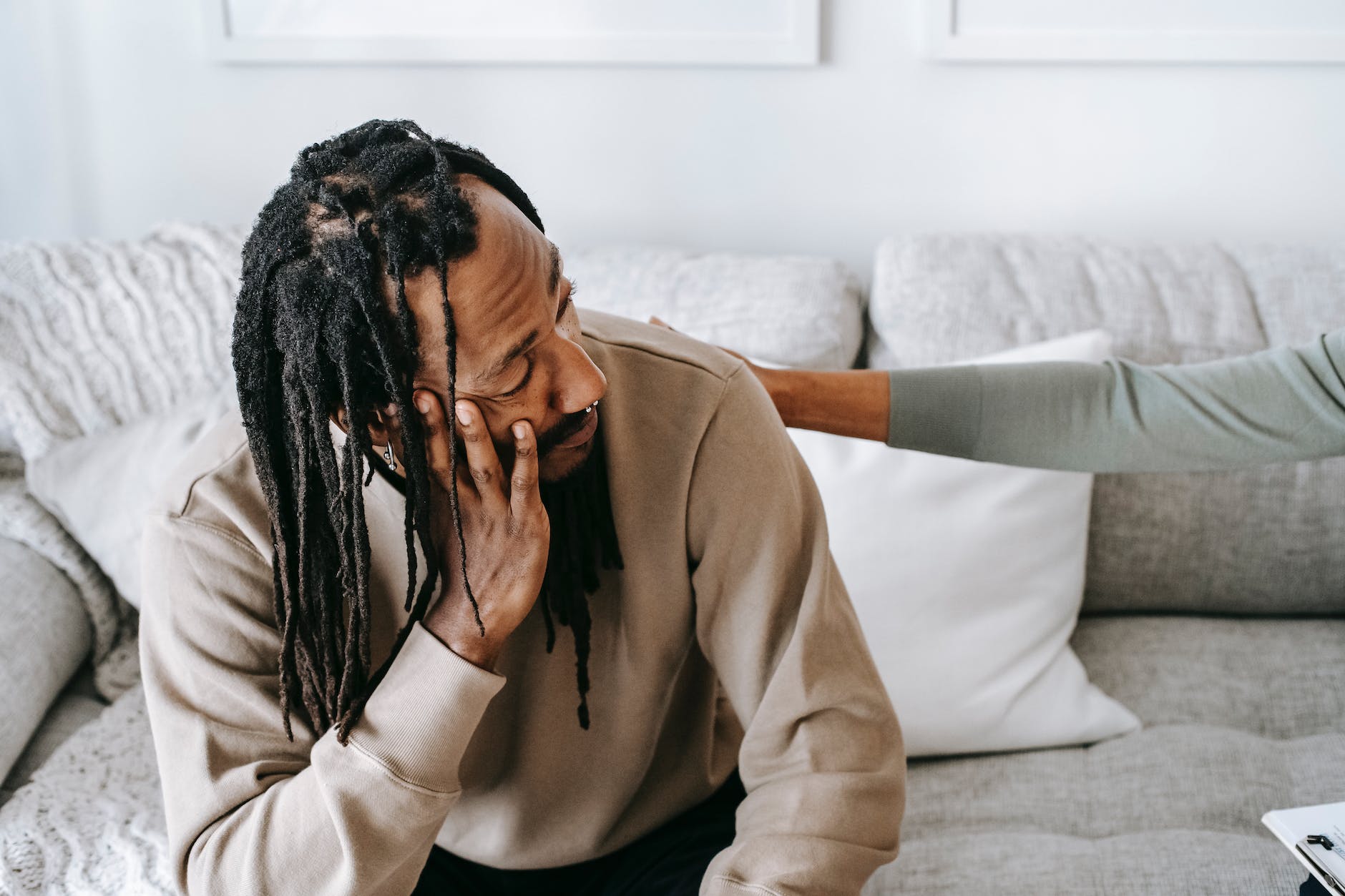
NOTE: Throughout this series I refer to the addict as “he” and the injured partner as his “wife.” This is merely a convenience for maintaining consistency. It is entirely possible for the addict to be a woman and the injured partner to be her husband. It is also entirely possible for the strained relationship to be between non-romantic partners, such as with a parent and a child.
Addiction and the Angry Spouse: Part Three

Toxic Criticism)

In my last post I explained that the addict needs to find empathy for the pain that his behavior caused his wife, though this is easier said than done. Speaking for myself, even after years of practice I still have many emotional safeguards that tried to dissuade me from really leaning into the pain. There is always that tendency to become defensive and search for any other path. I have even tried to fake empathy at times while keeping my heart securely locked off, but nothing but sincerity works. As my mentor in my first addiction recovery program often repeated “you can’t go under it, you can’t go around it, you can’t go over it. You have to go through it.”

Part of the challenge facing the addict is that he will likely face all manner of challenges that trigger his defense mechanisms. Typically the addict’s wife is not only hurt, she is angry, and that anger can come through in a multitude of ways. Insults or shouting or misrepresenting events will tempt the addict to dismiss everything his wife is saying. She’s being irrational, unfair, or intentionally derogatory, so he feels excused from taking anything that she says to heart. After all, this is already delicate, shameful ground for the addict, and anything abrasive is likely to drive him into his shell.

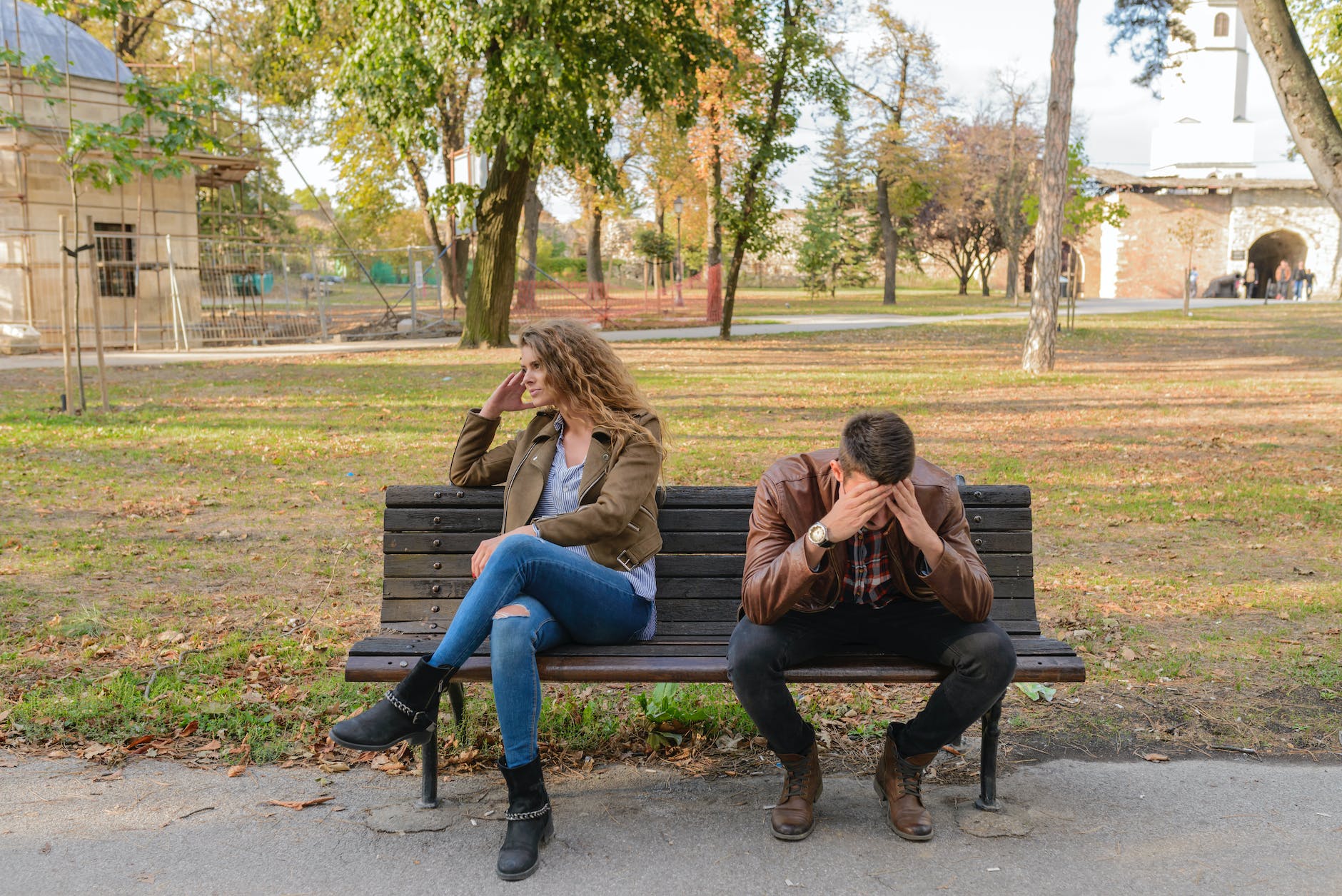
Certainly, the wife of the addict has a right to be angry. She has been profoundly hurt, and no one would reasonably expect her language to be unaffected by that. But at the same time, there must be a point where the expressing of one’s hurt can go too far, starting to become a form of abuse itself. Where is that point? Where is the line where one’s invective just isn’t okay any more? Even if someone has justified anger, they can express it in an unjustified way. And when they do, how are you supposed to respond to that?

Well, we will get into all of that, but before anything else I wanted to spend the rest of the day discussing a fact that every addict needs to appreciate.

Ricochet Damage)

If your spouse is expressing her anger in a way that is unfair, isn’t that basically the same as exactly what you did to her? Wasn’t the revelation of your betrayal something that caught your wife totally off guard? Didn’t it hurt her without justification? Didn’t it come on her totally out of the blue? You might be totally right that this pain your spouse is putting on you is unfair, but paradoxically, undeserved pain is exactly what you do deserve!

Now I’m not here to say that two wrongs make a right, but I am going to maintain that you can use this as an opportunity to better appreciate the reality of what you inflicted upon your spouse. You can feel all the stinging, out-of-line, crushing pain and say “I get it, that’s what I did to you.” In most cases, what you are feeling is nothing more than a part of the damage that you put out into the world ricocheting back in your face.

Which, once again, is not to say that we should live an eye-for-an-eye, but we do need to appreciate what it was for like for the other person when we took their eye away. We need to be able to have a taste for that experience, even if we don’t have to experience all of it.

When the addict’s spouse sees that he is deflecting her pain, that is only going to aggravate her further! The fastest way for the addict to de-escalate his wife’s anger is for him to develop a genuine and profound understanding of her pain. Cheap, phony efforts are only going to prolong things and make it worse for everyone. The addict must learn to lean face-first into the pelting hail. He needs to allow some of the shrapnel bouncing back from his own actions to land in the flesh.

I’ve said it twice now, and I’ll say it one more time. None of this is to say that verbal or physical abuse from a wounded spouse just has to be put up with. There is a line between holding empathy for another’s pain and just being their punching bag. And maybe that makes sense conceptually, but how do you actually walk that line in practice? Come back tomorrow as we explore the answer.

NOTE: Throughout this series I refer to the addict as “he” and the injured partner as his “wife.” This is merely a convenience for maintaining consistency. It is entirely possible for the addict to be a woman and the injured partner to be her husband. It is also entirely possible for the strained relationship to be between non-romantic partners, such as with a parent and a child.
Addiction and the Angry Spouse: Part Two

What More Can I Say?)

Sometimes “sorry” isn’t enough. I discovered this fact when I started to face the wrongs that I had done in my addiction. I found that I could acknowledge how I had messed up, I could genuinely say that I was sorry, and I could offer to make amends however possible…but that still was not enough to fix things.

Don’t get me wrong, being able to do these things showed that I had made great progress in my journey. They were good things to be able to do, and I was proud to have finally made it that far, but my work was not yet done.

This fact particularly manifested itself in my interactions with my wife. Both of us had acknowledged how far I had come, but it was clear to us that there something was still missing. My wife was still hurting, and no amount of me being a new and improved version of myself changed that fact.

Admittedly at this point I felt helpless. What more could I say? I wished that she could just stop feeling the hurt, but that wasn’t a switch that she could flip on and off. And even if she could have done that, there was still this sense that I hadn’t really done all my part yet. There was still something I was holding back.

Leaning In)

The conversations that highlighted my reluctance were the ones where she tried to get me to understand just how much I had hurt her. From these discussions I came to understand that her entire world had been fractured, that she had trusted me unquestioning for years, only to find out that I had been lying the whole time. I came to understand that these experiences had shaken her entire paradigm. If she had been so convinced of what was true about me, and had been so wrong, then how much else in her life was a lie? Nothing could be trusted anymore. She was alone without anything or anyone.

And I had absolutely no idea what to say to all of that. How was I supposed to respond? She was right, of course, but what could I do about it? I was sorry, if I could take all it back I would, but I couldn’t. What was done was done, and now I was doing all in my power to be a different person moving forward. What else was there?

Honestly, I don’t know that I would have ever found out the answer to that question without the help of my recovery group counselor. It was he who helped us to understand the essential quality of empathy in healing. He made it clear that it wasn’t enough for me to merely understand what my wife was being put through, I had to start empathizing with it. I had to find a way to step into that pain, to get a sense of what it was really like for her. I had made great strides towards understanding her on a mental level, but now it had to get emotional.

And that was a lot easier said than done. At first it seemed impossible to feel the feelings of another person to that degree. I was hearing her say that she was sad and angry, and I was trying to make myself feel sad and angry, too, but that never came out as sincere. Eventually I realized that I needed to move a little further upstream. I needed to not replicate the emotions she was describing, but replicate the experience that had caused the emotions in the first place. I had to envision someone putting on me the same sorts of things I had put on my wife, and then the negative emotions would come naturally. I genuinely and authentically started to have a real taste of what she was going through. I still cannot claim that I fully went through the experience, but I started to feel at least some of it.

Building Empathy)

Being able to lean into this sort of empathy was definitely a process. I got better at it over time, though there had always been some resistance to doing it. Part of me really didn’t want to imagine what it was like to be on the receiving end of the stunts I had pulled, because that put me in a place of shame. I had to be brave and really let down my guard and let the empathy take me. When I finally was able to do that there were many tears and many epiphanies. Best of all, my wife expressed that she was really starting to feel heard and understood. And that, it turned out, had been the missing piece.

Now, I’ve given the highly abbreviated version of this process. There were a lot of missteps along the way, both for me and my wife, but I wanted to fast-track to where we finally got it right so that you could know the target to aim for. In the rest of this series, I’m going to take a step back to call out some of the common mistakes that get made along the way. Come back tomorrow as we start digging into those.

NOTE: Throughout this series I refer to the addict as “he” and the injured partner as his “wife.” This is merely a convenience for maintaining consistency. It is entirely possible for the addict to be a woman and the injured partner to be her husband. It is also entirely possible for the strained relationship to be between non-romantic partners, such as with a parent and a child.

Addiction and the Angry Spouse: Part One

A Precarious Situation)

I attended an addiction recovery clinic when I decided I really wanted to be done with lust and pornography. One of the things that was so helpful about that clinic was that they did two treatments at the same time, one for the addict, and one for the spouse or partner of the addict. Given the demographics of pornography addiction, the addicts were predominantly men, and thus the partners were their girlfriends and wives.

The partners, of course, were deeply hurt by our addiction, and this is true for most other types of addiction as well. Being so closely involved to a person with any sort of compulsive, destructive behavior will always result in extensive wounding. Thus, every addict is going to have to deal with this most intimate relationship at some point of his or her recovery journey. They are going to have to take ownership of their mistakes, empathize with their spouse’s pain, make amends however they can, and accept the consequences that follow their behaviors.

The spouse also has her own issues to come to terms with. Given the secretive nature of an addiction, most likely she is only learning about this whole secret life that was going on behind her back for the first time. She has to process the betrayal, the lies, the manipulation, and has to decide between rebuilding the relationship or moving on. What’s more, the spouse has to negotiate all these matters while being flooded by intense, negative emotions. Very often this makes for periods of deep depression and angry outbursts, both of which are difficult for the recovering addict to know how to deal with.

A Strange Disconnect)

If the addict is sincere in his recovery, then these first months of sobriety probably give him a confusing, dual perspective of himself. On the one hand, this is the most honest he has ever been in his life. This is the first time ever that he can sincerely say that he is giving it his all. He is heroically facing his inner demons and doing something he is genuinely proud of. His recovery group members are recognizing his sincerity and acknowledging his bravery. They are encouraging him by pointing out that he is one of the very few in life who has found the “straight and narrow path” and committed to following it.

But then, on the other hand, the addict feels that he is an absolute dirtbag. For the first time he is really acknowledging the harm he has caused. He has shameful memories that he has avoided his whole life, but now he must face them head-on. He has natural responses of self-disgust and revulsion. The voices inside tell him that he has done too much wrong, he is irredeemable, and that he doesn’t deserve to be loved. And in many cases, that very message is being echoed by the person that used to love him best.

It is only natural that the wife whose whole conception of life has been shattered would have anger bursting out at every turn. Many addicts discover a side of their spouse that they never knew before, full of shouting, insulting, and profanity. Some spouses start throwing objects and breaking things. Some start looking for ways to hurt their husband back, physically or otherwise. The addict is trying to manage his emotions and choose sobriety over quick relief, all while enduring a constant and passionate reminder of what terrible damage he has done.

In fact, since the addict knows that he really is guilty of this terrible damage, he might feel that he has no right to question his spouse’s behavior. He has given his spouse the ultimate trump card in any argument. Any frustration or disagreement that he might express towards his spouse is immediately overcome with “well at least I didn’t do what you did!”

It is easy for a couple in this situation to subconsciously assume a new rule in life. Anything that goes wrong for the wife, no matter how unrelated it is to his past wrongs, is still the fault of the addict. Even if his acting out didn’t directly cause the new trouble, the new trouble is more painful because it has landed on a heart that was already beaten and tender. The addiction didn’t make the spouse’s uncle die, for example, but it has deprived her of the trusted shoulder to cry on now when she needs it.

Moving Forward)

So, which is it to be? Must the addict accept that he is a terrible monster and always will be? That no matter of future sobriety can make up for the wrongs already committed? That he will be an addict, and he must daily self-flagellate because of that? Or is the wife supposed to just shut up about her pain? Does her anguish just not matter because the addict is suddenly a “new man?” Does the past not even matter?

Which of these two extremes is the right way forward? Well, of course, neither.

If the right way were so simplistic it would hardly require a blog series to unpack it. The real way forward is far more nuanced and intricate, and it absolutely requires full respect to be afforded to both sides of the matter. Throughout the next several days we will examine this issue from multiple angles, hopefully coming to a conclusion that resonates with all.

NOTE: Throughout this series I refer to the addict as “he” and the injured partner as his “wife.” This is merely a convenience for maintaining consistency. It is entirely possible for the addict to be a woman and the injured partner to be her husband. It is also entirely possible for the strained relationship to be between non-romantic partners, such as with a parent and a child.

Perpetrator and Victim: Part Seven

The Place of Rescue)

Yesterday I made the point that both the perpetrator and the victim of abuse find themselves cut off from the presence of God. The perpetrator by their guilt, the victim by their despair. I explained that they do not have the power to bring themselves back into the light, either. Each requires an act of divine intervention to rescue them from the darkness.

It is not in the scope of this series to fully detail this rescue process. This process is outlined in the Gospel, it is conducted through the Savior, Jesus Christ. Anyone that searches for how one is “saved” in the Christian theology will find numerous explanations. For here I will simply say that this rescue or saving comes by accepting Christ as our Savior, and him redeeming us through no special merit of our own. It begins a new life within us, one of discipleship to Jesus.

My focus in this series has been to examine the hard path that precedes this saving grace. All of us have to be lost before we can be found, that is our common pattern in life. All of us are broken by others, and all of us break others in turn. Accepting these realities brings us to the bleakest place in our lives, but it just so happens to be the very same place where Christ’s rescue is waiting for us.

A dear friend of mine understood this concept and would often repeat the phrase “there is sacredness in suffering.” He understood the courage that it took to admit how guilty and broken one was, and he also understood that it was the prerequisite to a transformation for a soul. Nearly four years ago he passed in a tragic accident, leaving behind his young family. They have had their own “sacred suffering,” to be broken, and to be rescued to a new way of life.

New in the Light)

No one is rescued from the hole as the same person they were before they went in. They can be innocent again, they can be whole again, but they won’t be the same innocent or whole that they were before. That might be difficult for some to accept. Most of us spend so much of our time remembering how we used to be and trying to get back to it, but that’s something we just have to surrender.

This shouldn’t be considered tragic, though. The new person that emerges back into the light will not be equal to the person that went in, they will be indescribably better. We rise higher than we fall, our suffering and healing purifies and strengthens us into a purer form.

Of course, this is a transformation and journey that we never plan on. In the case of the victim it comes about entirely against their will. In the case of the perpetrator it does come about by their will, but they are ignorant of the full consequences they are calling forth. Most of us like to think that the greatest journeys of our lives will be ones that we elect for ourselves, ones that we choose deliberately and then carry out entirely by our own power. Nothing could be further from the truth. Those sorts of journeys are the most insignificant of our lives. The greatest journeys are the ones that catch us by surprise, even against our wills, and feature long periods where we are carried by various others. These journeys are far more dangerous, but the reward is far greater, too. There’s a reason why this is the sort of journey that all our literature has been obsessed with for thousands of years.

Parallel Journeys)

Here at the end I want to revisit a notion I mentioned in an earlier post. Many of us view the victim and the perpetrator as being two completely separate entities. We feel that each has entirely different needs from the other, that the only relationship that they share is those isolated moments of abuse.

But the reality is that both of these souls have a parallel journey to redemption. They both are prone to self-deception and false ideology, they both must overcome these lies to accept the hard truths, they both must come to despair so that they can then be rescued by the Savior.

And, indeed, each must deal with the other in their journey many times over. Even if they never see each other in the flesh again, each must come to terms with the specter of the other. No perpetrator will emerge whole without acknowledging the victim and doing whatever he can to make amends. No victim will emerge whole without accepting that the abuser is still their brother or sister and releasing their hate for them.

As I have suggested several times, I have been victim and perpetrator both. I have walked both journeys at various times, and I know firsthand the patterns of these paths. I know with all confidence that the way is hard, but also that it is beautiful.

Perpetrator and Victim: Part Six

Fallen in a Hole)

I’ve spent the last several posts talking about the situation of both perpetrators and victims of abuse. I have considered the various false narratives they start to live, lies that seem more palatable than facing their soul-wrenching reality. I have mentioned how these lies must be surrendered, though, and the harsh truths must be faced. Perpetrators must fully appreciate their wrongness and victims must fully appreciate their brokenness.

With most of our actions, if they take to places that we do not like we can reverse our steps to go back to where we were before. This is not the case with abuse, though, where our steps carry us over an edge and we fall into a hole, and no matter of walking around the bottom of that hole is going to find us a way out of it. Both for the enactor and the receiver of the abuse, they have been carried by choice or by force into a place that they cannot get themselves out of. And it is a damned place, a place that can only be described as godless. In that dark pit we will be made to understand what the very definition of hell is.

That might seem a harsh thing to say of the victim, who has not brought this travesty upon themselves, but it is the reality that they live even so. Like a dark cloud descending, their connection to God seems to be blotted out, and it is not at all unusual for those who experience this trauma to find their faith and core belief systems crushed.

Our Common Fate)

Be ye therefore perfect, even as your Father which is in heaven is perfect.- Matthew 5:48

These things I have spoken to you, that My joy may remain in you, and that your joy may be full. -John 15:11

See in the verses above what God intends for each of us. He calls us to be pure and to be joyful. But pure is the one thing that the perpetrator of abuse cannot be, and joyful is the one thing that the victim cannot be. They cannot live in the light and glory of God because they are in the hole, and neither of them has the power to get themselves back out of it.

At some point in our lives, each of us is going to receive harm from another. At some point in our lives, each of us is also going to harm another. Thus at some point all of us will be a victim and at some point all of us will be a perpetrator. That isn’t to say that we will all receive or inflict harm to the same degree, but each of us will break and be broken in some way or another.

And in that moment we will begin to understand—really understand—why it is that we all need to be saved. We will understand how helpless and hopeless we are on our own, how incapable we are of getting ourselves back up to the light.

We will find that our friends and families, no matter how hard they try, cannot piece back together our broken soul. They might alleviate some outer pains, might provide some worldly needs, but they cannot resolve the inner despair. They have no access and no power in the most secret places of our heart. Indeed, now that we find ourselves down in the pit, for the first time we will realize just how many of them are also right down there with us!

In this situation, whether as a victim or a perpetrator, the only one that can help us is a Savior. The only one that can help us is one who has never fallen into the pit, so that he may lower us a ladder, but one who has leapt into the lowest depths of the pit, so that he can mend our heart where it is. The only one that can help us is one that can take our hopeless and dark truth, swallow it within himself, and in return give us a new and bright truth.

I realize that I’ve leaned heavily into metaphor with this post, and perhaps it’s starting to sound like hyperbole. Frankly, it’s that I am struggling to find more straightforward words to communicate the ideas that I am trying to get across. My own experiences in the dark hole have literally fueled my nightmares, which perhaps lends to the language I have used. I shall finish, though, by summing up what I am trying to say just as plainly as I can.

As I mentioned before, I have been in that hole myself. It was a horrifying place. Without exaggeration, it was my greatest suffering in life, and I was totally unable to save myself from that hell. Even so, and much to my surprise, I was rescued from it by am unseen being. And I have seen this drama play out in the lives of many others, and I know that it can for you as well.