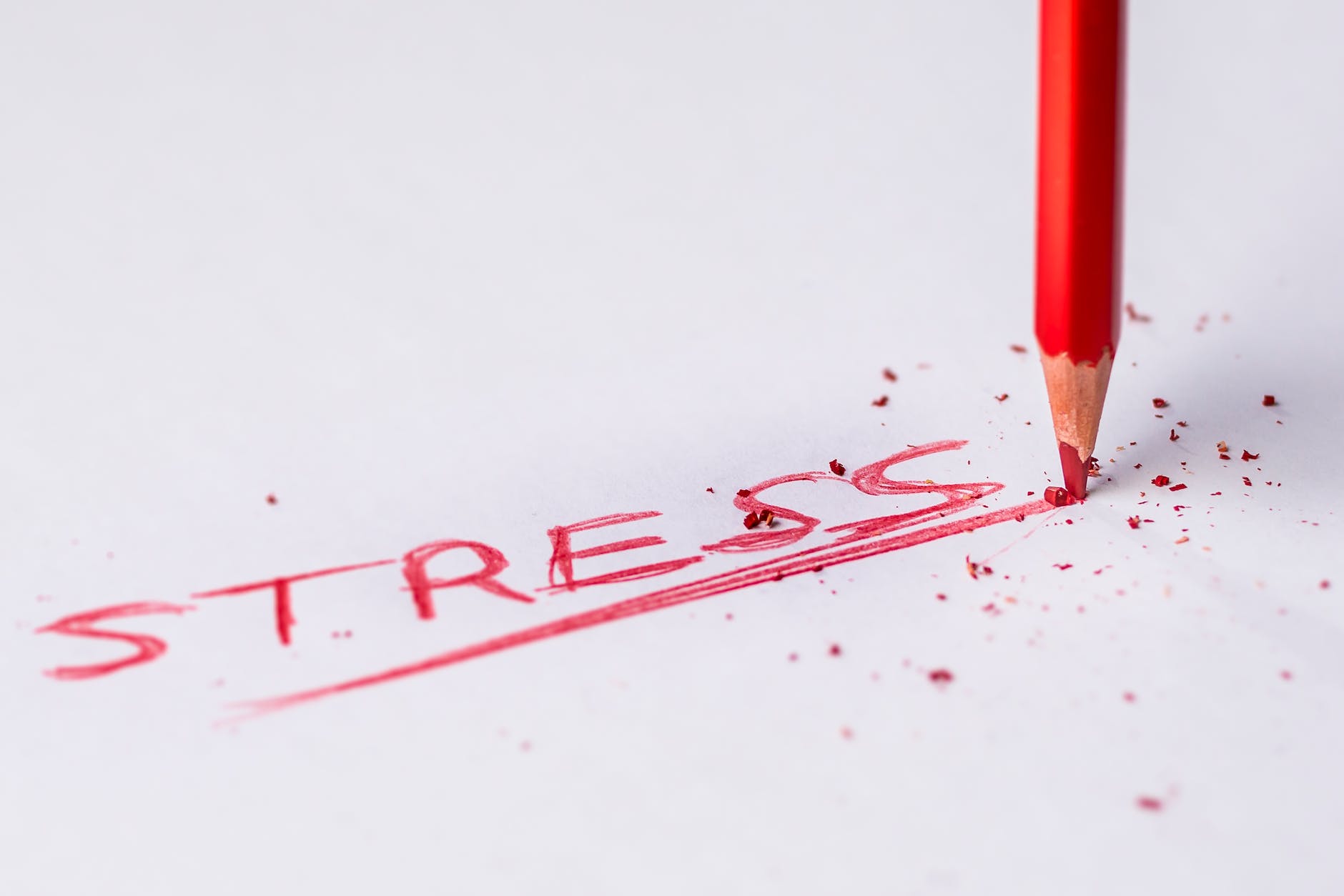
Overwhelming Stress: Part Four

A Broken Schedule)

Yesterday I addressed that we might not have the capacity to do all of our daily tasks, but we might be able to use some techniques to get through them anyway, such as shifting some to an every-other-day cadence, or quickly knocking out high-effort tasks that then become low-effort maintenance.

I acknowledged, though, that even this may not be sufficient for everyone. It is possible to simply not have the resources to do all the things that we need to maintain balance, no matter what strategy we employ. An example of this would be if one didn’t have enough income to pay off even the interest on their debt. Or perhaps if one suffered an injury that prohibited exercise. Or of one’s need for education and a regular day-job were mutually exclusive.

In situations like these, more drastic strategies are required. But as a prerequisite to any of these strategies, we first have to accept that we aren’t going to be able to do all the things that we want to do. Any solution at this point is going to require sacrifice and a change of expectations. Coming to terms with this disappointment is painful but necessary if we are ever to make the most of a hard situation.

Once we have made this peace, then here are two options to consider.

Ask For Help)

I am certainly one that wants to take care of everything myself. I want to prove that I have the strength and wherewithal to take care of everything on my own. Part of me feels that I would rather live a broken life by my own power than a fuller life by the power of others. But that part of me is simply pride, and now that I’ve tried both options I can tell you definitively which one is better,

For years I remained entrenched in my addiction because I insisted on taking care of it on my own. But the more I tried to handle it on my own, the more it became apparent that I simply couldn’t. My deficit wasn’t time or money, it was spiritual strength, and I had to finally accept that I didn’t have the wherewithal on my own and that I needed to reach outward for help.

I finally did so, and I have leaned on the strength of dozens of people since. My therapists, my group members, brothers in recovery that I’ve met along the way. I have an entire village of supporters who help me to do what I couldn’t by myself, who help make up for my spiritual strength deficit and then some.

The principle is the same if you’re talking about financial shortcomings, or scheduling conflicts, or simply not having enough time to do everything. If you really can’t do it by yourself, then can you swallow your pride and surrender some part of this plan to the care of another person? We are born into families and raised in communities for a reason. The resources are almost certainly there if we’re willing to just look outside of ourselves.

Make the Hard Cuts)

I have an entrepreneurial and hobbyist mindset. I always have a number of projects and developments that I want to work on, both so that I can learn new things and also create new sources of income. These endeavors seem justified by the fact that success in these areas would make me a more skilled individual and bring greater stability to my life. So I prioritize working on these projects, even trying to progress several of them at a time.

Of course, things of substance never come quickly or easily. The cost of doing this work gets higher and higher, other untested fields start to look more promising, I try dividing my focus into even more areas, and even my basic self-care starts to evaporate as I pour more and more time and effort into all these ventures.

Many times I have had to give myself a sharp reality check. I realize that optional projects have become obligations, hobbies have become jobs, and ambition has become obsession. At this point, letting these projects go feels like cutting out some of the essential parts of my life, but really they’re not. At some point I have to decide what genuinely is essential and what only feels like it is.

Obviously this is a problem of my own making. More difficult to deal with are the demands that have been put on us by duty and necessity. The principle remains the same, though. If you really can’t maintain everything that you want to, and you can’t get enough external help to make things manageable, then sooner or later you have to accept that some things need to go.

Maybe you really just don’t have the capacity for a relationship right now. Maybe you really do have to declare bankruptcy. Maybe you can’t maintain every friendship. Maybe having a clean house just isn’t in the cards for today. Maybe you just won’t be in shape to run the marathon this year.

None of these are happy sacrifices to make, but at least we can have the dignity of letting them go ourselves, rather than watching them shrivel from neglect. It’s better to throw the food you won’t get around to eating away than to let it grow moldy on the shelf. Better to stop making half-measures that accomplish nothing and preserve our strength for full-measures on what we can actually accomplish.

Conclusion)

Strategic management, asking for help, and making sacrifices, it certainly seems that everything would be nicer if we didn’t have to do any of these things, but these are the realities of life. All of us will need to take all of these steps many times through the years. Sooner or later we can have to make our peace with imperfection and make the most that we can of it.

If we do make our peace and move forward, we still may not accomplish everything we wanted in the way that we wanted, but I do believe we will all accomplish more than enough. Life can still be whole, even when it’s parts are broken.


Overwhelming Stress: Part Three

An Untenable Situation)

Yesterday I recommended a process by which a person can get their life under control. I suggested that they identify the minimum, daily effort that is necessary to change all areas in decline into areas of progress. Not massive progress, only a steady, consistent movement in the right direction. Then I suggested one commit to that daily quota, prioritizing sustainability of effort over grand, but short-lived surges.

But at the end I brought up the fact that for some even their bare minimums would still be too large an effort for a single day. You might have capacity for some of them, but you just don’t have it for them all. There are still a few ways that a person can respond positively to this situation, depending on the nature of their shortcoming. I will present two of the easier strategies today, and the two more difficult ones tomorrow.

Alternating Schedules)

Ideally, one would like to have balance every day. In 24 hours they would have sufficient sleep, spiritual communion, exercise, work, time with family, leisure, and whatever other life qualities they value most. But 24 hours is a hard limit on one’s daily resources, and sometimes there literally aren’t enough hours in a day to get all the things that one needs.

I found myself in this very situation. Trying to balance my family, writing, career, spirituality, rest, exercise, recovery work, budgeting, house maintenance, and pleasure only resulted in hurried efforts that didn’t really progress any of those areas and left many of them untouched for weeks.

I’m a little embarrassed to admit how long it took me to realize that several of my “daily” tasks could actually be “every-other-daily” tasks. While it may not be ideal, I’ve decided that I’m okay writing Monday, Wednesday, Friday, and exercising Tuesday, Thursday, Saturday. Being consistent with writing and exercising on an alternating pattern is still better than the sporadic, weeks-without pattern that I’ve had before.

Of course, not everything should be split into an alternating schedule, for example I still want to have a prayer and seek connection with God every day, but I have nearly cut my daily tasks in half. And again, so long as my every-other-day effort is enough to progress me towards a healthier lifestyle, then I will still reach my goals eventually. And you will, too!

One might even consider a three-day rotation, but the more you space things out the harder it will be to establish the habit. You really want the cadence to be as regular and rapid as possible.

Short-Term Goals)

Another strategy to consider is that some areas of life might require a higher effort temporarily, but then will become more manageable afterward. An example of this would be if you need to get your finances under control. At the beginning, you probably need a higher-than-usual effort to track down your expenditures, figure out your budget, and cut out unnecessary expenses. But once you’ve done all that, you then only require a fraction of that effort to check yourself against your budget moving forward.

Again, ideally you’d be able to do all of the work for all the areas of your life simultaneously, but if you can’t, it may be worth considering whether you have any of these temporarily high-effort areas. If you do, for the short term prioritize getting through those tasks. Once they’re taken care of, then try to settle into a daily or every-other-daily cadence to take care of everything else.

It will be up to you to decide what other areas of your life are put on hold while you’re focusing on these temporarily high-effort areas. Is it okay to not work on your physical health while you get your finances in order, so long as you make a solemn commitment to bring that area back into your schedule once your budget is established?

I had this situation when I got serious about overcoming my addiction. At some point I needed to be able to integrate my recovery work with all the rest of my daily self-care, but for the short term I needed to focus on gettimg some momentum into my sobriety. For a temporary period, everything but the bare necessities was put on hold as I attended group meetings, went to therapy, and did hours of homework. I experienced a great change of heart, and then, with a little trial-and-error, I transitioned to a lower-effort strategy that would still maintain the recovery I’d achieved while still having time for all the other parts of my life.

Minor Adjustments)

Scheduling regular, daily efforts is a great step towards taking back control of our lives, but there will probably be a couple wrinkles in that plan. Fortunately, many of these wrinkles can be smoothed out with the minor adjustments described above. By shifting some things to an every-other-day cadence and by focusing temporarily on areas that could later be reduced to a lower effort, we will find that life becomes far more manageable.

But as I mentioned at the start, this still may not be enough to resolve every situation. Come back tomorrow as we’ll deal with the areas of life that are imbalanced through-and-through. As we will see, even in these areas, there can be relief and growth.

Overwhelming Stress: Part Two

Frantic Lunges)

A sure sign that a person is losing a fight is when they give up on precision and strategy, to instead swing and lunge wildly at their foe, hoping to get a lucky connection. Unfortunately, this is very often the same manner in which we fight the problem areas of our lives, taking passionate, wild swings at our trouble, but consistently missing our mark.

I have been guilty many times of panicking at a bank statement, or a number on the scale, or a new mess in the house, and then I lunge at the problem with everything I have. I want to subdue the issue quickly and permanently, and so I try to take the biggest steps that I can towards doing so.

And, if I were able to sustain this, I probably would see real and rampant improvement in the area. But the fact is, none of us are able to maintain this sort of frantic behavior for long. We quickly lose our stamina and then aren’t able to do any work at all. Not only that, but while we’re obsessively working on one area of life, we tend to ignore all the others, and the lost ground in those areas can easily outweigh the gained footing in the one we are focused on.

Thus, our desperate efforts are doomed to failure and frustration. We’ll wind up right back where we before, and probably even worse off.

The Tortoise and the Hare)

We’re all familiar with the famous story of the tortoise and the hare, and with its moral that “slow and steady wins the race.” It might be in our nature to react to stress and fear in dramatic ways, but we need to suppress that urge and instead approach the issue with thoughtfulness and consideration, and then we need to act in a calm and deliberate manner.

If you only make mild progress towards accomplishing your goal, you won’t exhaust yourself prematurely like the hare did. A mild effort is sustainable for the rest of your life. Even better, you can only really perform one desperate lunge at a time, but you can maintain multiple mild efforts in different areas simultaneously.

As discussed in my last post, we need to shift our focus from “what is the massive gap between where I am now and where I want to be,” and instead consider “how much effort is it going to take to just get things moving in the right direction?

A Recipe for Improvement)

There is a practice I have implemented in my own life to help me keep my efforts grounded and reasonable. First, I make a list of all the areas in life that I feel I am losing ground in. Then, I try to make my best judgment for how much effort would be enough to overcome the daily entropy in each of those areas. So, for example, in the matter of cleaning the house, I don’t have to make everything spick-and-span in one weekend. I need to figure out how much mess is made in a day, and I need to clean up that much mess, plus just a little more, so that over time the house will reach the state I want it to be in.

Once I have quantified this for each area, then I have my daily to-do list. I know what my financial budget is, how many calories I’m allowed to eat, and how many messes need to be cleaned. Anytime I find myself with a spare moment in a day, I consult my list and take care of the next thing on it. Once the list has been accounted for I can spend the rest of my day on whatever projects or leisure I want with a clean conscience.

A Foundation to Build On)

You may find that your to-do list isn’t very demanding. You might be able to do all of your maintenance and improvements in just a small section of your day and still have hours leftover. It might be tempting to immediately raise your daily goals to something more ambitious, but I would recommend giving yourself a couple weeks at this lower capacity to see whether the pattern holds.

I have had times where the first week of following my plan was a breeze, because I was still highly motivated and the week did not have much else scheduled for it. After a little while, though, excitement for the new program cooled down and I had the occasional unusually busy week. This was the real test for whether my plans were sustainable or not.

If the pattern does hold for you, though, then you can incrementally raise your expectations for each day, resulting in you reaching all of your goals even more quickly. What’s important is that the goals still remain sustainable, though. You want to be able to meet them every day with rare exception.

Insufficient Resources)

Finding that you have extra time and resources is, of course, the happy outcome. The other possibility is realizing that you don’t have the capacity to even do the bare minimum in each area. Going through this process has helped us identify that our life is fundamentally unsustainable and to what degree. While this may be a depressing realization, it is crucial information to obtain. It is better to know where the realities are and react accordingly than to keep plowing ahead in vain behaviors.

This brings us to our options. Difficult options, to be sure, but now we can intelligently choose them. Tomorrow we’ll dive into those difficult choices and how we can determine the best ones for our situation.

Overwhelming Stress: Part One

Whenever we look at the root of our negative behaviors, we will most often find some form of stress lurking there. Powerful negative feelings fester inside of us and tend to come out sideways. But not all stress is the same. Some stress is inevitable and unchangeable, such as having a disability or a chronic disease, while other stress seems like it could be removed, whether by a change of environment or character. These changeable sources of stress are the subject for this series.

Two Kinds of Agitation)

Failing finances, becoming overweight, and having a messy house, these are all things that agitate us just by living with them, and then they agitate us again because we feel like we could resolve them if we just worked harder or smarter. Knowing that we could deal with these, but that we’re not, makes us feel guilty, ashamed, and weak. Our failure leads directly into our shame, and our shame leads directly into our negative behaviors.

I have certainly had my fair share of this sort of shameful stress. In fact, the three examples I just gave are all ones that are currently active in my own life. I have watched as the bank account became lower and lower, and the number on the scale became higher and higher, and the messes spread further and further. Each has brought its individual anxiety, and then each has been compounded with the embarrassment and shame of having ever letting things get into such a situation. Worst of all, I then indulge in unhealthy excesses to medicate this pain, and that excess further aggravates these very same problem areas.

The Fear of Destruction)

The key issue of these stresses is that they put in us the fear of our own destruction. Maybe there is still a little money in my bank account, but if it is trending negative, the eventual conclusion can only be financial ruin. And maybe I’m still able to get up and do what I want, but if my weight keeps trending upward the eventual conclusion can only be disease and a premature death. And maybe there are still some clean refuges in the house, but if the messes keep spreading the eventual conclusion can only be an entirely uninhabitable household. To see the train chugging towards a wreck and then discover that the brakes don’t work is enough to make anyone feel hopeless. They’re not ruined yet, but the crash is inevitable.

Under the shadow of inevitable ruin is a terrible place for one to take up residence. Is it any wonder we keep taking a vacation from here, even if only briefly, to the fantasy land of our indulgences? Of course, the fact that these indulgences only make the problem worse leads us to seek another vacation just as soon as we glimpse our home of harsh realities. We know that we’re not dealing with the problem, but it’s already gotten so heavy that it seems we couldn’t ever have the strength to lift all of it.

But let us take a step back to consider the facts that we have just uncovered. It is the recognition that our path leads to destruction that creates a constant sense of dread is un. It is the way a man’s life is trending that distresses him most, far more than the state he is actually in. So often we get caught up in trying to change our entire state, when really we ought to be focusing on simply changing our trend.

A man that is seventy pounds overweight longs to shed all of it, but his most pronounced anguish actually comes just from seeing that his weight is a mere 0.1 pounds higher today than it was yesterday. Being seventy pounds overweight is bad, but even more terrible is knowing that seventy pounds will look like a happy place compared to where he is going!

Shifting the Trend)

And in this realization we find our salvation! For which is the more manageable task, to get out of those seventy extra pounds, or to change the daily trend of 0.1 pounds plus to 0.1 pounds negative? Obviously shifting the trend down by 0.2 pounds per day is far more within reach than to suddenly melt away dozens and dozens of pounds!

And once again, I am saying all of this from my own experience. I am myself seventy pounds overweight, and 1,200 dollars in debt, and with six large messes spread throughout the house. And up until about a month ago I was inching further and further in the wrong direction in all of those areas and was miserable because of it. During this last month, though, I have started making small changes, so that I am now inching in the right direction in all of those areas. And at the end of that month, I am still overweight, and still in debt, and still have a messy house…but I am enormously happy! Why? Because the future is not inevitable destruction anymore, it is assured salvation! I have changed my trend and I am going the right way, and this is the peace I always wanted.

Charles Dickens probably summed it up best in his novel, David Copperfield (slightly paraphrased to a more familiar monetary format):

Annual income 20 pounds, annual expenditure 19.96, result happiness. Annual income 20 pounds, annual expenditure 20.06, result misery.