Doing Wrong vs Trending Towards It

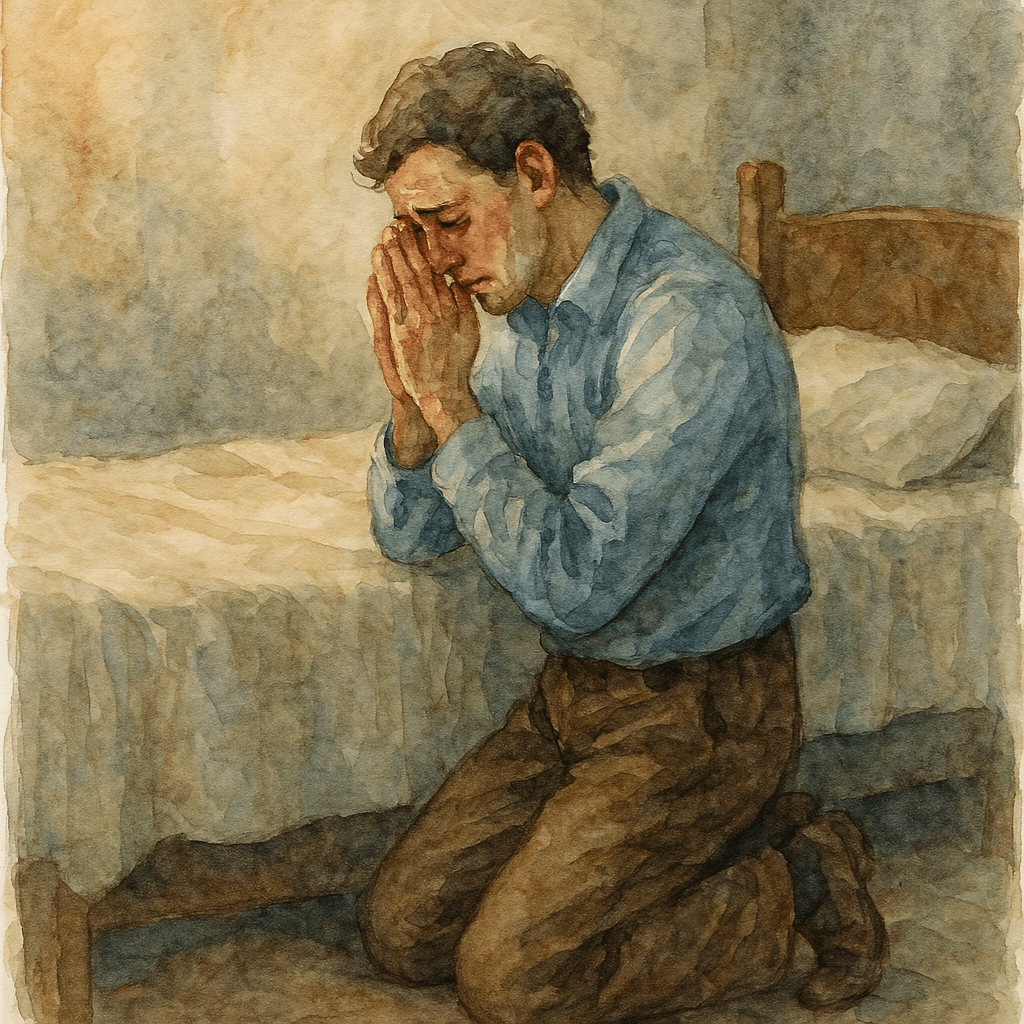
I’ve been part of an addiction recovery group for a while, and I’ve noticed something that can trip up addicts in our sobriety. I think it is a trap that applies universally as well.

I have witnessed and experienced how an addict will sometimes re-examine his definition of sobriety, playing with the fringes of exactly what behavior he will consider a relapse and what behavior he will not. Sometimes he will find a behavior that really doesn’t contradict his conscience or give him any guilt. So he relaxes the rules and guidelines in that one area, but not long after he finds himself pushing the envelope further and further, and ultimately relapsing multiple times in a row.

So was he wrong in his appraisal and just trying to justify doing things that he should have felt guilty about all along? Not necessarily.

As a general rule, good begets good and evil begets evil, but there are times where an action that is neutral, or even good, should be treated as evil, not for its own sake, but because of the evil places it tends to lead to. The addict has to acknowledge what actions follow his choices down the line. Lending a sympathetic ear to a friend might seem like a good thing to do, and in-and-of-itself it might be, but if spending time with that particular friend often leads to you eventually losing your sobriety, then maintaining that relationship is actually a bad thing to do.

The addict—and everyone else as well—is playing a game of chess against his own nature, and to not get caught in a trap he has to know how to play six moves ahead. He must reject what is clearly wrong, but also reject whatever leads to it. He must place a prudent and deliberate buffer around evil. He must come to know himself very, very well.

It’s Hard to Change Your Story

It can be a hard thing to change the story we have told other people of who we are. Each of us suggests to others what our principles and priorities are, what we will and will not do, and what behavior they might expect of us. Sometimes we begin to shift who we are, though, and at that point it becomes difficult to explain to others this new emerging version of ourselves. This is true whether our change is for the worse or for the better.

For the Worse)

Let us first consider the example of a change for the worse. Suppose I am developing a bad habit, or that I’m trying to admit to a bad habit that I’ve kept a secret. In this case, then telling others about this new lifestyle of mine reveals any number of the following details about me:

  1. I was lying to people in the past.
  2. I’m ignoring my conscience to do something that I still know is wrong.
  3. I wasn’t nearly so firm in my past convictions as I pretended to be.

None of these are a pleasant thing to own up to. None of them show me in a very good light. All of them make me a fool and/or a liar. Any other principles that I still claim to maintain are now suspect, because I’ve already shown the capacity to abandon one of them. This creates a motivation to hide our vices, to let people go on thinking that we are still as saintly as they had assumed, thus adding another layer of deceit to our story.

For the Better)

Now let us examine the example of me giving up a bad habit, changing my life for the better. In this case, there is still a friction against changing my story. For one, I might have the sense that my present company have something over me in that they knew the old me, the worst me, the me who openly did the things I now say I don’t do. I might be worried that these people will see my new efforts as nothing more than an act, a forced performance and not my true character. They might be anchors, trying to pull me back to what they think is the “real” me, even though I am trying to reject that version.

Not only this, but if I have done these bad habits with others, they may feel judged by my rejection of that behavior. I might say that I don’t judge them for doing that which I now consider inexcusable in myself, but that is inconsistent. I am now opposed to a part of my old self that still loves on in my friends’ current selves, so in truth I am now rejecting a part of who they are.

These two factors create a pull back towards our old ways. We are motivated to undo our story rewrite.

Is Change Possible?)

Whether for the better or the worse, change implies that there something wrong and deceitful about yourself either in the past or the present. Making a change means admitting to your flawed nature, your unreliableness, and your uncertainty. Is it any wonder, then, that so few people seem to change? Some people even believe that no one can really change. They say that people can only alter their outer behaviors from time-to-time, but will still be the same person at their core.

I don’t think the situation is quite that severe, though the difficulty of true transformation should never be understated. I think it would be more accurate to say: a man really can change, even for the better, but more often than not it takes an act of God to do it!

Apology is a One-Way Street

When you apologize, acknowledge your wrongs and express remorse for them, stopping short of the wrongs that the other person has done to you. It doesn’t matter if you hurt them because of what they did, or if they responded disproportionately. Regardless of the context, if what you did was wrong, then own what you did and speak only to that.

Ideally, the other person will also apologize for their wrongs, stopping short of the wrongs that you did, only owning what their own failings. If they do, then you will both be free, but even if they don’t, you still will be.

Anger Makes an Enemy

Raising a voice in anger, using insulting language, and swearing exhaust all forms of fear and coercion that we can impose on another before all that remains is to become physically violent. Shouting at other people communicates that we are one step from physically hurting them.

Shouting is, of course an antagonistic form of persuasion, as opposed to friendly forms of persuasion like reasoning, convincing, and offering. Shouting is to get the other person to give us what we want, though it personally hurts them to do it. As such, shouting communicates: that we are an antagonist, an enemy, a hater of the person. We can say that we do not hate the other just because we are shouting at them, but the message that others will receive is clear.

I have watched two people reassure one another of their friendship even in the middle of a shouting match, but as shouting became the standard form of communication between them, soon all talk of friendship ceased and they angrily parted ways. One must understand that whenever they raise a voice in anger, they raise the risk of ending the relationship forever. How often is that worth getting what we want in the moment?

So do we really mean to imply all that we imply when we shout at another person? Do we really want to tell our kids, our spouse, our friends, our coworkers, or our neighbors that we are their enemy, that we hate them, and that we are close to violence? Do we want to tell that to strangers and acquaintances just because they make a mistake or a social gaffe towards us? Do we even want to tell that to social rivals just because they have deeply held beliefs that contradict our own? When another person shouts at us first, does even that justify us in showing them the same message of hate in return?

Certainly we are justified to reason, to correct, to call out, and to oppose at all times. I would even say that at certain times there are those individuals and situations that are deserving of the threat of violence and hatred that we give in an angry shout, but these are very far and few between.

Joy is Internal

We can make it our life goal to make things pleasant for ourselves, getting things more stable, more fun, and more luxurious, but all the while not feeling any joy. Or we can be obsessed with our troubles, constantly focused on all that is wrong and unfair, convinced that we will never feel peaceful so long as we are so burdened. But joy is a metric of an internal state, not an external one. It has nothing to do with either our comforts or our discomforts. Rather, it is directly proportional to our alignment with what is right and true.

When I am guilty of wrong, when I am hiding the gifts God gave me, when I am giving less than I know I could, then I will never feel joy, no matter the life that surrounds me.

On the other hand, when I have a clean conscience, when I am shining the light God gave me to shine, when I know that I gave it my genuine best, then I will always feel joy, no matter the life that surround me.

Two Ways to Live Falsely

There are two ways to live falsely. The first is to take a false principle and insist that it is actually the truth. No amount of stubbornly insisting that our way is right will ever make it so, and we will grind our souls against the wheel of truth until we relent, or until it breaks us.

The second way to live a falsehood is to believe the actual, genuine truth, but to be insincere in our following of it. This might be due to being well-taught in our youth, but never gaining the fire and conviction of true conversion. We act in the manner of truth, but it comes out forced and unnatural.

Both sorts of false living require true conversion. Each person in these ways must become aligned to the truth at their core. At that point they will flow with the power of life instead of trudging upstream against it or floundering broadside to it.

Victims of Our Own Lies

Our own self is the primary victim when we lie. First, we do something against our conscience, then we lie about what we did, which gives the message that our fake, external image is of greater value than the true self. This wounds us. We cannot be so dismissive of a part of ourselves without that part hitting us back later on. A war begins within.

Heavy waves of guilt come from one side, telling us that we must tell the truth and stop denying who we truly are, but from the other side comes stifling and suffocation, applying greater and greater pressure on the conscience to deny the truth and accept the fiction. And with all the guilt and the suffocating, we are only hurting our own self in between.

We cannot have peace if we are at war, we cannot have wholeness if we are broken in two. If we are ever to stop beating ourselves the war must end, which means that one side or the other must surrender. And when we come to realize this fact, then we must come to realize another: the conscience cannot surrender. The true, authentic voice will never be killed because it is simply our natural, resting state. It exists because we did what we did, and made of ourselves what we made of ourselves, and there is no way to undo those facts. To live a lie without frustrating and twisting ourselves is fundamentally impossible, because part of ourselves is inseparably tied to unchangeable reality. The only surrender that we really can make is to surrender the lie. Surrender the phony public image. Surrender to the truth.