Ambitions are good for life
But it is not good
If life is for the ambitions
Tended Towards Ruin

A Heavy Loss)
There was a project that I once loved very much. It was a program oriented towards connecting men with God, helping them to bring their hearts back into His light. It was small and local, humble and unpolished, but it did truly miraculous things in the lives of those who attended it. Lately, though, I’ve found myself struggling to recognize that same institution from what it has become today. At some point, after about ten years of operation, the institution became a for-profit organization, and changes started being made for the betterment of the bottom line, not for the betterment of the men it served. Several of the original founders quit, due to personal disagreement with this new direction.
This has been a heavy thing for me to come to grips with, but as I have reflected on it I’ve realized that it was always going to go something like this. The special spirit of the old program had to meet its end one way or another, because that’s just the nature of things.
Tale as Old as Time)
I am reminded of the story of the tower of Babel. In it, a nation of people decide to build a great tower, reaching all the way to heaven. Bold enough to make themselves gods, they toiled and labored on this great elevation of man until the whole thing toppled to the ground.
We do not know exactly how high they built their tower, only that it fell before they could achieve their aim. Their construction became destruction, their order became ruin, and the people were returned back to the level of the fallen earth.
This, of course, is a type for all manner of structures in the world today. And I don’t merely mean physical structures, either. Even more so it applies to structures of law, of government, of ideology, of any edifice constructed by the wisdom of man.
The Way of Things)
Every club, organization, corporation, and ideal is laid with ruin in its foundation. On the one hand, this might be because they are laid with carnal and earthly motivations, such as focus on profit or notoriety. Once making money is one of the organization’s pillars, then it is tied to the natural things of this earth, all of which decay, erode, and finally collapse. Through the years we have seen countless companies over-exploit their workers, consumers, and intellectual properties, killing the golden goose just to get a higher profit in the short term. We have seen countless governments siphon power and wealth to the highest class until they became too top-heavy and collapsed under their own weight. The compromises that were deemed necessary to make the enterprise possible eventually make its continued existence impossible.
But even without a foundation of earthly motivations, every structure of man is still doomed to fall due to our fundamentally flawed nature. Even our organizations that are built on ideal, and virtue, and purity of intention, gradually erode and eventually go wrong entirely. Even if a core principle is worthy, if it is taken slightly too far at the beginning, it will magnify and accelerate over time, eventually becoming a great evil. It is like stacking blocks to build a taller and taller tower, given enough time and distance every structure leans too far one way or the other. Given enough time and distance, every little flaw becomes a crushing error, and the whole thing will topple. So an organization founded with a focus on discipline will eventually become fascistic oppression, whereas a focus on liberty will eventually become gross hedonism. We sow the death even in the birth, it is simply our nature.
Even God’s church, once entrusted to earthly stewards, is tended toward ruin. The world was in a state of apostasy in the time of Noah, and in the time of Abraham, and in the time of Jesus. God has to refresh His word among His people repeatedly, not because His word has deteriorated, but because we people just keep losing our grasp of it. We know that even the believers today will once again be on the brink of ruin when God will have to refresh everything with the second coming.
What Lasts)
Ironically, what truly lasts is what seems most transient. Though man’s works are doomed to fail, along the way they house occasional sparks of something pure and genuine. There can be a nugget of God in the midst of all the stone. And though that nugget seems momentary and transient, it is only because we are perceiving it through a shifting lens. In actuality, each of those nuggets is anchored in something realer and truer than the structure it was found within.
There is an entity behind all those sparks, a constant certainty beneath every brief wonder. By fastening ourselves to these pearls, and following their threads to deeper things, we tie ourselves to the only thing that is actually eternal.
The man-made program I once loved may be gone, but the experiences I found within it have not. Those experiences introduced me to the One who hasn’t changed at all, and never will. In reality, I haven’t lost a thing.
Isaac and Rebekah: Soulmates

There is an interesting sentence in Genesis 26:8. This is how the verse appears in the translated English of the King James Bible:
And it came to pass, when he had been there a long time, that Abimelech king of the Philistines looked out at a window, and saw, and, behold, Isaac was sporting with Rebekah his wife.
During my regular study I observed that the word “sporting” was taken from the Greek צָחַק / tsachaq which means to laugh, to joke, to make sport. I found this interesting, because Isaac’s name (יִצְחָק / Yitschaq) also means “he laughs.” Thus, this sentence can be rendered as, “He-laughs, laughed with his wife, Rebekah.”
I found that wording, “he-laughs, laughed,” a bit amusing, but really didn’t think anything more of it at the time. I have given it some thought since, and I think it is actually a beautiful, poetic testament to the love that Isaac and Rebekah had for one another.
First, some context. Isaac and Rebekah’s union seems to have been a particularly charmed relationship. First, Abraham’s servant was led to her by a sign from God, showing that this was literally a match made in heaven. Then, for their first meeting, Rebekah was riding through the field where Isaac was meditating and we hear how they both raised their eyes, saw one another, and she hurried off her camel to go meet him. It is as close as the Bible gets to saying it was love at first sight! Then, when the two of them were married, we are simply told, “and she became his wife; and he loved her.” Unlike his father or his sons, we never hear of another wife for Isaac, Rebekah was his sole companion to the very end.
Now, let us go back to the phrase, “He-laughs, laughed with his wife, Rebekah.” Rebekah was literally fulfilling Isaac’s identity! He-laughs was laughing, and he was laughing with his wife. She was bringing out his true, authentic self, his core identity, and the fact that they were a perfect complement to one another was so obvious to the king of the Philistines, that when he saw them together in this manner he immediately intuited that they were husband and wife. The two were genuine soulmates.
The Bible has all manner of stories in its pages. Tales of tremendous sacrifice, of lives being transformed, of rousing battles, and of great teachings. Perhaps most sweetly, though, it also has stories of deep, fulfilling love, of two people perfectly complementing one another, of two becoming one.
The Ends of Good and Evil

Of Evil)
Lying is evil. Stealing is evil. Murder is evil. These are functions of the wicked, not of the good.
If all evil behaviors belong to the wicked, and are eschewed by the good, then it logically follows that the wicked will afflict all these evils upon the good, tormenting them even unto death.
To be righteous is therefore to accept all the evil of the world, while denying oneself any opportunity to retaliate in kind. It therefore follows that evil will naturally triumph over good, as it can murder the righteous, but the righteous cannot murder the wicked.
Of Good)
That being said, triumph is good. Resurrection is good. Salvation is good. These are states of the righteous, not of the wicked.
If all good outcomes belong to the righteous, and are denied to the wicked, then it logically follows that the righteous will overcome all the afflictions of the wicked, even being raised from the dead.
To be righteous is therefore to accept all the evil of the world, but then being raised above it all. It therefore follows that good will ultimately triumph over evil, as it can overcome evil, but the evil cannot overcome the good.
Remembering Our Own Goodness

Sometimes we pine in the wilderness of our sin and shame, crying for some act of God to show us that we are still loved, even in spite of our wickedness. And, in some cases, maybe that really is what we need. But sometimes, in those situations, what we really need is to know that we can still love, even in spite of our wickedness.
I discovered this for myself recently, when I felt shut in a small room where I could not feel God’s light, even though all my past experiences told me that He still cared for and wanted me. As I prayed for Him to come and find me, I felt instead the urge to start singing. I was guided to a hymn I had never heard before, My Jesus, I Love Thee, and as I sang my redeclaration of love to my savior I felt my cold heart come back to life.
Knowing that God loves us is good, and is the first great testimony that we all require. But after that, the next great testimony is to know that there is an eternal goodness within us that we cannot kill. We need to remember our own spark of divinity, and have faith in ourselves to be better again. We need to learn, as I did that dark day turned bright, that even in the depths of our greatest shame we still have the ability to exclaim, “if ever I loved thee, my Jesus, ’tis now.”
Called to Wait

I have been guilty of being frustrated when God does not immediately answer the good desires of my heart. If I come to Him in faith, surrender my situation to His care, and believe in His power to do what is right, then why do I not receive the desired results?
And to be clear, I don’t mean going to God and asking Him to give me fame or fortune. I mean asking Him to change my heart, to cure my selfishness and addiction, to mend my brokenness so that I can be a better person. These are clearly good things, ones that I genuinely feel are in alignment with God’s will for me, so why wouldn’t the desire to change be answered with transformation?
Recently, though, I felt this impatience rebuked as I considered the precedent that is set for us in the word of God. I do not feel the scriptures justifies my opinion that God would immediately deliver every good thing that is sought for. Rather, the Bible is full of examples of waiting, sometimes for very long periods of time, before the realization of promised blessings are fulfilled.
Think of Abraham being promised that he would be the father of a great nation, but that not coming to pass for hundreds of years. Think of Jacob having to toil for seven years to marry the woman of his dreams, only to be deceived and committing to serving another seven years for her. Think of Joseph waiting long periods as a slave in Potiphar’s house and then in prison, even though he had done no wrong. Think of Moses trying to help the Israelites, failing, and then living decades in Midian before being called to try again. Think of the Israelites, freed from Egypt, but waiting in the wilderness 40 years before they would receive the Promised Land. Think of Job being left to wallow in his afflictions for a full measure before he was restored. Finally, think of those that Christ healed, and how many of them had been held by their afflictions for years before their deliverance. For the woman with the issue of blood it was twelve years, for the man at the pool of Bethesda it was thirty-eight!
In some of these examples there was a period of waiting because the people were not ready, such as the Israelites wandering in the wilderness. In others, however, there was no personal fault, such as with Joseph, it was simply not yet the right time for his deliverance. So why could not either of these cases be the same with me? Maybe I’m not ready for my deliverance, but if I trust the Lord to prepare me eventually I will be. Or maybe I am ready, but it is not the right time according to the Lord’s wisdom, so I should rest in Him and let the better things come when they may. In either case, the fact that I have not yet been healed is not, in-and-of-itself evidence that something is going wrong. It may still be going exactly right. I might be rightly waiting in the wilderness, just where I’m supposed to be.
The Shackles We Choose

Something I have been noticing while doing my study of Exodus is that Israel hated their enslavement in Egypt…but they also preferred it to being free. Though initially euphoric when God destroyed their enemies in the Red Sea, they repeatedly afterwards claimed that things were better for them when they were in captivity than free in the wilderness.
It seemed a strange behavior, until I examined my own life and realized that the same is true for me. As much as I may not like feeling subject to my boss, I cannot fathom living without the security he provides me. I think of all the projects I wish devoted my spare time to, but I’m afraid to cut out the movies and video games that receive most of my spare hours instead. I see my cluttered house and want to set it in order, but focus instead on the mess of emails I’m subscribed to. I say that I’m ready to live a self-controlled and honorable life, then I obey the will of my temptations instead.
From my birth I was blessed with great opportunity and freedom, given to me by the goodness of God and the sacrifices of my ancestors. But I have taken that freedom and given it right back to other masters. There is no locked gate keeping me captive, most of the prisons I have checked myself into I could leave any time that I wanted, but I choose to bind myself to these places of my own volition. I remain a prisoner because I am not ready to be truly free.
My conscience urges me to forge out into the wild. My Savior freed my soul two millennia ago. My ancestors provided the security to let my ambitions soar. I pray I find the courage to live as free as I could, to have no Master but my God, the one who calls me into deeper waters.
Shutting God Out
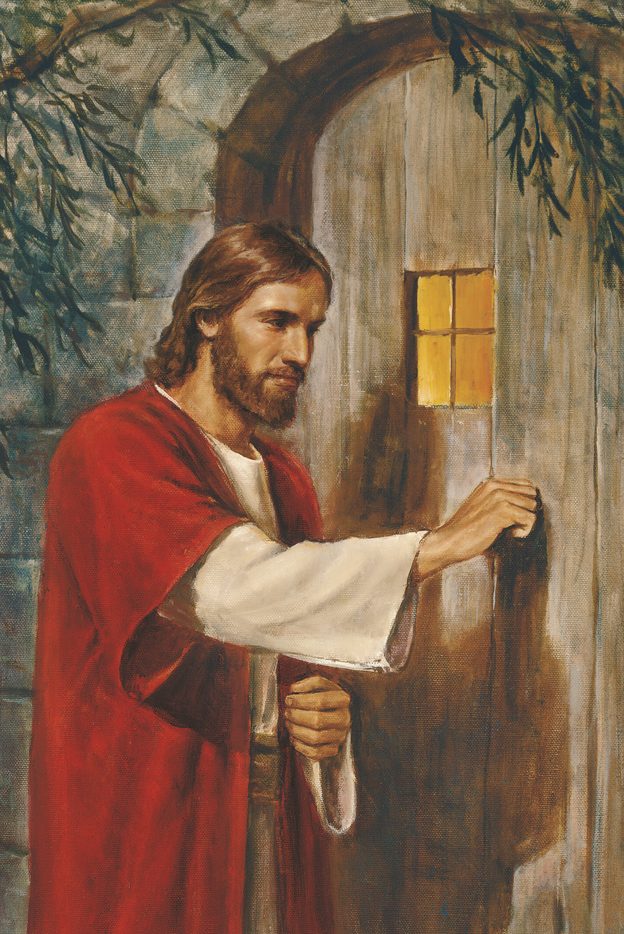
Sometimes when I converse with God I hear the kindest, warmest, and most loving voice I have ever heard. At other times, He seems clinical and formal, still telling me good things, but without His usual warmth. As I have examined those different experiences I have come to realize that it is not God who changes His manner, but I who change what tone I am willing to receive.
When God feels direct and cold to me, it is because I am not open to receiving His love. Sometimes I am frustrated with myself, unwilling to love myself, and so I set up a wall to keep His love out also. He speaks to me as kindly as I allow Him.
Sometimes He doesn’t just sound cold, though, sometimes I can’t even hear Him at all. But once again, it isn’t because He has abandoned me, but because I have gone and shut myself in a room without Him. Even then, though, “he stands at the door, and knocks: and if I will open the door, he will come in with me,” (Revelation 3:20).
And the fact that he will come in with me has been the most meaningful thing to me in those low moments. He doesn’t require me to break down my walls and come out into the open if I’m not yet willing to. He is content to come stay in the dark hovel with me. He will sit with me in the shadow, with only His presence for a light, until I’m finally ready to leave.
Appreciating the Worst Self

It is common to despise our “worst self.” This is the self that is lazy, selfish, overly-indulgent, and perverse. That self always gets us into the worst trouble, imitates the behaviors we most resent in others, and frustrates all of our plans for self-improvement. I have listened to many addicts share their hatred for their “worst self,” going so far as to wishing that they could kill him!
But the thought has occurred to me that my “worst self” has also done the bravest and noblest things that I have ever done. It was while I was firmly in the gutter of shame and depression that I decided to ask for help from my addictions. It was while I was a sinner that I made the decision to repent. It was while God seemed farthest from me that I tried to follow Him most.
The “worst self” has its downsides, but when transformation does occur, it is necessarily that self who decides to make it happen. The “worst self” chooses to let itself die so that the “whole self” may emerge, and we owe it a great debt of gratitude for repeatedly making that sacrifice.
Deeper Into Enemy Territory

Recovery is a multi-stage journey. I, and many of the other addicts that I have known, experienced an initial battle with temptation and eventually a victory over it, only to feel new battles springing up around us some time later. After the initial success, we tend to experience setbacks, or new addictions forming off to the side, and it makes us doubt the control we thought we had gained. Most great battles in recovery seem to be followed by a sequel.
As I have reflected on this phenomenon, the thought has occurred to me that the more you press against your foe, delving further into the heart of enemy territory, the more unpredictable and treacherous the terrain becomes. The initial push and triumph in recovery feels fantastic, but that is nothing more than breaking through the front lines. Yes, it is a victory, but you have yet to capture the capitol. Or, to shift metaphors, perhaps you have chased the bear from your home, but in so doing you have followed it into its lair where greater challenges await.
Virtually every addict finds that his bad behavior comes about by the following sequence:
- He has many hurts and frustrations in his life
- Those hurts and frustrations put him into a perpetually dejection and faithless state
- While depressed and faithless, temptation easily has its way with him
The first fight for recovery has to do with short-circuiting this pattern. The addict learns how to manage or mitigate his pain, removing unnecessary afflictions, ending negative relationships, and stopping behaviors that add stress. Less frustration means less dejection, and less dejection makes him stronger against temptation.
And this is all well and good, but the solution will last only as long as his management and mitigation efforts are effective. Sooner or later life will throw something new and unexpected, as it always does, and all his perceived progress will be undone. He will find out that his sobriety is dependent on life being easy, and no one’s life is always easy.
So the addict must go further into enemy territory, deeper into the heart of the problem. Sooner or later he has to learn to break the connection between the pain of life and becoming dejected. He has to learn how to be peaceful and content, no matter the simultaneous pain. This is a very difficult thing to do, of course, but if he can succeed in this critical battle, then the world will no longer have any power over him. He will have captured the heart of the enemy’s power, and the war will be over.
 Spiritual Wanderings