
It is better to be penalized for telling the truth
Than to be rewarded for telling lies
It is better to be penalized for telling the truth
Than to be rewarded for telling lies
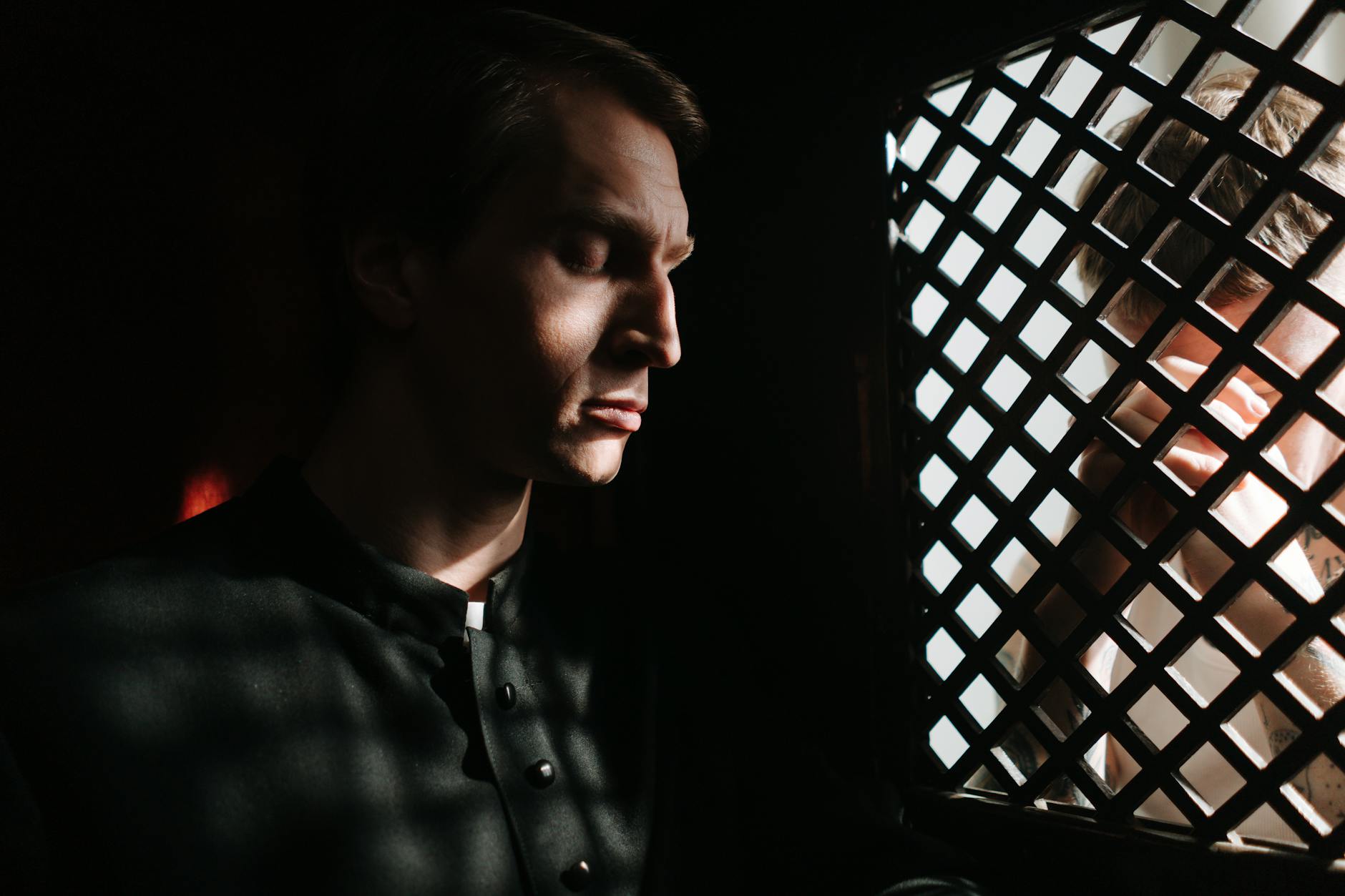
The root of all change
Is telling the truth

A reality based upon a lie can only end in obliteration
For a lie is the inversion of reality

There are many instincts that we people have ingrained in us, even without being taught them. We tend to fear heights, have a revulsion to spoiled meat, and pull our hand back when it is burned. These reactions are all invented from within us, though, they do not immediately correspond to some physical, universal reality. The universe is not afraid of heights, the universe is not repulsed by spoiled meat, and the universe does not pull back when it is burned. Fear and revulsion and recoil are not calculable by any sort of physical equation, they are only psychological illusions.
One might also make the case that it is the same with our morality. There is no observable universal reality that hates slavery and abuse. There is no observable universal objectivity to loving kindness and bravery. Could it be that these are also delusions of the mind? That they are simply extreme emotional hallucinations, totally detached from reality, just like being afraid of heights?
It’s an interesting argument but I do not find it convincing. In fact, it undoes itself.
Let us consider the first half: the notion that the universe itself is not afraid of heights, and so our fear of it is merely a psychological illusion. It is true that the greater cosmos does not shrink back at the edge of a cliff. All of the elements and minerals and flakes of dust that have no mind attached to them happily roll off the edge of the cliff without a care in the world. But that doesn’t mean that our fear of the cliff is random or detached from reality.
The fact is, we fear the edge of the cliff for a reason, and that reason is based on three universal truths. The first is that objects which become untethered at a high height will be accelerated downward by gravity. The second is that an object which has been accelerated into another object will experience an opposite and equal reaction, a force that presses against it. The third is that a force will continue through a body, dispersing its energy in fractures and breaks, until that other body has cancelled out that force.
These are all objective realities that apply to every physical object in the universe. The combined effect of them is, of course, that an object that is suddenly released at a great height will fall, and hit the ground with great force, and be broken into pieces. Our seemingly subjective fear is actually an abstraction of multiple objective truths that can combine to destroy us. It is well worth appreciating how our minds are able to take all these separate physical phenomena, and encapsulate them with a single, visceral emotion.
So yes, there is no universal fear of heights, but that fear is an abstraction of physical laws. So our fear does actually have an objective basis and justification, and no one is deluded for listening to it. The same goes, of course, for our revulsion of spoiled meat and our recoiling of our hand when burned. These impulsive, instinctive reactions are simply abstractions of objective truths in chemistry and thermodynamics.
Having recognized these objective roots to our other instincts, it seems most logical to assume that it is the same for our sense of morality. To suggest otherwise, one would have to make a compelling case as to why one set of instinctive, emotional reactions is grounded in reality, while another is purely relative, and I struggle to think of what such an argument would be.
To me, it is far simpler to assume that our disdain for slavery and stealing is a subjective abstraction around an objective reality. Not a physical reality, but a spiritual reality, and the disdain is not a protection of our physical form, but of our spiritual form. We are afraid of unkindness because it is a reflection of unseen universal, moral truths that will damage our spirits just as surely as falling off a cliff will damage our bodies. So even if our sense of justice and compassion and virtue are subjective illusions, they are still illusions that signify an underlying truth.

There are two ways to live falsely. The first is to take a false principle and insist that it is actually the truth. No amount of stubbornly insisting that our way is right will ever make it so, and we will grind our souls against the wheel of truth until we relent, or until it breaks us.
The second way to live a falsehood is to believe the actual, genuine truth, but to be insincere in our following of it. This might be due to being well-taught in our youth, but never gaining the fire and conviction of true conversion. We act in the manner of truth, but it comes out forced and unnatural.
Both sorts of false living require true conversion. Each person in these ways must become aligned to the truth at their core. At that point they will flow with the power of life instead of trudging upstream against it or floundering broadside to it.

Our own self is the primary victim when we lie. First, we do something against our conscience, then we lie about what we did, which gives the message that our fake, external image is of greater value than the true self. This wounds us. We cannot be so dismissive of a part of ourselves without that part hitting us back later on. A war begins within.
Heavy waves of guilt come from one side, telling us that we must tell the truth and stop denying who we truly are, but from the other side comes stifling and suffocation, applying greater and greater pressure on the conscience to deny the truth and accept the fiction. And with all the guilt and the suffocating, we are only hurting our own self in between.
We cannot have peace if we are at war, we cannot have wholeness if we are broken in two. If we are ever to stop beating ourselves the war must end, which means that one side or the other must surrender. And when we come to realize this fact, then we must come to realize another: the conscience cannot surrender. The true, authentic voice will never be killed because it is simply our natural, resting state. It exists because we did what we did, and made of ourselves what we made of ourselves, and there is no way to undo those facts. To live a lie without frustrating and twisting ourselves is fundamentally impossible, because part of ourselves is inseparably tied to unchangeable reality. The only surrender that we really can make is to surrender the lie. Surrender the phony public image. Surrender to the truth.

Yesterday I discussed three different domains of truth: the truth of the physical world, the truth of society, and the truth of morality. I made my case for each being well-founded and constant, even if at times mysterious. I argued that they all originate from outside of our individual selves, yet are inseparably integrated in us as well. I also considered the strange paradox where we all believe in these realities to some degree, yet we try to violate their rules even so. Each one of us seems to believe in the truth, but also disbelieve it in part. And this uncertainty makes it very difficult, even impossible, for us to live in full harmony with these realities and achieve our greatest potential.
Having acknowledged the problem, I turn now to an important passage of scripture, some of the most quoted verses from the Bible.
In the beginning was the Word, and the Word was with God, and the Word was God. The same was in the beginning with God. All things were made by him; and without him was not any thing made that was made. - John 1:1-3
Much has been said about the meaning of the word “Word” in this passage. It sounds a bit strange to our ears, because a “word” is a conceptual and impersonal thing, but here it is being used to describe a personified being, indeed the fundamental being. Of course, the passage isn’t just talking about a word, it is THE Word. It is the fundamental Word, the ultimate Word, the Word before all others. It is the Word that we are told made all other things, defined all other things, gave form to all other things. This Word is so fundamental and foundational that without it there was “not any thing made that was made.”
I have spent a great while talking about the systems and rules that we see in the created universe, from physics to society to morality. As I said before, these systems clearly originate from outside of us. They were present before we were, and they will exist after we are gone. These verses from John explicitly identify the Word as the author of these laws and systems of reality. And if this Word is the word that defines the laws and systems of reality, then that Word must necessarily be true. For if it were not true, then all of reality would not be true either, nor our very existence. In fact, not only must the Word be true, it must be THE Truth. The fundamental Truth, the ultimate Truth, the Truth from which all these other truths are derived.
The Word is the Truth, and the Truth is the author of all the other truths that we observe, infer, and feel. Any attempt to live outside of the created truths is therefore an attempt to live outside of the fundamental Truth, and any attempt to live outside the fundamental Truth is an attempt to live outside of created reality. To deny the Truth and live against it is to deny the entire fabric of the universe, our own selves included, and frustrate our very being. It is not that it is merely advisable to live in the Truth, it is that it is only possible to live living in the Truth. Any attempt to exist outside of the Truth is to begin to undo one’s own creation, to unravel oneself into nothingness, to vanish into outer darkness.
What a problem, then, that we violate the Truth every day!
For all have sinned, and come short of the glory of God, and the wages of sin is death - Romans 3:23, 6:23
It is a problem that we do not have the power to resolve either. As beings of the Truth, we cannot change the Truth. Nor can we change our own state back to being in harmony with the Truth after we have violated it, for the unmaking of ourselves is, in fact, instantaneous, only artificially prolonged by the grace of God.
And thus we see, that there was a time granted unto man to repent, yea, a probationary time - Alma 42:4
Of course, this probationary period does us little good if left to our own devices. We, ourselves, have no way to rectify the fact that we are now fundamentally disconnected from the Truth of the universe. And this is where the rest of John 1 comes into play. For, after defining the Word’s external authorship of all the elements that make up our reality, John then proclaims:
And the Word was made flesh, and dwelt among us. He was in the world, and the world was made by him. - John 1:14, 10
The creating Word came to live within its own creation! No longer just an external force, the creating Word now became an internal being as well. “It was made flesh and dwelt among us.” At one level that obviously represents the man Jesus Christ walking and teaching in Israel, but the penetration of the Word actually went much deeper. Jesus, himself, taught that he would be in us individually!
My Father will love him, and we will come unto him, and make our abode with him. - John 14:23

And as they did eat, Jesus took bread, and blessed, and brake it, and gave to them, and said, Take, eat: this is my body. - Mark 14:22

I in them, and thou in me - John 17:23
The Word is made our flesh, and it dwells inside of us!
Be strengthened with might by his Spirit in the inner man; That Christ may dwell in your hearts - Ephesians 3:16-17

And he that keepeth his commandments dwelleth in him, and he in him. - 1 John 3:24
What does this mean? It means that the Word that made the Truth that all of our existence is predicated upon can also come into our hearts and make the same Truth in there as well.
Though we have violated the external Truth, we can be reconciled to it by having it remade internally. Thus, we cease to be damned by the uprooting of ourselves from the external reality, because we are now sustained by the same reality existing anew within us.
But whosoever drinketh of the water that I shall give him shall never thirst; but the water that I shall give him shall be in him a well of water springing up into everlasting life - John 4:14
To live at all we must live in the Truth. To live in the Truth, we must be reconciled from our sin. To be reconciled from our sin, we must have that fundamental Truth that lays at the foundation of all reality planted within our hearts. To have the Truth planted in our hearts, we must receive the creator of that Truth, the Word, even Jesus Christ.
Jesus does not just come to invite us to join him in outer heaven, he comes to put heaven inside of us! And I do not mean that figuratively. Though I do not begin to understand how, in some way, entirely literally, Christ comes to put the seed of all created reality within our own being. All of the cosmos is made anew within us!
1 And I saw a new heaven and a new earth: for the first heaven and the first earth were passed away; and there was no more sea.

2 And I John saw the holy city, new Jerusalem, coming down from God out of heaven, prepared as a bride adorned for her husband.

3 And I heard a great voice out of heaven saying, Behold, the tabernacle of God is with men, and he will dwell with them, and they shall be his people, and God himself shall be with them, and be their God.

4 And God shall wipe away all tears from their eyes; and there shall be no more death, neither sorrow, nor crying, neither shall there be any more pain: for the former things are passed away.

5 And he that sat upon the throne said, Behold, I make all things new. And he said unto me, Write: for these words are true and faithful.

6 And he said unto me, It is done. I am Alpha and Omega, the beginning and the end. I will give unto him that is athirst of the fountain of the water of life freely.

7 He that overcometh shall inherit all things; and I will be his God, and he shall be my son.

- Revelation 21:1-7
This is what it means to live in Truth!

I began this study with a simple objective: to make the case that the only way to live was to live in truth. Right from the beginning I understood that this concept was so fundamental that it would defy definition. It is axiomatic, something that is most often just assumed to be true, unprovable by conventional methods. I tried to make my case even so, approaching the subject in all manner of different ways. It has been a fruitful, if eclectic, enterprise. Not only am I more convinced of the soundness of this principle, I better understand why it is such a difficult thing to prove objectively.
I will help illustrate this as I gave my final observations. Here is the first half of the conclusion to all that I have found.
One of the key things I came to realize through this study was the various realms of truth that we encounter in life. I found myself debating around three separate categories of truth at different times. Each of these categories had different levels of tangibility and effect, yet I observed that each seemed to follow the same pattern. Let us consider them each, one at a time.
First, there is the physical truth. This is the truth of our perceivable, material world. Scientists have long understood that our world is composed of systems and procedures, each reliable and consistent. There are clear rules that govern physics, chemistry, and geology. These rules can be directly observed and measured; that is how we know that they exist. They are true, and they are always true. What is more, these physical truths exist separately from our individual selves. We interact with the physical world, we cause certain of its rules to play out, we harness its systems for our own benefit, but we do not define or override its rules. For all the self-will we possess, we can only employ it within the confines of its laws. The physical truths simply are what they are, and even if all of us ceased to exist and there was no one left to recognize these truths, we are certain that they would continue regardless.
Secondly, there is the truth of a society. This truth is the state that we social beings exist within. It is comprised of all our individual selves, and the relationships that exist between us. It is the sum total of all our thoughts, feelings, words and beliefs, both within ourselves and towards each other. We cannot examine this social state as directly as we can the physical world, but logically we know that it must exist and have a true definition. For we all know that we have our own, personal state of being, and so the amalgamation of all our states must be a real state as well. Our experiences also suggests that this super-state moves by certain patterns and rules. There seem to be certain laws about how individuals, relationships, and societies grow and evolve, and philosophers and psychologists have spent countless years gleaning what nuggets of truth they can from these systems. Interestingly, while these patterns must emerge from us directly, we remain individually ignorant of how we contribute to them. We are like the particles of dust that fall in the physical world, our movements seeming to be individual and arbitrary when examined up close, but when taken as a whole, we see that the mass is subject to forces that underpin the whole. Thus, as with the physical world, the truth of this realm seems to emerge from something greater than the individual. It belongs to the species as a whole, yet it is clearly enmeshed in us as well.
Finally, we have the moral truth. This truth is defined by the laws of how we should govern ourselves. It is the principles that we should hold to, the ways that we can direct our efforts and our attention to harmonize with the thing that we call “good.” This truth is the most mystifying of them all. We cannot see it or measure it. We cannot graph its movements. All of us try to obscure it with our own agendas and selfish desires. And yet, in spite of all this confusion and denial, there still remains the universal conviction that moral truth is a reality. Every civilization has always believed in some form of it. Though we cannot see it, we can feel it. Like the two other realms of truth, we sense that it originates from somewhere outside of ourselves, and we believe in it so concretely that we are sure what is right would remain right, even if there was no one left to practice it. Also, though the moral truth originates outside of ourselves, it is inseparably integrated inside of us as well. It pulls at us, we interact with it, and it even emerges from out of us.
To some degree, we all perceive and accept each of these realms of truth. We all have a basic understanding of the laws of nature, the laws of society, and the laws of morality. We know that we should live in harmony with each of them. We know that there are certain things we just shouldn’t do, because they will cause physical pain, or social rejection, or be immoral. We know that there are other things that we should do, because they will increase our safety and be the most direct means to achieving what we desire. In the physical world, the positive benefits of conducting ourselves according to the laws of gravity can be explicitly observed. In the social world, the benefits of doing to others what we would like to have done to ourselves can be implicitly inferred. In the spiritual world, the benefits of sacrifice to our higher power are intuitively believed.
And yet, in spite of all this knowledge, and inference, and belief, we still try to violate these truths repeatedly! We risk injury just to save a few seconds of time, we try to fool others into giving us what we want, and we try to satiate our base desires when we think God isn’t looking. And even after we are hurt for our defiance of truth, we will still test its limits again and again. There is a part of us that is converted to the truth on a conceptual level, but somewhere between that part and the carrying out of our actions there is another part that is not converted, and it overrides our better senses.
We know the truth, but we are not, ourselves, entirely truthful. As mentioned above, these truths all emanate from outside of ourselves, and so they are foreign objects to us. But at the same time, they also are integrated in our individual existence, and so they are our very own selves as well. This is a strange paradox, and because of it, mankind has ever been a creature perplexed.
I have something to say about what I have learned of how this incongruity is resolved, but I’ve run out of time. I shall take it up tomorrow. See you then.

I’ve spent the last few weeks talking about the truth, and how our souls are designed to live in harmony with it. This exercise has been helpful for me to mull over my inner thoughts and feelings, bringing them into fuller, rational definition. I have explored, I have discovered, and I have gathered into one place. The only things I haven’t done is sort and refine. It might be worth it to take my raw discoveries and organize and develop them. I will begin that process by giving a summary and categorization of my study thus far. Any further work beyond that would probably be better taken offline.
For today I am going to step through all of my past posts, summarizing the key takeaways for each one. Then, starting tomorrow, I will give my overall conclusion on the matter.
I began this study by establishing my thesis: that only a life founded upon the truth was truly joyful and free. I began by considering which of all the people I know live in the truth most consistently. The group I settled on was addicts in recovery, and I noted the surprisingly joyful and meaningful lives that they lead.
Next I considered the importance of truth in other aspects of the world. First I looked at the physical truths necessary in aviation, and then the dangers of untruth in propositional logic. There may not be an obvious connection between these realms and that of our own personal behavior, at least not from our limited, mortal perspective, but the fact that truth is clearly essential in these other domains gives a strong suggestion that it would also be so in matters of self-governance.
I then moved on to arguing against putting untrue perspectives on other people. I said that it harmed them by separating them from reality and inadvertently reinforcing harmful messages. I explained that this complicated and frustrated individuals’ efforts to secure the basic good things that we all desire in life. I also pointed out that we put this harm on others due to incredible personal arrogance, and that the logic of deluding one another becomes untenable when scaled globally. I concluded that if it is demonstrably wrong to deceive others and cause them to live separately from the truth, then surely it is wrong for us to choose to live separate from the truth ourselves also.
Of course, it isn’t the case that we always know exactly how we’re deluding ourselves, though. I explained that we often need the help of another to see ourselves clearly, and that we block ourselves from the truth because we aren’t prepared to deal with it. Thus, even if we decide to live in the truth, it will take some special revelation to know what the requisite changes we then need to make are.
I also pointed out that even if we do recognize what our failings are, we might try to dismiss and minimize them, admitting what is true with our words, but hoping to get ahead through a little deception on the side. We have to learn to bring all of us into alignment with the truth, or our practice is only theoretical and basically useless.
I then related my own experiences with living in varying degrees of truthfulness. I described states of being oblivious to my falsehoods, and also of striving against them, and finally of periods of joyful congruity between with the truth. From my own experiences I sincerely believe that all of us can come to live in harmony with the truth, even while acknowledging that first we all struggle with being hypocrites and liars, myself included.
Finally, at one point I explained our need for an external truth. I made the case that we need the truth to be defined objectively and separately from any one person. It is essential that it is dictated by God, Himself, and given to us through divine words. This is the one truth that all of us must seek alignment to, and anything else that claims to be the truth is a counterfeit, and will not produce the full joy and freedom that we might otherwise have.
That is everything that I have explored thus far, tomorrow I will give the first half my final conclusion on the matter.

In my last post I shared how I have at times been oblivious to the inconsistencies and hypocrisy inside of me. I explained that I have moments where some external factor reveals to me that I am not living in harmony with the ideals and truths that I hold most dear. I also shared how at other times I know what my inconsistencies are, and I am genuinely striving against them, but I am unable to achieve total self-control. I am being truthful in my purposes, even if not in my outcomes. These two states represent my lower states of truthfulness, and today I will conclude by detailing the highest state that I have lived in as well.
Thankfully, not all of my experiences have been obliviously hypocritical or frustratingly impotent. I really have had some moments and some areas where I have been in harmony with the truth I feel inside. Having had these experiences in some areas of life is what gives me hope of ultimate victory in all the rest.
Perhaps the strongest of these experiences came nearly six years ago when I committed to an addiction recovery program. I overthrew the lies I had lived with by fearlessly confessing to the truth. The result was that my whole being came into alignment with the sort of person I wanted to be. I was honest, creative, healthy, and hopeful. Who I portrayed myself to be, who I wanted to be, and who I actually was were all the same person, or at least they the closest to being the same person than they had ever been before.
All the credit that I deserve for this state of life was that I was willing to finally reject falsehood. I demanded the truth of myself, and then grace seemed to come into my being and make all of my different parts work together. This was union through divine intervention, as any true union must always be.
Having lived the full gamut I can certainly say which levels of integrity are more happy and joyful. Being oblivious to my hypocrisy had a seductive bliss to it, but eventually the truth always revealed itself, and then I was in for a sharp awakening. Realizing my fundamental failing has been, at times, a crushing experience, for I often don’t have any clue how I am supposed to grow past it.
Trying, but slipping, is actually better than being oblivious. It is more constantly agitated than being oblivious, but it does have a hope to it. Even though I keep falling back to where I started, there is a hopefulness in my scrappy efforts. I’m trying because I think I can make it, and I find a sense of self-decency because I’m really trying to live what I preach.
Best of all, of course, is actually living in the truth. There is such a massive weight that is removed when I feel that I am genuinely being the person I was born to be. It truly does feel like a gift, though, not an accomplishment. Overwhelming gratitude, therefore, is my single, constant emotion.
Have defined these different states of my life, I must confess that the mode of transitioning from one to the is largely still a mystery to me. It is something that confounds and at times frustrates me, how to go from oblivion, to striving, to inner peace. It is a quest well worth the effort of a lifetime, though, and I will continue to seek my way no matter what comes.
 Spiritual Wanderings