21 And Moses stretched out his hand over the sea; and the Lord caused the sea to go back by a strong east wind all that night, and made the sea dry land, and the waters were divided.

22 And the children of Israel went into the midst of the sea upon the dry ground: and the waters were a wall unto them on their right hand, and on their left.
Here is the last wonder that the Egyptians would see, though not at all the last for the Israelites. Moses stretched out his hand, and a powerful wind blew from the east, the direction of Israel’s Promised Land, parting the sea. Notice that the parting of the Red Sea was not an instantaneous effect, though, but rather that it occurred over “all that night.” This was why the pillar of fire-on-one-side-and-cloud-on-the-other had been necessary. The Egyptians needed to be held in place for hours as the parting was accomplished.
Interestingly, the story becomes all the more incredulous by its the usage of natural phenomenon. When all the Egyptian firstborn were slain there was not any reference to a natural cause, and so we assume that an unseen heavenly figure from another plane of existence must have been responsible. But with the parting of the Red Sea, we are told it was effected by something as basic and familiar as the wind. The wind we are perfectly familiar with, and its behavior in this instance defies our typical experience.
Of course, in our everyday experience wind does move water, but enough to carve a channel through it? That might seem a stretch, though it does occur to me that we are never told the layout of the sea at that point. It seems like the most far-fetched thing would be if the wind was carving a channel through a large, convex shape, like an oval, but what if the sea in that area was bent and twisted, passing in front of the Israelites in a narrow channel? To me it seems like it might be possible that a strong enough wind could create a temporary bubble through that sort of narrow body, with the water pressed down on either side of the sustained air pressure.
Or perhaps there is some other physical phenomenon that can make such a thing possible, or perhaps there actually was a supernatural element to the parting. In either case, the way had been opened for the Israelites’ escape, though it would certainly require a step of faith and courage to take it!
19 And the angel of God, which went before the camp of Israel, removed and went behind them; and the pillar of the cloud went from before their face, and stood behind them:

20 And it came between the camp of the Egyptians and the camp of Israel; and it was a cloud and darkness to them, but it gave light by night to these: so that the one came not near the other all the night.
The Lord had been leading Israel in a pillar of cloud by day and of fire by night. That pillar was still present when Pharaoh and his army arrived, and it moved to stand between the Israelites and the Egyptians. In later years, Isaiah would assure the Israelites that “the Lord will go before you; and the God of Israel will be your rearward” (Isaiah 52:12). Here we see that these words were not only figurative, for in this moment God had literally been both a guide ahead of Israel and a guard behind. Every promise of the Lord is fulfilled in many figurative ways, but I believe that there is always a literal realization of them as well.
Note, also, that the pillar now shifted to take on two distinct faces at the same time. It was a cloud of darkness to the Egyptians, which obscured their way forward and forced them to hold until the new day. Meanwhile, to the Israelites it was a burning fire, illuminating the way ahead as Moses worked God’s miracle upon the Red Sea and the Israelites made their escape.
Thus, once again, God was able to make a division, showing one wonder to the Egyptians and another to the Israelites. One wonder of darkness, one of light. One to hinder, one to push forward. The same God will judge, divide, and separate, like a sword cleaving good from evil.
17 And I, behold, I will harden the hearts of the Egyptians, and they shall follow them: and I will get me honour upon Pharaoh, and upon all his host, upon his chariots, and upon his horsemen.

18 And the Egyptians shall know that I am the Lord, when I have gotten me honour upon Pharaoh, upon his chariots, and upon his horsemen.
The Egyptians had already come to commit a slaughter, so why would their hearts have to be further hardened to continue with what they already intended to do? Perhaps because God was about to work another miracle in their sight, one that would pose an obvious danger. To venture into the maw of the parted sea would require a hatred or an arrogance sufficient to override the most extreme sense of self-preservation!
Only this time it was not Pharaoh’s heart alone that would harden, but that of the entire army. God meant to slay the entire horde and that could only happen if they did not mutiny and leave Pharaoh to his own devices. They all needed to charge forward as one.
This is the last instance of God being said to harden the heart of Pharaoh and his people. Frankly, it wouldn’t even concern me if in this instance He really did. At this point, Pharaoh had already shown himself willing to commit a horrible genocide, even after being given so many reasons to stand down. He was already more than worthy of death, and the God who rules over every life would be justified in guiding Pharaoh and his men to their death sentence.
Of course, there has been some speculation as to whether Pharaoh himself died in the depths of the sea. Did he lead the charge after the Israelites, or did he command from the rear, ordering his men ahead while he remained on the banks of the sea? The fact that God specifically mentions that He would “get me honour upon Pharaoh” strongly suggests that the ruler received the exact same fate as his soldiers. I think it is pretty explicit language that Pharaoh did, indeed, die in this wonder.
13 And Moses said unto the people, Fear ye not, stand still, and see the salvation of the Lord, which he will shew to you to day: for the Egyptians whom ye have seen to day, ye shall see them again no more for ever.

14 The Lord shall fight for you, and ye shall hold your peace.

15 And the Lord said unto Moses, Wherefore criest thou unto me? speak unto the children of Israel, that they go forward:

16 But lift thou up thy rod, and stretch out thine hand over the sea, and divide it: and the children of Israel shall go on dry ground through the midst of the sea.
Moses appears to have been unperturbed by the Israelites mocking, frantic questions. He assured the Israelites that they would not have to trade blows with the Egyptians, for God would battle for them. After all, hadn’t God battled for them with His plagues in the midst of Egypt? The Israelites had sat idly by while the Lord worked His wonders there, and Moses was confident that it would be the same here.
But notice that Moses first told the Israelites to “stand still,” and then the Lord corrected him, saying “Whererfore criest thou unto me? Speak unto the children of Israel, that they go forward.” Moses had been incorrect in suggesting that the Israelites should remain motionless, when actually God needed them to start moving. This suggests that until God detailed the parting of the sea in verse 16, Moses had no idea what God’s plan to save the Israelites actually was. He was sure that God would save his people, though, even if he didn’t know in what way. This reveals great faith on Moses’s part. It shows the confidence he had in the character of God, and how he rested in the certainty that the Lord would surely save them somehow.
The somehow, God revealed, was going to require more of the Israelites than standing on the banks of the sea. Back in Egypt, He had worked many wonders that required no involvement from the Israelites, but He had also worked some wonders where something was required of them, such as painting the lamb’s blood on their door posts. This next miracle was going to be of the latter category.
Moses was absolutely correct when he told the Israelites that God would fight for them and destroy their enemies, but first they had to get themselves to the place appointed for their salvation.
11 And they said unto Moses, Because there were no graves in Egypt, hast thou taken us away to die in the wilderness? wherefore hast thou dealt thus with us, to carry us forth out of Egypt?

12 Is not this the word that we did tell thee in Egypt, saying, Let us alone, that we may serve the Egyptians? For it had been better for us to serve the Egyptians, than that we should die in the wilderness.
When the Israelites saw the Egyptian army approaching they first begged the Lord to save them, but then they complained to Moses. Their conduct towards him was entirely inappropriate, and shows that they did not honor the station that he held as God representative. The people gave Moses three accusatory questions, and each reveals a different form of insincerity and disrespect.
Because there were no graves in Egypt, hast thou taken us away to die in the wilderness? In their first question the people utilized great sarcasm and irony. At face value, the question wondered whether Moses thought Egypt was too inadequate of a place to die, and so had he thought it better to instead bring them here for their demise? Obviously that question wasn’t genuine, though. It was a rhetorical question, meant only to mock Moses for his lack of foresight.
Wherefore hast thou dealt thus with us, to carry us forth out of Egypt? This question had the Israelites dodging any personal responsibility for this situation. The way it was phrased suggested that they had no choice in the matter, that Moses made them pack up their belongings and leave the land. Yes, Moses had told them to do it, but of course they could have refused. They didn’t refuse, though, they chose to leave, presumably with gladness because they thought they would make a clean getaway. Now that the tables have turned, though, they behaved as if they were being compelled against their will all along.
Is not this the word that we did tell thee in Egypt, saying, Let us alone, that we may serve the Egyptians? They doubled down on the idea that Moses was short-sighted. This time, though, the accusation was genuine. When Moses first demanded the release of Israel, Pharaoh had doubled the burden on their backs. Then the people had complained to Moses, stating that they were better off before. It is this moment that they are referring back to with this final question. They are, in essence, saying, “We told you that it was better to leave us be! Now just look what you’ve done!”
It is understandable that the people would have felt hurt by the sudden turn of events. Because of their infantile faith, it is understandable that they would have even felt betrayed. But the way that they manifested these pains and fears was completely inappropriate and dishonest. They had chosen to throw their lot with Moses when things looked promising, but then they turned against him when things looked bad. They pretended to have not been complicit in the making of this situation.
The fact is, they had been complicit for many years, even before Moses came to them. For generations they had begged God to free them. They had requested some sort of divine intervention millions of times over in their prayers. Probably they hadn’t anticipated that their deliverance would transpire in this particular way, but that just shows that they weren’t as converted to the idea of freedom as they thought.
This was an important lesson to the Israelites, and also to us all. Do we really want the deliverance that we ask God for if we don’t get to control the form that deliverance takes? Are we praying for substantial changes in our lives, but imagine it happening by magic with no involvement and no risk on our part? When we pray for what we want, do we really want it no matter the cost? If we are going to petition the Lord to get involved in our lives, then we need to be compliant with whatever “mysterious ways” He uses to grant our request.
8 And the Lord hardened the heart of Pharaoh king of Egypt, and he pursued after the children of Israel: and the children of Israel went out with an high hand.

9 But the Egyptians pursued after them, all the horses and chariots of Pharaoh, and his horsemen, and his army, and overtook them encamping by the sea, beside Pi-hahiroth, before Baal-zephon.

10 And when Pharaoh drew nigh, the children of Israel lifted up their eyes, and, behold, the Egyptians marched after them; and they were sore afraid: and the children of Israel cried out unto the Lord.
The expression “with a high hand” means to go with a confident and bold air. It would seem that the Israelites had an attitude of now being home free, certain that all their woes had been left behind them. Thus, it must have been quite the whiplash when they suddenly saw Pharaoh in pursuit.
Verse 10 tells us that the Israelites were “sore afraid,” and it seems that they saw no hope in having a battle with the Egyptians. As mentioned yesterday, there were certainly more in the Israelite camp than there were of the Egyptian soldiers, even there were more Israelite men able to bear arms than there were of their enemy. The problem, presumably, was that they did not have any arms to bear. The Israelites would be raising fists against spears and bows. It would be a slaughter. And with the sea at their backs and no option to retreat, the Israelites were absolutely powerless.
Note, then, their immediate reaction of crying to the Lord. This was the only course that remained to them, the only avenue of hope. God had worked miracles for them before, but the stakes were higher now than ever before. This was the first time where they needed a miracle simply as a matter of basic survival. This was the first time that if God didn’t come through for them, it would be an immediate death sentence!
5 And it was told the king of Egypt that the people fled: and the heart of Pharaoh and of his servants was turned against the people, and they said, Why have we done this, that we have let Israel go from serving us?

6 And he made ready his chariot, and took his people with him:

7 And he took six hundred chosen chariots, and all the chariots of Egypt, and captains over every one of them.
Pharaoh received word that the Israelites had fled beyond the three-days-distance allotted for their sacrifices. It was clear that they were on the run, never intending to return, though as I have mentioned before, it must have been obvious to Pharaoh that this was always their intention.
Of course, even an expected insult is still an insult, and verse 5 tells us that not only did Pharaoh’s heart turn against the Israelites, but also the hearts of his people. Before, Pharaoh’s counselors had beseeched him to give in to the Israelites’ commands, and he had refused. But now all of Egypt was united in wanting revenge upon God’s chosen people. They had lost their crops, their economy, their firstborn, and they had been spoiled under false pretenses. What also might have been a factor in the Egyptian civilians’ wrath was that the battlefield would now be out in the wilderness, not in their heartland. This time the people wouldn’t be caught in the crossfire between God and their king, so perhaps that emboldened them to support a further provocation.
Thus, Pharaoh gathered his army for battle, and he, himself, rode with them. Verse 7 mentions that “he took six hundred chosen chariots, and all the chariots of Egypt.” That “and” suggests that 600 was not the total number of chariots, probably it was only the number of his personal guard, with many other chariots making up the rest of his cavalry. Also, it is to be assumed that he had many foot soldiers to further support the cavalry. Several ancient historians (Josephus, Patricides, Ezekiel) all describe a different number for this army, but averaging all of their estimates suggests that the force might have very well stood in the hundreds of thousands of men.
As mentioned earlier, the Israelite camp is estimated to have been about two million souls, but most of that was women and children, and even the men presumably did not have proper weapons to fight with, nor any advanced tools of war such as horses and chariots. Thus, Pharaoh was leaving with a force of sufficient strength that he really could kill the entire Israelite nation if he wanted. Perhaps he meant to bring a residue back to be his slaves again, or possibly he really meant to slaughter them all!
1 And the Lord spake unto Moses, saying,

2 Speak unto the children of Israel, that they turn and encamp before Pi-hahiroth, between Migdol and the sea, over against Baal-zephon: before it shall ye encamp by the sea.

3 For Pharaoh will say of the children of Israel, They are entangled in the land, the wilderness hath shut them in.

4 And I will harden Pharaoh’s heart, that he shall follow after them; and I will be honoured upon Pharaoh, and upon all his host; that the Egyptians may know that I am the Lord. And they did so.
Thus far, God had been leading Israel by day and by night, moving them as quickly through the land as He could. Now, though, He instructed them to stop their progress and make camp, and He deliberately instructed them to do it with their backs to the sea, thus cutting off any escape route.
God even said that this was so Pharaoh would see a moment of supposed weakness where the Israelites would be “entangled in the land.” This would tempt Pharaoh to come out with his armies and destroy them. Pharaoh would think that the Israelites had walked themselves into a trap of their own making. And indeed it was a trap, but a trap for catching Egyptians!
Thus, it was Pharaoh’s hubris that was to be his downfall. He could, of course, have left well-enough alone, but God already knew that he would not. The trap was effective because it was targeted towards Pharaoh’s character flaw: his pride and unwillingness to accept when he had lost. Due to this flaw he had already unnecessarily subjected his people to unnecessary suffering through the plagues, and now he would do so again.
Of course, verse 4 does say that God would harden Pharaoh’s heart, but I’ve already written many times that I believe this rendering is inaccurate, given the other times where it instead says that it was Pharaoh who hardened his own heart. And while this may not be the most significant of evidences, after reading today’s verses it occurs to me that another reason for believing that Pharaoh was culpable for his actions is that to assume otherwise would disrupt his character arc. Pharaoh is a type and example to us all of hubris and pride and self-defeat, but his cautionary tale would lose all its weight if he wasn’t a free agent in choosing that path of self-destruction. From a narrative perspective, it is essential that Pharaoh chose of his own free will to do evil so that the moral of his story may resonate in our hearts.
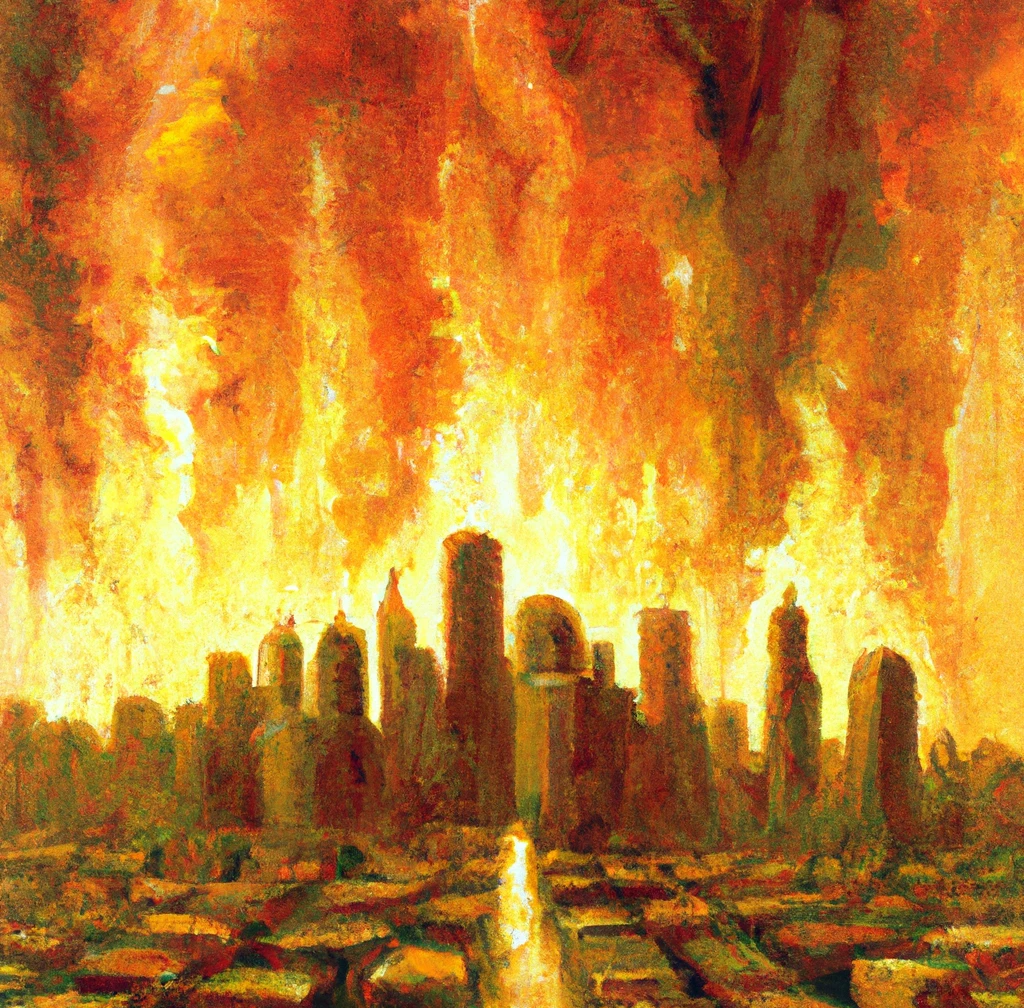
I have already reviewed the account of the Lord’s destruction of Sodom and Gomorrah in my standard scripture study, but the story has been on my mind lately and I wanted to address a few points about it in greater detail. All the verses I will be discussing can be found in Genesis 18-19.
God’s “Haggle”)
What first prompted my thoughts on this story was hearing a celebrity give it as evidence of God’s capriciousness, an example of Him being so petty and heartless that He would bargain and haggle over the lives of His children before destroying them. This is, of course, in reference to Abraham petitioning the Lord if He would spare the city for fifty souls, then forty-five, then forty, etc.
And Abraham drew near, and said, Wilt thou also destroy the righteous with the wicked?
 Peradventure there be fifty righteous within the city: wilt thou also destroy and not spare the place for the fifty righteous that are therein?
So, let me first point out that these accusations are obvious falsehoods, completely misrepresenting the story as it is written. God did not haggle or bargain over how many people it would take for Him to spare the city and He never changed His position on the matter. Abraham’s position changed, but not God’s.
The first thing to note is that God never brought numbers into the matter. He simply expressed His judgment, which was to destroy the city, no numbers attached whatsoever, and it was only Abraham who brought up the idea of sparing the city if a particular number of righteous people lived there.
Abraham wanted to know whether God would have spared the city for 50 righteous, and God assures that He would have… but there just aren’t 50. Abraham wanted to know if God would have spared the city for 45 righteous, and once again God indeed would have… but there just aren’t 45. And so on and so on, until Abraham reaches his own personal limit for mercy: 10 righteous souls to spare the city.
That Abraham presses the matter no further than 10 seems to suggest that he, himself, could not condone sparing the city for any less righteous than that. Even he felt it was justified to lose nine or eight righteous, if it meant that such a terrible evil could be blotted from the earth. And, once again, God shows that His mercy extends as far as Abraham could ever hope for. God, too, would have spared the city for 10 righteous…but there just aren’t 10.
When I read the account in Genesis 18, it is not about God and Abraham haggling, it is about Abraham not yet fully trusting God, and him exploring the limits of God’s mercy until he is convinced that God’s judgment is worthy of his trust. God had pronounced judgment, but Abraham wasn’t able to trust that judgment until he was convinced that God came to that determination by due prudence and fairness, and God indulged Abraham’s tests because He wanted to earn Abraham’s trust.
Thus, there is no haggling going on in this story and no changing of God’s mind. God was simply allowing Abraham to double-check His calculations so that Abraham could begin to learn to trust the Lord’s decisions.
God’s Mercy
And, as it turns out, not only was God as prudent and merciful towards Sodom and Gomorrah as Abraham, He was even more so. For after there were not even 10 righteous in the city Abraham would have surrendered any good souls to their destruction, but God would not. God shows us in this story that He cares for even the individual righteous soul, the 1 over the 99. Thus, while He was determined to destroy the city, first He sendt two angels to draw Lot and his family out of the midst of it.
In the records we have, Abraham never beseeched the Lord for the life of his nephew, Lot, even though he knew that Lot lived in the path of destruction. Abraham seems to have been ready to let his own kin die as a justified sacrifice for this destruction of evil. It was only because God was more good than Abraham that Lot and his family were spared.
A Lesson for Abraham)
Abraham’s willingness to sacrifice the righteous for the greater good returns again later in his story. When God commanded Abraham to sacrifice Isaac, we do not see a moment of hesitation in Abraham’s response. He forthrightly makes preparation, goes to the place of sacrifice, binds his son, and raises the knife to take the lad’s life. Abraham knew that his son was good, but as with Sodom and Gomorrah, he was willing to sacrifice that good to fulfill the demands of the Lord. But then, as with Sodom and Gomorrah, God intervened to save the good and provide another way.
I wonder whether Abraham being commanded to sacrifice Isaac was, in part, a way for God to teach Abraham a lesson that He had tried to teach with Sodom and Gomorrah, but which hadn’t fully clicked yet. I wonder whether Abraham was too quick to believe in the God that would sacrifice good to destroy evil. I wonder if God temporarily assumed that role when He commanded Abraham to sacrifice Isaac, so that He could then dispel that illusion from Abraham once-and-for-all. I wonder if one of God’s lessons to Abraham in that moment was “Stop seeing me as the God of sacrifice, the God of taking, the God of destroying evil. See me as the God of saving, the God that brings back, the God of redemption!”
This is, of course, pure speculation. I don’t claim to know that this was the subtext to Abraham’s trial, or even if it’s likely. It is simply something that I wonder about. At the very least, it does stand out to me that we have no account of Abraham pleading for Lot’s life nor Isaac’s, and yet God saved them both. Whatever else those facts mean, surely they mean that these stories show God’s mercy, not wrath. They show His care, not indifference. They show His compassion, not brutishness. They show that God is a God who can be trusted when He declares His judgment because He has already analyzed the situation more than we ever could, and He cares for the innocent more than we ever would.
Being distracted from our loved ones for today means giving up the only “this day” with them that we have.
And even a single day lost is a terrible cost. We have 40,000 days or less for our entire life. 7,000 days for our child’s entire childhood. 365 days for our child being at each particular age. These moments are dear, and when they are gone they are gone forever. They must not be given away cheaply.

 Spiritual Wanderings