
Trying to follow God’s law without God’s heart is hell
Trying to follow God’s law without God’s heart is hell
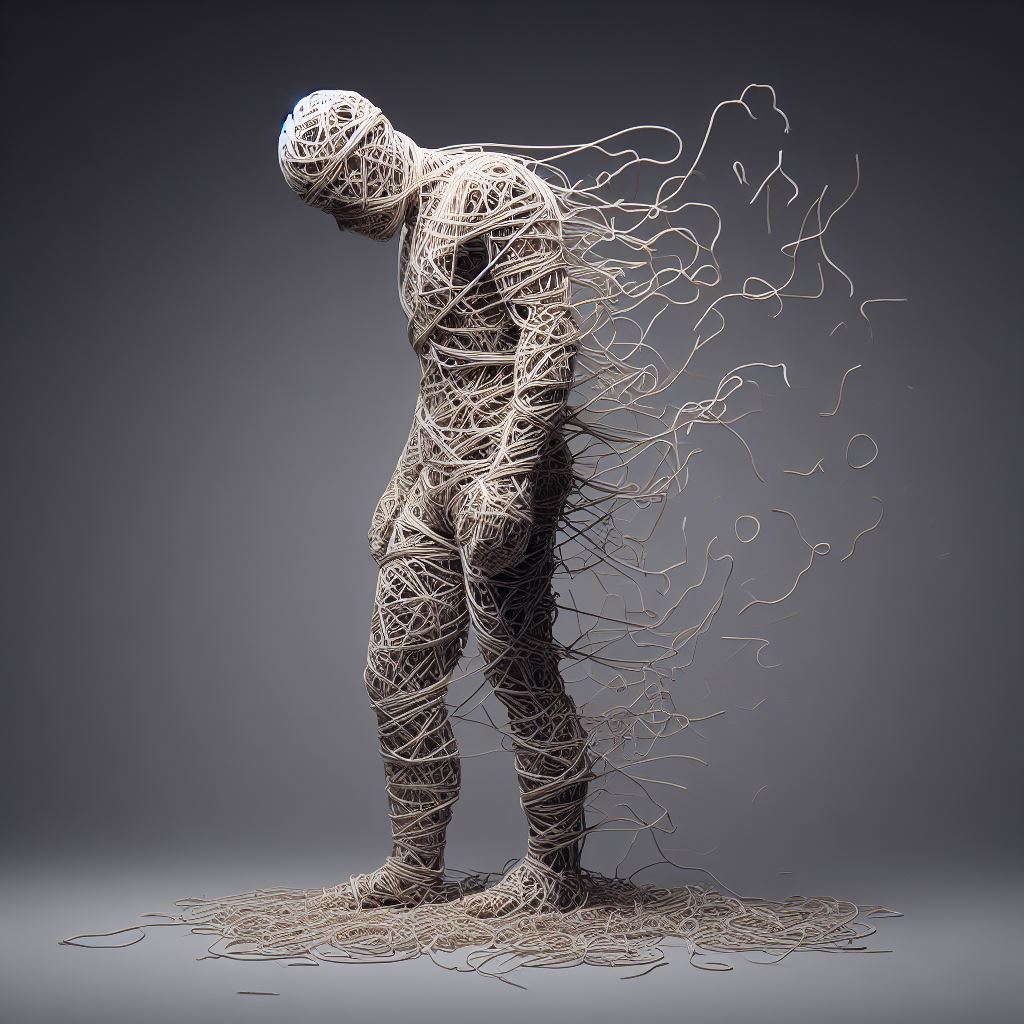
It is in our human nature to advance and improve. We are never content with the accomplishments of the past, we always seek to be better and better. We are a race of inventors and innovators, creators and pioneers. Entirely new branches of science, technology, medicine, and mathematics are constantly being opened, and old branches pushed further than ever before.
This is a divine characteristic within us, linked to our need for personal self improvement. It shows how our hearts and minds are constantly pulled toward the ideal. We seek perfection in all its forms, and that gives us the power to do brave, new things. Just as our pioneering spirit leads us to invent life-saving methods, it leads us to engage in soul-saving repentance. This is unquestionably a good thing, and a clear sign of our divine heritage.
But what happens when we lack the innovation to improve on what has already been done, but retain the desire to advance something new?
Ever since the social sciences began, one truth has emerged above all others: people do their best when they are raised in the traditional, nuclear family.
When a society has each of its children raised by a devoted father and mother, there is less crime, less mental illness, less depression, less suicide, and less drug use. When children have a devoted father and mother they report greater happiness, participate more in their society, obtain higher levels of education, earn more money, give more to charity, and live longer, healthier lives. Society settled on the traditional, nuclear family many years ago, and there simply has never been a better system ever found.
If every alternative strategy for raising humanity has fallen short, then one would think that continued research would be focused on how to strengthen this family unit. How can we better support the working father and the nurturing mother? How can we better train the raising generation to prepare themselves for those roles? How can we remove the temptations and obstacles that lead people to choose harmful alternatives? How can we shore up the children who lose one of their parent-pillars due to some tragedy?
Remarkably, though, those are not the sort of questions that the social pundits of today tend to focus their energy on. In spite of all evidence against it, social academia continues proposing ways to subvert, twist, and fully replace the ideal family. They push for alterations to laws and social norms, even though those changes have no evidence of yielding positive results. They criticize the standards and principles that have stood for years, even when those standards demonstrably lead to a better quality of life for everyone involved.
A society that achieves the pinnacle has the unfortunate tendency to adulterate its adventurous spirit and deconstruct that ideal, crippling and breaking it simply for the sake of having a project to work on, never mind if that project destroys millions of lives along the way! Those that lack the skill to build and improve occupy themselves with tearing apart!
And, unfortunately, the rule of the universe is that destruction is always easier than construction. Chaos comes more easily than order. Toppling is always faster than stacking, scattering easier than gathering, breaking more accessible than creating. Even a minority in a short period of time can undo what a majority took a very long while to accomplish. If current trends continue, the collapse of the most basic social unit will occur, and it will be many generations of horror before that good thing can be built back again, if ever at all.
In short, we have very good reason to be very fierce about promoting and protecting the traditional nuclear family, and in renouncing and destroying every bastardized alternative.

God does not save us for who we are, but for who we will become

You will never convince another person to abandon a position they are still using for a crutch
I have published several posts exploring different reasons why people refuse to live by faith, or believe in the gospel, or accept God as their father and creator. I spoke of people who renounce God due to passive skepticism, or having a hierarchy of authority that is incompatible with God, or possessing an instinct to believe every idea from other people, or being swayed by close relationships, or having model of the world that refutes the need for a Creator.
Through all of these varied reasons, though, I think there is one shared core, something that I started to describe with my last post, and today I will summarize my series by laying out that common theme in greater detail.
The core reason why most people refuse faith is that, on a fundamental level, they are converted to a worldview that is incompatible with the reality of God. Their current worldview might make them try to justify their sins, depend on a relationship with someone who is in opposition to God, or fear being damned if they give up on old ideals. Most of us find things that we rely on to make sense of the world and cope with our fears. And because we are human, we tend to choose imperfect things that are not God.
In short, accepting God often means shattering our entire conception of reality and personal safety. It means cutting out the foundation with nothing more than the hope that there will be a God who catches us as we fall.
There are many who first profess not to believe in God with an attitude of calm rationality, but who then devolve into hysterical, emotional outbursts when faced with a well-reasoned argument for God that they do not have a refutation for. This is a fear-based reaction, a survival mechanism to scare away the proselytizer who is pulling apart the disbeliever’s entire universe. The fact is, most people don’t care what the argument for God is. They might have pretended to have rejected Him for intellectual reasons, but most of them actually have an emotional reason for not surrendering to Him. You’re never going to be able to reason someone into abandoning a position that they are still using for a crutch.
All of the reasons for disbelief that I have given in this series come down to these elements of fear and coping in one way or another. When people see the evidence for God, they are able to work ahead and intuit how an admission of His reality might require them to stop relying on old superstitions, or end certain relationships, or do the hard work of investigating the truth, or stop listening to certain authorities. For most people, these are massive, life-changing alterations, and they are scary. This is why those who proselytize are to do so in a spirit of understanding and love, having great reverence and respect for the great undertaking they are inviting people to.
But the hardness of the way is in no way a justification for not following it. For any of us who are on the precipice of breaking a false worldview, may we be reassured by the knowledge that we were born to do great and heroic things, the greatest and most heroic of which may very well be smashing this carefully-crafted reality, casting aside the crutches that we have always depended upon, and taking a leap of faith into the unseen and unknown!
Mankind has always had the desire to understand the world around us. Indeed, the desire to comprehend our reality seems to be as great as our desire to know what is morally right. Long before our modern conception of the scientific method, people would try to explain life and death, disease, the changing seasons, and the different elements of nature by telling stories of unseen cosmic forces. Even with the advent of the scientific method started to take hold, people would still give naïve, pseudo-scientific explanations for the world, such as the medical descriptions of the four humours of the body.
Because of our great hunger to understand ourselves and the world we inhabit, we tend not to accept a belief system that does not fit with our perception of reality. To believe in God we have to believe that He is the cause of the world as we see it today. Conversely, if we do not see God as the cause of the world, then we do not feel it right to believe in Him. As a result, just as the scientific explanation for the world has parted itself from intelligent design, the general population has increasingly parted ways with their spiritual beliefs.
Of course, no model for understanding the universe is complete. Much as the die-hard atheist might have us believe otherwise, we have no explanation for why the universe is comprised of an ordered nature, or how the first proteins could have formed by random chance. This is a topic of such depth and breadth that I won’t attempt to cover it here, but just know that the idea that the building blocks of life randomly collided together without any intelligent intervention has serious mathematical problems. The odds against such an occurrence are astronomical beyond belief, and require assumptions that go against the tenets of natural selection. Thus, the scientific explanation is actually at war with itself in trying to model these developments.
But most devotees of science don’t delve that deep into their own subject. They see clear, natural explanations for the realities that are immediately at hand, such as for how a ball drops, and a balloon rises, and ice melts, and fire consumes wood, and they are content to say that because everything they see is accounted for, there is no need for a God. So long as the edifice looks complete around us, we tend to not care whether there’s a rational foundation down below.
And there is something about this which we can abstract into a general rule for disbelief. Materialists will passionately reject rational, scientifically-backed criticisms of their materialistic beliefs because they are afraid of having their conception of reality upended. They might claim all sorts of rational superiority, but when they face a rational argument that they cannot refute, many of them will become emotional and openly hostile. Ironically, it is just the same when a theist who does not actually understand his doctrine has the flaws in his faith pointed out as well. In both cases, what is being challenged is the person’s core desire to hold to a model for the universe, an intense fear of what would happen if they let that model go.
And that basic human instinct is true whether we are talking about scientific materialists, or disciples of social opinion, or a theist that refuses to consider a different doctrine, or any other sort of person that dismisses the true God out of hand, even in the face of rational arguments. People of all sorts have concocted their personal model of the world, and adopting a more divine belief system will always break that model to one degree or another.
As such, those who proselytize Christ’s gospel should have reverence for the fact that when they ask to share a message, really they are asking to shatter that other person’s entire view of reality! Yes, it is a flawed reality, and it would be replaced with something better, but it’s understandable why the other person is so hesitant and unsure. Their reluctance is understandable, and a great deal of love and support is usually necessary for them to make the transition.
Reason #5 for Disbelief is that we have a previously-established model of reality that doesn’t allow for Him. We would have to shatter our existence in order to make way for His existence, and that prospect terrifies us.
I spoke previously of how we assimilate into our world model the information that we receive from others, the logical strain that comes from competing messages, and the risk of rejecting old beliefs simply to relieve that strain. That post was focused on the logical/rational element of giving in to false teachings, but there is a social/emotional element to it as well. This element, I believe, stems from the fact that most of us prefer to avoid awkward confrontations, preferring to disassociate with someone rather than face repeated arguments with them. We would rather maintain our moral stance somewhere that it won’t be constantly criticized.
But, detaching from others is not always an option. Perhaps the confrontational person is a close family member, or perhaps the disagreeable principle is being pushed on us from all sides of society. Sooner or later, all of us will find disagreement that we cannot run from, and in that situation we may be tempted to give in to the opposing arguments simply as a means of restoring positive feelings in our relationships.
Sometimes the surrender to outside pressure is explicit, where we voice our capitulation for all too hear, repeating the message that has been being pressed upon us. Sometimes, though, it is only implicit, where we silently give the impression that we have no argument to make against what is being said. I, myself, have fallen into that second category, failing to realize that by my silence I was “serving two masters.”
What did it mean when I would hear others speaking against the truth but was afraid of making the situation awkward? What did it mean when I would remain silent to “preserve the peace?” It meant that I was more committed to social comfort than I was to the word of God. I had found this middle place where I was not converted to the messages of the world, but I was converted to needing to meet social expectations. I was more converted to being “normal” and “non-confrontational,” than to championing the word of God.
There are too many Christians today who are hesitant to condemn society’s sins because they aren’t willing to face the ridicule or awkwardness that follows. I know many Christians who say “it’s not my place to judge, I’m not God,” which is true, but then why don’t not address the fact that God has already ruled on many of these matters in His revealed words. The fact is, we Christians have no obligation to justify why the commandments are what they are, God will take care of that, we only have to point the way to Him.
***
So what is Reason #4 for Disbelief? Prioritizing social comfort over proclaiming God’s truth. The more we signify to ourselves that we care more about what our neighbors think of us than God, the more we still start to think and believe as our neighbors do, and not as God does.
I spoke a little bit yesterday about how some are more loyal to a group than to God. They let society be the highest authority of what is right and what is wrong, or of what can be believed and what is preposterous. I’d like to delve a little deeper on this matter, examining the reasons for this “popularity ideology,” and how it gives people reason to stop believing in God.
A major contributing factor to this is that people tend to optimize their learning by relying heavily on their trust in an authority. We do not all look through telescopes or microscopes to discover what can be found there, we just accept what we have been told by those that have.
And this predisposition to trust isn’t a flaw in us, either. It is an essential characteristic for us to progress as a race. Taking things on authority allows us to “stand on the shoulders of giants,” depending on the discoveries that came before us to be valid so that we can build something greater on top of them. Research and discovery is conducted at the outer limits of the human understanding, pushing the boundaries further than they’ve ever been pushed before. Were it otherwise, and each of us had to individually reinvent the wheel, our progress would be limited to only the things that can be accomplished in a single life-time.
While building on past work without a full context can result in catastrophic errors, and occasionally has done so, the net result has clearly been positive. We move forward and improve more often than we stumble and fall backward.
But what is the point of all this? Simply that we should recognize that we have this built-in instinct to believe anything claimed by another person, so long as they seem rational and decent. We hear what they say, and we try to update our model of the world with that new information so that we can save the time it would take for us to verify it on our own. As already discussed, this is a good thing in many cases, but clearly it also creates the potential for us to be manipulated from time-to-time.
If a seemingly-rational person teaches a principle that does not perfectly align with the beliefs that we held before, we tend to stretch and rotate our convictions to make the new one fit also. If we cannot make the old fit with the new, because the two are in direct contradiction, we will find ourselves divided, which is both logically and emotionally painful. Sooner or later, one conviction will give way to the other, if only to restore our inner equilibrium.
All too often, the decision of which side to align oneself with has less to do with the strength of the arguments, and more to do with social pressure. It is far easier to turn one’s back on a passive object, like the Bible, than the people who are actively arguing against proper theology. It is easier because the Bible’s arguments can be shut out by just refusing to read its passages, whereas the messages of society crowd in on us no matter what we do. We feel much more obligated to give some sort of response to the challenge of other people than to faceless books. Thus, just to restore a sense of logical consistency, we might very well discard the old faith, abandon the texts it comes from, and replace it with the philosophy espoused by the incessant babbling.
So what is Reason #3 for Disbelief? Allowing our convictions to be overrun by our instinct to adopt the views and opinions of other people. This mostly represents the rational side of social pressure, but obviously there is an emotional side to it also. Tomorrow we will examine that.
I was debating with another person about a social issue, and what the correct, moral stance on it should be. As we explained our disagreements I started to recognize that it wasn’t that we had different morals in general, but that we held them in a different hierarchy. I told the other person, “The difference between you and me is that I believe that the truth matters more than other peoples’ feelings, and you believe that peoples’ feelings matter more than the truth.” And the person agreed.
Which raises the question, “is there a correct hierarchy?” Is it appropriate to set some principles as superior to others, or should they all be equal to one another? Or, if I choose one principle over another and you invert the order are both perspectives equally right?
The answer is no. There really is a correct hierarchy and it really does matter. Remember how the Pharisees tried to trip up Jesus on this very point? “Master, which is the great commandment in the law?” they asked, and he had a clear and definitive response for them: “Thou shalt love the Lord thy God with all thy heart, and with all thy soul, and with all thy mind. This is the first and great commandment. And the second is like unto it, Thou shalt love thy neighbour as thyself.” (Matthew 22:36-39).
When it comes to moral questions, Jesus doesn’t leave us any doubt. Loving God comes first—and surely that includes loving his laws—and then comes loving our neighbors. We may do everything to support and please our neighbor up to the point of offending God, but then our loyalty to Him must surpass our loyalty to the neighbor.
One way to represent our hierarchy is to put it in terms of the different authorities in our lives. Whose voice carries the most weight when we make our decisions? I’ve examined myself, and I find that I try to follow this hierarchy of authority:
At the bottom is the opinions of others. I grow and learn from hearing outside perspectives. Other peoples’ insights can reveal truths to me that I would not find on my own. However, I know that there are false teachers also, so the things I take from others has to first be filtered by each of the higher standards.
Next comes my personal feelings. Not the feelings of what I want, but what I feel in my gut is right. These generally lead me rightly, but they are at times susceptible to immaturity and compromised motives, so they must also be subject to higher authorities.
Scripture comes next, which is the divine word of God. His voice must trump all earthly babble. I actually had an experience just recently where I was hearing an opinion from others that started to turn my personal feelings; I was becoming converted to that message, but then I reminded myself of the passage in the New Testament that stood as a clear rebuke to that line of thinking. I conformed myself to the scripture’s teaching, because I simply did not have the right to override it.
Finally, there is Divine Revelation. I believe the scriptures to have originated from the pure word of God, but the reality is that thousands of years and numerous translations stand between the original utterance and the words on the page today. Some of those translations disagree with one another, and some of them are difficult to understand correctly with our lack of ancient context. I therefore have as my final authority the revelation of God given to my mind and heart, purifying and brightening that which might have become muddled and faded.
The most concerning shift that I see in society is the progressive elevation of either “Personal feelings” or the “Opinions of others” above all other authorities. Many of our social divides are based around this transformation. Personal opinions and group interests take precedent over the divine words of God, and utter confusion follows. Not only are God’s morals trampled under foot, but everyone starts to fracture and divide from one another. Loyalty to God, Country, and Community are superseded by Loyalty to the Self or Loyalty to the Mob.
So what is Reason for Disbelief #2? A hierarchy authority that places anything above God. One simply cannot believe in a God when their hierarchy forbids compliance with Him.
When I was a child I had a very simple faith in the gospel. I simply believed what I had been taught, and I accepted it without question. As I became an adolescent and a young man, I became far more critical of my beliefs, requiring more concrete reasons to believe in them. I took apart each component of my theology and tried to understand its purpose and prove whether it was worthy of my devotion or not.
Fortunately, my critical examination proved to be extremely rewarding. I came to realize there were far richer reasons to believe in the gospel than “because my parents said so.” It turned out that the evidence for the gospel was deep and varied, and the curious, critical mind could plumb its depths forever, constantly finding greater meaning and greater justification in faith.
Looking back, I see what my thought process was as an adolescent and young adult. My logic was that if I had once been a child, and had a simple mind, then anything that I believed in in that state was likely also childish and simplistic. Thus, my childhood faith became suspect merely by association.
And, to be sure, some overly-simplistic childhood notions were discovered, such as believing that society was comprised purely of “bad guys” that always did what was wrong and “good guys” that never did. But there was also much of my old belief system that turned out to be even truer than I had ever known.
Sadly, I know others who reached their adolescent, skeptical phase and never progressed any further. They let their skepticism call into question their faith, but they didn’t seek a meaningful answer. They didn’t conduct their own research or dive deeper to find out the truth of the matter. They found it easier to throw out baby Jesus with Santa Clause, discarding the pale imitations of faith without ever finding the genuine article. The skeptic who does not find the real truth hardens into a cynic, actively resisting any further opportunities for growth.
Such an individual has arrested their intended development. Normally it is a good thing to pass through the phase of skepticism, culling the mind of everything that is superstitious and unfounded while deepening one’s roots into the truer truth that remains. But like many blessings, skepticism is two-sided, becoming a curse to those that misuse it.
***
This is Reason #1 for Disbelief: being stuck at an adolescent stage of skepticism, having pushed out all childhood beliefs and becoming hardened and cynical through the process.
There are other reasons for disbelief, and I will examine them over the next few days. I hope this series will be helpful to those who have temporarily lost their way, as well as those trying to rescue a loved one. All the world will be better when all of us can better believe.

