You Get to Choose, Even When it Seems Impossible: Part One

An Unfixable Flaw)

For the good that I would I do not: but the evil which I would not, that I do. - Romans 7:19

The universal paradox that every addict faces is the notion that they must stop acting out, but they can’t. They have tried to stop so many times before only to repeatedly let themselves down. They are overcome with a terrible sense of powerlessness, a belief that they are forever destined to do the very things that they cannot accept.

And what makes this situation even more frustrating is that part of them still insists that they really could stop. Certainly they possess the physical capability to not do the troubling behavior. None of us are physically required to do any of the things that we wish we didn’t do. It’s just that we can’t work up the self-will to control ourselves.

Except for when we do. I was once speaking to a man who received a powerful insight from his therapist. The addict had been bemoaning that he kept returning to pornography because he had no power to resist. The therapist then asked him what would happen if he was viewing pornography in his room and heard the footsteps of someone coming down the hall. Well, in that case, all of a sudden, this “powerless” man would suddenly find untold reserves of willpower as he frantically ALT-TABBED away from the offensive window! Thus, it was clear that the man could exercise the willpower to turn from his addiction, at least when sufficiently motivated by the fear of being found out!

Can’t vs Won’t)

So, what is it? We seem to be going back-and-forth as to whether the addict can suddenly stop his problematic behavior or not. After some time, I have concluded that the seeming paradox goes away just as soon as we change one, little word. Instead of saying that the addict “can’t” stop their behavior, it is far more truthful to say that they “won’t.”

Now I don’t mean “won’t” in the sense that the addict will defiantly refuse, only that the addict has presented copious amounts of evidence that when subjected to certain situations and triggers they will act out and they will not stop themself, even though they otherwise possess the desire and physical capability to reject the behavior. This is an observable, consistent pattern which we all need to come to terms with sooner or later.

The first truth that every addict must accept is that “if I am alone, by myself, under these particular circumstances…I am going to act out.” That doesn’t mean that you don’t want to resist, or that you won’t try to resist, or that you’re faking your efforts to be sober. Indeed, the defining trait of the addict is that he really, truly, sincerely does want to stop himself…but he just won’t.

The only logical conclusion is that part of the addict is holding the rest of himself as a slave. There is the part that would live soberly, but there is the other part that won’t let him.

Surrender)

This is a simple concept, but it is extremely difficult to accept. We are loathe to admit that we are not as in control of our own selves as we pretend. We say that we aren’t beholden to anyone or anything, that we are our own master, that all it takes for us to do something is to choose to do it.

But that is demonstrably false. That we are the masters of our own fate is a motivating and happy thought, but it is a complete lie. And living a lie is to remain living a pattern of life that simply cannot work. So long as you insist on this mentality of being your own master you’re going to keep living as a slave to your lusts, insisting through it all that you’re a free man.

I would like to tell you that waving the white flag and admitting that you are a slave to your appetites isn’t necessary. I have tried to find my way around this surrender myself. I have tried to deny my fundamental powerlessness. I have tried to find the external evils that forced me to do wrong against my self will.

But the simple fact of the matter is that if I live the same patterns of life that I have lived before, I will give in to my temptations again and again. Not because anyone or anything external forced me, not because I wanted to, but because I am enslaved to a tyrant of my own making. And I have to accept that fact, and then accept it again and again, anytime my ego starts to think that I can fully trust myself in the driver’s seat, only to be proven wrong yet again.

Now I do have more to say on the matter, including more hopeful messages for the addict, but first and foremost we have to come to accept this sense of powerlessness. This is the first step of any twelve-step program, to finally accept that we will not do what we wish we would do under every circumstance. Let’s let this notion settle in for today, and then move on to next things tomorrow. I’ll see you then.


The Trouble with Statistics in Recovery: Part Three

Statistics Criteria)

Over the last two posts I’ve examined the nature of statistics, and why they shouldn’t be used to predict one’s personal journey in recovery. I’ve spent time explaining that statistics are meant as a measurement of external uncertainty, and to model a group, but how they cannot represent your internal, individual state.

There is also one other limitation of statistics that makes them a poor crystal ball into your personal future. This is that every statistical survey has to clearly define the criteria that it is measuring for. Success and failure are described in clear, binary terms, which often fail to perfectly capture our nuanced, complicated world.

As an example, most surveys related to addiction seem to define success as simply not having another slip or relapse. People in recovery are surveyed, they answer if they have had a relapse since starting recovery, and that becomes the statistic of recovery. And even if the survey is more in-depth, it tends to only be this narrow, easily digestible slice that gets represented in web articles and everyday conversation.

And as the data shows, it turns out that most addicts who enter recovery will slip at some point in their first year. So, in conclusion, most addicts will fail their recovery and never get better.

Recovery vs Sobriety)

Well, no. It’s not as simple as that. Anyone that has been in close proximity to an addiction recovery program will be very familiar with the statement that “relapse is part of the journey.” Which is to say, that yes, almost everyone will relapse, but no, that doesn’t mean that their recovery journey is a failure.

Recovery is a process, and in most addicts, it means following the program, failing in a moment of weakness, and then recommitting to the program. Over time, rather than all at once, the addict pries off the grip of vice until he finally he can live free of it. Then, at last, he will be sober. When we fixate our surveys on the number of addicts who remain sober in the first year, we seem to be suggesting that sobriety doesn’t come at all unless it comes in that first twelve months.

So, are there addicts who at some point or another quit and never turn back? Yes. In my experience, if addicts are sincere and committed, then many, if not all, will achieve this state. It’s just that the point in the recovery program where this freedom is won is different for every addict. Thus, defining success as who quits cold turkey as soon as they start the program is an arbitrary and unhelpful goal.

Of course, I want to be sensitive to the fact that addicts want to stop acting out immediately. Their spouses want them to stop acting out immediately. Everyone who knows what’s going on with them wants them to stop acting out immediately. So, of course, at the outset everyone is going to want the addict to be in the small percentage who really do stop acting out as soon as they start the program. The problem is that if the addict “fails” at that goal, then the discouragement might make him give up the program entirely, when he would have eventually achieved success if he had kept with it. What is it that really matters? Immediate success, or just success?

What I am hopefully making clear is the difference between sobriety and recovery. Recovery is working the program faithfully and consistently, bit-by-bit freeing the captive soul. Sobriety is the desired fruit of all that labor, which ripens sooner in some lives and later in others, but all can achieve it if they keep working at their recovery.

One Day at a Time)

It is only natural to wonder what one’s chances of obtaining sobriety are but putting too much stock in the reported statistics is not only discouraging, it is deceiving. Immediate sobriety is not the one, true metric of an addict recovering.

If one wants to know if they will be successful in recovery, they have only to ask themselves if they are going to work the program of recovery for this one day. If their answer is yes, and they actually follow through on that, then yes, they are being successful in recovery. And if they can say and do the same tomorrow, then yes, they are in recovery for that day, too.

This, of course, brings us to the famous twelve step mantra “one day at a time.” The idea is that focusing on lengths of time past one’s immediate control is a fruitless effort. Long-term sobriety is not the result of mustering up the courage to be sober for an entire decade, but by mustering up the courage for a single day, one after another. Thus, ironically, most addicts who achieve ten years of sobriety do it by not worrying about the decade. If the addict is to consider months and years and decades, he does it in retrospect, looking backward upon the mountain of sobriety that was raised, almost by accident, one grain of sand at a time.

The odds of success in your recovery are not determined by what other people did in their first year of recovery. That doesn’t matter to you in the least. All that really matters is the decisions that you make for yourself this very day. This is the only metric of success, and in that field no survey has been conducted. You are the one that will record the numbers for yourself, you are the one who will create your own, personal statistics of success, and you are the one who will define what your fate is to be. In the end, success or failure is entirely up to you.

The Trouble with Statistics in Recovery: Part Two

Yesterday I discussed the use of statistics to predict how likely a person in recovery is to maintain sobriety. These sorts of statistics can be discouraging, as they often make it seem like the addict is unlikely to ever obtain lasting sobriety.

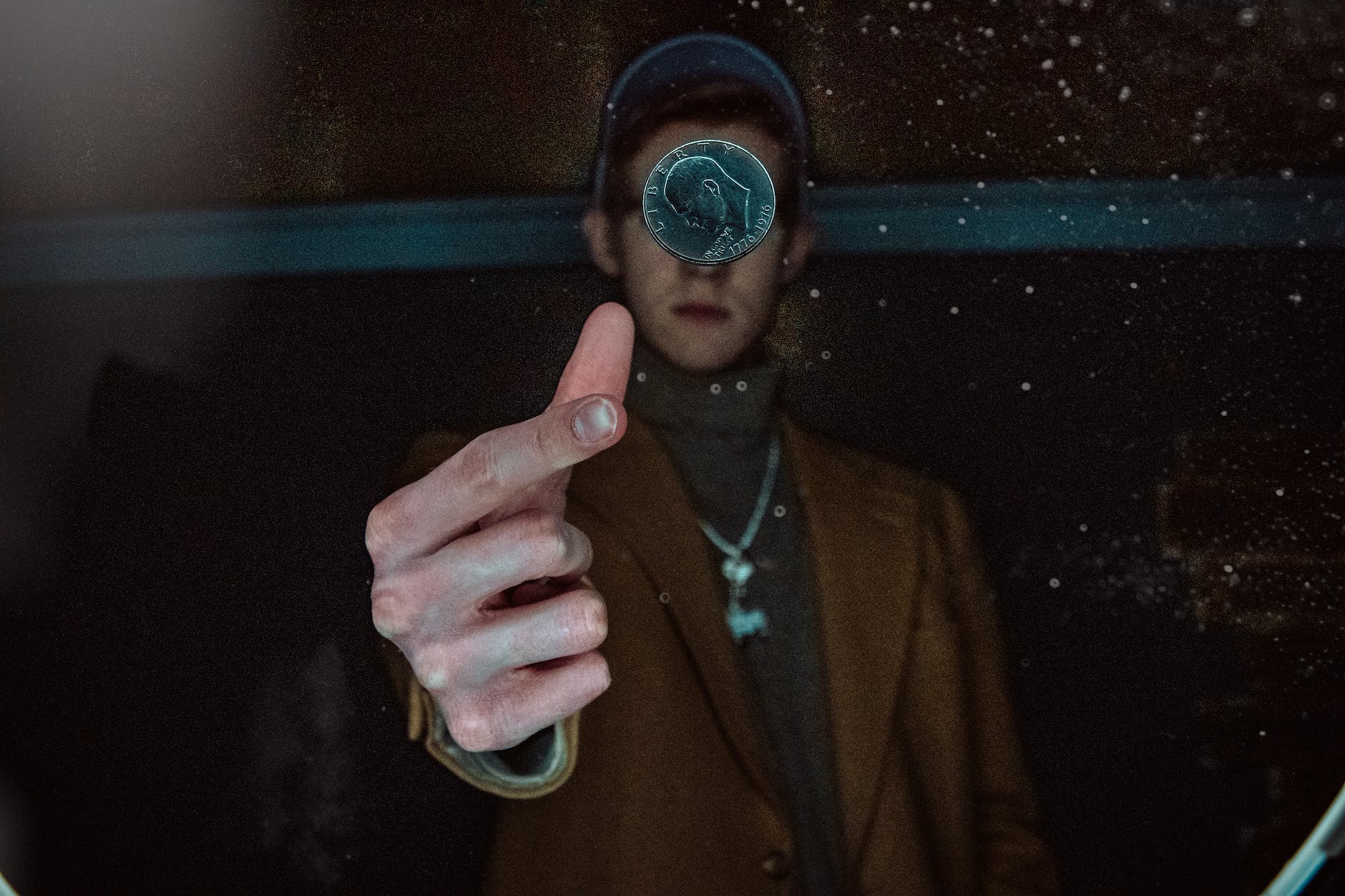
I made the case, however, that statistics have their time and place, but cannot be applied in every situation. They are useful for representing the level of uncertainty in the observer, but not for describing the actual state of the observed. Thus, a coin that is covered only exists in one state (heads or tails), but the uncertainty of the observer is divided between two (heads and tails).

Today I want to consider another fact of statistics which makes it unhelpful in determining what your personal future entails. That fact is that statistics are a tool for measuring groups, but not individuals.

The Sad Case of Sally Clark)

There is a tragic real-life example of how the misapplication of a broad statistic to a single individual is both in appropriate and dangerous. Sally Clark was an English woman who lost one son to SIDS (sudden infant death syndrome) in 1996, and then lost a second son as well in 1998. This was terrible enough, but then it was made worse when Clark was tried for murder. One SIDS death in the family was believable, but two?

As it turned out, there was no concrete evidence to show that Sally Clark had killed either of her two children, but the prosecution brought in Professor Sir Roy Meadow to describe the statistical probability that this mother would have lost two sons to the same rare cause.

Professor Meadow argued that the odds of such an occurrence would be 1 in 73 million, an event so improbable that it could be rejected as a virtual impossibility. Mathematically, he said, Sally Clark had to be a murderer. The jury was convinced, and Sally Clark was sentenced to life in prison.

Four years later, though, it was discovered that the lab reports on the deceased children had omitted clear evidence of the two sons’ deaths being due to natural causes. Clark’s conviction was overturned, and she was released. At this point, though, she had already slipped into a terrible depression, and died shortly thereafter of alcohol poisoning.

Professor Meadow’s application of statistics was torn apart by other mathematicians and statisticians. The numbers he arrived at were simplistic and faulty and he never considered calculating what the likelihood for a mother committing double infanticide is, about 4.5-to-9 times more unlikely than double-SIDS as it turns out! Perhaps most importantly, though, he had made the critical mistake of applying group statistics to an individual.

Consider this, if the odds of a double-SIDS family were genuinely 1 in 73 million, then that would mean for every 73 million mothers you would expect at least one to have lost two children to the phenomenon. 1 in 73 million does not mean that the event does not occur, it means that it does, and you will start seeing multiple occurrences once your population pool is large enough. 73 million is large, but it is not unfathomable for a population. It was inevitable that someone would show up with this situation at some point or another.

By Professor Meadow’s logic we could look at every mother on earth, one at a time, and for each individual conclude that it is too improbable to believe she has lost two children to SIDS. And thus, we would go through the entire population, believing none of them could have suffered that ordeal, when by Meadow’s own statistics there would have been over a hundred women who actually did.

It is the same with addiction recovery. Statistics can define the pattern for a group of addicts, as every group will inherently have a certain likelihood for certain behaviors. But when we apply those likelihoods to the individual we make the subtle, but damning mistake of saying that if something is improbable for everyone, then it is improbable for anyone.

Groups Within Groups)

Statistics can model the group, but they cannot model you. And they especially cannot model you when you consider that inside every group there are more specific subgroups, each with their own accompanying statistics.

By this I mean that most statistics on recovery cover a very broad spectrum of addicts. The odds of sobriety that they give tend to include individuals who have been working a 12-step program for twenty years, and individuals who showed up for the first time today. It includes those that have come of their own volition and those who came only because a judge ordered them to. Clearly not everyone in this broad group is as likely to remain sober as every other.

Every time you take the next step in recovery, you come into a new subgroup, which is represented by better and better odds. Maybe 1-in-10 of all addicts will stick with recovery, but just by returning for the second week you might now belong to a group with a 1-in-9.5 success rate. Do your “step 4 inventory” with another member of your program and you come into another subgroup with even higher levels of recovery. Earn your one-month chip and enter yet another higher-recovery subgroup.

Not to suggest that you are improving your own odds, only that the group statistics are converging more and more to who you actually are. Or at least they would be if the research were conducted down to such granular levels. But you don’t have to take my word for it. Start going to recovery programs for any sustained amount of time and you will quickly see that there is a clear correlation between amount of time working on recovery and length of sobriety.

You Are You)

Hearing discouraging statistics might make you feel like you don’t have a chance of recovery. But never forget that in order to even define the odds researchers must first find a number of successes. They couldn’t say 1-in-10, or 1-in-100, or 1-in-anything until they had found that 1. Never mind what the group pattern might be, the fact remains that there are people who do achieve sobriety, and whatever their methods to get there, it’s safe to assume that they weren’t putting too much stock in “what their odds” were. They got better because they got better. They weren’t 1 in a group, they were 1 in themself, and they decided for themself what that themself was going to be.

Governing your life by statistics is not only a misunderstanding of the science, but also a dangerous game of self-fulfilling prophecy, one that can ironically change the statistics on the subject. There is no statistics on you as an individual. There are statistics on the group, and they are useful for understanding the group, but the group is not you. The group can be documented, but to quote Lawrence of Arabia, for you as an individual “nothing is written.”

The Trouble with Statistics in Recovery: Part One

In addiction recovery it is natural to wonder what one’s chance of success is. If you’re like me, then shortly after you start a program, you’ll be googling something like “what percent of addicts relapse?” I’ll just tell you right now, the results are not encouraging. Depending on your personal flavor of addiction, your chance of never slipping again might be as low as the single digits. This can be a very discouraging realization, both for the addict and for any loved ones that are involved. It can be enough to make one feel that “once an addict, always an addict.”

But I am here to tell you that statistics like these are next to useless when it comes to predicting what your personal story will be. Something about them rang false to me when I first started recovery, and after walking the journey for several years, I gradually came to understand the reasons why.

Statistics of Uncertainty)

Let’s suppose I hold out a coin in front of you, heads-up, and ask you what the chances are that it is heads-up.

“Well it is heads-up,” you might say. “So 100%.”

“But there are two sides, aren’t there? So isn’t it a 50/50 chance?”

“No, I can see it. It’s 100% heads-up, and 0% tails.”

And you’d be right.

Now suppose I cover the coin with my other hand, but I do not rotate it. Still 100% heads?

“Of course,” you say, “it may be covered, but I still know what state it is in. 100% heads up.”

But now suppose I call our friend in, I show him my closed hands, and I tell him there is a coin underneath. I ask him what is the chance that it is heads.

“50%” he says, “and 50% tails.”

And he is right. But you still know it is 100% heads and you are also right.

You are both right because when we talk percentages and statistics we are not talking about the actual state of the coin, we are talking about the state of our own uncertainty. With your inside knowledge you are 100% certain of what the coin is and our friend, without that knowledge, is 50% certain. The numbers you give represent a state of your own selves and not the coin.

And what of the coin? It just is what it is. It isn’t 25% something, or 50%, or even 100%. It just is heads-up or it isn’t, and no matter of ignorant guessing is going to change what it is, even when that guessing is based on statistically sound principles. And not only is the coin what it is, it is also going to be what it is going to be. The mystery and uncertainty of what a flipping coin will land on is only a side-effect of how we view only a narrow slice of time, moving forward at a gradual rate.

The Statistics of You)

And as much as the coin just is what it is, you just are what you are, too. And as much as the coin is just going to be what it is going to be, you are just going to be what you are going to be as well. When you decide to go to recovery, you don’t split off a hundred separate universes and spin a cosmic roulette wheel, hoping it lands on one of the ten realities where you happen to stay sober. When you decide to go to recovery you just are going to see it through, or you just aren’t.

Outsiders may remain uncertain of whether you will maintain sobriety or not. They are ignorant of your inner state, so the best they can do is estimate your chances as a percentage. But you are not an ignorant outsider. You know what your state is and what it isn’t. If you’re honest with yourself, you probably already know whether you’re going to be acting out later this week or not.

The reason why the statistics didn’t feel like an appropriate fit to me when I started recovery was because I knew my own state. Outsiders didn’t know, but I did. I knew some of my group were only there because their wives made them come, but I wasn’t. I knew some were just going through the motions, but I wasn’t. I knew I was going to faithfully be at my recovery group every Tuesday night, and I knew that I was going to be doing my recovery work every other night of the week. I knew that my commitment was real, and I knew that my intentions were serious.

Now you may not be so certain of yourself over the next month and year and decade, but it is possible to be certain of the now. And unlike flipping a coin multiple times, your behavior in the future is affected your behavior in the past. What you choose today weights you more towards one side for the next day. If you are certain of sobriety today, and you follow through with that, then you will be that much more likely of sobriety tomorrow as well.

The Scope of Statistics)

Statistics have their place in the world. They help in defining the probabilities of what is unknowable, and they are useful for modelling large groups. But you are knowable, at least to yourself, and you are an individual, not a group. We’ve spoken to the first of those points today and we’ll examine the other one tomorrow.

Never forget the wonderful fact that you are a person who has free will. You get to choose. You are not a spinning roulette wheel. You are the card that draws itself, and the coin that turns itself. You get to decide your own outcome.

Bring Your Worst Fears to Reality and be Free: Part Three

I’ll Do it Myself)

At the start of this study, I talked about the lies we tell ourselves about why we cannot reveal the truth to others. Today let’s tear these falsehoods down and see how they keep us a prisoner.

First, let’s consider the idea that “I just need to really try my best and I’ll be able to beat this on my own.” I told myself this story for many years, until finally I had to accept that if I really could take care of my problem by myself, I would have done it by now.

I will always be able to point at my efforts and say that they weren’t good enough to make the desired change, but if I just try harder next time, then it will be enough. There will never be a time where I can’t make that argument, because the only way to prove it wrong is to make the perfect effort and still have it fail. But since I am not perfect, I will never make the perfect effort, so I will never have the empirical proof to discredit the theory.

But at some point, I just had to step back and see that I was running in a hamster wheel. Theories are only as good as the results that you get from them. And if this one has only resulted in me remaining in the same place with no change, then clearly it isn’t a good theory. I had to accept that this wasn’t a philosophy for improvement, it was a philosophy for remaining right in the same place. It was a pernicious sophistry that enabled me to continue my addiction and never get any actual results.

The Shining Knight)

The other reason I had for not telling the truth was the image I was trying to preserve. I felt that I couldn’t let down my wife and kids, my church and neighbors, my friends and coworkers. I knew that bringing forward the truth would send shockwaves through the lives of those that were closest to me, and it would break many of their hearts. I told myself that I didn’t have a right to put these good people through that pain. If I couldn’t save myself, at least I could endure my damnation quietly and let everyone else go unscathed.

Except that I couldn’t do even that! Not all addictions show their destructive effects so obviously, but all of them, without exception, damage lives and relationships. Some do it in sudden, decimating blows, others erode and disintegrate the soul over time, but all of them leave a life that is hollow and broken.

Through great effort I was able to hide the damage and convinced myself and others that we were all doing fine, and I maintained this image for a very, very long time. On the surface I appeared perfectly fine, with everything still held together, but I could not escape the sense of my soul caving in.

I knew that every relationship that appeared happy and fulfilled on the outside was, in fact, predicated upon a lie, and therefore hollow. My wife thought she loved me, my friends thought they respected me, but they didn’t know the genuine me so how could they really? They loved and respected a façade because I hadn’t even given them the chance to decide what they thought of the real me. So, there were no authentic relationships in my life. The ties I was afraid of severing weren’t really there to begin with. All the things I was afraid to lose I’d never even had in the first place.

My Story)

I kept my addiction a secret, and I rationalized doing so by telling myself that I would fix it by myself. I felt that I couldn’t break the “knight in shining armor” image that my family and friends had of me. My plan was to overcome my lust and pornography addiction on my own, and then, many years later, tell my family of my past with the reassurance that at this point in life I really was the person that they had always believed me to be. It was a plan as doomed to failure as it was dismissive of the feelings and autonomy of those around me.

When I was twenty-six, I realized that I had been addicted to lust in some form or another for twenty years, and I had been living a lie in my marriage for over five. At this point, I had to admit that I just wasn’t getting any better on my own. I had tried, I had really, really tried, but it simply was not working, and to continue saying that after twenty years of failure it was now about to start working was insanity.

Nor could I continue to believe that I was preserving relationships by living the lie. Things had been difficult for my wife and I for a while, and I knew the reasons why, but she was confused in the dark. She didn’t know why I was detached and unable to be fully present, she didn’t know why I was struggling to focus at work and had lost my job, she didn’t know why I was so absorbed with my selfish interests and constantly depressed. She didn’t know what the reason behind any of this was, but it was taking its toll on me and her and the relationship even so.

And so, on one particularly strained day, it finally occurred to me that I was destroying the marriage whether I told my wife the truth or not. I wasn’t saving anything by hiding the harmful things I had done; I was just dragging out the destruction in a more torturous manner.

Finally, I didn’t want to do this to my wife anymore, or to myself, or to the marriage. Finally, I accepted that even if telling the truth meant destroying everything in my life it would still be better than what was happening now. At that moment, the greatest kindness I could do to my loved ones would be to stop stringing them along and give them a chance to make what they still could out of the rest of their lives. It was the greatest kindness I could do for myself as well.

So, I confessed. I wrote a letter while my wife was away, admitting to what had been going on behind her back. I left it just inside the entrance of our home, and then I got in my car and drove as far away as I could. I knew I had to get far enough during this rare moment of commitment, so that I wouldn’t be able to turn around and get back to the house and hide the letter before she had already seen it.

And then, just like that, I wasn’t lying anymore. Just like that I was living in the truth. Perhaps it was an ugly truth, but it was the truth. And not one day since have I regretted that decision. The future was made uncertain, my relationships were made tenuous, but I never once questioned whether it was worth it.

As it turned out, after some rocky periods everything stabilized. My wife and I rekindled our marriage, I regained my children’s trust, I kept my new job, and I came back into the good graces of my church. But even if I hadn’t, I can truly and honestly say it would have been a small price to pay for the regaining of my soul.

Next Steps

I have just finished my study of Genesis. Over the past week, as I’ve been approaching this milestone, I’ve been thinking about what it is I want to do next. I could move on to a study of Exodus, or I could go back to doing topical studies, or I could try something else.

And as I’ve thought about it, I feel that I would like to be more open about my personal journey. I’d like to share about the spiritual journey I’ve taken thus far in life, and where I am trying to go with it now. I want to talk about the principles and practices that mean a great deal to me, and which ones I am still working on. I want to discuss how I have felt my soul saved by Christ, and how I have tried to become a genuine disciple as a result.

In order to explain my journey, it will be necessary to explain more of who I am and who I was before Christ rescued me. That means shining a light on private areas of my life, such as my wounds and shame. I don’t intend to go into excessive detail about every thing that I regret in life, but I do think it is important to admit at least their general nature, in order to provide hope to others who can relate to those experiences.

As such, these next episodes are going to put me in quite a vulnerable position, and I hope that you will receive what I share with compassion. I’m going to first lay out a little groundwork, though. Tomorrow I will give the roadmap for what the next several days will cover. Thank you, and I’ll see you then.

Personal Commitment: Month 7

November’s Review

For November I wanted to get curious about my relationship with food. I want to know that part of me, and understand the reasons behind my behaviors. With other habits, I have learned that I usually have a very understandable reason for my misguided behavior. And correcting the misguided behavior without first accounting for the wound or fear that it is protecting can be quite traumatic.

And so I did some introspection this month, and I made a few important discoveries.

First off, I have “deprivation thinking.” In other words, I’m worried about there not being enough to go around, and thus having to hurry to get as much as I can. It’s not hard to imagine how I might have come across this pattern of thinking. I grew up in a family of eleven, and if one wasn’t quick the jar of cookies might be empty before you even got one!

Secondly I’ve realized that I just want to be satisfied. Some days I just want to eat a dessert that’s a perfect 10. But if I don’t have that available, then I’ll try and eat two 5s to reproduce that same experience. Obviously it doesn’t work that way, and I would be better off to go and get the one 10 instead of compensating for it with volume.

Thirdly, food is a checklist. When we buy things from the grocery store I have a sense of having invested money into it and needing to get that money’s worth. I am mortified at the thought of any going to waste. When grocery shopping is compounded with receiving extra food during the holidays, it becomes overwhelming trying to eat it all.

And lastly, food is a stimulus. If I ever feel hurt or distressed, I grow numb. And then when I’m numb, I want to feel alive again. Waking up one’s heart naturally can be hard, though, and it is tempting for all of us to rely on easier stimuli instead. Thus we turn to overeating, heavy media use, lust, extreme spending, and other destructive behaviors.

I don’t believe this list is exhaustive, but I do believe these are all very real reasons for why I have built such an unhealthy relationship with food.

December’s Commitment)

So I want to start teaching myself to appreciate the bounty of the earth and the resources I’ve been personally blessed with. I want to build in myself a surety that I can take care of my needs and wants. I want to teach myself these things so that I stop being afraid of missing out and so that I don’t need to compensate for mediocrity with more mediocrity.

And it isn’t enough to just look myself in the mirror, say it once, and have my entirely frame of mind changed forever. I gained these patterns subconsciously over an extended period of time. It may take some reinforcing for this message to really sink in.

So for December I am going to recite a few mantras each day, and call out specific examples of the bounty all around me. I am going to try to reach a point of gratitude each day for all the things I already have, that I don’t need to do any further effort to secure.

I am also going to acknowledge that sometimes I am rooting for a pearl among the trash, and I will try to call out these moments as they occur. When they do, I will stop, and give myself permission to go find an actual pearl instead.

Thank you.

Personal Commitment: Month 6

October’s Review

My goal for this last month was to address my physical health and to rebuild my approach towards food. Specifically I committed to:

  1. Be open with others about my efforts to change
  2. Examine why I cope with stress through unhealthy eating
  3. Define what behaviors ought to be considered a “slip” in my recovery
  4. Strive to eat consciously and healthily, according to what my body genuinely needs

How I did with each of these is a mixed bag.

For #1 I spoke to my wife about my efforts…and that’s about it.

For #2 I didn’t really do anything. I guess I’ve at least I paid attention to myself, and am now fully convinced that I really do use eating as a coping mechanism! I was able to call out multiple moments where I was doing just that. I am therefore certain that this habit is primarily emotionally driven, but as for how and why I began this pattern remains a mystery.

#3 I actually did very well on. I accomplished this step early in the month, and the list that came out of it has been a real help for evaluating each day.

As for #4…well…I began each day with good intentions, but I finished many with “never mind about today, I’ll try again tomorrow.”

One of the main issues I see here is that I am not devastated about my slip-ups until some time after they occur. When that extra slice of cake is calling to me I find it very easy to say “so what? This may not be healthy, but it doesn’t hurt anybody.” Only later, when I look myself in the mirror, do I confess that yes, it actually does.

November’s Commitment)

I have one other takeaway from October’s efforts. I felt very distinctly that the addict-self was tightening his hold. He felt his domain challenged, and there followed a rush of rebellion within me, an insistence that I must not surrender a behavior that has long been a security blanket.

From prior addiction recovery I understand that the way forward is not to get mean and go to war with that scared part. That part of me is undoubtedly misguided, but probably has very good reasons for believing what it believes. That part therefore requires guidance, not harshness.

And so November’s commitment is twofold.

First, I will dedicate my next topic of study to “how a Christian disciple is meant to reason with and persuade the wayward soul.” Whether that wanderer be a family member, a stranger, or a part of the inner heart, we all need to know the Christ-like way to help a lost sheep.

And secondly, I commit to carrying out the lesson from that study with my food-addict self. I will dedicate some time each week to getting to know him, understanding his story, validating his concerns, gaining his trust, and gently guiding him back to the light. Basically a more enhanced version of step #2 from last month’s commitments.

I really don’t know what I will learn from that part of me, nor do I know what I will say in response to his concerns. But I take comfort in the knowledge that I don’t have to know now. For now I just need to listen, and then let Him direct me accordingly.

Thank you.

Personal Commitment: Month 5

September’s Review

I frankly did not define last month’s commitment very well. I most certainly did not meet the S.M.A.R.T. model (specific, measurable, achievable, relevant, time bound). I simply said that I wanted to define where my battle lines in life are, and then advance on them.

That being said, I did conduct my review as promised, and identified a list of practices that I am currently doing and wish to maintain, others that I am not doing and want to advance on, and even a list of ones that I want to get to someday, but won’t be adding now for fear of overwhelming myself. And then, through the rest of the month, I sort of kept track of them and tried to improve…but it was not a very earnest effort.

Having taken stock of my life, though, I grew increasingly aware of which specific area I want to improve on the most. From this heightened awareness I realized that there is a single section of my life that I am only making meager efforts in, but now want to start taking a lot more seriously.

October’s Commitment)

Which of course brings us to this new month and my commitment for October. The area where I feel the greatest need for improvement is in my physical health. Yesterday I was considering where I stand in this sector of life, and came to the conclusion (not for the first time) that I show several addictive behaviors in my approach to food.

I eat when I know I am not hungry, and I am more likely to eat when I am upset or stressed. I feel in my gut the healthy foods I want, and I dismiss those for more instantly-pleasurable options. And then I try to correct my imbalance by swinging into other unhealthy practices, such as starving myself.

In the past few years I have made great strides in other sectors of my life, with a lot of healing and growth that I am proud of. But I’ve reached the point where even those areas I feel are being limited by this one persistent weakness in my physical health. It is time that I focus on this piece of puzzle, and so I am going to approach my physical health with the same seriousness as any other addiction recovery effort.

This means that for the month of October I will:

  1. Find friends and loved ones to be open and honest about my efforts with
  2. Examine my past, discover how I developed my reliance on this unhealthy lifestyle, and identify any wounds that I am trying to medicate
  3. Define my bottom lines, behaviors that I will now consider a “slip” in my recovery journey
  4. Sincerely strive each day to listen to my body, eat when I am hungry, stop when I am full, and give myself the nutrients that my body craves

I’m very excited to finally start working through this process directly. I’ve been teasing at it for a long while, but at last I feel ready to do the work that it takes to heal. I’ll let you know how the process is going at the start of November.

Thank you.

Our Own Reality- Matthew 6:24, 1 Kings 18:21

No man can serve two masters: for either he will hate the one, and love the other; or else he will hold to the one, and despise the other. Ye cannot serve God and mammon.

And Elijah came unto all the people, and said, How long halt ye between two opinions? if the Lord be God, follow him: but if Baal, then follow him. And the people answered him not a word.

COMMENTARY

No man can serve two masters: for either he will hate the one, and love the other
Previously we considered Pharaoh, who wanted the God of the Hebrews to give him reprieve, but also wanted to maintain his control over the Hebrew slaves in direct defiance to that God. As the famous saying goes, though, you cannot ride two horses. If you try, you will only tear yourself, which, tragically is exactly what happened to Pharaoh. By trying to have his cake and eat it, too, he lost his firstborn child.
Many men and women lose the most precious things by trying to clutch to two opposing realities at the same time. Powerful addictions, in fact, often stem from a division of the soul, one where a person genuinely believes in a greater good, and professes it loudly, yet secretly lives a lesser evil on the side. A wedge is gradually driven into the heart, pressing deeper and deeper, until eventually things start to break.

How long halt ye between two opinions? if the Lord be God, follow him: if Baal, follow him.
Each of us only has room for one reality and one master. It is simply not in our nature to thrive so long as we are divided against ourselves. Thus each one of us must choose which reality we will embrace, and then embrace it with all our hearts, letting go of all the rest.