
How to Get the Praise You Deserve: Part Six

Hearing His Voice)

My sheep hear my voice, and I know them, and they follow me: - John 10:27

I have discussed how we need to hear God’s approval to be fulfilled in life, and that we receive His approval when we keep His commandments. For much of my life, with my addiction to lust and pornography, I was willingly violating God’s commandments of chastity, and I was certainly devoid the sense of His approval.

When I decided to make my confession and seriously begin the work of recovery, I was quickly flooded with feelings of His pleasure and approval. My heart was made sensitive to day-to-day moments that might have otherwise gone unnoticed. I saw His love and approval in a beautiful sunrise, a plan for the day that worked out, and a word of kindness from a stranger.

And this was one of the most important transformations for me: learning how to see and hear God’s approval in the day-to-day moments that I might have previously missed. Thankfully, right at the start of my recovery, God led me to people and places who would teach me to see Him more clearly.

I will spend the next posts examining three of the ways that I have learned to feel God’s pleasure in my life. Today we will take a look at the signs and wonders in the world around us.

Love Notes)

Right at the beginning of my recovery journey, my group therapist invited me to the Warrior Heart retreat based on the writings of John Eldredge, held in the mountains of Utah. One of the things they spoke about there was the notion of looking for “love notes” from God.

This led me to make an extremely important shift in how I view things of beauty and significance in the world. I have changed from interpreting the wonders around me as random happenstance, to seeing them as the deliberate actions of a Father who is trying to say “I love you. I made this for you. I appreciate the good that you’re doing in my world.”

I remember one night, just after my family moved into a new home by a little lake, I was woken by one of my children crying. After I had comforted her and she had gone back to sleep, I stepped by a South-facing window and my vision was filled with the full moon it all its glory, with its light bursting all across the tranquil water. The thought crossed my mind that I might be the only person in the world seeing this same view at this same moment, and even I would have missed it if not for my daughter calling me out of bed in the middle of the night. I chose to interpret the moment as a gift from a loving Father, a sign of approval for how I was trying to follow Him.

False Attribution?)

Perhaps it seems vain to assume that an entire act of nature was put together just for your benefit, or that God, Himself, summoned you to be a witness to His majesty. I certainly felt skeptical about calling moments of cosmic wonder a gift from heaven to little, old me. But as I started the practice of saying “thank you,” for these events, and allowing myself to indulge in their glory as if they really were made just for me, I never felt wrong for doing it. I didn’t feel like I was taking something that didn’t belong to me, or that I was giving credit to God where it wasn’t due. I actually felt very right about it, as if I was finally giving the miracle the applause that it had always been waiting for.

If we take the deliberate intention out of these moments, then they lose so much of what makes them meaningful and beautiful. They become nothing more than random chance, systems of particles and energy devoid of any feeling, noise and fury signify nothing. To deny the possibility of God crafting a perfect moment for you is to consign yourself to a cold and heartless world, one where your delight in it is nothing more than an accidental side-effect.

It is better to assume the best in others, including in God. Assume that if something mattered to you, He did it on purpose.

Expanding Wonder)

When we embrace life in this manner, then that life starts to open wider. Gratitude for kindness tends to beget more kindness. Once you start taking special note of the beauty in the world and saying “thank you” for it, then you’ll start noting beauty in more and more places.

I especially started noticing the beauty in the clouds above me. I’ve always loved tall, expansive, complex cloud structures, but it wasn’t until recently I appreciated how prevalent they are in my part of the world. Our Rocky Mountains are crowned by mountains in the sky every other day it seems.

I started to feel grateful for the visual representations of mathematical patterns people have discovered, such as the Mandelbrot set and Conway’s Game of Life. I was always entertained by these, but just recently I started to say “thank you” to God for there being people that were able to find them, and for me being able to experience them. When I did, I felt a rush of overpowering love. I really think God was grateful that I was finally acknowledging the beauty He had placed around me all my life.

I’ve also started to show gratitude for when my day goes according to plan. I know all too well that the schedules of my family, work, and personal errands are not guaranteed to line up at all, but when they do I feel wonderfully fulfilled in every sector.

In short, there are countless ways to recognize God’s love and approval in my life. And I really do believe that both those qualities need to be appreciated in these moments: His love and His approval. Sometimes I have more of a sense of His love from a beautiful sunrise, and other times it’s more of a sense that He’s saying, “you’re doing a good job.” The more I try to identify these moments, the more I discover new things to be grateful for, too. The more I show gratitude, the more there is to be grateful for. Is it because I am being more blessed than I was before, or is it because I am just recognizing it better? Probably both. After all, the ability to recognize blessings, is itself a blessing.

Interestingly, I started this study by discussing how we can feel more approval coming towards us, and I’ve ended up talking about how we can show more gratitude going out to God. It turns out that the two are inseparably linked. The more we expand our capacity to recognize God’s signs of approval to us, the more we are showing gratitude for Him doing so. It is a mutually-affirming relationship, which is the best kind that there is.

How to Get the Praise You Deserve: Part Five

Divine Approval)

In the last post I discussed an alternative to seeking validation from other people, and that was to get our validation from God instead. I pointed to the example of Jesus, who thrived on the acknowledgement and appreciation of his divine Father. I suggested that as the children of God, our hearts are wired to need His approval, just as how every child seeks the approval of their earthly parents.

Our craving for validation from other people is therefore nothing more or less than a misconstruing of our basic need for divine validation. Yes, we need validation, but no, not from our friends and coworkers. We need to develop a relationship with God in which we can feel His approval regularly.

So, then, how do we go about doing that?

Love vs Approval)

Work hard so you can present yourself to God and receive his approval. 2 Timothy 2:15 (NLT)

And I answered him, saying: Yea, it is the love of God, which sheddeth itself abroad in the hearts of the children of men; - 1 Nephi 11:22

To start off, we need to take a moment to recognize the difference between God’s love and God’s approval. It is a common thing for those who are living a life contrary to the commandments of God to point out that He still loves them, no matter what they do. And they are absolutely right. God does love all of His children, and He loves them wherever they are in life. Even in the midst of our sins, He is able to manifest His love, and no child is beyond the reach of His grace.

But that is not the same as having God’s approval. Any parent can attest that they are perfectly capable of whole-heartedly loving their child, while not condoning their behavior. So, while there is nothing that we must do to earn God’s love, as the verse from 2 Timothy suggests, there are things that we must do to earn His approval.

And gaining the approval of God is essential to realizing our full, divine potential. As Jesus Christ, himself, attested “Not every one that saith unto me, Lord, Lord, shall enter into the kingdom of heaven; but he that doeth the will of my Father which is in heaven,” (Matthew 7:21).

In other words, the love of God is an essential component in being saved…but it isn’t the only component. There will not be any saved who did not feel the love of God, but there will be those that felt His love who are not saved. Indeed, one might say the whole point of experiencing the love of God in our lives was to inspire us to press further and seek for His approval. It is those that receive and maintain the approval of God who can be sure of their salvation.

The Key to God’s Approval)

For am I now seeking the approval of man, or of God? Or am I trying to please man? If I were still trying to please man, I would not be a servant of Christ. - Galatians 1:10

If ye love me, keep my commandments. - John 14:15

For I the Lord cannot look upon sin with the least degree of allowance; - Doctrine and Covenants 1:31

So how do we receive the approval of God? The answer is extremely straightforward. You must obey Him. One cannot approve of behavior that they do not advocate for, and God, being the source of all good, can only advocate for what which is good. God can only ever approve of those that follow the good commandments that He has given. God can love the sinner, for love does not require obedience, but God cannot approve of the sinner, for approval does require obedience.

We started this series with the question of how we could obtain the acknowledgement and approval that we crave in life. We have identified that only God can fully provide this approval, not mankind, and now we have concluded that God can only approve of those that follow His commandments. Thus, having the sense of appreciation that we desire is predicated upon our choosing to follow the commandments of God. We can try to argue our way out of this rule, but the heart will remain forever frustrated until we accept and adhere to it.

Recognizing God’s Approval)

But what if we feel that we have been following God’s commandments, yet we still do not feel His approval? What if we suspect He is already speaking His appreciation to us, but we just aren’t attuned to hearing it?

This is entirely possible. Indeed, it is almost certain that God expresses His love to us many times, every day, but that we fail to recognize most, if not all, of His messages.

So how do we pick up on these moments as they are happening? How can we start to understand God’s language better? We’ll dive into that tomorrow. I’ll see you there.

How to Get the Praise You Deserve: Part Three

Being Nice to Myself)

In my last post I spoke about a practice of giving myself words of validation and appreciation. I explained how this process has helped to satisfy my need to have my good deeds seen and acknowledged. By providing this kindness for myself, I able to let go of unhealthy obsessions, such as trying to coerce love and attention out of others.

The way that I give myself this validation and appreciation is very simple, with only a few steps to follow. Basically, these steps come down to showing myself the same consideration and attention that I would to another person. I certainly don’t want to be sending myself a message that I am being taken for granted!

The steps I follow in this process are:

  • Set aside time. I wouldn’t want to praise the good someone else had done in an offhand manner, so I don’t do that to myself either. I like to wait until the evening, after the kids have gone down and I am able to have a conversation with myself free from distraction. This practice doesn’t ever take me too long, but I make sure it can last for as long as it needs.
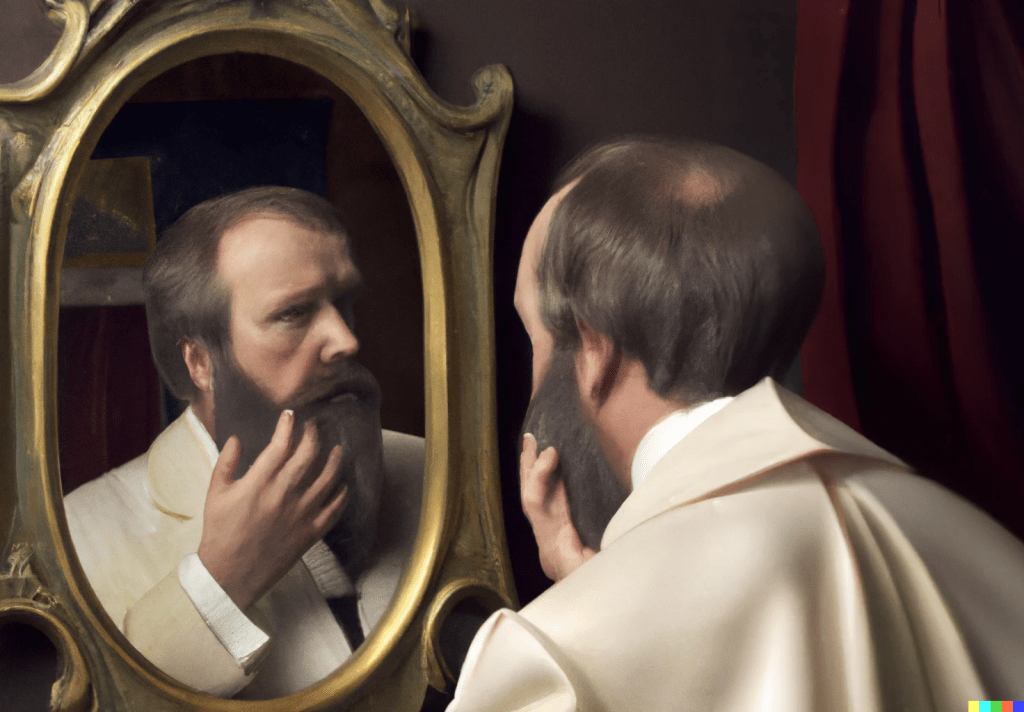
  • Look myself in the eye. This, of course, requires a mirror. I don’t want to hear these words of kindness from a faceless, inner place. I make the effort to look myself full in the eye and show my sincerity as I speak.
  • Speak out loud. It’s easy to be self-conscious about this practice, and at first it was tempting to just think the words in my head or mutter them under my breath. But I realized that I needed to literally hear these words. This is another reason why I wait for the evening, when I can go to an isolated place and not suddenly have someone walk in on me.
  • Be specific. The last thing I want to do is broadly tell myself “good job, today.” The whole point of this is to call out all of the individual things that I did that I feel proud of. One-by-one, I go through each point and acknowledge and express gratitude for it directly. And I use my knowledge of my own inner workings to call out things that no one else could. Like “I know you were a bit unsure about approaching that stranger to see if he needed help, but you were bold and went forward anyhow.” As you can see, I’m not only specific about the event (approaching the stranger), but also about the good quality shown (being bold).
  • Pause and listen. Once I’ve covered all the things that were at the forefront of the mind, I pause to listen to my own heart. Have I forgotten something? Did some of my words not feel right? I make sure that I stay in this moment until I feel totally seen and appreciated.
  • Reiterate my love. Last of all, I make sure that I know that I love and care for myself, that I see and appreciate myself, and that I will continue to be there for myself.

And this is the process that I follow. When I am on top of my self-care and recovery, I try to do it once every day. It does take a commitment of time and effort, but frankly that’s a big part of what gives it its value. All of us want to know that we’re worth it for someone to go out of their way to care for us, and why shouldn’t that someone be our own self? Honestly, even if we had another person who perfectly fulfilled that need for us, we still need to learn to treat ourselves this way as well.

I can attest that as I have done this work, I have seen a marked improvement in my emotional outlook and a definite increase in my life satisfaction. I highly recommend that you give this practice a try and see what it does for you.

All that being said, self-appreciation isn’t the end of the story. There is one particular source that I still feel we all need to feel the approval of: God. The rest of these posts will be exploring that side of things, I’ll see you tomorrow as we dive into it!

How to Get the Praise You Deserve: Part Two

A Somber Realization)

Yesterday I brought up the common sensation we all have of not being appreciated as we ought to be. I examined why others don’t validate us in the way that we wish they would, and I also pointed out that in many cases they literally can’t.

At this point one has to make their peace with a fact of life: you will never receive exactly the validation, recognition, and appreciation that you desire from other people. Some people, some of the time, might say some of the right words, but there will always be some things left unseen, unappreciated, and unsaid.

This realization brings one to a crossroad. On the one hand, you could simply accept this dissatisfaction as a necessary part of life, an unpleasant but unavoidable reality that you just have to bear and move on with. On the other hand, you could start to consider outside solutions. Maybe no other person can give you all the validation that you need, but is it possible that you’ve been looking in the wrong place for it all along?

To choose that satisfaction is impossible is the more cynical option, it is to accept life as inherently broken. Unfortunately, some might aspire to such a cynical view as a show of strength. They might say, “I don’t need anyone else’s approval to be happy.” In my experience, however, simply denying the longing inside me does nothing to make it actually go away. I might say it doesn’t bother me anymore…but really it does. And so long as it’s going to keep bothering me, I may as well see if there’s not an alternative.

And in my contemplating, I have come up with two better, more reliable sources of validation. Today we will look at the first.

Love Myself)

One of the problems I mentioned with seeking approval and validation from others is that most of the good we do in life will be imperceptible to those around us. Another reason was that even when our good is recognized, the exact words of affirmation that we need to hear are a personal secret. Only we know exactly what qualities we feel that we most need to be appreciated for.

And so, what better person to provide the specific and targeted validation that we need than our own selves? Of all the people on Earth, only we know all the good that we have done, and only we know what qualities we exercised to do it.

I first considered giving approval and validation to myself after learning about Internal Family Systems, which suggests that your personality exists as several different entities, such as the wounded child who still hurts from a trauma in your past, and the protector who pushes others away in order to protect that child. My therapist guided me through a program in which I, as the authentic self, work with each of these different parts, unburdening them and giving them validation. After a while, I realized that I didn’t have to wait for those hurt and frustrated parts to come and find me, though, I could proactively care for them by letting my authentic self speak words of kindness and praise to them at any time that I wished.

Matters of Concern)

Even after having the idea of giving myself this self-appreciation, I still had my skepticisms about the practice. On the one hand, I suspected that I wouldn’t be satisfied. I felt that what I really wanted was validation from others, people who had said that they cared for me, but then took my contributions to the relationship for granted. How was validating myself supposed to resolve those relationship problems? My other concern was that I would give myself an over-inflated ego. I already felt like I was obsessed with the praise of others, wouldn’t patting myself on the back just extend my narcissism further?

I think that these were valid concerns to have, and I’m glad that I had them in mind from the beginning. Since I knew what dangers to watch out for, I felt I could experiment, and at the first sign of trouble I could abandon the practice altogether.

Thus I moved forward, and though I did not start this practice until recently, much to my surprise I have already seen both of these concerns be emphatically refuted. It is true that I have still felt taken for granted in some of my relationships, but now that I am receiving validation from myself, I no longer feel like I have to get the approval of others. For years these other people have been my only hope for validation, so I had a codependent relationship with them. I haven’t dared to speak my mind, for fear of losing what little I had. Now that I’ve learned that I can meet those needs without them, though, I am finally free to speak up for myself. I can tell them how I feel, and if they respond with hostility, I am perfectly content to end the unhealthy relationship.

And it has been much the same with my other concern. Being able to receive approval and validation from myself has disintegrated the need for the praise of the world. After a showing love and appreciation to myself, I really feel okay with the idea that I might never have the broader love and acclaim that I once dreamed of. As it turns out, it isn’t really fame that I wanted, it was a listening ear, even if only my own.

Self-Care)

Recognizing and calling out the good things that I do is now one of my fundamental practices of self-care. It has taken my peace and fulfillment out of the hands of unreliable sources and brought them under my own jurisdiction.

So how exactly do I do this practice? I’m out of time for today, but I’ll spell out the simple steps I follow with tomorrow’s post. Maybe it’ll be useful for you as well.

How to Get the Praise You Deserve: Part One

Lacking Validation)

Something I’m sure that all of us have noticed is that there’s never any shortage of people to criticize us when we do something wrong!

Do what you feel in your heart to be right - for you'll be criticized anyway ~ Eleanor Roosevelt

Whatever course you decide upon, there is always someone to tell you that you are wrong. ~ Ralph Waldo Emerson

Remember, the only taste of success some people have is when they take a bite out of you. ~ Zig Ziglar

Great spirits have always encountered violent opposition from mediocre minds. ~ Albert Einstein

All that was great in the past was ridiculed, condemned, combated, suppressed ~ Nikola Tesla 

Whether to shine a light on what is wrong with us, or else to disparage what is right with us, there is always another who will criticize and tear us down. Unfortunately, it doesn’t seem to work the other way. When we feel that we are deserving of praise, there never seem to be enough to appreciate what we have accomplished.

Some might say that this is just a pessimistic view, that we are more prone to remember the negative commentary than the positive. At least to some degree, this is true. I have caught myself bemoaning the lack of appreciation for something I have done, when suddenly I remember that someone actually had complimented me about this earlier.

However, even after recognizing this phenomenon, I still feel that neither I, nor anyone else, receives an adequate dose of being seen or appreciated. I am convinced of this, because I have realized that much of this notion of being unappreciated is an inevitable reality of our human existence. Let us consider why this is so.

Not Being Seen)

It seems to me that the majority of things that I would like to receive validation and appreciation on are things that no one else will even see. Not because they are inconsiderate, not because they are inattentive, but because they occur in the secret recesses of the heart where I am the only witness.

Day-to-day behaviors of mine might seem meaningless or arbitrary to any other person, even though they required a moral choice on my part. It could be that I felt an old grudge rising up and I let it go, or that I drove down a different street to avoid an object of lust, or that I perfectly coordinated my schedule to make sure I had ample time to play with my son.

Dozens of these moments might occur in a single day, with no fanfare and no recognition. I suppose I could draw attention to them, spelling out to others exactly what I went through inside, but in most cases that would feel like petty boasting.

These are good moments in our lives, perhaps the best moments, yet by their nature they will pass unnoticed by any other.

Not Being Acknowledged)

Sometimes the good that we do is witnessed by other people, but they fail to recognize or appreciate it. Whether as a father working to provide for his family, or a mother caring for her children, or a church leader picking up the phone whenever a member of his parish calls, or a citizen volunteering in the community, we all have ways that we do good simply as a matter of habit.

Unfortunately, when we make a pattern of doing good, it is easy for others to take that good for granted. They don’t see doing our duty every day as a moral decision, and most days it might not be…but some days it totally is! Just because something is a duty, doesn’t mean it isn’t worthy of recognition.

On the flip side, the world also tends not to recognize when we are justified in retaliating against another but chose not to do so. It’s not very common that we say to one another “thank you for not demanding your pound of flesh from me” even when it required a superhuman effort from the other person not to do so!

Not Hearing the Right Words)

Finally, we have the situation where someone does recognize that praise is deserved, but they lack the time and insight to be specific and meaningful with it. Not all words of appreciation are created equal. A generic “good job, everyone” to the entire group doesn’t begin to acknowledge your individual efforts and virtues. Even worse, many who know that they ought to compliment another feel awkward about doing it and will avoid making any sort of eye contact. This suggests that the giving of praise is a chore to them, rather than a sincere expression of appreciation. Earlier I suggested that pessimism might cause us to forget most of the compliments we receive, but perhaps the real issue is that most of the praise we get is phony, so we don’t make note of it anyway.

Of course, sometimes people do show us appreciation that is heartfelt, sincere, and made while holding our gaze. And while the gesture is appreciated, sometimes even this won’t land just how we would like. This is because people will compliment us based off of the qualities that they think are important, rather than the ones that we really needed to hear. I might say to you, “that’s a wonderful poem you’ve written, the rhyming and the meter are perfect,” and in your own head you might think “well…yeah…I’ve always been good at rhyming and meter, but this was the first time I tried to have a spiritual connection through my craft.” By complimenting the polish rather than the subject matter I have failed to give you the praise you needed to hear most.

Of course, knowing which specific virtues you need to have reaffirmed requires an intimate knowledge of your inner self. The right words for the same behavior will be totally different from one person to the next, so knowing the exact words to say is often beyond the capability of the one giving the praise. We can appreciate that the intention was on the mark, even if the words weren’t quite, but the sense of dissatisfaction may persist all the same.

Alone in Our Needs)

To receive sincere appreciation and refreshing validation is a very rare occurrence. The lack of them is in some part due to the laziness and thoughtlessness of others, but as we’ve illustrated, much of it is simply beyond the capability of others to provide for us.

Are we to simply accept this sense of dissatisfaction as having no solution? Well, yes and no. We need to accept that we are never going to have complete satisfaction from other people, but we don’t have to accept that other people are the only ones who can satisfy this need.

Throughout the rest of this study I will discuss what other sources of validation we can have. I will begin tomorrow by introducing a new practice I have recently implemented in my life, one that has already brought me much of the validation and contentment I have longed for. See you then!