Wresting the Truth

The frustration and suffering in our lives is directly proportional to the lies that we have come to believe. Complicating matters is that the lies are woven into our society before we were even born, becoming so indoctrinated in us that we can’t even see them for what they are half the time.

The word of God is therefore an essential standard. Whenever we read an eternal principle in the scriptures that seems uncomfortable to our modern sensibilities, we have just identified a lie that rests at our foundation. That is the area where our conception of Truth has been twisted, and we will find greater peace only as we correct that perversion.

So, what do you see as “problematic” in the scriptures? That men and women are meant to function in different roles? That divorce should be virtually unheard of? That fornication, homosexuality, and every other sexual deviance is abominable? That we should not provide preferential treatment to one group over another? That sometimes God declares war? That sin makes us deserving of death? That Christ is the only path to salvation? That spiritual freedom is more important than physical liberty? That all of our possessions and life decisions properly belong to the Lord?

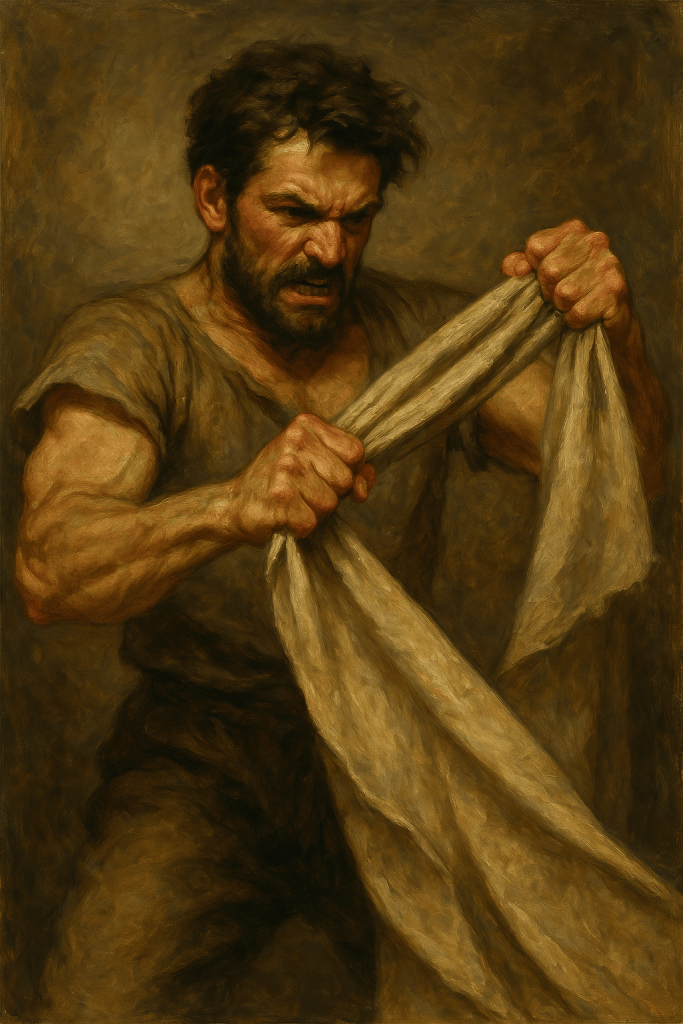
If we see any of these tenets in need of “being fixed,” then we live in a “truth” that is actually a lie. We will forever be frustrated because we are trying to twist the fabric of reality against itself, which is doomed to failure. True reality will not tear. It will snap back and tear us instead. And when that happens it is actually an act of mercy, as each of us needs to be broken before we can rebuild ourselves on the actual Truth.

The Basis for Following the Commandments: Summary

In this series I noted society’s progressive departure from traditional Western ethics and morality, which are founded upon the Judeo-Christian commandments. I identified three core pillars of belief that are essential for wholehearted adherence to these commandments. They were:

  1. Belief in the reality of the Judeo-Christian God
  2. Belief that the Bible contains the genuine commandments of that God
  3. Belief that those authentic commandments are essential for true happiness in life

If someone lacks any one of these testimonies, then they are not likely to be motivated to actually follow the commandments.

Review)

As we discussed, belief in the reality of the Judeo-Christian God means believing that God is real, that He is our creator, that He is benevolent, and that He is all-powerful. Put another way, we need to believe that God is someone we can actually trust. We trust Him because He is good, and the things He says are genuinely meant to bring us joy, and we trust Him because He is capable, so if He says something is for our ultimate joy He will be able to deliver on that promise.

Overlapping with that testimony is the third one, which is to believe that God’s instructions are THE BEST way to obtain happiness and purpose in our lives. So long as we think we can figure out a better plan than God’s we will hold ourselves back from His law. To have this testimony means that we trust in Him more than anything else, even more than we trust in ourselves. It means that His word carries greater weight than any other.

Finally, even if we believe that God is real, and that His word carries greater weight than any other, we still need to know what those words are. To follow the commandments we have to believe that the Bible is genuine scripture, divine words that originated from that real and trusted God. Without this testimony, one is left to operate only on the direct whispers of God to our own heart, which I believe for most of us occurs less frequently than the number of times we need guidance in our lives. At some point we need to adopt principles on faith, and one must have a testimony in the Biblical commandments to follow them

Cultivating Testimony)

Some people seem to come by these three pillars of testimony naturally. Their inner core is already perfectly aligned with each tenet and they accept and live the ethical principles of Christianity without struggle.

But I believe that is not the case for most of us. I believe that most of us do not naturally have all three of the core beliefs mentioned here. Maybe we have one, maybe two, maybe none of them at all. However, not naturally having all three pillars of belief does not mean that we should just abandon the Christian ethic. It turns out that most testimonies do not come before the trying of the law, but after. Most of us don’t know what we believe until we live it. Either we try the right thing and then become convinced that it is right, or we try the wrong thing and then become convinced that it is wrong.

So if you lack any or all of the core pillars mentioned above, I would implore you to not give up on their ideas, but to put them to the test. Pause and think what sort of life you might live if you did already believe in them all, and then try living that way for a time. See whether you find a greater sense of wholeness, peace, and joy from that lifestyle or not.

I don’t want to extend this study long enough to lay out the evidence for the following assertions, but perhaps I will do so at another time. The Christian ethic has been the bedrock of Western civilization, and has brought greater innovation, illumination, and relief into the world than any other thing. It would be naive and foolish to discard it without ever giving it serious consideration and experimentation. If it has uplifted so many billions, it really might lift you as well. Certainly it has done so for me.
The Basis for Following the Commandments: Part Four

Thus far we have discussed how accepting the traditional Western ethics requires us to both believe in the Judeo-Christian God, and that the words of the Bible contain His genuine commandments. There yet remains one core pillar for our testimony, though, which is a belief that God’s true commandments are absolute.

The fact is, there are many today that do believe in God and do believe that the Bible contains His commandments, however they are taken by a notion that these commandments are little more than paternal advice. They think it is ideal to follow the commandments, and that it would be good for other people to adhere to them, but that things won’t be so bad if they personally don’t. What they lack is a testimony that God’s laws are actually imperative.

Traditionally, the commandments have been presented to the Western world as having both a negative deterrent against breaking them, and a positive reinforcement for following them. The negative deterrent is the assertion that breaking the commandments brings suffering, either in the form of divine punishment or simply natural consequences. The positive reinforcement is the assertion that following the commandments brings joy, either in the form of divine blessing or simply natural consequences. The combination of these two is that following the commandments will lead to the most fulfilling, most joyful, most complete form of life that we can experience, whereas regularly breaking them will lead to the most heartbroken, the most painful, the most fractured form of life that we can experience.

So now the questions come to you. Do you believe that God’s commandments genuinely matter? Do you believe that the quality of your life will be always be affected by adherence or resistance to them?

If the answer to any of those is “no,” why is that? As with the other pillars, is there something in your life that prevents you from believing that the highest quality of life can only be achieved by adherence to the commandments? Is there some part of you that insists on finding another way? Would you be willing to experiment with the commandments, adhering to them as a matter of analysis, to see if your quality of life markedly improves?

If, on the other hand, your answer to all of those is “yes,” then you have established that God is real, that His commandments are taught in the Bible, and that following those commandments really matters for your personal happiness. There can be no logical reason not to abide by these principles of traditional, Western ethics. Only weakness of the flesh could cause you to set these principles aside.

The Basis for Following the Commandments: Part Three

In my last post I discussed how a belief that the Judeo-Christian God is real, benevolent, and all-powerful are necessary components to accepting the commandments taught in traditional Western ethics. However, those beliefs alone do not get us all the way to being convinced of exactly which law we need to live by. Today we will talk about the second aspect of our testimony that is necessary to follow these commandments. In order to abide by these rules, we have to believe that they are really coming to us from the God that we believe in.

The commandments that have been taught to us in traditional Western culture have all been derived from the Bible. They include the ten commandments that were given to Moses, as well as the others that are scattered throughout the sacred text. We follow them because we consider them to be the words of God, Himself, and since we believe that He is real, benevolent, and all-powerful, we are inclined to follow the instructions that He has given us. He would know, better than anyone else, what behavior would be for our own good, and following His plan would be the most certain way to achieve happiness and peace.

But what if one believes in God, but not necessarily in the authenticity of the words of scripture? We are thousands of years from the first writing of those words, and it is strictly a function of faith to say, “yes, these words really did come from the mouth of the Lord, and not just the pen of man.”

One doesn’t even have to get lost in academic arguments on the authenticity of the text. In my observation, the reasons why most people dismiss the Bible has nothing to do with scholarly analysis, but just because their default is not to believe something that is so fantastic and far removed from them. Even if one accepts that a loving God probably would leave instructions to His children, they might struggle to accept anything that purports to be that instruction. They have lost their capacity to believe in the incredible.

I turn these questions over to you. Do you believe that the Bible is genuinely the word of God? And if it is, do you accept that the commandments written therein are His genuine instructions to you?

If the answer to any of those is “no,” why is that? As with the questions of God’s reality, is there some experience or barrier in your life that prevents you from believing in anything that purports to be scripture? And even if you are prevented from believing by default, would you be willing to abide by the commandments contained in the Bible even while unsure of their authenticity, if only to see if they come alive for you as you do so?

If, on the other hand, the answer to all of those questions is “yes,” then we have established that God is real and His commandments are the same as what is taught in traditional Western tradition. Even with all that, though, there remains yet one more pillar of faith that must be established. Even if these are God’s commandments, how absolute are they? Is it permissible for us to flex and bend them? We will discuss that matter in the next post.

Scriptural Analysis- Exodus 12:12-13

12 For I will pass through the land of Egypt this night, and will smite all the firstborn in the land of Egypt, both man and beast; and against all the gods of Egypt I will execute judgment: I am the Lord.

13 And the blood shall be to you for a token upon the houses where ye are: and when I see the blood, I will pass over you, and the plague shall not be upon you to destroy you, when I smite the land of Egypt.

Here, at last, God explains the curse He is about to bring upon Egypt and how the blood of the lamb will save the Israelites from it. In many of the prior curses, God also put a separation between the Israelites and the Egyptians, but in each of those cases there was not anything that the Israelites had to do to receive that protection, it just came for granted. This final curse is unique in that the Israelites will still be separated, but only so long as they meet the requirement that God has given to them.

We see this same sort of idea in the Christian theology, where we believe that some gifts come to all, and some don’t. All people are saved from death by the resurrection, and no effort is required of us to receive this free gift, but at the same time Christ calls us to become perfected in him, and do the work that he gives us, that we may enjoy a oneness with him and the Father in heaven. Of course, even in the cases where some effort from the faithful is required, God’s grace is always still a factor. Even though the Israelites did the work of following God’s commands to kill the lamb and put its blood on their posts, there isn’t anything inherently life-saving in those actions. They only worked because God made them work by His grace. It is the same with our efforts to become more like Christ. They only work because of a miracle of transformation that God brings to our hearts.

Also, note in verse 12 that God is not merely doling out His judgment upon the Egyptian people, but also upon their gods. He had made mockery of their pagan beliefs before when He sent the murrain that slew their sacred flocks, and now He had His people slaying those same lambs, eating their flesh, and painting their blood on the doors for all to see. The Egyptians would consider all of these acts a spiritual desecration, yet the Israelites would blessed and preserved for doing it. God would therefore justify what the people of Egypt denounced, and He would denounce what the Egyptian gods had justified.

In short, there were multiple layers of destruction and humiliation facing the Egyptians this night, and when they awoke they would become a profoundly broken people.

Scriptural Analysis- Exodus 12:8-11

8 And they shall eat the flesh in that night, roast with fire, and unleavened bread; and with bitter herbs they shall eat it.

9 Eat not of it raw, nor sodden at all with water, but roast with fire; his head with his legs, and with the purtenance thereof.

10 And ye shall let nothing of it remain until the morning; and that which remaineth of it until the morning ye shall burn with fire.

11 And thus shall ye eat it; with your loins girded, your shoes on your feet, and your staff in your hand; and ye shall eat it in haste: it is the Lord’s passover.

God provided further instructions for how the Passover meal was to be prepared. First, the lamb was to be roasted, not boiled, and all in a single piece: head, legs, and edible organs included. Other commentators have pointed out that roasting would have been the quickest way to prepare the food, beginning a theme of haste that we will see continued in the other details. Also, roasting is simpler than boiling, especially when it is an entire lamb that has to be cooked, and therefore more accessible to the simplest and poorest of the Israelites.

Secondly, with the lamb the Israelites were to have unleavened bread and bitter herbs. Unleavened bread is also a sign of haste, as they were not allowing time for the bread to rise. Bitter herbs are also quick to assemble and prepare. These two items also represent hardship, as leavened bread and sweeter herbs would be more pleasant to the taste, but the rougher alternatives are a more fitting match to the bondage that Israel had suffered for generations.

Finally, all of the food was to be consumed in a single night, and any leftovers burned with fire. A camp that is on the move, that needs to flee in the morning, has no purpose for leftovers and so it is tossed in the fire. This idea of being ready to move is further reinforced by the instruction that they eat dressed, with their shoes on, and the staff in their hands.

All this suddenness and haste and living by simple means is also reflected by Jesus’ later instruction that “no one, having put his hand to the plow, and looking back, is fit for the kingdom of God.” Jesus taught his disciples that when one was called to the work there was not be any excuse or delay. One had to be ready to drop all and move as directed. Jesus further told his disciples that when they preached the gospel, they were not to pack food or extra clothing, but to travel with the absolute minimum, trusting God to provide the rest. All of this echoes back to the ritual of the Israelites on the Passover. The true disciples and the chosen people are to be in a state of constant readiness, quick to move at the command of their Lord, content to cast everything aside to follow.

Scriptural Analysis- Exodus 12:6-7

6 And ye shall keep it up until the fourteenth day of the same month: and the whole assembly of the congregation of Israel shall kill it in the evening.

7 And they shall take of the blood, and strike it on the two side posts and on the upper door post of the houses, wherein they shall eat it.

Not only would the Israelites eat the sacrificial lamb, but they were also to streak its blood across their doorposts. We will soon read how this unique practice would protect the Israelites from the death of their firstborn. The blood of the lamb was being used to mark a home as housing God’s people, and His favor and protection would be upon them. This is obviously representative of Christ, the Lamb of God, whose blood was shed to also make us God’s people, and to similarly mark us for His protection and favor.

This is not the only representation in the killing of the lamb, though. As we have already discussed, sheep were one of the creatures that the Egyptians worshipped. God had already mocked that pagan worship by sending the murrain that killed their sacred flocks, now He would mock them again by having His people sacrifice the animals right before the Egyptians. Perhaps the Israelites would normally have been harmed for doing this, if not for the humbling that God would put upon the Egyptians immediately after.

Another possible symbol in killing the lamb and streaking its blood on the posts might have been that the lamb was innocent and young, just like the Israelite baby boys that the prior Pharaoh had ordered to be killed and thrown into the river. At the start of Moses’s campaign against the Egyptians he had drawn the blood out of the river, presumably to show that Egypt’s sins had not been hidden and washed away. God still remembered that evil and He had come to recompense. Thus, slaying the lamb and painting their doorposts with its blood might have been a way for the Israelites to signify that “we have already had our young and innocent slaughtered, therefore pass us over in this next doling out of death.”

Scriptural Analysis- Exodus 12:3-5

3 Speak ye unto all the congregation of Israel, saying, In the tenth day of this month they shall take to them every man a lamb, according to the house of their fathers, a lamb for an house:

4 And if the household be too little for the lamb, let him and his neighbour next unto his house take it according to the number of the souls; every man according to his eating shall make your count for the lamb.

5 Your lamb shall be without blemish, a male of the first year: ye shall take it out from the sheep, or from the goats:

God had instructed the Israelites to follow a new calendar, now He instructed them on a special feast to be held on the tenth day of the first month. This, of course, would be the Passover. The significance of this event would soon be made apparent, and every year afterward the tradition would be used to remind the Israelites of the events that came on the first Passover.

God instructed the Israelites that they must each kill and eat a lamb in its first year during the Passover. Aside from this, the requirements for this offering were quite lenient. It could be one lamb for each household, or one lamb for two households, and it could be a lamb of the sheep or of the goats. Given that this lamb would be a key instrument in God’s redemption of the Israelites, it seems appropriate that His instructions were very gracious and accommodating, fitted to the convenience of His people.

A lamb in its first year would mean that it came from the previous calendar year and it would not live to see the next. It was therefore a lamb “of the year,” and every lamb in every year would be a potential candidate for the sacrifice. Thus, each lamb’s fate would hang in the balance until their first Passover, at which point their fate would be sealed one way or the other.

This lamb was being used as a food, as the main item of the Passover meal, and that seems to be representative of how God’s grace provides the earthly nourishment that people require to survive. He lends us our breath, our water, our sources of food. The fact that this Passover nourishment came by means of the creature’s death seems to represent that there is a real cost and a real sacrifice behind God’s grace. It is not just some magical reserve that comes from nothing. God genuinely gives up something to provide for us. What exactly that is will only become more evident as we continue the analysis with tomorrow’s verses.

Scriptural Analysis- Exodus 12:1-2

1 And the Lord spake unto Moses and Aaron in the land of Egypt, saying,

2 This month shall be unto you the beginning of months: it shall be the first month of the year to you.

Israel might not have been released from Egypt’s control quite yet, but God already began setting down the laws and traditions that they were to follow as a free nation. And so, even as Moses was coming to the end of his role as Israel’s deliverer he was beginning his new role as Israel’s lawgiver.

The first instruction that the Lord had for Israel was that the current month was now to be the beginning of their calendar year. Clearly this was because Israel was about to have a new beginning. This month would be the month of their rebirth, the month of their re-creation. Every year after this would begin with a celebration and a reminder of when God had redeemed and reformed them, giving back their life and freedom when they were perished and lost.

Scriptural Analysis- Exodus 11:8-10

8 And he went out from Pharaoh in a great anger.

9 And the Lord said unto Moses, Pharaoh shall not hearken unto you; that my wonders may be multiplied in the land of Egypt.

10 And Moses and Aaron did all these wonders before Pharaoh: and the Lord hardened Pharaoh’s heart, so that he would not let the children of Israel go out of his land.

These three sentences appear to be a brief summation of everything that transpired between the Lord, Moses, and Pharaoh, following their first discussion. Pharaoh rejected God’s word, but the Lord told Moses that this served a greater purpose: to let the world witness His power and wonder. There then followed a series of plagues upon Egypt, and through it all Pharaoh continued to harden his heart.

If Pharaoh had relented after the first curse or two, it hardly seems that the story would have had the same impact and travelled far and wide. It truly is a remarkable thing to consider, that these events transpired some 3,500 years ago and are still so commonly known in the world today. If anyone ever doubts that the Bible is the bedrock of Western civilization they have only to ask themselves how many stories of the Hittite or Assyrian empires they know. Though the Israelite people were quite small, with virtually no impact on the larger world at the time of its liberation, theirs is the story that we know best today. And surely their freedom sticks so well in our minds because of its ten dramatic plagues being wrought one after another by the hand of the Lord.

As the Lord said in verse 9, His wonders were indeed multiplied. Multiplied in the doing, the telling, and the retelling, thousands and thousands of times over.