If You Can Change One

If you can clean up your house, you can clean up your bad habits and build good ones instead.
If you can build good habits, you can build new friendships and cure your loneliness.
If you can cure your loneliness, you can cure your boredom and find something good to do.
If you can find something good to do, you can find something good to help others.
If you can help others, you can help your home have more peace and bring order to it.
If you can bring order to your home, you can bring order to your mind and calm it down.
If you can calm your mind down, you can calm your lusts and free your spirit.
If you can free your spirit, you can free the downtrodden and given them hope.
If you can give hope, you can give attention to what really matters.
If you can give attention to what really matters, you can give attention to God and praise Him.
If you can praise God, you can praise what is good in you and let Him purify your soul.
If you can let Him purify your soul, you can let Him purify your family and clean up your house.

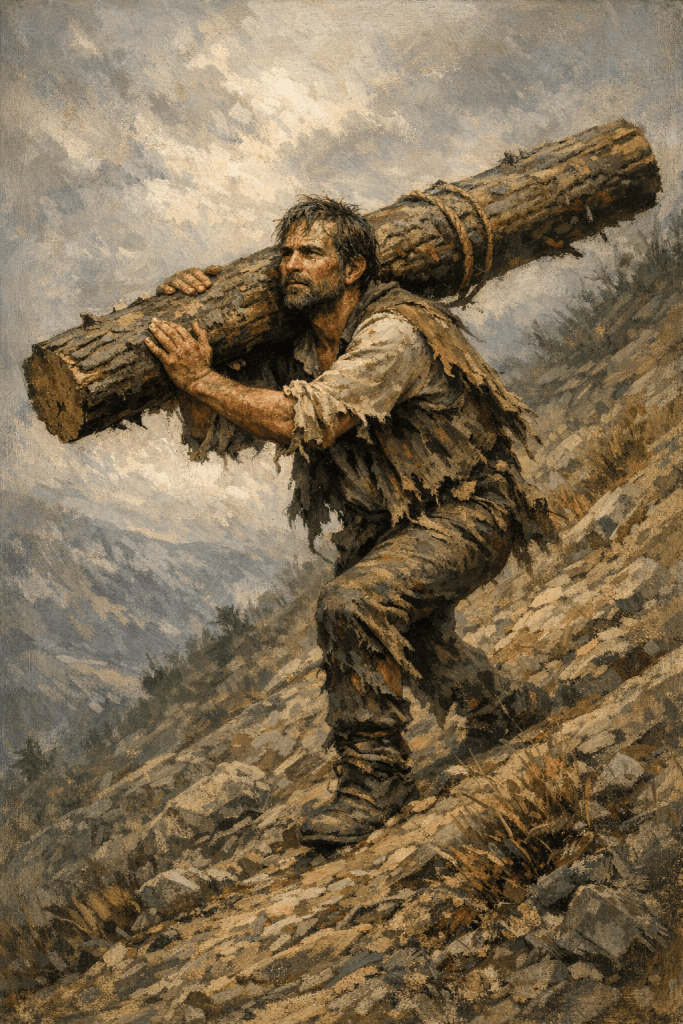
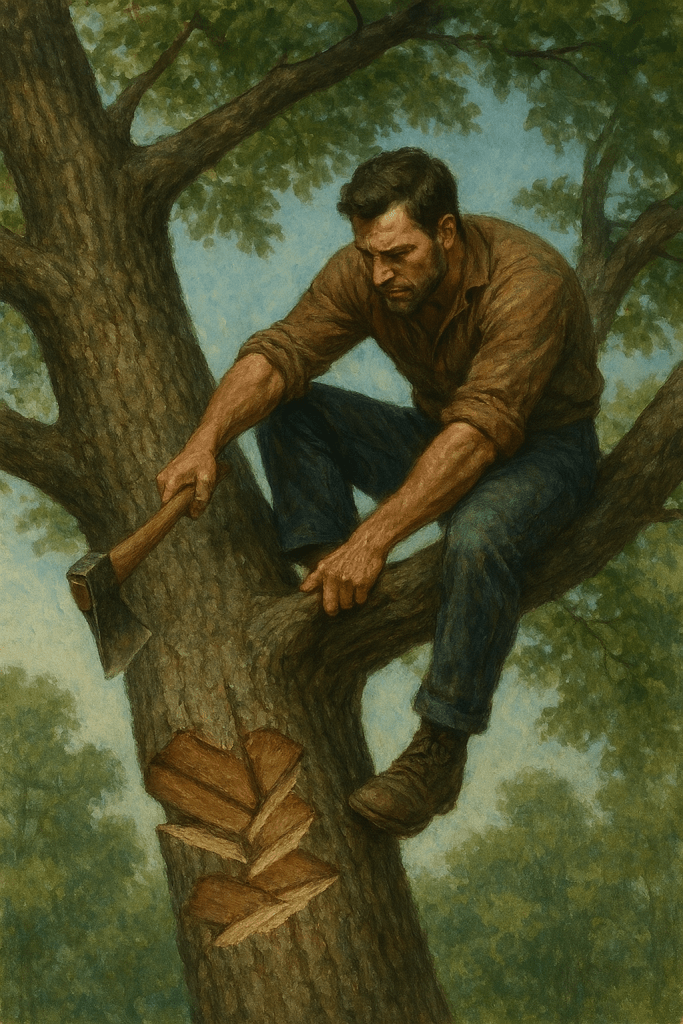
If you can change but one, you can change them all.

The Best Lessons Must be Painful

The best lessons in life must be painful, because the best lessons require us to change. If they didn’t require us to change, they couldn’t be as meaningful as those that did. And to change means, to some degree, breaking and rebuilding. And breaking and rebuilding is painful.

So, if we are going through lessons that are painful, but which are causing us to change, it’s not that we are doing something wrong, we’re actually doing it exactly right. It’s just that growth is hard. That change is painful. It always has been this way, and it always will be.

Scriptural Analysis- Leviticus 6:10-11

10 And the priest shall put on his linen garment, and his linen breeches shall he put upon his flesh, and take up the ashes which the fire hath consumed with the burnt offering on the altar, and he shall put them beside the altar.

11 And he shall put off his garments, and put on other garments, and carry forth the ashes without the camp unto a clean place.

The priest was to arise in the morning, put on the clothing of his office, and collect the ashes off the altar. Then he had to change his clothes and carry the ashes out of the camp and dispose of them. This seems unusual. Why two different sets of clothes for the same chore? The general understanding is that the priest could not interact with the holy altar without wearing the official clothes of his office, but also he could not leave the tabernacle while wearing those holy garments. Thus, he wore the holy garments for the part that involved the altar and then had to wear his everyday clothes for carrying the ashes out of the camp.

This, of course, is not to say that we are meant to be two-faced disciples, faithful and religious in church, then carnal and sinful when we leave. But there is a special gravity when we commune with the Almighty, which is absent in our other business. We should have a seriousness in our sacred works, and a levity in our mortal labor. The two parts are connected, and each affects how we show up for the other, but they are also distinct.

Moral Growth and Decline

If we think that people hundreds of years ago had morally despicable views, and that now we have a better view of the truth, we ought to consider why. What beliefs and values did our forefathers foster that led them to become more moral, leading to where we are now?

And if we are now prying those beliefs and values from the public square, if we are rejecting the faith of the very people who made the world a better place, what do we expect to happen to our morality in the next hundred years?

Stop Trying to Change the World

Stop trying to change the world. When people use that term today, all they mean is finding fault elsewhere and making others change.

Which doesn’t work, because they are doing the same thing, finding fault in you, and trying to make you change.

And in this cycle no one actually changes. They only become more entrenched.

So, stop trying to change the world.

Just change yourself.

How the World Can Ever Change

Maybe even if I change
The world will stay the same
But on the other hand,
How can the world ever change
If I’m still staying the same

Taking Accountability- Conclusion

Big Problems)

In this little series of posts, it was my sole intention to act out the principle I had recently espoused, to put my behavior where my belief was. And so, in the aftermath of Charlie Kirk’s death I identified a way that I contributed to the culture that got him killed, and I took steps to change my behavior accordingly.

But that wasn’t all that came out of these posts. By going through this exercise, I was able to more fully flesh out some of the vague ideas that originally inspired my call for us to find our own personal responsibility in every ill that besets us.

I realized that a major reason for us all to seek out our own slice of responsibility is because that is the only way that the world will ever be healed. Some problems are just too big for some of us to solve it for everyone else. Everyone has to tackle the part that is directly in front of them.

We must not have the arrogance to think that we can divide ourselves into fixers and problems. We all have to see that we are each a fixer, and we are each a problem in and of ourselves. And so, we must take our fixer part and use it on our own problem part, and only by doing this individually can we heal collectively.

A Call Inward)

I invite all of us to start looking at the big problems of the world in this way. I suspect it will be best if we look at the deepest problems, things much more fundamental than politics or ideological divides. Let us consider the hate, the poverty, the deceit, the confusion, and the loneliness. For once, let us set aside who is most responsible for these issues, and just ask, “to what extent am I responsible?”

Is there something negative that we are doing that we could stop? Is there something positive that we should be doing that we are shirking? Can we truly say that we have a clean conscience? That we have contributed nothing to the problem? That we have done our part to contribute to the solution? Or is there room for improvement, room for taking the beam out of our own eyes, room to re-establish heaven in our little corner of the world?

Taking Accountability- Acknowledging Limitations

My Commitment and Influence)

In my last post I explained how I feel that I have given my attention to social media that escalates tension and promotes an “us vs them” mentality. I have been more likely to click on a video because the thumbnail or title promised outrage and blame. And in so doing, I have signaled to the algorithms that I, and people like me, want to engage with this sort of content, want to consume it, and want to be emotionally charged by it. And it’s not hard to see how that drives division, animosity, and eventually violent ideation in the most impressionable of minds.

And so, with yesterday’s post I made a commitment that I was going to stop engaging in this cycle of escalation and tension. I have gone through all of my subscriptions and purged the voices that were most divisive and angry. I am resolving to lessen their reach by at least one viewer, and by that take accountability for my own, little slice of the murder of Charlie Kirk.

Limited Scope)

I think that that conclusion is pragmatic and realistic. Of course, to be honest, it has its limitations. It is not as though that I am equally responsible for the murder of Charlie Kirk as some other people are, or that I have the power within me to change everything wrong that led to his murder. This moment of introspection wasn’t about convincing myself that I’m guilty of his murder or making it my sole responsibility to make sure something like that never happens again. That would not be realistic. This moment was about seeing how I am guilty of some things, and how those parts are in my power to change.

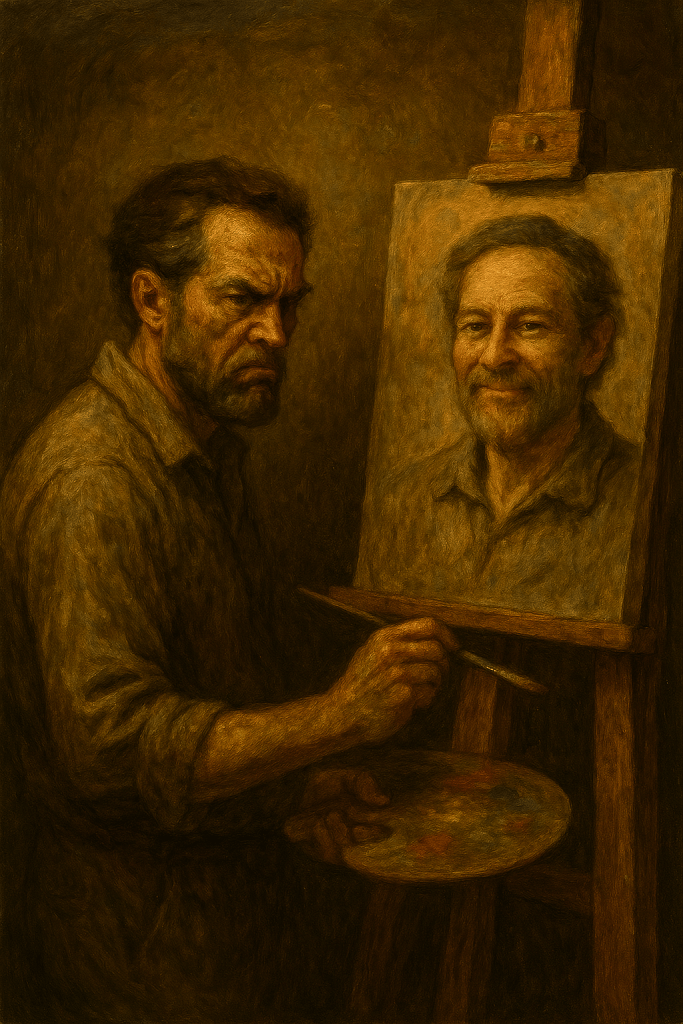
This isn’t about changing everything; it’s about changing me. And that might not seem important from the scope of the world, but it is important from the scope of me. My own world and my own soul will be better for making this change, and right now that’s what I want to focus on.

Also, who knows. I’ve seen in the past where I’ve made changes to myself and then seen parallel shifts happening in the world at large. I actually do believe that our spirits are bigger than we think, and that they pull on more strands than we know, and one person making a change for himself can create unseen ripples in the world around him.

More than anything, though, I think the real importance of making a personal change comes down to this: the world is much bigger than I am and requires much more effort to be moved, so if I won’t find the will to change just myself, then obviously the world won’t either. Or in other words, maybe the world will stay the same even if I change, but how can the world ever change, if I’m still staying the same?

Taking Accountability- The Responsibility of Us All

A Tragedy and an Evil)

I don’t typically comment on world events or change my post lineup for special days. The way I see it, gospel study should be a constant in life, something steady and reliable, no matter what else is going on. So, whether it’s a special day or a mundane one, whether a happy day or sad, studying the gospel remains my rock through it all, and I try to have this blog reflect that.

But I recently saw a connection between something I wrote a couple weeks ago, and the assassination of Charlie Kirk, and I thought it might be instructive to talk about it.

First of all, let me emphatically renounce the assassination itself. It was evil, and cowardly evil at that. As Isaac Asimov said, “Violence is the last refuge of the incompetent.” Anyone that feels any sort of satisfaction from the occurrence, and celebrated it, is also evil, and cowardly evil. Those that commit and celebrate violence upon the innocent are devolving from the divine to the animal.

In the face of such abhorrent evil, it is only natural to ask, “how did we get here?” and “what can we do about it now?”

And these are the questions that brought me back to my post from two weeks ago. On September 5, I shared this simple prayer:

May my first reaction to every problem in the world 
And every problem in my personal life
Be "What did I do to contribute to this?"

Taking Accountability)

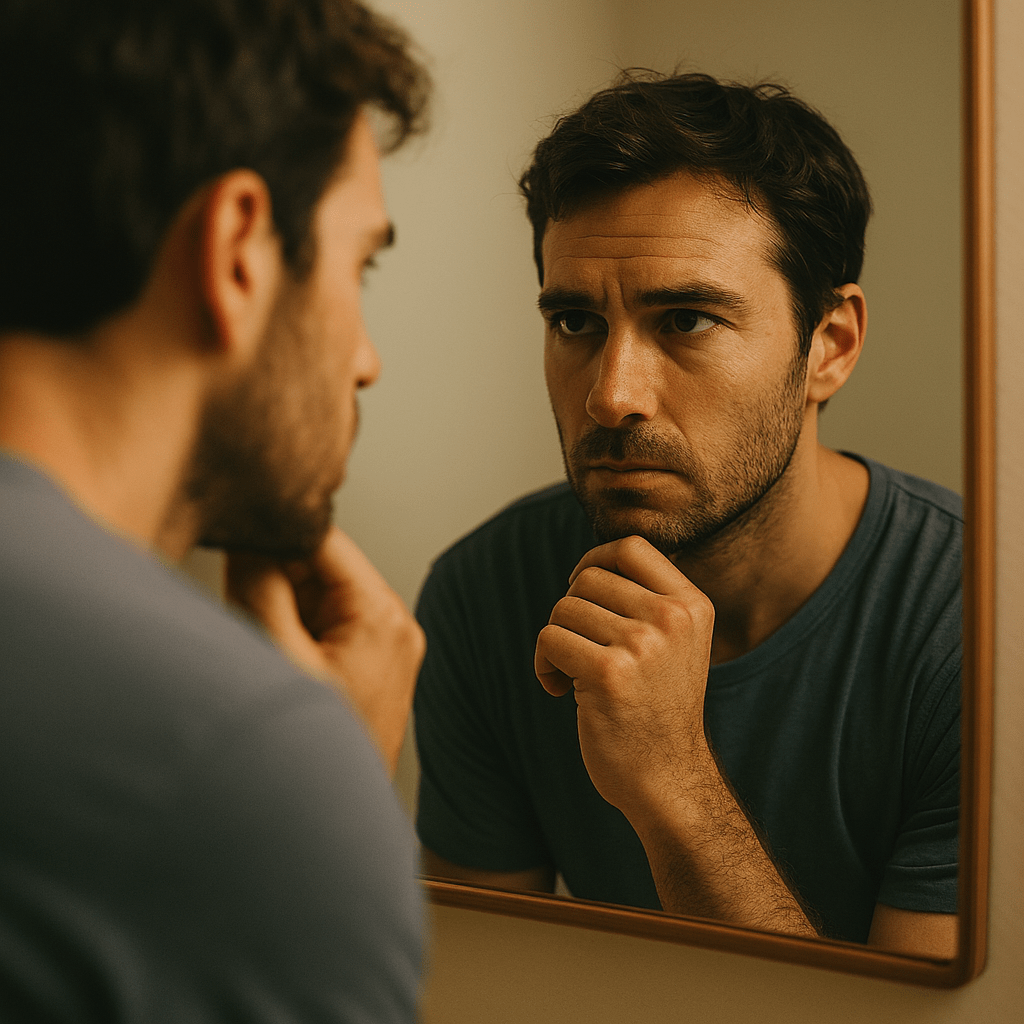
Well, that was my prayer at the time, but will I actually hold to its ideals in this moment? Will I say that only people other than myself need to change? Will I comfort myself with the assurance that I’m ‘one of the good ones’ and that I contributed nothing to what transpired? Or will I try to find some piece, even if it is small, that I can take accountability for?

Over the next three days I want to take my intentions and make them into actions. I want to look at this terrible thing that happened and see what I can change about myself as a response to it. I want to take ownership for the ways that my behavior has helped build a culture that produces tragedies such as these. I want to be realistic, and pragmatic, and honest.

I want to do this, because I truly believe it is my responsibility to do so. I believe it is the responsibility of us all. Only by focusing first and foremost on our own accountability will we become innocent of the world’s evil and transcend it. If enough of us take accountability, then we will transcend the world’s evil by changing the world so that events like these don’t happen anymore. Or, if not of us take accountability to accomplish that, we will at least transcend the world by no longer being part of the cycle that creates moments like these. Either collectively or individually, we can only create a better world by each of us taking accountability for ourselves.