Tended Towards Ruin

A Heavy Loss)

There was a project that I once loved very much. It was a program oriented towards connecting men with God, helping them to bring their hearts back into His light. It was small and local, humble and unpolished, but it did truly miraculous things in the lives of those who attended it. Lately, though, I’ve found myself struggling to recognize that same institution from what it has become today. At some point, after about ten years of operation, the institution became a for-profit organization, and changes started being made for the betterment of the bottom line, not for the betterment of the men it served. Several of the original founders quit, due to personal disagreement with this new direction.

This has been a heavy thing for me to come to grips with, but as I have reflected on it I’ve realized that it was always going to go something like this. The special spirit of the old program had to meet its end one way or another, because that’s just the nature of things.

Tale as Old as Time)

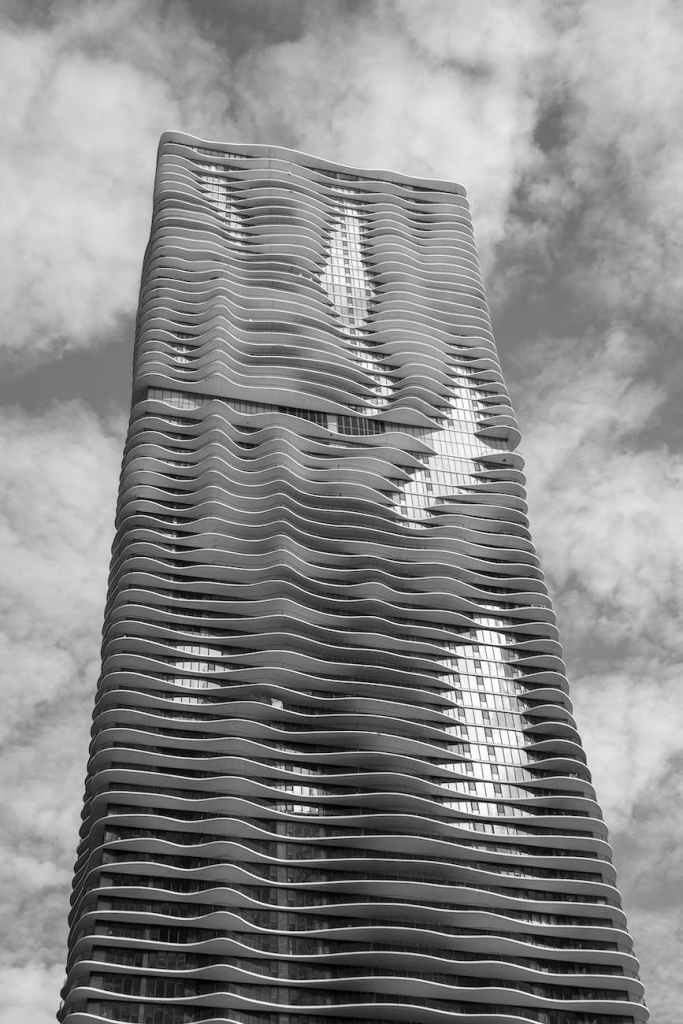
I am reminded of the story of the tower of Babel. In it, a nation of people decide to build a great tower, reaching all the way to heaven. Bold enough to make themselves gods, they toiled and labored on this great elevation of man until the whole thing toppled to the ground.

We do not know exactly how high they built their tower, only that it fell before they could achieve their aim. Their construction became destruction, their order became ruin, and the people were returned back to the level of the fallen earth.

This, of course, is a type for all manner of structures in the world today. And I don’t merely mean physical structures, either. Even more so it applies to structures of law, of government, of ideology, of any edifice constructed by the wisdom of man.

The Way of Things)

Every club, organization, corporation, and ideal is laid with ruin in its foundation. On the one hand, this might be because they are laid with carnal and earthly motivations, such as focus on profit or notoriety. Once making money is one of the organization’s pillars, then it is tied to the natural things of this earth, all of which decay, erode, and finally collapse. Through the years we have seen countless companies over-exploit their workers, consumers, and intellectual properties, killing the golden goose just to get a higher profit in the short term. We have seen countless governments siphon power and wealth to the highest class until they became too top-heavy and collapsed under their own weight. The compromises that were deemed necessary to make the enterprise possible eventually make its continued existence impossible.

But even without a foundation of earthly motivations, every structure of man is still doomed to fall due to our fundamentally flawed nature. Even our organizations that are built on ideal, and virtue, and purity of intention, gradually erode and eventually go wrong entirely. Even if a core principle is worthy, if it is taken slightly too far at the beginning, it will magnify and accelerate over time, eventually becoming a great evil. It is like stacking blocks to build a taller and taller tower, given enough time and distance every structure leans too far one way or the other. Given enough time and distance, every little flaw becomes a crushing error, and the whole thing will topple. So an organization founded with a focus on discipline will eventually become fascistic oppression, whereas a focus on liberty will eventually become gross hedonism. We sow the death even in the birth, it is simply our nature.

Even God’s church, once entrusted to earthly stewards, is tended toward ruin. The world was in a state of apostasy in the time of Noah, and in the time of Abraham, and in the time of Jesus. God has to refresh His word among His people repeatedly, not because His word has deteriorated, but because we people just keep losing our grasp of it. We know that even the believers today will once again be on the brink of ruin when God will have to refresh everything with the second coming.

What Lasts)

Ironically, what truly lasts is what seems most transient. Though man’s works are doomed to fail, along the way they house occasional sparks of something pure and genuine. There can be a nugget of God in the midst of all the stone. And though that nugget seems momentary and transient, it is only because we are perceiving it through a shifting lens. In actuality, each of those nuggets is anchored in something realer and truer than the structure it was found within.

There is an entity behind all those sparks, a constant certainty beneath every brief wonder. By fastening ourselves to these pearls, and following their threads to deeper things, we tie ourselves to the only thing that is actually eternal.

The man-made program I once loved may be gone, but the experiences I found within it have not. Those experiences introduced me to the One who hasn’t changed at all, and never will. In reality, I haven’t lost a thing.


Thought for the Day- To Accept One Lie

To accept but one lie is to destabilize all of its many connected truths

To Live Freely: Part Eight

I am concluding the section of this study where I examine the ways that we set others upon false foundations and all the negative consequences that follow. I’ve considered individual cases thus far, but now I want to turn my scope broader. After all, one way to prove the invalidity of a proposition is to apply it on a universal scale and then see if it maintains its original appeal. With today’s post I will hold the philosophy of the “helpful lie” to this universally-applied metric and see what the result of it is.

Applied in Reverse)

Suppose a religion were to have as one of its tenets that all other religious persuasions ought to be suppressed or destroyed. Clearly things would not work out so well for the members of that same religion if everyone else adopted the same principle towards them! It is a self-destructive policy, because it cannot be applied in reverse without destroying the originator. On the other hand, a religion having a fundamental tenet that there should be religious freedom for all others would be itself benefited and protected if the same principle were applied back to it again.

So I say to the person that believes in using beneficial lies to protect other people, you would do well to consider how you would feel if this same principle was applied back towards yourself, and also universally to all other people. You might say that you are comfortable with people telling you the same sort of lies that you tell to others, but that isn’t a fair comparison. Your idea of what is okay to lie about is your own personal opinion, so to be consistent you would have to be accepting of other people using their own judgment as to what is appropriate to lie to you about. Also, you might feel you could trust the decisions of those who are equal to you in intelligence and morality, but that also isn’t a fair comparison. You are less intelligent and moral than some of those that you lie to, so you must consider how you would feel being at the mercy of those who are less intelligent and moral than you.

Does that sound like a comfortable proposition, being subjected to the false realities concocted by the basest and meanest of society, entirely according to their own opinion and judgment? I’m certain it does not!

When one supports themself in telling a “white lie,” they give all other people permission to do the same, and that’s really not a trend that ought to be being perpetuated. On the other hand, when one firmly decides to tell the truth, they revoke the right of all others to lie. If enough of us were to insist on truth-telling for ourselves, and renounce lying on the part of others, we would likely start to see a ripple of truthfulness throughout our society. Convictions, once held by enough people, influence even those who have not become totally committed to them. And even if we don’t reach the point of mass adoption, at least those who perpetuate honesty will be living in a accordance with a principle that is constructive, not destructive.

Lies Upon Lies)

But let us go back to this notion of lies being told at all levels of our society. I have already discussed in a previous post how a lie, by its definition, separates everyone that stands upon it from the ground level of life as it really is. Everyone who believes in the lie is now out on a ledge which might break under its own weight, particularly as more and more people take residence upon it.

And now, extend that with the realization that many people who are already founded upon a lie are also telling additional lies upon it. People are exponentially multiplying the confusion, carving out more and more from the true foundation, extending ledges out upon ledges, building their deceitful worlds without any knowledge of where the center of balance even is. At some point, we will have the straw that breaks society’s back, and all will crumble in violence and chaos.

And I’m not merely saying that from a theoretical perspective, I believe the notion is borne out by a simple examination of history. I feel that these compounded lies are the only way to explain such collective insanity as was seen at Auschwitz and the Gulag. The deceit might have seemed “harmless” enough at first, a simple mischaracterization of national pride or social inequity. But then that deluded premise was compounded with faulty reasoning for how to address the issue and aggressively expanded by the masses taking hold of the idea, until an entirely untenable reality was force upon millions, killing countless of innocents and eventually collapsing the entire experiment under its own weight.

The only system which is sure to be equal and fair to everyone, the only one that is sure to be founded on solid bedrock, is the one that stands firmly on the ground of the truth. That truth may be unpleasant, and without any simple solutions, but dealing with it directly is the only possible way to make genuine progress. All other strategies are temporary structures, at times very pretty, but all of them doomed to fall.

Thought for the Day- A Flawed Foundation


Laying perfect bricks on a crumbling structure only hastens the collapse of it all. At some point, you have to tear the whole thing down and make a new foundation.

A New Foundation: Part Two

Weighing Down)

Yesterday I shared about the broken and divided foundation that is exposed in a marriage when a secret addiction is brought to light. Every positive experience from the past was at least somewhat predicated upon a lie. Every good and decent thing that the addict ever did is tarnished.

And not only is the past thrown into disarray, but also the present and the future. I pointed out how even the most sincere and genuine acts of kindness from the now-truthful addict can be a trigger to his wife, reminding her of all the false and manipulative overtures he made in the past. Yes, today his actions might be blameless, but they are linked in her memory to the actions that were not.

Thus, the husband trying to repair the marriage with acts of goodness is like trying to fix a crumbling building by stacking new floors on top of it. Those new floors might be sound and whole, the very finest of design, but their added weight is only going to hasten the collapse and soon the whole thing will come down, good and bad parts alike.

The addict and his wife are stuck in a situation where anything they do to try and prop up the falling structure only sets off more problem areas. Finally, they might realize that they have to stop trying to save a fundamentally ruined structure. And, counter-intuitively, that might just be the thing they need to save their marriage.

Letting Go)

I have known many couples in recovery that just admitted that their marriage had failed, stepped back from the problem, and watched it collapse at their feet. And then they started talking about how to build a new one. They realized that they could start the relationship over from scratch. They could pour a new foundation there at ground zero.

The old marriage vows were now a sham, they had been broken to the point of losing all meaning. So rather than trying to revitalize them, why not renounce them for the empty promises that they were and make all-new commitments instead? The couple’s memories are marred by the Jekyll-and-Hyde performance of the addict weaved through them all. So why not accept that those memories’ former luster has been lost and start making new ones instead?

It can be such a relief to realize that you don’t have to solve this architectural problem at all. You don’t have to marry two opposite realities together. You can instead assign all that was flawed and broken to the past and all that is hopeful and good to the future.

Some of the couples I have known that made this discovery bought new rings, had a new vow ceremony, and started counting their anniversary from the day they recommitted themselves to one another. It might sound like a strange thing to do, it certainly goes out of the normal convention, but really why not? It is an irregularity that is more congruent with life as they were experiencing it. Perhaps they didn’t realize it at the time, but so much of their confusion was because they were trying to fit stereotypes of love and marriage that didn’t fit their situation. There’s nothing to say that you can’t and shouldn’t alter the signs and symbols of love and marriage to match the one that you actually have before you.

In Due Time

Before I close off this topic, I must point that none of the couples in our recovery group took this step on day one. It would have been hugely premature to say, “let go of the past and hold on to now,” when “now” was still totally enmeshed with the “past.” Most of us addicts were still learning how to even live soberly from day-to-day, and it wouldn’t do to make new marriage vows that wre then broken a second and a third time.

It is prudent to wait until you are actually ready to live the new life before you make a solemn symbol of it. Better to not start pouring the new foundation until you have learned the fundamentals of architecture. Better to not say it is for real this time until you really mean it. And not only that you mean it right now in this moment, but you know that you will still mean it tomorrow.

Put another way, it is good to commit to the better future, but neither of you can do that until you are first ready to totally let go of the past.