Faith vs Works- The Argument for Works

In the last post I made the case for salvation by grace through faith, and I provided what I consider to be the strongest verses to support that view. I absolutely believe in salvation by grace. That being said, I also believe in salvation through works, and again the scriptures give clear evidence for this. Let us look at the verses that demonstrate this most effectively.

Good Works)

Not every one that saith unto me, Lord, Lord, shall enter into the kingdom of heaven; but he that doeth the will of my Father which is in heaven (Matthew 7:21).

Then shall the King say unto them on his right hand, Come, ye blessed of my Father, inherit the kingdom prepared for you from the foundation of the world: For I was an hungred, and ye gave me meat: I was thirsty, and ye gave me drink: I was a stranger, and ye took me in: Naked, and ye clothed me: I was sick, and ye visited me: I was in prison, and ye came unto me, (Matthew 25:34-36).

And he said unto them, Go ye into all the world, and preach the gospel to every creature. He that believeth and is baptized shall be saved; but he that believeth not shall be damned, (Mark 16:15-16)

If ye love me, keep my commandments (John 14:15).

What doth it profit, my brethren, though a man say he hath faith, and have not works? can faith save him? Even so faith, if it hath not works, is dead, being alone. (James 2:14, 17).

For we are his workmanship, created in Christ Jesus unto good works, which God hath before ordained that we should walk in them (Ephesians 2:10).

My Own Growth)

The message of these verses is clear: It is not enough to only believe the right things or say the right words. We may never be able to earn our way into heaven, but we do become suited to it by the acts of devotion and good that we do. Jesus, himself, called on his followers to do certain works (follow the commandments) and to enter certain ordinances (be baptized), and he went so far as to say that being saved was contingent upon it.

To all this scriptural evidence, allow me to add my personal testimony that entering into God’s ordinances, and taking part in His work, has been essential to my path of salvation. The fact is, I was not naturally well-suited to heaven. It is my nature to be selfish, to be slothful, to be lustful, and to be mean. It has been through the effort of surrendering my will to the Father and doing His work, instead of my work, that I have cultivated some improvements to my heart. It isn’t about carrying myself to heaven, it is about reshaping myself to fit when I get there. Given my personal experience, I can only accept a theology that teaches the necessity of good works in our salvation.

Now that we’ve made a strong case for both salvation through faith/grace and also through works/ordinances, let us dispel some of the false teachings and myths related to both. We will begin that work with our next post.
A Loving Relationship with Christ- Love Without Obedience

Love via Obedience)

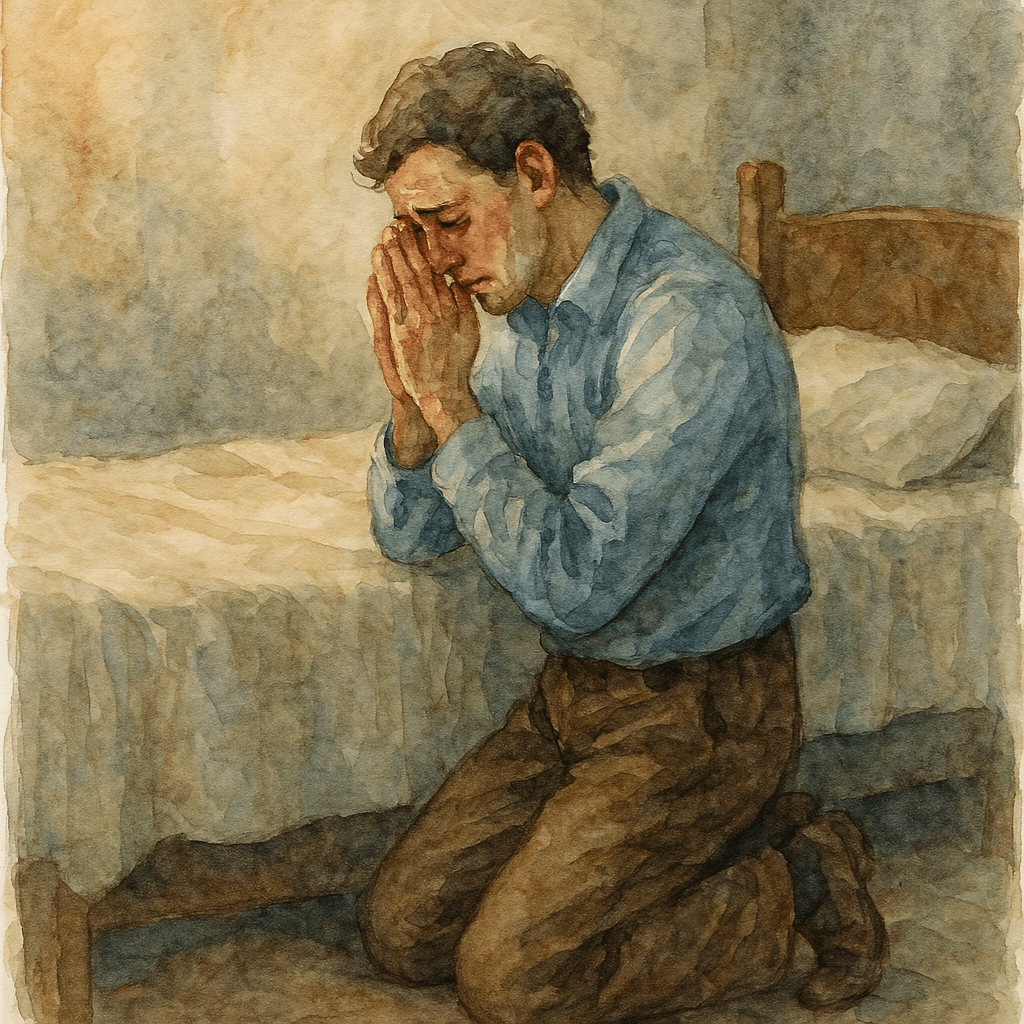
In yesterday’s post we gave both an acknowledgement and a question. Yes, Jesus does love you, but how do you love him back? Can someone say that they genuinely care for their Savior while shamelessly performing the very sins that make him suffer to death? Surely, genuine love for the Lord must look different.

The scriptures detail exactly what genuine love would look like. Jesus, himself, said, “If ye love me, keep my commandments,” (John 14:15).

We also learned yesterday the importance of knowing Jesus. There, too, the scriptures tell us how to do so.

“And hereby we do know that we know him, if we keep his commandments,” (1 John 2:3).

“Whosoever abideth in him sinneth not: whosoever sinneth hath not seen him, neither known him,” (1 John 3:6).

The message of the scriptures is clear. If we want to do our part to gain salvation, we must love and know the savior, and the means and the fruit by which we come to love and know the savior is by keeping his commandments.

The Proper Framing)

There is an important distinction that we must make here, though. We are not saying, “keep the commandments to make it into heaven,” or “do enough good works that you deserve to be saved.” Those sorts of messages make people overwhelmed and uncomfortable, and well they should, because they stray from the true theology.

When we focus primarily on the works, we stop being motivated by love, which is supposed to be the core of our behavior. It is entirely possible to do good works without love, and those offerings are not acceptable to the Lord, as Cain famously learned.

We should always frame our obedience to the commandments as a natural extension of our love of him. We should say, “he loved me first, and he died for me, and me following his word is just the way that I love him back.” Any time we feel that our works are being driven by a different motivation, such as fear, we need to recenter ourselves on love.

Grit vs Surrender- Liberation vs Burden

Thou Shalt Not)

There are many that say the restrictive aspect of the commandments is made obvious by how many of them start with the words, “thou shalt not.” How can anyone dispute that God is trying to oppress us, given how He prohibits us from doing things? It seems from this view that a truly permissive and liberating set of commandments would be ones that started with “thou shalt.” But is that true?

Just looking at the two phrases at their most fundamental level, “thou shalt” is a call to action and “thou shalt not” is a call to inaction. “Thou shalt” requires doing, “thou shalt not” simply requires being. “Thou shalt” is effortful, “thou shalt not” is restful.

Even when we consider historical examples of inappropriate “thou shalts” and “thou shalt nots,” it is times when people were compelled to act against their will that seem even more oppressive than times when people were restricted from their will.

Or consider these thought experiments, would it be more perverse for me to require you to not have sex with someone that you want to, or to require you to have sex with someone that you do not want to? To not be allowed to speak a truth, or to be compelled to spread a lie? To refrain from punishing a person that you see as guilty, or to hurt a person that you see as innocent?

In short, it is strange to see people rankle under the term “thou shalt not,” when clearly its opposite has far more potential to be oppressive.

The True Taskmasters)

Of course, one might say the thought experiments I provided were poor examples, because they all involved being compelled to do or not do things against our desires. The problem with the commandments is that they hold us back from the things that we want to do, while a life of fun invites us to do them.

To that, I say, you haven’t yet seen just how dark “fun” can be.

That which we call “fun” is nothing more than indulging our appetites. Our appetites for food, for sex, for attention, for endorphins. And anyone with experience and perception will soon find out that appetites are the true slavemasters of all mankind. It is a mark of immaturity to still think that feeding the appetite is harmless fun. It is a mark of wisdom to know that what is once given to the appetite by choice, is soon taken by force. Ever notice that all of the twelve step programs are for people who became slaves to the “fun” things?

Just ask any world-weathered soul what it’s like to go on a bender and be made useless when everyone needed you most, or to sleep with someone you don’t even know because it’s the closest you can get to feeling loved, or to take drugs just to feel again.

These aren’t the actions of people doing what they want to do. These are the actions of people who are actually being oppressed, people being pulled by the “thou shalts” of a cruel and demanding taskmaster. Their appetites are their god, and that god makes them do things that they don’t want to do. They don’t like the music that is playing anymore, but their feet keep dancing to the tune. “I don’t want to do this anymore!” they cry out, but the chant continues, “Thou shalt! Thou shalt! Thou shalt!”

For people in such dire straits, there is no message more merciful than a God who would finally stop that dance. A God who would have the kindness, the leniency, and the liberality to finally give them “thou shalt not.”

From Failure to Faith

Those that say they will not follow God’s commandments until they are convinced that He is real overlook the fact that even the truly faithful regularly struggle to keep His commandments also. Even a strong belief in God’s reality does not suddenly cause us to swallow our appetites and live as perfect saints.

Indeed, it is our struggle with our moral behavior that leads so many of us to believe in God in the first place. Our belief in Him begins as we let go of our misplaced belief in ourselves. We try to change our hearts on our own, we consistently fail, we lose all trust in our own power, throw our last hope on a God that we are not sure of, and then experience a miracle as He changes what we never could.

Thus, the cynic’s disbelief of the Almighty and dismissal of the commandments is not due to having not explored God enough, but due to having not explored his own heart enough.

Scriptural Analysis- Exodus 34:27-28

27 And the Lord said unto Moses, Write thou these words: for after the tenor of these words I have made a covenant with thee and with Israel.

28 And he was there with the Lord forty days and forty nights; he did neither eat bread, nor drink water. And he wrote upon the tables the words of the covenant, the ten commandments.

We heard a few of the commandments that the Lord reinstated to Moses, but now we are told that the two remained in communion for another forty days and nights. Given that duration, it seems entirely plausible that every single commandment that the Lord had given thus far, from when the Israelites first left Egypt to the time Most first ascended Mount Sinai to the time he ascended it the second time, were all included in this restoration of God’s law. All of the commandments around the feast days, and surrounding betrothal and marriage, and the management of servants, and the ten commandments, and the structure of the tabernacle, and the process for each sacrifice, all of it. In fact, verse 28 specifically calls out the ten commandments as being one of those things that was communicated, even though we do not have the full transcription of that here, so it stands to reason that all these others might have been as well.

How Moses was sustained for forty days and nights without even water is a wonder, and I must assume that there was some sort of divine intervention there. I wonder if he was being nourished by the spirit, and whether partaking of the food and drink of our fallen world would have made him unfit to remain in the presence of the Lord. Indeed, we will see in the following verses that he really was somewhat transfigured during his time in the mountain, and that it altered his very appearance.

Scriptural Analysis- Exodus 34:19-20, 25-26

19 All that openeth the matrix is mine; and every firstling among thy cattle, whether ox or sheep, that is male.

20 But the firstling of an ass thou shalt redeem with a lamb: and if thou redeem him not, then shalt thou break his neck. All the firstborn of thy sons thou shalt redeem. And none shall appear before me empty.

25 Thou shalt not offer the blood of my sacrifice with leaven; neither shall the sacrifice of the feast of the passover be left unto the morning.

26 The first of the firstfruits of thy land thou shalt bring unto the house of the Lord thy God. Thou shalt not seethe a kid in his mother’s milk.

God continues to re-establish His original commandments, now detailing the requirement that every firstborn of their flocks was to be an offering to the Most High. These instructions are all things that we have heard before.

It is interesting to note that the laws that God is re-establishing were originally given clear back at the start of Israel’s journey out of Egypt. These are not the instructions that He gave the first time Moses met with Him in Mount Sinai, which included the ten commandments, nor is it the instructions that He gave during Moses’s second visit to the mountain, which included the details for building the tabernacle.

Of course, we will see throughout the rest of the Old Testament that the Israelites observed all of the laws given at all of the prior times of instruction, even if we don’t hear them all being reimplemented here. Moses was up in the mountain this third time for another forty days and forty nights, so it is entirely possible that the Lord did, in fact, restate all of the previous commands during this visit, even if only the first portion of His words have been transcribed into our present-day Bible.

The Basis for Following the Commandments: Summary

In this series I noted society’s progressive departure from traditional Western ethics and morality, which are founded upon the Judeo-Christian commandments. I identified three core pillars of belief that are essential for wholehearted adherence to these commandments. They were:

  1. Belief in the reality of the Judeo-Christian God
  2. Belief that the Bible contains the genuine commandments of that God
  3. Belief that those authentic commandments are essential for true happiness in life

If someone lacks any one of these testimonies, then they are not likely to be motivated to actually follow the commandments.

Review)

As we discussed, belief in the reality of the Judeo-Christian God means believing that God is real, that He is our creator, that He is benevolent, and that He is all-powerful. Put another way, we need to believe that God is someone we can actually trust. We trust Him because He is good, and the things He says are genuinely meant to bring us joy, and we trust Him because He is capable, so if He says something is for our ultimate joy He will be able to deliver on that promise.

Overlapping with that testimony is the third one, which is to believe that God’s instructions are THE BEST way to obtain happiness and purpose in our lives. So long as we think we can figure out a better plan than God’s we will hold ourselves back from His law. To have this testimony means that we trust in Him more than anything else, even more than we trust in ourselves. It means that His word carries greater weight than any other.

Finally, even if we believe that God is real, and that His word carries greater weight than any other, we still need to know what those words are. To follow the commandments we have to believe that the Bible is genuine scripture, divine words that originated from that real and trusted God. Without this testimony, one is left to operate only on the direct whispers of God to our own heart, which I believe for most of us occurs less frequently than the number of times we need guidance in our lives. At some point we need to adopt principles on faith, and one must have a testimony in the Biblical commandments to follow them

Cultivating Testimony)

Some people seem to come by these three pillars of testimony naturally. Their inner core is already perfectly aligned with each tenet and they accept and live the ethical principles of Christianity without struggle.

But I believe that is not the case for most of us. I believe that most of us do not naturally have all three of the core beliefs mentioned here. Maybe we have one, maybe two, maybe none of them at all. However, not naturally having all three pillars of belief does not mean that we should just abandon the Christian ethic. It turns out that most testimonies do not come before the trying of the law, but after. Most of us don’t know what we believe until we live it. Either we try the right thing and then become convinced that it is right, or we try the wrong thing and then become convinced that it is wrong.

So if you lack any or all of the core pillars mentioned above, I would implore you to not give up on their ideas, but to put them to the test. Pause and think what sort of life you might live if you did already believe in them all, and then try living that way for a time. See whether you find a greater sense of wholeness, peace, and joy from that lifestyle or not.

I don’t want to extend this study long enough to lay out the evidence for the following assertions, but perhaps I will do so at another time. The Christian ethic has been the bedrock of Western civilization, and has brought greater innovation, illumination, and relief into the world than any other thing. It would be naive and foolish to discard it without ever giving it serious consideration and experimentation. If it has uplifted so many billions, it really might lift you as well. Certainly it has done so for me.

The Basis for Following the Commandments: Part Four

Thus far we have discussed how accepting the traditional Western ethics requires us to both believe in the Judeo-Christian God, and that the words of the Bible contain His genuine commandments. There yet remains one core pillar for our testimony, though, which is a belief that God’s true commandments are absolute.

The fact is, there are many today that do believe in God and do believe that the Bible contains His commandments, however they are taken by a notion that these commandments are little more than paternal advice. They think it is ideal to follow the commandments, and that it would be good for other people to adhere to them, but that things won’t be so bad if they personally don’t. What they lack is a testimony that God’s laws are actually imperative.

Traditionally, the commandments have been presented to the Western world as having both a negative deterrent against breaking them, and a positive reinforcement for following them. The negative deterrent is the assertion that breaking the commandments brings suffering, either in the form of divine punishment or simply natural consequences. The positive reinforcement is the assertion that following the commandments brings joy, either in the form of divine blessing or simply natural consequences. The combination of these two is that following the commandments will lead to the most fulfilling, most joyful, most complete form of life that we can experience, whereas regularly breaking them will lead to the most heartbroken, the most painful, the most fractured form of life that we can experience.

So now the questions come to you. Do you believe that God’s commandments genuinely matter? Do you believe that the quality of your life will be always be affected by adherence or resistance to them?

If the answer to any of those is “no,” why is that? As with the other pillars, is there something in your life that prevents you from believing that the highest quality of life can only be achieved by adherence to the commandments? Is there some part of you that insists on finding another way? Would you be willing to experiment with the commandments, adhering to them as a matter of analysis, to see if your quality of life markedly improves?

If, on the other hand, your answer to all of those is “yes,” then you have established that God is real, that His commandments are taught in the Bible, and that following those commandments really matters for your personal happiness. There can be no logical reason not to abide by these principles of traditional, Western ethics. Only weakness of the flesh could cause you to set these principles aside.

The Basis for Following the Commandments: Part Three

In my last post I discussed how a belief that the Judeo-Christian God is real, benevolent, and all-powerful are necessary components to accepting the commandments taught in traditional Western ethics. However, those beliefs alone do not get us all the way to being convinced of exactly which law we need to live by. Today we will talk about the second aspect of our testimony that is necessary to follow these commandments. In order to abide by these rules, we have to believe that they are really coming to us from the God that we believe in.

The commandments that have been taught to us in traditional Western culture have all been derived from the Bible. They include the ten commandments that were given to Moses, as well as the others that are scattered throughout the sacred text. We follow them because we consider them to be the words of God, Himself, and since we believe that He is real, benevolent, and all-powerful, we are inclined to follow the instructions that He has given us. He would know, better than anyone else, what behavior would be for our own good, and following His plan would be the most certain way to achieve happiness and peace.

But what if one believes in God, but not necessarily in the authenticity of the words of scripture? We are thousands of years from the first writing of those words, and it is strictly a function of faith to say, “yes, these words really did come from the mouth of the Lord, and not just the pen of man.”

One doesn’t even have to get lost in academic arguments on the authenticity of the text. In my observation, the reasons why most people dismiss the Bible has nothing to do with scholarly analysis, but just because their default is not to believe something that is so fantastic and far removed from them. Even if one accepts that a loving God probably would leave instructions to His children, they might struggle to accept anything that purports to be that instruction. They have lost their capacity to believe in the incredible.

I turn these questions over to you. Do you believe that the Bible is genuinely the word of God? And if it is, do you accept that the commandments written therein are His genuine instructions to you?

If the answer to any of those is “no,” why is that? As with the questions of God’s reality, is there some experience or barrier in your life that prevents you from believing in anything that purports to be scripture? And even if you are prevented from believing by default, would you be willing to abide by the commandments contained in the Bible even while unsure of their authenticity, if only to see if they come alive for you as you do so?

If, on the other hand, the answer to all of those questions is “yes,” then we have established that God is real and His commandments are the same as what is taught in traditional Western tradition. Even with all that, though, there remains yet one more pillar of faith that must be established. Even if these are God’s commandments, how absolute are they? Is it permissible for us to flex and bend them? We will discuss that matter in the next post.

The Basis for Following the Commandments: Part Two

In my last post I stated that the question of whether it is reasonable to abide by God’s commandments rest on three fundamental pillars. It is not the point of this study to try and prove each of these pillars, only to establish that they are the core issues that must be wrestled with when deciding whether to follow the traditional Christian principles or not. It is left to the reader to discover what answer he or she has to every point.

The first of these core pillars has to do with the reality of the Judeo-Christian God. Is there a supreme creator of the universe, one who calls Himself our Father, who seeks our eternal salvation? There are many different possible representations of who or what that God would be, whether personified or disembodied, whether dwelling in the heavens above or emerging from within the human heart, but for the purpose of this study all that matters is the question of whether a benevolent and all-powerful creator exists. This requirement is itself divided into three parts. As taught in the Judeo-Christian tradition, God must be:

  1. Real
  2. Good and Benevolent
  3. All-powerful

If God were not good and benevolent, then His laws would not necessarily be for our benefit. They might not be given to us out of love, designed to bring about our greatest happiness, and so adherence to them might be counterproductive to our nature. If God is not all-powerful, then He may not be able to secure for us the promised blessings that obedience to His law is supposed to provide. We would have no assurance that following His law would give the peace, joy, serenity, and wholeness that has been foretold of. And if God is simply not real at all, then obviously both of the above failings apply.

And so, it is up to the sincere seeker of truth to determine: do you believe that God is real? Do you believe that He loves you, and only provides laws that are meant to secure your ultimate happiness? Do you believe He has the power to deliver that happiness as promised?

If the answer to any of those is “no,” do you wish it was otherwise? Is there some experience or barrier in your life that prevents you from believing in such a God? Would you be willing to live as if such a God did exist, if only to see whether He manifests Himself to you in time?

Or, if the answer to all of those is “yes,” then one knows that God’s commandments to us are motivated by love, and that they are empowered to bring us the peace and serenity we need. Following such law would be a privilege, and it would be the great desire of the true believer to find out exactly what are the details of that law. And that brings us to our second point, are the commandments taught in traditional Christianity the true law of this true God? We will discuss that matter in the next post.