
Before we can become right before God, we have to be able to confess everything that we have wrong before God.
Before we can become right before God, we have to be able to confess everything that we have wrong before God.

But I was racked with eternal torment, for my soul was harrowed up to the greatest degree and racked with all my sins. Yea, I did remember all my sins and iniquities, for which I was tormented with the pains of hell; yea, I saw that I had rebelled against my God, and that I had not kept his holy commandments.- Alma 36:12-13
Yesterday I spoke about perpetrators of abuse who try to avoid any questions about the state of their soul. Deep down they know that they have done wrong, but they go to incredible length to avoid giving an answer for their behavior because they know all the answers condemn them. Obviously, a person in this state is living apart from reality, and will never be able to achieve real change until they stop running from the truth.
But it is not as if these people are only living at one extreme. They only work so hard to avoid introspection because at their core they are already convinced that they are irredeemably evil. If they weren’t already convinced of that, they wouldn’t need to dodge conversations about it. Thus, they are divided against themselves, utterly loathing themselves even while maintaining that they are totally blameless.
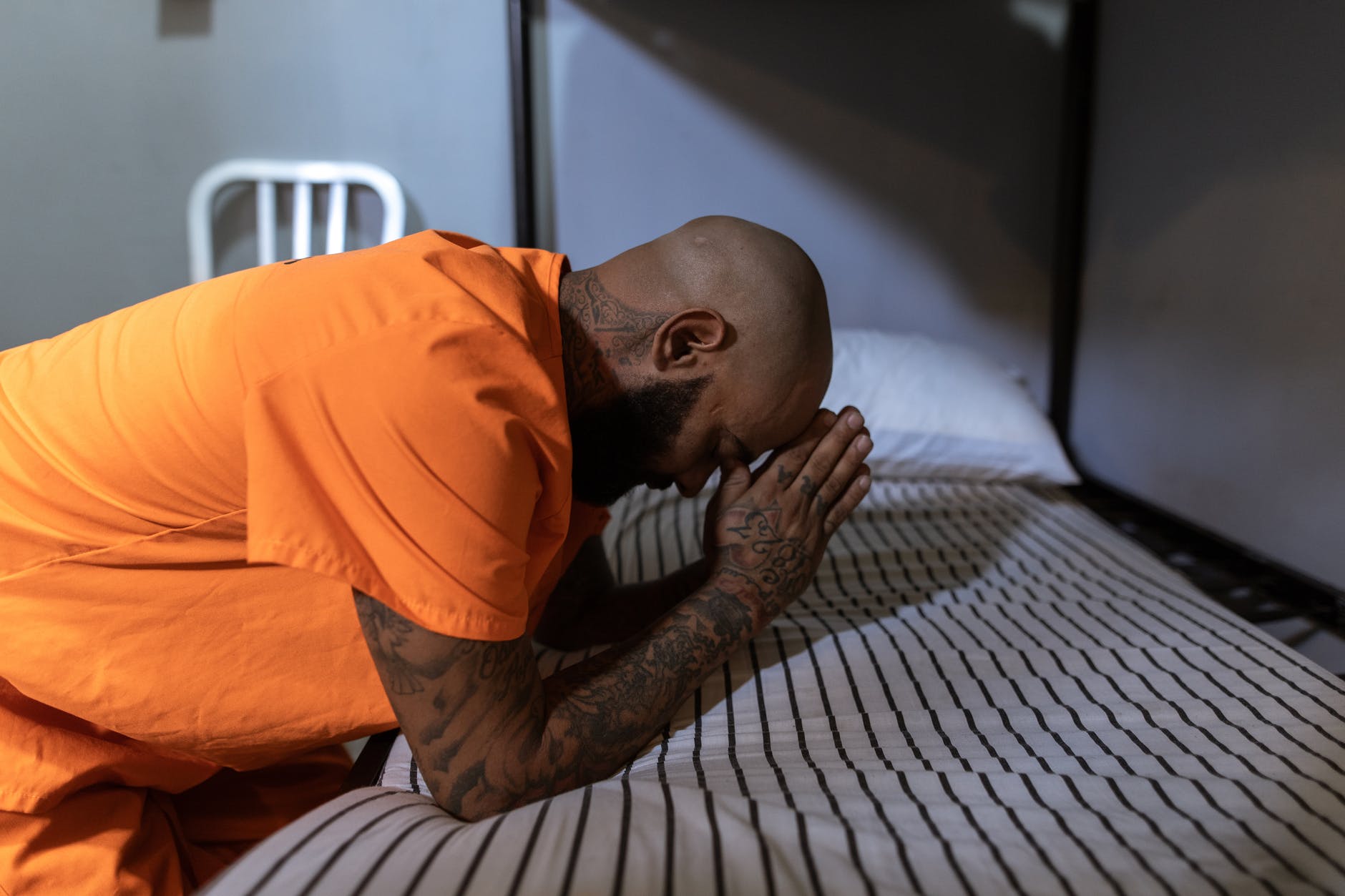
This is an exhausting way to live, and now and again a perpetrator will give up on this divided self-perception. Typically they have first tried to give up on guilt, to say they just don’t care what they do, but the heart refuses to comply. Their conscience betrays them, and refuses to be beat into submission. So eventually they go the other way and wholeheartedly confess that they are bad and guilty.
The reason we put off this confession for as long as we can is that we instinctively know it will bring with it all manner of anguish and torment. Truly owning one’s serious mistakes can invoke the most pronounced and painful suffering we will ever know. We can become lost in a labyrinth of despair, with many paths leading to a variety of unfortunate ends, especially when we discover that not even making our confession is necessarily enough for us to stop doing evil.
For that which I do I allow not: for what I would, that do I not; but what I hate, that do I.- Romans 7:15
There is a portion of addicts who discover that making confession unlocks their previously-uncontrollable behavior. Just by brining their secret shame into the light it loses its power over them. They are able to live with a freedom that they never knew before.
But this only a portion of the addicts. Many others find that making their confession does help, but the problem still isn’t entirely removed. They continue to slip, continue to do the very thing that they confess is wrong. Thus they are still divided against themselves, truthfully admitting to what is right, but deceiving themselves with their actions.
Having taken this step and still not finding relief often brings a second crushing realization. The addict realizes that he is incapable of redeeming himself. Even if he could atone for all his past wrongs, which frankly he probably can’t do, it wouldn’t matter, because he’s going to keep doing new wrong things. All along there has been a secret desire that he would be able to pull himself up by his bootstraps and come into a way of life where conviction and behavior were one and the same. But now he realizes that he is irredeemable, at least by his own power.
If the addict didn’t give up before, he certainly might now. He has realized that he is not just guilty, he is fundamentally broken. He knew that he was bad, but now he realizes that he can never be good. Trial has been held and he has been convicted and condemned. This is what it means to be damned. This is what it means to be in hell.
Unlike when the perpetrator was in denial of even doing wrong, this appraisal of his life is completely valid. The abuser has finally centered himself on a foundation of truth, but it has come too late.
While he has come to a truth, though, it is not the only truth. It is true that man cannot redeem himself, but it is also true that man does not only have to rely upon himself to be redeemed. There is a God, there is a Savior, and there is a redemption.
Before the perpetrator can have access to the redemptive power of Christ, though, he typically has to first reach this place of appreciating his own damnation. This low point is a necessary prerequisite before true healing can commence.
So this despair is a good place to come to, but it needs to not be the end of the journey. It must only be a checkpoint along the way. The perpetrator must pivot his self-perception twice. First to shift from self-justification to accepting the reality of his crimes, then again to shift from self-condemnation to seeing himself as a son of God. Core paradigm shifts like these do not come easily. There is a reason this is a process, not an event.
But difficult as the perpetrator’s journey is, so too is that of the victim. Tomorrow we will begin examining those that have been on the receiving end of abuse, and the various disconnects from reality that they can experience as well. I’ll see you there.

Therefore whosoever heareth these sayings of mine, and doeth them, I will liken him unto a wise man, which built his house upon a rock: and the rain descended, and the floods came, and the winds blew, and beat upon that house; and it fell not: for it was founded upon a rock.

And every one that heareth these sayings of mine, and doeth them not, shall be likened unto a foolish man, which built his house upon the sand: and the rain descended, and the floods came, and the winds blew, and beat upon that house; and it fell: and great was the fall of it.

Matthew 7:24-27
At the end of yesterday’s post I made the case that when addicts deny or avoid the harm that we have done we are living a life that is divorced from the truth. Sweeping bad news under the rug does not change the underlying reality one bit, but it does detach ourselves from reality. And then trying to live a meaningful, purposeful life while keeping a blind eye to our sins is a vain endeavor. If you want your life to flourish, you have to align yourself with the truth of that life, both the good and the bad. This is just one of those fundamental truths, so basic and atomic that it defies explanation.
Confession, at its core, is therefore all about aligning ourselves to that truth. It brings our secret deeds into the light, acknowledging our problems as they really are, creating an image of ourselves that is harmonious with reality. Even though that reality is one that we are ashamed of, accepting it makes our world more right and whole even so. Everyone, perpetrator and victim alike, need to reconnect themselves to this truth if they ever want to really live again.
Because yes, this step of fully embracing the truth is a requirement for victim and perpetrator alike. Today and tomorrow we will be considering the ways that the perpetrator hides from the truth, and afterwards we will look at how the victim does as well.
The fact that the perpetrator tends to run from his crimes should be something we can all agree on. Each of us has seen many others, publicly and privately, who staunchly deny the reality of their moral perversions. We think it is cowardly of them to not face their well-deserved judgment, particularly when we are among those that they have harmed. Yet even as we recognize this behavior in others, we struggle to see how it is true for ourselves as well. We all have our blind spots, whether willful or ignorant. We know it isn’t right for anyone else to makes excuses for their behavior, but when it comes to us, of course, all of our excuses are totally valid!
Why do we live in this denial? Why do we overlook our obvious hypocrisy?
Well, for one we probably want to avoid punishment from others. We also don’t want to lose the things we have. Depending on the nature of our addiction, we might even be afraid of legal repercussions! But aside from any of those reasons, there is another and more immediate cause for our self-deception. We simply don’t want to face our dark reality, because doing so brings up some hard questions that we don’t want to answer. Questions like:
In our minds, we have two clearly-divided groupings of people: those that are good and those that are bad, and the first person that all of us sort into the good camp is our own self. It is the natural instinct of all of us to see ourselves as being the prototype for all that is right and good in the world. We might admit to some flaws, but we immediately follow that up with affirmations that our heart is really in the right place, that we are genuinely trying to do our best, that our good clearly outweighs our bad, that our situation is complicated, and that we’re nothing like all those other truly bad people!
But why then did you hurt someone that you loved?
Any time you bring the introspection back to this sort of targeted, direct question, you’ll catch yourself writhing and wriggling to escape! It’s like seeing a cave-dwelling creature scurrying to get out of the light! We writhe and we wriggle because deep down, one of the most fundamental fears that we all have is that we’re actually not one of the good people. We all dread the possibility that we’ve been the villain, not the hero, all along. Stating that we have so much as a doubt about the state of our soul feels like it is going to kill us. We would rather tell a thousand lies and curse everything that we touch than to say, “I have done serious wrong for which there is no excuse. I have hurt the people I love. I am deserving of death and hell.”
For all have sinned, and come short of the glory of God; -Romans 3:23
For the wages of sin is death -Romans 6:23
These are difficult verses to apply to ourselves, but they really are the truth. Accepting this truth feels like it will break us, but, paradoxically, this truth is the key to our rebirth. As we are told elsewhere in the bible:
The truth shall make you free. -John 8:32
This promise really is true, impossible as it may seem. Later in this series we will see why.
9 And the Lord God called unto Adam, and said unto him, Where art thou?

10 And he said, I heard thy voice in the garden, and I was afraid, because I was naked; and I hid myself.

11 And he said, Who told thee that thou wast naked? Hast thou eaten of the tree, whereof I commanded thee that thou shouldest not eat?

12 And the man said, The woman whom thou gavest to be with me, she gave me of the tree, and I did eat.

13 And the Lord God said unto the woman, What is this that thou hast done? And the woman said, The serpent beguiled me, and I did eat.
Perhaps Adam and Eve hid themselves first, but I must applaud their honesty in these verses. When confronted with an inquiry they came forward and clearly confessed all that they did wrong. “I was afraid and I hid myself,” “the woman gave me, and I did eat,” “the serpent beguiled me, and I did eat.”
I do wonder whether it even occurred to them to lie. Perhaps they realized God would see through it, or perhaps no such notions had yet entered the human mind, or perhaps they were simply choosing to do what was right.
In any case, as one who has partaken of his own forbidden fruit and then lied about it, I have great respect for Adam and Eve bringing it forth directly. I am never able to move on from my shame until I am ready to confess, and the sooner I have been able to do that the better it has always been.
He that covereth his sins shall not prosper: but whoso confesseth and forsaketh them shall have mercy.
For with the heart man believeth unto righteousness; and with the mouth confession is made unto salvation.
COMMENTARY
He that covereth his sins shall not prosper
The effort of self-improvement is too great to also be burdened by unconfessed wrongs. I have had personal experience in trying to make myself a healthier, better balanced, more faithful person…while also harboring secret shames. It simply didn’t work. I felt that I was running on frictionless ice, flailing my arms and legs about valiantly, but all to no effect. My system was broken, and I simply could not prosper.
But whoso confesseth and forsaketh them shall have mercy
And with the mouth confession is made unto salvation
Eventually I made confession to God, to my family, to my spiritual leaders, and started attending therapy for my addictions. Shortly thereafter one of my spiritual leaders asked me how I was doing and I expressed that I had felt a wall breaking down. Suddenly all my efforts weren’t cursed anymore. Suddenly striving to improve myself actually felt like it was going somewhere.
Yes, confession had brought me mercy, and it had put me on the path of salvation. I had anticipated that. But what had come as a surprise was that now when I sowed, I finally had the opportunity to reap.
 Spiritual Wanderings