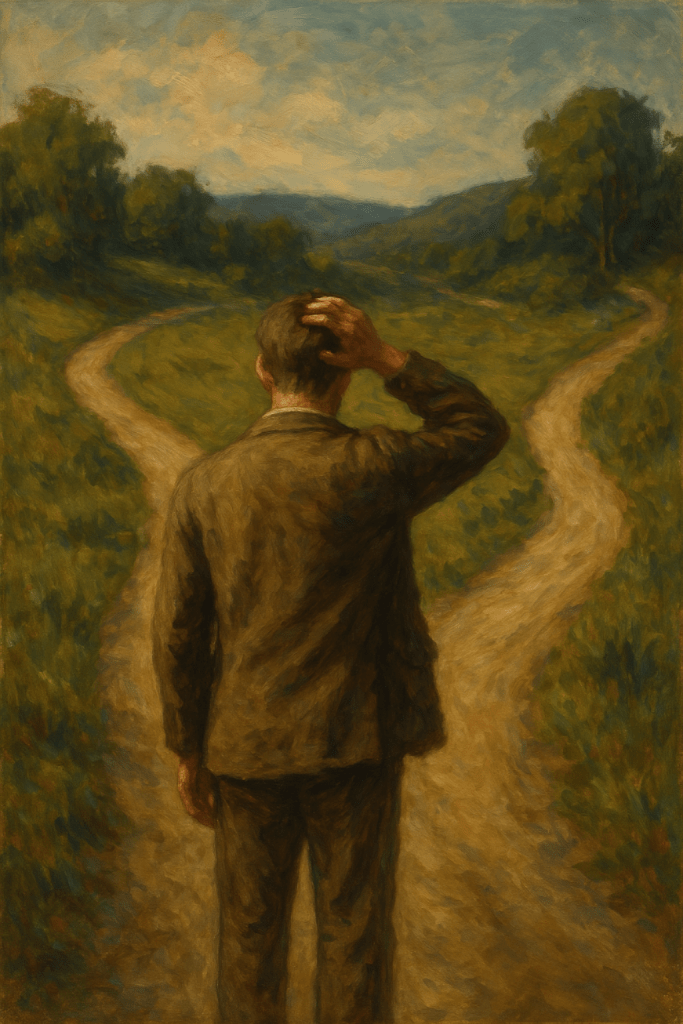
They say, “moderation in all things,” yet none can agree what the properly moderated view is. In the face of differing opinions and contradictions, there are a couple points that can help provide clarity.
There is a correct balance. It can be tempting to just assume that there is no proper moderation at all. That all positions are equally valid. But these perspectives are not enlightenment, they are giving up on the search for truth. Deep down, all of us know that there is such a thing as being too passive and too aggressive, too sexual and too prudish, too reckless and too risk averse. And if there is too much of each extreme, then there must be some place in the middle that is better. That better place might be a range, and it might shift a little from one person to another, but it is there and it can be found.
You will never have universal agreement. When you do find the correct level of moderation, it would be nice if everyone would agree that how you are living is right, but that will never happen. Some will always still say you are too much and others will say that you are too little. If you try to align yourself by committee, you will be jerked from side-to-side in a never-ending tug-of-war. In the end, you must depend on your own conscience to know if you are too fat or too thin, too quiet or too loud, too ambitious or too reserved. And never forget that both excesses are real, and both have people trying to pull you into them.
A choice of integrity is a choice that I can live with for the long term and not hurt my conscience. If I am making a choice that I am willing to tolerate only for a time, but could not abide by permanently, then it is likely not a choice that I am making in integrity.
That is not to say that there cannot be changes of situation or perspective. It is possible to make one choice in integrity, and then with integrity change it afterward. It is also possible to recognize that one is entering a special season in life, and posture oneself accordingly, with the up-front understanding that after the season is over things will change.
But if from the outset I make a choice with the hope and expectation that those around me will change so that I do not have to abide by that choice any longer, then I have started without integrity. I am looking for outside sources to rescue me from my own decision, and that means I am making a violation against myself. I should not count on outside situations or people to change. I should ask myself what I would do from my conscience if they never changed, and the answer to that question is the choice of integrity.
Being a person of conscience means being willing to stand up for truth if no one else will. Obviously, we hope it doesn’t come to that, we hope that our society will be a buffer against the waves of lies and sin, but if they will not, we still will. If nowhere else, the buck stops here. We are the last line of defense. The iron plate that will not yield while everything else breaks in pieces. We cannot bear the idea of having to face our Maker and having Him ask of us, “but why didn’t you say anything.” And so, whether we wanted it or not, we are the bearers of our generation’s public conscience, the ones who will not give silent, implicit consent to what we know is wrong.
Our lives are defined by a few pivotal choices, special moments where we are presented with what is easy on one side, and what is right on the other, and then we prove to ourselves and anyone observing whether or not we are a person of principle, someone who will stick to conscience no matter what.
It is important that we don’t see these moments as predetermined by who we already are, though. It is not as if our quality of character is already locked in, and we simply behave according to our predetermined nature. No, these are moments of active free will. Suppose we have a moment where the right thing is to divulge a difficult truth. We can say to ourselves, “I’ve always struggled with honesty, but I wish I were the sort of person who told the truth, no matter what, and here in this moment I can behave as if I were.” Then, we can make the choice to be that person of honesty just in that moment, and that decision transforms us into really being that way.
Do not worry whether you will have the necessary qualities when the time comes, simply resolve to make the choice that is right, whether you think you’re ready for it or not. No matter the hesitation and doubt, you can choose to be the person that you always wanted to be.
We’ve all heard the admonition to reflect on “what would Jesus do” and then conduct ourselves in the same manner. This advice brings up the question, though, of how do we know what Jesus would really do in our particular situation? In some cases he showed compassion and reservation, such as when he spared the woman caught in adultery. At other times he showed judgment and passion, such as when he turned the tables of the money-changers in the temple. How can we really know which way he would deal with each situation, or even the things he would do that don’t even occur naturally to our minds?
Anticipating the behavior of another person typically requires a deep and intimate knowledge of that person. This is something else we are encouraged to develop: a personal and intimate relationship with Jesus. We are told that we ought to know his personality, his manner, his attitude. But once again, how do we do that when he isn’t here in the flesh?
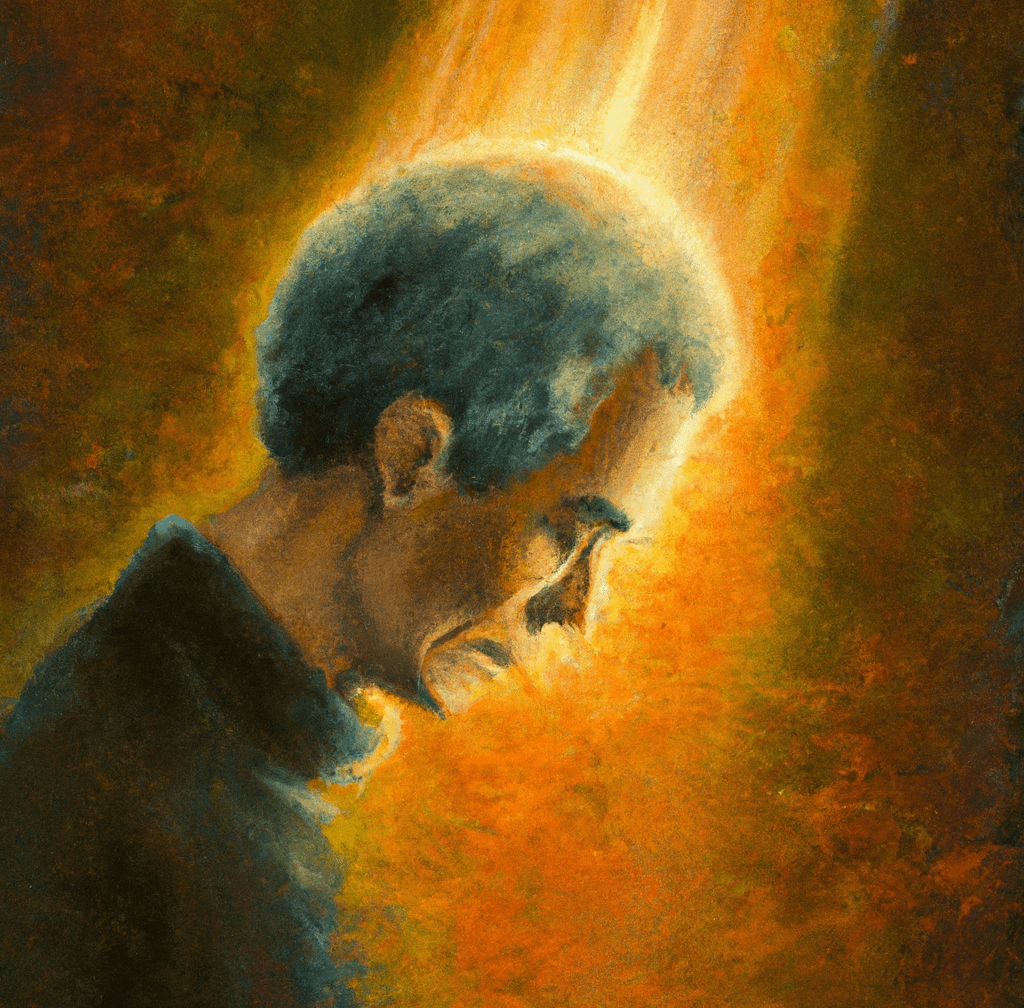
Of course, we can glean some of Christ’s personality and pattern of behavior from the Biblical account, and we might gain further insights through personal, spiritual experiences, but there is also a third way that is perhaps the most reliable method of them all. Jesus told his disciples: “I am the light of the world: he that followeth me shall not walk in darkness, but shall have the light of life” (John 8:12). Paul later confirmed to the Corinthians that he had sensed this light of Christ shining within him: “For God, who commanded the light to shine out of darkness, hath shined in our hearts, to give the light of the knowledge of the glory of God in the face of Jesus Christ” (2 Corinthians 4:6). This light of Christ is in all of us, even in those who have not yet accepted Christ. It is the conscience that always persuades us to do what is right. And this conscience is the key to learning who he is.
When we feel our conscience whisper in our hearts and we follow its counsel, we are at the same time both learning the nature of Jesus Christ and also doing what he would do. The conscience is telling us how he would behave in this instance, and as we do the same we feel his emotions and desires come alive in our own hearts. Thus, the prick of the conscience is an invitation to actually be Christ for a moment, and we are educated to his nature from within our very own selves!
Of course, this is also why following our conscience typically feels so strange and unnatural to us. It almost always means setting aside our own personality and choices, and stepping into an entirely different personality and pattern of behavior. This is a hard thing to do, but the more we practice it the more natural it becomes. Bit-by-bit we will be transformed from our old nature into Christ’s, taking on his attitude and likeness until we become his true representative. Thus, we can come to a deeper and more intimate knowledge of Christ than any other person. We will know him even as ourselves, because we will ourselves be as him.
If you truly want to know who Christ is, the tool to do so is already there in your heart. Practice bending yourself to the light he has put in you, and you will become a foremost expert on who the man really is. And then, everyone who sees you will also see the image of their Savior, and learn of him by you.
I finished yesterday’s post by pointing out that if man tries to make himself the final power and authority in the universe—which would be to make himself god—then he must supplant his connection to actual divinity. If he would exalt himself, he must pave a ceiling between himself and heaven.
The Inner Voice)
But let’s look back even further than yesterday’s post. I mentioned at the start of this series that our society has developed a strong emphasis on everyone needing to “listen to their own heart,” and be “true to themselves.” Once I might have agreed with this notion wholeheartedly, but the words inside of these phrases have gradually changed their meaning. We used to mean that people needed to listen to the conscience as their heart, that they needed to be true to their divine selves. But today we’ve taken away the notion of an external voice that whispers within us, and now when we tell people to look inward, they think we mean narcissistic navel-gazing.
The fact is, there have always been two voices inside of us: the divine influence and the selfish desire. “Listen to your heart” was only useful advice when it pointed towards the first of those two inner voices. It becomes a great misguidance when attributed to the second. This misguidance is pernicious in that it so closely resembles what actually would have been good advice.
Spiritual Without God)
This subtle shift can perhaps be seen most clearly in society’s shift away from organized religion. “I’m spiritual, not religious,” we hear parroted over and over, but what does that really mean? From what I see, it appears to mean that the person still has a sense that she has a spiritual element, but she does not accept that she is a creation of God.
Yet each of us is a creation of God. This is the fundamental belief that we have lost, and that is very concerning, for it is the fundamental belief. The most fundamental, core principle of our identity must be where we are from. If we are from God, then it absolutely behooves us to understand who God is, what He is like, and what He created us for. And if He has told us these things, and if His voice is one of the influences that lives inside of us, then we must assume that following His instructions would bring us, His creations, the greatest fulfillment and purpose that we are capable of. If we truly are from God, then there can be no coherent argument to abandon Him just because society has decided something else.
To say that you are spiritual, but not religious, to say that you believe in the divine self, but not the divine creator, is to appreciate the beauty of the tree while cutting it off at the roots. It is to lay hold of something that is true and good, but to sever it from its sustenance, and before long it will wither and lose what originally attracted us to it. We can live without the belief that we are a creation of God, and we can even convince ourselves that it is so, but none of that will change our soul from still needing Him.
We can make it our life goal to make things pleasant for ourselves, getting things more stable, more fun, and more luxurious, but all the while not feeling any joy. Or we can be obsessed with our troubles, constantly focused on all that is wrong and unfair, convinced that we will never feel peaceful so long as we are so burdened. But joy is a metric of an internal state, not an external one. It has nothing to do with either our comforts or our discomforts. Rather, it is directly proportional to our alignment with what is right and true.
When I am guilty of wrong, when I am hiding the gifts God gave me, when I am giving less than I know I could, then I will never feel joy, no matter the life that surrounds me.
On the other hand, when I have a clean conscience, when I am shining the light God gave me to shine, when I know that I gave it my genuine best, then I will always feel joy, no matter the life that surround me.
I have spent quite a while examining different reasons for why one should live in accordance with the truth, and I have been calling out the ways that we try to excuse ourselves from doing so. Hopefully each one of us will be convinced at some point that we must live in harmony with fundamental truth, aligning ourselves to the universal good.
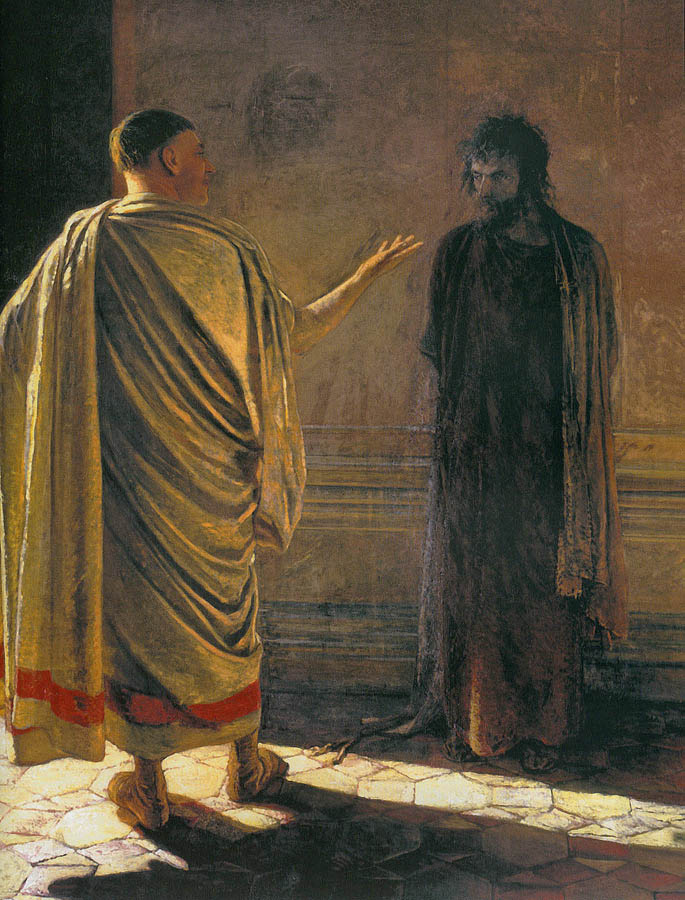
But, even if we do come to this conviction, we may find a new question that takes its place. It is the same question that Pilate famously posed to Christ: “What is truth?” It seems that the answer to that should be obvious, but any serious examination on the matter will soon uncover a few issues. Most particularly, we will likely find it difficult to distinguish what is THE TRUTH from merely “my truth.”
Consider that many of us hold different principles inside of us that we identify with the truth. Two men confronted by the same injustice might be stirred by their conscience to two different actions. One of them might feel called to meekly endure the offense, remaining patient and longsuffering. On the other hand, the other man might feel compelled to stand up for what is right and challenge the oppressor. Frankly, neither of these reactions feels fundamentally wrong to me. Perhaps towards less severe injustices the passive response seems more fitting, and towards grievous injustices the bold response, but there is a great deal of overlap where either seem entirely appropriate, and I would not call any person wrong for behaving one way or the other. But at the same time, in a single person each response is mutually exclusive to the other. So which way is actually correct?
Furthermore, two men acting in sincere accordance with their conscience is one thing, but what about the issue of us misidentifying our wants with our conscience? I’m sure we can all call out social movements that claim to be based in truth and conscience, but which are clearly just justification for selfish and immoral practices. Making matters even more complicated, while sometimes we know in our hearts that we are being dishonest, most often we really do delude ourselves into thinking that our own personal wants just happen to align with what is cosmically right. How can I recognize what is actually true, and what is just me trying to get my own way?
A Point of Reference)
Both of the issues that I have presented are a result of defining the truth locally. If each person is let alone to define their “own truth,” then there will be as many distinct truths as there are people. We will probably each settle on some genuine pieces of conscience, but also much that is colored by personality or selfish desire. Aligning ourselves with “our truth” will therefore disappoint us, both on a personal and universal level. On the personal level, it will disappoint us because we will come out looking very much the same as who we already are. We will not have any sense of transcendence, of having been called up and made into something new and better. On the universal level, we will never have unity and common purpose. We will remain entrenched in embittered battles against one another, everyone convinced of their own rightness above all others.
If this enterprise of humanity is to move forward, then there absolutely has to be some underlying, fundamental truth established outside of all of us that we can each defer to. There has to be an external truth that is real and consistent, so that we may all come into union when we separately align ourselves to it. If the truth is defined by a person, or if it is shifting in its nature, then we will never find harmony with either conscience or community.
If, however, we do settle upon a universal truth that exists outside of us all, then both of the issues mentioned above are resolved. Now we have a standard that all other “self-truths” can be compared against. Selfish desires, misinterpreted as truth, are immediately recognized as such and discarded. Also, in the example of the two men choosing differently, but according to their genuine conscience, it is possible that the universal truth is broad enough to harmonize with both decisions. While the universal truth will certainly never contradict itself, it does seem reasonable to me that it could allow some range of individual, moral choice within its domain.
Is it any wonder, then, that the bedrock of every civilization has been religion? Be it the Bible, or the Quran, or the Torah, or the Bhagavad Gita, or the words of Buddha, each culture has composed itself around words that are said to have descended from on high. They might have come through the mouths of prophets and sages, but they are not interpreted as the words of those prophets and sages. They are understood to be the words of the external, of the divine, of God in some form or another.
Cultures that detach themselves from sacred truth do not remain cultures for long. As a society they break apart and become an anarchy. As individuals they become stunted and cease to improve their situation. They lag behind the rest of the world, both technologically and ethically, and they are soon destroyed by the whims of the world.
So, going back to our idea that only the life founded upon the truth is free, even after we accept this fact we still have to identify what the truth really is. And in order to do this, we’re going to have to find a source outside of ourselves, and outside of any other person. At some point we’re going to have to find God and discover THE TRUTH for ourselves. Choosing to found ourselves upon the truth is therefore no mere decision that we make once in our current place and then have the matter resolved. Choosing to be founded upon the truth means deciding to go on a great journey. It is a quest of exploration, discovery, and refinement, and it will last us the rest of our lives and then some!
The addict is a curious creature, utterly appalled at his inexcusable behavior, yet also in complete denial about it. Before acting out he minimizes the severity of the deed, reassuring himself that just this once won’t make a difference and he can quit whenever he wants. Immediately afterwards he experiences terrible self-loathing, promising himself that he will never do it again.
Now and again, during those shameful after-effects where he most strongly wishes to be free of his vice, the thought might occur to him that he needs to tell someone what is going on. If he is married, he might feel that he needs to tell his wife. If he is religious, he might feel that he needs to confess to a leader. If he has broken laws, he might feel that he needs to turn himself in to the police. If none of the above, there is still confession to those that have been hurt, professional therapists, or close friends. There is always someone that the addict could turn to…if they had the courage.
And it is this matter of courage where the addict struggles. For no sooner does the thought to confess rise up then it is forced right back down. He might fight the urge down through minimizing:
“Oh I don’t need to do anything as drastic as that! I just need to really try my best and I’ll be able to take care of it.”
Or he might come up with some reason why he can’t:
“I would tell my wife the truth…but it would break her. I just can’t put her through that pain, she doesn’t deserve it.”
Or, if he’s being more honest, he just isn’t willing to face the fear:
“If I tell, I’ll lose everyone and everything. I can’t lose my marriage. I can’t lose my kids. I can’t lose my church. I can’t lose my job. I can’t and won’t do it.”
The Mind’s Fear, the Heart’s Hope)
This fear is the real reason why the addict doesn’t confess. If he could have solved it on his own, he would have done it by now, and he doesn’t protect anyone but himself by living under a false image. The only reason that stands up to scrutiny is that he isn’t willing to lose the things that he has.
Is that selfish? Yes, but it is also human nature. We are terrified of losing our surrounding structure and that’s not always a bad thing. A healthy dose of fear keeps us from doing things that jeopardize our lives and well-being. The problem is that the addict’s fear is keeping him in a behavior that is destroying all the things that he doesn’t want to lose anyway.
He isn’t present at work, he isn’t working on his faith, and he isn’t faithful in his marriage. The things he is afraid of losing he is slowly gutting of their original virtue until they become an unfulfilling career, a hollow faith, and a sham marriage. So, in his self-interest, he is ironically destroying his own self-interest.
Thus, when it comes to hiding one’s addiction, we can immediately comprehend its root. The desire to hide comes from within the addict. It comes from the fear of losing himself. But now contrast this with the recurring notion that keeps returning to the addict that he should confess. Where on earth does that thought come from?
If hiding is about self-preservation, exposing is suicidal! As we have shown, excessive self-preservation can erode what the addict already has, but exposing his secrets seems that it will surely blow it all away! What possible reason would an addict’s mind have to conjure up an idea that is so against himself?
And the answer is: none. Because it isn’t about intellectual reasons. Any addict who appraises the idea of confession will realize that it did not come with a reason, it came with a feeling. The idea did not come from their analyzing, rationalizing, efficiency-focused brain, it came from the heart. Might it destroy the addict? Yes, that is a distinct possibility. But it just feels right even so. It feels like it might be just the thing to save the aching soul. Why? The addict might not have any idea why, but it just feels true in their heart.
Thus, hiding is to preserve yourself, but confession is to save yourself.
13 And it came to pass, when she saw that he had left his garment in her hand, and was fled forth,

14 That she called unto the men of her house, and spake unto them, saying, See, he hath brought in an Hebrew unto us to mock us; he came in unto me to lie with me, and I cried with a loud voice:

15 And it came to pass, when he heard that I lifted up my voice and cried, that he left his garment with me, and fled, and got him out.
Potiphar’s wife could see that Joseph would never commit adultery with her, and having been frustrated in her lust she now determined to ruin him. I am struck by her language saying “he hath brought in an Hebrew unto us to mock us.” She isn’t just casting stones at Joseph, she is disparaging his entire culture. “He brought in an Hebrew” feels to me like it is spoken with revulsion, as though her husband has let a dirty thing into the house like a rat. Hebrews are untrustworthy, Hebrews are dangerous, Hebrews aren’t principled like the rest of us.
And in truth, Joseph had done nothing wrong. But a false image of him had to be erected for Potiphar’s wife to conceal her own shameful behavior. In this tactic Potiphar’s wife shows a similar mentality to that of Joseph’s brothers, who could not stand to have his worthiness reveal to them their own guilty conscience. There is a tendency among the wicked to silence their shame by smothering whatever source of purity is stinging it. Vitriolic and abusive retaliation only reveals how guilty the conscience of the crier really is.
Disagreement and difference of opinion are inevitable in life, but attempted murder and assassination of character were not proportional responses from Joseph’s brothers and Potiphar’s wife! The magnitude of their reaction shows that they did not merely disagree with Joseph, they felt threatened in their guilty souls.





 Spiritual Wanderings