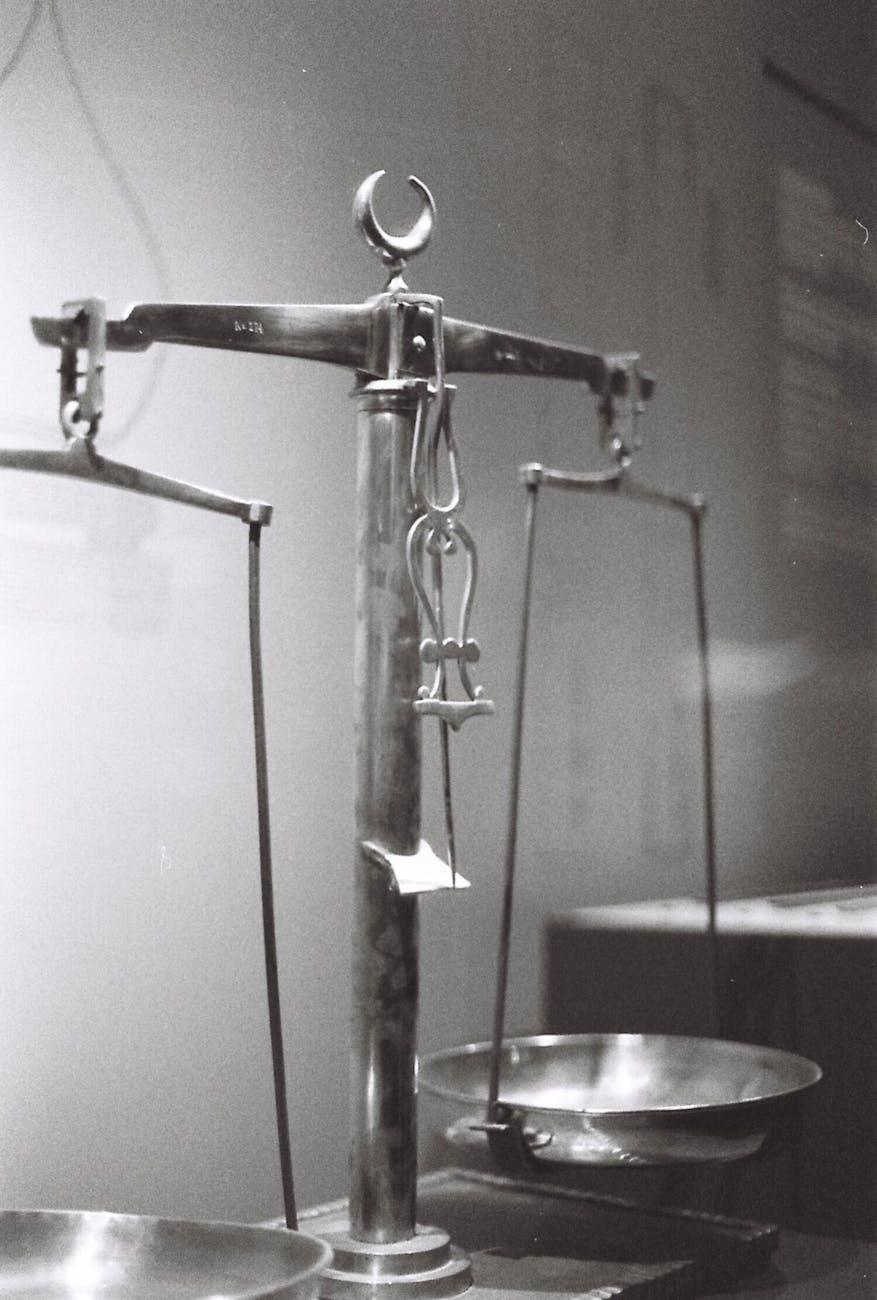
Scriptural Analysis- Leviticus 4:13-21

13 And if the whole congregation of Israel sin through ignorance, and the thing be hid from the eyes of the assembly, and they have done somewhat against any of the commandments of the Lord concerning things which should not be done, and are guilty;

14 When the sin, which they have sinned against it, is known, then the congregation shall offer a young bullock for the sin, and bring him before the tabernacle of the congregation.

15 And the elders of the congregation shall lay their hands upon the head of the bullock before the Lord: and the bullock shall be killed before the Lord.

16 And the priest that is anointed shall bring of the bullock’s blood to the tabernacle of the congregation:

17 And the priest shall dip his finger in some of the blood, and sprinkle it seven times before the Lord, even before the veil.

18 And he shall put some of the blood upon the horns of the altar which is before the Lord, that is in the tabernacle of the congregation, and shall pour out all the blood at the bottom of the altar of the burnt offering, which is at the door of the tabernacle of the congregation.

19 And he shall take all his fat from him, and burn it upon the altar.

20 And he shall do with the bullock as he did with the bullock for a sin offering, so shall he do with this: and the priest shall make an atonement for them, and it shall be forgiven them.

21 And he shall carry forth the bullock without the camp, and burn him as he burned the first bullock: it is a sin offering for the congregation.

The last verses described how the sin offering would apply to a priest who sinned. Now it describes how the same process applied when all the congregation would sin. The chapter will continue with this pattern, describing how the pattern applied to a ruler that sinned and to a common Israelite that sinned.

The message here is clear. All are under the law of the Lord. It is not a different set of rules for leaders or priests, groups or individuals. God’s commandments were the great equalizer, just as pertinent to the king as to the beggar in the streets. All would fall short at some point, and all would be expected to make an offering then. As we will see, the exact animal sacrificed could vary, but it was still the same sacrifice and the same ritual for all.

It may seem a remarkable thing for all of the congregation to go astray at once. But as we will see later in the Bible, there were times when the people would go off worshipping false gods and then return to the proper worship of the Lord. There was also the time when book of the law had been lost and forgotten, then rediscovered during temple renovations. When it was read to King Josiah, he realized how the entire people had unwittingly gone astray and restored the rituals and commandments of old. While the record does not explicitly mention the performance of a sin offering, one would expect that it occurred, as it was specifically prescribed for just such an occasion.

SacrificeEligible oblationStepsExplanation
Sin offeringBullockSacrifice for sin
The same performance for an individual, community, priest, or leaderAn equal path to God for all
Hands placed on head, slaughteredAnimal takes the place of us
Blood placed on horns of the altarA heartfelt plea to the Lord for mercy
Fat and kidneys burned on altarCleansing our behavior and desire
Skin, dung, and flesh burned beyond the campThe sinful behavior purged out of us

Full table.

Equal vs Enough

It is less important to be equal than to be enough.

That isn’t to say that there isn’t a value to equality. Rooting out unfair disadvantages and gross discrimination have their place, but every virtue is bounded by others and each can be taken too far.

Perfect equality is not always the ideal and is not always possible. When a baby is first born, it should receive more care than its older brothers and sisters. The wise should receive more attention than the foolish. The innocent should have more liberty than the guilty.

Even the natural universe follows the pareto principle, in which an uneven distribution is evident, and the minority possess the majority of the resources. In the ant colony there is only one queen and tens of thousands of workers. Only 1% of all mosquito eggs will reach adulthood and reproduce. Ours is the only planet out of thousands studied to have all the correct conditions to support life. The universe is not equal.

So, while it is again worthy to root out flagrant and malicious inequality, one has to have a nuanced appreciation for the fact that absolute equality is impossible. The unbridled pursuit of it can only yield frustration and counter-productivity. Every historical example of absolute and mandated equality has ended in disaster.

In the long run, “is it enough” is a more reasonable consideration than “is it equal.” As mentioned before, the older brother may not receive equal care to his infant sister, but we can ask “is he receiving enough?” Are his physical and emotional needs being adequately met? If it is not enough, he should receive more. If it is enough, then it is enough. Are enough ants born as queen to keep their species alive? If not, they will go extinct. If it is enough, then is it enough.

Over the course of our lives we will never be perfectly equal to all others. In some ways we will always have less, and in some ways we will always have more. But do we have enough? Can we make do with our disadvantages? Can God make up for what we lack? If we can find our way to enough, then it is enough.

Scriptural Analysis- Exodus 21:33-36

33 And if a man shall open a pit, or if a man shall dig a pit, and not cover it, and an ox or an ass fall therein;

34 The owner of the pit shall make it good, and give money unto the owner of them; and the dead beast shall be his.

35 And if one man’s ox hurt another’s, that he die; then they shall sell the live ox, and divide the money of it; and the dead ox also they shall divide.

36 Or if it be known that the ox hath used to push in time past, and his owner hath not kept him in; he shall surely pay ox for ox; and the dead shall be his own.

The final verses of this chapter discuss what is to be done if a man destroys the livestock of another. If the man has directly caused the death of the animal, such as by digging a pit that the creature falls into, or by leaving his known-to-be-violent ox in the vicinity of the other animal, then he will be compelled to buy the dead creature. He must pay the value of the creature as if it were still alive, though, either with money or with his own still-living livestock, and all he would gain in return is the dead creature’s meat. Thus, the owner who had lost his livestock would be restored, and the difference between hurt and whole would be laid upon the man who was responsible for the harm.

There is another situation covered in these verses also, where an ox kills another but it was unprecedented for the creature to do such a thing, so the owner had no reason to expect this would happen. In this instance the man is innocent of any malfeasance, but still his neighbor has been deprived. There is not guilt in this scenario, only ill fortune, and the solution provided by the law is an exactly equal distribution of that ill fortune. The living ox would be sold and the two men would split the money from that, and also they would split the meat from the dead creature. They would share in the fruits of life and death in equal measure.

The Family of God- Galatians 3:28-29, Malachi 2:10

There is neither Jew nor Greek, there is neither bond nor free, there is neither male nor female: for ye are all one in Christ Jesus.
And if ye be Christ’s, then are ye Abraham’s seed, and heirs according to the promise.

Have we not all one father? hath not one God created us? why do we deal treacherously every man against his brother, by profaning the covenant of our fathers?

COMMENTARY

Have we not all one father? Why do we deal treacherously every man against his brother?
For ye are all one in Christ Jesus
We love to make divisions. For some reason we feel this need to put ourselves as better than others. There are the obvious criteria of segregation: race, religion, sex, and age. Thankfully many of us today have accepted that discriminating on these terms is entirely inappropriate.
That is good, but I don’t think that any of us are still entirely in the clear. If we keep listing out other metrics by which people judge one other, I believe sooner or later each of us will feel a twinge of guilt. You might think less of others because of their education level, or what sort of car they drive, which political party they most frequently vote for, their physical or mental handicaps, their success or their failure, their resting facial expression, their parenting style, which words they use, what clothes they wear, their weight, whether they have clear skin or not, whether they had things handed to them on a silver platter, their choices…we could go on, but I think you get the point.
Somehow we get the notion that some people are “less” children of God than us. To be sure, there are choices people make, and some truly do make poorer ones than others…. But not one bit of that makes a person any less God’s child than another. Your testimony that you are a child of God is important, but it is incomplete until it includes a fervent belief that so is everyone else.