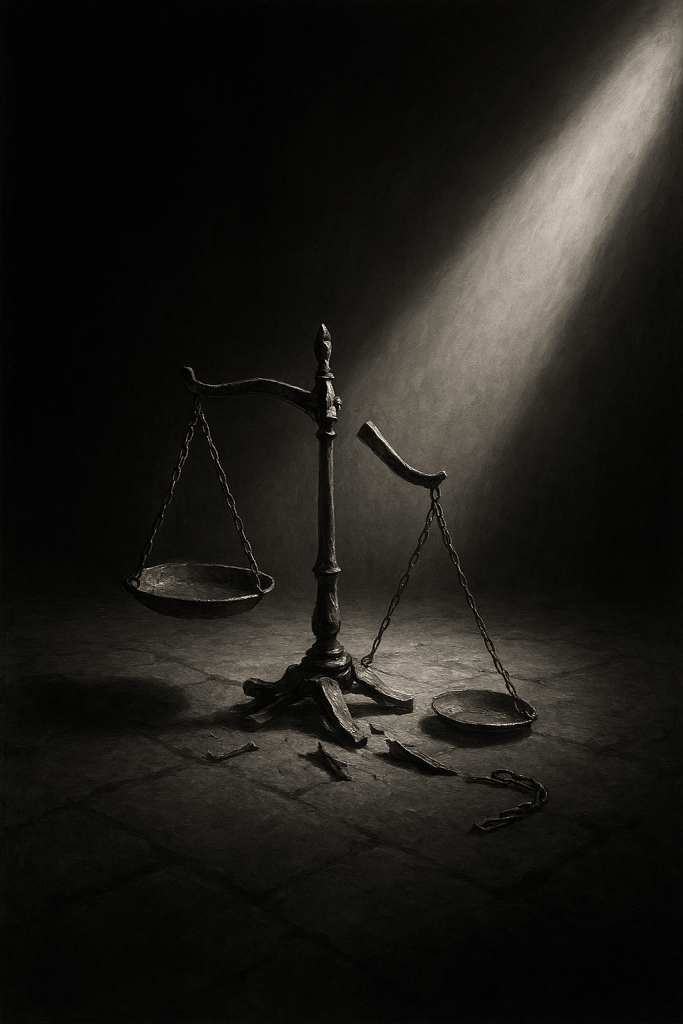
The Threat of Good People- Patterns Big and Small

Pattern of Hate)

I’ve spent the past two days discussing the tendency of those that feel wrong to try and tear down those that seem right. The reason for this is that the very existence of the holy is a testament against the impure. The holy prove that moral living is possible, and that it is better, which means that the immoral are worse and deserving of blame.

This pattern is nothing new. To his friends Jesus foretold, “If the world hate you, ye know that it hated me before it hated you. If ye were of the world, the world would love his own: but because ye are not of the world, but I have chosen you out of the world, therefore the world hateth you,” (John 15:18-19).

To his enemies Jesus said, “Ye seek to kill me, because my word hath no place in you. Ye are of your father the devil, and the lusts of your father ye will do. He was a murderer from the beginning,” (John 8:37, 44).

The children of the devil seek to destroy Jesus and also hate those he has chosen. Thus, the impulse of the wicked to destroy the righteous is nothing more than an extension of the devil’s desire to destroy God.

Woven Through All)

This animosity isn’t just political, and it isn’t isolated to one instance. What we see in our private lives is but a fractal strand of a war that is cosmic and universal. There are branches of this struggle that are relatively low stakes, such as when the awkward child tries to tear down his more successful peer, but it is the same spirit behind it that would murder a God.

The immoral want to destroy the moral because evil wants to destroy good. Meanwhile the good, if they are truly good, emulate the God at their root and seek to redeem the wicked.

Just as these cosmic, eternal forces have fractal strands woven into our society, so too, there are strands woven into our own selves as well. There is an agent of evil within us that seeks to tear down our good parts, because those good parts remind us that there is a better version of us inside, and that we are not meeting our full potential. And there is that agent of good in us that seeks to redeem the evil part and raise it to its holy potential. As we learn to find the right solution within ourselves, we will learn how to find it in our society, and our society will join God in His solution for the entire universe.

We are all part of one cosmic ritual or another, and the outcome that we support in the eternities is echoed in the outcome we seek in ourselves.

The Threat of Good People- Justification for Evil

Yesterday I spoke about how children who are socially insecure can try to tear down those who are confident, because they hold up a mirror to the insecure children’s flaws. But as the years go by, what might be nothing more than teenage angst, gradually evolves into something deeper. Even, something evil.

Selfishness and Sin)

Most of us come into evil by simple selfishness. A neighbor is looking for help with some yardwork, and we discreetly make plans to be out of town that morning. Upon seeing a traffic lane slowing down, we might swerve into the next, cutting off the driver behind. We disparage the “other side” for their idiocy, enjoying the moral superiority that that brings. We want what they want, and we only deviate from our predetermined path when it serves our own interest.

And then, inevitably, that same selfishness leads to doing something objectively wrong. The commission of a mortal sin. Something truly damning, which far more than the teenage awkwardness discussed in yesterday’s post, is something that we tend to shrink from, to try and not face up to in our own heart.

And to soothe our conscience on the matter, we tell ourselves that everyone is “looking out for number one.” Everyone takes the advantage when it is presented to them. Everyone holds a grudge. Everyone is selfish. Everyone has a serious sin hidden inside. We become suspicious of those that appear to defy these universal assertions, assuming that the so-called good are really just hypocrites and liars, pretending to be holier-than-thou, but secretly just as selfish and compromised as the rest of us.

An Unbearable Reality)

Which then makes it very difficult when someone shows an undeniable act of kindness. When someone is doing good, even when they think no one else is looking. When someone is giving, with no possibility of return. When someone forgives another, even though they have every right to demand vengeance. When someone openly confesses and renounces their sins.

Moments like these threaten the wicked, because it holds up a mirror, showing us that we don’t have to be the way that we are. That person was willing to forgive his enemy, so why don’t I? That person gave with true charity, so why don’t I? That person admitted his sins and forsook them, so why don’t I? These questions remind the sinners that we do what we do because we choose to, not because it was inevitable. The sinners see what we really are, and how what we still cling to is inexcusable. We see that we are deserving of hell.

The good people therefore become hateful to us for no other reason than that they are sincerely good. They become an unbearable burden. They are a threat to the illusion that everyone is guilty, so we’re no worse than anyone else. They are a threat because they show us that change is necessary, but we are still unwilling to change.

Then, the good people have to be crushed so that there is no longer a standard to be measured against. Society redefines morality, so that even thinking or believing or speaking “incorrectly” is now deemed violence. Then the destruction of the good is considered justified and even called right.

Taking Accountability- The Responsibility of Us All

A Tragedy and an Evil)

I don’t typically comment on world events or change my post lineup for special days. The way I see it, gospel study should be a constant in life, something steady and reliable, no matter what else is going on. So, whether it’s a special day or a mundane one, whether a happy day or sad, studying the gospel remains my rock through it all, and I try to have this blog reflect that.

But I recently saw a connection between something I wrote a couple weeks ago, and the assassination of Charlie Kirk, and I thought it might be instructive to talk about it.

First of all, let me emphatically renounce the assassination itself. It was evil, and cowardly evil at that. As Isaac Asimov said, “Violence is the last refuge of the incompetent.” Anyone that feels any sort of satisfaction from the occurrence, and celebrated it, is also evil, and cowardly evil. Those that commit and celebrate violence upon the innocent are devolving from the divine to the animal.

In the face of such abhorrent evil, it is only natural to ask, “how did we get here?” and “what can we do about it now?”

And these are the questions that brought me back to my post from two weeks ago. On September 5, I shared this simple prayer:

May my first reaction to every problem in the world 
And every problem in my personal life
Be "What did I do to contribute to this?"

Taking Accountability)

Well, that was my prayer at the time, but will I actually hold to its ideals in this moment? Will I say that only people other than myself need to change? Will I comfort myself with the assurance that I’m ‘one of the good ones’ and that I contributed nothing to what transpired? Or will I try to find some piece, even if it is small, that I can take accountability for?

Over the next three days I want to take my intentions and make them into actions. I want to look at this terrible thing that happened and see what I can change about myself as a response to it. I want to take ownership for the ways that my behavior has helped build a culture that produces tragedies such as these. I want to be realistic, and pragmatic, and honest.

I want to do this, because I truly believe it is my responsibility to do so. I believe it is the responsibility of us all. Only by focusing first and foremost on our own accountability will we become innocent of the world’s evil and transcend it. If enough of us take accountability, then we will transcend the world’s evil by changing the world so that events like these don’t happen anymore. Or, if not of us take accountability to accomplish that, we will at least transcend the world by no longer being part of the cycle that creates moments like these. Either collectively or individually, we can only create a better world by each of us taking accountability for ourselves.

Perverted Frames of Mind

Any act of evil can be justified given a particular frame of mind.

Thus, the greatest safeguard is not against evil itself, but against the perverted frame of mind that would allow it.

Evil in God’s World

A Common Argument)

I have frequently heard the argument that if we have an all-loving God, how are tragedies and disasters a part of this world? I have addressed this issue in part with previous posts, but today I wanted to point out a fundamental flaw in the argument itself.

Neil DeGrasse Tyson gave this argument in an interview where he said, “Every description of God that I’ve heard holds God to be all-powerful and all-good, and then I look around, and I see a tsunami that killed a quarter million people in Indonesia, an earthquake that killed a quarter million people in Haiti, and I see earthquakes, and tornadoes, and disease, childhood leukemia, and I see all of this and I say I do not see evidence of both of those being true simultaneously. If there is a God, the God is either not all-powerful or not all-good.”

I find it interesting that Tyson’s public persona is entirely based around having a scientific mind, yet his argument is entirely unscientific. He jumps to a conclusion that is not at all supported by the premises. Here are the premises that he establishes:

  1. God is all-powerful
  2. God is all-good
  3. ???
  4. There is great tragedy in this world

And from these he draws the conclusion that the last premise is incompatible with the first two. But as it stands, the statements of God’s character and the state of the world live in isolation from one another. There is a crucial premise missing, one that would establish what the relationship between God and the world even is!

This is the fundamental flaw in all of these criticisms. They speak of the nature of God, and the nature of the world, but never establish what one of those has to do with the other. It is quite a leap to say that if God is all-good that He is required to enforce only good things on the Earth of today. Where did that notion come from? Why can’t God be all-good and not puppeteering everything that plays out in humanity?

The Perfect Earth)

One thing that Tyson did not explicitly say, but which I believe is implied in his argument, is that the missing link between God’s goodness and the state of the earth is that God created the earth. If God is perfect, and the original author of our existence, then why isn’t that existence perfect also?

But even introducing this to the argument doesn’t make it any better. Because if one is going to question why a perfect God did not create a perfect world, the obvious answer is, “well, according to our records…He actually did.” In the first chapters of Genesis, we read that God created a world where everything was “good.” There was no death, no sickness, none of the great tragedies that so distress us today. Thus, the expectation actually fit the reality at the moment of creation. God did give us exactly the sort of world that we would have expected Him, too.

But states can change. And man, not God, chose to introduce sin into this world, corrupted its perfection, and gave birth to the fallen earth that we see all around us. This is all made clear in the first three chapters of the Christian canon, so it doesn’t make sense to state that the Christian conception of God does not account for the disparity between His goodness and the world’s evil.

If one does not believe in the biblical explanation, so be it, but don’t claim that there isn’t any explanation. Indeed, this is one of the unique and compelling aspects of Christianity, that it not only acknowledges the dual nature of our existence but also provides one of the clearest, most explicit explanations of that division’s origin.

Of course, one might still be troubled by the disparity between the professed perfection of the Christian God and the suffering in the world, and one might feel that if God really is all-powerful, then He ought to be able to reclaim that fallen world. And to that I say, brother, have I got some good news for you!

Scriptural Analysis- Exodus 32:19-20

19 And it came to pass, as soon as he came nigh unto the camp, that he saw the calf, and the dancing: and Moses’ anger waxed hot, and he cast the tables out of his hands, and brake them beneath the mount.

20 And he took the calf which they had made, and burnt it in the fire, and ground it to powder, and strawed it upon the water, and made the children of Israel drink of it.

At the start of this chapter I mentioned that Moses up in the mountain with God and the Israelites down in the valley with their idol was an allegory for all mankind. Today, we see those two opposites meeting again. The elevated and transcendent has touched back to the fallen earth.

The first thing that Moses does is break in pieces the Lord’s invitation to Israel to build Him a holy house. The people were not worthy of it. They had not only violated the principles etched upon the tablets, but also the earlier law that was the prerequisite to receiving the latter tablets. Of course, we know that ultimately Israel would build the tabernacle as planned, but only because God would restore that privilege. First the people had to lose everything. They had to be condemned before they could be redeemed.

Next, Moses similarly broke the people’s sin. He took their perverse calf and destroyed it in the most complete way imaginable. First burned, then ground into powder, then poured into water, then drunk. It’s hard to think of a way he could have decimated it any further!

Also, there is an obvious symbolism in Moses having the people drink the very essence of their sin. They were drinking the consequences of their own wrongs. No one can pervert the ways of the Lord and not be soiled within. Many the man has tried to have his secret vice on the side while still maintaining that he is a “good” person, but it never works. The sin does not live outside of the man. It begins external, as the influence of temptation, but by engaging with it the man ingests its evil, and then it churns within him.

The Paradoxical Gospel

One of the most intriguing elements of the gospel is its reliance upon seeming paradoxes. The only way to save your life is to lose it. Christ overcame the world by letting himself be defeated by it. We only find the strength to overcome our vices when we admit defeat and surrender to Jesus. We are saved by grace, but that salvation is then evidenced by our works. In our relationships with our fellow man we are supposed to return good for evil.

It is a fascinating concept, and perhaps one day I will do a more in-depth study as to why this pattern of paradox is so prevalent in the gospel. One reason that is apparent to me now, however, is that it allows God to hide His path in plain sight. Consider the last example in the above paragraph, which is that we are to return good for evil. Jesus was absolutely clear on this point. Here are his words in Matthew 5:44:

But I say to you, love your enemies, bless those who curse you, do good to those who hate you, and pray for those who spitefully use you and persecute you.

Returning kindness for cruelty goes against our human nature. It seems completely illogical. It only seems consistent that we would do good to those that do us good, and evil to those that do us evil. In the spirit of fairness, we would at least need to hurt our enemies just as much as they hurt us, and then perhaps we could build a new, more positive relationship since we were back on even ground.

But that isn’t what Christ commands us. He commands us to love even while we are the one at a disadvantage. It isn’t logical and it isn’t natural, but it is a surefire way to experience a slice of heaven here on earth. Genuinely forgiving an enemy brings a buoyancy and cheerfulness to the heart that defies all reason. And so, the evil suffered was actually the potential for good, a beautiful blessing in disguise.

And this is no secret. All of these counter-intuitive, paradoxical behaviors that unlock the greatest joy have already been laid out before us. The proliferation of the Christian gospel has made it so that all of us know that turning the other cheek will make us walk hand-in-hand with God. We all know the way, but few there be that take it because it requires us to go against our own nature and embrace the paradox.

This combination of free knowledge, but paradoxical requirement means that no one will join God by accident, but everyone that sincerely wants to join God may do so. It is an ingenious solution that allows God to save every soul that really wants it.

The Christian Conception of Evil

A Shallow View of Evil)

Great divisiveness in a culture tends to form ideologies with a naïve and overly-simplistic perception of evil. Festering hatred lures people into a mentality where they conceive of evil itself as propagating outward from “those people” over there. Strict ideologues believe that if they could just convert or destroy “those people,” then the evil would be gone, and society would be a perfect Utopia.

This narrow view of evil is a powerful tool for focusing and concentrating the passion of the ideologues. It progressively motivates them to disparage, dehumanize, and destroy their enemies. Mankind has fallen into the routine of dividing, declaring the other side to be the bastion of evil, and then destroying them for as long as we have a historical record. Yet if the problem of evil is so simple, then why has this pattern never succeeded in the eradication of evil? Why haven’t we finally killed it already? Why do we keep facing it in every generation?

The Christian View of Evil)

For an answer, let us consider the Christian conception of evil instead, taken directly from the words of the Bible.

And God saw that the wickedness of man was great in the earth, and that every imagination of the thoughts of his heart was only evil continually. -Genesis 6:5

There is nothing from without a man, that entering into him can defile him: but the things which come out of him, those are they that defile the man. -Mark 7:15

But every man is tempted, when he is drawn away of his own lust, and enticed. Then when lust hath conceived, it bringeth forth sin: and sin, when it is finished, bringeth forth death. -James 1:14-15

For the flesh lusteth against the Spirit, and the Spirit against the flesh: and these are contrary the one to the other: so that ye cannot do the things that ye would. -Galatians 5:17

As it is written, There is none righteous, no, not one: They are all gone out of the way, they are together become unprofitable; there is none that doeth good, no, not one. -Romans 3:10, 12

This view of evil is far more mature, nuanced, and difficult to solve. Instead of saying “evil comes from that group over there,” the Christian perspective maintains that “evil emanates from us all.” It is in me, in you, in everybody. Evil is a super-entity, one that pervades through all of us.

And yes, maybe certain ideologies have a deeper fealty to evil than others; perhaps some dark trains of thought really should be arrested and ceased; perhaps some collectives need to be disbanded; but the true Christian knows that even these efforts will not bring about the perfect Utopia. The true Christian knows that the eradication of “those people” is not the final solution to the problem of evil because even if we stamped all the evil out in one place, it would still seep out from within our own ranks. Eventual corruption is the rule of the world.

The Solution)

Obviously, this conception of evil is much more daunting to wrestle with. If evil will emerge anew in every heart, than what can be done to have victory over it?

Ultimately and universally, nothing.

God will have to claim the victory there because it will always be beyond us. However, on a more individual level, there is something we can do.

This Christian conception of evil, that it arises in every heart, is the very reason why Christianity has always taught that every man ought first and foremost to address his own personal evil before that of the world. That isn’t to say that we don’t concern ourselves with the greater evils of the world, or that we don’t give our energy to curtail it, but our primary concern is to first plug the well of evil in our very own heart. If all of us could just do that, could just get control of the darkness that is within, then that would be the greatest blow against evil we could ever achieve.

It may seem paradoxical, but the fact that evil is so universal means that it can only be remedied individually. It is up to all of us to each do our part.

The Ends of Good and Evil

Of Evil)

Lying is evil. Stealing is evil. Murder is evil. These are functions of the wicked, not of the good.

If all evil behaviors belong to the wicked, and are eschewed by the good, then it logically follows that the wicked will afflict all these evils upon the good, tormenting them even unto death.

To be righteous is therefore to accept all the evil of the world, while denying oneself any opportunity to retaliate in kind. It therefore follows that evil will naturally triumph over good, as it can murder the righteous, but the righteous cannot murder the wicked.

Of Good)

That being said, triumph is good. Resurrection is good. Salvation is good. These are states of the righteous, not of the wicked.

If all good outcomes belong to the righteous, and are denied to the wicked, then it logically follows that the righteous will overcome all the afflictions of the wicked, even being raised from the dead.

To be righteous is therefore to accept all the evil of the world, but then being raised above it all. It therefore follows that good will ultimately triumph over evil, as it can overcome evil, but the evil cannot overcome the good.