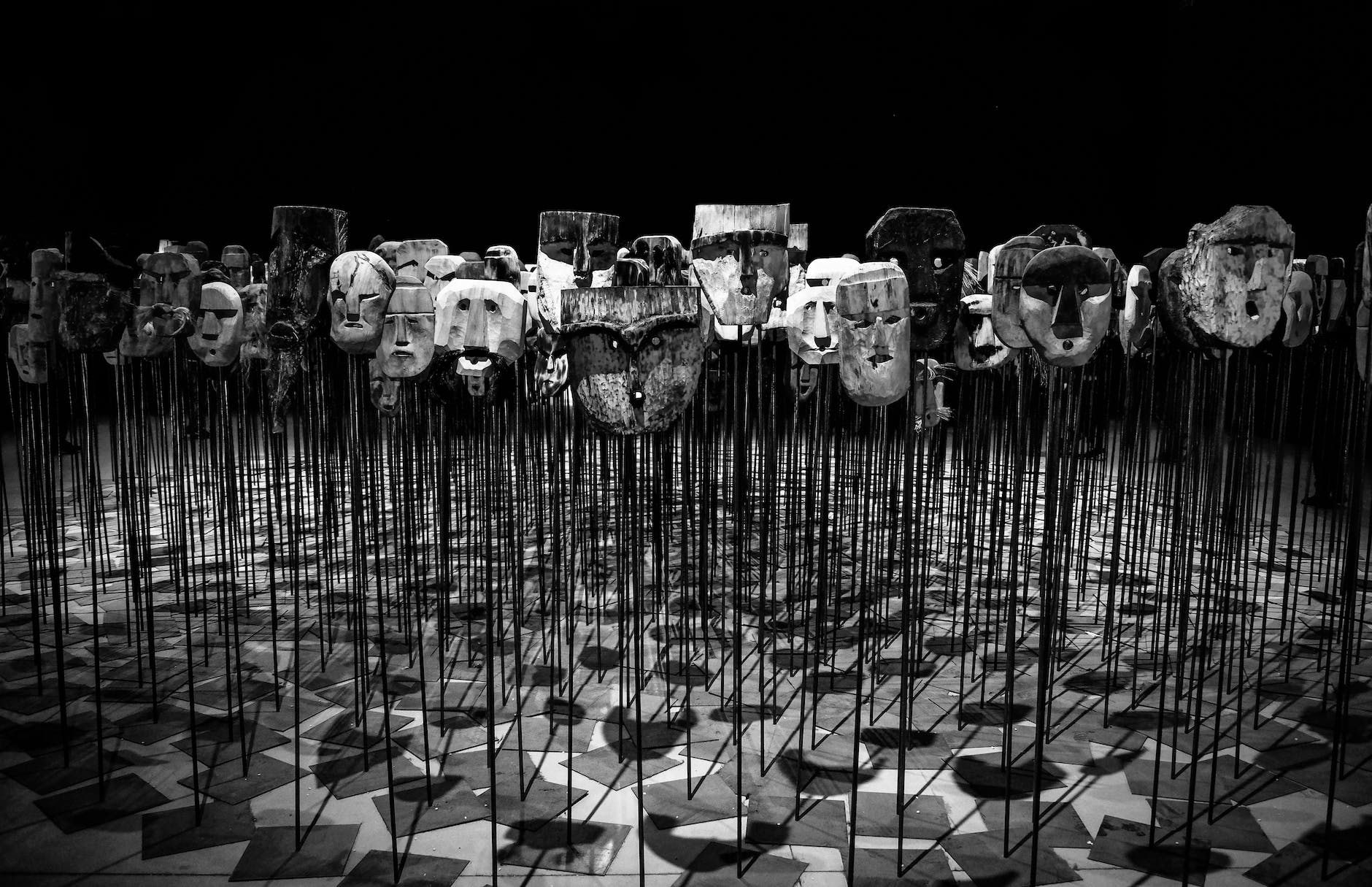
And the eyes of them both were opened, and they knew that they were naked; and they sewed fig leaves together, and made themselves aprons. - Genesis 3:7
You will never know most of the people you meet.
A strange sentiment perhaps, seemingly paradoxical, but it is completely true. Put another way, for most of the people in your life, you will never interact with the actual them, only with their mask. You will only ever know the surface-level, carefully-doctored, phony personality that they are making a conscious effort to project.
Like Adam and Eve, we make aprons. We hide who we really are behind a layer of fashion. A fashion that we hope will make us attractive to the people that we want to like us.
And this phenomenon hasn’t gone unnoticed. We so often complain about how fake everybody seems and how we crave relationships that are more real. But at the same time, we tend to downplay how much we’re playing the exact same game ourselves. Even criticizing the phoniness in others can itself be a social fashion.

Every way of a man is right in his own eyes - Proverbs 21:2

Or how wilt thou say to thy brother, Let me pull out the mote out of thine eye; and, behold, a beam is in thine own eye? - Matthew 7:4
The reason why so many of us don’t realize how much we are projecting our own façade is because we are the ones being fooled the most by it! We pretend to be a particular way for so long that we actually start to believe that is who we really are!
And then we must defend whatever principles and ideologies our delusion is based upon, as any challenge to them might tumble down our entire house of cards. This is what divides our culture into isolated echo chambers, where we surround ourselves with people that show the same façade we are trying to project, we become saturated with their dogma, and then we attack anyone whose façade is at odds with our own. We’ll pick apart all their flaws while ignoring our own, and the whole time we’ll believe that we are standing for what is right and virtuous. In reality, it is only self-preservation.
This cycle, unfortunately, can continue forever. All of our façades are fundamentally flawed in one way or another, and thus each is deserving of criticism, and thus there will always be an easy avenue to tear one another down. The only way to break out of this cycle is to finally admit that our façade is a façade and that it is beneath us.
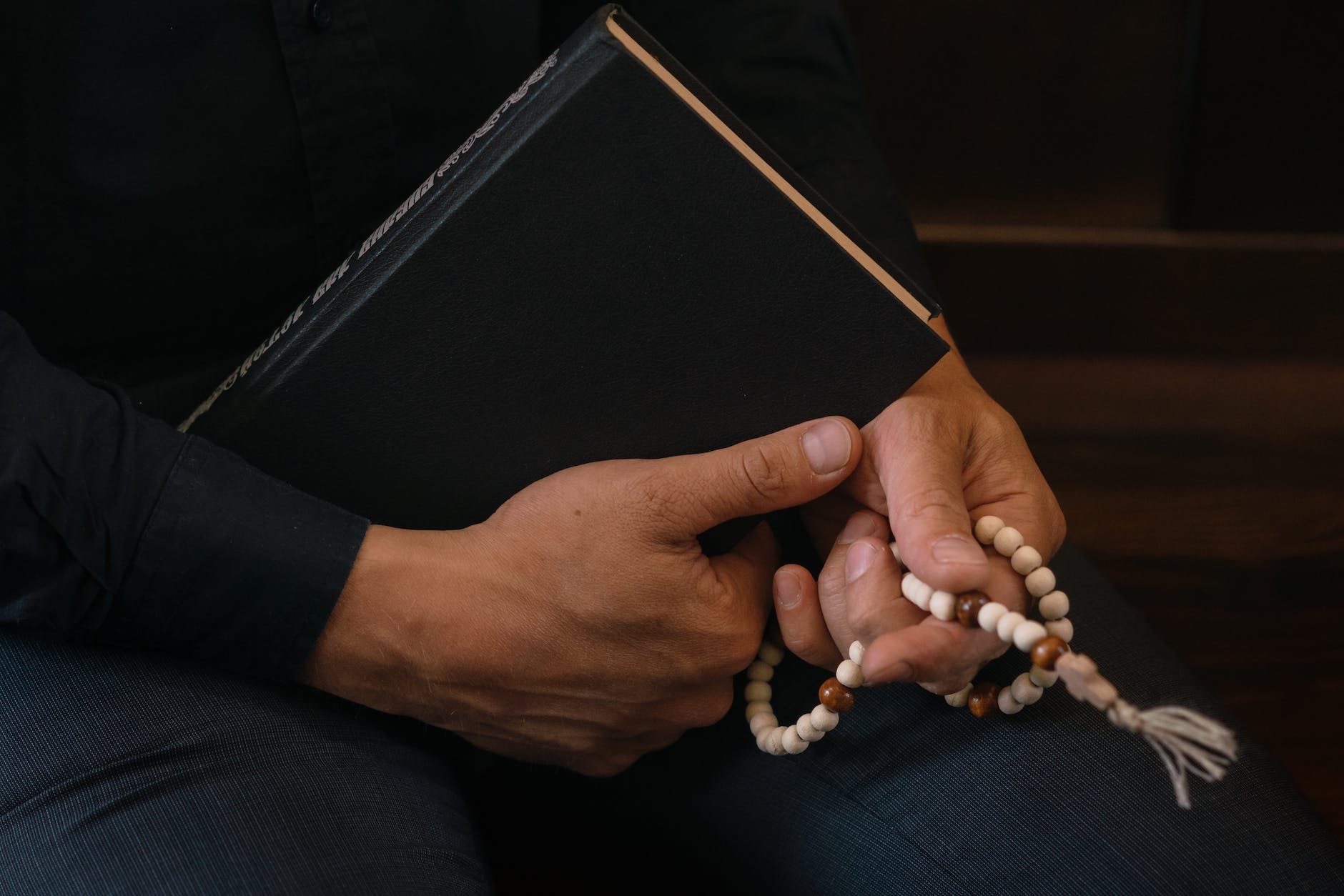
Because the foolishness of God is wiser than men; and the weakness of God is stronger than men. - 1 Corinthians 1:25

And he looked up, and saw the rich men casting their gifts into the treasury. And he saw also a certain poor widow casting in thither two mites. - Luke 21:1-2
One of the greatest curses that could ever be wished upon someone is that their façade would be good enough and consistent enough for them to never have to challenge it. Continuing to identify with this superficial layer, believing that this who they really and truly are, will stunt any person’s growth. Most of us will never call it quits on our game of pretend until it completely and utterly fails us, so as long as we’re able to be somewhat happy, somewhat secure, and somewhat wealthy we will never have a reason to disrupt the status quo.
And what a terrible fate that would be, for it would forever keep us living in the lower echelons of existence. The wisest and strongest we could ever make ourselves is still superseded by the most simple and weak of God. The uneducated and frail woman who gave her two mites was living a more complete and joyful life than the learned and powerful rulers who made a great show of giving their riches. Authentic living, even of the humblest variety, trumps inauthentic living, even at its most extravagant.
Many the addict has learned to be grateful for their life-destroying vice, because hitting rock bottom was what finally brought them to drop their façade and start living with actual authenticity. To have not been destroyed might have meant to never truly live.
***
But what about for me personally? What has been my go-to façade, what are its strengths and weaknesses, and why wasn’t it enough to keep me content in life? The way I try to come across is extremely intelligent and incredibly nice. Let’s look at each of these qualities one at a time.
Intelligent)
I want people to know that I know things, and I will absolutely pretend to know more than I really do. I will also carefully avoid conversations that might reveal my ignorance in a particular area.
I work in a highly technical field, and when other people start throwing out jargon that I don’t know, I feel very uncomfortable about my ignorance. I try to glean enough context to give an intelligible response, all the while terrified of being found out as a fraud. My great hope is that I will be able to continue the illusion of knowing everything that I need to know and having many wise insights to offer.
Nice)
But I don’t want to be seen as too full of myself. I want to be recognized as smart, but not conceited. So, I also make myself into quite the people-pleaser. I defer on my own preferences and opinions, give everyone the benefit of the doubt, and never say a bad word about anyone.
I’m also very careful to do all of the things I’m supposed to be doing as a good person. I go to church, I pay my taxes, and I am never to be seen in a disreputable establishment! I want people to know that they can depend on me to be just the sort of guy that they think I am. The sort who quietly handles all his own struggles without being a bother to anyone.
Now obviously, not all of these qualities are bad things, and not all of them are totally fake. In some areas of life, I really am intelligent, and I really can be very kind. But I’ve taken these natural qualities and I’ve overinflated them. At some points I’ve embellished them with outright lies.
Some of these behaviors are outright unhealthy, such as always deferring my own preferences. Some of them are unhealthy simply because they are coming from an inauthentic place, such as when I listen closely to what someone else is saying and give a meaningful response, but only so they will know what a great guy I really am.
But if I genuinely do have some good qualities, why do I feel the need to exaggerate and pretend? We’ll get more into that as we continue this study, but the short answer is because my basic goodness was wounded at some point, and I concluded that it wasn’t good enough. I was smart, but not smart enough. I was thoughtful, but I wasn’t thoughtful enough. Someone told me I had failed to measure up and I had to do better.
Not only that, but hidden away, beneath my phony exterior, my vices were rapidly growing. The façade had to stretch to cover all the parts I didn’t want to be seen. The more secret shame I had, the more I had to shore it up with pretended goodness on the other side.
And this, of course, brings us to the next layer of the human soul: shame. When a person makes a decision to start living an authentic life, the first thing they usually bring to light is the naked shame that hides beneath the fancy costume. Tomorrow we will uncover this layer, but we will do so with kindness and understanding.
 Spiritual Wanderings