Scriptural Analysis- Exodus 32:11-14

11 And Moses besought the Lord his God, and said, Lord, why doth thy wrath wax hot against thy people, which thou hast brought forth out of the land of Egypt with great power, and with a mighty hand?

12 Wherefore should the Egyptians speak, and say, For mischief did he bring them out, to slay them in the mountains, and to consume them from the face of the earth? Turn from thy fierce wrath, and repent of this evil against thy people.

13 Remember Abraham, Isaac, and Israel, thy servants, to whom thou swarest by thine own self, and saidst unto them, I will multiply your seed as the stars of heaven, and all this land that I have spoken of will I give unto your seed, and they shall inherit it for ever.

14 And the Lord repented of the evil which he thought to do unto his people.

God had presented legitimate reasons for obliterating the people, now Moses presents legitimate reasons not to. He mentions the mockery that the Egyptians will make if Israel won its freedom in such spectacular fashion, only to be destroyed immediately after.

Moses also mentions the Lord’s promise to the patriarchs that He would raise a mighty people that would inherit the land of Canaan. As mentioned yesterday, God could still do that through Moses, but that would mean delaying the realization of the promise for many more years.

Moses had the opportunity to let God blot out trouble at its root, but instead sought to let it live instead, so that it could be wrestled with and redeemed. He chose the path of upward struggle, which is the story of our entire world. It was the story of Adam after the fall. Bread and children were both made possible, but only by sweat of brow and pain of childbirth. It is the story of Jesus after his condescension. He could defeat death and hell, but only by lowering himself into their jaws. So, too, Israel had just experienced its own collapse, but Moses elected to stay and fight even so. All of us are wicked and go astray, but we are spared because someone better agrees to take on our burden and fight for us.

Perhaps God really would have destroyed all of the Israelites. Perhaps He was giving Moses a chance to rewrite the narrative going forward. It does occur to me, however, that if Moses was going to be the champion for these people that the Lord needed to let him make that decision for himself. Suggesting the path of destruction might have been a clever way to get Moses to throw himself entirely into the cause of mercy instead. When God first called Moses to help these people Moses had hesitated, but now Moses was willing to do it entirely uncompelled.
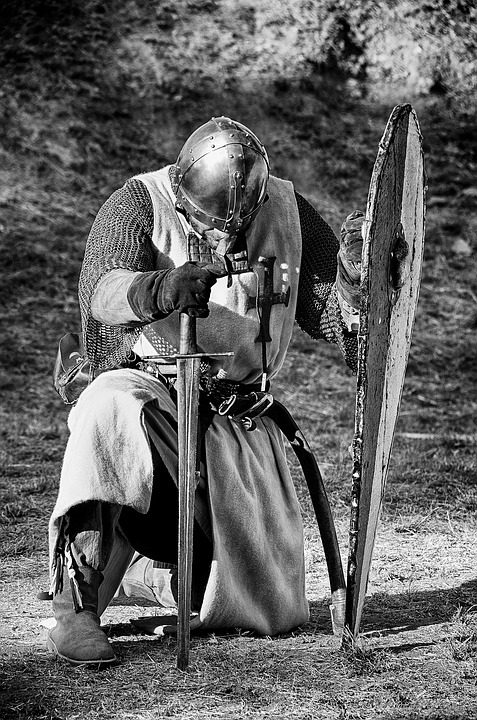

True Wisdom

True strength is being able to fight for what is right

True humility is being able to patiently endure wrongs

True wisdom is being able to know which it is time for

Thought for the Day- Winning Makes You Lose


Don’t fight a fight
Where winning makes you lose

Scriptural Analysis- Genesis 26:19-22

19 And Isaac’s servants digged in the valley, and found there a well of springing water.

20 And the herdmen of Gerar did strive with Isaac’s herdmen, saying, The water is ours: and he called the name of the well Esek; because they strove with him.

21 And they digged another well, and strove for that also: and he called the name of it Sitnah.

22 And he removed from thence, and digged another well; and for that they strove not: and he called the name of it Rehoboth; and he said, For now the Lord hath made room for us, and we shall be fruitful in the land.

The herdmen who fought to take away Isaac’s well cannot be justified in their actions. Notice that they waited until he was done doing all of the work before they tried to make their claim, which shows that their motives were selfish and deceitful.

Then Isaac again dug a well and the herdmen again wrested it from him. But again, Isaac did not dwell on the matter. Instead, he left that hotly contested area and dug a third well in a new area. Finally, there was no dispute over this one, so he named it Rehoboth, which means “broad places,” because at last he had found room enough to live in.

The story of the herdmen stealing Isaac’s wells rankles me. It is in our nature to want punishment for the unjust, to see them be held accountable and pay back what they have taken. We hate to see the unfair win.

But in the long run they do not. Truly, the lazy and the indolent are their own worst punishment. Whatever happened to these herdmen who cheated to get ahead? Evidently they then led such insignificant lives that we never hear of them again, either in scripture or any other historical record. But Isaac, the one who “lost” the struggle and meekly moved onward? His fame has continued for millennia.

In the long run, it pays to be honorable.

Thought for the Day-Stand Up Again


You can beat any foe into submission

Just by standing up more times than you get knocked down

Scriptural Analysis- Genesis 14:13-16

13 And there came one that had escaped, and told Abram the Hebrew; for he dwelt in the plain of Mamre the Amorite, brother of Eshcol, and brother of Aner: and these were confederate with Abram.

14 And when Abram heard that his brother was taken captive, he armed his trained servants, born in his own house, three hundred and eighteen, and pursued them unto Dan.

15 And he divided himself against them, he and his servants, by night, and smote them, and pursued them unto Hobah, which is on the left hand of Damascus.

16 And he brought back all the goods, and also brought again his brother Lot, and his goods, and the women also, and the people.

This story stirs my heart! I love the image of Abram hearing that his kin is in trouble and rushing off to the rescue. Never mind the fact that the army he is pursuing just finished laying waste to the militias of Sodom, Gomorrah, and three other cities. It doesn’t matter what the difficulty of the task is, Lot needs to be rescued, so that’s what Abram is going to do!

I’m also touched by how Lot is called Abram’s “brother” here, not his nephew. I mentioned previously how after the death of Haran (Abram’s brother and Lot’s father) that the record seemed to treat Lot as if he stood in the place of his father, and this verse further reinforces that notion. Of course I’m sure this also has to do with the customs of the time, but that does not diminish the passion Abram clearly has for this “brother” as he smites the enemy, pursues the battle all the way into another land, and doesn’t let up until he has retrieved every single thing they had taken.