Grit vs Surrender- What I Held Back

My Enslavement)

In my last post I promised that today I would share a personal example of my own struggles with vice, how I exerted great effort to overcome them and failed, but then found that freedom could come at a much simpler price.

I have already shared before about my addiction to pornography, and how I spent many years under its power. Perhaps some people do not feel guilty when they take their first steps into addiction, but I most certainly did. From the very first day, I was ashamed and disappointed with myself. From the very first day I tried to stop. I had fits and starts, I tried to make deals with God, I told myself again and again that this next time would be the last time. But no matter what I tried, I remained a slave to my lust for twenty long years.

Because for twenty years I wasn’t willing to try the one thing that would actually work.

Practically from the very start of my addiction, I knew that I needed to make confession. My conscience would consistently prick me to shine a light on this secret shame, but I would always make an excuse not to. I told myself that all I needed was God. He and I would work this out somehow, no one else needed to be involved. God would know how to fix me. That was ironic, given that I was deliberately ignoring what God was telling me to do in my heart.

For so many years I couldn’t make a confession because I couldn’t tolerate being seen by another person at that level of intimacy. It was a boundary that had never crossed in my life, not even in my marriage, and frankly I didn’t think I would ever be willing to have it crossed. That was the part of my autonomy that I kept holding on to, the surrender that I wasn’t willing to make.

Light Streams In)

Then, one day, I finally accepted that there was no salvation in the path that I was walking. I finally admitted to myself that I was getting worse, not better, and that as ashamed as I was of what I had done thus far, I would yet do things more shameful. I realized that for all of my attempts to keep myself whole, I was fracturing apart even so.

That was when I decided to finally make the surrender that God was asking of me. That was when I made my confession. Not just once, not just twice, but over and over again to my wife, to spiritual leaders, to therapists, to twelve-step groups, and even to all of you reading this blog. I surrendered my need for darkness, and finally let the light in.

There were other surrenders that came as a part of this, too. I surrendered my need to hate and punish myself. I surrendered my pride, my need to solve things on my own. I surrendered the fate of my future.

Making these surrenders wasn’t easy, but the transformation that followed them was. In fact, the transformation was effortless. The very changes that I had been trying so hard to make for twenty years took place on their own practically overnight. I didn’t have to wrestle them into submission, I didn’t have to choke them out, I didn’t have to force myself to be worthy by sheer force of will. None of that. I just changed, and there’s no explanation other than that God worked a miracle inside of me.

Now, to be clear, I am not saying that I am impervious to temptation now. I do still need to watch myself. I do still need to make deliberate choices to remain true to who I was born to be. I do still need to remove myself from situations that are going in a bad direction. But for the first time I actually can do those things, and they actually work! I am not free from temptation, but I am free to deny it.

In my following posts I will break down a few key themes in this story, but for now I hope it is clear that God’s way is not one of constant, painful exertion. Following Him and becoming a better person is supposed to be easy and joyful, not tedious and brutal. Jesus was really telling the truth when he said, “Come to me, all you who are weary and burdened, and I will give you rest. For my yoke is easy and my burden is light” (Matthew 11:28, 30). In the following posts, we will examine more closely how that could be.
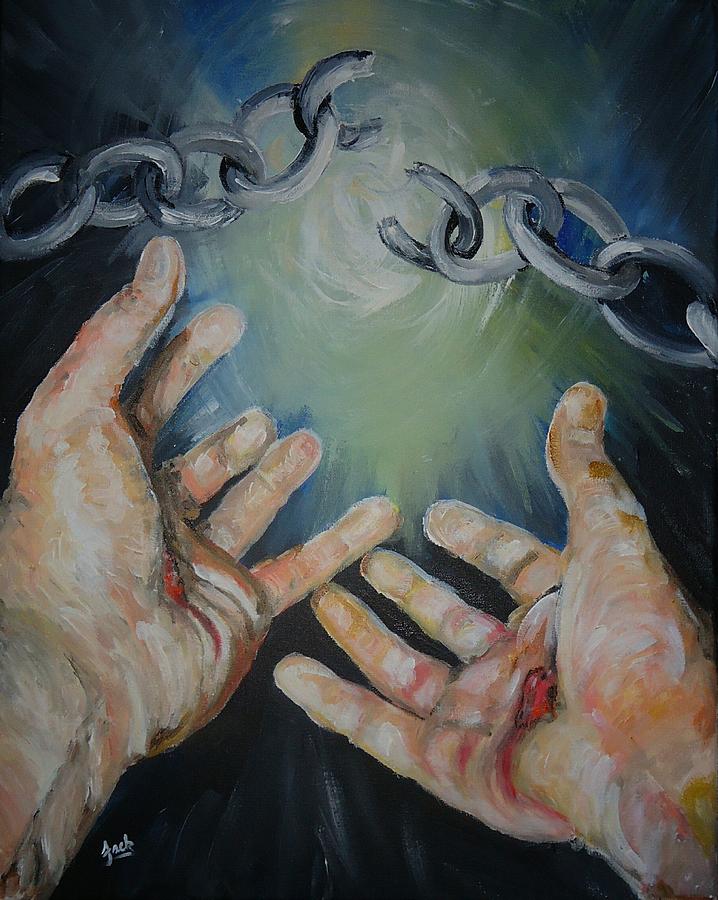

Rebukes of Today’s World

Permitted does not mean equally valid.
Not all disparity is injustice.
Civil rights are a distraction when the soul is left enslaved.

A Misunderstanding of Freedom

Two Kinds of Freedom)

At first glance, Genesis Chapter 38 seems like a strange anomaly in the Biblical record. It interrupts the narrative of Joseph right after he is sold into Egypt to tell the sordid tale of Judah’s family. Its plot unfolds like a trashy soap opera, culminating in Judah’s own daughter-in-law seducing him and conceiving twins. Once the chapter ends, we are whisked back to the main story of Joseph, just in time to hear about his experience in Potiphar’s house.

Genesis Chapter 38 only makes sense when it is viewed in the context of that broader narrative involving Joseph. I do not think it is a coincidence that it is placed right after Joseph is cast into slavery, and right before he rejects the advances of Potiphar’s wife and is cast further down into prison. His narrative and Judah’s provide a perfect contrast. On the one hand, Judah is physically free, but a slave to his immorality. On the other hand, Joseph is physically captive, but still the master of his own soul. Thus, the record is presenting two kinds of freedom and two kinds of slavery, and implicitly asking the reader, “which of these is truly free?” The correct answer, of course, is that Joseph is truly free, for though he is a slave an in prison, he is free in his inmost parts, while Judah is not.

Of course, the story is not presenting physical captivity as a good thing, mankind is meant to strive for all layers of freedom, but if a man wishes to be truly free, he must at the very least be the master of his own self. Any man who does not have moral control over his own appetites is fundamentally a slave, no matter the rest of his situation.

A Modern Misfocus)

Today, in our western culture, we have a great commotion of perceived shackles and demands for freedom. On the one hand, the white male is accused of still reaping the benefits of historical slavery and patriarchy, enjoying a higher freedom than women or most other races. On the other hand, we hear of blue-collar workers, predominantly white males, sick of being society’s punching bag for decades, sick of having their strings pulled by society’s elites. And then there are conspiracy theories that even those elites are for the most part powerless, their votes and influence bought and paid for by blackmail and bribery, shadowy corporations directing things from behind the scenes.

Everyone, it seems, isn’t as liberated as they would hope to be, and the majority of public discourse is set on the pursuit of freeing one class or another. It is an obsession that I believe our ancestors would find laughable, given that we are the freest people that the world has ever known. We are fighting over the slimmest margins of injustice, many of which are imagined, and we show no appreciation for the fact that our ancestors gave everything for just a fraction of the liberty that we now enjoy. Without devolving into complete lawless anarchy, we are about as free as it is humanly possible to be.

Or, at least, we are free physically. Spiritually and morally, though? We are a society that is absolutely enslaved to our appetites, to our devices, to our distractions, to our immorality, to our self-justification, to our anger and pride. We are simultaneously one of the freest and most enslaved people the world has ever known; and our focus for liberation is in completely the wrong area.

To Be Truly Free)

Perhaps we are so obsessed with our perceived injustices because our spirit accurately identifies that something is holding us down, but our heavy-lidded eyes can’t see past the physical to realize it is our lack of moral will. We settle on the assumption that it must be a physical shackle simply because we lack the imagination or the courage to consider a spiritual one. We are, therefore, a modern-day Sisyphus, doomed to an eternal effort that never achieves anything.

If we truly cared to be free, the great commotion of our time would be one of spiritual ministry. We would seek to convict the world of its sin as an act of kindness, waking up all to their true taskmaster, and the true liberation from it. We would strive as a community to abandon our shrines of distraction and learn how to rise to a collective moral mastery.

Then, and only then, we would be truly free.

What We Are, Fundamentally- Deterministic Machines

The Materialist Position)

I have previously criticized the materialist position, which is that only the material exists and is real. In the physical-materialist view there is no metaphysical reality, such as soul or spirit or transcendence. Debates between the material and the immaterial viewpoints are often based on interpretations of the human experience. The materialist must maintain that even the things that are typically not associated with matter have their origins within it. For the materialist view to be correct all thoughts, feelings, convictions, hopes, and anguish must have an explanation in atoms and protons and minerals.

Many critics of materialism have pointed out the horrifying conclusions that follow when we strip morality and emotion of their spiritual origins. I would like to emphasize a few of these points, observations that have only been briefly mentioned elsewhere, but which deserve the special attention that I will bring to them with this series. I will start today by defining one of the core beliefs of materialism, and tomorrow I will make my critique of it.

Deterministic Machines)

The theory that describes how a person can make choices under a physical-materialist worldview is called determinism, which asserts that there actually is no choice at all. In a physical-materialist view, humans possess no free will. They are nothing more than deterministic machines, and all that they “choose” to do is actually predetermined by their chemical construction and environment.

Each one of us is born with certain synapses and pathways already formed in our brains. That is the programming that determines what behavior we will exhibit in response to certain inputs. The inputs come from the environment that we live in. If the temperature is cold, our brain interprets that fact and executes whatever reaction is programmed as a response.

Since the environment is out of our control, and since the initial state of our brains is formed before we are born, we have no control over what inputs and reactions will come into and out of us. It has all been predetermined, and we are simply reactive beings, constrained to behave in a way that is outside of our own control.

Even if we change our programming, we only do so in predetermined ways. So if a child is pre-programmed to touch a hot stove, and is burned, and then remaps his brain to not do that anymore, he does that remapping as a pre-programmed reaction to feeling pain. Thus, even the changing of one’s mind is predictable.

And we predetermined machines are perfectly capable to interacting with one another by hooking up our cognitive inputs and outputs to form a larger machine. What you say to me you are predetermined to say, and how I respond I am predetermined to respond, and the same for you, and then the same for for me, back-and-forth, until one of us terminates the conversation because we are predetermined at that point to do so. And what each of us takes away from that conversation will be exactly what we are predetermined to take away.

Commentary)

This model may sound very strange, very different from how we perceive our day-to-day experiences, but it is the only logical conclusion once one decides that only the material is real. So long as there is nothing but matter, choice and free will can only be an illusion, a perception that is ironically pre-programmed into us, just like everything else.

Tomorrow I will discuss the absolute license this theory gives to all immoral and unethical behavior. In short, if everything we do is predetermined, if we have no choice over our own actions, then we are not responsible for any evil that we might do. There is no blame for even the most horrific of crimes, because the people that did those things only did so because they were predetermined to do so. Come back next time where I will discuss this even further.

Scriptural Analysis- Exodus 21:2-3

2 If thou buy an Hebrew servant, six years he shall serve: and in the seventh he shall go out free for nothing.

3 If he came in by himself, he shall go out by himself: if he were married, then his wife shall go out with him.

Today we begin the rules that applied to an Israelite slave. As I mentioned in my last post, this subject can be shocking to us today, but we must not take our current privileges and assume that they also existed in these ancient times. The historical context matters.

As we will read in upcoming verses, an Israelite man might end up a servant by selling himself, or by being sold by his father, into that service, presumably due to immense poverty. This was, therefore, a transaction with payment, and the serving participant elected to participate in it. The relationship being described here is not chattel slavery, but probably something between our modern concept of slavery and servanthood.

Today, we might wish that that the slave/servant could have been aided by some sort of welfare program instead, but what if there wasn’t sufficient stability and wealth in the economy to provide that welfare? We might wish that the rich master would simply pay for the man’s livelihood without receiving any service in return, as an act of charity, but what if the rich men of the time would themselves become destitute unless they made some gain after paying for the man’s livelihood?

Freedom is a great good that we should all aspire to, but history has taught us that it is a concept that requires a certain level of infrastructure and stability to exist. The Israelites simply may not have had that necessary infrastructure or stability, given that they were fresh out of Egypt and living in a brutal environment. At least, not enough infrastructure or stability to support it entirely.

Because, even while God’s law was allowing for a form of slavery in this moment, it is already showing the ending of slavery as well. Defined in God’s law was that no Hebrew slave should be forced to stay in such a state for perpetuity. Every seventh year he would have the opportunity to go free, at no cost, and be a free man again. If he found the world still too hard to abide on his own he could presumably sell himself back into servitude again, though after another seven years he would have still have that guaranteed chance for freedom once more.

And if it seems unfair that this option for freedom is only offered to Hebrew slaves, and presumably not the foreign ones, remember that God had already detailed how any foreigner could become a child of the covenant, and would presumably then have the same privilege of freedom.

True Freedom

True freedom is not having your chains removed, it is realizing they were never there in the first place.

The Shackles We Choose

Something I have been noticing while doing my study of Exodus is that Israel hated their enslavement in Egypt…but they also preferred it to being free. Though initially euphoric when God destroyed their enemies in the Red Sea, they repeatedly afterwards claimed that things were better for them when they were in captivity than free in the wilderness.

It seemed a strange behavior, until I examined my own life and realized that the same is true for me. As much as I may not like feeling subject to my boss, I cannot fathom living without the security he provides me. I think of all the projects I wish devoted my spare time to, but I’m afraid to cut out the movies and video games that receive most of my spare hours instead. I see my cluttered house and want to set it in order, but focus instead on the mess of emails I’m subscribed to. I say that I’m ready to live a self-controlled and honorable life, then I obey the will of my temptations instead.

From my birth I was blessed with great opportunity and freedom, given to me by the goodness of God and the sacrifices of my ancestors. But I have taken that freedom and given it right back to other masters. There is no locked gate keeping me captive, most of the prisons I have checked myself into I could leave any time that I wanted, but I choose to bind myself to these places of my own volition. I remain a prisoner because I am not ready to be truly free.

My conscience urges me to forge out into the wild. My Savior freed my soul two millennia ago. My ancestors provided the security to let my ambitions soar. I pray I find the courage to live as free as I could, to have no Master but my God, the one who calls me into deeper waters.

Scriptural Analysis- Exodus 6:4-6

4 And I have also established my covenant with them, to give them the land of Canaan, the land of their pilgrimage, wherein they were strangers.

5 And I have also heard the groaning of the children of Israel, whom the Egyptians keep in bondage; and I have remembered my covenant.

6 Wherefore say unto the children of Israel, I am the Lord, and I will bring you out from under the burdens of the Egyptians, and I will rid you out of their bondage, and I will redeem you with a stretched out arm, and with great judgments:

God had given His name to Moses to share with the Israelites, and next Moses was to reveal God’s purpose to them. It is notable how clear and specific this prophecy from God was. It was not a vague promise that could be fulfilled in various or symbolic ways, God was very specific that He would literally redeem Israel from their slavery. It was an extremely lofty claim, but God did not shy away from it. He boldly committed Himself to the miracle, just as when He told Abraham that he would have a son in his extreme old age.

I think it is also worth noting that there were no conditions set upon this promise. He did not say that He would free them if they proved worthy, just that He would free them. Later on the Israelites would themselves eligible or ineligible for certain blessings, such as whether the first generation would see the promised land, but this first gift was theirs for free. This is a type for the other gifts that God has determined to give all of us for free, regardless of our worthiness. We all have the gift of life, the gift of agency, and the gift of resurrection, regardless of whether we use those gifts in honorable or dishonorable ways. Like Israel, we are all brought out of obscurity and confinement by the Lord. Whether we will be happy with the lives and freedom that we have been given depends on what we choose to do with them.

Scriptural Analysis- Genesis 41:46-49

46 And Joseph was thirty years old when he stood before Pharaoh king of Egypt. And Joseph went out from the presence of Pharaoh, and went throughout all the land of Egypt.

47 And in the seven plenteous years the earth brought forth by handfuls.

48 And he gathered up all the food of the seven years, which were in the land of Egypt, and laid up the food in the cities: the food of the field, which was round about every city, laid he up in the same.

49 And Joseph gathered corn as the sand of the sea, very much, until he left numbering; for it was without number.

We know that Joseph was seventeen years when he lived in his father’s house, before his brothers sold him into Egypt. From that introduction the only timed interval that we know is the two years after the chief butler was redeemed from prison and forgot to speak up for Joseph. That leaves eleven years divided between Joseph being resented by his brothers, being carried into Egypt, serving as a slave in Potiphar’s house, and being in jail before interpreting the dreams of the butler and baker.

In all, Joseph had spent nearly half of his life not being free. He had matured from a youth to a man while in some form of captivity or another. That is a very long period, and it covers the most critical, transformational years in the life of a man. It is remarkable that he did not lose himself in the trial.

As soon as Joseph was set free, though, he didn’t sit around idling. Notice the directness in verse 46: “Joseph went out from the presence of Pharaoh, and went throughout all the land.” He has a great lifesaving work to do, and the entire country needs to be prepared with storehouses and workers and a plan of action. This is a massive undertaking, one that will require structures and overseers and bookkeeping. And so he travels through the whole country, instituting his food preservation program in every city (verse 48). Joseph gathers and gathers the increase of the entire country, until the yield exceeds their numbering system!

In short, no sooner was Joseph let loose than he did his work, and he did it well. His years in confinement might have broken a lesser man. But it had not rendered him useless. He was as sharp as he had ever been, if not more so.

Scriptural Analysis- Genesis 27:37-40

37 And Isaac answered and said unto Esau, Behold, I have made him thy lord, and all his brethren have I given to him for servants; and with corn and wine have I sustained him: and what shall I do now unto thee, my son?

38 And Esau said unto his father, Hast thou but one blessing, my father? bless me, even me also, O my father. And Esau lifted up his voice, and wept.

39 And Isaac his father answered and said unto him, Behold, thy dwelling shall be the fatness of the earth, and of the dew of heaven from above;

40 And by thy sword shalt thou live, and shalt serve thy brother; and it shall come to pass when thou shalt have the dominion, that thou shalt break his yoke from off thy neck.

Esau continued to plead for some sort of blessing from his father, even after hearing that Jacob had already been promised to rule over his brother’s posterity. And this prophecy would come true after the Israelite Exodus. Jacob’s descendants would enter wars with all the other nations in the promised land, including the Edomites, who were the descendants of Esau. This struggle between the brothers’ posterity would be resolved when Saul and David finally conquered the Edomites, subjugating the nation for many years to come.

However, God did have a small reprieve for Esau, and through Isaac he pronounced that the Edomites would eventually regain their freedom. This would occur in the days of Elisha and Joram, when the Edomites successfully revolted and crowned their own king. They would never go so far as to gain power over the Israelites, but at least they would be their own masters.

But it would be wrong to assume that the Israelites would prevail over the Edomites because of this one time where Jacob was more faithful than Esau. The Israelites prevailed in the time of David because they were more worthy at that time. And the Edomites eventually threw off the Israelites because the Israelites were no longer more worthy at that time. Sometimes we make the mistake of thinking that when God foretells good or bad for a nation, it is a recompense for a decision made by a single ancestor. This was a misconception that Jesus had to correct his own disciples on many years later. When God foretold that Jacob’s descendants would rule over Esau’s he was merely foretelling that their descendants would earn that outcome for themselves.