
We try to find God so that we may do good…
When in fact it is in doing good that we find God
We try to find God so that we may do good…
When in fact it is in doing good that we find God

I’ve spent more than a week discussing how we desire approval and validation in our lives. It’s a common and basic longing, but there was a lot to unpack on the subject. Let’s review some of the lessons we’ve learned along the way.
It might seem vain for us to need constant validation and approval, and we might have spent quite some time trying to squash those emotions because we viewed them as being beneath us. But this is the same as trying to deny any of our other basic needs. Just as we need food and rest for our bodies, we also have requirements for our emotional health, including these. If you didn’t need some sense of validation in your life, then your heart wouldn’t keep longing for it.
And just as how we can satiate our physical hunger with food that is bad for us, so too we can seek out unhealthy forms of validation. Acknowledging that our hearts need validation is not the same as saying that all validation is worthy. Demanding fame and attention are perhaps the most detrimental ways of dealing with this need, but there are other mistaken ways to deal with it as well. Perhaps the most common of these is tying our peace and happiness to the responses of those in our immediate vicinity. Allowing ourselves to be miserable unless one, specific person gives us a kind word puts us in their power in a way that we never should.
During this study we considered the two kinds of validation and approval that are actually a good thing to pursue, and fortunately each is entirely within our power to obtain.
The first method we discussed was to approve and validate your very own self. This means taking the time out of our day to look yourself in the mirror, verbalize all the good things that you have seen yourself do, and express appreciation to yourself for how you are helping your own life and the life of others.
Self-validation also means recognizing our behaviors that we do not approve of and overcoming them. Paul recognized this reality of people betraying their own conscience when he said, “For that which I do I allow not: for what I would, that do I not; but what I hate, that do I” (Romans 7:15). So long as we are disappointed with our own behavior then we are never going to feel fully approved or validated, no matter what affirmation we might hear from others.
Of course, overcoming our evil nature not only brings a sense of self-approval, it also invites the one other kind of approval that is healthy to pursue.
For am I now seeking the approval of man, or of God? Or am I trying to please man? If I were still trying to please man, I would not be a servant of Christ. - Galatians 1:10
In this verse Paul denounces the idea of seeking man’s approval, but he does promote seeking the approval of God. And what a relief, as this is actually the far more straightforward target to hit. Playing for the applause of the world means constantly altering one’s behavior to the ever-shifting demands of society. The way to satisfy God, however, has always remained the same. We must keep his commandments.
However, as we discussed earlier, obeying the commandments as they are written is not all that we must do. They provide an essential foundation and will bring a sense of validity in and of themselves, but upon that base we are supposed to actively build. We must put good into the world, taking our talents and using them to shine a light to others. It is in this combination of obedience and righteous productivity that I have felt the greatest sense of validation and approval in my life by far.
I also took some time to discuss that we can cultivate our ability to hear God’s approval of us. It may be that He has been trying to express His appreciation for some time, but He has been speaking in a language that you haven’t recognized. I suggested getting into the habit of seeing all that is beautiful in this world as a way of God telling you directly that He sees you, that He loves you, and that He appreciates what you are doing. If you come across something that seems to uniquely bring you joy, something that touches your heart more than the hearts of others, then consider it a gift from a Father who knows you perfectly and give gratitude for it. The more you give gratitude for these moments, the more you’ll start seeing these “love notes” placed all around you.
Like many things, validation and approval represent a two-edged sword. On the one hand we can become obsessed with shallow counterfeits, chasing never-obtainable ideals. And even if we did achieve the constant attention of loved ones and the highest fame of the world, we would find ourselves still dissatisfied even so.
But on the other hand, there is such a thing as real validation and real approval. It is when we receive these gifts from our own selves and from God. It is here that genuine satisfaction occurs, that our anxieties are stilled, and we finally repose in peace. This is what it means to live life richly and with contentment, a richness and contentment that the world can never take from us, for the world never gave it to us to begin with.
Our desire for validation and approval were given to us for a reason. Not to be a source of perpetual frustration, but to lead us to eternal glory. Hopefully the principles we’ve discussed here can be helpful for you in your journey. They’ve certainly been helpful to me.

Thus far in this series I have discussed our need for approval and validation in our lives, how we can accomplish some of this through self-care, and how these needs are only completely satisfied when they come from God. We’ve since moved on to considering ways that we can feel that approval of God in our lives.
I have looked at how we receive God’s approval by keeping His commandments, and this is important, but gospel living is meant to be more proactive than simply avoiding forbidden fruits. In my experience, the place where I feel God’s pleasure the most is when I go beyond merely following commandments and actually start trying to put good into the world.
A key plot point in the film Chariots of Fire is Eric Liddell’s desire to be useful to God, while also pursuing a running career. He and his sister have committed themselves to a life of ministry and missionary work, and she is concerned that he is starting to lose his spiritual conviction, being seduced by the pull of fame and worldly praise.
Eric reassures his sister that this is not the case at all. He tells her “I believe God made me for a purpose, but he also made me fast. And when I run, I feel His pleasure.” With this frame of mind, Eric trains for and ultimately wins gold at the 1924 Olympics. Along the way, his convictions to God are tested, but Eric remains faithful. The press highlights this drama in the papers, spreading abroad the story of the athlete who is first and foremost a man of God. After the Olympics, Eric does become a missionary, and the experiences he shared while running help him to give glory to God wherever he goes.
Eric’s sister’s concerns are understandable. Athletic prowess is a way that people can become self-centered and pursue their own glory, but as Eric attested, for him running was the way that he felt the pleasure of God. It was a special bond that they shared, a tool to further the kingdom. Given these facts, it was not only permissible for Eric to run, it was imperative!
In Matthew 25, Jesus recounts the parable of the talents. In the story, a ruler leaves to a far country, and before he goes, he distributes his wealth to three servants. One receives five measures of money (called talents), another two, and another one.
The servants that received five and two talents put the money to work, and by the time the ruler has returned they have doubled his investment. He praises them and then calls upon the servant who received only one. That servant revealed that he has hidden the money away, burying it in the earth, and has no profit to show for what he was given. He is declared to be an evil servant by the master.
The moral of the story is that God gives to each of us opportunities and abilities, and we are actually expected to do something with them all. Frankly, it isn’t enough to only keep from evil and enjoy the beauties of this earth. We are also expected to actively put more good back into the world. God’s sun rises, his wind blows, his water runs, and all of it brings glory and beauty to the world. We are also His creation, and there is just as much expectation for us to also be functional and beautiful. And when we are a vibrant, active in the talents God has given us, then we also bring glory and beauty to the world, and we are sure to “feel His pleasure.”
Verily I say, men should be anxiously engaged in a good cause, and do many things of their own free will, and bring to pass much righteousness; - Doctrine and Covenants 58:27
An interesting effect I have seen in those living a life of addiction recovery is that they often start taking the “talents” they have received from God and seeking to do more with them. After being saved from their vices many of them have gone back to school, changed their careers, and leapt into the work that they feel called to do. Several have become therapists and counselors, helping others as they were once helped. Some have begun podcasts, sharing the stories of addiction recovery with the world. Others have become public speakers, using their hard-earned experience to motivate audiences around the world.
I, too, have felt called to a work. It was early on in my recovery that I recognized God had given me creativity and writing as a way to bring glory to Him and to “feel His pleasure.” As a result, I started writing a story blog, this spiritual blog, and a novel. Sometimes I’ve lapsed in this work, but when I commit to it with a pure heart, I really do feel His approval and validation. I feel that I am making Him pleased with me, because I am doing my part to shine a light into the world.
Remember what Jesus told to his disciples. “Let your light so shine before men, that they may see your good works, and glorify your Father which is in heaven” (Matthew 5:16). This is more than a suggestion it is a requirement if we are ever to have that sense of self-satisfaction that we all crave. If you find yourself longing for the world to shine a spotlight on you, it’s time to start considering instead how you can start shining your light into the world!

My sheep hear my voice, and I know them, and they follow me: - John 10:27
I have discussed how we need to hear God’s approval to be fulfilled in life, and that we receive His approval when we keep His commandments. For much of my life, with my addiction to lust and pornography, I was willingly violating God’s commandments of chastity, and I was certainly devoid the sense of His approval.
When I decided to make my confession and seriously begin the work of recovery, I was quickly flooded with feelings of His pleasure and approval. My heart was made sensitive to day-to-day moments that might have otherwise gone unnoticed. I saw His love and approval in a beautiful sunrise, a plan for the day that worked out, and a word of kindness from a stranger.
And this was one of the most important transformations for me: learning how to see and hear God’s approval in the day-to-day moments that I might have previously missed. Thankfully, right at the start of my recovery, God led me to people and places who would teach me to see Him more clearly.
I will spend the next posts examining three of the ways that I have learned to feel God’s pleasure in my life. Today we will take a look at the signs and wonders in the world around us.
Right at the beginning of my recovery journey, my group therapist invited me to the Warrior Heart retreat based on the writings of John Eldredge, held in the mountains of Utah. One of the things they spoke about there was the notion of looking for “love notes” from God.
This led me to make an extremely important shift in how I view things of beauty and significance in the world. I have changed from interpreting the wonders around me as random happenstance, to seeing them as the deliberate actions of a Father who is trying to say “I love you. I made this for you. I appreciate the good that you’re doing in my world.”
I remember one night, just after my family moved into a new home by a little lake, I was woken by one of my children crying. After I had comforted her and she had gone back to sleep, I stepped by a South-facing window and my vision was filled with the full moon it all its glory, with its light bursting all across the tranquil water. The thought crossed my mind that I might be the only person in the world seeing this same view at this same moment, and even I would have missed it if not for my daughter calling me out of bed in the middle of the night. I chose to interpret the moment as a gift from a loving Father, a sign of approval for how I was trying to follow Him.
Perhaps it seems vain to assume that an entire act of nature was put together just for your benefit, or that God, Himself, summoned you to be a witness to His majesty. I certainly felt skeptical about calling moments of cosmic wonder a gift from heaven to little, old me. But as I started the practice of saying “thank you,” for these events, and allowing myself to indulge in their glory as if they really were made just for me, I never felt wrong for doing it. I didn’t feel like I was taking something that didn’t belong to me, or that I was giving credit to God where it wasn’t due. I actually felt very right about it, as if I was finally giving the miracle the applause that it had always been waiting for.
If we take the deliberate intention out of these moments, then they lose so much of what makes them meaningful and beautiful. They become nothing more than random chance, systems of particles and energy devoid of any feeling, noise and fury signify nothing. To deny the possibility of God crafting a perfect moment for you is to consign yourself to a cold and heartless world, one where your delight in it is nothing more than an accidental side-effect.
It is better to assume the best in others, including in God. Assume that if something mattered to you, He did it on purpose.
When we embrace life in this manner, then that life starts to open wider. Gratitude for kindness tends to beget more kindness. Once you start taking special note of the beauty in the world and saying “thank you” for it, then you’ll start noting beauty in more and more places.
I especially started noticing the beauty in the clouds above me. I’ve always loved tall, expansive, complex cloud structures, but it wasn’t until recently I appreciated how prevalent they are in my part of the world. Our Rocky Mountains are crowned by mountains in the sky every other day it seems.
I started to feel grateful for the visual representations of mathematical patterns people have discovered, such as the Mandelbrot set and Conway’s Game of Life. I was always entertained by these, but just recently I started to say “thank you” to God for there being people that were able to find them, and for me being able to experience them. When I did, I felt a rush of overpowering love. I really think God was grateful that I was finally acknowledging the beauty He had placed around me all my life.
I’ve also started to show gratitude for when my day goes according to plan. I know all too well that the schedules of my family, work, and personal errands are not guaranteed to line up at all, but when they do I feel wonderfully fulfilled in every sector.
In short, there are countless ways to recognize God’s love and approval in my life. And I really do believe that both those qualities need to be appreciated in these moments: His love and His approval. Sometimes I have more of a sense of His love from a beautiful sunrise, and other times it’s more of a sense that He’s saying, “you’re doing a good job.” The more I try to identify these moments, the more I discover new things to be grateful for, too. The more I show gratitude, the more there is to be grateful for. Is it because I am being more blessed than I was before, or is it because I am just recognizing it better? Probably both. After all, the ability to recognize blessings, is itself a blessing.
Interestingly, I started this study by discussing how we can feel more approval coming towards us, and I’ve ended up talking about how we can show more gratitude going out to God. It turns out that the two are inseparably linked. The more we expand our capacity to recognize God’s signs of approval to us, the more we are showing gratitude for Him doing so. It is a mutually-affirming relationship, which is the best kind that there is.

In the last post I discussed an alternative to seeking validation from other people, and that was to get our validation from God instead. I pointed to the example of Jesus, who thrived on the acknowledgement and appreciation of his divine Father. I suggested that as the children of God, our hearts are wired to need His approval, just as how every child seeks the approval of their earthly parents.
Our craving for validation from other people is therefore nothing more or less than a misconstruing of our basic need for divine validation. Yes, we need validation, but no, not from our friends and coworkers. We need to develop a relationship with God in which we can feel His approval regularly.
So, then, how do we go about doing that?
Work hard so you can present yourself to God and receive his approval. 2 Timothy 2:15 (NLT)

And I answered him, saying: Yea, it is the love of God, which sheddeth itself abroad in the hearts of the children of men; - 1 Nephi 11:22
To start off, we need to take a moment to recognize the difference between God’s love and God’s approval. It is a common thing for those who are living a life contrary to the commandments of God to point out that He still loves them, no matter what they do. And they are absolutely right. God does love all of His children, and He loves them wherever they are in life. Even in the midst of our sins, He is able to manifest His love, and no child is beyond the reach of His grace.
But that is not the same as having God’s approval. Any parent can attest that they are perfectly capable of whole-heartedly loving their child, while not condoning their behavior. So, while there is nothing that we must do to earn God’s love, as the verse from 2 Timothy suggests, there are things that we must do to earn His approval.
And gaining the approval of God is essential to realizing our full, divine potential. As Jesus Christ, himself, attested “Not every one that saith unto me, Lord, Lord, shall enter into the kingdom of heaven; but he that doeth the will of my Father which is in heaven,” (Matthew 7:21).
In other words, the love of God is an essential component in being saved…but it isn’t the only component. There will not be any saved who did not feel the love of God, but there will be those that felt His love who are not saved. Indeed, one might say the whole point of experiencing the love of God in our lives was to inspire us to press further and seek for His approval. It is those that receive and maintain the approval of God who can be sure of their salvation.
For am I now seeking the approval of man, or of God? Or am I trying to please man? If I were still trying to please man, I would not be a servant of Christ. - Galatians 1:10

If ye love me, keep my commandments. - John 14:15

For I the Lord cannot look upon sin with the least degree of allowance; - Doctrine and Covenants 1:31
So how do we receive the approval of God? The answer is extremely straightforward. You must obey Him. One cannot approve of behavior that they do not advocate for, and God, being the source of all good, can only advocate for what which is good. God can only ever approve of those that follow the good commandments that He has given. God can love the sinner, for love does not require obedience, but God cannot approve of the sinner, for approval does require obedience.
We started this series with the question of how we could obtain the acknowledgement and approval that we crave in life. We have identified that only God can fully provide this approval, not mankind, and now we have concluded that God can only approve of those that follow His commandments. Thus, having the sense of appreciation that we desire is predicated upon our choosing to follow the commandments of God. We can try to argue our way out of this rule, but the heart will remain forever frustrated until we accept and adhere to it.
But what if we feel that we have been following God’s commandments, yet we still do not feel His approval? What if we suspect He is already speaking His appreciation to us, but we just aren’t attuned to hearing it?
This is entirely possible. Indeed, it is almost certain that God expresses His love to us many times, every day, but that we fail to recognize most, if not all, of His messages.
So how do we pick up on these moments as they are happening? How can we start to understand God’s language better? We’ll dive into that tomorrow. I’ll see you there.
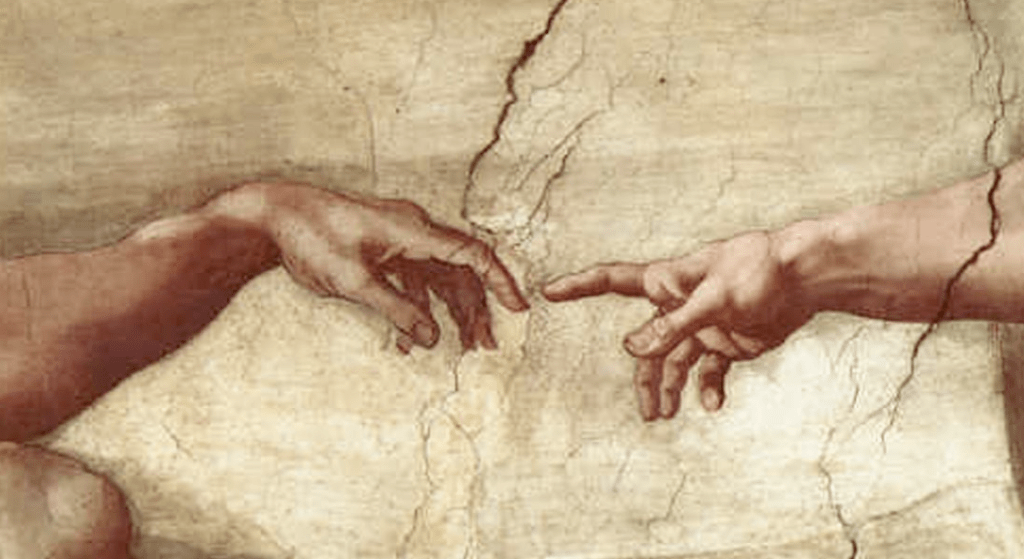
I have been examining our need for approval and validation in our lives, and how we can seek it from other sources than the people around us. Thus far I have discussed the practice of giving approval and validation to our own selves, and this certainly an important practice, but it isn’t the end of the story.
Today we will start to examine another source of approval and validation, one that is higher than any other. We will start by looking at the most perfect example of a man living with this sort of higher approval in his life.
The Father hath not left me alone; for I do always those things that please him. - John 8:29

And Jesus lifted up his eyes, and said, Father, I thank thee that thou hast heard me.
And I knew that thou hearest me always. - John 11:41-42

And lo a voice from heaven, saying, This is my beloved Son, in whom I am well pleased. - Matthew 3:17
We often speak of the pain that Jesus endured, but he also must have had moments of wonderful rapture as well. Can you imagine knowing with the same surety that he did that God loved you, saw you, and appreciated everything that you did? Can you imagine hearing God’s voice literally speaking out loud to say that He was pleased with you?
Forget about the validation of other people, what further approval would you need if you were regularly having experiences like this?! I believe each of us knows, deep down, that somehow this is the sort of the validation that we were made for!
If we are the children of God, then we are wired to need His approval. Children need to know that their father sees and appreciates them. We speak so much of our need to be obedient to Him, but that’s only half of the story. We need to be obedient to Him so that we may feel His approval. You cannot get away from this need, it is part of your identity as His son or daughter.
And that is why saying “I don’t need anyone else’s approval to be happy” is misguided. Or rather, it is misguided when it is applied to more than just the human race. Each of us has inside of us a hole that only God can fill, and so long as we keep trying to fill it with the approval of other people, or deny that the hole exists at all, we are going to be left agitated, incomplete, and perpetually frustrated.
Most of the time, we don’t even consider the absence of God’s approval when we try to make sense of this frustration inside of us. We might even ask Him to bless us with the approval from others, and then wonder why He didn’t answer that prayer! He doesn’t, because in His wisdom He knows that isn’t what we really need.
In conclusion, the world doesn’t meet the need for acknowledgement and approval that we need, nor indeed can it. This need for praise is based in our relationship as children of a Heavenly Father, and His is the only approval that can satiate our souls.
Which is all well and good to understand…but now how do we get to hear those sorts of messages from Him? We’ll take a look at that with tomorrow’s post.

Yesterday I brought up the common sensation we all have of not being appreciated as we ought to be. I examined why others don’t validate us in the way that we wish they would, and I also pointed out that in many cases they literally can’t.
At this point one has to make their peace with a fact of life: you will never receive exactly the validation, recognition, and appreciation that you desire from other people. Some people, some of the time, might say some of the right words, but there will always be some things left unseen, unappreciated, and unsaid.
This realization brings one to a crossroad. On the one hand, you could simply accept this dissatisfaction as a necessary part of life, an unpleasant but unavoidable reality that you just have to bear and move on with. On the other hand, you could start to consider outside solutions. Maybe no other person can give you all the validation that you need, but is it possible that you’ve been looking in the wrong place for it all along?
To choose that satisfaction is impossible is the more cynical option, it is to accept life as inherently broken. Unfortunately, some might aspire to such a cynical view as a show of strength. They might say, “I don’t need anyone else’s approval to be happy.” In my experience, however, simply denying the longing inside me does nothing to make it actually go away. I might say it doesn’t bother me anymore…but really it does. And so long as it’s going to keep bothering me, I may as well see if there’s not an alternative.
And in my contemplating, I have come up with two better, more reliable sources of validation. Today we will look at the first.
One of the problems I mentioned with seeking approval and validation from others is that most of the good we do in life will be imperceptible to those around us. Another reason was that even when our good is recognized, the exact words of affirmation that we need to hear are a personal secret. Only we know exactly what qualities we feel that we most need to be appreciated for.
And so, what better person to provide the specific and targeted validation that we need than our own selves? Of all the people on Earth, only we know all the good that we have done, and only we know what qualities we exercised to do it.
I first considered giving approval and validation to myself after learning about Internal Family Systems, which suggests that your personality exists as several different entities, such as the wounded child who still hurts from a trauma in your past, and the protector who pushes others away in order to protect that child. My therapist guided me through a program in which I, as the authentic self, work with each of these different parts, unburdening them and giving them validation. After a while, I realized that I didn’t have to wait for those hurt and frustrated parts to come and find me, though, I could proactively care for them by letting my authentic self speak words of kindness and praise to them at any time that I wished.
Even after having the idea of giving myself this self-appreciation, I still had my skepticisms about the practice. On the one hand, I suspected that I wouldn’t be satisfied. I felt that what I really wanted was validation from others, people who had said that they cared for me, but then took my contributions to the relationship for granted. How was validating myself supposed to resolve those relationship problems? My other concern was that I would give myself an over-inflated ego. I already felt like I was obsessed with the praise of others, wouldn’t patting myself on the back just extend my narcissism further?
I think that these were valid concerns to have, and I’m glad that I had them in mind from the beginning. Since I knew what dangers to watch out for, I felt I could experiment, and at the first sign of trouble I could abandon the practice altogether.
Thus I moved forward, and though I did not start this practice until recently, much to my surprise I have already seen both of these concerns be emphatically refuted. It is true that I have still felt taken for granted in some of my relationships, but now that I am receiving validation from myself, I no longer feel like I have to get the approval of others. For years these other people have been my only hope for validation, so I had a codependent relationship with them. I haven’t dared to speak my mind, for fear of losing what little I had. Now that I’ve learned that I can meet those needs without them, though, I am finally free to speak up for myself. I can tell them how I feel, and if they respond with hostility, I am perfectly content to end the unhealthy relationship.
And it has been much the same with my other concern. Being able to receive approval and validation from myself has disintegrated the need for the praise of the world. After a showing love and appreciation to myself, I really feel okay with the idea that I might never have the broader love and acclaim that I once dreamed of. As it turns out, it isn’t really fame that I wanted, it was a listening ear, even if only my own.
Recognizing and calling out the good things that I do is now one of my fundamental practices of self-care. It has taken my peace and fulfillment out of the hands of unreliable sources and brought them under my own jurisdiction.
So how exactly do I do this practice? I’m out of time for today, but I’ll spell out the simple steps I follow with tomorrow’s post. Maybe it’ll be useful for you as well.

For the last week we have been exploring the different layers that make a person up, which ones we mistakenly identify with, and the one true identity that we should define ourselves by. We made this journey by moving from the outside in, first examining the external falsehoods, moving to the interior ones, and finally settling on the truth. This inward journey tends to be the pattern that the reawakened soul follows, digging through the layers to get back to who they once were. But, of course, all of these layers come upon the soul in reverse order. So, let’s take a minute to start at the core and work our way back out, just to make sure the picture is complete.
First and foremost, we have the divine. Our true identity, present in us from before our birth. We do not have to work for it, we do not have to earn it, it is just inherent in our innocent, infant state. Artists have long recognized the natural divinity of children, rendering them as angels and cherubs, holy souls under the direct purview of God, Himself.
The divine core is present in us from the beginning, though it should be noted that it can grow and expand throughout our lives. When we are living from this authentic core, we are able to develop and attach other virtues to our character. If we attempt to attach these virtues at any other level of being, they will never stick. Thus, the great prerequisite to real change in our lives is for that change to be able to communicate with this most intimate layer. If you really want to make lasting changes in your life, then you need to stay in this place.
Tragically, though, at some point the divine self is assaulted and taken from us. Though we are naturally bright, someone tells us that we are stupid. Though we are effortlessly kind, someone tells us that we are hurtful. Though we are inherently innocent, someone tells us that we are guilty. We accept these messages as true, because we are young and vulnerable, and they come from someone that we love and trust.
Part of the reason why childhood wounds hurt us the most is because they cut at the truest part of us. If we accept that at our core we are foolish and selfish and worthless, then there is nowhere else to go for reassurance. We see ourselves as fundamentally broken, and by definition, fundamentally broken means unfixable.
The pain brought on by this wounding cannot be overstated. It is entirely appropriate to say that these are the greatest assaults our souls will ever face in life. Being struck to our core, our survival instincts will almost certainly kick in. These instincts are simple and powerful, designed to find the quickest, most efficient way to remove oneself from the pain.
And all too often, the quickest, most efficient anesthesia is some sort of carnal pleasure. Whether the pleasure of sexual gratification, or of consumption, or of entertainment, or of mind-altering chemicals, or of getting new things, or of establishing control over another. All of these alleviate pain in the moment, but they do so at the terrible cost of tearing our conscience and hurting the hearts of others. We will hate ourselves for doing these things, but that hatred will only inspire the survival instincts to do them yet again to numb that pain also! A vicious cycle of self-hurt and hurt to others thus begins.
The pain of a broken heart and of a guilty conscience, the two most terrible burdens to live with. The instinct-based survival mechanism has tried to save us in its own way and utterly failed, so now our higher reasoning takes a crack at it, but its attempt is hardly any better.
We mistakenly conclude that we must create a new layer outside of the others, one that covers the shame so that no one else can see it and one that overcompensates for the part of our divine soul that was assaulted by the wound. So, if we were told that we were selfish, and if our shameful addictions have reinforced that belief, then we will likely create a façade of exaggerated niceness, straining to put on a show of compassion and consideration, not motivated by genuine love for other people, but by fear of having our ugly side seen.
Because the façade totally ignores the underlying issue, it is trying to erect a beautiful building on top of a fractured foundation, and it is doomed to fail miserably. Sometimes this failure is a sudden and public collapse, sometimes it is hidden from the world as we slowly erode from the inside out. In either case, its scope is all-reaching, shattering every branch and relationship in our lives.
And thank God that it does. Thank God that our efforts to put a band-aid over a gaping laceration don’t work. Thank God that we will never find a workable solution without Him. And I literally mean “thank God,” because He is often the one who topples our house of cards to the floor.
Sometimes, when we are in the midst of trying so hard to cover our mistakes and wounds, we feel like divine intervention is tripping us up. Often that makes us incredibly mad! “God, I’m trying to make myself good enough, I’m trying to make this house beautiful enough, so why do you keep sending earthquakes to knock it down?!”
God breaks apart everything that we build so that we can finally give up. Routed and cut off from support, our marshalling ruined and our hopes in retreat, finally we throw our hands up and say “I surrender! Go ahead. Punish me! Break me! I deserve it!”
And then we see what a liberating captor God is.
One layer after another, God then breaks through the façade, the shame, and the wound. He blasts all of it away and reveals to us our shining, divine spark, long forgotten but never faded.
“I don’t care about the wrongs,” He tells us. “I don’t care about the lies. I don’t care about the shame. And I’m not here to condemn you, break you, or punish you. I’m only here for this!”
He takes that divine spark and puts it back into our hands. He gives ourselves back to ourselves.
“Now let’s try this again,” He says.
And now, with our true self restored back to us, we miraculously find ourselves effortlessly able to be the person that we could never make ourselves be by force. Where once we felt cursed in all that we did, now we are blessed. Certain defeat is replaced with already-won victory. Real change and real happiness come over us, and we are amazed to find that all this was ready and waiting for us at any moment.
Unveiling our shame and our wounds may seem a terrible ordeal. Our anxiety might seem sure that to do so will kill us! But this is the only way to get them out of the way and then unveil the divine, and once we have done this, then all the hard journey will have been worth it. At last, we are our ourself again, and we need never go back to playing pretend.
I have just finished my study of Genesis. Over the past week, as I’ve been approaching this milestone, I’ve been thinking about what it is I want to do next. I could move on to a study of Exodus, or I could go back to doing topical studies, or I could try something else.
And as I’ve thought about it, I feel that I would like to be more open about my personal journey. I’d like to share about the spiritual journey I’ve taken thus far in life, and where I am trying to go with it now. I want to talk about the principles and practices that mean a great deal to me, and which ones I am still working on. I want to discuss how I have felt my soul saved by Christ, and how I have tried to become a genuine disciple as a result.
In order to explain my journey, it will be necessary to explain more of who I am and who I was before Christ rescued me. That means shining a light on private areas of my life, such as my wounds and shame. I don’t intend to go into excessive detail about every thing that I regret in life, but I do think it is important to admit at least their general nature, in order to provide hope to others who can relate to those experiences.
As such, these next episodes are going to put me in quite a vulnerable position, and I hope that you will receive what I share with compassion. I’m going to first lay out a little groundwork, though. Tomorrow I will give the roadmap for what the next several days will cover. Thank you, and I’ll see you then.
Seventeen months ago I started my study of Genesis. I’ve always had a great esteem for the Old Testament, and during the last year-and-a-half I’ve realized that Genesis in particular is one of my favorite books in all of scripture. Ever since I was a child, I have loved legends and fairy tales, life lessons wrapped in a fable, and Genesis is full of that same sort of mythic storytelling. It has larger-than-life individuals, people who discover important morals, and cautionary tales.
In the beginning we had the story of Adam and Eve, and during my study I focused on how their experiences are an archetype for common experiences that we all pass through, and thus can be interpreted on an individual level. The story of Adam and Eve shows a state of innocence, the loss of that innocence, and the need to be saved from the resultant corruption. The story of Adam and Eve might be completely literal, but even if it is, it also has great value to us as an allegory of our own selves.
Then we had the decline of civilization, the prevalence of evil, and the eventual flooding of the world. I noted at the time that this was a sort of rebirth of the world, a second beginning. Also, it sets up the theme of man being prone to losing his way and that the truly faithful are a great minority.
The rest of Genesis was then dedicated to some examples of those faithful few. Abraham, Isaac, Jacob, and Joseph were each an island of faith in a pagan world. Though each faced different challenges, they did share common themes and patterns. In one way or another each of them was a stranger in a strange land, was taken from their usual comforts, was thrust into the wild world where they discovered the true nature of God, and each learned to trust Him above all else. They were imperfect men, but through their trials they grew into the unique identity God had called them to, often receiving a new name to signify this. And usually with those new names came promises, some to be fulfilled immediately, but some to come in God’s own good time.
Of course, this is only a brief summary. Genesis also has a tremendous number of individual lessons scattered throughout. It covers topics such as sacrifice, admitting one’s wrongs, duty, forgiveness, redemption, inner peace, patience, and faith. It illustrates how the good prosper overall, even if not in the moment. It gives example of how to live peacefully, even among those of different beliefs. It makes clear the importance of acting in accordance with one’s conscience, no matter the danger in so doing.
In conclusion, the book of Genesis teaches us how to live in honor with God and also our fellow man. It teaches by example the principles of virtue. Later on, we will have Moses and his explicitly spelled out law, we will have Jesus Christ and his clearly delineated gospel, but here at the beginning we have no formal set of commandments. This does not mean that there isn’t a law being taught, though, there absolutely is, it’s just that the reader is expected to derive what that law is from the stories. Thus, this is an interactive sort of law-giving, one that demands interpretation and application. If we don’t understand exactly why each of these principles exists, or if we don’t know how to abide by them all, that’s alright, more detailed explanation and instruction will come later. For now, though, we have enough to start living a life of faith.

