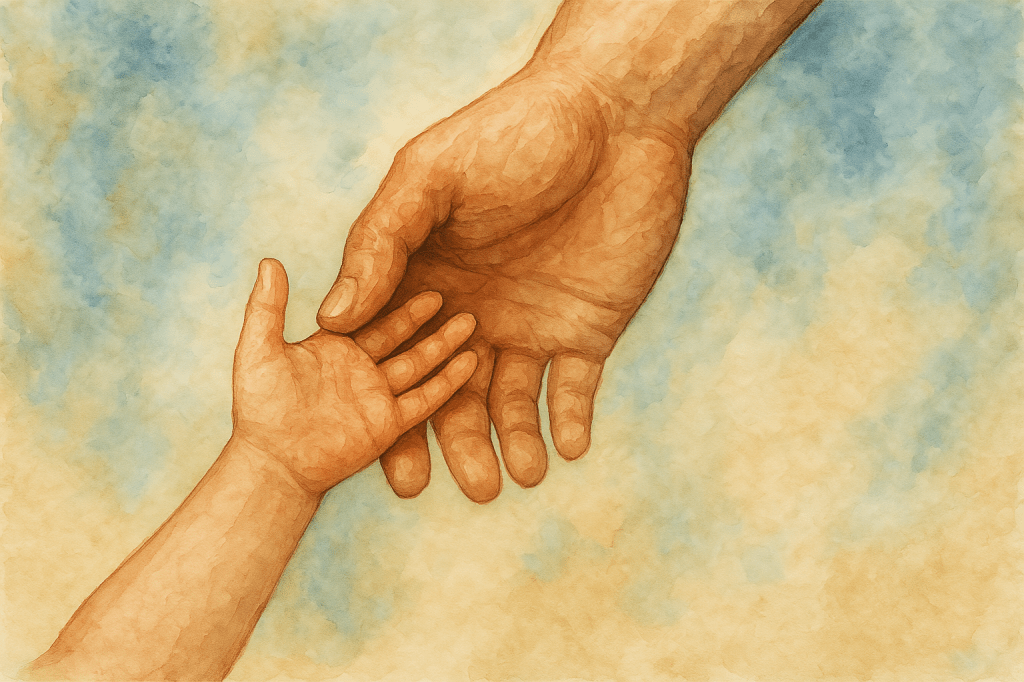
If it takes our whole life long just to find God, and to give Him our heart, and to regain our soul, it will have been worth it.
If it takes our whole life long just to find God, and to give Him our heart, and to regain our soul, it will have been worth it.
In my last post I mentioned diverging movements that we are seeing in America today. Over the last few years, the white, conservative male has decided to respond to the unfair treatment that he has received. For some that has meant going back to church and looking for a higher purpose, while for others it has meant abandoning society and treating their antagonists with deep resentment.
Many of those who turn to anger and resentment will do so because they are reacting to personal hurt. Perhaps they obediently submitted to the anti-masculine/anti-white messages they received, publicly emasculating themselves until they could bear it no longer, then turned hateful for having been led to shame themselves. But the truth is, they “simped” because they thought it would serve their own interests, and now their turn to harshness and cruelty is still in pursuit of their own interests. They are still obsessed with the self, and just playing the game that they think will benefit them best.
The better approach is to take oneself out of the game entirely. Turning to God and traditional religion, if done sincerely, is an act of faithful surrender. It is saying, “I don’t care what the rest of the world says anymore, or what benefit or harm society has in store for me, my focus will remain on something Higher.” In both reactions we have men recognizing that the current state of affairs just isn’t going to cut it, and renouncing the way things used to be, but one actually breaks free of the social merry-go-round while the other goes around for another turn.
Which of these sides will outweigh the other? Only time will tell.
The future is unknown because the future is still subject to influence. I believe that there are many men currently hanging in the balance who could ultimately go either way. In this there is the danger of souls being pulled deeper into the abyss, but there is also the potential of souls landing at safe harbors.
What we need now, is lighthouses. We need many beacons of light. We need good examples and good teachers, people who can encourage the undecided young man in the right way to go and welcome him with open arms. We have the opportunity in this pivotal moment to really make a change for good, to make the world better than it might have been otherwise.
I am personally considering ways that I can help those who are looking for answers in this pivotal moment and invite you to do the same. Let us see this as our God-given opportunity to do something with our lives that really made a difference.
I have discussed how some aspects of America’s historical treatment of women and the black population were immoral, how many of those issues were addressed, and how the pendulum kept swinging so that now there is much that is immoral in the treatment of men and white people also.
Now, there is a movement pushing against that most recent unfair treatment, but does this actually represent change and progress? If all we’re doing is changing which side has the stick to beat the other with, that would only be a continuation of the same.
As I mentioned before, this sort of tribalism and zero-sum game and cyclical oppression all seem to stem from our loss of spiritual identity, and shared purpose, and sense of one another as children of God. Unless we see a positive change at this deeper level, then I cannot be optimistic about any shift happening on the surface. So long as we remain godless, each shift is more likely to be an escalation of offense, not a return to balance.
So, do we see any of those deeper shifts that would represent a return to godly living? Unsurprisingly, the answer is mixed. Let us look at the dynamic of men versus women specifically. On the one hand, there does seem to be a real movement of men back towards religion. A recent Axios article noted that “Gen Z men are more likely to attend weekly religious services than millennials and even some younger Gen X-ers.” It also noted that while historically there have been more women in church than men, that the female decline in church attendance continues. Thus, if the latest trajectories persist, eventually there will be more men in church than women.
Of course, this trend must be observed longer to see if it is going to actually have any lasting results. The numbers are still developing. Speaking anecdotally, though, I have also perceived a shift of men around me moving back to God and religion. Even I, who always called myself religious, had a shift seven years ago that has made my relationship with God far more real.
But that’s just one side of what’s happening. At the same time, we are seeing movements like MGTOW, which is built on resentment and rejection of women and society as a whole. We also see figures like Andrew Tate growing in popularity, who encourage men to treat women as products. And just like I have seen some men around me moving towards God, I have also seen other men moving towards anger.
For an entire generation, men have been told that they are irredeemable monsters. This is a gross lie, but my great fear is that this oft-repeated incantation will summon forth a generation of men filled with cruel indifference, men who truly are beasts, and thus become a self-fulfilling prophecy.
It is an unclear picture, with many parts still moving, and difficulty in telling how things will land. There is reason for hope and there is reason for fear. A time of potential, but also of danger.
I admit that my assumptions are pessimistic. I see the world following a downward trend overall. Also, I am a Christian, and I believe the Biblical prophecies that the world will be a hellish place before the return of Christ. I suspect we are in the last age before that return, so even if things do get better in the short term, I suspect that overall it is worse times that lay ahead.
Still, I could be wrong. There is reason for hope. Even if this shift turned out to be negative overall, there could still be a treasure of good within its midst. I will finish this series tomorrow by exploring that more hopeful view.
In the late 19th century, Nietzsche boldly proclaimed the Death of God. The world had passed through its Enlightenment Era, scientific discoveries were breaking barrier after barrier, and industrialization would see a dramatic increase in the average wealth of the everyday citizen. With things becoming so self-manageable and positive, what need was there for God?
Even as he made this observation, Nietzsche’s words also showed extreme caution. He foresaw existential quagmires as people gave up their traditional morals and purpose. Would we be able to find a new source for motivation and decency, or would we be blessed all the way into a state of despondency and depravity?
As it turned out, humanity’s ascension was not without serious setback. There was a crippling depression, terrible world wars, organized crime waves, and continued racism. Did these serious problems dispel Nietzsche’s vision of a godless society? Actually, no. If anything, they seem to have hardened that vision in our cultural mind. So now mankind was ascendant, but also cynical, a most dangerous combination. As a whole, we still believed that we didn’t need God, but also a growing resentment against Him, one another, and all of creation.
Though Nietzsche might have hoped that we would find some new unifying principle, we never did, and so shifted into a zero-sum game where every side seems to feel that they can advance only at the loss of the others. Significant portions of society have bought into the idea that everything is a struggle for power. This mindset pits poor against rich, women against men, and black against white.
If we are not all children of God, members of a universal family, then why not look out for our own interests and play for our own advantage? From this perspective, we have only to look at whoever was doing best at the turn of the century, and clearly those people were “winning,” so now everyone else needs to compete against them and grow by taking away from them.
So obsessed have we become by this game, that we have ignored the fact that no one even cares about the prize anymore. They want to win just so that they can say that they are winning, but they’re the most miserable “winners” the world has ever known. Not only have we not found a new unifying principle outside of God, but we also haven’t found a purpose outside of Him either. We say that all we want now is career, fame, and fun, but do those goals really sustain us?
Look at the end result of these worldly pursuits: incredible rates of depression, suicide, singleness, childlessness, abortion, obesity, drug abuse, alcohol abuse, media consumption, complacency, declining education, indifference, dearth of creativity, crime, and mass murder to name a few. So now we’re striving against each other to get at the top of the heap, but one has to stop and ask, what is even the point?!
It is a most disturbing picture. Nietzsche correctly saw that humanity was entering a new era, but it did not turn out to be the utopia that so many hoped it would be. The dream has become a nightmare. Suddenly, old and “quaint” fables like the Tower of Babel and Icarus flying too close to the sun become incredibly relevant. We have ascended on high, but was to our ruin and not our salvation?
As I said in my previous post, the world seems to be shifting again, but I am undecided as to whether it is to something better or worse. Now that we have this deeper analysis of society in front of mind, we are ready to look at some of those changes in the proper context and can discuss what they do or don’t say about this deep underlying sickness.
Here at the end of this series I must acknowledge that I haven’t even scratched the surface of symbols in the Bible. There are so many different symbols, found in the parables, in the actions of everyday people, in the dreams, in the prophecies, in the patterns, and in the static images. I’ve known all along that this study would never be complete, that I could not cover all of the relevant material, that at some point I would just have to call it good enough and bring it to an end. It would be impossible to ever make a full assessment of what all the symbols are and what they stand for.
Yet for all this infinite variety of symbolism, it is at the same time entirely singular as well. Every basic symbol points to something higher, and every higher symbol points to something higher still. Together they form a great upward rising column, narrowing and converging as they ascend, until they point to the one: God, Himself. All of the symbolism in the Bible is meant to funnel our attention to Him.
As another book of scripture states:
The scriptures are laid before thee, yea, and all things denote there is a God; yea, even the earth, and all things that are upon the face of it, yea, and its motion, yea, and also all the planets which move in their regular form do witness that there is a Supreme Creator.
-Alma 30:44
Throughout this series I have been trying to identify the key qualities of good symbols in the scriptures. I have mentioned that they connect to something fundamental in the human experience, that they repeated play out in our collective lives, and that they can stand for multiple things at once, even polar opposites. All of these are good hallmarks, but the most important of them all is this quality that was identified just above: that they point us upwards, ultimately leading us back to the Creator. We know that we are recognizing a good symbol when it is bringing us to our Father.
Now I would be remiss if I didn’t acknowledge one final great trick in all this symbolism. Remember what I said: that all of these infinite symbols point upward, ascending together as a column, combining in one that is God. Thus, God is the INFINITE…ONE. And once we start talking cosmic paradoxes like that, we should immediately realize that we are talking, once again, about a symbol.
God is Himself…a symbol.
He is the condensed, singular representation of the infinity that is also Him. He is the circle that is one, finite line, which circumscribes infinite angles. He is the recursive loop that is both self-terminating and also never-ending. He is the word that is used to define all other words and thus requires all other words to define itself.
It is God who shows us symbols, and those symbols are there to show us God, and that cyclical pattern is itself a symbol that God is showing us and that is also showing us God.
Symbols are much, much more than amusing, little mysteries. They are nuggets of eternity. They are part of a system that defies our capability to fully comprehend. We may extract from them what we can, and as we do, they in turn extract from us our spiritual transcendence.
35 And Moses was not able to enter into the tent of the congregation, because the cloud abode thereon, and the glory of the Lord filled the tabernacle.

36 And when the cloud was taken up from over the tabernacle, the children of Israel went onward in all their journeys:

37 But if the cloud were not taken up, then they journeyed not till the day that it was taken up.

38 For the cloud of the Lord was upon the tabernacle by day, and fire was on it by night, in the sight of all the house of Israel, throughout all their journeys.
God’s presence was so powerful that not even Moses was able to enter into it. It was a place of overwhelming divinity and majesty. God’s glory being described as an occupying cloud and fire calls to mind both His presence upon Mount Sinai and the pillar that led the Israelites across the Red Sea and protected their retreat from the Egyptians.
We are further told that God’s cloud was used to signal the movements of the Israelites. While the cloud remained, they lived in their tents, and when the cloud removed, they journeyed further into the wilderness. So, too, we today must pay attention to God’s spirit to know our own comings and goings. There is an appropriate season for all things, and we look to the Lord to know which season we are in now.
There is an interesting implication in the cloud remaining over the tabernacle all the time that Israel was camped. That would mean that the priests were performing their duties within this cloud, and those that came to make an offering would literally pass into the physical domain of the Lord, being encompassed by His glory, as if they were now a part of His body. What a supernatural and symbolic experience that must have been!
This also suggests that God’s glory could preside in varying degrees of intensity. It was evidently too consuming for anyone to enter at the time of dedication, but it must have tamed down somewhat to permit entry afterward. We are able to endure some of the Lord’s majesty now, perhaps some of us to greater degree and some of us to lesser. We hope to one day be transfigured to the point that we can survive the full strength of His infinite glory.
34 Then a cloud covered the tent of the congregation, and the glory of the Lord filled the tabernacle.
It has been a long time to get to this point, but here we have the final step in the creation of the tabernacle. After weeks of planning and months of labor, after verifying and recording the correctness of all that was done, the Israelites have finished their work and turned it over to the Lord. Now, the Lord, in turn, descends, and His presence sanctifies the place. God takes the man’s vessel and makes it holy, which is a transformation that man could never effect on his own. Up until this point the tabernacle was just a beautiful building, but thanks to the Almighty’s touch, it is now divine.
This moment also calls to mind the story of Cain and Abel, and their offerings to the Lord. In this moment, Israel has made a good offering, like Abel, and God had respect to it. Recall that this wasn’t the largest offering that could have been made, Moses turned away Israelites who were trying to contribute more. The offering didn’t need to be the grandest, it just needed to be right, and the Lord has shown in this moment that it was.
This is a transformative moment in the history of the world. Once the earth was a paradise and God seems to have walked it in the flesh. After the fall of Adam and Eve, though, a separation was made. God ceased to have an abiding presence on the earth and became primarily a voice from heaven. He may have made the occasional appearance to Abraham or to Moses in the burning bush, but these were isolated moments, He still did not live among man. Now all of that changes. For the first time since the Garden of Eden, God has a home among the community, a constant presence among mankind. Heaven may still be God’s native dwelling place, but now a part of Him is able to be with the Israelites always.
30 And he set the laver between the tent of the congregation and the altar, and put water there, to wash withal.

31 And Moses and Aaron and his sons washed their hands and their feet thereat:

32 When they went into the tent of the congregation, and when they came near unto the altar, they washed; as the Lord commanded Moses.

33 And he reared up the court round about the tabernacle and the altar, and set up the hanging of the court gate. So Moses finished the work.
The final element of the physical structure of the tabernacle was the water basin, which led directly to the preparation of the men who would serve there as priests. Interestingly, not only Aaron and his sons washed their hands and feet, but also Moses. Similarly, we heard in yesterday’s verses that he offered the first offerings upon the golden and brazen altars. Moving forward, we do not hear of him continuing to function in the role of the priest, but it seems that in this first instance he did.
My assumption is that Moses performed these rituals as the first priest, so that he could then transfer that authority and responsibility to Aaron and his sons. As has been previously discussed, it was as if Moses were the Lord, Himself. He was God’s approved representative, so he alone he was authorized to function in these sacred rituals. But after having once functioned in that role, and thus claimed them, he could then pass them on to others that the Lord had chosen: Aaron and his sons.
This idea is echoed by what verse 33 states: that “Moses finished the work.” Obviously, many hands were involved in the labor of creating the tabernacle, but all of them were only able to perform this service as an extension of Moses, who was the extension of God, Himself. Everything was fulfilled under the stewardship of Moses, and now he could hand its continuation to those who would remain after he was gone.
Yesterday I shared the observation that our culture raises us with certain preconceptions about what is good and ideal. When we then engage with the idea of God, we find aspects of His revealed character that do not comport with our preconceptions. Either we discard Him, try to make Him fit our own ideals, or sacrifice our own values to embrace His.
If we elect that third option, this will likely see us surrendering to a God that we don’t fully understand or agree with. Based on our unrecognized bias, we might think that God is sexist, or unmerciful, or discriminatory, or antiquated. But if we surrender to Him even so, living according to His word in spite of our uncertainty, in time we will see our secret prejudices for what they are, and be able to let them go.
For those that elect the second option, to try and change God, they often justify it by saying that the ancient records of Him were biased by the culture of their time. The irony of this generational snobbery is obvious. If you accuse another person of misrepresenting God according to his bias, how do you know that you are not doing exactly the same?
Another justification might be that the description of God’s standards was appropriate for that time, but there is a precedent for it to be updated now. After all, we do not still perform animal sacrifices or abstain from eating pork, so why couldn’t God update His opinion on certain social constructs today?
However, this argument ignores the fact that all of the aforementioned changes were never instituted by popular vote, only by those who carried divine investiture from God, Himself. Jesus was God incarnate when he approved of his cousin John’s use of baptism, when he corrected the Israelite conception of the sabbath, and when he began the practice of the sacrament. The twelve apostles were divinely appointed by Jesus with his authority, and guided by revelation, when they changed the sabbath to Sunday, opened the gospel to the gentiles, called for an end to animal sacrifice, and approved the eating of previously unclean animals.
It is not the Christian view that we can change any of God’s commands or practices at will. We have not instituted the changes from Mosaic law to Christian values at random, or due to popular preference. Every change that we observe is founded in a heavenly mandate, not in popularity. In contrast, where is the divinely invested steward who declares God’s approval of our modern social ideals? Where is the heavenly vision that roots our “progressivism” in God and not the earth?
This leaves the final possible response to our personal ideals differing from God’s: rejection. We can say, “yes, the God of the Bible is that particular way, and I will never be okay with that, so I will reject Him.” This, at least, is a more honest response than trying to change the divine.
But to the person making this decision I would encourage them to consider the origin of your values. Are they not directly from the society around you? Are they not from the material, fallen world? Ideals based in the world are doomed to the same fate as all the rest of mortality. These ideals will go out of fashion, and those that lived by them will similarly perish and fade. It is the natural endpoint of every worldly path. If you reject the transcendent, transcendence will respect that decision and similarly abandon you. If you wish to have no more reality than materialism and popularity, then you will have no more than them, and you will die with them.
If, on the other hand, you wish to have a hope for life, and renewal, and the transcendent ideal, and ultimate truth, if you wish to belong to those things and be transfigured by them, you should only expect to do so by embracing a message and a perspective that transcends from on high. One that comes from an ancient God, whose long-standing ways you should naturally expect to contradict many of the messages in our modern, constantly changing world. If you reject that God, then you must realize you have rejected your only option for eternal life, and you must accept the nihilistic void in His place.
We are a culture that approaches God by first establishing a foundation of worldly ideals that we believe in, and then trying to make Him fit them. We reject God or alter Him because He simply doesn’t match our modern presuppositions about what ultimate good is supposed to be.
Some require a God who isn’t patriarchal. Some require a God who doesn’t wage war on His enemies. Some require a God whose sovereignty doesn’t supersede our own authority. Some require a God who can be validated by scientific methods. Some require a God who is socially progressive.
In these cases, feminism or pacifism or individualism or materialism or progressivism are our first God, and for God to be God He must be in alignment with that first ideal, or He must not exist at all. He is forced to fit, or He is discarded.
This is, of course, an inversion of the proper order. When man recognizes that he has a different life philosophy than God he is supposed to change himself to conform with the Almighty, not change the Almighty to conform with him!
Let us note that differences between God’s ideal and our own is inevitable. Even setting aside personal selfishness and flaws, our modern culture has been far removed from the Judeo-Christian ethic for a while now, and we have been immersed in that climate from before we had any understanding at all. Even if we were raised in a traditional, Christian home, it is certain that we have absorbed presuppositions that we are not even aware of, reasons why we feel that we cannot accept God entirely as He has been described to us.
I have never met the person who did not have some baked-in misunderstanding of the Lord, including myself. I have never met the person who did not struggle with some aspect of who God is declared to be. This is a common challenge that we all grapple with in one way or another. Indeed, we could make a case that most of our path of discipleship is simply us coming to terms with God as He is, surrendering our inclination to try and change Him, and choosing to change ourselves instead.
There is a little more that I wish to say on this subject, but I will save it for a second post tomorrow.
 Spiritual Wanderings