Scriptural Analysis- Exodus 34:19-20, 25-26

19 All that openeth the matrix is mine; and every firstling among thy cattle, whether ox or sheep, that is male.

20 But the firstling of an ass thou shalt redeem with a lamb: and if thou redeem him not, then shalt thou break his neck. All the firstborn of thy sons thou shalt redeem. And none shall appear before me empty.

25 Thou shalt not offer the blood of my sacrifice with leaven; neither shall the sacrifice of the feast of the passover be left unto the morning.

26 The first of the firstfruits of thy land thou shalt bring unto the house of the Lord thy God. Thou shalt not seethe a kid in his mother’s milk.

God continues to re-establish His original commandments, now detailing the requirement that every firstborn of their flocks was to be an offering to the Most High. These instructions are all things that we have heard before.

It is interesting to note that the laws that God is re-establishing were originally given clear back at the start of Israel’s journey out of Egypt. These are not the instructions that He gave the first time Moses met with Him in Mount Sinai, which included the ten commandments, nor is it the instructions that He gave during Moses’s second visit to the mountain, which included the details for building the tabernacle.

Of course, we will see throughout the rest of the Old Testament that the Israelites observed all of the laws given at all of the prior times of instruction, even if we don’t hear them all being reimplemented here. Moses was up in the mountain this third time for another forty days and forty nights, so it is entirely possible that the Lord did, in fact, restate all of the previous commands during this visit, even if only the first portion of His words have been transcribed into our present-day Bible.

Scriptural Analysis- Exodus 34:18, 22-24

18 The feast of unleavened bread shalt thou keep. Seven days thou shalt eat unleavened bread, as I commanded thee, in the time of the month Abib: for in the month Abib thou camest out from Egypt.

22 And thou shalt observe the feast of weeks, of the firstfruits of wheat harvest, and the feast of ingathering at the year’s end.

23 Thrice in the year shall all your men children appear before the Lord God, the God of Israel.

24 For I will cast out the nations before thee, and enlarge thy borders: neither shall any man desire thy land, when thou shalt go up to appear before the Lord thy God thrice in the year.

Israel had gone astray and broken their promise with the Lord, but God had restored it to them afresh. So, too, He also gave His people their core commandments afresh, as if for the first time ever. We have heard all of these commandments already, but now they are new again.

God reminds them of the feast of unleavened bread, which He first established with them as He brought them out of Egypt. He also reinstates the other two feasts: firstfruits and ingathering. Over the next couple days, we will continue to see God re-establishing His agreements with the Israelites, all of them made new.

It is in our human nature to have a long memory, burdening ourselves with the disappointments and failures of the past. We say that we are recommitting ourselves to prior agreements, but we also hold onto our old baggage. God does not operate the same way. As Paul taught, “Therefore if any man be in Christ, he is a new creature: old things are passed away; behold, all things are become new” (2 Corinthians 5:17). In today’s verses we see that when we repent for our sins, and God extends His partnership to us again, He really is doing so untethered by the memory of our past. Though it may go against our nature, we should strive to receive that offer with the same newness and freedom that it is being extended with, as if we are receiving it for the very first time.

Scriptural Analysis- Exodus 34:15-17

15 Lest thou make a covenant with the inhabitants of the land, and they go a whoring after their gods, and do sacrifice unto their gods, and one call thee, and thou eat of his sacrifice;

16 And thou take of their daughters unto thy sons, and their daughters go a whoring after their gods, and make thy sons go a whoring after their gods.

17 Thou shalt make thee no molten gods.

What God says here about the tendency to make a covenant with idolatry has been an eternal challenge of God’s people. When Paul wrote to the church in Corinth thousands of years later, he still had to continually remind the people to not mix their faith with false gods. For convenience or politeness, the people would partake of the culture around them, even when doing so violated their exclusive commitment to the Lord.

Howbeit there is not in every man that knowledge: for some with conscience of the idol unto this hour eat it as a thing offered unto an idol; and their conscience being weak is defiled (1 Corinthians 8:7).

We must not make the mistake of dismissing these verses decrying idolatry as irrelevant to us today because we do not carve our false gods out of wood anymore. There are still many false gods and vain obsessions all around us, and many the disciple is deceived to think that they can both be a Christian and partake in the world’s folly. We commit idolatry when we show fealty to the prevailing societal trends, even though they contradict God’s laws. Many that would follow the Lord stumble to the ideals of sexual and identity perversion.

God is also very right to identify the trojan horse of family members and spouses that we become devoted to, who then seduce us into unworthy concessions. I know many the brother and sister who watched the world celebrating that which God has called sin, and they stood boldly against the perversion, but then their spouse convinced them of the need to be “tolerant” of the evil, and by-and-by they lost their way.

Scriptural Analysis- Exodus 34:11-14

11 Observe thou that which I command thee this day: behold, I drive out before thee the Amorite, and the Canaanite, and the Hittite, and the Perizzite, and the Hivite, and the Jebusite.

12 Take heed to thyself, lest thou make a covenant with the inhabitants of the land whither thou goest, lest it be for a snare in the midst of thee:

13 But ye shall destroy their altars, break their images, and cut down their groves:

14 For thou shalt worship no other god: for the Lord, whose name is Jealous, is a jealous God:

As part of the Lord re-extending His covenant to bring Israel into the Promised Land, He now describes all of the enemies that currently dwell in that land, whom He will drive out to make space for His chosen people. God then warns the Israelites against making any sort of liaison with those people. The Canaanites had been marked for destruction because of their perversions, and anyone that became confederate with them would be linking themselves to their doom. Instead, the Israelites were commanded to remain firmly apart, and to tear down any of the false gods that they came across.

While the Lord did not specifically bring to mind Israel’s recent offense, these instructions must have been a timely reminder for how fundamentally they had betrayed their covenant to Him with the worship of the golden calf, taking a step towards the same idolatry of the Canaanites. In that one act they had broken God’s first two commandments. Indeed, the supplanting of God with any other ideal is the first of all wickedness. If the first and great commandment is to love the Lord with all of your heart, then the first and great sin must be to replace Him with something else.

Thus, God says in verse 14 that He is a jealous God. He is necessarily an exclusive God, one that must permeate all of our lives and not be mixed with alternative beliefs. Indeed, He cannot be mixed with alternative beliefs, for once one tries to mix, they have already cast aside God.

Scriptural Analysis- Exodus 34:10

10 And he said, Behold, I make a covenant: before all thy people I will do marvels, such as have not been done in all the earth, nor in any nation: and all the people among which thou art shall see the work of the Lord: for it is a terrible thing that I will do with thee.

Notice how God makes no reference to Israel’s sin or broken promises. He is establishing His covenant as if it is totally fresh, being extended for the first time, with no baggage from previous failures.

Such is the magnanimity of the Lord’s mercy. Because of the atonement of Jesus Christ, transgressions are not merely swept under the rug, they fully die with him, and every new beginning is as pure and perfect as the first. Because Israel sought a way to make restitution, the Lord has already forgiven them, and they are being offered the exact same covenant as before.

The word that the Lord uses towards the end to describe the work that He will accomplish with Israel is translated here as “terrible.” The original word is יָרֵא, which is often used to describe fear, but more broadly can also mean to cause reverence or awe. It suggests something so great that it overpowers the beholder. In the next verses God will specifically mention the driving out of the heathen nations in Canaan, so the application of this word makes sense.

Scriptural Analysis- Exodus 34:8-9

8 And Moses made haste, and bowed his head toward the earth, and worshipped.

9 And he said, If now I have found grace in thy sight, O Lord, let my Lord, I pray thee, go among us; for it is a stiffnecked people; and pardon our iniquity and our sin, and take us for thine inheritance.

Moses now repeats the same sort of pleas that he made for Israel down in the tabernacle. He asks that the people can be pardoned for their sins, chosen once again as the Lord’s inheritance, and then led by His presence directly. He does not specifically say what end he hopes for them to be led to, though. He does not discuss the Promised Land or the driving out of their enemies or even safe passage through the wilderness. For now, the return of God’s presence is all that matters to Israel.

Moses asking the Lord to take Israel “for thine inheritance” is something new. We have heard a good deal of the Israelite’s inheritance, but not of them being the inheritance of God, Himself. This definitely reinforces the notion of Israel being a chosen and peculiar people. It brings to mind a sense that all the world was what it was, but Israel specifically was selected out of the midst of it to be the reward and sole possession of the Lord’s. They were the harvest for all His work on this world, the fruit in the midst of the tree.

Scriptural Analysis- Exodus 34:4-7

4 And he hewed two tables of stone like unto the first; and Moses rose up early in the morning, and went up unto mount Sinai, as the Lord had commanded him, and took in his hand the two tables of stone.

5 And the Lord descended in the cloud, and stood with him there, and proclaimed the name of the Lord.

6 And the Lord passed by before him, and proclaimed, The Lord, The Lord God, merciful and gracious, longsuffering, and abundant in goodness and truth,

7 Keeping mercy for thousands, forgiving iniquity and transgression and sin, and that will by no means clear the guilty; visiting the iniquity of the fathers upon the children, and upon the children’s children, unto the third and to the fourth generation.

Moses brings two new tables into Mount Sinai as instructed. The Lord passes before him, and while we do not hear about Moses being covered in the cleft of the rock by the hand of the Lord, presumably that transpires as described in the previous chapter.

It seems particularly appropriate that the Lord’s introduction, beginning in verse 6, particularly focuses on His patterns of justice and mercy, given that those are the qualities being weighed in His meeting with Moses today. Moses and the Lord are here to sanctify their agreement for Israel to be restored to God’s good graces, to be transferred from God’s justice to His mercy.

Verse 7 might initially sound contradictory to some. Is God merciful or does He dole out punishment? Will He forgive iniquity or refuse to clear the guilty? But I believe that is the whole point of this passage, to highlight that God does both. He is perfect justice, and He is perfect mercy. But isn’t that impossible? Aren’t those two mutually exclusive, at least in regard to any individual infraction? To man, perhaps so, but not to God.

These may sound like strange riddles, assertions with no basis, but the delight of the gospel is to take seeming paradoxes like these and beautifully resolve them. This particular riddle finds its answer in the person Jesus Christ.

But he was wounded for our transgressions, he was bruised for our iniquities: the chastisement of our peace was upon him; and with his stripes we are healed. All we like sheep have gone astray; we have turned every one to his own way; and the Lord hath laid on him the iniquity of us all. 
-Isaiah 53:5-6

Does God dole out justice for transgression or provide undeserved mercy. Both. The justice is met in Christ, and the mercy comes through Christ to all of us. The two natures of God’s judgment described in today’s verses are entirely accurate.

Scriptural Analysis- Exodus 34:1-3

1 And the Lord said unto Moses, Hew thee two tables of stone like unto the first: and I will write upon these tables the words that were in the first tables, which thou brakest.

2 And be ready in the morning, and come up in the morning unto mount Sinai, and present thyself there to me in the top of the mount.

3 And no man shall come up with thee, neither let any man be seen throughout all the mount; neither let the flocks nor herds feed before that mount.

God and Moses are concluding their discussion in the tabernacle, but they have to meet again on Mount Sinai. As I suggested in the last chapter, I suspect that this means that the meeting in the tabernacle was only a sort of preliminary or planning stage for how God and Israel would proceed forward together, and now Moses needed to come into the mountain so that he and God could formalize His contract with the people.

Indeed, things are going to even be put in official writing, and Moses is to bring two new tables of stone for the Lord to etch His law into as He did the last time Moses went up into the mount. The first tablets, of course, were broken by Moses when he saw the idolatry that the Israelites had got up to during his absence.

Note that this story is allegorical for a common aspect of the human experience. All the time we are breaking a moral law, then relying on God’s grace to re-establish the broken contract. Christians play out this pattern when they regularly partake of the bread and the wine, the idea being that we regularly stray from Christ, so we must regularly recommit ourselves to him. When we do this, it is humbling to reflect on the fact that we are playing out something that goes all the way back through humanity, even to Moses and his stone tablets from Mount Sinai.

A Life That I’m Proud Of

There is no specific accolade or achievement in this life that the gospel of Jesus Christ guarantees for me. It does guarantee, however, that my life will be optimal. It will be the most fulfilling of all the possible lives that I might have led. Even if that means it was still fraught with hardship and pain, it will at least be a life that I will be proud to have lived.

That might not seem like much to the naive, but for those that have realized that the default life has no such assurances, that promise is everything.

Condemned Before Redeemed

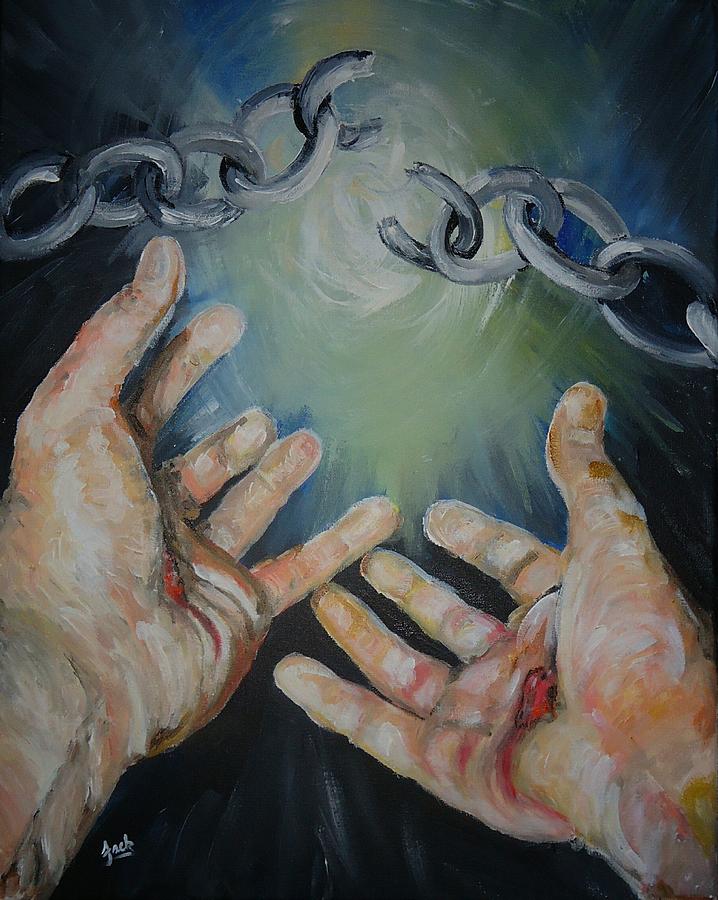
Before we can be redeemed, we have to be condemned. Before we can be reborn, we have to have perished. Before we can be healed, we have to be broken.

And we have to be condemned, and perished, and broken, because we don’t recognize our natural fallen state until what little good we have is taken away. Though death is our certain end, we don’t feel the reality of it until we sin. Sin reveals to us the fallen nature we were always under and makes death itself more real to us. Sin brings upon us a sense of condemnation both for our guilt and our mortality.

Thus, we start in a state of innocent delusion, and we break that delusion by being awoken to our state of condemned mortality. But then we are reborn from that state of condemned mortality, not back into a state of delusion, but into the genuine article of eternal life. Though first we had to die, we are reborn into the reality of redemption.