Bring Your Worst Fears to Reality and be Free: Part Four

Doctrine, Wisdom, and Example)

Thus far I have appealed to the mind and to the heart for why the addict needs to bring his secret shame to light through confession. I have shared how my own self-delusions prevented me from confessing for a time and how I was saved after I finally broke through them.

My testimony would be incomplete, however, if I did not bring up what the words of scripture have said upon the matter. It is not only good philosophy and psychology to confess, it is good religion.

And it shall be, when he shall be guilty in one of these things, that he shall confess that he hath sinned in that thing: - Leviticus 5:5

He that covereth his sins shall not prosper: but whoso confesseth and forsaketh them shall have mercy. - Proverbs 28:13

And I set my face unto the Lord God, to seek by prayer and supplications, with fasting, and sackcloth, and ashes: And I prayed unto the Lord my God, and made my confession, and said, O Lord, the great and dreadful God...we have sinned, and have committed iniquity, and have done wickedly, and have rebelled, even by departing from thy precepts and from thy judgments: - Daniel 3:3-5

In Leviticus, the book of the law, the Israelites were commanded to confess. It was one of the key steps towards forgiveness, and it was meant to be understood that cleansing would not occur until this ritual had been observed. Thus, by doctrine itself we are shown that we must confess.

Then, in the book of Proverbs we are told that he who does not confess shall not prosper. The book of Proverbs is not a statue of law like Leviticus. It is a collection of wisdoms observed from Solomon’s life experience. Thus, by the words of wise counsel we are again told that we must confess.

And finally, in the book of Daniel, we see the prophet in a moment of personal spiritual practice. Daniel is not performing a formal ritual or giving an address to others, he is being compelled by his own conscience in a personal act. Something in his heart just tells him that he needs to be “confessing my sin and the sin of my people” (verse 20). Thus, by the example of righteous people we also see that we must confess.

By doctrine, by wisdom, and by example, the scriptures make clear that the sinner who wishes to be clean must make their confession.

“But,” one might say, “couldn’t this only mean confession to God? Do the scriptures really say that I have to bring imperfect human beings into the matter? I’ll just work things out with God and that should be enough.” Well, let’s see if the scriptures do have anything to say on that matter.

Confession to Others)

Then went out to him Jerusalem, and all Judæa, and all the region round about Jordan, and were baptized of him in Jordan, confessing their sins. - Matthew 3:5-6

Confess your faults one to another, and pray one for another, that ye may be healed. - James 5:16

Many of those who believed now came and openly confessed what they had done. - Acts 19:18

Here we have three verses that speak to the need for confession to others is addition to God. The passage in Matthew definitely seems to be suggesting that those who were baptized of John the Baptist were making known to him exactly what wrongs they were having washed away by his baptism. The passages in James and Acts make even more explicit the fact that the early saints were confessing “one to another,” and doing so “openly.”

In my personal experience, the need to confess to another human soul is due to our misconception that our faults make us incapable of being loved by another person. We need to break that illusion, and the only way to do so is to confess to another and see how they respond. Some of the most powerful moments of my life have been sitting in a twelve-step group where I have shared the deepest, most vulnerable parts of myself, and then had my brothers look me in the eye and say “Abe, me too. I’ve been right there myself and I want you to know that I still love you. You may still be in the ugly parts of your journey, but I absolutely respect you for taking this step in the right direction.”

Yes, these are messages that we need to hear from God directly, and at special moments He does say them directly to us. But in my experience, He usually reminds me of these messages through His living angels, the brothers and sisters all around me. When I find a safe place, among godly people, and I make my confession to them, then they are flooded with the love of God and speak to me the words that He gives them.

The Promises of Christ)

We have looked at the words and examples of prophets and apostles, both in the Old Testament and in the New. We have considered my personal experiences as well. But what of the words of Christ, himself? What promises has he made to those who come forward and make confession?

Whosoever shall seek to save his life shall lose it; and whosoever shall lose his life shall preserve it. - Luke 17:33

A new heart also will I give you, and a new spirit will I put within you: and I will take away the stony heart out of your flesh, and I will give you an heart of flesh. - Ezekiel 36:26

No doubt these verses have several applications, but one of them is most certainly to this matter of confession. I have already mentioned how the addict tries to hide his shame because he is trying to preserve his sham life. Christ assures us that the preservation of the old will ironically end in its destruction. The only way forward is to give up the old life. Once we shine a light on the secret, then the secret life dies, replaced with one of authenticity. Lose your life of fearful self-management and give birth to a new one of faithful surrender. The stony heart comes out and one of flesh takes its place.

And he said to them all, If any man will come after me, let him deny himself, and take up his cross daily, and follow me. - Luke 9:23 

What a fitting description for the addict who overcomes his fears and rationalizations and embraces confession! To do this he must overcome his every basic nature, the pattern he has lived his whole life by, the very reasoning of his own mind. He must “deny himself,” take up the cross of the thing he dreads most, confession, and follow Jesus into that crucible.

Paul communicated this same idea to the Galatians when he wrote “I am crucified with Christ: nevertheless I live; yet not I, but Christ liveth in me:” (Galatians 2:20). Denying ourselves and taking up our cross leads to being “crucified with Christ.” Many the addict has said that he felt like making his confession would kill himself. That sounds like hyperbole until you consider it in this spiritual sense. They were actually right; it would kill them. The carnal them! But in that crucifixion, they discovered Christ living within them. Through and in and of him, they were saved.

For my yoke is easy, and my burden is light. - Matthew 11:30

I mentioned in my last post that as terrible as the consequences of confession might seem, they end up being miraculously less than what we expect. First, because almost every addict finds that the world and nature are kinder and more forgiving than they had given them credit for. Their sins had made them cynical, and they had then projected that cynicism onto the world. And secondly, because even when a burden does come, it is tremendously alleviated by the sense of new life within.

And this is exactly what Christ promises us in this verse from Matthew. His yoke and his burden may have some weight, but they are easy and light, certainly far more so than the iron shackles we’ve been dragging around thus far!

***

In the end, I did not make the decision to confess because I was convinced of the promises in these scriptures. I had heard them, and at times they did stir something within me, but I was far beyond faith when I finally gave in to the truth. I did not unveil my shame because I expected salvation, I did it because I was finally willing to accept damnation.

But, as it turns out, these verses make no requirement for the disciple to have the right expectations when he makes his confession. I found out for myself that you can take this step for virtually none of the right reasons, and mercy will still swoop down and make its claim upon you. It was only in hindsight, after I had already had the reality of these promises come true in my life, that I read these verses and realized that I had engaged in a contract with God without ever realizing it. In hindsight I can testify with all my heart that these promises are true. They were true for me, right down to the smallest detail, and they will be true for you!


Bring Your Worst Fears to Reality and be Free: Part Three

I’ll Do it Myself)

At the start of this study, I talked about the lies we tell ourselves about why we cannot reveal the truth to others. Today let’s tear these falsehoods down and see how they keep us a prisoner.

First, let’s consider the idea that “I just need to really try my best and I’ll be able to beat this on my own.” I told myself this story for many years, until finally I had to accept that if I really could take care of my problem by myself, I would have done it by now.

I will always be able to point at my efforts and say that they weren’t good enough to make the desired change, but if I just try harder next time, then it will be enough. There will never be a time where I can’t make that argument, because the only way to prove it wrong is to make the perfect effort and still have it fail. But since I am not perfect, I will never make the perfect effort, so I will never have the empirical proof to discredit the theory.

But at some point, I just had to step back and see that I was running in a hamster wheel. Theories are only as good as the results that you get from them. And if this one has only resulted in me remaining in the same place with no change, then clearly it isn’t a good theory. I had to accept that this wasn’t a philosophy for improvement, it was a philosophy for remaining right in the same place. It was a pernicious sophistry that enabled me to continue my addiction and never get any actual results.

The Shining Knight)

The other reason I had for not telling the truth was the image I was trying to preserve. I felt that I couldn’t let down my wife and kids, my church and neighbors, my friends and coworkers. I knew that bringing forward the truth would send shockwaves through the lives of those that were closest to me, and it would break many of their hearts. I told myself that I didn’t have a right to put these good people through that pain. If I couldn’t save myself, at least I could endure my damnation quietly and let everyone else go unscathed.

Except that I couldn’t do even that! Not all addictions show their destructive effects so obviously, but all of them, without exception, damage lives and relationships. Some do it in sudden, decimating blows, others erode and disintegrate the soul over time, but all of them leave a life that is hollow and broken.

Through great effort I was able to hide the damage and convinced myself and others that we were all doing fine, and I maintained this image for a very, very long time. On the surface I appeared perfectly fine, with everything still held together, but I could not escape the sense of my soul caving in.

I knew that every relationship that appeared happy and fulfilled on the outside was, in fact, predicated upon a lie, and therefore hollow. My wife thought she loved me, my friends thought they respected me, but they didn’t know the genuine me so how could they really? They loved and respected a façade because I hadn’t even given them the chance to decide what they thought of the real me. So, there were no authentic relationships in my life. The ties I was afraid of severing weren’t really there to begin with. All the things I was afraid to lose I’d never even had in the first place.

My Story)

I kept my addiction a secret, and I rationalized doing so by telling myself that I would fix it by myself. I felt that I couldn’t break the “knight in shining armor” image that my family and friends had of me. My plan was to overcome my lust and pornography addiction on my own, and then, many years later, tell my family of my past with the reassurance that at this point in life I really was the person that they had always believed me to be. It was a plan as doomed to failure as it was dismissive of the feelings and autonomy of those around me.

When I was twenty-six, I realized that I had been addicted to lust in some form or another for twenty years, and I had been living a lie in my marriage for over five. At this point, I had to admit that I just wasn’t getting any better on my own. I had tried, I had really, really tried, but it simply was not working, and to continue saying that after twenty years of failure it was now about to start working was insanity.

Nor could I continue to believe that I was preserving relationships by living the lie. Things had been difficult for my wife and I for a while, and I knew the reasons why, but she was confused in the dark. She didn’t know why I was detached and unable to be fully present, she didn’t know why I was struggling to focus at work and had lost my job, she didn’t know why I was so absorbed with my selfish interests and constantly depressed. She didn’t know what the reason behind any of this was, but it was taking its toll on me and her and the relationship even so.

And so, on one particularly strained day, it finally occurred to me that I was destroying the marriage whether I told my wife the truth or not. I wasn’t saving anything by hiding the harmful things I had done; I was just dragging out the destruction in a more torturous manner.

Finally, I didn’t want to do this to my wife anymore, or to myself, or to the marriage. Finally, I accepted that even if telling the truth meant destroying everything in my life it would still be better than what was happening now. At that moment, the greatest kindness I could do to my loved ones would be to stop stringing them along and give them a chance to make what they still could out of the rest of their lives. It was the greatest kindness I could do for myself as well.

So, I confessed. I wrote a letter while my wife was away, admitting to what had been going on behind her back. I left it just inside the entrance of our home, and then I got in my car and drove as far away as I could. I knew I had to get far enough during this rare moment of commitment, so that I wouldn’t be able to turn around and get back to the house and hide the letter before she had already seen it.

And then, just like that, I wasn’t lying anymore. Just like that I was living in the truth. Perhaps it was an ugly truth, but it was the truth. And not one day since have I regretted that decision. The future was made uncertain, my relationships were made tenuous, but I never once questioned whether it was worth it.

As it turned out, after some rocky periods everything stabilized. My wife and I rekindled our marriage, I regained my children’s trust, I kept my new job, and I came back into the good graces of my church. But even if I hadn’t, I can truly and honestly say it would have been a small price to pay for the regaining of my soul.

Bring Your Worst Fears to Reality and be Free: Part Two

The Conflicted Soul)

In my last post I examined the reason why the addict doesn’t dare admit his secret shame, which is that doing so might jeopardize all the things he feels he cannot lose. His family, his job, his church, maybe even his ability to live outside of prison, he cannot stand to give up any of these things, and so he will accept a pretend life instead.

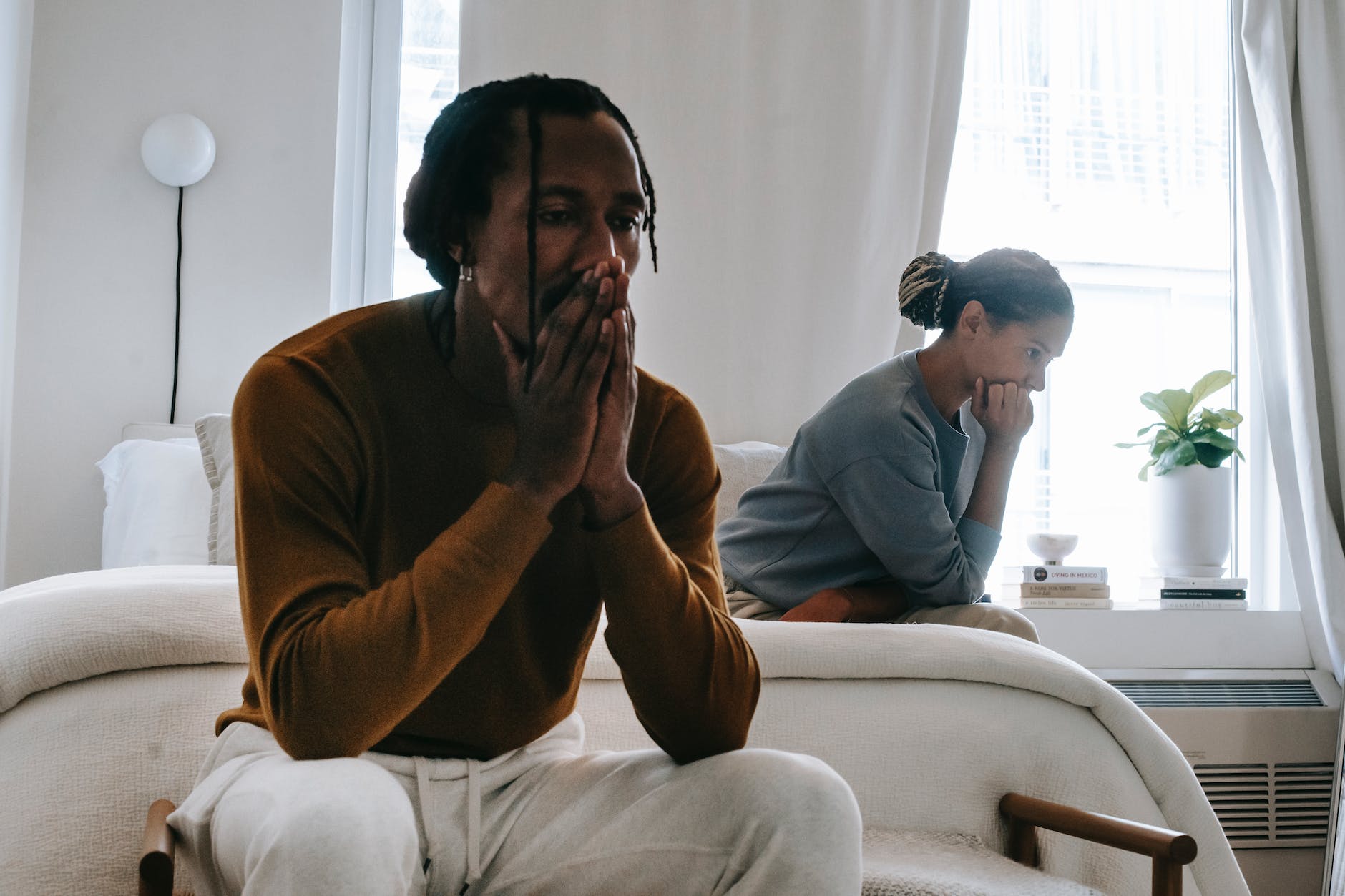
The addict tells himself that he doesn’t need to choose between confession and living a cursed life, he assures himself that he will overcome this behavior on his own. No one will need to know about it, and he’ll still figure it out. But year after year passes and he still hasn’t made the change, and through all the years his conscience keeps bringing to his mind that he really must confess.

So, which is he to listen to? The calculating, rationalizing brain that assures him healthy living is nothing more than mind over matter? Or the aching, broken heart that insists that somehow, someway, confession is the only road to healing?

Well, if he is content to have his life continue just the same as it has always been, then he can continue to listen to the same rationalizations that he always has, but if he ever wants to have a different outcome than every time before, then he must be willing to take a step that he has never dared before. At some point he has to make the leap from his head to his heart. He must accept the possibility of losing all the things he holds most dear as the price for his salvation.

Two Encouragements)

To the soul that is on the cusp of throwing in with the heart and making confession, may I offer two reassurances. The first is that the things you fear most may not actually occur. Our nature is to think up absolute worst-case scenarios, to assume that every turn that can go wrong will go wrong. Negative outcomes that seem a certainty, in truth are usually only possibilities.

Of course, I cannot promise you that every worst fear in your head won’t come true. Even if the most severe repercussions have only a small likelihood of coming true, one should accept that it might still be possible. That being said, I can tell you that I still have never met the addict who had things go even remotely as bad as they had anticipated. Certainly, there have been choppy waters and losses, but never the total capsizing that most of us envision.

The other reassurance is that even if the losses are dire, even if every bad thing in your imagination did come true, there will be interwoven with it a peaceful contentment that you probably have not accounted for. You will have a peaceful contentment that soothes every loss and pain so that they are never as terrible as you had imagined.

That contentment comes from the fact that now, for the first time in who knows how many years, you are your real self again. I cannot overstate just how much of a relief you feel when you bring forward the truth and are finally back to being your own self. You feel a way that you had forgotten you could feel like. It is like getting out of a bath and putting on fresh clothes. You feel warm and comfortable and clean and safe. You feel reassured that whatever comes, it will be alright, because you have you again, and that more than makes up for whatever else you have no longer.

I promise you that you will find greater joy being yourself in a miserable place than to be a fraud in comfortable surroundings.

And this is not all. The very things you fear to lose by telling the truth you probably don’t even have anymore, anyway. I will examine that concept more in my next post, but for now I’ll simply say that you truly have little to nothing to actually lose, but you do have everything to gain. See what the analyzing, calculating mind makes of that arithmetic!

Bring Your Worst Fears to Reality and be Free: Part One

The Reasons to Lie)

The addict is a curious creature, utterly appalled at his inexcusable behavior, yet also in complete denial about it. Before acting out he minimizes the severity of the deed, reassuring himself that just this once won’t make a difference and he can quit whenever he wants. Immediately afterwards he experiences terrible self-loathing, promising himself that he will never do it again.

Now and again, during those shameful after-effects where he most strongly wishes to be free of his vice, the thought might occur to him that he needs to tell someone what is going on. If he is married, he might feel that he needs to tell his wife. If he is religious, he might feel that he needs to confess to a leader. If he has broken laws, he might feel that he needs to turn himself in to the police. If none of the above, there is still confession to those that have been hurt, professional therapists, or close friends. There is always someone that the addict could turn to…if they had the courage.

And it is this matter of courage where the addict struggles. For no sooner does the thought to confess rise up then it is forced right back down. He might fight the urge down through minimizing:

“Oh I don’t need to do anything as drastic as that! I just need to really try my best and I’ll be able to take care of it.”

Or he might come up with some reason why he can’t:

“I would tell my wife the truth…but it would break her. I just can’t put her through that pain, she doesn’t deserve it.”

Or, if he’s being more honest, he just isn’t willing to face the fear:

“If I tell, I’ll lose everyone and everything. I can’t lose my marriage. I can’t lose my kids. I can’t lose my church. I can’t lose my job. I can’t and won’t do it.”

The Mind’s Fear, the Heart’s Hope)

This fear is the real reason why the addict doesn’t confess. If he could have solved it on his own, he would have done it by now, and he doesn’t protect anyone but himself by living under a false image. The only reason that stands up to scrutiny is that he isn’t willing to lose the things that he has.

Is that selfish? Yes, but it is also human nature. We are terrified of losing our surrounding structure and that’s not always a bad thing. A healthy dose of fear keeps us from doing things that jeopardize our lives and well-being. The problem is that the addict’s fear is keeping him in a behavior that is destroying all the things that he doesn’t want to lose anyway.

He isn’t present at work, he isn’t working on his faith, and he isn’t faithful in his marriage. The things he is afraid of losing he is slowly gutting of their original virtue until they become an unfulfilling career, a hollow faith, and a sham marriage. So, in his self-interest, he is ironically destroying his own self-interest.

Thus, when it comes to hiding one’s addiction, we can immediately comprehend its root. The desire to hide comes from within the addict. It comes from the fear of losing himself. But now contrast this with the recurring notion that keeps returning to the addict that he should confess. Where on earth does that thought come from?

If hiding is about self-preservation, exposing is suicidal! As we have shown, excessive self-preservation can erode what the addict already has, but exposing his secrets seems that it will surely blow it all away! What possible reason would an addict’s mind have to conjure up an idea that is so against himself?

And the answer is: none. Because it isn’t about intellectual reasons. Any addict who appraises the idea of confession will realize that it did not come with a reason, it came with a feeling. The idea did not come from their analyzing, rationalizing, efficiency-focused brain, it came from the heart. Might it destroy the addict? Yes, that is a distinct possibility. But it just feels right even so. It feels like it might be just the thing to save the aching soul. Why? The addict might not have any idea why, but it just feels true in their heart.

Thus, hiding is to preserve yourself, but confession is to save yourself.

Layers of Man- Summary

For the last week we have been exploring the different layers that make a person up, which ones we mistakenly identify with, and the one true identity that we should define ourselves by. We made this journey by moving from the outside in, first examining the external falsehoods, moving to the interior ones, and finally settling on the truth. This inward journey tends to be the pattern that the reawakened soul follows, digging through the layers to get back to who they once were. But, of course, all of these layers come upon the soul in reverse order. So, let’s take a minute to start at the core and work our way back out, just to make sure the picture is complete.

The Divine)

First and foremost, we have the divine. Our true identity, present in us from before our birth. We do not have to work for it, we do not have to earn it, it is just inherent in our innocent, infant state. Artists have long recognized the natural divinity of children, rendering them as angels and cherubs, holy souls under the direct purview of God, Himself.

The divine core is present in us from the beginning, though it should be noted that it can grow and expand throughout our lives. When we are living from this authentic core, we are able to develop and attach other virtues to our character. If we attempt to attach these virtues at any other level of being, they will never stick. Thus, the great prerequisite to real change in our lives is for that change to be able to communicate with this most intimate layer. If you really want to make lasting changes in your life, then you need to stay in this place.

The Wound)

Tragically, though, at some point the divine self is assaulted and taken from us. Though we are naturally bright, someone tells us that we are stupid. Though we are effortlessly kind, someone tells us that we are hurtful. Though we are inherently innocent, someone tells us that we are guilty. We accept these messages as true, because we are young and vulnerable, and they come from someone that we love and trust.

Part of the reason why childhood wounds hurt us the most is because they cut at the truest part of us. If we accept that at our core we are foolish and selfish and worthless, then there is nowhere else to go for reassurance. We see ourselves as fundamentally broken, and by definition, fundamentally broken means unfixable.

The Shame)

The pain brought on by this wounding cannot be overstated. It is entirely appropriate to say that these are the greatest assaults our souls will ever face in life. Being struck to our core, our survival instincts will almost certainly kick in. These instincts are simple and powerful, designed to find the quickest, most efficient way to remove oneself from the pain.

And all too often, the quickest, most efficient anesthesia is some sort of carnal pleasure. Whether the pleasure of sexual gratification, or of consumption, or of entertainment, or of mind-altering chemicals, or of getting new things, or of establishing control over another. All of these alleviate pain in the moment, but they do so at the terrible cost of tearing our conscience and hurting the hearts of others. We will hate ourselves for doing these things, but that hatred will only inspire the survival instincts to do them yet again to numb that pain also! A vicious cycle of self-hurt and hurt to others thus begins.

The Façade)

The pain of a broken heart and of a guilty conscience, the two most terrible burdens to live with. The instinct-based survival mechanism has tried to save us in its own way and utterly failed, so now our higher reasoning takes a crack at it, but its attempt is hardly any better.

We mistakenly conclude that we must create a new layer outside of the others, one that covers the shame so that no one else can see it and one that overcompensates for the part of our divine soul that was assaulted by the wound. So, if we were told that we were selfish, and if our shameful addictions have reinforced that belief, then we will likely create a façade of exaggerated niceness, straining to put on a show of compassion and consideration, not motivated by genuine love for other people, but by fear of having our ugly side seen.

Because the façade totally ignores the underlying issue, it is trying to erect a beautiful building on top of a fractured foundation, and it is doomed to fail miserably. Sometimes this failure is a sudden and public collapse, sometimes it is hidden from the world as we slowly erode from the inside out. In either case, its scope is all-reaching, shattering every branch and relationship in our lives.

Hope)

And thank God that it does. Thank God that our efforts to put a band-aid over a gaping laceration don’t work. Thank God that we will never find a workable solution without Him. And I literally mean “thank God,” because He is often the one who topples our house of cards to the floor.

Sometimes, when we are in the midst of trying so hard to cover our mistakes and wounds, we feel like divine intervention is tripping us up. Often that makes us incredibly mad! “God, I’m trying to make myself good enough, I’m trying to make this house beautiful enough, so why do you keep sending earthquakes to knock it down?!”

God breaks apart everything that we build so that we can finally give up. Routed and cut off from support, our marshalling ruined and our hopes in retreat, finally we throw our hands up and say “I surrender! Go ahead. Punish me! Break me! I deserve it!”

And then we see what a liberating captor God is.

One layer after another, God then breaks through the façade, the shame, and the wound. He blasts all of it away and reveals to us our shining, divine spark, long forgotten but never faded.

“I don’t care about the wrongs,” He tells us. “I don’t care about the lies. I don’t care about the shame. And I’m not here to condemn you, break you, or punish you. I’m only here for this!”

He takes that divine spark and puts it back into our hands. He gives ourselves back to ourselves.

“Now let’s try this again,” He says.

And now, with our true self restored back to us, we miraculously find ourselves effortlessly able to be the person that we could never make ourselves be by force. Where once we felt cursed in all that we did, now we are blessed. Certain defeat is replaced with already-won victory. Real change and real happiness come over us, and we are amazed to find that all this was ready and waiting for us at any moment.

Unveiling our shame and our wounds may seem a terrible ordeal. Our anxiety might seem sure that to do so will kill us! But this is the only way to get them out of the way and then unveil the divine, and once we have done this, then all the hard journey will have been worth it. At last, we are our ourself again, and we need never go back to playing pretend.

Layers of Man- The Divine

For now we see through a glass, darkly; but then face to face: now I know in part; but then shall I know even as also I am known. - 1 Corinthians 13:12

This above all: to thine own self be true - Hamlet, Act 1, Scene 3

It might seem impossible that a person could not know their own self, one would think that knowledge would be self-evident to them, but nothing could be further from the truth. I do not know a single person who has not totally lost their genuine self at some point or another. We all stray from our authentic core, and finding our way back isn’t as simple as we might think. Indeed, there are many who never find their way back at all! This a tragedy, because we will never grow into our full potential until we are living from that genuinely authentic place.

Over the past several posts we’ve highlighted the common false identities we find ourselves in: the wounded victim, the shameful addict, and the phony pretender. At different times we might consider any of these roles to be our real self, but none of them can be. Each of these layers only came into existence partway through our lives. They are therefore artificial and external, addendums on top of something else.

And what is that something else? What was the true self that everything else was layered on top of us? What identity we have always had inside of ourselves, right from the beginning of life?

Jesus answered them, Is it not written in your law, I said, Ye are gods? - John 10:34

Before I formed thee in the belly I knew thee; and before thou camest forth out of the womb I sanctified thee - Jeremiah 1:5

The words of scripture provide bold declarations that each and every one of us is a special creation of God, a divine child of the most powerful being in the universe, and an heir to heaven through Christ. The words of scripture tell us that none of us are a bit player or window dressing in the story of the world, but a central character unlike any other. Each of us comes with unique talents and callings, meaning we have both a God-given ability and a God-given purpose.

In short, each one of us is sacred, each one of us is divine, and each one of us is an imprint of God. Many of us have been told this at one point or another, but relatively few of us have been able to actually believe it. Or we might say that we believe it, but when asked to describe who our divine self is we are unable to provide any specific or unique details.

Forgetting who the divine self is the first step to all the trouble that we experience in life. Coming to remember who we are is the first step to restoring all that was lost.

For as the body is one, and hath many members, and all the members of that one body, being many, are one body: so also is Christ. For the body is not one member, but many. If the whole body were an eye, where were the hearing? If the whole were hearing, where were the smelling? But now hath God set the members every one of them in the body, as it hath pleased him. - 1 Corinthians 12:12, 14, 17, 18

Verily I say unto you, Except ye be converted, and become as little children, ye shall not enter into the kingdom of heaven. - Matthew 18:3

I can tell you that your true identity is defined by wonderful and divine traits…but I cannot tell you exactly what those traits are. We are not all the same image of divinity, but each a part of the whole. It is not for another mortal to define what your identity is. It is a personal and individual pilgrimage that all of us must take for ourselves, to know who we truly are.

I can, at least, give you a starting point to begin your journey from. Remember that all of our false identities were layers heaped upon our original state. Remember that our divine self is not one that we had to earn or fashion, it was present in us from the very beginning. And so, the best place to start looking for the divine self is in our young childhood. What were you like before your innocence had been broken, when happiness came so naturally, and you didn’t ever wonder if you were enough? How did you play and perform before you cared who was watching you? What were the things you could do that brought you joy effortlessly, that made you feel strong and adept? Some may be able to recall these years better than others. Some may need to enlist the help of parents and loved ones who might remember more clearly.

Of course, remembering these things is one thing, but then there is the matter of actually going back to that place. Some may feel that their childlike self has been irreversibly broken, that the path back home is blocked by an impassable chasm.

Whether you have forgotten your child self, or do not know how to find your back to it, do not worry. It can all be brought back to you right where you are at this moment. “Therefore if any man be in Christ, he is a new creature: old things are passed away; behold, all things are become new.” (2 Corinthians 5:17). As you cultivate your relationship with Christ and search with earnest, old things will be made new. The self that was forgotten or lost will be brought back effortlessly; a gift restored.

***

I’ve shared my façade, my shame, and my wounds, it only seems fair that now I get to share the most divine parts of my soul as well. This isn’t boasting, either, because these are the qualities I did absolutely nothing to obtain. They were given to me as a gift from God. “Let the one who boasts, boast in the Lord.” (1 Corinthians 1:31).

From my youngest years I have been naturally cheerful and gregarious. I am most typically happy, and I want to see everyone around me be happy as well. I tend to sense how engaged everyone is with an activity, and when someone is frustrated or losing interest, I know what to change to include them.

I am curious and creative, endlessly fascinated by this world and stimulated by it into imagining new things. I love to write and create stories, to convert life lessons into parables and allegories. And even when it does not lead to creativity, I still find great pleasure just in learning and understanding new things.

Finally, I am also conscientious, having an unbreakable sense of what is right. When it comes to deciding what I should do, I need no more justification or rationalization than simply to feel what is right in my heart and obey it. Along with this, I have recently discovered that I always comes back to my conscience. Sometimes, admittedly, I do become complacent and aloof, trying to glide through life without holding myself to a greater purpose. But these spells are always short-lived. I am constantly pulled back towards conscience, even without any external pressure to do so.

And now, at long last, we have reached the true core of who we are. The part of us that has always been ingrained in us since before our birth. The part that is inseparable from who we are, even when it is temporarily forgotten. The part that it is actually correct for us to identify ourselves by.

We are so often taught that we have to make ourselves be enough, that we have to spend our whole lives striving to becoming who we are supposed to be. What a welcome shock to realize that in reality we don’t need to strive at all. The divine was in us all along, before we had done a single thing to build or earn it. So now, instead of grasping at convoluted philosophies, we can let go of everything but the truth. Instead of looking high and low for God, we can discover Him within us. Instead of working so hard to become His we can realize that we always were.

Now, at last, we are home.

Layers of Man- The Wound

One would hope that a man and woman wouldn’t have any secrets from one another by the time they decide to get married, but this is far from guaranteed. Certainly I was guilty of keeping my wife in the dark from all the deepest parts of me. Previously I mentioned that I kept my addiction to lust concealed from her, but that wasn’t all, I was also hiding my wounds.

It may seem a strange thing, but I was able to tell my wife about my problems with pornography before I could tell her how I got hit as a child, and how I felt ashamed for wincing before each blow. Obviously the addiction was the part of my life that made her more upset, the one that directly hurt her, but it still was the easier thing for me to confess to. I never thought that she would despise me for having suffered abuse, but talking about it brought up areas that were still raw and tender. I couldn’t go there without bringing up all of the attached horrible feelings, so I had always stayed away.

My heart is broken within me; all my bones shake - Jeremiah 23:9

Unto the woman he said, I will greatly multiply thy sorrow and thy conception; in sorrow thou shalt bring forth children;
And unto Adam he said, cursed is the ground for thy sake; in sorrow shalt thou eat of it all the days of thy life; - Genesis 3:16-17

All of us have these deep, soul-shaking wounds. As Brené Brown has said, “Every single person has a story that will break your heart. Nobody rides for free.”

If you listen to the stories of two different people, one might have endured a more horrifying pain for a more extended period of time, but both lives will still hold significant trauma. The hardest thing you have ever had to go through, no matter how small it might seem compared to others, is still the hardest thing you have ever had to go through. Simply by virtue of being your greatest pain, it will warp your psyche and become your personal definition of suffering.

Coming to terms with that pain, and developing our relationship with it, is one of the most difficult things we will ever do in life. Virtually all of us will make mistakes in this arena, and we will come up with flawed reactions that end up causing even more pain further down the road.

The Spirit of the Lord is upon me; he hath sent me to heal the brokenhearted, to preach deliverance to the captives - Luke 4:18

And the Lord said unto Moses, Make thee a fiery serpent, and set it upon a pole: and it shall come to pass, that every one that is bitten, when he looketh upon it, shall live. - Numbers 21:8

Jesus teaches us that it is good for us to mourn our sorrows, and reassures us with the knowledge that we can be comforted (Matthew 5:4). But there is a clear line between mourning our sorrows and wallowing in them. It is one thing to recognize that you have been a victim, and another to make victimhood your key defining feature.

Over-identifying with our pains and obsessing on what happened to us can lead us to reject the deliverance that is offered, because we start thinking that healing means saying our wounds didn’t matter. Even more perversely, holding on to our damage can be used as a way to justify our own misbehavior afterward. Thus, God is offering us to look to him and live, but we first have to choose to stop remaining a prisoner.

And if men come unto me I will show unto them their weakness. I give unto men weakness that they may be humble; and my grace is sufficient for all men that humble themselves before me; for if they humble themselves before me, and have faith in me, then will I make weak things become strong unto them. - Ether 12:27

Thus says the LORD: "Cursed is the man who trusts in man and makes flesh his strength" - Jeremiah 17:5

The intended effect of our wounds is that in our weakness we might turn to God, who will heal and make us strong. But that requires stepping fully into our hurt, letting it wash over us, and asking for God to meet us in the middle of all that pain. But what if He doesn’t show up? What if we are consumed?

It is natural to have a fear of facing the pain, and thus many of us will never even try to take that step. We instead try to bury our wound. We act tough, we say “yeah, it happened, but so what?” We claim that our wounds made us stronger, that they made us grow a thicker skin. Or maybe we try to deny that they ever happened, changing the subject anytime someone brings the matter up. In either case, we put on a show that the wounds are unimportant and don’t need to be examined, and that we are well and past them, but nothing could be further from the truth. If we really were past them, there would be no fear of bringing them into the light. A tough wall around the wound only reveals how upset we still are about it.

Surely he hath borne our griefs, and carried our sorrows - Isaiah 53:4

Behold, I stand at the door, and knock: if any man hear my voice, and open the door, I will come in to him, and will sup with him, and he with me. - Revelations 3:20

One way or another, wound tends to lead to building up walls. Sometimes walls are a good thing, a necessary survival mechanism for keeping our oppressor out. Our natural instinct with physical wounds is also to cover them up, to shield them from any outside aggravation. But walls tend not to discriminate. Often they keep everything out, not only the source of the pain. Obviously this becomes a problem if we now stand before the physician and we still can’t expose our wound for healing. We need to let the physician in, even if it will initially cause even more pain, so that we can start becoming better.

Jesus stands at the door and knocks. He is reverential and respectful of our pain, so he does not force his way into our wounds. If we absolutely refuse his healing he will wait. If we never accept his help he will never force it upon us. But he really can help us if we will let him. He has felt it, he has borne it, he has descended into it and risen above it.

If we will not let Christ in, then the wound will fester. It will grow and it will infect. Most addicts don’t initially recognize the connection between their shameful behavior and the unhealed pains for their youth, but through time and exploration the links become clear. One of the greatest sources of trouble in our lives is things that we should have cried about but never did.

***

At the start of this post I mentioned being struck as a child. This pain was most typically the result of not being able to play quietly enough. I was expected to keep entertained by myself, in a way that was contained and non-intrusive. I would try to do that, really I would, but I was a boisterous boy, and I would raise my volume without realizing it, and then I would be hit. A few days ago I mentioned that a key part of my façade is that I try to be a people pleaser, never a bother to anyone. Can you see the connection to that from this wound?

There was also a wound of isolation. I was homeschooled, and any would-be friends were told over-and-over that I wasn’t able to play with them until they stopped asking altogether. As I came into my adolescence I wanted to have meaningful relationships with girls, but I was such an outsider to every social norm that I could never relate to them. Can you see how this wound connects to my addiction for pretend-love-on-demand?

And there were also wounds for being unintelligent. I was pushed to get into college as early as possible, being punished when I did poorly on the admission tests, and being treated as the stupid child for not making it in until I was sixteen. Can you see why I cheated for better grades and made up a façade of being ultra-intelligent?

Our shame is nothing more than a misguided way to cope with our wounds. It tries to alleviate painful shortcomings, but tragically it often does so in a way that only reinforces them. Relying on cheating and lust gave me artificial grades and relationships in the short term, but they further confirmed to me that I wasn’t intelligent or social enough for the real thing.

Our façade is nothing more than an over-compensation for the wound, where we pretend to be all the things that our wounds have told us we are not. In our childhood mind it seemed that we were denied connection and love because of these shortcomings, and so we end up with the false belief that we must project strengths in these areas to be worthy of that connection love.

And so, the wound is a layer deeper than either the shame or the façade, but it is not the true core of who we are either. Defining ourselves based on our wound prevents us from living with truth and joy, same as identifying at the other two levels. There still remains a deeper layer to uncover.

In fact, the reason the wound hurts us so much, is because it is a direct assault at that deeper core. Our wounds put us on such a long and misguided path because they make us forget who we really are. They make us forget our own divine self.

Layers of Man- Shame

And he said, I heard thy voice in the garden, and I was afraid, because I was naked; and I hid myself. - Genesis 3:10

The story of Adam and Eve is strange and fantastic, and at first glance it may seem difficult to relate to. Or at least, it seems difficult until Adam and Eve discover shame. When we hear of them scrambling to hide from God the story suddenly becomes all too familiar. Each of us knows that moment of uncomfortable exposure where we wish we could sink into the floor and disappear from the disapproving glare of another.

Like Adam and Eve, shame is a developed emotion within us. Infants and babies do not exhibit it to any degree, but starting around the age of two or three they start to recognize when they have been caught behaving naughtily and will sometimes cry because of it. Though shame is not present at the beginning, it is inevitable. Like sexual feelings, the fact that it isn’t present from birth does not mean that it is any less real or certain.

Shame is an essential, if unpleasant, part of learning how to conduct oneself within a society. Every child develops it alongside their need for friends and social identity. When properly handled, all of these will guide is into becoming a healthy, well-adjusted individual. But that requires us to embrace shame’s pain, and too often we try to find ways to short-circuit it instead. This, of course, means hiding our shame and crafting the façade to cover it, and this means splitting ourselves into two realities.

For the good that I would I do not: but the evil which I would not, that I do. - Romans 7:19

Watch and pray, that ye enter not into temptation: the spirit indeed is willing, but the flesh is weak. - Matthew 26:41

Literature and theater have long been fascinated with the dual nature of man. The Phantom of the Opera shows us a man both hideous and beautiful. The Strange Case of Dr Jekyll and Mr Hyde features a man who is one part kind and one part violent. The Brothers Karamazov is full of characters who believe they are one way but then discover an opposite side to themselves.

Yesterday we discussed the part of our personality that we wear like a mask, a façade that we use to cover the shameful ways we feel inside. Many the addict has confessed to a dual life, trying to sustain two completely opposite existences. If the façade is intended to attract the people that we want to like us, then the inner shame tends is all the qualities that we think would repulse those same people. Addicts express sentiments such as “people think I’m so great, but if they knew who I really was, they’d run for the hills.” Shame represents all the qualities that we think make us unlovable.

And this makes our shame very difficult to expose. It is literally the things that we feel will make people abhor and reject us, so how are we to willingly unveil those very parts to other people? It feels like an act of social suicide!

Woe unto them that call evil good, and good evil; that put darkness for light, and light for darkness; that put bitter for sweet, and sweet for bitter! - Isaiah 5:20

For the time will come when they will not endure sound doctrine; but after their own lusts shall they heap to themselves teachers, having itching ears; - 2 Timothy 4:3

Of course, there is not only shame, but shamelessness. There are those whose answer to unpleasant feelings of embarrassment and exposure is to reject those feelings and put gross excess and inappropriate behavior on a pedestal.

Just as excessive heat and sharpness should cause pain, excessive indulgence and immorality should cause shame. Those that live shamelessly may think that they are living a truer existence because they have thrown away the phony outer layer of the façade, but in reality they have made their shame into their façade. Being accepting of the unacceptable is not authentic, it is just as much a fraud as the person trying to live a dual life.

There are also those who admit to their shameful deeds, and admit that they are indeed shameful, but pitifully conclude that there is nothing they can do about it. They are just no good, and that’s that.

Thus, just as how those who self-identify with their façade stunt themselves by living a lie, so too do those who self-identify with their shame. Because while shame is a deeper layer of our psyche, it is still not the true us. Stopping our progression at this level will still prevent us from living with fulness and joy.

***

Yesterday I explained my own façade, the way I try to put on an intelligent and kind face to everyone I meet. But what is beneath that layer? What is my shame? What are the secret behaviors I always felt rendered me unlovable?

Well, as one might expect, they tend to be the opposite of the façade that I project. They are my lack of intelligence and my selfishness.

For lack of intelligence, I have always felt that I am lagging behind the curve. I have always been terrified to have my knowledge tested, and for the first several years of college I cheated in every test that I could. Eventually I was caught and brought before a school counselor. I thought I would try to lie my way out of it, admitting to my dishonest behavior would be social suicide after all, but something came over me as I sat down with the counselor, and I peeled back the façade and showed my shame instead. I admitted that the accusation was completely true, that I had cheated, and that I had been doing so for quite some while. And, most unexpectedly, I actually felt relieved to have finally been discovered.

Fortunately for me, the school showed mercy. I did not die socially, I was not expelled, and from that moment on I never cheated on a test again. But the temptation to do so was always there. I still dreaded having my knowledge measured, because I was never able to be confident that my intelligence on its own could ever be enough. But a change had finally occurred, where I was willing to accept failure and embarrassment rather than pretend to something false.

For selfishness, I have my addictions. Compulsive behaviors that are based around getting what instantaneous pleasure I want. My addictions primarily take the form of lust, overeating, and excessive media use.

Of these three, lust is certainly the one that has brought me the most shame. I have felt absolutely disgusted with myself for using women for my own gratification, viewing pornography and typing away in chat rooms, all the while pretending to be a loving husband and an attentive father. I told myself for years that I could not break the façade, that I could not ruin the image of a shining knight that my wife and son had for me. As with the cheating in school, I really believed that I could never tell the truth, and unlike with academic cheating, I knew how to cover my tracks well enough that I likely would have never been caught. I lived the lie and I never let the mask slip.

Until, one day, I did something different. One day I had had enough, and I wrote my wife a letter and left it on our doorstep. In the next two days I met with my ecclesiastical leader and scheduled an appointment with an addiction recovery program. Since that moment, my secret shame has been out in the open, and I have shared my absolute worst moments with therapy and twelve step groups. Much to my surprise, revealing my shame has not made me unlovable. In fact, it has drawn people closer.

However, accepting that we have this layer of shame and bringing it to the light is still not the end of the road. There is a reason why we do the things that we are ashamed of, and that reason emanates from deeper down. Tomorrow we will approach the next layer, which is our wounds. We will come to understand their pain and how we mishandle them with shame and façade. I’ll see you then.

Layers of Man- The Façade

And the eyes of them both were opened, and they knew that they were naked; and they sewed fig leaves together, and made themselves aprons. - Genesis 3:7

You will never know most of the people you meet.

A strange sentiment perhaps, seemingly paradoxical, but it is completely true. Put another way, for most of the people in your life, you will never interact with the actual them, only with their mask. You will only ever know the surface-level, carefully-doctored, phony personality that they are making a conscious effort to project.

Like Adam and Eve, we make aprons. We hide who we really are behind a layer of fashion. A fashion that we hope will make us attractive to the people that we want to like us.

And this phenomenon hasn’t gone unnoticed. We so often complain about how fake everybody seems and how we crave relationships that are more real. But at the same time, we tend to downplay how much we’re playing the exact same game ourselves. Even criticizing the phoniness in others can itself be a social fashion.

Every way of a man is right in his own eyes - Proverbs 21:2

Or how wilt thou say to thy brother, Let me pull out the mote out of thine eye; and, behold, a beam is in thine own eye? - Matthew 7:4

The reason why so many of us don’t realize how much we are projecting our own façade is because we are the ones being fooled the most by it! We pretend to be a particular way for so long that we actually start to believe that is who we really are!

And then we must defend whatever principles and ideologies our delusion is based upon, as any challenge to them might tumble down our entire house of cards. This is what divides our culture into isolated echo chambers, where we surround ourselves with people that show the same façade we are trying to project, we become saturated with their dogma, and then we attack anyone whose façade is at odds with our own. We’ll pick apart all their flaws while ignoring our own, and the whole time we’ll believe that we are standing for what is right and virtuous. In reality, it is only self-preservation.

This cycle, unfortunately, can continue forever. All of our façades are fundamentally flawed in one way or another, and thus each is deserving of criticism, and thus there will always be an easy avenue to tear one another down. The only way to break out of this cycle is to finally admit that our façade is a façade and that it is beneath us.

Because the foolishness of God is wiser than men; and the weakness of God is stronger than men. - 1 Corinthians 1:25

And he looked up, and saw the rich men casting their gifts into the treasury. And he saw also a certain poor widow casting in thither two mites. - Luke 21:1-2

One of the greatest curses that could ever be wished upon someone is that their façade would be good enough and consistent enough for them to never have to challenge it. Continuing to identify with this superficial layer, believing that this who they really and truly are, will stunt any person’s growth. Most of us will never call it quits on our game of pretend until it completely and utterly fails us, so as long as we’re able to be somewhat happy, somewhat secure, and somewhat wealthy we will never have a reason to disrupt the status quo.

And what a terrible fate that would be, for it would forever keep us living in the lower echelons of existence. The wisest and strongest we could ever make ourselves is still superseded by the most simple and weak of God. The uneducated and frail woman who gave her two mites was living a more complete and joyful life than the learned and powerful rulers who made a great show of giving their riches. Authentic living, even of the humblest variety, trumps inauthentic living, even at its most extravagant.

Many the addict has learned to be grateful for their life-destroying vice, because hitting rock bottom was what finally brought them to drop their façade and start living with actual authenticity. To have not been destroyed might have meant to never truly live.

***

But what about for me personally? What has been my go-to façade, what are its strengths and weaknesses, and why wasn’t it enough to keep me content in life? The way I try to come across is extremely intelligent and incredibly nice. Let’s look at each of these qualities one at a time.

Intelligent)

I want people to know that I know things, and I will absolutely pretend to know more than I really do. I will also carefully avoid conversations that might reveal my ignorance in a particular area.

I work in a highly technical field, and when other people start throwing out jargon that I don’t know, I feel very uncomfortable about my ignorance. I try to glean enough context to give an intelligible response, all the while terrified of being found out as a fraud. My great hope is that I will be able to continue the illusion of knowing everything that I need to know and having many wise insights to offer.

Nice)

But I don’t want to be seen as too full of myself. I want to be recognized as smart, but not conceited. So, I also make myself into quite the people-pleaser. I defer on my own preferences and opinions, give everyone the benefit of the doubt, and never say a bad word about anyone.

I’m also very careful to do all of the things I’m supposed to be doing as a good person. I go to church, I pay my taxes, and I am never to be seen in a disreputable establishment! I want people to know that they can depend on me to be just the sort of guy that they think I am. The sort who quietly handles all his own struggles without being a bother to anyone.

Now obviously, not all of these qualities are bad things, and not all of them are totally fake. In some areas of life, I really am intelligent, and I really can be very kind. But I’ve taken these natural qualities and I’ve overinflated them. At some points I’ve embellished them with outright lies.

Some of these behaviors are outright unhealthy, such as always deferring my own preferences. Some of them are unhealthy simply because they are coming from an inauthentic place, such as when I listen closely to what someone else is saying and give a meaningful response, but only so they will know what a great guy I really am.

But if I genuinely do have some good qualities, why do I feel the need to exaggerate and pretend? We’ll get more into that as we continue this study, but the short answer is because my basic goodness was wounded at some point, and I concluded that it wasn’t good enough. I was smart, but not smart enough. I was thoughtful, but I wasn’t thoughtful enough. Someone told me I had failed to measure up and I had to do better.

Not only that, but hidden away, beneath my phony exterior, my vices were rapidly growing. The façade had to stretch to cover all the parts I didn’t want to be seen. The more secret shame I had, the more I had to shore it up with pretended goodness on the other side.

And this, of course, brings us to the next layer of the human soul: shame. When a person makes a decision to start living an authentic life, the first thing they usually bring to light is the naked shame that hides beneath the fancy costume. Tomorrow we will uncover this layer, but we will do so with kindness and understanding.

Layers of Man- Overview

But the LORD said unto Samuel, Look not on his countenance, or on the height of his stature; because I have refused him: for the LORD seeth not as man seeth; for man looketh on the outward appearance, but the LORD looketh on the heart. - 1 Kings 16:7

In his excellent series Restoring the Shack, author William Paul Young discusses the different layers that there are to a person. He points out that what most of us present to the world is nothing more than a façade, a carefully-constructed window dressing that reveals how we want to be seen, but which is far removed from who we actually are inside. He explains that behind the façade there is an inner layer which may appear more like a broken-down shack. And while we may feel that it would kill us to reveal that part to another person, we will never have any true connection until we do.

John Eldredge also speaks of this idea of layers in his book Wild at Heart. He illustrated how we create a “poser,” a carefully crafted image, whose primary function to is protect an inner wound. The poser prevents anyone from getting to a place that is vulnerable and tender, but as William Paul Young suggests, this again means never having any true connection.

Both Young and Eldredge identify a fake, outer layer, and also a sensitive inner one. Personally I feel that they identify two different inner layers, though. There is the shame, that William Paul Young discusses at great length, and there is the wound, which Eldredge focuses on. But these inner layers cannot represent the entire self either. There must still be a deeper layer, the one that feels hurt by the wound, the one that feels ashamed of the misbehavior.

As I have examined my own life I have found this notion of layers to be absolutely true, and I have recognized the hierarchy that they organize themselves into. Within my life, and I suspect many others, there is

  1. Façade
  2. Shame
  3. Wound
  4. Divine

This sequence of these layers is not random, either. I have presented them in order of intimacy and truth. The deeper you go into the layers, the more secret and sacred of a space you come into.

Over the next few days I will explore each of these layers in turn, and what each specifically represents for me. I will consider how these layers are formed, how they help or hurt us, and how we return to our core self after we recognize the falsehoods of the others. If these notions are new to you they may bring up some difficult realizations. I can understand anyone that doesn’t want to see these intimate parts uncovered, I certainly did not want to go to these places for the first few decades of my life. And for good reason.

But I can also attest that one will never be fully alive until this work is gone through. This is the most important work any of us can do for ourselves, the work of discovering our true, divine heart. Make no mistake, there are dragons ahead, but dragons must be faced!