The Danger of Growth

Predetermined Expectations)

I grew up in an active Christian household. Every Sunday, I attended church with my family. There was never any consideration of not going, and through my childhood it never even dawned on me that that would even be an option.

Of course, at a certain point, I became a young adult and stopped living in my parents’ home. I started taking care of myself, making my own plans, my own decisions for the day. I remember it dawned on me that I didn’t have to go to church. I could just sleep in, or get chores down, or play. I could go once in a while, whenever I started to feel guilty about being away for too long. Or, I could keep going every Sunday, maintaining the same pattern I had been raised with.

I had a choice, and having realized such, my relationship with my faith could no longer be taken for granted. If I was going to remain a Churchgoer, it would not be by accident. It would be because I had actively chosen it for myself. And if I was going to be tepid in my faith, or backslide entirely, that would also not be by accident. It would be because I had actively chosen it.

I have heard that young adulthood is a point where many churches lose large swathes of their congregation, and given my own experiences at that time, I am not surprised. In our culture, his is the age in which we give full autonomy, and for many Christians, this the first time that they start considering other options. I have heard a lot of Church leaders asking how we can change this trend, how we can ensure we don’t lose people at this pivotal moment. Frankly, I think this falloff is inevitable. It is not a flaw in the system. It is simply a byproduct of choice.

Stronger Ties)

Having a choice means having the ability to choose the worse option, and there will always be some that choose it. If the ability to choose the worse option is removed, then there isn’t really any choice. And maybe that seems like a good thing. It prevents the bad outcomes. However, it also prevents the possibility for growth.

Growth requires a choice. Character development requires deciding to do what is right even when there are other tempting offers. Church attendance is just one example of this, but there are countless others. No one is truly courageous until he has chosen action over fearful retreat. No one is truly virtuous until he has turned down the opportunity to act out his lusts. No one is truly good until he has conquered the desire to be bad.

To have growth, you must have genuine choices, and genuine choices are dangerous things. It creates the possibility of failure but also creates the possibility of entering a new level of discipleship.

Some of those who recognize they can stop attending church choose to keep going anyway. Some decide to take a step away from church, but later on decided to come back. And for both of these groups of people, their status in the church is now more genuine, more real, more mature than ever before. Having made an actual choice, they are actually invested, they are there because they want to be, and they are giving up something else to make this a priority. They are attending church on purpose. They are successful, because they had the real possibility of failure.

There is no getting around this. Growth will always come with danger. The only way to remove danger is to deny growth, and that is an even worse outcome than failure.

The Miracle of Seeds

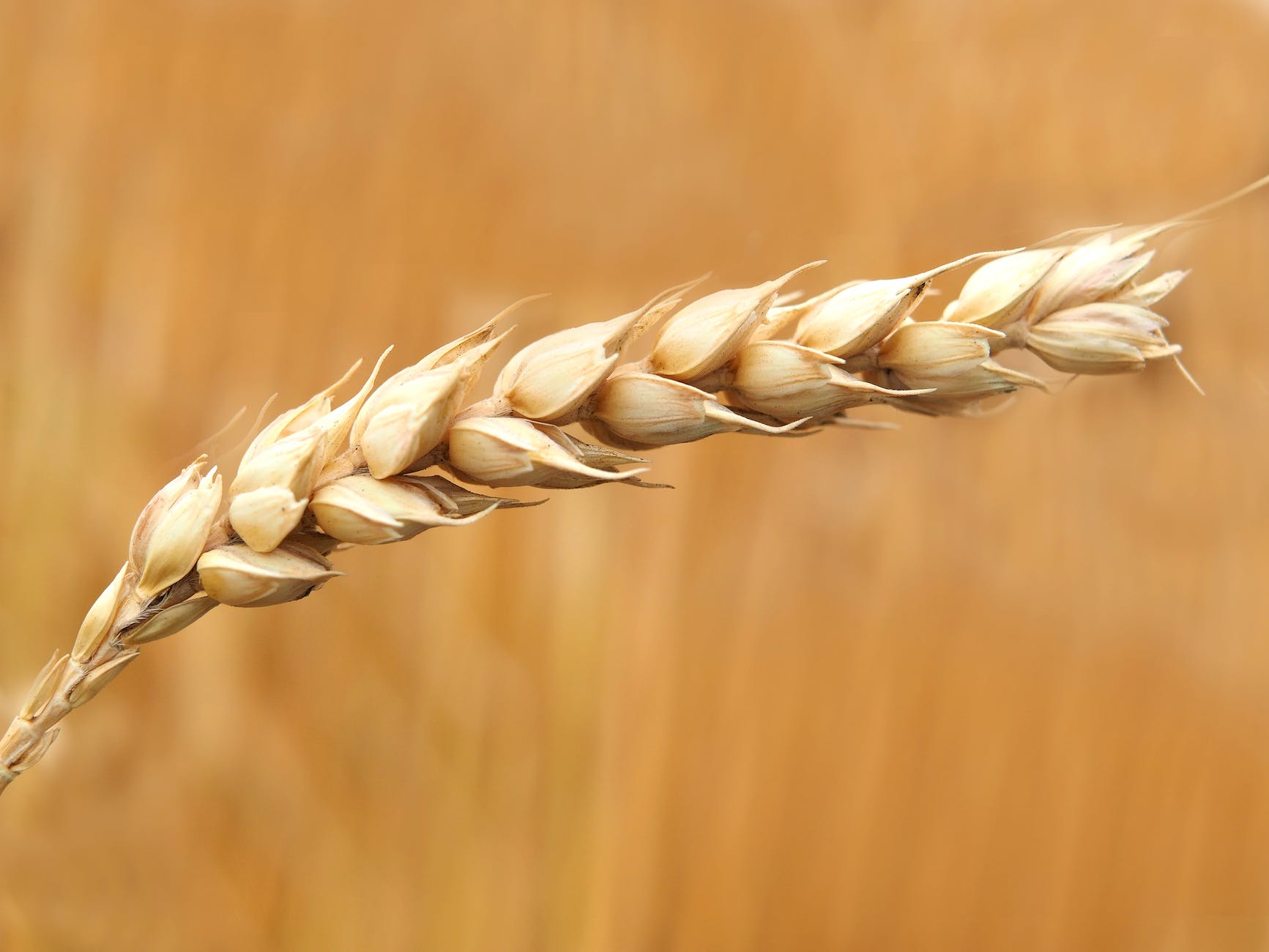
Seeds are one of the most miraculous things I know of, and they have been quietly working their wonders every day for untold years. Seeds usually come in a miniscule package, sometimes no more than a pinpoint, yet from their confines entire trees will emerge, stand for hundreds of years, and produce millions of new seeds of their own.

I also find incredible how the saplings that emerge from the seed is able to take dirt and nutrient from the earth and transform it into stem and leaf. The transformation of material is one of the most strange and mysterious things, and the more we learn of the complex process by how it works the more miraculous it seems.

And here is one more miracle of seeds, most of them have incredible versatility, able to lay in sterile or hostile environments for multiple years, appearing absolutely dead to the world, but will still germinate and grow long after they fell from their parent tree. In some cases, seeds have been known to still grow after laying as a dead husk for more than a thousand years! Somehow they retain the potential for life without food or batteries or nourishment.

When a seed lays dormant, all that it is waiting for is the correct environment. Once it is put in the right levels of moisture, temperature, and oxygen, it finally begins to flourish.

And so it is with people.

I have met men and women who moved through their lives in a catatonic state, feeling useless and reaching for nothing. It can be all too easy to write such people off, to assume that if they have already spent years in this lifeless same state then they will remain there forever.

But these people still have the potential for life—real life. It may be laying dormant inside of them, but that doesn’t mean it is dead. Like a seed, they are often just waiting for the proper environment to flourish, and from what I’ve seen, that proper environment is being brought into the light of God’s love. I have seen how lethargic and passionless men and women fell into the soil of belief, were rained on by the saving power of Jesus Christ, and sprouted towards the sun! Suddenly they wanted to go back to school and get the education they had abandoned, and change jobs for something more purposeful, and begin engaging in their home and family! They started seeing and helping the needy around them, and meeting with their brothers and sisters with sincere purpose, and finding joy and nourishment in the little wonders they had never noticed before.

Not only did they sprout upward, but they also reached further downward, deepening their roots and stability. These people began operating from a seat of power, sure enough to finally thrive.

Before this sprouting, these people appeared to be dead. But they were not dead, they simply hadn’t yet been born. There are many people who are still waiting to start living for the first time, so help plant them somewhere good if you can, somewhere that they can finally open their shell and live.

Scriptural Analysis- Genesis 33:5-7

5 And he lifted up his eyes, and saw the women and the children; and said, Who are those with thee? And he said, The children which God hath graciously given thy servant.

6 Then the handmaidens came near, they and their children, and they bowed themselves.

7 And Leah also with her children came near, and bowed themselves: and after came Joseph near and Rachel, and they bowed themselves.

Waiting behind Jacob were all of his family, and Esau was anxious to meet them. Originally, I had thought that he had staggered them in order to give the ones in the rear a chance to escape if things went very badly, but it seems they were already much too near for that to have been Jacob’s strategy. Instead, it seems that he had been preparing them for presentation in the event that things went very well. Which, thankfully, they did.

So now Jacob introduces his household, one branch at a time, showing Esau that he has not only grown in age and servants and flock and wealth, but also in family ties. The boy who had left their father’s tent had had nothing and nobody, but he had made his way, and had had come into his own. Evidently Esau had grown as well, able to marshal hundreds of men, a veritable army. Yet he also seems to have grown in his capacity for tenderness of feeling. The two boys had become men.

A Surety of Truth- Alma 32:28-30, 34

Now, we will compare the word unto a seed. Now, if ye give place, that a seed may be planted in your heart, behold, if it be a true seed, or a good seed, if ye do not cast it out by your unbelief, that ye will resist the Spirit of the Lord, behold, it will begin to swell within your breasts; and when you feel these swelling motions, ye will begin to say within yourselves—It must needs be that this is a good seed, or that the word is good, for it beginneth to enlarge my soul; yea, it beginneth to enlighten my understanding, yea, it beginneth to be delicious to me.
Now behold, would not this increase your faith? I say unto you, Yea; nevertheless it hath not grown up to a perfect knowledge.
But behold, as the seed swelleth, and sprouteth, and beginneth to grow, then you must needs say that the seed is good; for behold it swelleth, and sprouteth, and beginneth to grow. And now, behold, will not this strengthen your faith? Yea, it will strengthen your faith: for ye will say I know that this is a good seed; for behold it sprouteth and beginneth to grow.
And now, behold, is your knowledge perfect? Yea, your knowledge is perfect in that thing, and your faith is dormant; and this because you know, for ye know that the word hath swelled your souls, and ye also know that it hath sprouted up, that your understanding doth begin to be enlightened, and your mind doth begin to expand.

COMMENTARY

Would not this increase your faith? Nevertheless it hath not grown up to a perfect knowledge
Yesterday I spoke of how we ought to follow our best understanding, even if it might only be partially correct. Even if there are flaws in our beliefs, we should trust that our intuition is generally in the right direction, and therefore worthy of being pursued.
As this verse suggests, it is not unusual for us to have a faith in what we are following…yet not a perfect knowledge. We are able to say “I believe that this is the truth, and so I will follow it. I might have some parts wrong, or a little off the mark, but I believe that I’m doing what is right.” We have faith, but not yet a testimony.

But behold, as the seed swelleth, and sprouteth, and beginneth to grow, then is your knowledge perfect, and your faith is dormant; and this because you know
Faith does eventually give way to something greater, though. Where at first we only believed, and followed with trust, eventually we can become confident and sure. This we call testimony. And when we have a testimony we testify, not of what we believe, but of what we know. Tomorrow we will consider what it is that takes us from the belief of faith to the knowledge of testimony.

What Chance Do I Have?- Isaiah 28:10, Matthew 6:34

For precept must be upon precept, precept upon precept; line upon line, line upon line; here a little, and there a little:

Take therefore no thought for the morrow: for the morrow shall take thought for the things of itself. Sufficient unto the day is the evil thereof.

COMMENTARY

Precept upon precept; line upon line
It is easy when reading the stories of the saints to wonder how you could ever measure up to their great example. But it isn’t fair to compare yourself at the beginning of your journey to them at their end. Moses was not born as a prophet and lawgiver, he spent nearly a full lifetime growing into that role. Young Moses might not have been ready to stand up to the entire Egyptian nation and rescue all of the Hebrews…but he was ready to stand up to one soldier who was beating one Jew (Exodus 2:11-12).
So long as you are fighting down complacency and actively progressing, then it is alright to not yet be able to do all things. Just take it one line at a time.

Take therefore no thought for the morrow. Sufficient unto the day is the evil thereof.
I think the fear that we might fall away is simply the recognition that we are not yet ready to bear all things. And that is true, we are still unfinished vessels. But God is not going to ask the world of you today.
There is such a thing as preparing for the future, but there is also such a thing as fretting over things unnecessarily. You do not have to succeed today in tomorrow’s trials. If you do not feel ready to face a sacrifice like Abraham’s, that is fine. Simply ask if you are ready to face the sacrifices that are actually before you right now. I have found that I always am.