The Threat of Good People- Justification for Evil

Yesterday I spoke about how children who are socially insecure can try to tear down those who are confident, because they hold up a mirror to the insecure children’s flaws. But as the years go by, what might be nothing more than teenage angst, gradually evolves into something deeper. Even, something evil.

Selfishness and Sin)

Most of us come into evil by simple selfishness. A neighbor is looking for help with some yardwork, and we discreetly make plans to be out of town that morning. Upon seeing a traffic lane slowing down, we might swerve into the next, cutting off the driver behind. We disparage the “other side” for their idiocy, enjoying the moral superiority that that brings. We want what they want, and we only deviate from our predetermined path when it serves our own interest.

And then, inevitably, that same selfishness leads to doing something objectively wrong. The commission of a mortal sin. Something truly damning, which far more than the teenage awkwardness discussed in yesterday’s post, is something that we tend to shrink from, to try and not face up to in our own heart.

And to soothe our conscience on the matter, we tell ourselves that everyone is “looking out for number one.” Everyone takes the advantage when it is presented to them. Everyone holds a grudge. Everyone is selfish. Everyone has a serious sin hidden inside. We become suspicious of those that appear to defy these universal assertions, assuming that the so-called good are really just hypocrites and liars, pretending to be holier-than-thou, but secretly just as selfish and compromised as the rest of us.

An Unbearable Reality)

Which then makes it very difficult when someone shows an undeniable act of kindness. When someone is doing good, even when they think no one else is looking. When someone is giving, with no possibility of return. When someone forgives another, even though they have every right to demand vengeance. When someone openly confesses and renounces their sins.

Moments like these threaten the wicked, because it holds up a mirror, showing us that we don’t have to be the way that we are. That person was willing to forgive his enemy, so why don’t I? That person gave with true charity, so why don’t I? That person admitted his sins and forsook them, so why don’t I? These questions remind the sinners that we do what we do because we choose to, not because it was inevitable. The sinners see what we really are, and how what we still cling to is inexcusable. We see that we are deserving of hell.

The good people therefore become hateful to us for no other reason than that they are sincerely good. They become an unbearable burden. They are a threat to the illusion that everyone is guilty, so we’re no worse than anyone else. They are a threat because they show us that change is necessary, but we are still unwilling to change.

Then, the good people have to be crushed so that there is no longer a standard to be measured against. Society redefines morality, so that even thinking or believing or speaking “incorrectly” is now deemed violence. Then the destruction of the good is considered justified and even called right.
Thy Sins Are Forgiven

One of the most common phrases of Jesus’s ministry was “thy sins are forgiven thee.” When the paralytic man was lowered to him through the roof, Jesus first forgave the man’s sins, then healed his body. When the woman of many sins wept on his feet and anointed them with ointment, he also told her that her many sins were forgiven. The woman taken in adultery he did not directly forgive, but he did provide her a stay of execution and implored her to sin no more, implying that he was giving her time to seek the same forgiveness that the others had received.

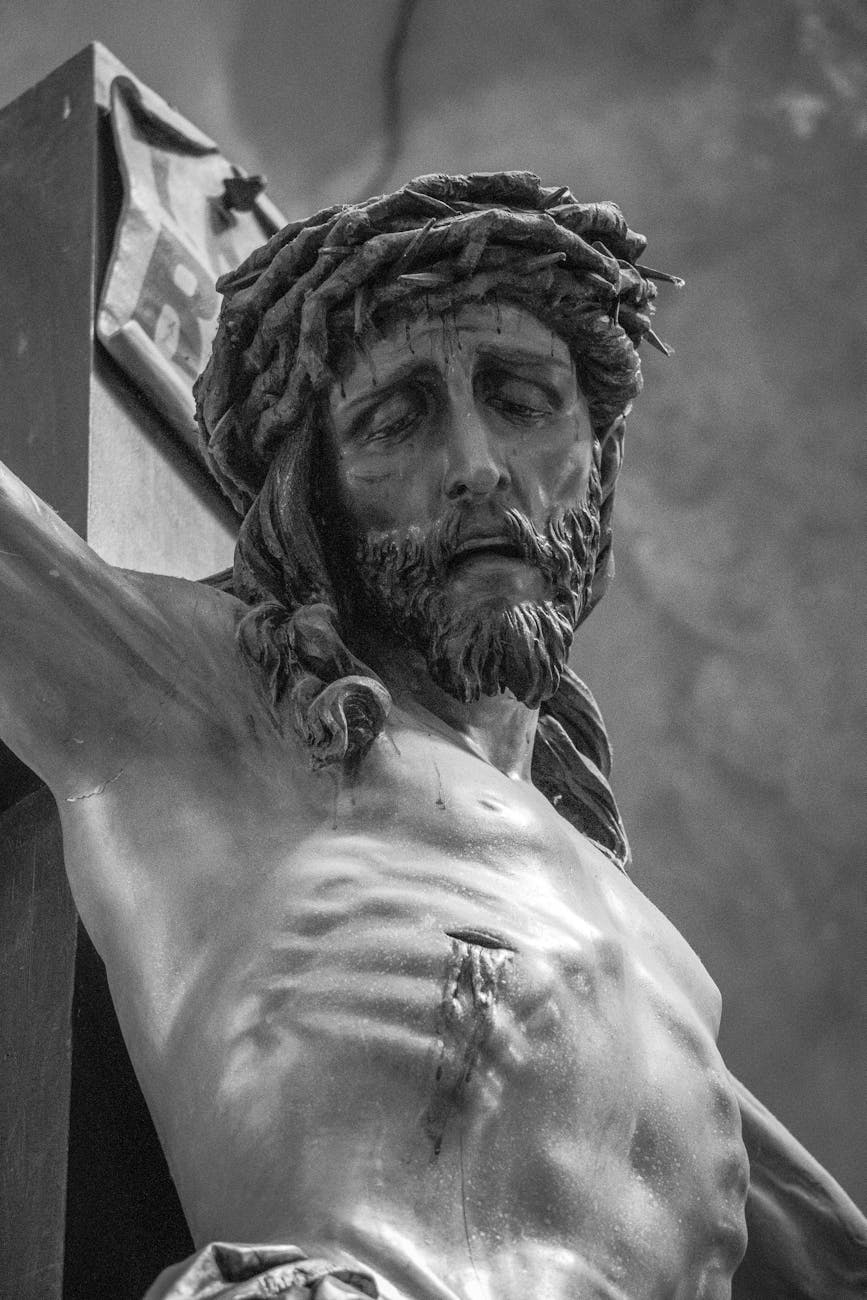
Even as he was dying on the cross, Jesus had two famous moments of forgiveness. He interceded for the Romans who were carrying out his execution, observing that they were acting without understanding. He also promised the repentant thief that the two of them would see each other in paradise, implicitly forgiving him of the very sins that the man was being put to death for.

These are nice moments to think on, times where Jesus gave the greatest gift that we can experience in this life. I can’t imagine reading these stories and not being moved with happiness and hope.

But I think it also worth noting the deep gravity behind them also. I think we should always remember that when Jesus said, “thy sins are forgiven thee,” that forgiveness did not pop out of nowhere. Yes, it was given freely, but it was not acquired freely. Every time Jesus uttered those words an implication followed, “thy sins are forgiven thee, because I will die for them.”

In Hebrews it states:

For where a testament is, there must also of necessity be the death of the testator.
For a testament is of force after men are dead: otherwise it is of no strength at all while the testator liveth.
Hebrews 9:16-17

Surely, part of the reason why the death of the testator, Jesus, was necessary, was because his New Testament would take the place of the death penalties in the Old Testament. Thus, when Jesus let the woman taken in adultery go free…it was only because he was going to be killed in her place. And in all the other cases where Jesus pronounced “thy sins are forgiven thee,” those were only words until he paid the price that would give them actual force. The wages of sin are death, and so forgiveness of sin could only be real after his death for them.

We rejoice whenever Jesus’s words of forgiveness, mercy, and healing come upon us, and well we should. We marvel at how freely we receive them, how they seem to come from out of nowhere. But in the midst of our joy, we should remember that the freeness of them is only an illusion from our perspective. In reality, with every word of forgiveness Jesus gives to us, he is agreeing to die for them also.

Hell Within

If you live every day with a level of physical comfort, security, wealth, and peace that almost no one in history has ever enjoyed, yet every day is filled with anger, anxiety, and despair, then perhaps it is time to consider that your hell comes from within.

Ascend, Decline, or Plateau- True Redemptive Experience

Stagnant and Moving Upward)

For much of my life I was a Christian whose faith to any outside observer would have appeared to have plateaued. I came to church each Sunday, fulfilled all of my basic duties, testified of the importance of Christ, occasionally looked for ways to be helpful, and generally treated everyone with politeness and respect.

I was a good citizen, but I never felt particularly good. I felt stung by Jesus’s words when he declared, “And if ye do good to them which do good to you, what thank have ye? for sinners also do even the same.” (Luke 6:33).

There is a fundamental idea here that basic decent behavior is, well, basic. The path of the true Christian must transcend that into the truly extraordinary. The path of the true Christian requires denying the natural self and demands real sacrifice.

In the years since, I have had moments where I did make some more significant sacrifices, times where I stopped living on the basically good plateau and ascended to a higher form of living.

What Makes the Difference)

So, what was it that took me from resting on the plateau to climbing the mountain? As I look at my story the answer is crystal clear. It was passing through a truly redemptive experience. What immediately preceded my initial changes was that I gained a true conviction of my sin, felt the reality of hell before me, and then felt the reality of being saved. When those things became real, not just theoretical, I didn’t have to have anyone telling me to start living differently. Making changes was simply the most natural thing for me to do.

People that are living on the plateau have to constantly be coaxed or manipulated into works of self-betterment. External motivation might get them to move a little up the mountain, but it isn’t natural, and once the motivation disappears, they’ll most likely slide back to their comfort zone. To such a person, the idea of eternal self-improvement is a terrible burden of perfectionism.

When one has had a truly redemptive experience, though, that same idea of eternal self-improvement now feels like a privilege and an opportunity. It is only a burden if you are already at your paradise. It is an opportunity if you want to go to God’s.

The Day Without Christ

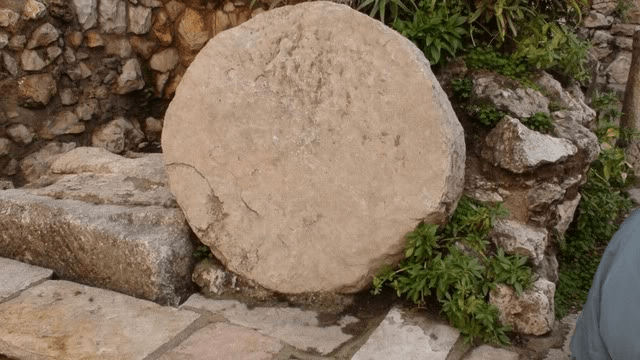
Jesus was crucified just before the sabbath, hastily laid to rest in an empty tomb, and remained shut out of sight for the next 24 hours. The following day he appeared, newly resurrected, and was witnessed by one group of followers after another, including all eleven apostles. Eventually he was even seen by 500 disciples at one time.

Thus, there was the last day of Jesus’s mortal life, the first day of his glorified life, and in between one day without Christ at all. What a bitter sabbath that must have been for Jesus’s disciples, the one day where they didn’t have their Lord to be there with them, and didn’t know that he would ever be with them again. A day of darkness, a day without the Lord.

But where was Jesus during that day away from the world? What was he gone to when he departed from his people?

He was gone conquering.

As the children are partakers of flesh and blood, he also himself likewise took part of the same; that through death he might destroy him that had the power of death, that is, the devil; And deliver them who through fear of death were all their lifetime subject to bondage. He led captivity captive, and hath put all things under his feet. (Hebrews 2:14-15, Ephesians 4:8, and Ephesians 1:22).

Jesus might have been missing, but hardly had he abandoned his people. The time when Jesus was absent in the lives of his disciples, he was gone destroying their greatest enemies: death and hell. He fought with mankind’s greatest evils, and his ability to rise back to life the next day shows that he was triumphant in that battle. He came back having won for them the greatest gifts they would ever receive.

Each of us similarly faces days where Christ appears to be missing in our lives. We feel his spirit beforehand, but then for a spell it seems that he has gone away from us. We are left alone in the dark, much like his ancient disciples. At such times, might not he have gone to conquer our greatest enemies also? Our days without Christ might be a sign that the greatest victories are about to come.

Perpetrator and Victim: Part Six

Fallen in a Hole)

I’ve spent the last several posts talking about the situation of both perpetrators and victims of abuse. I have considered the various false narratives they start to live, lies that seem more palatable than facing their soul-wrenching reality. I have mentioned how these lies must be surrendered, though, and the harsh truths must be faced. Perpetrators must fully appreciate their wrongness and victims must fully appreciate their brokenness.

With most of our actions, if they take to places that we do not like we can reverse our steps to go back to where we were before. This is not the case with abuse, though, where our steps carry us over an edge and we fall into a hole, and no matter of walking around the bottom of that hole is going to find us a way out of it. Both for the enactor and the receiver of the abuse, they have been carried by choice or by force into a place that they cannot get themselves out of. And it is a damned place, a place that can only be described as godless. In that dark pit we will be made to understand what the very definition of hell is.

That might seem a harsh thing to say of the victim, who has not brought this travesty upon themselves, but it is the reality that they live even so. Like a dark cloud descending, their connection to God seems to be blotted out, and it is not at all unusual for those who experience this trauma to find their faith and core belief systems crushed.

Our Common Fate)

Be ye therefore perfect, even as your Father which is in heaven is perfect.- Matthew 5:48

These things I have spoken to you, that My joy may remain in you, and that your joy may be full. -John 15:11

See in the verses above what God intends for each of us. He calls us to be pure and to be joyful. But pure is the one thing that the perpetrator of abuse cannot be, and joyful is the one thing that the victim cannot be. They cannot live in the light and glory of God because they are in the hole, and neither of them has the power to get themselves back out of it.

At some point in our lives, each of us is going to receive harm from another. At some point in our lives, each of us is also going to harm another. Thus at some point all of us will be a victim and at some point all of us will be a perpetrator. That isn’t to say that we will all receive or inflict harm to the same degree, but each of us will break and be broken in some way or another.

And in that moment we will begin to understand—really understand—why it is that we all need to be saved. We will understand how helpless and hopeless we are on our own, how incapable we are of getting ourselves back up to the light.

We will find that our friends and families, no matter how hard they try, cannot piece back together our broken soul. They might alleviate some outer pains, might provide some worldly needs, but they cannot resolve the inner despair. They have no access and no power in the most secret places of our heart. Indeed, now that we find ourselves down in the pit, for the first time we will realize just how many of them are also right down there with us!

In this situation, whether as a victim or a perpetrator, the only one that can help us is a Savior. The only one that can help us is one who has never fallen into the pit, so that he may lower us a ladder, but one who has leapt into the lowest depths of the pit, so that he can mend our heart where it is. The only one that can help us is one that can take our hopeless and dark truth, swallow it within himself, and in return give us a new and bright truth.

I realize that I’ve leaned heavily into metaphor with this post, and perhaps it’s starting to sound like hyperbole. Frankly, it’s that I am struggling to find more straightforward words to communicate the ideas that I am trying to get across. My own experiences in the dark hole have literally fueled my nightmares, which perhaps lends to the language I have used. I shall finish, though, by summing up what I am trying to say just as plainly as I can.

As I mentioned before, I have been in that hole myself. It was a horrifying place. Without exaggeration, it was my greatest suffering in life, and I was totally unable to save myself from that hell. Even so, and much to my surprise, I was rescued from it by am unseen being. And I have seen this drama play out in the lives of many others, and I know that it can for you as well.