
No one ends up on the right side of every matter
Without being humbled into some of them
No one ends up on the right side of every matter
Without being humbled into some of them

There is a world of difference between wanting to be right,
Versus wanting to be true.
Seek to be true, even when it reveals that you weren’t right.
Yesterday I spoke about how each of us not only require faith that God is real, but that we are following Him in the right way. Personally, I do believe in receiving spiritual witnesses from God, and I have received them myself, but even those still leave me in a place of faith and trust, not perfect knowledge.
In the end, this means that I have to accept that I could be wrong. I could be in the right church, but wrong in my conception of it. Or I could be in the right family of faith, Christianity, but wrong in the specific denomination I attend. Or I could be right about there being a God, but wrong about following Christ. Or I could be wrong about there even being a God. All of these are possible. At each deeper level, I feel more certain of my belief. I feel so certain of many of them that it would take a divine intervention to unseat me…but even so, I could still be wrong.
When it comes to the church that I am baptized in, the leaders that I listen to, the spiritual rituals that I observe, and the standard of life I try to live, I do these things because I think they are right and I am trying to follow the Truth. My first and foremost commitment is to the Truth, and I am trying to follow it wherever it leads me. It has led me to change some aspects of my discipleship, and it has reinforced others, and I expect it to continue to do so until I meet it face-to-face.
I frankly do not believe that it is the same with many who come to accuse me of false beliefs. In conversations with them I have tried to express this shared foundation of uncertainty, the fact that both of us are operating on faith, the mutual possibility of being wrong, and the humility with which we should therefore approach one another…only to have them refuse to meet me on this common ground. They express that they know their creeds are divinely authored. They know their interpretations are correct. They know that I am wrong and going to hell.
I found this unjustifiable certainty very confusing, and I described a theoretical to make sure I was understanding them correctly: “Let’s suppose you and I both die tomorrow, and we meet at the gates to heaven, and Jesus is there to welcome us, and he informs me that I was misguided in my faith. He says that I should have belonged to your church all along and not the Church of Jesus Christ of Latter-day Saints. In this situation, I genuinely believe that I would accept his word. I would accept your position as being the correct one and mine as being wrong. What’s more, I would accept whatever judgment Christ has for me given that I went astray. Whatever his judgment is, it is, by definition, just and right. Or, if I would not be so gracious in correction, then I here admit it would be because I was proud, and arrogant, and more in love with my own conceptions than with my Savior.” And then, having given this theoretical and my personal feelings about it, my follow-up question to the person attacking my faith is very simple: “What about for you if the situation was reversed? If Jesus told you that you were wrong, would you renounce your faith and accept ‘Mormonism?'”
What I found very telling was how uncomfortable everyone became when I asked this question. They would not give me straight answers. They would tell me that what I was asking was a logical impossibility, and therefore pointless to engage with. They would say that Mormonism is false as an absolute fact, and that therefore the mental exercise was absurd. They would tell me that in my half of the theoretical it would be too late for me to accept the true faith after I had died, focusing on that aspect rather than addressing their half of the theoretical. One way or another, they simply would not entertain the possibility of receiving correction in their faith, even as a thought experiment. They were closed-minded and closed-hearted, and there really was no point in continuing a conversation with them.
A healthy dialogue of differences can only be had between two people who are both seeking the truth. But to be a seeker of truth, by definition, means not yet having it fully. When one of the people in the conversation is not a seeker, when they insist upon already being the haver and the other person being the not-haver, then they hold a fundamental air of superiority and have closed themselves to one direction of dialogue only: them telling you what is right, and you accepting it or staying wrong. There can be no back-and-forth, no mutual understanding, no lifting each other to greater clarity. This is a pattern of domineering and abuse, and it is not how Christ meant for us to reason with one another. Once a person shows that they will insist on such a dynamic, I will not continue to participate any further. I insist on better than “perfect” knowers. I insist on flawed seekers of truth.
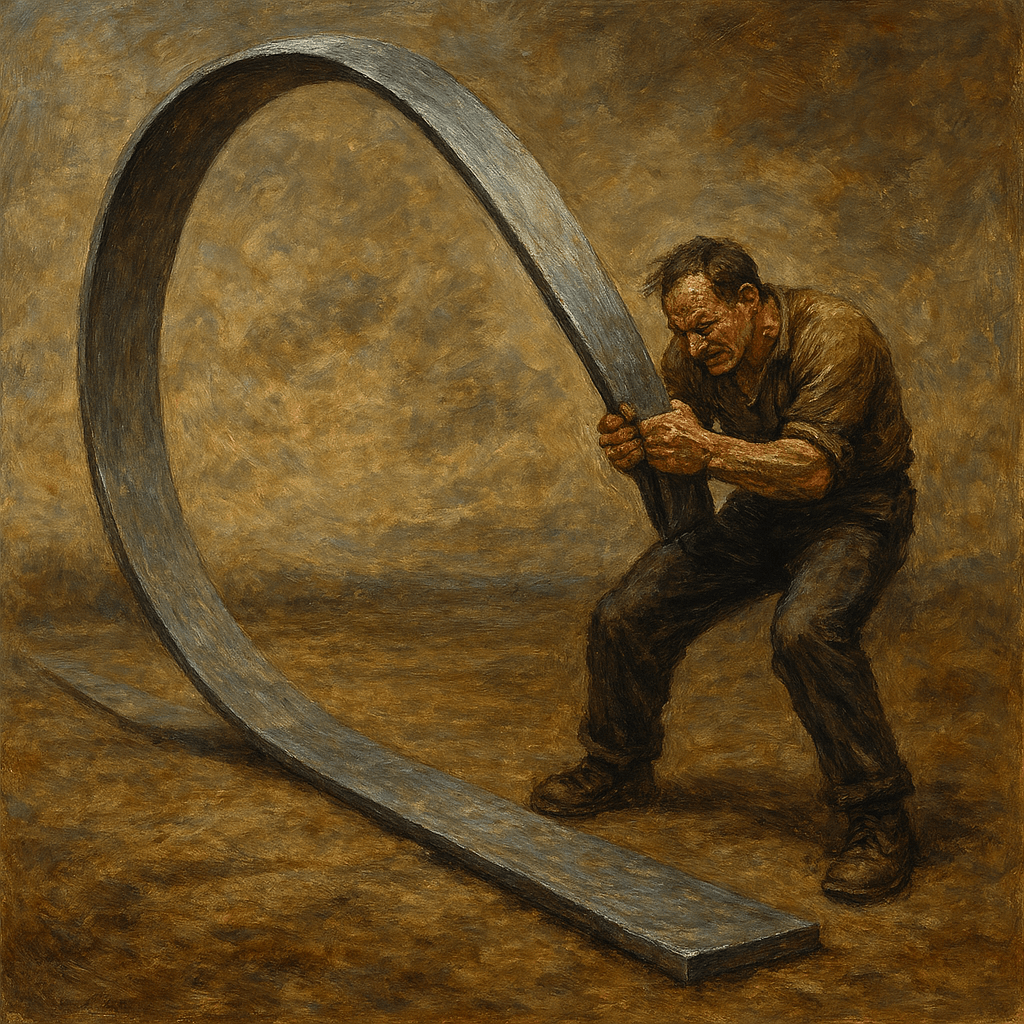
Man is mighty enough that he may bend God's creation
But it will always snap back
There are so many different interpretations of scripture, so many opposing theological opinions, so many churches that have divided over incompatible beliefs. Is man saved by faith, or works? Are our fates predetermined, or dependent on free will? Should we believe in theosis true, and if so to what extent? Is God a trinity, or separate persons? Is the Bible a closed canon, or can there be new prophets and revelations? Is the rapture pre-tribulation, or post? What is the correct mode of baptism? Do any Old Testament traditions still apply today, and if so, which ones? Should women serve as pastors? Does God approve of same-sex relationships?
With so many different interpretations and opinions, the only way to assume that a certain church has the correct answer on all of them is to believe it is the one, true church, and that all others have gone astray. But even in that case, within the narrower scope of that single religion’s theology, there would still be room for a plethora of different personal beliefs, most of which would necessarily be false.
It is therefore unrealistic to assume that everything that you or I believe is correct. It is far more probably that as Isaiah said, “All we like sheep have gone astray; we have turned every one to his own way,” (Isaiah 53:6). Obviously that scripture applies to our sins, but surely also to our own misguided beliefs.
Each of us must reason as best we can, and obey as we see understand, but we must also have the humility to recognize that we are surely wrong in one way or another and be willing to make dramatic changes as needed. We must be open to ideas that before seemed impossible to us. We must always remain teachable. We must never be so sure of ourselves that we resist the corrections of the Lord. Ultimately, there is no belief that should be so precious that we would be unwilling to relinquish it if required by God.

Insisting that God meet you on your terms
Is the surest way never to meet Him at all

.
Some say, “Jesus loves me just the way I am”
As an excuse to not seek forgiveness
And any that do not seek, will not find
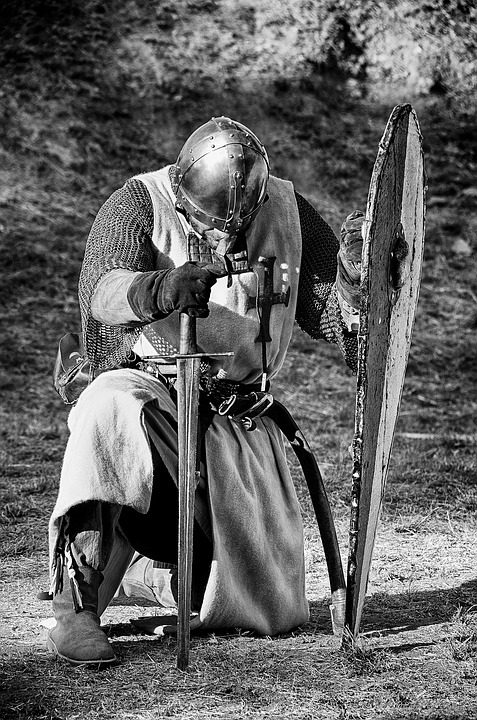
True strength is being able to fight for what is right
True humility is being able to patiently endure wrongs
True wisdom is being able to know which it is time for
1 Now when Jacob saw that there was corn in Egypt, Jacob said unto his sons, Why do ye look one upon another?

2 And he said, Behold, I have heard that there is corn in Egypt: get you down thither, and buy for us from thence; that we may live, and not die.

3 And Joseph’s ten brethren went down to buy corn in Egypt.

4 But Benjamin, Joseph’s brother, Jacob sent not with his brethren; for he said, Lest peradventure mischief befall him.

5 And the sons of Israel came to buy corn among those that came: for the famine was in the land of Canaan.
I could not find any clear answer on whether “why do ye look upon one another” was a common idiom of the time. It does seems to have a distinct meaning within this story, though, similar to our modern expression of “don’t look at me,” spoken when we don’t have a solution to the problem at hand.
Whatever tactic they had employed thus far to make it through this famine, it hadn’t worked, and if they continued to rely on their own power or resources, they and their families would starve and die. Thus, as Jacob suggests, they have to admit their own uselessness and go to where real hope resides.
Unbeknownst to them, this means humbling themselves and coming to Joseph, their younger brother, as helpless souls in need. They are about to fulfill the prophecy they once said could never be, and they aren’t even aware of it.
Let your light so shine before men, that they may see your good works, and glorify your Father which is in heaven.
And whether one member suffer, all the members suffer with it; or one member be honoured, all the members rejoice with it.
COMMENTARY
And whether one member be honoured, all the members rejoice with it
Let your light so shine before men, that they may see your good works
Can you imagine a world where all of the petty competition and comparison are gone? In today’s world we have insecurities that make us jealous of others’ accomplishments, when we should be rejoicing with them. Or if not that, we are repulsed by that idea of jealousy and over-correct into a false humility, not daring to appear “special” ourselves.
I’ve expressed this in previous sections, but it is alright for you to be special, and it is okay for others to be so as well. We do need to be humble, we do need to give God the praise for our talents, and we must never use our abilities to make another feel that they are somehow “worse” than us.
But, none of that means that we are supposed to dim the wonderful light that God has given us. Having a purpose to fill and a talent to show makes the world brighter and helps others to see more clearly. When one is vibrantly living out the purpose for which they were made it helps everyone.
Children are remarkable in how they are able to be both fearlessly proud of themselves, and fiercely proud of others. I am convinced that this is one of the aspects of children Jesus had in mind when he commanded us to be like them.

