6 And Moses brought Aaron and his sons, and washed them with water.

7 And he put upon him the coat, and girded him with the girdle, and clothed him with the robe, and put the ephod upon him, and he girded him with the curious girdle of the ephod, and bound it unto him therewith.

8 And he put the breastplate upon him: also he put in the breastplate the Urim and the Thummim.

9 And he put the mitre upon his head; also upon the mitre, even upon his forefront, did he put the golden plate, the holy crown; as the Lord commanded Moses.
We already discussed the symbolic elements for each individual piece of the priestly vesture when we first read about them in Exodus. Today let us consider the significance of clothing as a general rule. Clothing has always been a symbol for taking on an identity, for becoming someone. Wearing clothes is like putting on a second skin or entering into another person.
As pointed out in yesterday’s post, Aaron and his sons were officiating in the place of Moses, and by extension, of God. Thus, Moses was enclothing the priests with himself and with the Lord. When the priest performed in his office, personal failings or scruples with other Israelites would need to be set to the side. It wouldn’t matter what you thought of Aaron or what he thought of you, because Aaron wasn’t really the one leading you through the ritual, God was. And you were reminded of that fact by seeing Aaron in these godly clothes.
Another universal symbol of clothing is uniformity. When people wear exactly the same articles, as the priests did, that would further reinforce the notion that these were not individuals anymore. They were one and the same: God. There was no advantage to being serviced by this priest, rather than that one, because the same clothes, therefore the same identity, therefore the same God, was through it all.
Perhaps the greatest obstacle to God winning our souls is that true conversion requires an interaction with the genuine self. And we, being a highly social and impressionable species, very rarely exist as our genuine self. Most of us spend our lives as a collage of other people’s thoughts and beliefs and attitudes. We hear a question, and we immediately know the pre-scripted answer that we have been told by others. God reaches out to us, but all He finds is fragments of Darwin, Nietzsche, and Oprah.
And so, before God corrects the false image we have of Him, He first must shake loose the false image we have of our own self. He thwarts our pretend identity. He puts us in situations where our pale imitations and our tired platitudes fail spectacularly. He does for us what He did for Abram, and Jacob, and Saul, stripping us down and leaving us barren, and lame, and blind.
Seek the death of the false self. Unearth the real you. Learn how to think outside the catechisms that you have been given. Only then will you be able to find your real identity, like Abraham, and Israel, and Paul. Only when you have the real you can a proper introduction be made between you and the Father.
There is an interesting sentence in Genesis 26:8. This is how the verse appears in the translated English of the King James Bible:
And it came to pass, when he had been there a long time, that Abimelech king of the Philistines looked out at a window, and saw, and, behold, Isaac was sporting with Rebekah his wife.
During my regular study I observed that the word “sporting” was taken from the Greek צָחַק / tsachaq which means to laugh, to joke, to make sport. I found this interesting, because Isaac’s name (יִצְחָק / Yitschaq) also means “he laughs.” Thus, this sentence can be rendered as, “He-laughs, laughed with his wife, Rebekah.”
I found that wording, “he-laughs, laughed,” a bit amusing, but really didn’t think anything more of it at the time. I have given it some thought since, and I think it is actually a beautiful, poetic testament to the love that Isaac and Rebekah had for one another.
First, some context. Isaac and Rebekah’s union seems to have been a particularly charmed relationship. First, Abraham’s servant was led to her by a sign from God, showing that this was literally a match made in heaven. Then, for their first meeting, Rebekah was riding through the field where Isaac was meditating and we hear how they both raised their eyes, saw one another, and she hurried off her camel to go meet him. It is as close as the Bible gets to saying it was love at first sight! Then, when the two of them were married, we are simply told, “and she became his wife; and he loved her.” Unlike his father or his sons, we never hear of another wife for Isaac, Rebekah was his sole companion to the very end.
Now, let us go back to the phrase, “He-laughs, laughed with his wife, Rebekah.” Rebekah was literally fulfilling Isaac’s identity! He-laughs was laughing, and he was laughing with his wife. She was bringing out his true, authentic self, his core identity, and the fact that they were a perfect complement to one another was so obvious to the king of the Philistines, that when he saw them together in this manner he immediately intuited that they were husband and wife. The two were genuine soulmates.
The Bible has all manner of stories in its pages. Tales of tremendous sacrifice, of lives being transformed, of rousing battles, and of great teachings. Perhaps most sweetly, though, it also has stories of deep, fulfilling love, of two people perfectly complementing one another, of two becoming one.
13 And Moses said unto God, Behold, when I come unto the children of Israel, and shall say unto them, The God of your fathers hath sent me unto you; and they shall say to me, What is his name? what shall I say unto them?

14 And God said unto Moses, I AM THAT I AM: and he said, Thus shalt thou say unto the children of Israel, I AM hath sent me unto you.
I’m not sure why Moses assumed that the Israelites would ask him what the Lord’s name was, perhaps he was referencing some societal norm that is lost on me today. In any case, Moses’s request hits at one of the most fundamental questions in all of humanity. Namely, what is the identity of God? Who is He, really? What is His name, His definition, His origin? What is it that makes Him God?
God’s response is as profound as it is simple. “I AM THAT I AM,” is one interpretation of the Hebrew phrase that God used, other valid translations would be “I will be what I will be” and “I will become whatsoever I may become.” I think looking at all three interpretations we start to see the real meaning behind them: God is one who emerges from, belongs to, and is directed by His own self. What makes Him God, and not us, is that He is entirely self-sustaining and self-directing. Whatever He says He will do or be, He will do or be. There is no other entity that can override or prevent God’s proclamation from happening.
Let us contrast this to the identity of us a mere mortal like me. I am an employee only if I am hired, I am a citizen only if I am not exiled, I am alive only if I am not killed, I am a father only if my wife gives birth to a child. All of my definitions depend on another, and many of them can be revoked, but God’s definitions only depend upon himself. I say “I am that I am allowed to be,” but God says “I am that I am.”
6 Moreover he said, I am the God of thy father, the God of Abraham, the God of Isaac, and the God of Jacob. And Moses hid his face; for he was afraid to look upon God.
After giving Moses the instructions to remove his shoes, God introduced Himself more fully. He explained that He is God, and not just any “god,” but the God of Moses’s forefathers. The interaction of the Lord with Abraham, Isaac, and Jacob were, of course, the thing of legend, and Moses’s reaction to joining that same association was one of deep humility, even fear.
Throughout the scriptures we see that whenever Lord enters such an intimate closeness with a child, it is because He is about to give them a calling that will consume the rest of their life and change countless souls around them. It was the case for the patriarchs, and it was certainly the case for Moses as well. There is an incredible gravity to these moments, and whenever they show up in the scriptural record one may know that whatever comes next, everything is about to change!
11 And it came to pass in those days, when Moses was grown, that he went out unto his brethren, and looked on their burdens: and he spied an Egyptian smiting an Hebrew, one of his brethren.

12 And he looked this way and that way, and when he saw that there was no man, he slew the Egyptian, and hid him in the sand.
Moses “went out unto his brethren, and looked on their burden.” Before Moses could be a force of change for his people, he first needed to understand what their afflictions were. This, again, is a type for Christ, who came personally to Earth and “hath borne our griefs, and carried our sorrows, that he may know according to the flesh how to succor his people according to their infirmities” (Isaiah 53:4, Alma 7:12). It is also a hallmark for any good leader. If the problem is going to be fixed, if the situation is going to be improved, first one must care enough to really understand the nature of things as they currently are.
Moses then illustrates the second step of leadership that follows curiosity and concern. Attention to injustice naturally causes a compulsion to act. Having come to see the suffering, Moses saw a particularly egregious abuse occurring right then and there, and he was compelled to rush forward and slay the tyrant. Though, it should be noted, he was not perfectly bold. He did first pause to look “this way and that way,” and only acted “when he saw that there was no man.” Moses’s heart yearns for these people, but he has yet to grow into the totally fearless protector that he will ultimately become.
One final thought from this passage is that I wonder whether Moses knew at this point what his true lineage was. Did he go out to see the plight of the Israelites because he knew that they were his real people, or did he believe he was a genuine Egyptian, and was merely curious about these unfortunate people? The Biblical record never tells us when Moses first became aware of his true heritage. One thing is clear, though, even if he already knew where he came, he still had yet to throw in entirely with them. He was already a good man of conscience, but he had not arrived at his full destiny yet.
I recently considered the markers we use to identify ourselves when meeting someone new. The most common descriptors seem to include what our work is, where we are from, what our race/heritage is, what religion we belong to, and what our family situation is. Of late, there has also been an increase in identifying oneself by one’s sexual and gender identity.
But why are these the sorts of markers that we use? Do these really represent the most fundamental qualities of a person? If I told you what I do for work, does that really tell you much about how I think and feel? If I disclosed my sexual preferences, would that really give you an accurate window into my soul?
I don’t think so. In my experience, most of these categories have little, if anything, to do with who a person is at their core. Really, I think we only use these because they tend to represent the smallest minorities that we belong to. The mentality seems to be “if you know what is most unique about me, you will know who I really am,” but I think this is a false assumption. Sometimes, it is the broadest of definitions that actually get the closest to the truth.
For example, the identification that I am “a son of God,” hardly puts me into a minority, but it is much more fundamental to who I really am. Descriptions like “I am a Software Developer,” or “my family is from Norway,” put me into smaller buckets, but those buckets are pretty shallow. Being “a son of God” has me in a bucket that is very wide, but also very deep.
I think it is therefore more useful to take those broader, wide-bucket categories, and then go deep with them. If I really wanted to introduce myself in a way that gave people a window into my soul, I might say something like “I am one of God’s creations, and I, in turn, share my Maker’s passion for creating new things. And not only am I a creation, but also a re-creation. I am one who has been redeemed by Christ, brought back from an addiction and loneliness that I thought I would never see the end of.”
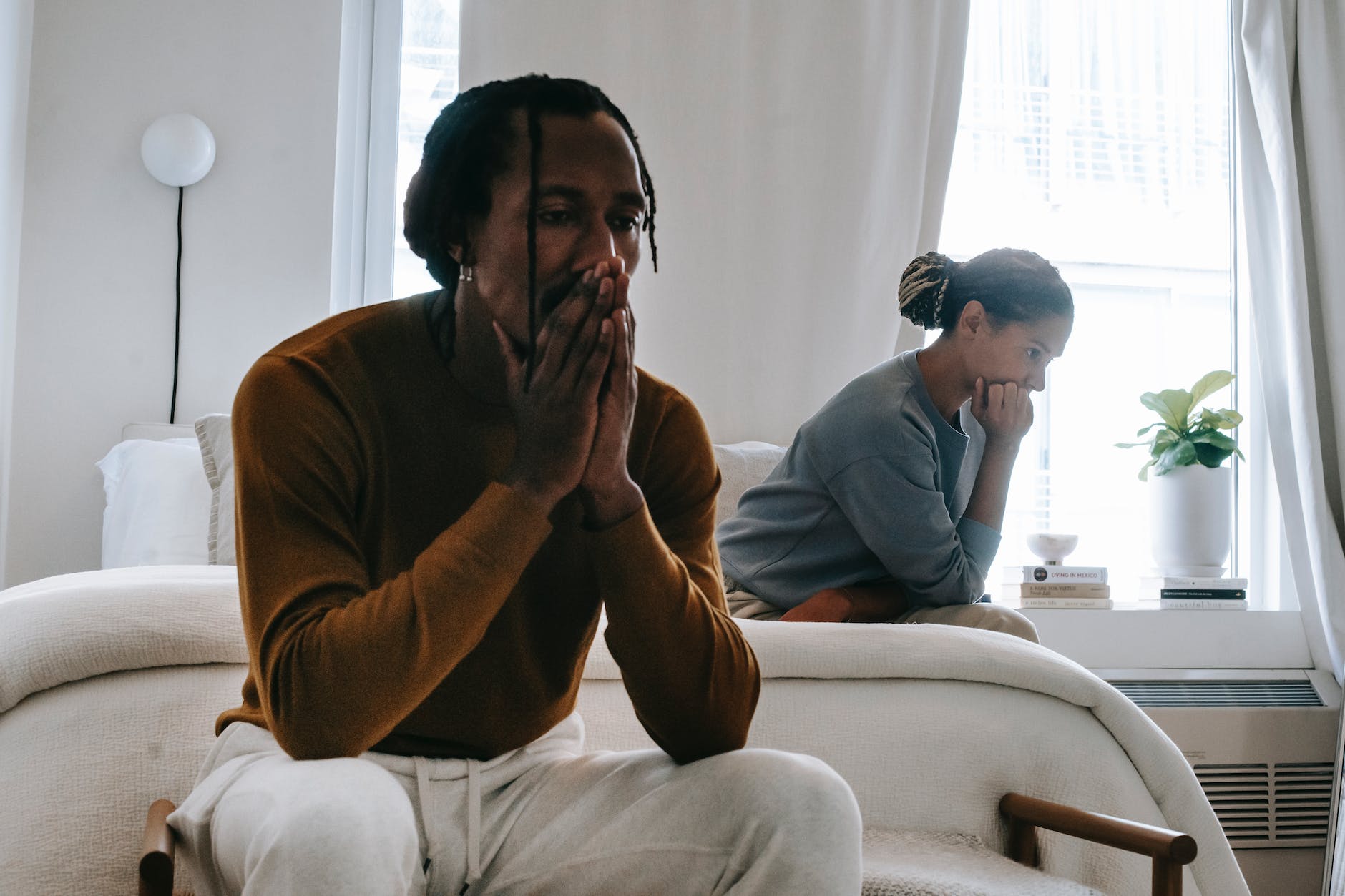
One would hope that a man and woman wouldn’t have any secrets from one another by the time they decide to get married, but this is far from guaranteed. Certainly I was guilty of keeping my wife in the dark from all the deepest parts of me. Previously I mentioned that I kept my addiction to lust concealed from her, but that wasn’t all, I was also hiding my wounds.
It may seem a strange thing, but I was able to tell my wife about my problems with pornography before I could tell her how I got hit as a child, and how I felt ashamed for wincing before each blow. Obviously the addiction was the part of my life that made her more upset, the one that directly hurt her, but it still was the easier thing for me to confess to. I never thought that she would despise me for having suffered abuse, but talking about it brought up areas that were still raw and tender. I couldn’t go there without bringing up all of the attached horrible feelings, so I had always stayed away.
My heart is broken within me; all my bones shake - Jeremiah 23:9

Unto the woman he said, I will greatly multiply thy sorrow and thy conception; in sorrow thou shalt bring forth children;
And unto Adam he said, cursed is the ground for thy sake; in sorrow shalt thou eat of it all the days of thy life; - Genesis 3:16-17
All of us have these deep, soul-shaking wounds. As Brené Brown has said, “Every single person has a story that will break your heart. Nobody rides for free.”
If you listen to the stories of two different people, one might have endured a more horrifying pain for a more extended period of time, but both lives will still hold significant trauma. The hardest thing you have ever had to go through, no matter how small it might seem compared to others, is still the hardest thing you have ever had to go through. Simply by virtue of being your greatest pain, it will warp your psyche and become your personal definition of suffering.
Coming to terms with that pain, and developing our relationship with it, is one of the most difficult things we will ever do in life. Virtually all of us will make mistakes in this arena, and we will come up with flawed reactions that end up causing even more pain further down the road.
The Spirit of the Lord is upon me; he hath sent me to heal the brokenhearted, to preach deliverance to the captives - Luke 4:18

And the Lord said unto Moses, Make thee a fiery serpent, and set it upon a pole: and it shall come to pass, that every one that is bitten, when he looketh upon it, shall live. - Numbers 21:8
Jesus teaches us that it is good for us to mourn our sorrows, and reassures us with the knowledge that we can be comforted (Matthew 5:4). But there is a clear line between mourning our sorrows and wallowing in them. It is one thing to recognize that you have been a victim, and another to make victimhood your key defining feature.
Over-identifying with our pains and obsessing on what happened to us can lead us to reject the deliverance that is offered, because we start thinking that healing means saying our wounds didn’t matter. Even more perversely, holding on to our damage can be used as a way to justify our own misbehavior afterward. Thus, God is offering us to look to him and live, but we first have to choose to stop remaining a prisoner.
And if men come unto me I will show unto them their weakness. I give unto men weakness that they may be humble; and my grace is sufficient for all men that humble themselves before me; for if they humble themselves before me, and have faith in me, then will I make weak things become strong unto them. - Ether 12:27

Thus says the LORD: "Cursed is the man who trusts in man and makes flesh his strength" - Jeremiah 17:5
The intended effect of our wounds is that in our weakness we might turn to God, who will heal and make us strong. But that requires stepping fully into our hurt, letting it wash over us, and asking for God to meet us in the middle of all that pain. But what if He doesn’t show up? What if we are consumed?
It is natural to have a fear of facing the pain, and thus many of us will never even try to take that step. We instead try to bury our wound. We act tough, we say “yeah, it happened, but so what?” We claim that our wounds made us stronger, that they made us grow a thicker skin. Or maybe we try to deny that they ever happened, changing the subject anytime someone brings the matter up. In either case, we put on a show that the wounds are unimportant and don’t need to be examined, and that we are well and past them, but nothing could be further from the truth. If we really were past them, there would be no fear of bringing them into the light. A tough wall around the wound only reveals how upset we still are about it.
Surely he hath borne our griefs, and carried our sorrows - Isaiah 53:4

Behold, I stand at the door, and knock: if any man hear my voice, and open the door, I will come in to him, and will sup with him, and he with me. - Revelations 3:20
One way or another, wound tends to lead to building up walls. Sometimes walls are a good thing, a necessary survival mechanism for keeping our oppressor out. Our natural instinct with physical wounds is also to cover them up, to shield them from any outside aggravation. But walls tend not to discriminate. Often they keep everything out, not only the source of the pain. Obviously this becomes a problem if we now stand before the physician and we still can’t expose our wound for healing. We need to let the physician in, even if it will initially cause even more pain, so that we can start becoming better.
Jesus stands at the door and knocks. He is reverential and respectful of our pain, so he does not force his way into our wounds. If we absolutely refuse his healing he will wait. If we never accept his help he will never force it upon us. But he really can help us if we will let him. He has felt it, he has borne it, he has descended into it and risen above it.
If we will not let Christ in, then the wound will fester. It will grow and it will infect. Most addicts don’t initially recognize the connection between their shameful behavior and the unhealed pains for their youth, but through time and exploration the links become clear. One of the greatest sources of trouble in our lives is things that we should have cried about but never did.
***
At the start of this post I mentioned being struck as a child. This pain was most typically the result of not being able to play quietly enough. I was expected to keep entertained by myself, in a way that was contained and non-intrusive. I would try to do that, really I would, but I was a boisterous boy, and I would raise my volume without realizing it, and then I would be hit. A few days ago I mentioned that a key part of my façade is that I try to be a people pleaser, never a bother to anyone. Can you see the connection to that from this wound?
There was also a wound of isolation. I was homeschooled, and any would-be friends were told over-and-over that I wasn’t able to play with them until they stopped asking altogether. As I came into my adolescence I wanted to have meaningful relationships with girls, but I was such an outsider to every social norm that I could never relate to them. Can you see how this wound connects to my addiction for pretend-love-on-demand?
And there were also wounds for being unintelligent. I was pushed to get into college as early as possible, being punished when I did poorly on the admission tests, and being treated as the stupid child for not making it in until I was sixteen. Can you see why I cheated for better grades and made up a façade of being ultra-intelligent?
Our shame is nothing more than a misguided way to cope with our wounds. It tries to alleviate painful shortcomings, but tragically it often does so in a way that only reinforces them. Relying on cheating and lust gave me artificial grades and relationships in the short term, but they further confirmed to me that I wasn’t intelligent or social enough for the real thing.
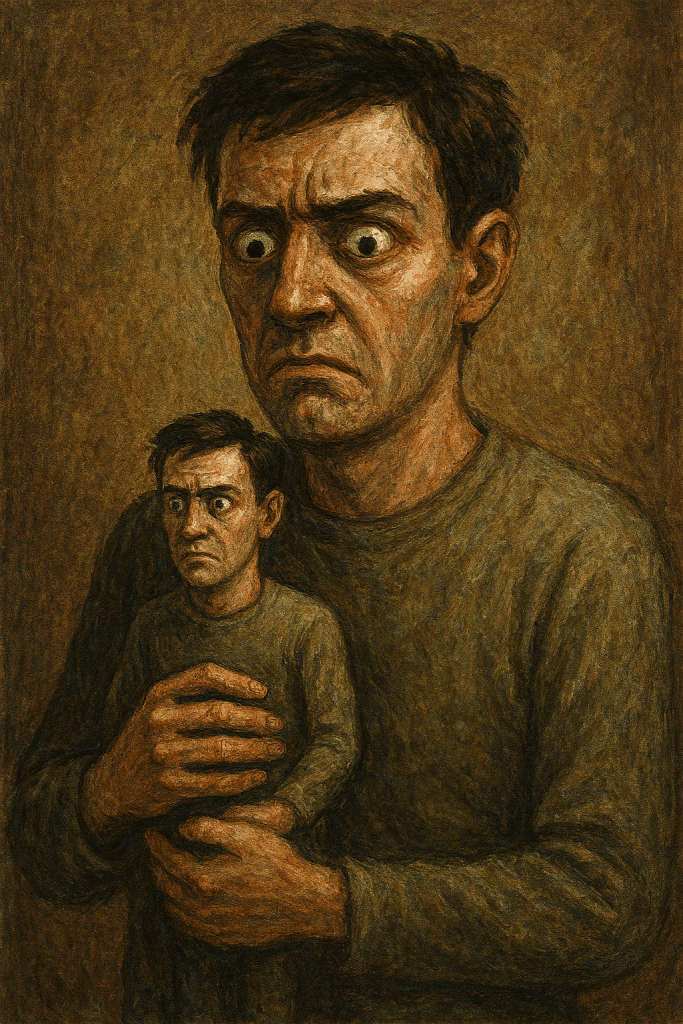
Our façade is nothing more than an over-compensation for the wound, where we pretend to be all the things that our wounds have told us we are not. In our childhood mind it seemed that we were denied connection and love because of these shortcomings, and so we end up with the false belief that we must project strengths in these areas to be worthy of that connection love.
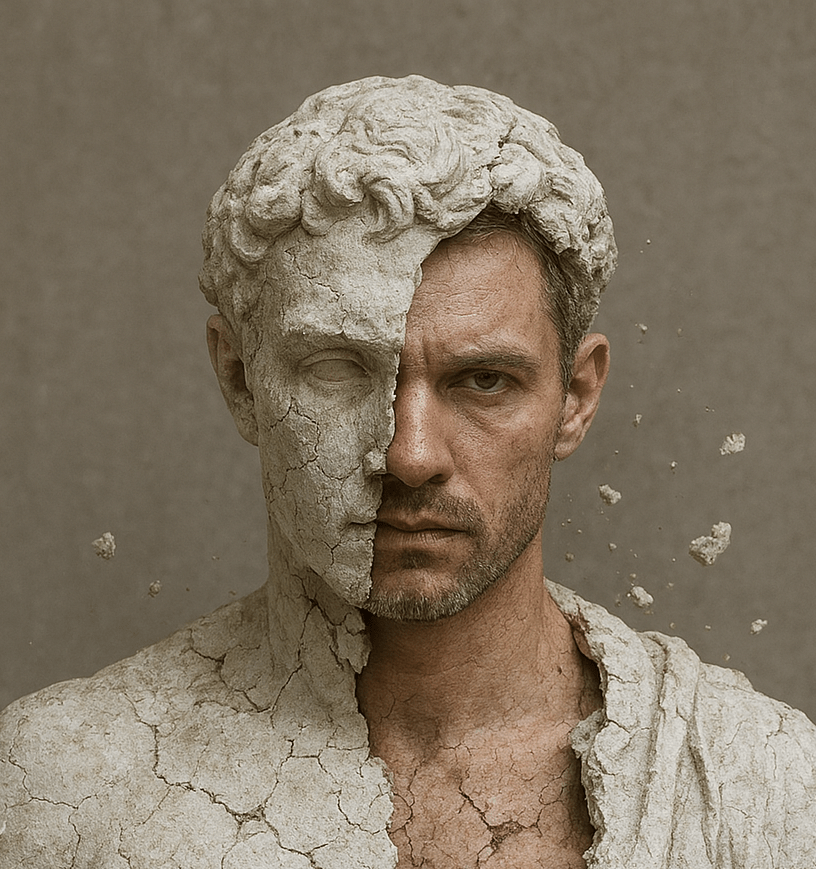
And so, the wound is a layer deeper than either the shame or the façade, but it is not the true core of who we are either. Defining ourselves based on our wound prevents us from living with truth and joy, same as identifying at the other two levels. There still remains a deeper layer to uncover.
In fact, the reason the wound hurts us so much, is because it is a direct assault at that deeper core. Our wounds put us on such a long and misguided path because they make us forget who we really are. They make us forget our own divine self.
1 Then Joseph could not refrain himself before all them that stood by him; and he cried, Cause every man to go out from me. And there stood no man with him, while Joseph made himself known unto his brethren.

2 And he wept aloud: and the Egyptians and the house of Pharaoh heard.

3 And Joseph said unto his brethren, I am Joseph; doth my father yet live? And his brethren could not answer him; for they were troubled at his presence.
I wonder how Joseph originally intended to reveal himself to his brothers. Perhaps if they had been willing to abandon Benjamin he never would have, except to his younger brother after they had left? Or maybe if they had tried to walk away, he would have revealed himself then and shut all the older brothers in prison?
In either case, whatever plans he did or did not have, it would seem everything was upended when he couldn’t hold his composure together any longer, and he calls for everyone to leave the room except his brothers.
There, alone with the rest of Jacob’s sons he takes off the mask. All this time they have known him only as the Egyptian prince Zaphnath-paaneah, but now he reclaims his true identity. “I am Joseph!” Then, though his brothers have already told him that Jacob still lives, he asks for confirmation of it one more time. This time he does not ask “does your father still live” but “does my father.”
The brothers, for their part, remain in stunned silence. When one holds a secret, it is a relatively small thing to them to uncover the truth of it. But to the one that has the secret revealed, it can be a major paradigm shift, a sense of one’s entire reality spinning to a new alignment. Thus, before any further conversation can continue, Joseph will first need to coax his brothers into accepting that their long-lost brother has returned to them again.






 Spiritual Wanderings