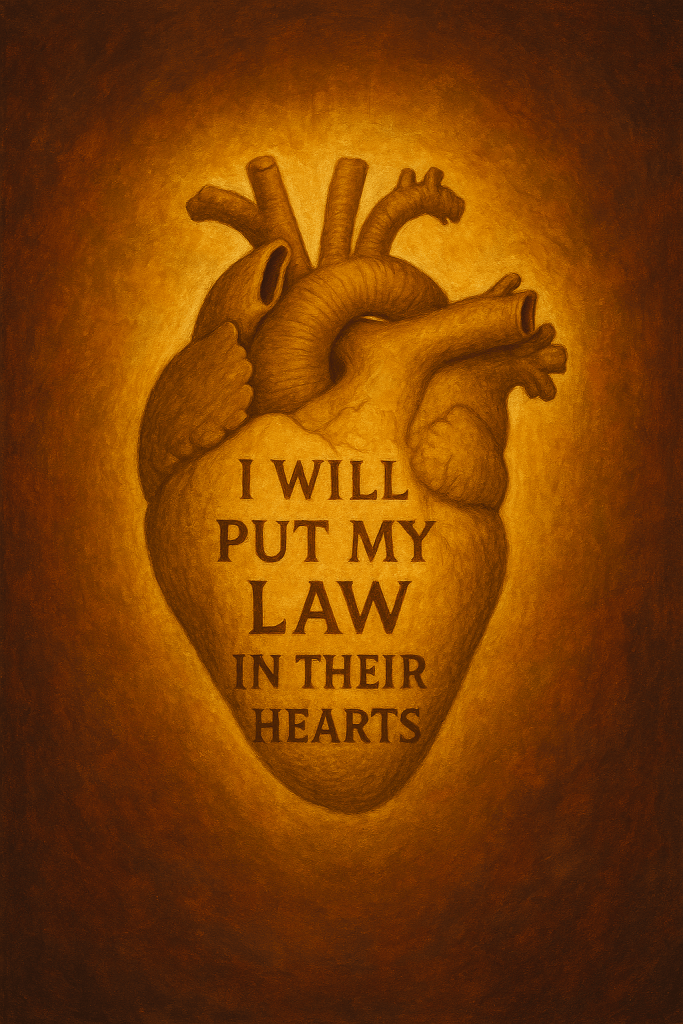
The laws of the land may be important
But the laws of the heart even more so
The laws of the land may be important
But the laws of the heart even more so
7 And I will take you to me for a people, and I will be to you a God: and ye shall know that I am the Lord your God, which bringeth you out from under the burdens of the Egyptians.

8 And I will bring you in unto the land, concerning the which I did swear to give it to Abraham, to Isaac, and to Jacob; and I will give it you for an heritage: I am the Lord.
God does not only promise the Israelites their freedom, but He also claims them as His own. “I will take you to me for a people, and I will be to you a God.” This was God re-establishing His special relationship to the current Israelite generation. He was creating with them the covenant and the union that He had with their forefathers.
Last of all, God also covenanted to bring the Israelites to the promised land that He had designated to their forefathers. God had promised this land as the eventual inheritance for Abraham’s children, but that had not yet been fulfilled. For many Israelites this promise wasn’t meant for them personally, but for some future generation. Now, though, God was saying that it was this generation was the first that could see the realization of these promises. It could be meant for them, not just their children. Though, as we will see, while the deliverance from Egypt was a sure promise, receiving the promised land was contingent upon their obedience. By their rebellion and faithlessness they would end up pushing the promised land back one more generation.
18 When that year was ended, they came unto him the second year, and said unto him, We will not hide it from my lord, how that our money is spent; my lord also hath our herds of cattle; there is not ought left in the sight of my lord, but our bodies, and our lands:

19 Wherefore shall we die before thine eyes, both we and our land? buy us and our land for bread, and we and our land will be servants unto Pharaoh: and give us seed, that we may live, and not die, that the land be not desolate.

20 And Joseph bought all the land of Egypt for Pharaoh; for the Egyptians sold every man his field, because the famine prevailed over them: so the land became Pharaoh’s.
First, the people spent all their money to purchase grain, then they gave up their flocks as well. But still the famine continued, and now they return a third time. The people confess that they have nothing else of traditional value to offer Pharaoh. All that remains are their lands and themselves. They must choose between death or giving over the last they have held in reserve.
On the one hand, buying the lands of these people is obviously a good business investment for Joseph. He knows that in time the famine will end, and so these lands will be an investment in the future. But on the other hand, there is also a generosity to his purchase. Who can say that the people were cheated by giving up barren fields that cannot produce crops for already-grown grain? He is taking of their barrenness and giving them of his plenty.
And in this we clearly see an allegory for our spiritual surrender to God. Many times we are not comfortable to give up all at once, but the hard times of the world compel us to surrender our autonomy bit-by-bit, giving Him our time, our resources, and the big decisions in our lives. We give to Him of our weakness, and He returns His strength for it instead. Finally, we give Him our all. Our hearts and souls, our undying servitude. In the next verses we will read a type for what God then does with our sacrifice.
 Spiritual Wanderings