A choice of integrity is a choice that I can live with for the long term and not hurt my conscience. If I am making a choice that I am willing to tolerate only for a time, but could not abide by permanently, then it is likely not a choice that I am making in integrity.
That is not to say that there cannot be changes of situation or perspective. It is possible to make one choice in integrity, and then with integrity change it afterward. It is also possible to recognize that one is entering a special season in life, and posture oneself accordingly, with the up-front understanding that after the season is over things will change.
But if from the outset I make a choice with the hope and expectation that those around me will change so that I do not have to abide by that choice any longer, then I have started without integrity. I am looking for outside sources to rescue me from my own decision, and that means I am making a violation against myself. I should not count on outside situations or people to change. I should ask myself what I would do from my conscience if they never changed, and the answer to that question is the choice of integrity.
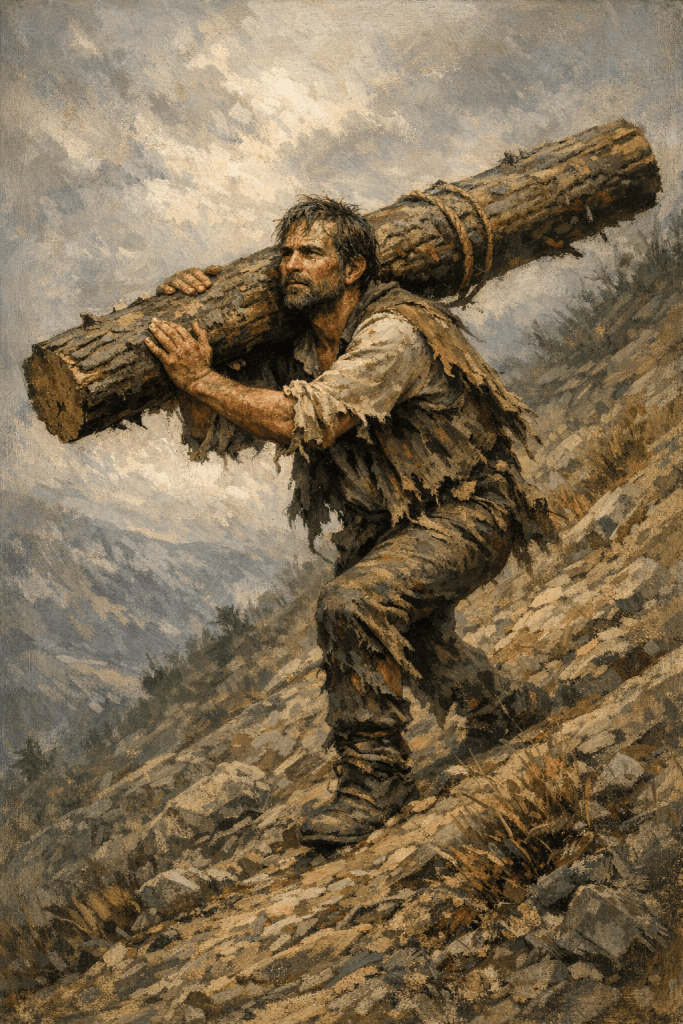
The best lessons in life must be painful, because the best lessons require us to change. If they didn’t require us to change, they couldn’t be as meaningful as those that did. And to change means, to some degree, breaking and rebuilding. And breaking and rebuilding is painful.
So, if we are going through lessons that are painful, but which are causing us to change, it’s not that we are doing something wrong, we’re actually doing it exactly right. It’s just that growth is hard. That change is painful. It always has been this way, and it always will be.
16 And the priest shall burn them upon the altar: it is the food of the offering made by fire for a sweet savour: all the fat is the Lord’s.

17 It shall be a perpetual statute for your generations throughout all your dwellings, that ye eat neither fat nor blood.
This chapter ends with an interesting aside, where the Lord gives a commandment to the Israelites. Parts of these animals were never to be consumed by the Israelites. The Israelites were forbidden from consuming the blood of the animal, and from eating the fat. And it doesn’t seem to be because these parts were unclean or evil, but because they instead belonged to the Lord.
From other verses it is made clear that the blood was seen as containing the life itself of the animal. It was the sacred, animating factor that turned the creature from a heap of flesh and bones to a moving, acting thing. The fat, being the richest part of the animal, represented passion, energy, and drive. Thus, the animating factor in our lives, and our passion, energy, and drive, are to be seen as belonging to the Lord, not ourselves. We should not give our passion and life to our own desires, but reserve them for the higher purposes of God.
I don’t think that is just about reserving the best of ourselves for God. That could certainly be a part of it, but I believe it is also because the forces of life and passion are too strong for us to handle on our own. They are simply too potent, too powerful. We become drunk on our own passion and we flail about, trying to find some well that is deep enough to hold them. And so, we end up indulging in addiction, gambling, unsafe sex, vanity, greed, endless partying, and false causes. They are attractive to us because they are bottomless pits that we can pour our life and passion into forever, never mind the fact that they are unworthy vessels.
Thousands of years ago God showed His people a different endless well that we could pour their lives and passion into: Him. Just as the Israelites were warned not to try and stomach the fat and blood of the animal, but to surrender it to God instead, we are meant to direct our greatest energy and vitality to His cause, and it will be for our own good.
2 And he shall lay his hand upon the head of his offering, and kill it at the door of the tabernacle of the congregation: and Aaron’s sons the priests shall sprinkle the blood upon the altar round about.

3 And he shall offer of the sacrifice of the peace offering an offering made by fire unto the Lord; the fat that covereth the inwards, and all the fat that is upon the inwards,

4 And the two kidneys, and the fat that is on them, which is by the flanks, and the caul above the liver, with the kidneys, it shall he take away.

5 And Aaron’s sons shall burn it on the altar upon the burnt sacrifice, which is upon the wood that is on the fire: it is an offering made by fire, of a sweet savour unto the Lord.
In the last post we discussed the difference in meaning between the Meat Offering and this Peace Offering. These different meanings are reflected in the different steps of the sacrifices, as we can see in today’s verses. For the Meat Offering, there was no death involved. The offeror merely gave some grain, or flour, or baked goods. The absence of a death would certainly help maintain the joyful levity that that offering represented. But with the Peace Offering a death was mandatory, which is much more fitting for the thoughtful and emotional themes of reconciliation to the Lord that the sacrifice represented.
The fact is that death is a necessary component for any reconciliation. It might be the death of the ego, where I finally put an end to my ideas and my behavior, letting them die, so that I can be reconciled to another. Or it might be the death of individuality, such as when a man marries a woman, and they lay to rest their solitary lives to begin a new one of unity. Certainly, it can also be the death of the Savior, who paid the ultimate price so that we can have ultimate oneness with God again.
And so, in this symbolic offering, a life is appropriately taken, and the fat of the animal, which represents its passions, its energy, and its drive, are laid on the altar and burned. The offeror gives up all these things to instead be subsumed into the Almighty.
At key points in life, you must choose between that which is most beneficial to you and that which you know to be right. You will have to decide if you follow your conscience, even when there is no reason to assume a positive outcome for yourself.

It only stands to reason, however, that if you ever want to live in the hands of the supernatural, beyond the confines of mortal logic, that at some point you must make a choice just like this. Earthly outcomes follow choices based on earthly evidence. If you ever want a heavenly outcome, at some point you must leap with nothing earthly in view to catch you.

Thus, watch for these moments where there is no evidence that things will work out well, and in those moments take courage in the knowledge that the lack of evidence is the greatest evidence of all.
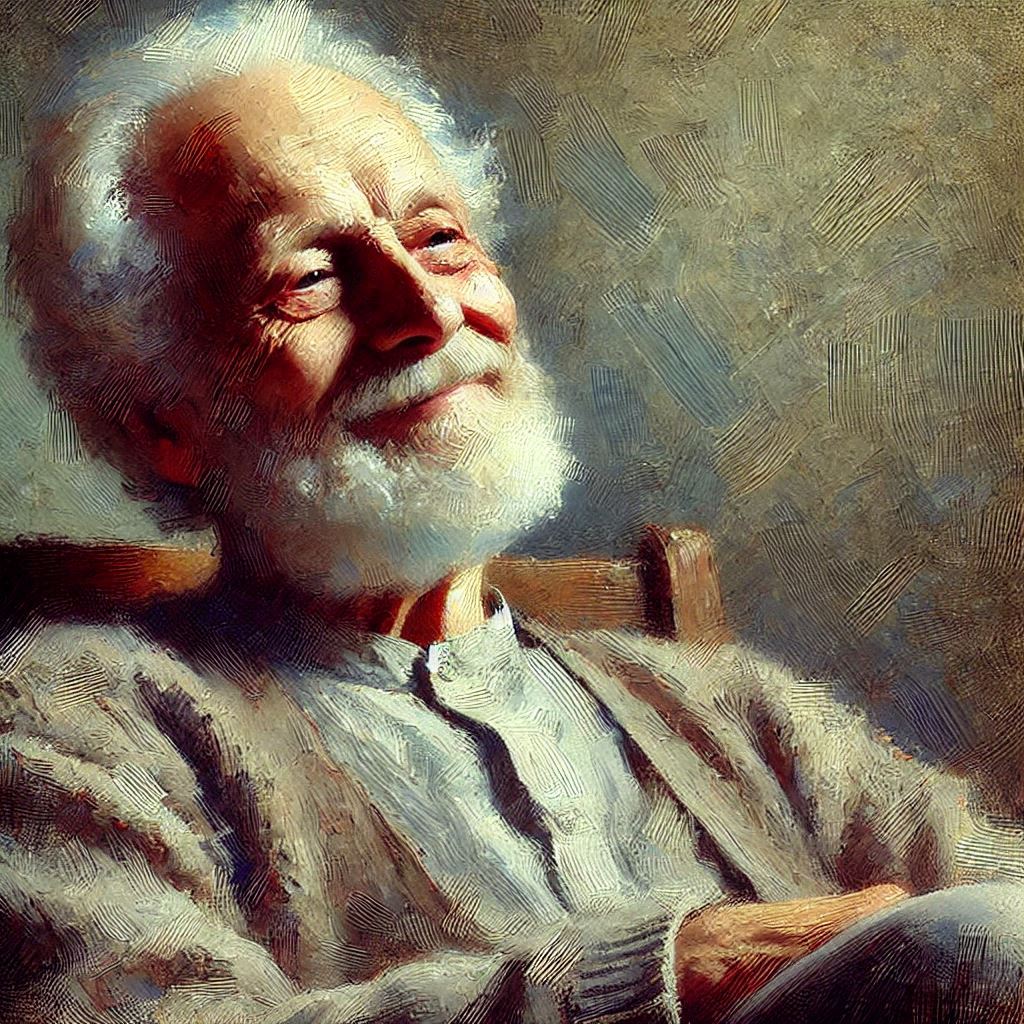
There is no specific accolade or achievement in this life that the gospel of Jesus Christ guarantees for me. It does guarantee, however, that my life will be optimal. It will be the most fulfilling of all the possible lives that I might have led. Even if that means it was still fraught with hardship and pain, it will at least be a life that I will be proud to have lived.
That might not seem like much to the naive, but for those that have realized that the default life has no such assurances, that promise is everything.

 Spiritual Wanderings