12 And his brethren went to feed their father’s flock in Shechem.

13 And Israel said unto Joseph, Do not thy brethren feed the flock in Shechem? come, and I will send thee unto them. And he said to him, Here am I.

14 And he said to him, Go, I pray thee, see whether it be well with thy brethren, and well with the flocks; and bring me word again. So he sent him out of the vale of Hebron, and he came to Shechem.
So begins the great journey of Joseph. An innocuous errand will lead to his entire life being changed. Unlike his father and great-grandfather, Joseph didn’t know that he was about to leave his home. He had no bag packed and had said no goodbyes. He was plucked out mid-stride and against his will.
I also am noticing in these verses how the story of Joseph is representative of the savior. A father sends his favored son as a representative to his other children. The son comes to see whether his brothers have properly cared for their flocks, or have gone astray, and the brothers respond by trying to destroy him. But their attempt is in vain, for in both cases the favored son is led through the tragedy to fulfilling his great purpose.
So no, Joseph was not anticipating the detour that awaited him, but as terrible as his fate may have seemed for a time, God was in it, and it all worked out for the greater good.
5 And God saw that the wickedness of man was great in the earth, and that every imagination of the thoughts of his heart was only evil continually.

6 And it repented the Lord that he had made man on the earth, and it grieved him at his heart.

7 And the Lord said, I will destroy man whom I have created from the face of the earth; both man, and beast, and the creeping thing, and the fowls of the air; for it repenteth me that I have made them.
There have been many that struggle with the notion of a loving God who has destroyed swaths of humanity. For whatever reason, this has never been much of a concern for me. I have a sense that God made my life and He has the divine right to extinguish it at any time. I’m honestly okay with that, and by extension I’m willing to surrender the fate of all mankind into His hands as well. That doesn’t mean I know why He does all the things that He does, but I’m okay with it. I’ve already seen Him extend immense mercy to me that I wasn’t deserving of, so I’m not afraid that He is being unfair or cruel to my brothers or sisters either.
I will say, though, that the Old Testament seems to represent a fundamentally different time from the one we live in today. I get the sense that things took a drastic shift after Jesus came and performed the atoning sacrifice, providing a space between sin and consequence, a place that mercy could be more freely applied. I do believe that God has always been a loving God, that He is unchanging, but that the systems in between Him and us do change.
Forgiveness is realizing that we have picked the wrong back up and letting it go once more.
Forgiveness is recognizing all the many times thereafter that the wrong is still in our hands, perhaps over and over throughout our entire lives, and each time letting it go.
22 And the Lord God said, Behold, the man is become as one of us, to know good and evil: and now, lest he put forth his hand, and take also of the tree of life, and eat, and live for ever:

23 Therefore the Lord God sent him forth from the garden of Eden, to till the ground from whence he was taken.

24 So he drove out the man; and he placed at the east of the garden of Eden Cherubims, and a flaming sword which turned every way, to keep the way of the tree of life.
Verse 22 suggests that if Adam and Eve had eaten of the tree of life at this point they would have become immortal, which would mean living forever in their fallen state. It was therefore a great act of mercy that God drove them from that temptation and placed a guard over it.
This notion of living forever has obsessed man ever since. For millennia we have told of the Fountain of Youth, of the Nectar of the Gods, and more recently of medications and de-aging practices that stretch this short life out longer and longer. We may have all manner of pain in this life, but the notion of losing it still terrifies us, and we would give anything to escape that end.
Of course God promises us that death is only a portal to something better. He assures that a short walk into the dark gives way to a bright light at the other end. But it takes great faith to trust in that, and all of us have days where we would trade God’s promise of heaven for Eden’s tree of life. We would limit ourselves to eternity in the fallen world if given the chance. And this is perhaps the ultimate struggle we face. Learning to stop clutching to our world of pain, letting go of control, and just trusting that we will be caught in unseen glories.
17 And unto Adam he said, Because thou hast hearkened unto the voice of thy wife, and hast eaten of the tree, of which I commanded thee, saying, Thou shalt not eat of it: cursed is the ground for thy sake; in sorrow shalt thou eat of it all the days of thy life;

18 Thorns also and thistles shall it bring forth to thee; and thou shalt eat the herb of the field;

19 In the sweat of thy face shalt thou eat bread, till thou return unto the ground; for out of it wast thou taken: for dust thou art, and unto dust shalt thou return.
Here Adam is told of a cursed earth, of hard labor and sweat before having any bread, of a war against the land just to live, and this description fits my native land perfectly. I live in central Utah, the middle of a desert, where it is possible to grow fruits and vegetables and trees…but it is not easy. Today we cheat and import richer dirt and foreign plants to help us out, but my progenitors extracted their lives from the land inch-by-inch.
And even in the more flourishing parts of the world there is still a strong sense of strife in nature. Consider the monarch butterfly, which has a symbiotic relationship with the milkweed plant. The monarch butterfly, when still a caterpillar, feeds exclusively on the plant’s leaves, and after transforming into a butterfly pollenates its flowers. Neither can live without the other.
But also each kills the other by the thousands! The caterpillars have a ravenous appetite, and consume and destroy vast numbers of the milkweed plants as they grow. They would overrun the species entirely if it weren’t for the fact that the plants lethally defend themselves. They secrete a sap that drowns massive numbers of the caterpillars when they are still young, cutting their numbers to a mere fraction! These two parts of nature may rely on one another to live, but there is still a great, mortal strife between them, and this is a common theme in nature: life, but only through a heavy, struggling burden.
In sorrow shalt thou eat. Thorns and thistles. We raise out of the dust, we struggle until we can struggle no longer, then we collapse back into the dust. It is a bleak life, to be sure, but it is still a life.
20 And God said, Let the waters bring forth abundantly the moving creature that hath life, and fowl that may fly above the earth in the open firmament of heaven.

21 And God created great whales, and every living creature that moveth, which the waters brought forth abundantly, after their kind, and every winged fowl after his kind: and God saw that it was good.

22 And God blessed them, saying, Be fruitful, and multiply, and fill the waters in the seas, and let fowl multiply in the earth.

24 And God said, Let the earth bring forth the living creature after his kind, cattle, and creeping thing, and beast of the earth after his kind: and it was so.
There is an undeniable joyousness to God’s creation. “Bring forth abundantly,” “fowl that may fly above the earth,” “be fruitful, and multiply”…in these I hear a command to spread out, to explore, to uncover the beauty that God has hidden in nature.
Notice in these verses how God created the sea and populated it with vibrant life, the skies and populated it with vibrant life, the earth and populated it with vibrant life. He wanted every nook and cranny of His creation to be appreciated and adorned with life, and He instructed that life to propagate and fill the whole space around it.
After the fall animal life would become defined by a vicious struggle of life-and-death, a survival that was based on the termination of others. But as originally designed, life was meant to be a peaceful, joyful flourish.
14. And God said, Let there be lights in the firmament of the heaven to divide the day from the night; and let them be for signs, and for seasons, and for days, and years:

15 And let them be for lights in the firmament of the heaven to give light upon the earth: and it was so.

16 And God made two great lights; the greater light to rule the day, and the lesser light to rule the night: he made the stars also.
It amuses me how casual the wording is in these verses when describing the creation of worlds without number! You know, God just put some lights in the sky, simple as a parent painting stars on the bedroom ceiling, right? The phrase “he made the stars also” doesn’t begin to capture the magnitude of a hundred billion stars in our galaxy alone, each of them an entire world or star, each meticulously suspended by a complex web of gravity. And all of it described as little more than set dressing to the other work of creation that was happening down on Earth, a garnish to the main course.
And perhaps there is some truth to that, for as incredible as massive bodies of rock and gas in infinite space might be, they are surpassed by the wonder and intricacy of plants, animals, and people. When we turn from looking to the heavens above to the world around us we find the careful balance of nature, the micro-universes of cells and proteins, and the inexplicable miracle called “life” which animates it all. God’s crowning achievement of creation is not to be found in the vastness of space, but within us smaller things.
2. And the earth was without form, and void; and darkness was upon the face of the deep. And the Spirit of God moved upon the face of the waters.
Here we see the natural state of this world: without form, void, darkness upon the face of the deep. It wasn’t for millennia after this passage was written that science became aware of entropy, the phenomenon that suggests the entire universe, if left to its natural devices, will dissolve itself into a evenly distributed, stagnant void. Everything will be made uniform until there remains no variety, and with in no variety there is also no catalyst or process. That fits the description of this verse remarkably well, doesn’t it?
Life and individuality can only occur as God moves upon the face of this world. He doesn’t just make our existence good, He makes it possible.
And then, just like that, I’m two years into writing this blog! This has certainly been a tumultuous year in the world, and it has been a dramatic year in my personal life as well. Many good things have happened for me and my family: changing jobs, moving to a new house, and getting used to having a new baby in the home, but each of these good things have also disrupted my regular routines, leaving me longing for a sense of consistency.
And during all of that disruption this spiritual study has been one of those pillars of consistency that I have come to rely on. Tethering myself to the regular practice of spiritual devotion has helped me fight the tide of distraction, to push against the temptation to give up my self-care and balance until things are more “normal.” I haven’t been perfect at maintaining my course, but I have definitely been better if I didn’t have these practices to anchor my soul.
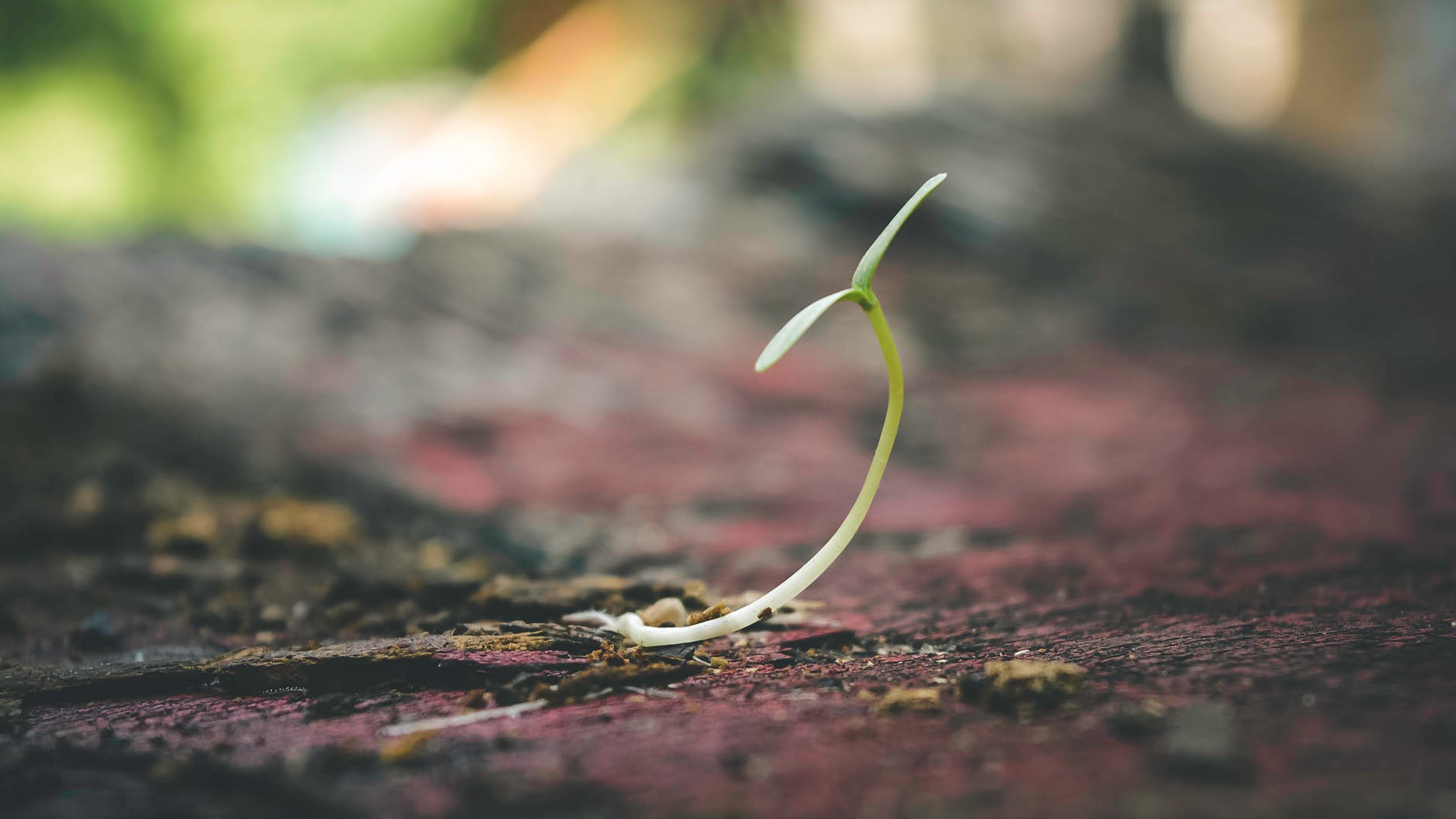
My great hope is that the third year of this spiritual study will see me putting roots deep once more and moving from a state of survival to flourishing.
Statistics)
Throughout this year I added 275 entries to this blog, bringing my total up to 565. Those made up 18 new essays, bringing that total up to 51, and 12 monthly updates on how I am trying to make the gospel be more alive in my life. This blog has been picked up in 12 new countries during the last year, resulting in a worldwide spread of 55 countries in all.
Moving Forward)
Each of these anniversaries provides me an excellent opportunity to examine what is working well in my spiritual journey and what could be improved. I have spent some time thinking it over this last week and I have decided that it will be best for me to make a few changes to this blog.
Daily Study)
I have been researching specific topics for two years now, putting together a collection of scriptures and life lessons that convey a single, focused message. I like this style of scripture study and I will surely return to it from time-to-time. Lately, though, I have felt a need to shift from hunting out scriptures to fit into a predetermined category, and to instead let them speak for themselves. I want to take some time to just read them in their own context, allowing them to convey just the messages that they want to convey.
To that end I will discontinue the topical studies for a time and instead shift to a more sequential study. I will read through the scriptures chapter-by-chapter, verse-by-verse, making commentary on the lessons that stand out to me from them. I will not force myself to provide commentary where I have none. I expect that some passages of scripture will be very dense in the impressions that they make on me while others will be sparse. That is alright.
Now from time-to-time I would expect that a category of the gospel will weigh heavily upon me, and when that occurs I will pause my sequential study, get on my soap box, and conduct a topical study on that matter. After that it will be back to the regular, sequential study, at least until I feel the need to change my processes again.
Monthly Check-ins)
Last year I began a practice of checking my pulse spiritually and deciding where I needed to improve my daily practices. I do see great value in this self-analysis, and I do intend to continue it privately, but I will not continue to publicly post the results of those introspections.
It is not that I am opposed to sharing parts of one’s personal journey. I believe that vulnerability is an essential part of shining our light to the world. But I also believe that we typically don’t know which are the truly significant moments of our lives until after the fact, when we look back at all the events as a whole. I feel like taking time to chronicle all the little ebbs and flows of life is actually distracting me from the broader, more significant strokes of my development.
So for the time being I will limit the publicizing of my life lessons to the times that they specifically relate to the topic of my regular, daily scripture study.
Thank You)
Thank you once again for being a part of this journey. Each of us has a very personal, very individual path to walk which no one else can walk for us, but that doesn’t mean that we cannot have accompaniment along the way. You may not be able to take my steps for me, but you can be beside me as I take them.
I thank you for that accompaniment, and I hope that in some way my words convey my companionship with you on your private walk as well. God bless you.

 Spiritual Wanderings