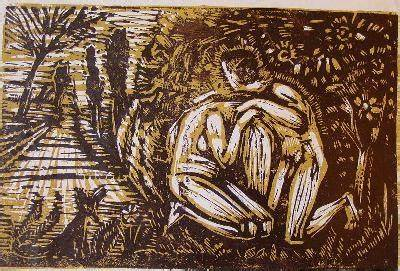
Layers of Man- The Façade

And the eyes of them both were opened, and they knew that they were naked; and they sewed fig leaves together, and made themselves aprons. - Genesis 3:7

You will never know most of the people you meet.

A strange sentiment perhaps, seemingly paradoxical, but it is completely true. Put another way, for most of the people in your life, you will never interact with the actual them, only with their mask. You will only ever know the surface-level, carefully-doctored, phony personality that they are making a conscious effort to project.

Like Adam and Eve, we make aprons. We hide who we really are behind a layer of fashion. A fashion that we hope will make us attractive to the people that we want to like us.

And this phenomenon hasn’t gone unnoticed. We so often complain about how fake everybody seems and how we crave relationships that are more real. But at the same time, we tend to downplay how much we’re playing the exact same game ourselves. Even criticizing the phoniness in others can itself be a social fashion.

Every way of a man is right in his own eyes - Proverbs 21:2

Or how wilt thou say to thy brother, Let me pull out the mote out of thine eye; and, behold, a beam is in thine own eye? - Matthew 7:4

The reason why so many of us don’t realize how much we are projecting our own façade is because we are the ones being fooled the most by it! We pretend to be a particular way for so long that we actually start to believe that is who we really are!

And then we must defend whatever principles and ideologies our delusion is based upon, as any challenge to them might tumble down our entire house of cards. This is what divides our culture into isolated echo chambers, where we surround ourselves with people that show the same façade we are trying to project, we become saturated with their dogma, and then we attack anyone whose façade is at odds with our own. We’ll pick apart all their flaws while ignoring our own, and the whole time we’ll believe that we are standing for what is right and virtuous. In reality, it is only self-preservation.

This cycle, unfortunately, can continue forever. All of our façades are fundamentally flawed in one way or another, and thus each is deserving of criticism, and thus there will always be an easy avenue to tear one another down. The only way to break out of this cycle is to finally admit that our façade is a façade and that it is beneath us.

Because the foolishness of God is wiser than men; and the weakness of God is stronger than men. - 1 Corinthians 1:25

And he looked up, and saw the rich men casting their gifts into the treasury. And he saw also a certain poor widow casting in thither two mites. - Luke 21:1-2

One of the greatest curses that could ever be wished upon someone is that their façade would be good enough and consistent enough for them to never have to challenge it. Continuing to identify with this superficial layer, believing that this who they really and truly are, will stunt any person’s growth. Most of us will never call it quits on our game of pretend until it completely and utterly fails us, so as long as we’re able to be somewhat happy, somewhat secure, and somewhat wealthy we will never have a reason to disrupt the status quo.

And what a terrible fate that would be, for it would forever keep us living in the lower echelons of existence. The wisest and strongest we could ever make ourselves is still superseded by the most simple and weak of God. The uneducated and frail woman who gave her two mites was living a more complete and joyful life than the learned and powerful rulers who made a great show of giving their riches. Authentic living, even of the humblest variety, trumps inauthentic living, even at its most extravagant.

Many the addict has learned to be grateful for their life-destroying vice, because hitting rock bottom was what finally brought them to drop their façade and start living with actual authenticity. To have not been destroyed might have meant to never truly live.

***

But what about for me personally? What has been my go-to façade, what are its strengths and weaknesses, and why wasn’t it enough to keep me content in life? The way I try to come across is extremely intelligent and incredibly nice. Let’s look at each of these qualities one at a time.

Intelligent)

I want people to know that I know things, and I will absolutely pretend to know more than I really do. I will also carefully avoid conversations that might reveal my ignorance in a particular area.

I work in a highly technical field, and when other people start throwing out jargon that I don’t know, I feel very uncomfortable about my ignorance. I try to glean enough context to give an intelligible response, all the while terrified of being found out as a fraud. My great hope is that I will be able to continue the illusion of knowing everything that I need to know and having many wise insights to offer.

Nice)

But I don’t want to be seen as too full of myself. I want to be recognized as smart, but not conceited. So, I also make myself into quite the people-pleaser. I defer on my own preferences and opinions, give everyone the benefit of the doubt, and never say a bad word about anyone.

I’m also very careful to do all of the things I’m supposed to be doing as a good person. I go to church, I pay my taxes, and I am never to be seen in a disreputable establishment! I want people to know that they can depend on me to be just the sort of guy that they think I am. The sort who quietly handles all his own struggles without being a bother to anyone.

Now obviously, not all of these qualities are bad things, and not all of them are totally fake. In some areas of life, I really am intelligent, and I really can be very kind. But I’ve taken these natural qualities and I’ve overinflated them. At some points I’ve embellished them with outright lies.

Some of these behaviors are outright unhealthy, such as always deferring my own preferences. Some of them are unhealthy simply because they are coming from an inauthentic place, such as when I listen closely to what someone else is saying and give a meaningful response, but only so they will know what a great guy I really am.

But if I genuinely do have some good qualities, why do I feel the need to exaggerate and pretend? We’ll get more into that as we continue this study, but the short answer is because my basic goodness was wounded at some point, and I concluded that it wasn’t good enough. I was smart, but not smart enough. I was thoughtful, but I wasn’t thoughtful enough. Someone told me I had failed to measure up and I had to do better.

Not only that, but hidden away, beneath my phony exterior, my vices were rapidly growing. The façade had to stretch to cover all the parts I didn’t want to be seen. The more secret shame I had, the more I had to shore it up with pretended goodness on the other side.

And this, of course, brings us to the next layer of the human soul: shame. When a person makes a decision to start living an authentic life, the first thing they usually bring to light is the naked shame that hides beneath the fancy costume. Tomorrow we will uncover this layer, but we will do so with kindness and understanding.

Scriptural Analysis- Genesis 39:1-4

1 And Joseph was brought down to Egypt; and Potiphar, an officer of Pharaoh, captain of the guard, an Egyptian, bought him of the hands of the Ishmeelites, which had brought him down thither.

2 And the Lord was with Joseph, and he was a prosperous man; and he was in the house of his master the Egyptian.

3 And his master saw that the Lord was with him, and that the Lord made all that he did to prosper in his hand.

4 And Joseph found grace in his sight, and he served him: and he made him overseer over his house, and all that he had he put into his hand.

We come to know very little of Potiphar. We will read multiple quotes from his unnamed wife, but never a word from him. His account in this story has only to do with how he relates to Joseph. And that is the focus of today’s verses. We come to see that whatever Joseph did in the house of Potiphar, that work was made to prosper. Potiphar recognized this, and put more and more under Joseph’s control, until the entire household was his to run. Here we see the beginning of Joseph’s dreams being fulfilled, the one which showed his sheaf rising above all others. He had blessed hands, and whatever work he did started bearing great fruit.

And frankly, at this point life seems like it was pretty good for Joseph. In fact, one in Joseph’s position might be tempted to think that this elevated position was already the fulfillment of what God had promised, and not look for anything greater. But as we will see, this is but a shadow of the true adventure God had in store for Joseph.

Many times we also reach moments in life where things are pretty good, and we become satisfied. We run the risk of forever staying there, rather than living the truly grand adventure God intended. And that is why life sometimes has to disrupt our station, just as it will soon disrupt Joseph’s. It may seem a cruel turn of fate at the time, but it is actually meant to lead to better things.

Scriptural Analysis- Genesis 37:12-14

12 And his brethren went to feed their father’s flock in Shechem.

13 And Israel said unto Joseph, Do not thy brethren feed the flock in Shechem? come, and I will send thee unto them. And he said to him, Here am I.

14 And he said to him, Go, I pray thee, see whether it be well with thy brethren, and well with the flocks; and bring me word again. So he sent him out of the vale of Hebron, and he came to Shechem.

So begins the great journey of Joseph. An innocuous errand will lead to his entire life being changed. Unlike his father and great-grandfather, Joseph didn’t know that he was about to leave his home. He had no bag packed and had said no goodbyes. He was plucked out mid-stride and against his will.

I also am noticing in these verses how the story of Joseph is representative of the savior. A father sends his favored son as a representative to his other children. The son comes to see whether his brothers have properly cared for their flocks, or have gone astray, and the brothers respond by trying to destroy him. But their attempt is in vain, for in both cases the favored son is led through the tragedy to fulfilling his great purpose.

So no, Joseph was not anticipating the detour that awaited him, but as terrible as his fate may have seemed for a time, God was in it, and it all worked out for the greater good.

Scriptural Analysis- Genesis 6:5-7

5 And God saw that the wickedness of man was great in the earth, and that every imagination of the thoughts of his heart was only evil continually. 

6 And it repented the Lord that he had made man on the earth, and it grieved him at his heart.

7 And the Lord said, I will destroy man whom I have created from the face of the earth; both man, and beast, and the creeping thing, and the fowls of the air; for it repenteth me that I have made them.

There have been many that struggle with the notion of a loving God who has destroyed swaths of humanity. For whatever reason, this has never been much of a concern for me. I have a sense that God made my life and He has the divine right to extinguish it at any time. I’m honestly okay with that, and by extension I’m willing to surrender the fate of all mankind into His hands as well. That doesn’t mean I know why He does all the things that He does, but I’m okay with it. I’ve already seen Him extend immense mercy to me that I wasn’t deserving of, so I’m not afraid that He is being unfair or cruel to my brothers or sisters either.

I will say, though, that the Old Testament seems to represent a fundamentally different time from the one we live in today. I get the sense that things took a drastic shift after Jesus came and performed the atoning sacrifice, providing a space between sin and consequence, a place that mercy could be more freely applied. I do believe that God has always been a loving God, that He is unchanging, but that the systems in between Him and us do change.

Thought for the Day- Forgiveness

Forgiveness is letting go of the wrong.

Forgiveness is realizing that we have picked the wrong back up and letting it go once more.

Forgiveness is recognizing all the many times thereafter that the wrong is still in our hands, perhaps over and over throughout our entire lives, and each time letting it go.

Scriptural Analysis- Genesis 3:22-24

22 And the Lord God said, Behold, the man is become as one of us, to know good and evil: and now, lest he put forth his hand, and take also of the tree of life, and eat, and live for ever:

23 Therefore the Lord God sent him forth from the garden of Eden, to till the ground from whence he was taken.

24 So he drove out the man; and he placed at the east of the garden of Eden Cherubims, and a flaming sword which turned every way, to keep the way of the tree of life.

Verse 22 suggests that if Adam and Eve had eaten of the tree of life at this point they would have become immortal, which would mean living forever in their fallen state. It was therefore a great act of mercy that God drove them from that temptation and placed a guard over it.

This notion of living forever has obsessed man ever since. For millennia we have told of the Fountain of Youth, of the Nectar of the Gods, and more recently of medications and de-aging practices that stretch this short life out longer and longer. We may have all manner of pain in this life, but the notion of losing it still terrifies us, and we would give anything to escape that end.

Of course God promises us that death is only a portal to something better. He assures that a short walk into the dark gives way to a bright light at the other end. But it takes great faith to trust in that, and all of us have days where we would trade God’s promise of heaven for Eden’s tree of life. We would limit ourselves to eternity in the fallen world if given the chance. And this is perhaps the ultimate struggle we face. Learning to stop clutching to our world of pain, letting go of control, and just trusting that we will be caught in unseen glories.

Scriptural Analysis- Genesis 3:17-19

17 And unto Adam he said, Because thou hast hearkened unto the voice of thy wife, and hast eaten of the tree, of which I commanded thee, saying, Thou shalt not eat of it: cursed is the ground for thy sake; in sorrow shalt thou eat of it all the days of thy life;

18 Thorns also and thistles shall it bring forth to thee; and thou shalt eat the herb of the field;

19 In the sweat of thy face shalt thou eat bread, till thou return unto the ground; for out of it wast thou taken: for dust thou art, and unto dust shalt thou return.

Here Adam is told of a cursed earth, of hard labor and sweat before having any bread, of a war against the land just to live, and this description fits my native land perfectly. I live in central Utah, the middle of a desert, where it is possible to grow fruits and vegetables and trees…but it is not easy. Today we cheat and import richer dirt and foreign plants to help us out, but my progenitors extracted their lives from the land inch-by-inch.

And even in the more flourishing parts of the world there is still a strong sense of strife in nature. Consider the monarch butterfly, which has a symbiotic relationship with the milkweed plant. The monarch butterfly, when still a caterpillar, feeds exclusively on the plant’s leaves, and after transforming into a butterfly pollenates its flowers. Neither can live without the other.

But also each kills the other by the thousands! The caterpillars have a ravenous appetite, and consume and destroy vast numbers of the milkweed plants as they grow. They would overrun the species entirely if it weren’t for the fact that the plants lethally defend themselves. They secrete a sap that drowns massive numbers of the caterpillars when they are still young, cutting their numbers to a mere fraction! These two parts of nature may rely on one another to live, but there is still a great, mortal strife between them, and this is a common theme in nature: life, but only through a heavy, struggling burden.

In sorrow shalt thou eat. Thorns and thistles. We raise out of the dust, we struggle until we can struggle no longer, then we collapse back into the dust. It is a bleak life, to be sure, but it is still a life.

Scriptural Analysis- Genesis 1:20-22, 24

20 And God said, Let the waters bring forth abundantly the moving creature that hath life, and fowl that may fly above the earth in the open firmament of heaven.

21 And God created great whales, and every living creature that moveth, which the waters brought forth abundantly, after their kind, and every winged fowl after his kind: and God saw that it was good.

22 And God blessed them, saying, Be fruitful, and multiply, and fill the waters in the seas, and let fowl multiply in the earth.

24 And God said, Let the earth bring forth the living creature after his kind, cattle, and creeping thing, and beast of the earth after his kind: and it was so.

There is an undeniable joyousness to God’s creation. “Bring forth abundantly,” “fowl that may fly above the earth,” “be fruitful, and multiply”…in these I hear a command to spread out, to explore, to uncover the beauty that God has hidden in nature.

Notice in these verses how God created the sea and populated it with vibrant life, the skies and populated it with vibrant life, the earth and populated it with vibrant life. He wanted every nook and cranny of His creation to be appreciated and adorned with life, and He instructed that life to propagate and fill the whole space around it.

After the fall animal life would become defined by a vicious struggle of life-and-death, a survival that was based on the termination of others. But as originally designed, life was meant to be a peaceful, joyful flourish.

Scriptural Analysis- Genesis 1:14-16

14. And God said, Let there be lights in the firmament of the heaven to divide the day from the night; and let them be for signs, and for seasons, and for days, and years:

15 And let them be for lights in the firmament of the heaven to give light upon the earth: and it was so.

16 And God made two great lights; the greater light to rule the day, and the lesser light to rule the night: he made the stars also.

It amuses me how casual the wording is in these verses when describing the creation of worlds without number! You know, God just put some lights in the sky, simple as a parent painting stars on the bedroom ceiling, right? The phrase “he made the stars also” doesn’t begin to capture the magnitude of a hundred billion stars in our galaxy alone, each of them an entire world or star, each meticulously suspended by a complex web of gravity. And all of it described as little more than set dressing to the other work of creation that was happening down on Earth, a garnish to the main course.

And perhaps there is some truth to that, for as incredible as massive bodies of rock and gas in infinite space might be, they are surpassed by the wonder and intricacy of plants, animals, and people. When we turn from looking to the heavens above to the world around us we find the careful balance of nature, the micro-universes of cells and proteins, and the inexplicable miracle called “life” which animates it all. God’s crowning achievement of creation is not to be found in the vastness of space, but within us smaller things.