We live in a world of artificial lights. They have become so ubiquitous that we can hardly fathom life without them. Some live every day with hardly any exposure to the sun at all. They do not need it. And all is well…so long as the lights stay on.
But one day, the electricity will be cut, and it will not come back on. And then we will remember the horror of the dark, and why we never outgrew the need for the sun.
9 Command Aaron and his sons, saying, This is the law of the burnt offering: It is the burnt offering, because of the burning upon the altar all night unto the morning, and the fire of the altar shall be burning in it.
Today begins a new section of ritual instructions. This part is related to the perpetual burnt offering that the priests were to offer through the whole night. At the close of the day, after the needs of the common Israelite had been seen to, the priests would make one more overnight burnt offering.
This is presumably a repeat of the command we already read in Exodus, in which a lamb was to be offered each night, and another lamb each morning. There are multiple meanings and symbols to be found in this practice. In my previous post on the subject, I noted how the perpetual offering can be seen as representing the path of the disciple, largely defined by its daily, quiet surrender to the Lord.
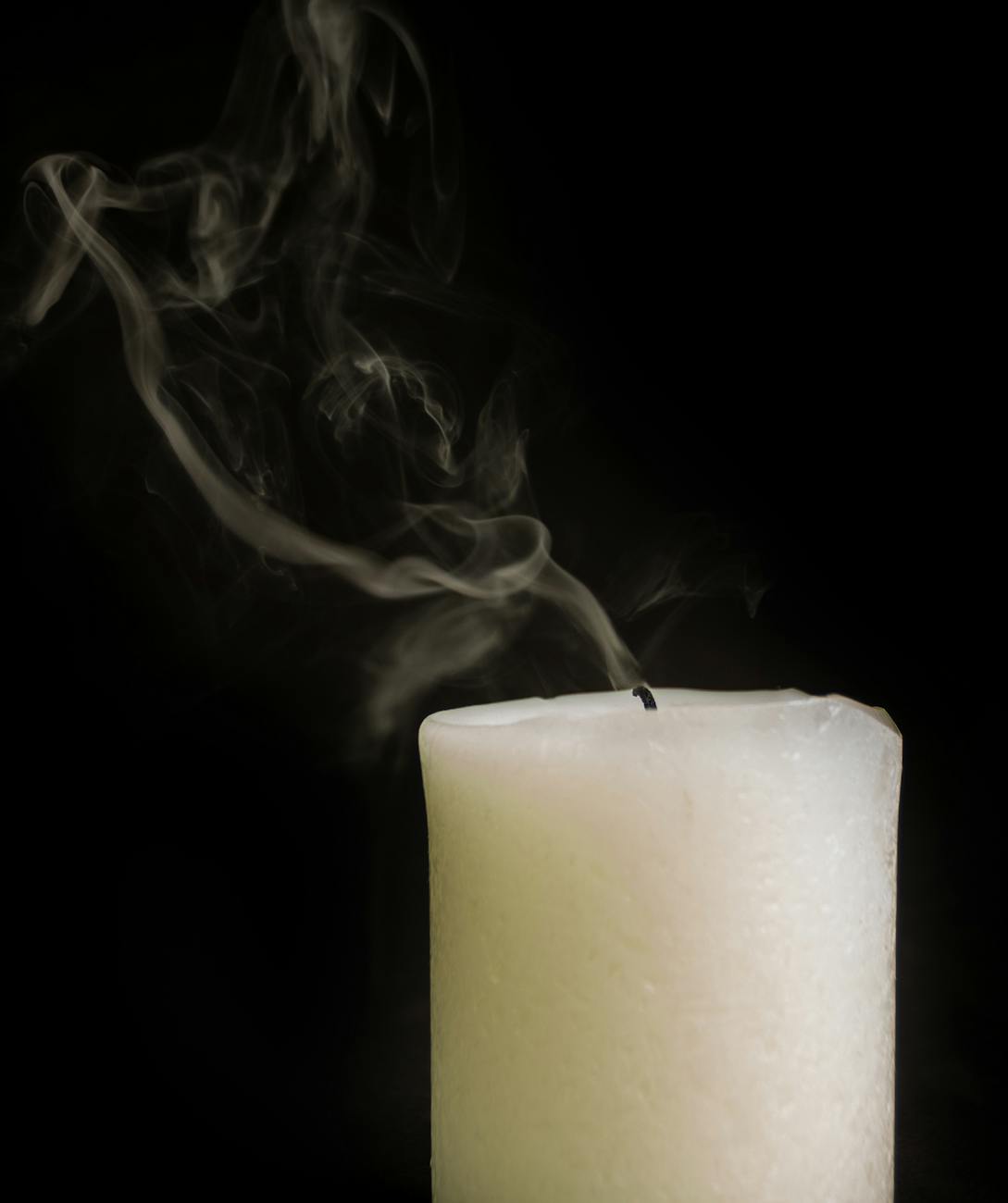
Another symbol is that even when the world would go dark, the perpetual flame of the Lord’s altar would still be burning, still providing a mark and a guide to God’s people. So, too, when the world becomes confused and apostate, the Spirit of the Lord can still guide us through the dark.
A third symbol is the sacrifice of a lamb closing one period of time and also ushering in the beginning of a new one. This seems to echo the change from the Old Testament to the New, where John the Baptist, the last Old Testament prophet, was slain at the close of one era, and Jesus was slain to usher in the next.
14 And he made curtains of goats’ hair for the tent over the tabernacle: eleven curtains he made them.

15 The length of one curtain was thirty cubits, and four cubits was the breadth of one curtain: the eleven curtains were of one size.

16 And he coupled five curtains by themselves, and six curtains by themselves.

17 And he made fifty loops upon the uttermost edge of the curtain in the coupling, and fifty loops made he upon the edge of the curtain which coupleth the second.

18 And he made fifty taches of brass to couple the tent together, that it might be one.

19 And he made a covering for the tent of rams’ skins dyed red, and a covering of badgers’ skins above that.
The previous post detailed Bezaleel’s creation of the linen covering, which was the innermost layer, the one that was visible from the interior. Today we hear about all the following layers: the ones of goats’ hair, rams’ skin, and badgers’ skin. These would be visible from the outside, and I would imagine that they effectively blocked out the sun, such that the only illumination would be from the seven lamps on the menorah.
Of course, the menorah was only on one side of the inner curtain, which means there would have been no direct light source for the most holy place, only whatever light leaked in. We do not know how thick the inner curtain was, so maybe light was able to pass through or maybe not. If the most holy place was quite dim, this might seem like a strange choice given the common connection between God and light; but there are a couple possible reasons why this feature could have been fitting.
One explanation could be that this would help the priest to disconnect from the material world. Cutting off his sight may have helped him to surrender his own perception and reason, encouraging him to listen to his spiritual senses instead. Another reason might have been to symbolize the great shroud of mystery that still surrounds God, even when we are at our closest to Him. His depth and breadth are simply unfathomable and imperceivable to us. A third possibility is that the room might have been illuminated, but not by a natural light source. If Moses’s face was made to shine from his visits into the tabernacle, perhaps there was a divine glow that originated in there.
20 And Moses said unto the people, Fear not: for God is come to prove you, and that his fear may be before your faces, that ye sin not.

21 And the people stood afar off, and Moses drew near unto the thick darkness where God was.
I find very interesting the last phrase in today’s verses: “Moses drew near unto the thick darkness where God was.” This sounds counterintuitive. The scriptures describe God as being synonymous with the light, the entity that dispels the darkness. Why would Moses go into darkness to meet the Lord?
We have to ask, “what was causing the darkness that Moses stepped into?” Looking back on verse 18, I assume that it was “the mountain smoking.” It seems that Moses stepped into the darkness of the smoke to find the Lord within. But, of course, what one finds within smoke is a flame. It wasn’t that God was the darkness, but that He was the light within the darkness. This idea returns at other points as well, such as when John gives his testimony of the Word that was with God, and he uses the phrase: “the light shineth in darkness.”
We do not come across God as a bright spot in an already well-lit room. We find Him shining in the midst of the deepest darkness, darkness that we must step into before we find Him. Stepping into that darkness means facing our deepest fears, confessing our most shameful secrets, enduring our most painful afflictions, and ultimately passing into the darkness of death itself. This is a most fascinating aspect of our faith. We do not just believe that God is good, but that He is the good that we can only find through the darkest experiences of our life.
Sometimes when I converse with God I hear the kindest, warmest, and most loving voice I have ever heard. At other times, He seems clinical and formal, still telling me good things, but without His usual warmth. As I have examined those different experiences I have come to realize that it is not God who changes His manner, but I who change what tone I am willing to receive.
When God feels direct and cold to me, it is because I am not open to receiving His love. Sometimes I am frustrated with myself, unwilling to love myself, and so I set up a wall to keep His love out also. He speaks to me as kindly as I allow Him.
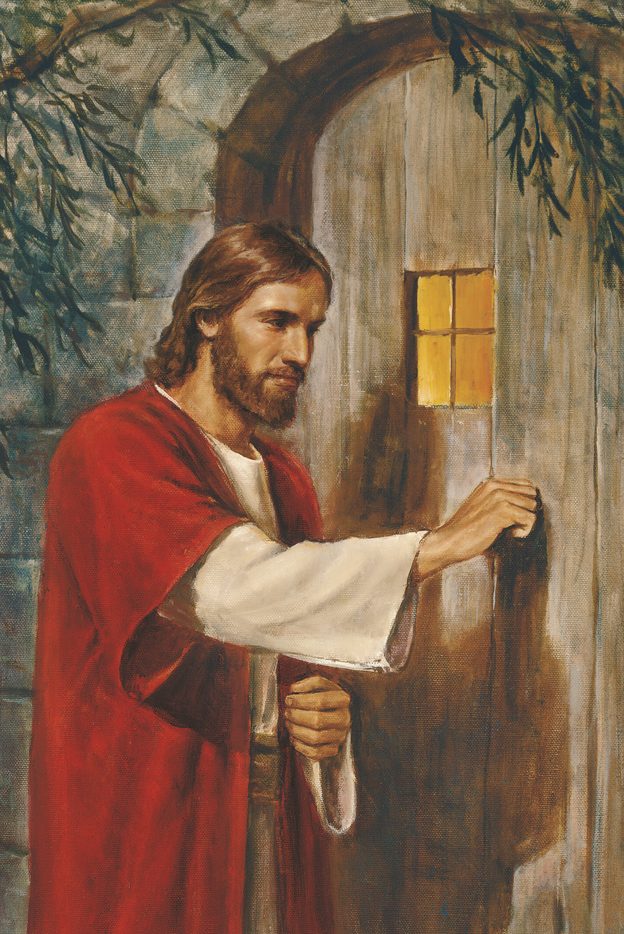
Sometimes He doesn’t just sound cold, though, sometimes I can’t even hear Him at all. But once again, it isn’t because He has abandoned me, but because I have gone and shut myself in a room without Him. Even then, though, “he stands at the door, and knocks: and if I will open the door, he will come in with me,” (Revelation 3:20).
And the fact that he will come in with me has been the most meaningful thing to me in those low moments. He doesn’t require me to break down my walls and come out into the open if I’m not yet willing to. He is content to come stay in the dark hovel with me. He will sit with me in the shadow, with only His presence for a light, until I’m finally ready to leave.
19 And the angel of God, which went before the camp of Israel, removed and went behind them; and the pillar of the cloud went from before their face, and stood behind them:

20 And it came between the camp of the Egyptians and the camp of Israel; and it was a cloud and darkness to them, but it gave light by night to these: so that the one came not near the other all the night.
The Lord had been leading Israel in a pillar of cloud by day and of fire by night. That pillar was still present when Pharaoh and his army arrived, and it moved to stand between the Israelites and the Egyptians. In later years, Isaiah would assure the Israelites that “the Lord will go before you; and the God of Israel will be your rearward” (Isaiah 52:12). Here we see that these words were not only figurative, for in this moment God had literally been both a guide ahead of Israel and a guard behind. Every promise of the Lord is fulfilled in many figurative ways, but I believe that there is always a literal realization of them as well.
Note, also, that the pillar now shifted to take on two distinct faces at the same time. It was a cloud of darkness to the Egyptians, which obscured their way forward and forced them to hold until the new day. Meanwhile, to the Israelites it was a burning fire, illuminating the way ahead as Moses worked God’s miracle upon the Red Sea and the Israelites made their escape.
Thus, once again, God was able to make a division, showing one wonder to the Egyptians and another to the Israelites. One wonder of darkness, one of light. One to hinder, one to push forward. The same God will judge, divide, and separate, like a sword cleaving good from evil.
Carl Jung is known for his quote “The brighter the light, the darker the shadow.” By this he meant that the more a person fixated on trying to be better, the more the darkness inside of him would lash out in defiance, leading to a pendulum swinging back-and-forth between periods of extreme good and extreme evil. Jung therefore recommended a sort of gray area, a place where a person could embrace both his vices and virtues, letting neither get out of balance.
The first time I heard this perspective I was struck by how it contradicted some of the most sacred experiences I have ever been witness to. In the twelve step group I attend we frequently express how good it feels to finally shine a light on the darkness and feel it dissipate from us. Men come to the meetings and confess all manner of temptation and unholy desire, and then tearfully express gratitude that the darkness is leaving their hearts even in the telling of it. There is no sense of the shadow growing darker, for the light is permeating all the way through and coming out the other side.
But as I gave Jung’s words a second consideration, I realized that I knew a few instances where I would agree with his assessment. I think that Jung’s perspective does have value, but that it is incomplete. In my experience, there are three types of shining a light on a problem, each with different degrees of usefulness.
Outer Light)
The first kind of light is one that one person shines on another. An example of this would be getting caught in a lie, or with incriminating evidence, anything that exposes one’s secret wrongs. There was no intention in the guilty to expose his secrets, but exposed they have been!
This light could be useful, depending on how the exposed person reacts to it. Ideally he would turn this embarrassing exposure into a wake-up call. Maybe he was horrified when he first got caught, but later on he says that he is so grateful that it happened. Having been seen at his worst, he could finally begin the work of becoming his best.
Alternatively, though, he might be resentful at being caught. Perhaps his exposer gives him an ultimatum and he does recovery work, but only begrudgingly. In this case he will have no gratitude for the light that shone upon him, and he will take the first opportunity to recede back into the darkness. He will pretend that he is cured, but all that he really learned was to be more careful in his lying. This therefore leaves him worse off than before.
The Light in the Cave)
The second kind of light is when a person fixates on his own problems. He is still in denial towards the rest of the world, but not towards himself. Silently, in his own head, he continually berates himself for failing to live in harmony with his conscience. He launches many campaigns against the darkness, trying to force himself to be better by sheer force of will, but these efforts always end in failure.
A person can white-knuckle his way to some length of acceptable behavior, but he hasn’t actually destroyed the darkness inside. Sooner or later it comes back, and this time with a vengeance. Inevitably the person slips back into his old ways, and usually delves deeper into them than before.
This is the sort of light that Jung was able to observe, and he was correct to be skeptical of it. However, his conclusion that there was no appropriate way to change one’s life was incorrect. A better conclusion would be that repentance was never meant to be an isolated experience.
Bringing Into the Light of Others)
The third kind of light is the one that I mentioned at the start. This is when the guilty freely confesses his wrongs to another. The key difference between this light and the first is that the person wasn’t caught against his will. This time the person is bringing his shame to trusted friends of his own volition, not trying to face the darkness on his own.
All throughout the scriptures we are told that we must confess. Confession is only confession when it involves another. We do not confess to ourselves, or by being found out. We confess by taking the initiative and sharing the darkest parts of our soul with another trusted person. Because of our shame, most of us would suffer in silence for years rather than take this step. Some will suffer in silence for their entire lives, feeling in their hearts as though being truly honest would kill them!
And in some sense it would. It would kill the dark self and replace it with the light. This effect might be difficult to accept by a modern psychologist, but only because it isn’t a natural, measurable thing. It is a miracle. It is absolutely real, but it defies intellectual explanation because God is in it. God is the light that dissipates the darkness, where our own light often only hardens it.
Exactly why God’s light shows up when we confess to one another could be a topic of study in-and-of-itself. For now, let us content ourselves with the fact that one reason why God shows up in these moments is simply because He promised that He would:
Confess your faults one to another, and pray one for another, that ye may be healed. For where two or three are gathered together in my name, there am I in the midst of them.
-James 5:16, Matthew 18:20
20 But the Lord hardened Pharaoh’s heart, so that he would not let the children of Israel go.

21 And the Lord said unto Moses, Stretch out thine hand toward heaven, that there may be darkness over the land of Egypt, even darkness which may be felt.

22 And Moses stretched forth his hand toward heaven; and there was a thick darkness in all the land of Egypt three days:

23 They saw not one another, neither rose any from his place for three days: but all the children of Israel had light in their dwellings.
Pharaoh had given his most solemn pledge yet, approving death and unforgiveness for him and his people if he ever again turned back on his promise. Yet in today’s verses he still “would not let the children of Israel go.”
Thus far Pharaoh had witnessed miracles of transfiguration, pests and vermin, and the destruction of crops and cattle. Now, though, a new sort of affliction was summoned, one more strange and fantastic. This one was an attack on something much more fundamental than any of the previous: the ability to see.
Darkness spread throughout the land, casting the Egyptians into pitch blackness. We are told that the darkness was “thick,” that it could even “be felt.” Some have suggested that the darkness might have been thick ash or dust, actual particles that were so dense as to block out the sun. Verse 22 tells us that in their blindness the Egyptians didn’t dare venture out into the streets, remaining still and alone in the darkness of their own homes.
The connection between this curse and the effects of sin is obvious. Prolonged sin blinds a people to the spiritual world, warping their sense of right and wrong, and obfuscating the connection between behavior and their consequences. A people so afflicted then grope stupidly through their relationships and attitudes, making wrong choices and causing harm without even knowing what they do.
As before, a division is put between the Egyptians and the Israelites, such that the Israelites still have “light in their dwellings.” It is unclear whether the exterior in the land of Goshen was still veiled in darkness, but at the very least we know that in the comfort of their own homes God’s people could still see. This, of course, is symbolic of “the light that shines in the darkness,” Jesus Christ. Even as all the world blinds itself to the truth, Christ is the light that will keep us grounded on solid principles and understanding.


 Spiritual Wanderings