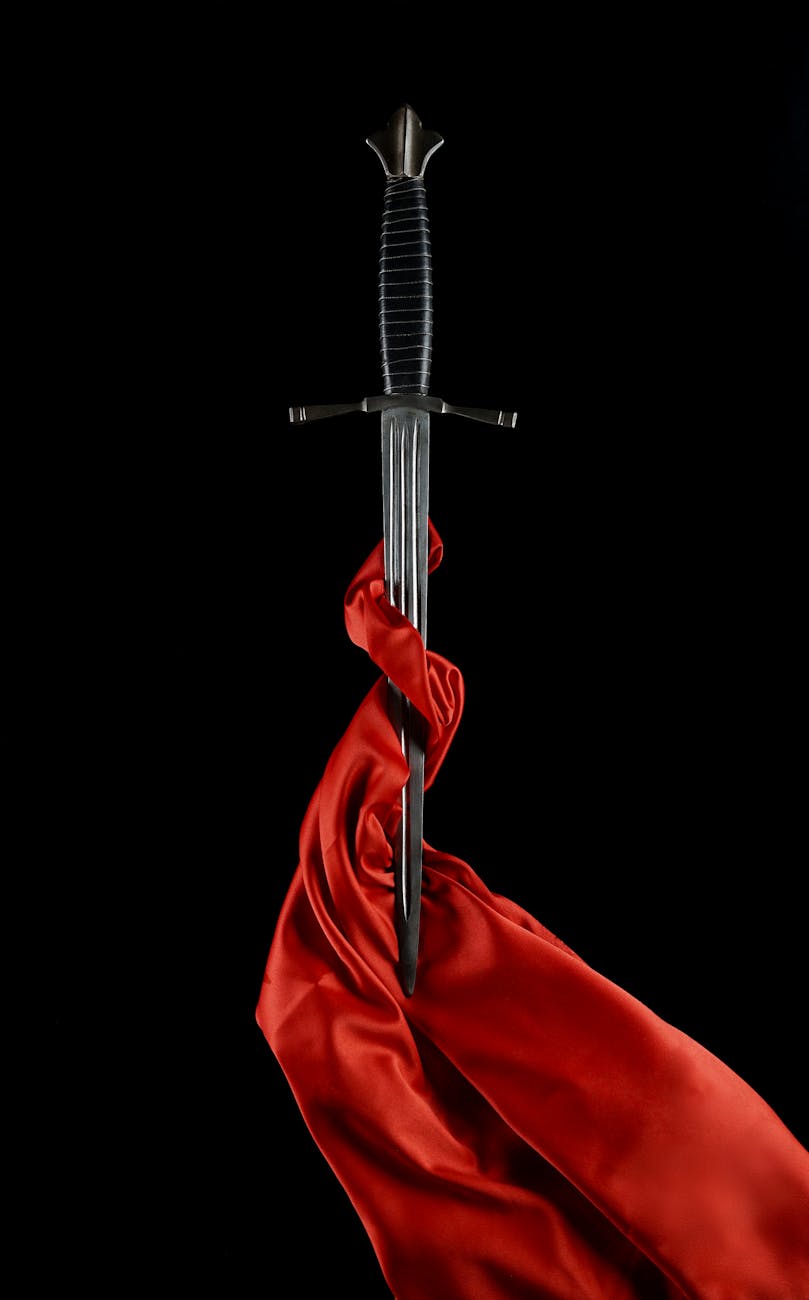
We Are Not Made for Peace

Made to War)

Many have envisioned a utopia where there is no more war and strife. Many have proposed by what method we could achieve such universal peace, though every attempt has failed. It is a strange paradox. Whether we have peace or not is obviously in our own hands, and it is hard to think of a more common goal, so why does it continually evade us? Why can’t we just stop fighting?

Because we are not made for peace.

We are a people that are designed to do battle. It is simply in our nature to fight. It is in our nature to draw a line and make war with whatever is on the other side of it. Yes, there is a part of us that craves calm and rest, but that part will always be overrun by our stronger, warrior nature. Battle is inevitable, and all of us are called to it. The need for war isn’t lessened by previous victories or having a rich life. The previous fathers’ wars do not satiate the hot blood of the rising generation.

This principle was found to be true in the shocking Universe 25 experiment with rats. The rodents were given a perfect Rat Utopia, with all the food, space, and sociality that they needed to thrive. And in every case, the rats eventually turned to self-destruction and brought about their own extinction. We may not be rats, but we carry that same fire within us.

A Divine Purpose)

But just because we are made to battle, does not mean that we have to use it for evil. Indeed, our warrior heart was given to us for a good purpose, and it is only when we twist it or suppress it that it bursts out in violence and hate.

God gave us warrior hearts so that we would have the motivation to battle our own inner demons. God made us restless in times of peace, because there is no end to the onslaught of temptation. God made us itch for a fight so that we wouldn’t be complacent about our flaws.

All of our lives are meant to be a struggle, though in the afterlife it may very well be different. Perhaps the part of us that yearns for peace looks to the afterlife, while the part of us that yearns for a fight looks to this life.

But one has to choose to wage war with the inner man. One can, instead, run from that fight, surrender to his worst impulses, and then his warlike nature has nowhere to go but outward. Even worse, because he gave control of his spirit up to the author of evil, his noble warrior heart becomes corrupted to one of cruelty.

Resolved to the Better Fight)

Trying to numb our desire to fight is misguided. That is trying to change our fundamental nature, which we cannot do.

Peace in this life will not be found by removing our desire to fight, but by each of us turning that fight inwards. Conflict never dies, but it can be transplanted. The global conflict can be internalized by the populace. We will only know peace in our society as we each accept that we will never know peace individually.

It may be a sobering reality: a lifetime of never-ending battle within the heart, but ironically, you can make peace with that war. You can accept it as a necessary component of life, something that you just have to do, and then it becomes easier. There are no easy answers, but there are at least answers.
The Richness of Scriptural Symbolism- Eternal Wisdom

The Perpetual Relevance of Symbols)

The Bible is a library of many different things, including historical accounts, legal instructions, moral teachings, prophetic sayings, psalms, letters, and gospel testimony. One of its defining features is its rich symbolism, which people continue to find new interpretations and new meanings for even today.

Some of the text in the Bible is, at a minimum, over 3000 years old. It is a rare thing to have words from that long ago that still resonate and have meaning to us today. Such an accomplishment demonstrates a profound understanding of the human condition, for it is only by identifying and representing something that is fundamental to humanity itself that these symbols can be consistent through all changes of culture and context. A symbol that is tied to the very core of the human soul will re-manifest itself perpetually, keeping its importance forever new.

They say that those who do not learn from history are doomed to repeat it. But history is but a record of how people reacted to their fundamental human nature, and since fundamental human nature persists, history will repeat itself again and again, whether we have studied it or not. Every great setback that we will face in the future has already been observed, and the way that each of those setbacks will be overcome is also already knowable. When the old evils return, it is the timeless symbols of ancient scripture that will guide us back to the light.

The Qualities of Good Symbols)

So far, we have identified one hallmark of good symbols: that they represent a core part of the human soul and thus reappear eternally through each generation. With the rest of this study, I want to consider what other hallmarks of good symbols, so that we may know how to separate the perpetually useful from the context dependent.

It will be necessary to provide specific examples of scriptural symbols as a part of this study, and when I do so, I will specifically use ones from the Bible. This will serve a secondary objective of this study, which is to demonstrate the intrinsic value of that book. That being said, this study will by no means be a comprehensive list of all the greatest symbols within the Bible. It remains the responsibility of each of us to find those nuggets for ourselves and to integrate them into our own lives.

Equal vs Enough

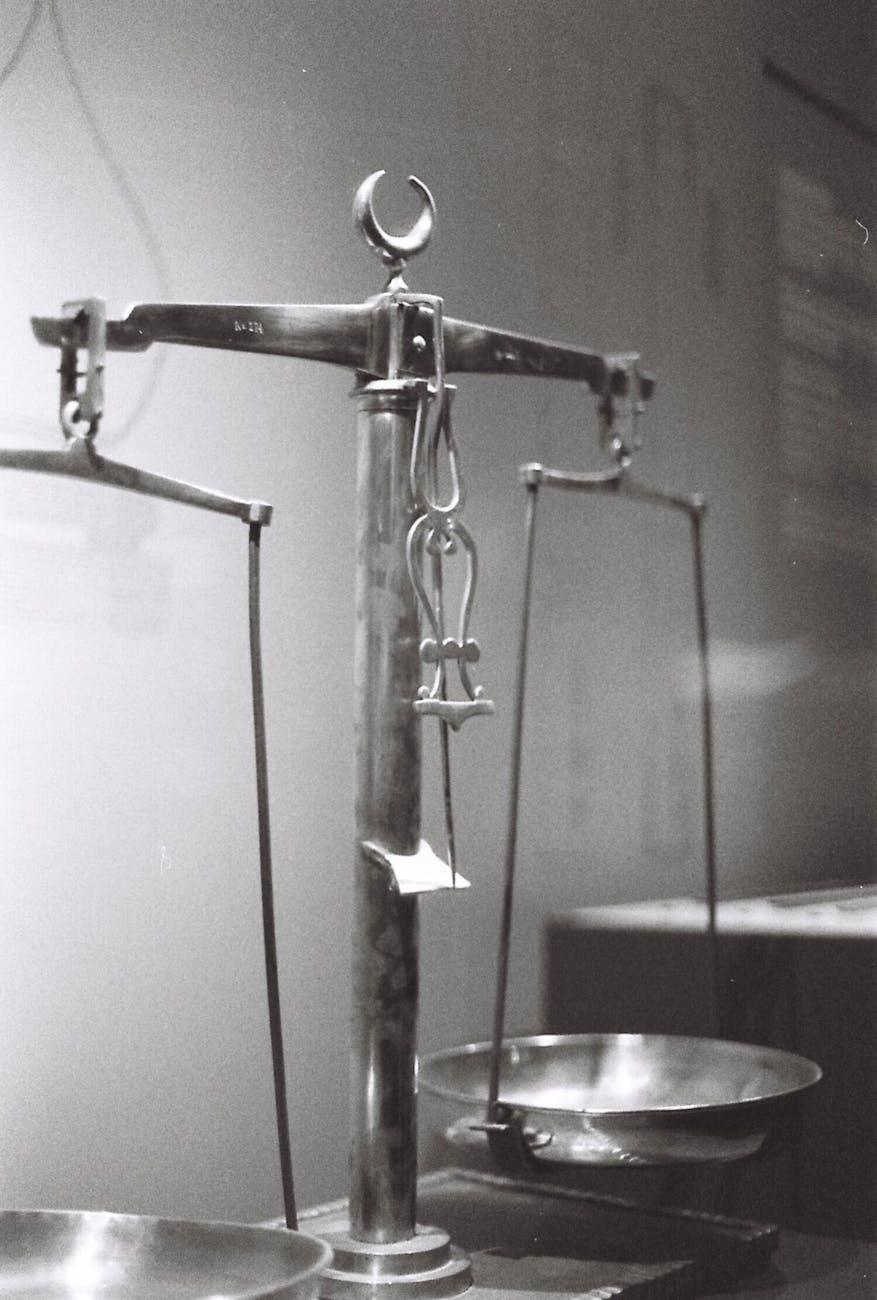
It is less important to be equal than to be enough.

That isn’t to say that there isn’t a value to equality. Rooting out unfair disadvantages and gross discrimination have their place, but every virtue is bounded by others and each can be taken too far.

Perfect equality is not always the ideal and is not always possible. When a baby is first born, it should receive more care than its older brothers and sisters. The wise should receive more attention than the foolish. The innocent should have more liberty than the guilty.

Even the natural universe follows the pareto principle, in which an uneven distribution is evident, and the minority possess the majority of the resources. In the ant colony there is only one queen and tens of thousands of workers. Only 1% of all mosquito eggs will reach adulthood and reproduce. Ours is the only planet out of thousands studied to have all the correct conditions to support life. The universe is not equal.

So, while it is again worthy to root out flagrant and malicious inequality, one has to have a nuanced appreciation for the fact that absolute equality is impossible. The unbridled pursuit of it can only yield frustration and counter-productivity. Every historical example of absolute and mandated equality has ended in disaster.

In the long run, “is it enough” is a more reasonable consideration than “is it equal.” As mentioned before, the older brother may not receive equal care to his infant sister, but we can ask “is he receiving enough?” Are his physical and emotional needs being adequately met? If it is not enough, he should receive more. If it is enough, then it is enough. Are enough ants born as queen to keep their species alive? If not, they will go extinct. If it is enough, then is it enough.

Over the course of our lives we will never be perfectly equal to all others. In some ways we will always have less, and in some ways we will always have more. But do we have enough? Can we make do with our disadvantages? Can God make up for what we lack? If we can find our way to enough, then it is enough.

Tended Towards Ruin

A Heavy Loss)

There was a project that I once loved very much. It was a program oriented towards connecting men with God, helping them to bring their hearts back into His light. It was small and local, humble and unpolished, but it did truly miraculous things in the lives of those who attended it. Lately, though, I’ve found myself struggling to recognize that same institution from what it has become today. At some point, after about ten years of operation, the institution became a for-profit organization, and changes started being made for the betterment of the bottom line, not for the betterment of the men it served. Several of the original founders quit, due to personal disagreement with this new direction.

This has been a heavy thing for me to come to grips with, but as I have reflected on it I’ve realized that it was always going to go something like this. The special spirit of the old program had to meet its end one way or another, because that’s just the nature of things.

Tale as Old as Time)

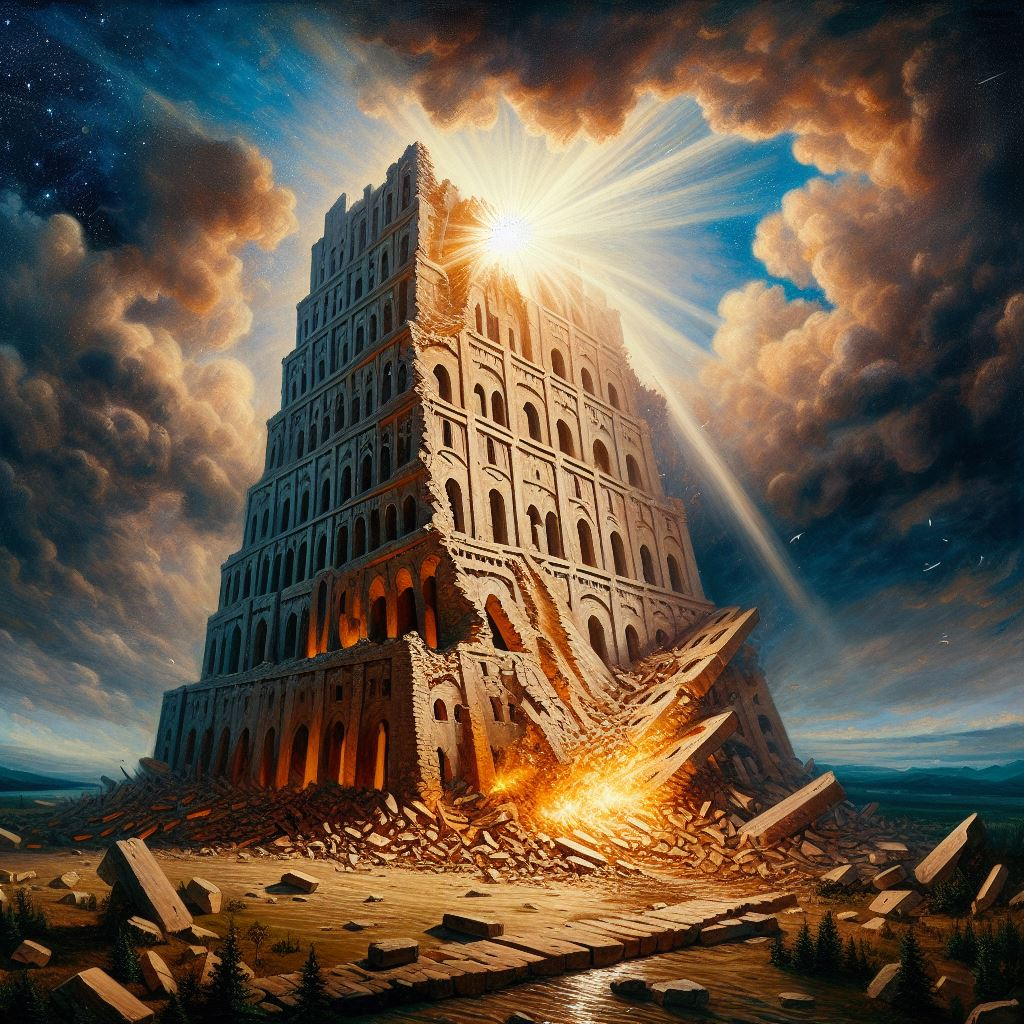
I am reminded of the story of the tower of Babel. In it, a nation of people decide to build a great tower, reaching all the way to heaven. Bold enough to make themselves gods, they toiled and labored on this great elevation of man until the whole thing toppled to the ground.

We do not know exactly how high they built their tower, only that it fell before they could achieve their aim. Their construction became destruction, their order became ruin, and the people were returned back to the level of the fallen earth.

This, of course, is a type for all manner of structures in the world today. And I don’t merely mean physical structures, either. Even more so it applies to structures of law, of government, of ideology, of any edifice constructed by the wisdom of man.

The Way of Things)

Every club, organization, corporation, and ideal is laid with ruin in its foundation. On the one hand, this might be because they are laid with carnal and earthly motivations, such as focus on profit or notoriety. Once making money is one of the organization’s pillars, then it is tied to the natural things of this earth, all of which decay, erode, and finally collapse. Through the years we have seen countless companies over-exploit their workers, consumers, and intellectual properties, killing the golden goose just to get a higher profit in the short term. We have seen countless governments siphon power and wealth to the highest class until they became too top-heavy and collapsed under their own weight. The compromises that were deemed necessary to make the enterprise possible eventually make its continued existence impossible.

But even without a foundation of earthly motivations, every structure of man is still doomed to fall due to our fundamentally flawed nature. Even our organizations that are built on ideal, and virtue, and purity of intention, gradually erode and eventually go wrong entirely. Even if a core principle is worthy, if it is taken slightly too far at the beginning, it will magnify and accelerate over time, eventually becoming a great evil. It is like stacking blocks to build a taller and taller tower, given enough time and distance every structure leans too far one way or the other. Given enough time and distance, every little flaw becomes a crushing error, and the whole thing will topple. So an organization founded with a focus on discipline will eventually become fascistic oppression, whereas a focus on liberty will eventually become gross hedonism. We sow the death even in the birth, it is simply our nature.

Even God’s church, once entrusted to earthly stewards, is tended toward ruin. The world was in a state of apostasy in the time of Noah, and in the time of Abraham, and in the time of Jesus. God has to refresh His word among His people repeatedly, not because His word has deteriorated, but because we people just keep losing our grasp of it. We know that even the believers today will once again be on the brink of ruin when God will have to refresh everything with the second coming.

What Lasts)

Ironically, what truly lasts is what seems most transient. Though man’s works are doomed to fail, along the way they house occasional sparks of something pure and genuine. There can be a nugget of God in the midst of all the stone. And though that nugget seems momentary and transient, it is only because we are perceiving it through a shifting lens. In actuality, each of those nuggets is anchored in something realer and truer than the structure it was found within.

There is an entity behind all those sparks, a constant certainty beneath every brief wonder. By fastening ourselves to these pearls, and following their threads to deeper things, we tie ourselves to the only thing that is actually eternal.

The man-made program I once loved may be gone, but the experiences I found within it have not. Those experiences introduced me to the One who hasn’t changed at all, and never will. In reality, I haven’t lost a thing.

Basis for Judgment: A Creation of God

I finished yesterday’s post by pointing out that if man tries to make himself the final power and authority in the universe—which would be to make himself god—then he must supplant his connection to actual divinity. If he would exalt himself, he must pave a ceiling between himself and heaven.

The Inner Voice)

But let’s look back even further than yesterday’s post. I mentioned at the start of this series that our society has developed a strong emphasis on everyone needing to “listen to their own heart,” and be “true to themselves.” Once I might have agreed with this notion wholeheartedly, but the words inside of these phrases have gradually changed their meaning. We used to mean that people needed to listen to the conscience as their heart, that they needed to be true to their divine selves. But today we’ve taken away the notion of an external voice that whispers within us, and now when we tell people to look inward, they think we mean narcissistic navel-gazing.

The fact is, there have always been two voices inside of us: the divine influence and the selfish desire. “Listen to your heart” was only useful advice when it pointed towards the first of those two inner voices. It becomes a great misguidance when attributed to the second. This misguidance is pernicious in that it so closely resembles what actually would have been good advice.

Spiritual Without God)

This subtle shift can perhaps be seen most clearly in society’s shift away from organized religion. “I’m spiritual, not religious,” we hear parroted over and over, but what does that really mean? From what I see, it appears to mean that the person still has a sense that she has a spiritual element, but she does not accept that she is a creation of God.

Yet each of us is a creation of God. This is the fundamental belief that we have lost, and that is very concerning, for it is the fundamental belief. The most fundamental, core principle of our identity must be where we are from. If we are from God, then it absolutely behooves us to understand who God is, what He is like, and what He created us for. And if He has told us these things, and if His voice is one of the influences that lives inside of us, then we must assume that following His instructions would bring us, His creations, the greatest fulfillment and purpose that we are capable of. If we truly are from God, then there can be no coherent argument to abandon Him just because society has decided something else.

To say that you are spiritual, but not religious, to say that you believe in the divine self, but not the divine creator, is to appreciate the beauty of the tree while cutting it off at the roots. It is to lay hold of something that is true and good, but to sever it from its sustenance, and before long it will wither and lose what originally attracted us to it. We can live without the belief that we are a creation of God, and we can even convince ourselves that it is so, but none of that will change our soul from still needing Him.

Scriptural Analysis- Genesis 7:10-12

10 And it came to pass after seven days, that the waters of the flood were upon the earth.

11 In the six hundredth year of Noah’s life, in the second month, the seventeenth day of the month, the same day were all the fountains of the great deep broken up, and the windows of heaven were opened.

12 And the rain was upon the earth forty days and forty nights.

The feats of man in subduing nature are truly impressive. We flatten hundreds of square miles for a city, pave it over, and erect towering skyscrapers. We trace the countryside with a web of highways, tunneling clean through a mountain and bridging over the sea. We send satellites into space and cables across the ocean. We genetically modify our fruit and domesticate wild animals. We produce awesome reserves of power, and we have weapons of mass destruction that could devastate all of modern civilization. And all of this can make us feel pretty sure of ourselves. It can give us the illusion that we rule this world, can make us believe that there is nothing we cannot tame.

Then, a category-5 hurricane touches land, or an earthquake weighs in at over 9.0 on the Richter scale, or the threat of a mega-colossal eruption lurks underfoot. And suddenly we realize that we might tame the periphery, but we don’t hold a candle to the true power of God. For all of our scientific and technologic advancements, we only continue to exist by His grace.

Scriptural Analysis- Genesis 3:17-19

17 And unto Adam he said, Because thou hast hearkened unto the voice of thy wife, and hast eaten of the tree, of which I commanded thee, saying, Thou shalt not eat of it: cursed is the ground for thy sake; in sorrow shalt thou eat of it all the days of thy life;

18 Thorns also and thistles shall it bring forth to thee; and thou shalt eat the herb of the field;

19 In the sweat of thy face shalt thou eat bread, till thou return unto the ground; for out of it wast thou taken: for dust thou art, and unto dust shalt thou return.

Here Adam is told of a cursed earth, of hard labor and sweat before having any bread, of a war against the land just to live, and this description fits my native land perfectly. I live in central Utah, the middle of a desert, where it is possible to grow fruits and vegetables and trees…but it is not easy. Today we cheat and import richer dirt and foreign plants to help us out, but my progenitors extracted their lives from the land inch-by-inch.

And even in the more flourishing parts of the world there is still a strong sense of strife in nature. Consider the monarch butterfly, which has a symbiotic relationship with the milkweed plant. The monarch butterfly, when still a caterpillar, feeds exclusively on the plant’s leaves, and after transforming into a butterfly pollenates its flowers. Neither can live without the other.

But also each kills the other by the thousands! The caterpillars have a ravenous appetite, and consume and destroy vast numbers of the milkweed plants as they grow. They would overrun the species entirely if it weren’t for the fact that the plants lethally defend themselves. They secrete a sap that drowns massive numbers of the caterpillars when they are still young, cutting their numbers to a mere fraction! These two parts of nature may rely on one another to live, but there is still a great, mortal strife between them, and this is a common theme in nature: life, but only through a heavy, struggling burden.

In sorrow shalt thou eat. Thorns and thistles. We raise out of the dust, we struggle until we can struggle no longer, then we collapse back into the dust. It is a bleak life, to be sure, but it is still a life.

Scriptural Analysis- Genesis 1:1

1. In the beginning God created the heaven and the earth.

Many have pointed out that the Bible begins in media res. Even though it is “in the beginning” of our story, it is also in the middle of another larger story: God’s story. Humanity and animal life and the mountains and the sea do not yet exist at this point, but God still does. He is already an entity, already all-powerful, and already commanding legions of angels to do His will.

And the lesson that stands out to me from this is that we are fundamentally different from God and we need to appreciate that fact. He exists before, outside of, and after our own little sphere. He is therefore mysterious and He always will be. He is not mortal, and cannot be understood in mortal terms. And yet we often try to do just that, stripping away the parts that exceed our understanding and remaking Him in our own image. That is folly.

Yes, there are parts of Him that are connected to us. There are things that we learn about Him by examining ourselves. He is our Father and we are His children, we have the same basic desire for good, and the same natural repulsion for evil. But still we are not entirely the same as Him, and we never can be so long as we live in this smaller, mortal story. Thus we will get along much better if we do not try to project onto Him our opinions of what He “should” be like, and instead rely on what He has personally revealed to us about His nature.

Discussing Spiritual Differences- John 18:37-38, Matthew 5:14

Pilate therefore said unto him, Art thou a king then? Jesus answered, Thou sayest that I am a king. To this end was I born, and for this cause came I into the world, that I should bear witness unto the truth. Every one that is of the truth heareth my voice.
Pilate saith unto him, What is truth? And when he had said this, he went out again unto the Jews, and saith unto them, I find in him no fault at all.

Ye are the light of the world. A city that is set on an hill cannot be hid.

COMMENTARY

Every one that is of the truth heareth my voice
Pilate saith unto him, What is truth?
It is in our nature when we hear something untrue to correct it. Even small children cannot help but call out when a known fact is misstated. Point at something and call it the wrong color, mess up on a simple mathematical operation, attribute a quote to the incorrect historical figure, lie about where you were yesterday…someone will call you out on it. There is something in each of us that just wants for the truth to be spoken.
And certainly this applies to moral truth as well. When we have awoken to the balance of right and wrong we become unsettled to hear any declaration that is morally askew. When others speak a morally untrue message we feel compelled to correct it.

Ye are the light of the world. A city that is set on an hill cannot be hid
And this is a great source of friction to those that proselyte, for there are some who would rather they just kept their moral truths to themselves.
But exercising that restraint runs contrary to the very nature of truth. Truth is like a light: it shines forth. It is a city on a hill that cannot be hid, a candle that cannot be stowed beneath a bushel. When someone casts shades of untruth, whether it be “1 + 1 = 3” or “joy can be found in carnal living,” then truth is compelled to sweep forward to correct it. Truth, even undesired truth, yearns to fill every dark corner with light.

The Need for Law- Social Law vs Divine Law

Yesterday we looked at natural law, and what principles of law we can glean from it, which principles we would then expect to find in moral law as well. And yet we usually struggle to see moral law as being as “real” of a law as natural law. We see the forces of gravity and magnetism as universal and uncompromising, yet believe we can make bargains about moral rights and wrongs. Not only that, but we believe that if there are moral laws, we can transgress them, and yet avoid consequences through bargaining or concealment.

Why is this? A major reason is because we have human “laws” which defy all of the principles we found in natural law. Where the forces of nature never change, apply equally to all, and are cannot be petitioned for cancellation, both the laws of government and the trends of society do change, do not apply equally, and can be petitioned for cancellation.

Our first lesson in this likely occurred when growing in our childhood homes. Parents are forever inconsistent in how they respond to the same behaviors. Sometimes they let misdeeds slide and sometimes they don’t, they might punish incorrect behavior at a severe level one day and at a more measured level the next, sometimes they let one child get away with a certain action but never the other child. Parents can be persuaded and bargained with to let go of their principles. In short, parental law is extremely organic, based a great deal on their mood in the moment, and teaches a pattern that morals are flexible.

In school we learn about our governments, and the principles and laws upon which they are founded. We are told that those laws are meant to be administered universally and indiscriminately, but obviously they are not. Different officers and judges of the law act on different biases. What is more, their presence is not total enough to respond to all queries or misdeeds, making holes in the law’s coverage of the nation. Laws can be changed and even abolished, and the laws of one nation are different from the laws of its neighbors, an artificial boundary changing the legality of one’s behavior like the flipping of a switch. This starts to make us believe that moral law only applies so far as it can be seen. That it can be compartmentalized, hidden from, and vetoed by a strong enough consensus.

Social law, of course, is the most flimsy of all, the same behaviors being simultaneously applauded and condemned by different circles at the same time. There is absolutely no consensus whatsoever, a million different voices saying a million different things. This suggests to us that moral law is worse than organic, it is non-existent. All that we call morality is opinion, and has no universal binding whatsoever.

Our mistake is taking all these imperfect forms, and trying to extrapolate from them how Divine Law must work as well. We assume that certain commandments no longer apply, because society has come to a consensus to vote them out. We assume that if we hide our sins, then we need not pay the price of guilt. We assume that if we butter God up with love in other ways, then He might give us a pass on our misdeeds. We use the strategies that work with our fellow man, and try to apply them where they can never work. Divine Moral Law, to be Divine Moral Law, must be constant, universal, unchanging, non-negotiable, all-reaching, and all-encompassing. And even more than it needs to be all those things, we need it to be all those things. For with anything less than a totally sure foundation, nothing permanent can ever be built.