Layers of Man- The Wound

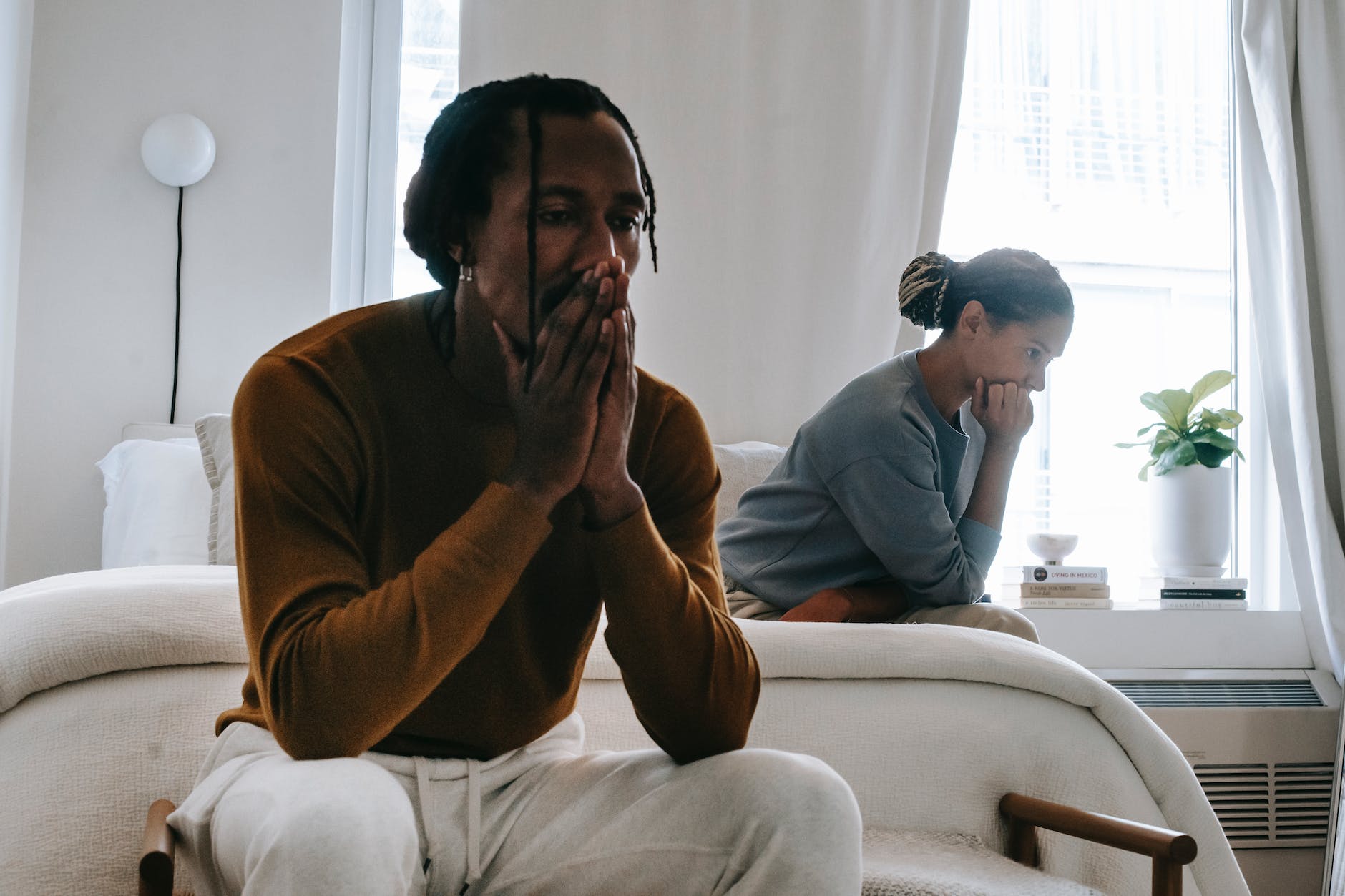
One would hope that a man and woman wouldn’t have any secrets from one another by the time they decide to get married, but this is far from guaranteed. Certainly I was guilty of keeping my wife in the dark from all the deepest parts of me. Previously I mentioned that I kept my addiction to lust concealed from her, but that wasn’t all, I was also hiding my wounds.

It may seem a strange thing, but I was able to tell my wife about my problems with pornography before I could tell her how I got hit as a child, and how I felt ashamed for wincing before each blow. Obviously the addiction was the part of my life that made her more upset, the one that directly hurt her, but it still was the easier thing for me to confess to. I never thought that she would despise me for having suffered abuse, but talking about it brought up areas that were still raw and tender. I couldn’t go there without bringing up all of the attached horrible feelings, so I had always stayed away.

My heart is broken within me; all my bones shake - Jeremiah 23:9

Unto the woman he said, I will greatly multiply thy sorrow and thy conception; in sorrow thou shalt bring forth children;
And unto Adam he said, cursed is the ground for thy sake; in sorrow shalt thou eat of it all the days of thy life; - Genesis 3:16-17

All of us have these deep, soul-shaking wounds. As Brené Brown has said, “Every single person has a story that will break your heart. Nobody rides for free.”

If you listen to the stories of two different people, one might have endured a more horrifying pain for a more extended period of time, but both lives will still hold significant trauma. The hardest thing you have ever had to go through, no matter how small it might seem compared to others, is still the hardest thing you have ever had to go through. Simply by virtue of being your greatest pain, it will warp your psyche and become your personal definition of suffering.

Coming to terms with that pain, and developing our relationship with it, is one of the most difficult things we will ever do in life. Virtually all of us will make mistakes in this arena, and we will come up with flawed reactions that end up causing even more pain further down the road.

The Spirit of the Lord is upon me; he hath sent me to heal the brokenhearted, to preach deliverance to the captives - Luke 4:18

And the Lord said unto Moses, Make thee a fiery serpent, and set it upon a pole: and it shall come to pass, that every one that is bitten, when he looketh upon it, shall live. - Numbers 21:8

Jesus teaches us that it is good for us to mourn our sorrows, and reassures us with the knowledge that we can be comforted (Matthew 5:4). But there is a clear line between mourning our sorrows and wallowing in them. It is one thing to recognize that you have been a victim, and another to make victimhood your key defining feature.

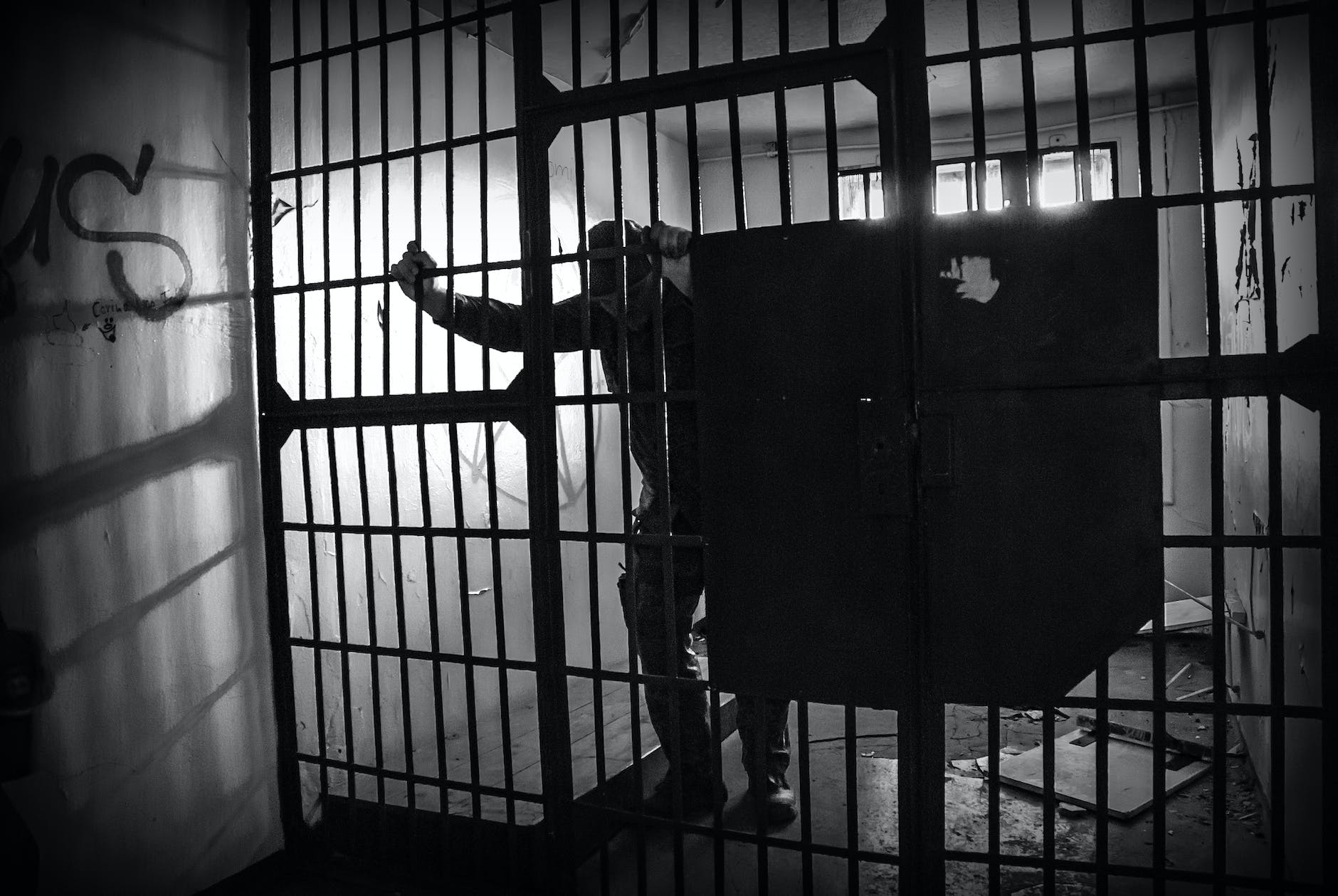
Over-identifying with our pains and obsessing on what happened to us can lead us to reject the deliverance that is offered, because we start thinking that healing means saying our wounds didn’t matter. Even more perversely, holding on to our damage can be used as a way to justify our own misbehavior afterward. Thus, God is offering us to look to him and live, but we first have to choose to stop remaining a prisoner.

And if men come unto me I will show unto them their weakness. I give unto men weakness that they may be humble; and my grace is sufficient for all men that humble themselves before me; for if they humble themselves before me, and have faith in me, then will I make weak things become strong unto them. - Ether 12:27

Thus says the LORD: "Cursed is the man who trusts in man and makes flesh his strength" - Jeremiah 17:5

The intended effect of our wounds is that in our weakness we might turn to God, who will heal and make us strong. But that requires stepping fully into our hurt, letting it wash over us, and asking for God to meet us in the middle of all that pain. But what if He doesn’t show up? What if we are consumed?

It is natural to have a fear of facing the pain, and thus many of us will never even try to take that step. We instead try to bury our wound. We act tough, we say “yeah, it happened, but so what?” We claim that our wounds made us stronger, that they made us grow a thicker skin. Or maybe we try to deny that they ever happened, changing the subject anytime someone brings the matter up. In either case, we put on a show that the wounds are unimportant and don’t need to be examined, and that we are well and past them, but nothing could be further from the truth. If we really were past them, there would be no fear of bringing them into the light. A tough wall around the wound only reveals how upset we still are about it.

Surely he hath borne our griefs, and carried our sorrows - Isaiah 53:4

Behold, I stand at the door, and knock: if any man hear my voice, and open the door, I will come in to him, and will sup with him, and he with me. - Revelations 3:20

One way or another, wound tends to lead to building up walls. Sometimes walls are a good thing, a necessary survival mechanism for keeping our oppressor out. Our natural instinct with physical wounds is also to cover them up, to shield them from any outside aggravation. But walls tend not to discriminate. Often they keep everything out, not only the source of the pain. Obviously this becomes a problem if we now stand before the physician and we still can’t expose our wound for healing. We need to let the physician in, even if it will initially cause even more pain, so that we can start becoming better.

Jesus stands at the door and knocks. He is reverential and respectful of our pain, so he does not force his way into our wounds. If we absolutely refuse his healing he will wait. If we never accept his help he will never force it upon us. But he really can help us if we will let him. He has felt it, he has borne it, he has descended into it and risen above it.

If we will not let Christ in, then the wound will fester. It will grow and it will infect. Most addicts don’t initially recognize the connection between their shameful behavior and the unhealed pains for their youth, but through time and exploration the links become clear. One of the greatest sources of trouble in our lives is things that we should have cried about but never did.

***

At the start of this post I mentioned being struck as a child. This pain was most typically the result of not being able to play quietly enough. I was expected to keep entertained by myself, in a way that was contained and non-intrusive. I would try to do that, really I would, but I was a boisterous boy, and I would raise my volume without realizing it, and then I would be hit. A few days ago I mentioned that a key part of my façade is that I try to be a people pleaser, never a bother to anyone. Can you see the connection to that from this wound?

There was also a wound of isolation. I was homeschooled, and any would-be friends were told over-and-over that I wasn’t able to play with them until they stopped asking altogether. As I came into my adolescence I wanted to have meaningful relationships with girls, but I was such an outsider to every social norm that I could never relate to them. Can you see how this wound connects to my addiction for pretend-love-on-demand?

And there were also wounds for being unintelligent. I was pushed to get into college as early as possible, being punished when I did poorly on the admission tests, and being treated as the stupid child for not making it in until I was sixteen. Can you see why I cheated for better grades and made up a façade of being ultra-intelligent?

Our shame is nothing more than a misguided way to cope with our wounds. It tries to alleviate painful shortcomings, but tragically it often does so in a way that only reinforces them. Relying on cheating and lust gave me artificial grades and relationships in the short term, but they further confirmed to me that I wasn’t intelligent or social enough for the real thing.

Our façade is nothing more than an over-compensation for the wound, where we pretend to be all the things that our wounds have told us we are not. In our childhood mind it seemed that we were denied connection and love because of these shortcomings, and so we end up with the false belief that we must project strengths in these areas to be worthy of that connection love.

And so, the wound is a layer deeper than either the shame or the façade, but it is not the true core of who we are either. Defining ourselves based on our wound prevents us from living with truth and joy, same as identifying at the other two levels. There still remains a deeper layer to uncover.

In fact, the reason the wound hurts us so much, is because it is a direct assault at that deeper core. Our wounds put us on such a long and misguided path because they make us forget who we really are. They make us forget our own divine self.

The Nature of Sacrifice- Question

Some things in the gospel are very easy to talk about with others: grace, love, forgiveness, and peace for example. But other things are more difficult to broach, such as the element of sacrifice. Sacrifice, by its nature, means a painful experience. Indeed if there is no pain involved, then it isn’t really a sacrifice.

Yet discussing sacrifice is not only difficult because of the pain associated with it, but also because of the sweetness. Many people testify that their most sacred moments have come directly from their sacrifices. Indeed, both words have at their root the Latin term sacer, which means holy. Sometimes these moments are too private to share, and those that experience them can only encourage others to find their own.

But why is sacrifice such an integral part of the gospel? And why is pain essential to perfection? I would like to explore these questions and others with my new study, taking into consideration the root of all sacrifice: that of the Jesus Christ to redeem mankind.

In the meantime, I would love to hear about your own experiences with sacrifice. How have you known what you should sacrifice and what you should hold to? What were the effects of your surrendering? What did you receive in return for your loss?

Finding Our Purpose- Genesis 45:4-5

And Joseph said unto his brethren, Come near to me, I pray you. And they came near. And he said, I am Joseph your brother, whom ye sold into Egypt.
Now therefore be not grieved, nor angry with yourselves, that ye sold me hither: for God did send me before you to preserve life.

COMMENTARY

God did send me before you to preserve life
I believe that most of us think of our calling and our trials separately. A calling is something beautiful and meaningful that we are meant to accomplish. A trial is something we have to endure to prove our faithfulness.
But it would seem that Joseph did not see them as so apart from one another. He was taken from his family, sold into slavery and imprisoned unjustly. And yet in all those monumental afflictions he had seen the hand God. Through his suffering he found purpose.
This isn’t to say that we should seek out suffering, or that we shouldn’t try to mitigate pain when it is in our power to do so. We are encouraged to avoid pain wherever possible.
But when we have been dealt a hard hand we should pause now and again to look for greater meaning in it. If we are being required to pass through something, then certainly there is a reason why. What is the bigger picture yet to be revealed?

Faith vs Fear- 1 Samuel 15:24, Jeremiah 17:5

And Saul said unto Samuel, I have sinned: for I have transgressed the commandment of the Lord, and thy words: because I feared the people, and obeyed their voice.

Thus saith the Lord; Cursed be the man that trusteth in man, and maketh flesh his arm, and whose heart departeth from the Lord.

COMMENTARY

Because I feared the people, and obeyed their voice
Yesterday we noted how fear is used to try and control others. Today we will look at what it is like to be the recipient of fear. In Saul’s case he chose to do something that he felt wrong about, because he feared. Where faith empower us to meaningful action, fear it seems is a principle of inaction.
Consider how the moment of fear is so often often described as being crippling, freezing, or paralyzing. It is a force by which men and the devil seek to prevent the undesired actions of another, or to cause them to perform an action that they feel contrary to. To the person being made afraid, then, their actions are not to achieve some greater good, but simply to avoid or mitigate pain.

Cursed be the man that trusteth in man, and maketh flesh his arm, and whose heart departeth from the Lord
Pilate feared the people, too, when they called for the crucifixion of Jesus. Peter feared the people when the identified him as on of the Lord’s followers during his trial. Each of them had their “heart depart from the Lord” because of their trust (or fear) in the power of the people, and did things they felt wrong about.
Many the vice is entered into by the root of fear. We fear what others will think of us, we fear not receiving approval, we fear being left alone. By those fears we willingly do the very things we know we shouldn’t. Not because we think those things are good, but simply to avoid or mitigate pain.

Our Dual Nature- Moses 6:55-56

And the Lord spake unto Adam, saying: Inasmuch as thy children are conceived in sin, even so when they begin to grow up, sin conceiveth in their hearts, and they taste the bitter, that they may know to prize the good.
And it is given unto them to know good from evil; wherefore they are agents unto themselves, and I have given unto you another law and commandment.

COMMENTARY

They taste the bitter, that they may know to prize the good
How do you know that you want to go to heaven? Because you have been told it is a place of peace and love. How do you know that you do not want to go to hell? Because you have been told it is a place of suffering and sorrow. But how do you know that you want peace and love, rather than suffering and sorrow? Because you have experience both, and therefore know which experience is pleasurable and which is painful. Even before you committed your first sin, you were educated on the differences between the two so thoroughly that you cannot mistake one for the other.
If you had never received that education, words like peace, love, pleasure, good, suffering, sorrow, pain, and evil would merely be words. Meaningless, and impossible to judge one against the other.

Wherefore they are agents unto themselves
So what is our purpose here on Earth? To gain knowledge, to learn the difference between good and evil, and to choose the better part. Because of our awareness we are able to choose a path. Not only that, but we can also turn to another path if we later change our choice. We are free to be our own agent, to steer ourselves to our own destination. We are not be some dumb entity that is puppeteered into its destiny, we choose it for ourselves.
And that is truly something worthy. For this, a God would die.

Trial Before Blessing, Pleasure Before Anguish- Lorem Ipsum

No one rejects, dislikes, or avoids pleasure itself, because it is pleasure, but those who pursue pleasure irrationally may encounter consequences that are extremely painful. Nor again is there anyone who loves or pursues or desires to obtain pain of itself, because it is pain, but occasionally toil and pain can procure some great pleasure…
Who would fault a man who chooses pleasure that has no negative consequences, or who avoids any pain which produces no resultant pleasure? On the other hand, we denounce with righteous indignation men who are so beguiled and demoralized by the charms of pleasure of the moment, so blinded by desire, that they cannot foresee the pain and trouble that are bound to ensue.
The wise man therefore always holds in these matters to this principle of selection: he rejects pleasures to secure other greater pleasures, or else he endures pains to avoid worse.

COMMENTARY

Have you ever seen the Lorem Ipsum text? It’s a large collection of altered Latin that starts like this: “Lorem ipsum dolor sit amet, consectetur adipiscing elit, sed do eiusmod tempor incididunt ut labore et dolore magna aliqua…” You may have come across and not even realized it, you see it is commonly used as a placeholder or background text. If you look closely at a graphic with nonsense text written on a newspaper, then quite possibly this is what was used.
But it’s actually an excerpt from a work by Cicero, and one that is particularly profound. I have given an abbreviated form of the translation up above. Though this is not a work of scripture, I am convinced that there is a simple truth to it. There is nothing wrong in desiring pleasure and avoiding pain…yet only if one has the wisdom to recognize that actions of immediate pleasure sometimes are followed by a worse pain, and moments of immediate pain sometimes are followed by a better pleasure.
Thus one is right to avoid the pain of touching the burning stove, but one is also right to endure the pain of healthy exercise to enjoy a better physical condition. And yet, even knowing that eating too much will be bad for us, we still do it anyway. It is common knowledge today that smoking cigarettes is bad for us, but people still smoke. Our conscience warns against telling lies, but still we lie. Tomorrow let’s examine why this sort of illogic is baked into our very nature, and how God calls us to overcome it.