
Called to Wait

I have been guilty of being frustrated when God does not immediately answer the good desires of my heart. If I come to Him in faith, surrender my situation to His care, and believe in His power to do what is right, then why do I not receive the desired results?

And to be clear, I don’t mean going to God and asking Him to give me fame or fortune. I mean asking Him to change my heart, to cure my selfishness and addiction, to mend my brokenness so that I can be a better person. These are clearly good things, ones that I genuinely feel are in alignment with God’s will for me, so why wouldn’t the desire to change be answered with transformation?

Recently, though, I felt this impatience rebuked as I considered the precedent that is set for us in the word of God. I do not feel the scriptures justifies my opinion that God would immediately deliver every good thing that is sought for. Rather, the Bible is full of examples of waiting, sometimes for very long periods of time, before the realization of promised blessings are fulfilled.

Think of Abraham being promised that he would be the father of a great nation, but that not coming to pass for hundreds of years. Think of Jacob having to toil for seven years to marry the woman of his dreams, only to be deceived and committing to serving another seven years for her. Think of Joseph waiting long periods as a slave in Potiphar’s house and then in prison, even though he had done no wrong. Think of Moses trying to help the Israelites, failing, and then living decades in Midian before being called to try again. Think of the Israelites, freed from Egypt, but waiting in the wilderness 40 years before they would receive the Promised Land. Think of Job being left to wallow in his afflictions for a full measure before he was restored. Finally, think of those that Christ healed, and how many of them had been held by their afflictions for years before their deliverance. For the woman with the issue of blood it was twelve years, for the man at the pool of Bethesda it was thirty-eight!

In some of these examples there was a period of waiting because the people were not ready, such as the Israelites wandering in the wilderness. In others, however, there was no personal fault, such as with Joseph, it was simply not yet the right time for his deliverance. So why could not either of these cases be the same with me? Maybe I’m not ready for my deliverance, but if I trust the Lord to prepare me eventually I will be. Or maybe I am ready, but it is not the right time according to the Lord’s wisdom, so I should rest in Him and let the better things come when they may. In either case, the fact that I have not yet been healed is not, in-and-of-itself evidence that something is going wrong. It may still be going exactly right. I might be rightly waiting in the wilderness, just where I’m supposed to be.

Loving Your Enemy vs Renouncing Evil- God’s Judgment

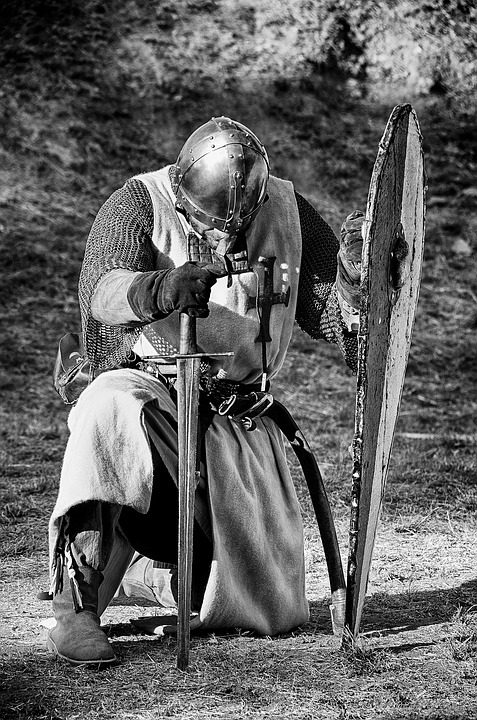
The Old Testament gives accounts of the people of Israel being an extension of the Lord to bring judgment and condemnation upon the pagan nations of Canaan. It also gives accounts of them going to war when not as an extension of the Lord, and suffering disastrous results.

As an example of the first we have God instructing the Israelites to circle the city of Jericho, following a very precise ritual that resulted in the walls of the city collapsing to the ground. The Israelites charged in and won a tremendous victory that day. As an example of the second we have the Israelites going up to battle with the Philistines with the Ark of the Covenant in 1 Samuel 4. God had not commanded them to go up to this fight, and as a result Israel lost 30,000 footmen, were forced to retreat, and the Ark of the Covenant was lost to their enemies.

I think in these opposing examples there is a lesson for when we should battle with the enemies of the church, and when we should hold our peace. We must always remember that we are the foot-soldiers and God is the general. This is His fight to fight. It is up to Him to decide when the field is right for battle and when it isn’t. The choice is His, not ours. Our duty is simply to obey. In both of the stories, the Israelites were willing to fight the Lord’s enemies, the difference was that the time to do so was right in the first instance, and not in the second.

As you see the enemies of God’s kingdom throwing their insults and barbs at the walls of the church, claiming victories and taking souls as they go, you may feel a great desire to leap into the fray, tearing them down in similar manner. But it is imperative to ask yourself, has God actually called you to fight that fight? And has He called you to fight that fight right now?

Having the courage and the desire to fight for God’s kingdom is, in-and-of-itself, a good thing, but it must be bounded by God’s will for when and how. Wage the right war when the time is right to do so, and in the meantime hold the line and be faithful.

Change in Others

Always trust that others can change,
But never think that you can make them.
Transformation will come from within or not at all.

True Wisdom

True strength is being able to fight for what is right

True humility is being able to patiently endure wrongs

True wisdom is being able to know which it is time for

Spiritual Analysis- Genesis 18:9-15

9 And they said unto him, Where is Sarah thy wife? And he said, Behold, in the tent.

10 And he said, I will certainly return unto thee according to the time of life; and, lo, Sarah thy wife shall have a son. And Sarah heard it in the tent door, which was behind him.

11 Now Abraham and Sarah were old and well stricken in age; and it ceased to be with Sarah after the manner of women.

12 Therefore Sarah laughed within herself, saying, After I am waxed old shall I have pleasure, my lord being old also?

13 And the Lord said unto Abraham, Wherefore did Sarah laugh, saying, Shall I of a surety bear a child, which am old?

14 Is any thing too hard for the Lord? At the time appointed I will return unto thee, according to the time of life, and Sarah shall have a son.

15 Then Sarah denied, saying, I laughed not; for she was afraid. And he said, Nay; but thou didst laugh

I find this passage rather comical. Sarah finds the Lord’s promise incredulous and inwardly laughs. But of course, with God no inward thought is private. When He calls her out she tries to deny it, but He reiterates “nay; but thou didst laugh.”

And then He drops it. He reproved her for doubting Him and corrected her for lying to Him, but He doesn’t need to punish her for having a moment of everyday human incredulity.

Because Sarah’s behavior is actually very common. When we speak with God we frequently forget just who it is we’re talking to. I, myself, have tried to bargain with Him and con Him, I’ve made promises that I knew I wouldn’t keep, and I’ve quickly disbelieved His declarations of love. I’ve made the mistake of seeing Him as just another man, and He has called me out on that. But then, as with Sarah, He has also patiently waited for me to take Him seriously so we can move forward.

Influence and Persuasion- Matthew 23:37, Nehemiah 9:30-31 (NIV), Psalm 103:8

O Jerusalem, Jerusalem, thou that killest the prophets, and stonest them which are sent unto thee, how often would I have gathered thy children together, even as a hen gathereth her chickens under her wings, and ye would not!

For many years you were patient with them. By your Spirit you warned them through your prophets. Yet they paid no attention, so you gave them into the hands of the neighboring peoples.
But in your great mercy you did not put an end to them or abandon them, for you are a gracious and merciful God.

The LORD is merciful and gracious, slow to anger, and plenteous in mercy.

COMMENTARY

O Jerusalem, thou that killest the prophets, and stonest them which are sent unto thee
By your Spirit you warned them through your prophets. Yet they paid no attention
Yesterday I looked at the example of how Satan tries to force certain behaviors from us, and the methods of fear and manipulation he uses when we resist him. Today I want to look at the example of how God influences and persuades His children when they resist the behavior He wants for them.
And as it turns out, the entire Old Testament is a lesson in exactly this! So many of its passages are focused around a chosen people who will not meet their better nature. God wants one thing, they want another, and we get to see how He deals with that conflict.

How often would I have gathered thy children, as a hen gathereth her chickens under her wings, and ye would not!
Yet they paid no attention, so you gave them into the hands of the neighboring peoples
And the first of God’s methods I find is that of patience. We see that patience first in how he handles the rebelling of His children. He would gather them, but they refuse, and so He lets them go. He does not try to force them, He lets them choose, and then He lets them reap the natural consequence of those actions.
God cautioned Israel that their neighboring nations only meant them harm, but Israel still chose to make friends with them and adopt their philosophies and theologies. And rather than try to interject Himself, God just let things play out.

In your great mercy you did not put an end to them, for you are a gracious and merciful God
The LORD is merciful and gracious, slow to anger, and plenteous in mercy
And what is it that God is patiently waiting for? For His children to finally return. Even though they betrayed and abandoned Him, He still waits to give them love. Here we see His second and third principles: to be merciful and forgiving.
He lets us choose for ourselves, He lets us go when we choose to leave, but He’s still there for us when we return. In each step He waits for us to act under our own volition. There is none of the “forcing” we saw from Satan, only patience and mercy.

Seeking Spiritual Witnesses- Psalm 27:14, Habakkuk 2:3, Acts 2:1-2

Wait on the Lord: be of good courage, and he shall strengthen thine heart: wait, I say, on the Lord.

For the vision is yet for an appointed time, but at the end it shall speak, and not lie: though it tarry, wait for it; because it will surely come, it will not tarry.

And when the day of Pentecost was fully come, they were all with one accord in one place.
And suddenly there came a sound from heaven as of a rushing mighty wind, and it filled all the house where they were sitting.

COMMENTARY

Wait, I say, on the Lord
For the vision is yet for an appointed time, wait for it; because it will surely come
God wants us to ask Him for the portions of the Spirit that we need in our lives. We should feel emboldened to request witnesses, a change of heart, and the blessings that we feel He wants to give us. We are assured that if we ask, we shall receive…but never are we told exactly when.
I know from personal experience that God will answer my prayers, but now I am a father, and I am anxious for my son to learn this truth as well. I find myself anxiously wishing that I could force a spiritual experience around him so that I could point to it and say “see, son, this is it. This is what it’s all about.”
But I can’t force these things to happen, because the timing of them just isn’t up to me.

They were all with one accord in one place. And suddenly there came a sound from heaven, and it filled all the house.
This does not mean that I am powerless, though. What I can do is foster a spiritual atmosphere, a climate where God’s touch can come when it is ready to. The early saints gathered themselves to worship in one place, and that communion invited heaven to join them.
I can bring my son to gatherings of other disciples, I can read the scriptures with him, and I can pray with him. I can leave the door open for the Spirit to come to us, and wait for it to arrive. Perhaps tonight, when our family has our spiritual devotional, God’s Spirit will come into our home very strongly. And if not tonight, then it is alright, perhaps it will come tomorrow.

Divided from God- Romans 8:24-25, James 1:3-4

For we are saved by hope: but hope that is seen is not hope: for what a man seeth, why doth he yet hope for?
But if we hope for that we see not, then do we with patience wait for it.

Knowing this, that the trying of your faith worketh patience.
But let patience have her perfect work, that ye may be perfect and entire, wanting nothing.

COMMENTARY

But if we hope for that we see not, then do we with patience wait for it
We have previously noted that God would not have put this divide between us and Him unless it was for our own good. One of the good qualities that this brings about in us is patience.
Patience is a virtue that is too easily forgotten. We all know that faith is supremely important, but there cannot be any faith without patience. Faith is putting trust and confidence in a yet-unrealized good, it is anticipating a blessing that we do not yet hold. By necessity, there is a period of time between us establishing our faith and our receiving the fruits of it. But we won’t be able to get through that period unless we are willing to wait…with patience.

But let patience have her perfect work, that ye may be perfect and entire, wanting nothing
Patience is both a means and an end. By exercising it we stop demanding that we be given things right now, and so we become content, “wanting nothing.” But then, having become a patient being, we receive all, and thus are “wanting nothing” in an entirely different sense.
We long to see our Father, it is a desire ingrained in our infinite soul. What better way to teach us patience than to remove the possibility for that very thing? We have to make our peace with living incomplete. But if we have made our peace, then we are complete. And then, being complete, we are ready to receive the Father.

Faith vs Fear- Psalm 56:4, Matthew 10:28, Doctrine and Covenants 101:36-37

In God I will praise his word, in God I have put my trust; I will not fear what flesh can do unto me.

And fear not them which kill the body, but are not able to kill the soul: but rather fear him which is able to destroy both soul and body in hell.

Wherefore, fear not even unto death; for in this world your joy is not full, but in me your joy is full.
Therefore, care not for the body, neither the life of the body; but care for the soul, and for the life of the soul.

COMMENTARY

And fear not them which kill the body, but are not able to kill the soul
Therefore, care not for the body, neither the life of the body; but care for the soul, and for the life of the soul
As we have mentioned, part of replacing fear with faith is acknowledging that God possesses all power, and that He can save us from every threat imaginable…if it is His will. The other element of surrendering our fear, then, is to accept the times when it is not God’s will. We need to believe that even in those moments we are still preserved in what really matters.
Many the faithful disciple has prayed for relief from sickness, oppression, and even death, yet been told “no, this trial is one that you are supposed to pass through.” At first this might sound like being abandoned back to fear, but in reality it is being lifted to greater faith.

For in this world your joy is not full, but in me your joy is full
If our hope is that depending on God will shield us from every pain, then our happiness is still tied to worldly security. We are still living in the “fear of the world.” And even if God did circumvent all worldly pain and give us all worldly pleasure, our joy would still be unfulfilled, because this world simply does not have what it takes to provide completeness. Fulfillment of the flesh is a game you just cannot win.
God wants something better for us. He does not want to merely mask our fears, He wants to help us overcome them. So sometimes He isn’t going to give us worldly comfort and He isn’t going to spare us worldly pain. What He is going to do, though, is help us through worldly pain with spiritual comfort. In this way He is bit-by-bit weaning us from the flesh and supplanting it with the soul. And in the needs of the soul He does provide all and we do find fullness of joy.

Sow and Then Reap- Hosea 8:7, Job 4:8, 2 Corinthians 9:6, Galatians 6:7-8

For they have sown the wind, and they shall reap the whirlwind: it hath no stalk: the bud shall yield no meal: if so be it yield, the strangers shall swallow it up.

Even as I have seen, they that plow iniquity, and sow wickedness, reap the same.

But this I say, He which soweth sparingly shall reap also sparingly; and he which soweth bountifully shall reap also bountifully.

Be not deceived; God is not mocked: for whatsoever a man soweth, that shall he also reap.
For he that soweth to his flesh shall of the flesh reap corruption; but he that soweth to the Spirit shall of the Spirit reap life everlasting.

COMMENTARY

For whatsoever a man soweth, that shall he also reap
The first and most obvious lesson that the scriptures teach us about sowing and reaping is that there is a cause-and-effect relationship between the two. “What you sow is what you reap” seems so obvious that one can hardly believe it needed to be said even once, though the scriptures repeat this message numerous times.
Yet I’m sure we all can think of times where we did something bad, hoping to somehow avoid the negative consequences that always follow. Though the principle “sow what you reap” held true for everyone else, we were going to be the exception.
Many times we talk about having faith in good. We say to trust that good works bring good rewards. But sometimes I think we need to have faith in the bad as well. We need to have a faith that doing bad things is just going to let us down…every time.

The bud shall yield no meal: if so be it yield, the strangers shall swallow it up
For he that soweth to his flesh shall of the flesh reap corruption

Notice that these scriptures allow for the phenomenon of people sowing unwisely and still appearing to be gratified for a time. Perhaps their bud will yield, perhaps they will reap flesh. But sometimes the curse is in the getting. Just ask the Israelites (Numbers 11:32-33).
Often this world puts a delay between action and consequence, but that does not mean the link of cause-and-effect is broken. Play the long game and hedge your bets on the truth that every good deed will be rewarded sooner or later.