Knowledge vs Practice- Conclusion

Deepening Theories)

I began this study simply to explain why I don’t like statements like, “action is better than knowledge.” While I saw some validity to that statement, I felt it obscured the fact that these two components of faith actually have a symbiotic relationship with one another, each requiring the other to properly exist. In the course of this study, I tried to clarify and express my own position, which ended up leading me to an even deeper understanding of the subject, as any good study should. Here are the three levels of depth that I identified in the relationship between these two components:

  1. Knowledge is fulfilled when we put it into genuine practice, and genuine practice is dependent upon us first gaining knowledge. Ultimately, all of our faithful actions have their roots in revelations of true knowledge given by God.
  2. Practice leads back to greater knowledge. It turns out that knowledge to practice is not a one-way street. The two exist in a cycle. Small actions are inspired by small knowledge, and they yield a testimony of greater knowledge, inspiring greater actions.
  3. Knowledge is the conceptual seed that only becomes part of physical reality through our practice of it. We are moved when we learn key concepts, such as mercy, but at this point that concept is only metaphysical. It is as we put that concept into practice, by actually extending mercy to another who has wronged us, that the metaphysical becomes a living reality in the world.

Essential, Thus Equal)

Thus, can we truly say that knowledge is inferior to practice? They are inseparably linked to one another, each performing a different but complementary role, neither existing without the other. Can we say that the conceptual is more important than reality, or that reality is more important than the conceptual? Both are essential, neither exists without the other.

Of course, when we look at a specific individual, we can probably identify some knowledge which he has not allowed to bloom as practice in his daily life, and in that case, yes, it would be better for him if he let his knowledge become truly alive through action. But that is a statement of how the person becomes better, not a measure of practice being more essential than knowledge.

Like anyone else, I am such a person who has unfulfilled knowledge in me. Having the knowledge isn’t the problem, the problem is that I have held it back, obstructed it from its destination. I pray that I learn to take some of my life, and give it to those ideals, so that the ideals become truly alive through me.
Knowledge vs Practice- The Theory

I have often heard that spiritual practice is more important than spiritual knowledge. Just knowing that you should do good to your fellow man doesn’t do anything to make the world better, you have to actually live that principle in your daily life.

There is something true in this sentiment, but it isn’t as though these two types of testimony live in isolation from one another. Knowledge of the first order precedes practice, and knowledge of the second order follows practice. I’ll explain that further in the course of this study, but for now my point is simply that there is a cyclical relationship between knowledge and practice, and practice typically only occurs because we first gained some sort of knowledge.

Thus, there actually is no “knowledge vs practice.” While I see some merit in describing practice as better than knowledge, I fear that portraying them in this opposing light may create the illusion that we can have practice without any knowledge and perhaps should aspire to that. I believe it would create a clearer picture in our minds if we were to instead say that “knowledge is incomplete without practice.” This, I feel, communicates that practice is a continuation of what began with knowledge, a further step along the same path.

Now, just like practice cements what was previously only knowledge, examples can cement what was previously only theory. I’ve already given the theory, so now I will grow from it with specific examples in scripture. Hopefully those will make clear anything that is still murky from what we have discussed today.

How to Get the Praise You Deserve: Part Three

Being Nice to Myself)

In my last post I spoke about a practice of giving myself words of validation and appreciation. I explained how this process has helped to satisfy my need to have my good deeds seen and acknowledged. By providing this kindness for myself, I able to let go of unhealthy obsessions, such as trying to coerce love and attention out of others.

The way that I give myself this validation and appreciation is very simple, with only a few steps to follow. Basically, these steps come down to showing myself the same consideration and attention that I would to another person. I certainly don’t want to be sending myself a message that I am being taken for granted!

The steps I follow in this process are:

  • Set aside time. I wouldn’t want to praise the good someone else had done in an offhand manner, so I don’t do that to myself either. I like to wait until the evening, after the kids have gone down and I am able to have a conversation with myself free from distraction. This practice doesn’t ever take me too long, but I make sure it can last for as long as it needs.
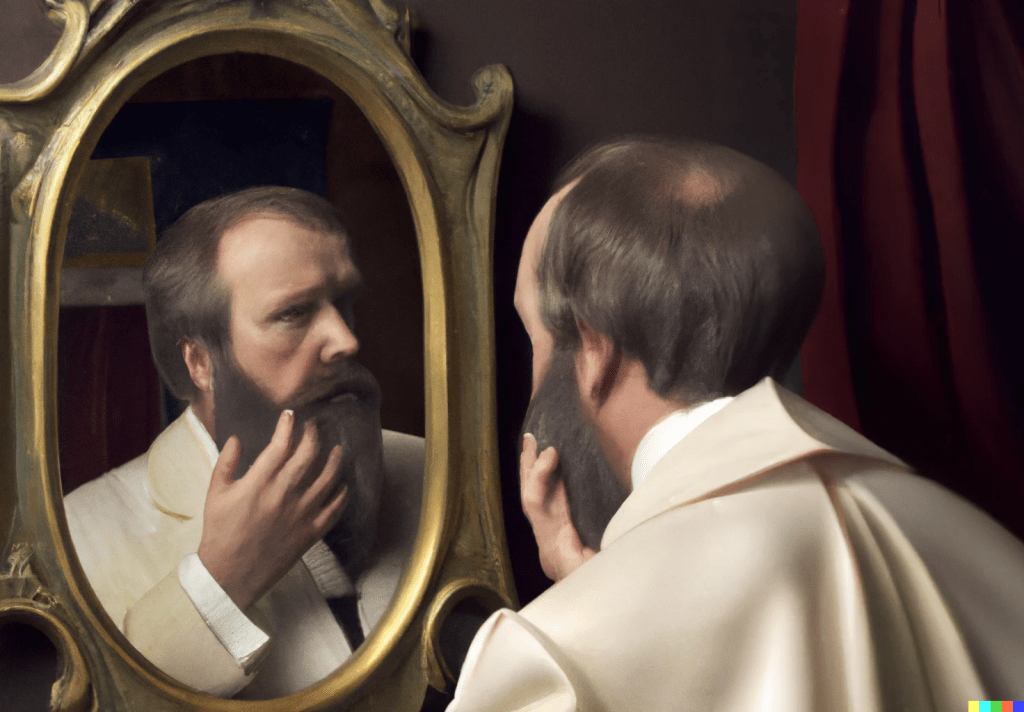
  • Look myself in the eye. This, of course, requires a mirror. I don’t want to hear these words of kindness from a faceless, inner place. I make the effort to look myself full in the eye and show my sincerity as I speak.
  • Speak out loud. It’s easy to be self-conscious about this practice, and at first it was tempting to just think the words in my head or mutter them under my breath. But I realized that I needed to literally hear these words. This is another reason why I wait for the evening, when I can go to an isolated place and not suddenly have someone walk in on me.
  • Be specific. The last thing I want to do is broadly tell myself “good job, today.” The whole point of this is to call out all of the individual things that I did that I feel proud of. One-by-one, I go through each point and acknowledge and express gratitude for it directly. And I use my knowledge of my own inner workings to call out things that no one else could. Like “I know you were a bit unsure about approaching that stranger to see if he needed help, but you were bold and went forward anyhow.” As you can see, I’m not only specific about the event (approaching the stranger), but also about the good quality shown (being bold).
  • Pause and listen. Once I’ve covered all the things that were at the forefront of the mind, I pause to listen to my own heart. Have I forgotten something? Did some of my words not feel right? I make sure that I stay in this moment until I feel totally seen and appreciated.
  • Reiterate my love. Last of all, I make sure that I know that I love and care for myself, that I see and appreciate myself, and that I will continue to be there for myself.

And this is the process that I follow. When I am on top of my self-care and recovery, I try to do it once every day. It does take a commitment of time and effort, but frankly that’s a big part of what gives it its value. All of us want to know that we’re worth it for someone to go out of their way to care for us, and why shouldn’t that someone be our own self? Honestly, even if we had another person who perfectly fulfilled that need for us, we still need to learn to treat ourselves this way as well.

I can attest that as I have done this work, I have seen a marked improvement in my emotional outlook and a definite increase in my life satisfaction. I highly recommend that you give this practice a try and see what it does for you.

All that being said, self-appreciation isn’t the end of the story. There is one particular source that I still feel we all need to feel the approval of: God. The rest of these posts will be exploring that side of things, I’ll see you tomorrow as we dive into it!

For Our Own Good- Personal Example

I never had trouble understanding why I needed to say prayers. Talking with my Father was clearly going to be the best way to receive guidance, and to draw my mind into spiritual reflection. And studying scriptures made perfect sense as well. How could I live his word unless I knew it? When I was young I struggled with boredom attending church services, but later in life came to understand the more you put into community, the more you get out of it. Tithing has never bothered me either. Sacrifice feels cleansing, and it feels good to give something away for the things I truly value, just like giving gifts to my loved ones.

There was one practice of discipleship that I never really felt the purpose for, though. Fasting. I heard other people say how it helped them to master their appetites, how it helped their spirit have the upper hand over the flesh, and I didn’t doubt that that was their genuine experience…it just wasn’t how it felt for me.

I became very hit-or-miss about the practice, and would go months without remembering to do it. I frankly didn’t feel very guilty about it, either, because it didn’t feel like I was gaining anything meaningful when I did try to do it.

And then, just recently, that changed. I really cannot say why, either. I’d like to be able to point to some key piece of understanding, or meaningful life experience, which made the practice fall into place for me, but I can’t.

Just one time I started feeling it, and I have been feeling it ever since. Maybe this was always here and I just wasn’t picking up on it? Maybe I just had to mature a bit more? I don’t know.

Interestingly, though, it isn’t quite the same experience for me that I have heard others share about. In my experience, it’s about going through the crucible. Because lately, without fail, every time I fast everything falls apart. Relationships become strained, everyone gets on their worst behavior, stress mounts up, and powerful waves of depression wash over me. It frankly feels like being cursed, where everything I touch just turns out wrong. And then, without fail, everything turns right at the very end of the fast. In those last hours pride dissipates, problems work out, stings are soothed, and I feel at peace. During the crucible I start to lose faith that things will work out…but then they always do before the end.

And I guess…I still don’t really understand fasting. Why is this experience happening this way? What is going hungry essential for God to show me this? I don’t know. But at least I can attest that it’s doing good things in me.

The Need for Refreshing- Question

Most every branch of Christianity has some sort of “sacrament.” Regularly repeated ceremonies that are meant to keep us in constant reminder of God, our dependence on Him, and our commitment to Him.

This idea of repeated ceremony is not unique to Christianity either. Confucius strongly believed in the worthiness of proper rituals, the Buddha advocated for consistent meditative practices, and Hinduism promotes regular yoga practice.

Even outside of any religious or ideological context, it has long been observed that “practice makes perfect,” and that education is most effective with regular repetition. I’d like to examine what insights the scriptures have to offer for these regularly repeated sacraments. What benefit do we derive from them? How can we approach them in a way that is best for our soul? Did God put this need for constant reminding within us, or is it simply a part of our fallen state?