
If you were an all-knowing God,
And aware that harder and more dangerous times were ahead,
It would be an act of unkindness
To not prepare your people with progressive trials and hardship.
If you were an all-knowing God,
And aware that harder and more dangerous times were ahead,
It would be an act of unkindness
To not prepare your people with progressive trials and hardship.
7 The tabernacle of the congregation, and the ark of the testimony, and the mercy seat that is thereupon, and all the furniture of the tabernacle,

8 And the table and his furniture, and the pure candlestick with all his furniture, and the altar of incense,

9 And the altar of burnt offering with all his furniture, and the laver and his foot,

10 And the cloths of service, and the holy garments for Aaron the priest, and the garments of his sons, to minister in the priest’s office,

11 And the anointing oil, and sweet incense for the holy place: according to all that I have commanded thee shall they do.
God continues describing the tasks for those He has called and inspired to create the tabernacle. He runs through all the articles for the tabernacle that have been detailed in the previous chapters, which these artisans will fashion. The Ark of the testimony, the table of shewbread, the candlestick, the altar of incense, the altar of burnt offering, the laver of washing, all the clothing for the priests, the anointing oil, and the incense.
There is a principle in the scriptures that “the Lord giveth no commandments unto the children of men, save he shall prepare a way for them that they may accomplish the thing which he commandeth them” (1 Nephi 3:7). Long before this commandment came, God had been preparing the way for it to be fulfilled. He had been preparing the skills and experiences of the artisans, He had been preparing Israel to be freed from Egypt, He had been preparing the resources that had to be used. Thus, while God was asking for effort from these people to make the tabernacle a reality, the great brunt of the work had already been borne by Him.
5 And thou shalt take the garments, and put upon Aaron the coat, and the robe of the ephod, and the ephod, and the breastplate, and gird him with the curious girdle of the ephod:

6 And thou shalt put the mitre upon his head, and put the holy crown upon the mitre.

7 Then shalt thou take the anointing oil, and pour it upon his head, and anoint him.

8 And thou shalt bring his sons, and put coats upon them.

9 And thou shalt gird them with girdles, Aaron and his sons, and put the bonnets on them: and the priest’s office shall be theirs for a perpetual statute: and thou shalt consecrate Aaron and his sons.
We hear how the clothes we heard of last chapter are placed upon the priests, and these verses appear to give the correct order in which articles would be put on. First the coat as the bottom layer, then the robe and the ephod. Next the breastplate would be secured to the front, and all the layers would be fastened by the girdle. The mitre would be placed upon the head, and finally the golden plate inscribed with HOLINESS TO THE LORD would be tied to the mitre as a holy crown.
There was a proper order to getting dressed, just as there would be a proper order to every ritual performed at the tabernacle. The priest would have to dress himself correctly each morning to be ready to conduct himself rightly in his duties. Just as every article of clothing needed to be applied in its proper time and place, so must the affairs of our lives be properly ordered and timed as well.
Verse 7 also mentions the anointing with oil, which is the touch of the divine to complete the adornment of the priests. They would put themselves in order, then God would enrobe them in His spirit to be fully ready.
As I read through the rest of the process, I will treat it as a symbol for all of us in our approach to the Lord. The first step, as we have already seen, is to set ourselves in order and clean up our act as best we can. Just for following our conscience in this way, God will make His spirit rest upon us, like the anointing of oil. So prepared, we will be ready to progress further towards Him.
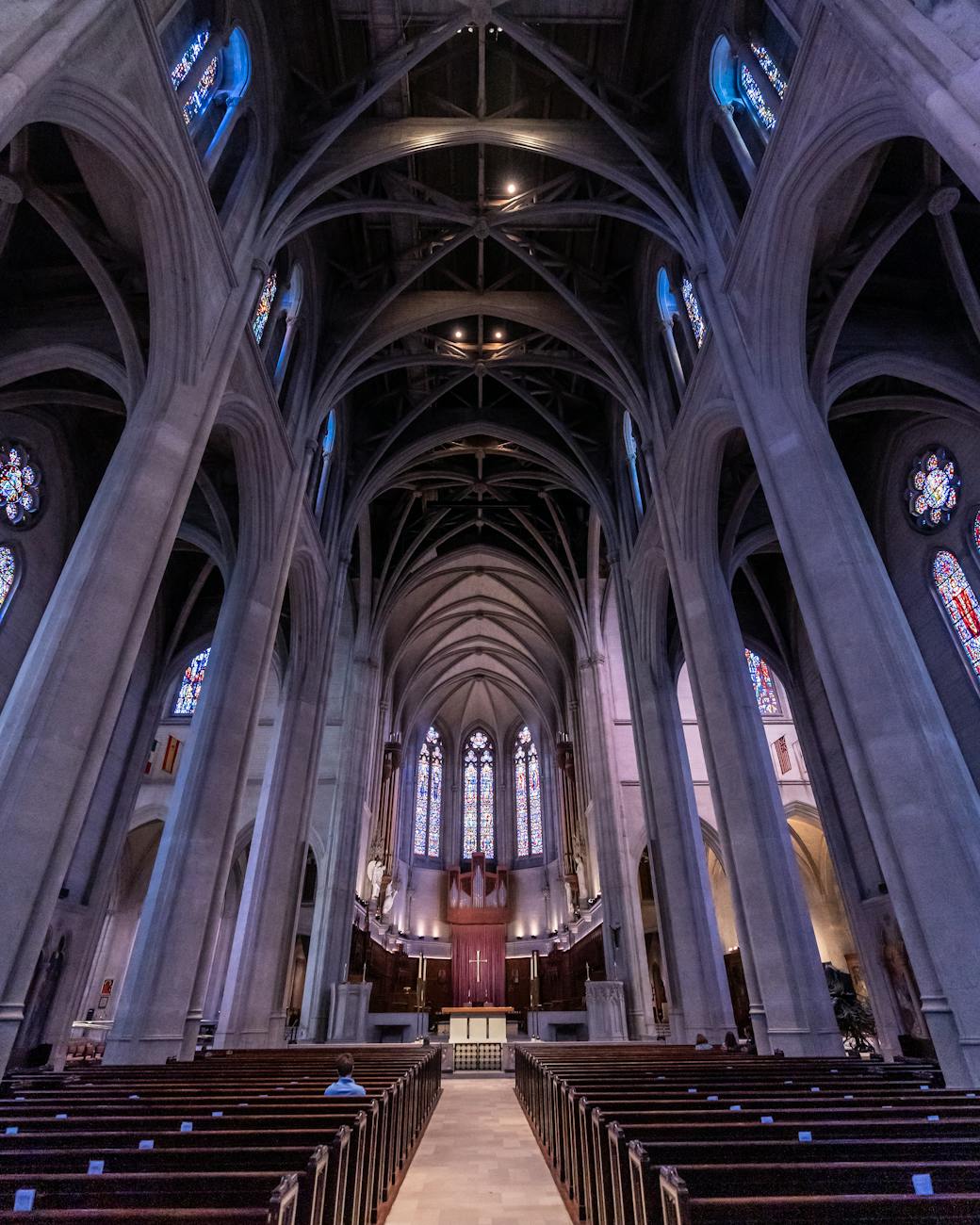
The control you give God over your life
When times are good
Is the control God has to save your life
When times are evil
10 And the Lord said unto Moses, Go unto the people, and sanctify them to day and to morrow, and let them wash their clothes,

11 And be ready against the third day: for the third day the Lord will come down in the sight of all the people upon mount Sinai.
Already we heard how the Israelites expressed their intent to do all that the Lord commanded them, and He had responded by saying that He would let them hear His voice directly. Before that could transpire, though, they had to go through a purification process. Much as how Moses had been commanded to put the shoes off his feet at the burning bush, the Israelites now needed to wash their clothes. This was a time for removing the dirt and the dust, the particles of the earth, in order to have as little of the world between them and the Lord when he arrived.
We will hear in the coming verses that the people were also instructed to not be sexually active during this period of three days. Thus this was also to be a time of fasting from the basic desires and habits of the flesh, a time of enhancing the spirit within. Their spirits had to be ready to meet the Lord’s spirit, their hearts had to be open to His heart, their will had to be subservient to His will. Only then would they be ready to receive His word as it needed to be received.

God often has to prepare the answers to our prayers. Outside of our view people are being moved, opportunities are being orchestrated, hearts are being readied, and all of this takes time and effort. We only recognize the work when God presents the gift to us, finished and whole.
Just because you haven’t received your desire yet does not mean that you have been forgotten, or that God has answered with a “no.” Like the Israelites in Egypt, God might very well be working out your deliverance over time.
1 And Jacob lifted up his eyes, and looked, and, behold, Esau came, and with him four hundred men. And he divided the children unto Leah, and unto Rachel, and unto the two handmaids.

2 And he put the handmaids and their children foremost, and Leah and her children after, and Rachel and Joseph hindermost.

3 And he passed over before them, and bowed himself to the ground seven times, until he came near to his brother.

4 And Esau ran to meet him, and embraced him, and fell on his neck, and kissed him: and they wept.
At long last the moment of reckoning has come for Jacob. He sees Esau and his men, which presumably means that they have also seen him, meaning it would be too late to run away. Jacob sets himself ahead of his family, and as he comes to Esau he bows seven times, a final gesture to show his immense reverence and respect. It truly is hard to think what more he could have done to appease any lingering wrath in Esau.
And then…Jacob finds out that all his fear was unnecessary. Esau runs forward, embraces his brother, and kisses him. He has no intention of causing harm to Jacob, rather he is moved to tears by being reunited after these long twenty years!
All of Jacob’s preparation may not have been necessary for his survival, but I do not think it was a wasted effort. Abraham’s preparation to sacrifice Isaac ended up not being necessary either, but the exercise was still essential in how it revealed Abraham to himself. So, too, I imagine that Jacob had a far greater understanding of what he was made of for having passed through this trial. And, like Abraham, he had learned that with God as His shepherd, things would work themselves out.
I have just finished a study examining the need for opposites in our lives. There were one such opposite-paring that particularly stood out to me during my research: that of faith-and-fear. Essentially these two qualities describe how we view the unknown.
Faith is the hope of good things yet unrealized, whereas fear is the dread of bad things yet unrealized. While it might seem inconsequential whether we view the future in positive or negative light, the fact that it is the future means that we can influence and change it by our state-of-mind. Thus the faithful are more likely to bring about the future that they hoped for, and the fearful to bring about the future that they dreaded.
This is already very interesting, but I feel we are still only scratching the surface. For example while there is faith, there is also delusion. While there is fear, there is also preparation. I want to understand better where we draw the line between those. I want to know what the faith-filled life looks like, and how I can tell where I am on the faith-fear spectrum. Over the next few days I’ll dive into scriptural passages on these topics and we’ll see what lessons can be gleaned from them.
 Spiritual Wanderings