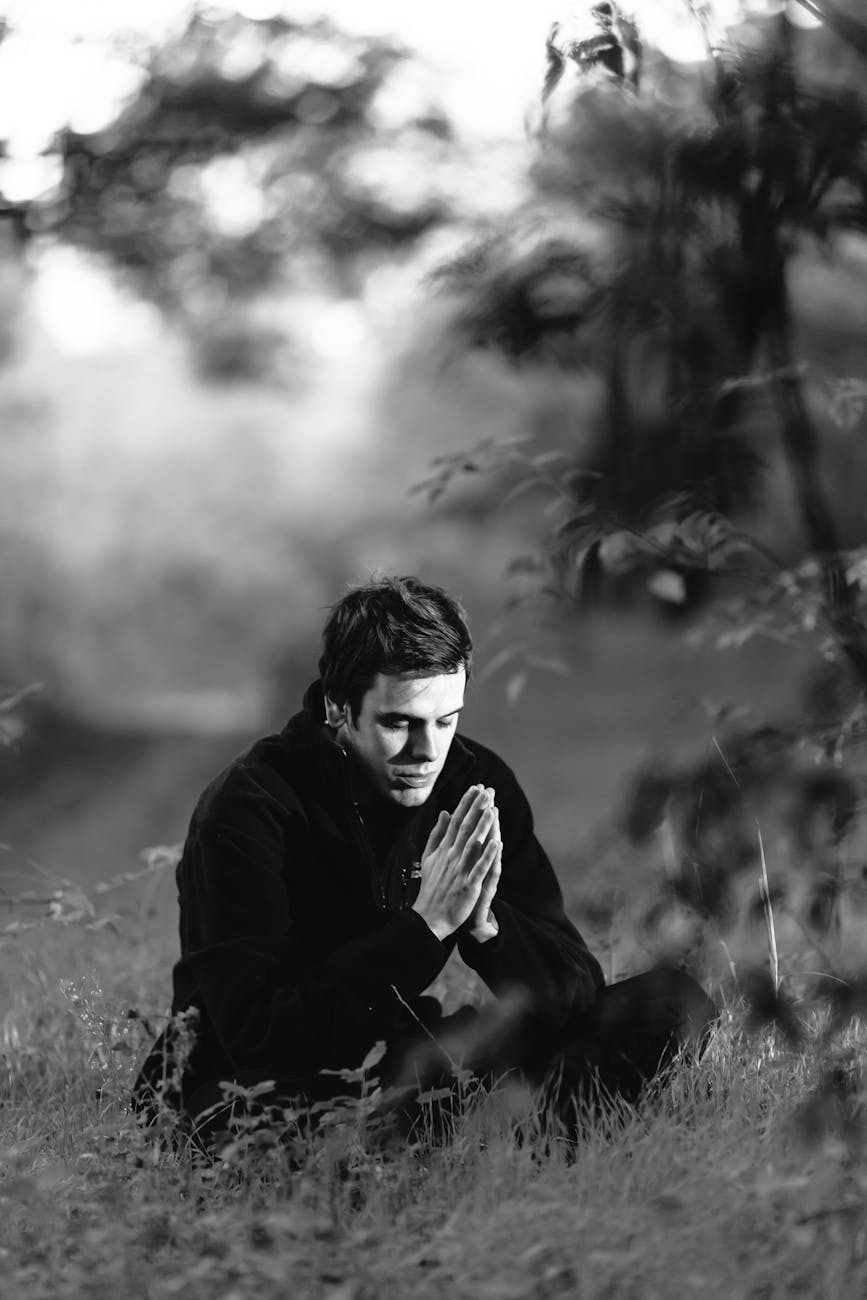
Knowledge vs Practice- Conclusion

Deepening Theories)

I began this study simply to explain why I don’t like statements like, “action is better than knowledge.” While I saw some validity to that statement, I felt it obscured the fact that these two components of faith actually have a symbiotic relationship with one another, each requiring the other to properly exist. In the course of this study, I tried to clarify and express my own position, which ended up leading me to an even deeper understanding of the subject, as any good study should. Here are the three levels of depth that I identified in the relationship between these two components:

  1. Knowledge is fulfilled when we put it into genuine practice, and genuine practice is dependent upon us first gaining knowledge. Ultimately, all of our faithful actions have their roots in revelations of true knowledge given by God.
  2. Practice leads back to greater knowledge. It turns out that knowledge to practice is not a one-way street. The two exist in a cycle. Small actions are inspired by small knowledge, and they yield a testimony of greater knowledge, inspiring greater actions.
  3. Knowledge is the conceptual seed that only becomes part of physical reality through our practice of it. We are moved when we learn key concepts, such as mercy, but at this point that concept is only metaphysical. It is as we put that concept into practice, by actually extending mercy to another who has wronged us, that the metaphysical becomes a living reality in the world.

Essential, Thus Equal)

Thus, can we truly say that knowledge is inferior to practice? They are inseparably linked to one another, each performing a different but complementary role, neither existing without the other. Can we say that the conceptual is more important than reality, or that reality is more important than the conceptual? Both are essential, neither exists without the other.

Of course, when we look at a specific individual, we can probably identify some knowledge which he has not allowed to bloom as practice in his daily life, and in that case, yes, it would be better for him if he let his knowledge become truly alive through action. But that is a statement of how the person becomes better, not a measure of practice being more essential than knowledge.

Like anyone else, I am such a person who has unfulfilled knowledge in me. Having the knowledge isn’t the problem, the problem is that I have held it back, obstructed it from its destination. I pray that I learn to take some of my life, and give it to those ideals, so that the ideals become truly alive through me.


Knowledge vs Practice- The Mystery Connection

A Connection Between Worlds)

Two posts ago I spoke about the apparent limitless potential of knowledge to cause change in the lives of individuals and the world. Of course, while knowledge can be the catalyst for action it is not the action itself.

This is tied to an interesting phenomenon that has puzzled man for thousands of years. Many have noted how something that is merely conceptual can become something manifest in reality. It is a pattern that we observe, and know that this connection clearly exists, but we don’t actually understand how it works. The theologian, the philosopher, the biologist, and the physicist, none of them have found out the mystery of this connection.

Why do mathematical truths, purely conceptual, play out in physical reality? How do concepts in the mind become come out as words from our mouths? And how does mere knowledge become action? In all these examples and more, we see that the metaphysical world can manipulate and change the physical, but it does so by a secret method that God has not deemed fit to reveal.

Metaphysical Origins)

My purpose in pointing this out is to show that if knowledge is merely conceptual, and we have a common pattern of the conceptual somehow being translated into manifest reality, then that supports my initial claim that knowledge precedes action and then action begets new knowledge. For that is the common pattern that we see between the immaterial and material states of man. The artist has a creative vision, and builds the monument, and then the monument inspires a creative vision in the mind of its beholder.

To gain knowledge is to expand our immaterial domain, which increases our ability to perform in the real world. But note that the expansion of knowledge only increases the ability to perform. It is possible to gain much knowledge and never translate it into action, in which case it is wasted. But when we do see greater action, it must come from a place of greater knowledge.

I want to take a moment to make clear that when I advocate for the gaining of knowledge, I do not merely mean acquiring trivial facts. Knowledge can take more than one form. To hear a revelation of a specific truth is one form of knowledge, one that is factual. To be moved emotionally by a kind act is another form of knowledge, one that is experiential. Thus, a person who knows little in the way of “facts” may still possess a great reserve of “understanding,” and from that have the immaterial knowledge to give tremendous action.

Ideals Made Alive

Truth, mercy, justice, hope, love, and courage.

These ideals belong to a higher plane of existence: what the spiritual man calls heaven, the philosopher calls metaphysics, and the mathematical man calls abstraction. Though immaterial and conceptual, these concepts are not sealed off from the living world.

When we lend our lives to these ideals, these ideals become alive. We are the vessels to speak truth, show mercy, enact justice, raise hope, share love, and stand in courage. These principles take form through us.

Conception and Hardening

In times of comfort, we are able to derive ideals based on pure principles, our logic uncompromised by the instincts of self-preservation or self-advantage that might possess us in times of trouble. But it is only in times of suffering that those ideals are actually tested, transformed from theoretical belief to lived reality. Thus, perfect theory becomes raw conviction, all according to the seasons and wisdom of God.

Reality Based Upon a Lie

A reality based upon a lie can only end in obliteration
For a lie is the inversion of reality

Right Before Belief

Sometimes you have to do what’s right
Before you believe in it
To find out that it’s real

Shame, the Unspeakable

If I were to give a personal definition of shame, it was all the things in my life that were unspeakable. Since about the age of 7 or 8 I started to collect certain things that I didn’t dare talk to anyone about, and it grew throughout the years. It was filled with deeply embarrassing things that I did, times that I hurt someone I loved for selfish reasons, and secret repulsive behaviors I engaged in.

All of these shameful things were real weights in my life, they were extremely present and significant in my mind, yet totally absent in my words and confessions. My reality was therefore twisted around things that were genuine, but treated as if they weren’t, and that twisting caused me all manner of anxiety and misery.

In the moment my conundrum seemed so incredibly complicated, yet the solution to it was ridiculously simple. If my crushing shame was all of the things that I couldn’t speak, then all I had to do was speak them aloud and they would cease to be shame, by definition. After twenty years I did eventually start divulging the things I had refused to talk about, and the relief and release that I experienced took me entirely by surprise. Only in hindsight has the logic of what transpired in those moments of confession revealed itself to me. I confessed not knowing the significance of what I was doing, but I received the full benefits of it regardless. I was speaking the unspeakable, so the shameful became unashamed.

If you have any things in your own life that are unspeakable, I urge you to look for the person and place where you can start to confess your guilt and shame. I wouldn’t say to divulge those things to just anyone, Jesus did teach us not to “cast our pearls before swine,” after all. But I would hope that you could find at least one trusted minister, or well-meaning friend, or recovery group of similarly-burdened individuals. Just find anyone who can receive that confession and offer you peace and wholeness in return. I can tell you that in my own life nothing else has given me as much healing and change of heart as this, and I pray it may be the same for you, too.

True Freedom

True freedom is not having your chains removed, it is realizing they were never there in the first place.

Reasons for Disbelief- The Shattered View

I have published several posts exploring different reasons why people refuse to live by faith, or believe in the gospel, or accept God as their father and creator. I spoke of people who renounce God due to passive skepticism, or having a hierarchy of authority that is incompatible with God, or possessing an instinct to believe every idea from other people, or being swayed by close relationships, or having model of the world that refutes the need for a Creator.

Through all of these varied reasons, though, I think there is one shared core, something that I started to describe with my last post, and today I will summarize my series by laying out that common theme in greater detail.

Breaking Reality)

The core reason why most people refuse faith is that, on a fundamental level, they are converted to a worldview that is incompatible with the reality of God. Their current worldview might make them try to justify their sins, depend on a relationship with someone who is in opposition to God, or fear being damned if they give up on old ideals. Most of us find things that we rely on to make sense of the world and cope with our fears. And because we are human, we tend to choose imperfect things that are not God.

In short, accepting God often means shattering our entire conception of reality and personal safety. It means cutting out the foundation with nothing more than the hope that there will be a God who catches us as we fall.

There are many who first profess not to believe in God with an attitude of calm rationality, but who then devolve into hysterical, emotional outbursts when faced with a well-reasoned argument for God that they do not have a refutation for. This is a fear-based reaction, a survival mechanism to scare away the proselytizer who is pulling apart the disbeliever’s entire universe. The fact is, most people don’t care what the argument for God is. They might have pretended to have rejected Him for intellectual reasons, but most of them actually have an emotional reason for not surrendering to Him. You’re never going to be able to reason someone into abandoning a position that they are still using for a crutch.

All of the reasons for disbelief that I have given in this series come down to these elements of fear and coping in one way or another. When people see the evidence for God, they are able to work ahead and intuit how an admission of His reality might require them to stop relying on old superstitions, or end certain relationships, or do the hard work of investigating the truth, or stop listening to certain authorities. For most people, these are massive, life-changing alterations, and they are scary. This is why those who proselytize are to do so in a spirit of understanding and love, having great reverence and respect for the great undertaking they are inviting people to.

But the hardness of the way is in no way a justification for not following it. For any of us who are on the precipice of breaking a false worldview, may we be reassured by the knowledge that we were born to do great and heroic things, the greatest and most heroic of which may very well be smashing this carefully-crafted reality, casting aside the crutches that we have always depended upon, and taking a leap of faith into the unseen and unknown!

Reasons for Disbelief- Models of Reality

Understanding the World)

Mankind has always had the desire to understand the world around us. Indeed, the desire to comprehend our reality seems to be as great as our desire to know what is morally right. Long before our modern conception of the scientific method, people would try to explain life and death, disease, the changing seasons, and the different elements of nature by telling stories of unseen cosmic forces. Even with the advent of the scientific method started to take hold, people would still give naïve, pseudo-scientific explanations for the world, such as the medical descriptions of the four humours of the body.

Because of our great hunger to understand ourselves and the world we inhabit, we tend not to accept a belief system that does not fit with our perception of reality. To believe in God we have to believe that He is the cause of the world as we see it today. Conversely, if we do not see God as the cause of the world, then we do not feel it right to believe in Him. As a result, just as the scientific explanation for the world has parted itself from intelligent design, the general population has increasingly parted ways with their spiritual beliefs.

Limitations of Our Models)

Of course, no model for understanding the universe is complete. Much as the die-hard atheist might have us believe otherwise, we have no explanation for why the universe is comprised of an ordered nature, or how the first proteins could have formed by random chance. This is a topic of such depth and breadth that I won’t attempt to cover it here, but just know that the idea that the building blocks of life randomly collided together without any intelligent intervention has serious mathematical problems. The odds against such an occurrence are astronomical beyond belief, and require assumptions that go against the tenets of natural selection. Thus, the scientific explanation is actually at war with itself in trying to model these developments.

But most devotees of science don’t delve that deep into their own subject. They see clear, natural explanations for the realities that are immediately at hand, such as for how a ball drops, and a balloon rises, and ice melts, and fire consumes wood, and they are content to say that because everything they see is accounted for, there is no need for a God. So long as the edifice looks complete around us, we tend to not care whether there’s a rational foundation down below.

The Resistance to Change)

And there is something about this which we can abstract into a general rule for disbelief. Materialists will passionately reject rational, scientifically-backed criticisms of their materialistic beliefs because they are afraid of having their conception of reality upended. They might claim all sorts of rational superiority, but when they face a rational argument that they cannot refute, many of them will become emotional and openly hostile. Ironically, it is just the same when a theist who does not actually understand his doctrine has the flaws in his faith pointed out as well. In both cases, what is being challenged is the person’s core desire to hold to a model for the universe, an intense fear of what would happen if they let that model go.

And that basic human instinct is true whether we are talking about scientific materialists, or disciples of social opinion, or a theist that refuses to consider a different doctrine, or any other sort of person that dismisses the true God out of hand, even in the face of rational arguments. People of all sorts have concocted their personal model of the world, and adopting a more divine belief system will always break that model to one degree or another.

As such, those who proselytize Christ’s gospel should have reverence for the fact that when they ask to share a message, really they are asking to shatter that other person’s entire view of reality! Yes, it is a flawed reality, and it would be replaced with something better, but it’s understandable why the other person is so hesitant and unsure. Their reluctance is understandable, and a great deal of love and support is usually necessary for them to make the transition.

Reason #5 for Disbelief is that we have a previously-established model of reality that doesn’t allow for Him. We would have to shatter our existence in order to make way for His existence, and that prospect terrifies us.