Faith vs Works- One More Type of Good Works

Yesterday I shared about general good works that cultivate our faith in God and Jesus Christ. These are the everyday things that we feel we should do in our conscience. When we do those things, it increases the good in the world and transforms our hearts to be more dedicated to the Lord. This is a very important category of good works, but it is not the only one.

Ordinances and Sacraments)

To ancient Israel God gave a great number of laws and rituals. There were specific customs that had to be observed, sacrifices that had to be made, and holy days that had to be remembered. Of course, when Jesus came, he fulfilled these rituals, and they were done away with, but we are mistaken if we assume that that means that there are no more essential rituals that still apply to us today. Just as Christ’s church brought an end to observing the sabbath on the last day of the week and replaced it with a sabbath on the first day, so too, new mandatory rituals were introduced in place of the old ones.

This is the second category of good works that we must recognize. We don’t just have the things that are generally good for cultivating our faith, we also have mandatory rituals that are essential steps in our salvation. Some traditions may refer to these as “sacraments,” some as “ordinances,” some as “mysteries,” and some as “rites.” The most universal and familiar of these special rituals is baptism.

Sola Fide)

Of course, not every Christian tradition recognizes the existence of ordinances/sacraments that are necessary for salvation. They essentially collapse general good works (prayer, scripture study, service) and essential works (baptism) together as one.

However, we have already shared in this series how the words of Jesus refutes this. “And he said unto them, Go ye into all the world, and preach the gospel to every creature. He that believeth and is baptized shall be saved; but he that believeth not shall be damned,”(Mark 16:15-16). Jesus explicitly states that being baptized is a prerequisite for salvation.

This leads us back to our original tension. If there are certain ordinances that are essential for salvation, then how can Paul say, “By grace are ye saved through faith; and that not of yourselves: it is the gift of God: Not of works, lest any man should boast,” (Ephesians 2:8-9)?

Well, one answer to that is that just because a work is required for salvation does not mean that it earns our way into heaven. Notice in Paul’s statement that faith isn’t what is really saving us either. It is grace. Thus, faith and necessary works are actually at the same level of essential but non-saving. Both are commanded of God, but neither is sufficient to gain entry into heaven. We can perform all the ordinances and have all the faith, and thus be eligible for salvation, but we’re still not saved by anything but grace. Just like I might have all the requirements and qualities listed on a job application, and thus be eligible for being hired, but I’m still not hired by anything but the bestowal of the employer.

Now, at this point a person might still have some questions or concerns. For example, what about all those who died without an opportunity for baptism? We will get to those matters in tomorrow’s post, but for now, I want to emphasize the importance of accepting the words of scripture without prior bias. If Paul says that we are saved by grace through faith, believe it. If Jesus says that baptism is a required work for salvation, believe it. If we don’t know how to resolve those two yet, that’s okay. Let us accept some initial confusion and uncertainty and embrace the unknown. Surely that is better than throwing away one half of scripture or the other!
Faith vs Works- One Type of Good Works

Thus far I have been talking about “works” as only one category, but it is actually two. To avoid confusion, I thought I should take a moment to describe these categories, and how each relates to our personal salvation. Today I will examine one type, and tomorrow the other.

Faith-Building Good Works)

The first category of good works is when we do something just because it is a good thing to do. Helping others in need, telling the truth, giving up our vices, singing songs of praise, praying, and other activities like these all fall into this first category.

These practices are important because they help to build our faith in the Almighty. Indeed, they are inseparable from faith. We are motivated to do them by what faith we have and doing them increases our faith over time.

It should be noted, actions like these are available to all people, regardless of their religion. A Hindu from the 7th century could dedicate to himself to good works, and by it develop a heart that is committed to cosmic, universal truth, the same as a modern-day devout Christian. All people can cultivate a soul that is fit for alignment with the author of all good, simply by listening to their conscience and doing as it dictates.

Are These Works necessary?

So, are good works like these necessary for salvation? Well, as we have already noted, these types of works are inseparable with developing our faith in the creator, and in making our hearts submissive to His will, so in a sense, yes. Without these works, we likely won’t be able to accept our Lord and Savior, because our hearts will not have been softened.

But, in another sense, the specific good works are not individually mandatory. Imagine that one man devotes himself to the study of God’s word, hungering for the knowledge of the divine, and by it cultivates a faithful and willing heart, while another man depends primarily on acts of service to keep himself humble and dedicated to the greater good. It is conceivable that while these men grew their faith through different good works, that both will be welcomed with open arms by the Lord. Not because of the specific work they performed, but because of how the work cultivated their faith.

We cannot quantify the significance of each good work. We cannot count the number of prayers offered or the number of hours served and judge a soul by those figures. And of course, no amount of these good works is sufficient to earn a place in heaven.

Thus, believing that good works saves us is wrong. But also thinking that we are saved by faith, and not works, is also wrong. Both views make a categorical error. They both assume that faith and works are separate, when really, they are two sides of the same coin.

We do need to do good works, and we are saved by faith. Both of those conditions are satisfied together. We do good works as part of growing our faith, and having faith in Christ, we become well-aligned to His kingdom and can then be saved by His grace.

Thus, we should tell all people to listen to their conscience and do the work it tells them to do. But they should do it to purify their hearts and to propagate God’s good in the world, with no thought of heavenly transaction. They should do it with their focus on what they are becoming, not on where they are going. They should do good works to be more like Jesus and then leave to Jesus the matter of their salvation.

Faith vs Works- Two More Common Myths

In the last post we broke down two of the common myths in the faith vs works debate. Arguments that would have us believe that it really has to be just one or the other. Today I want to address two more, to really make clear that the scriptures do not teach us to take part in this feud.

Myth #1: All you have to do is confess the name of Jesus, accept him as your Lord and Savior, and then you are saved.

It is remarkable that people can say this, when Jesus, himself, explicitly denounced it!

“Not every one that saith unto me, Lord, Lord, shall enter into the kingdom of heaven; but he that doeth the will of my Father which is in heaven,” (Matthew 7:21).

In that one passage, Jesus makes it clear that calling on his name is not enough, and he immediately follows it up by calling for actual works, doing the will of the Father.

Consider what this myth would say of the Good Samaritan. Obviously, he is a fictional character but think how this principle would apply to the man if he were real. The Good Samaritan is, as his name suggests, good. And he is good because he does good. Because he stops to save the life of a stranger. He is not called good because of his faith in the accepted theology, though. Being a Samaritan, it is implied that he holds heretical beliefs. Thus, the Good Samaritan did good works, even though he believed wrong things. Would we really say that such a man couldn’t be saved because he lacked the correct faith?

Myth #2: Those that have died without performing the essential rituals are damned, even if they had no opportunity to do so.

This is the extreme that works-focused theology can go to. A theology that would deny salvation for the vast majority of God’s children for no other reason than that they lived in the wrong time or place, and thus never even heard the name of Jesus, and therefore never took part in the necessary ordinances or sacraments. It discounts every saintly person who served the greater good in their heart, but never through the proper channels.

This theology would also deny salvation to the Good Samaritan. It might applaud the good works that he did, but he still didn’t do perform the correct ordinances, so that isn’t enough.

Now, to be clear, I actually do think that there are ordinances that are required for salvation, but rather than assuming the damnation of all those that lacked the opportunity to take part, I assume that there must be some divine plan, some grace and allowance that will bridge that gap to those who never had the gospel but would have accepted it.

Unholy Agreement)

We have looked at the most egregious outcomes faith-only and works-only models for salvation. The two at first seemed to be polar opposites but note how they actually come to the same conclusion. Each could look at a great person, one who had devoted his life to serving truth and good, who had served his fellowman all his days, “yes, you were very good, but you were not good in the right way, so you are going to hell.” Each tries to gatekeep heaven in the most uncharitable way.

I think that there is just one more point of clarification that I would like to make on the nature of good works tomorrow, and then after that we will start to explore a theological explanation that satisfies all of the scriptures we have seen. One that both allows God to make mandatory requirements of us, but which acknowledges that we all need grace, and which offers mercy to those who never had an opportunity to worship God “the right way.”

Faith vs Works- The Argument for Faith

I shared in the last post how Christians have argued for ages as to whether man is saved by grace through faith, or whether he is saved by works. I suggested that this may be a false dichotomy, that there may be a way to put both faith and works into a position of primacy, even if that initially sounds like a contradiction. Thus, I am not here to diminish the importance of either, but rather to fully embrace both. So let us begin by reflecting on scriptures that express the preeminent quality of each. Today we focus on the ones that emphasize grace and faith.

Grace and Faith)

For by grace are ye saved through faith; and that not of yourselves: it is the gift of God: Not of works, lest any man should boast, (Ephesians 2:8-9).

Therefore we conclude that a man is justified by faith without the deeds of the law, (Romans 3:28).

And if by grace, then is it no more of works: otherwise grace is no more grace. But if it be of works, then is it no more grace: otherwise work is no more work, (Romans 11:6).

Knowing that a man is not justified by the works of the law, but by the faith of Jesus Christ, even we have believed in Jesus Christ, that we might be justified by the faith of Christ, and not by the works of the law: for by the works of the law shall no flesh be justified, (Galatians 2:16).

Not by works of righteousness which we have done, but according to his mercy he saved us, by the washing of regeneration, and renewing of the Holy Ghost; (Titus 3:5).

My Own Reclamation)

The message of these verses is clear: salvation comes by grace, through faith. And to these ancient words let me also add my own testimony. I have shared before how I walked a dark path of addiction, how I eventually turned my life over to Christ, and how he reclaimed my soul immediately, long before I had done anything to deserve it, and since that time I have known that I am truly saved by grace. The only action that I really did was to put my faith in him. I didn’t earn redemption, I didn’t fill a quota before he accepted me, I just trusted him, and he saved me because he wanted to.

Having had this personal experience, I would not accept any theology that denied this reality. Salvation comes by grace to those that exercise faith. This is a fact. And now, still keeping that in mind, we will dedicate tomorrow to seeing how it is also true that salvation comes through our works.

A Loving Relationship with Christ- Love Without Obedience

Love via Obedience)

In yesterday’s post we gave both an acknowledgement and a question. Yes, Jesus does love you, but how do you love him back? Can someone say that they genuinely care for their Savior while shamelessly performing the very sins that make him suffer to death? Surely, genuine love for the Lord must look different.

The scriptures detail exactly what genuine love would look like. Jesus, himself, said, “If ye love me, keep my commandments,” (John 14:15).

We also learned yesterday the importance of knowing Jesus. There, too, the scriptures tell us how to do so.

“And hereby we do know that we know him, if we keep his commandments,” (1 John 2:3).

“Whosoever abideth in him sinneth not: whosoever sinneth hath not seen him, neither known him,” (1 John 3:6).

The message of the scriptures is clear. If we want to do our part to gain salvation, we must love and know the savior, and the means and the fruit by which we come to love and know the savior is by keeping his commandments.

The Proper Framing)

There is an important distinction that we must make here, though. We are not saying, “keep the commandments to make it into heaven,” or “do enough good works that you deserve to be saved.” Those sorts of messages make people overwhelmed and uncomfortable, and well they should, because they stray from the true theology.

When we focus primarily on the works, we stop being motivated by love, which is supposed to be the core of our behavior. It is entirely possible to do good works without love, and those offerings are not acceptable to the Lord, as Cain famously learned.

We should always frame our obedience to the commandments as a natural extension of our love of him. We should say, “he loved me first, and he died for me, and me following his word is just the way that I love him back.” Any time we feel that our works are being driven by a different motivation, such as fear, we need to recenter ourselves on love.

A Loving Relationship with Christ- Reciprocated Love

The Need to Know)

In the last post we made clear that all of us are loved by Jesus, all of us are offered salvation in his name, but not all of us who call upon that name will actually be saved. What, then, still remains? What must be paired with the love of Jesus for us to be redeemed?

Well, continuing with the scripture from yesterday, what explanation did Jesus give to those that would be rejected from his kingdom. He said, “And then will I profess unto them, I never knew you: depart from me, ye that work iniquity” (Matthew 7:23).

Contrast that with Jesus’s description of eternal life was: “And this is life eternal, that they might know thee the only true God, and Jesus Christ, whom thou hast sent.” (John 17:3).

Both of these passages use the very “know.” Clearly, “knowing” has something to do with those that are saved and those that are not. But let’s look at two more verses to expand this further.

“Jesus said unto him, Thou shalt love the Lord thy God with all thy heart, and with all thy soul, and with all thy mind. This is the first and great commandment,” (Matthew 22:37-38).

“He that loveth not knoweth not God; for God is love,” (1 John 4:8).

Here, the verb “know” is joined by “love.” Thus, we need to know Christ, and be known by him, and also part of that knowing is loving the Almighty, which is the greatest commandment that we are called to do.

Divine Relationship)

So yes, being loved by Jesus is an essential part of our salvation but so is loving him back. We need to be known by him, but also, we need to know him. In a word, we need “relationship.” This is the part that we were missing in yesterday’s post, this is why salvation is a two-way street. Being loved without reciprocation is not a relationship, and it isn’t enough for a man to be redeemed by.

We started this study by considering those who openly defy the commandments of God, but justify it by saying, “Jesus loves me just the way I am,” suggesting that their salvation was made sure by the fact that Jesus cared for them. They are correct that Jesus loves them, but that was only ever half the requirement for salvation.

To these people the correct response is, “Yes, Jesus does love you, but how do you love him back?”

Redeemed Through Christ- Part One

This last Sunday I was invited to speak to my congregation, where I shared my personal experience with redemption. Preparing this message brought up some new ideas that I will explore in greater detail with upcoming posts. Other stories and ideas I have already covered in this blog. I don’t wish to bore you with redundant messages, but I did think that seeing my speech might be interesting to some of you. I’ll post the first half of it today, and the second half tomorrow.

Part One)

Stories of redemption, where people fall, and are then raised even higher, are woven all throughout our scriptures, our myths and legends, our history, even our books and movies. But of all the many stories of redemption, today I would like to focus on the one that I know best: my own. And I want to talk about it in terms of the pairings that it was made up of. The first of these pairings was the reality of damnation and then the reality of being saved.

My great demise came in the form of addiction to pornography. The whole thing started when I was about seven years old and progressed through various stages over the next twenty years. 

Now, from the very beginning I felt guilty about what I was doing, I knew it was wrong, I knew I had to repent of it. But I didn’t necessarily feel damned, because the whole time I insisted it was in my power to fix this on my own. So I tried, over and over, to just make myself be better. I kept telling myself that this next time would be the last time. I repeatedly prayed that God would just give me the determination to do things right.

And even though this approach never worked for me, I clung to it, because the only alternative would be to admit that I had become so lost that I could never find my way back again. And if you had asked me if I believed the atonement of Jesus Christ could rescue me, I would have said “yes,” but, looking back, I really only believed that in my head. I didn’t feel it in my heart. So, accepting that I was lost would include not having any confidence that anyone would ever come and find me.

Rather than accept that, I kept my addiction secret from everyone, even my wife, and pretended like I wasn’t damned. But no matter how I tried to hide it, there was a genuine darkness inside of me, and its nature was to damage me, and those closest to me. Thus, even as I was trying to preserve my life and my relationships, I was actively destroying them instead. When I finally saw this pattern, when it clicked for me, I finally decided I would rather be honestly damned than falsely holy.

So, one day, when I was alone in the house, I wrote a letter to my wife. In it, I shattered the facade I had been living behind and explained what was really going on. I left the letter just inside the entrance to the house, got in my car, and drove as far away as quickly as possible. I knew that I had to get far enough that she would make it back to the house before I could, because then I knew it was done. I couldn’t take it back, even if I wanted.

This is how I came to embrace the reality of my own damnation. At this point, for the first time in my life, I truly accepted that I was on track for hell and all that came with it. This was an absolutely necessary chapter in my personal story of redemption. I was never going to get any further without first taking this leap into the void.

What came next was a whirlwind of confession, surrender, and connection. My wife scheduled a meeting with our Bishop that very night, our Bishop recommended us to LifeStar, which does therapy for sex addicts and their couples, and my LifeStar therapist encouraged me to join a group of other men in recovery. Put simply, there was a long and difficult path of repentance and recovery set before me, one that I am still taking steps on to this day.

But while the journey has been long, redemption, much to my surprise, began immediately! Right from the day that I wrote the letter, I started to feel like my real self again. I felt like I had a soul! This was something I didn’t even know I was missing; it had been so long since I had felt it.

That rediscovery of the soul in addiction is not unusual, but what you might find unusual is that many of us addicts actually express gratitude for our addiction, even though we are in recovery from it, and we certainly don’t endorse it! See, from our perspective, if we hadn’t had something truly break us, we never would have sought out a real connection with God and the soul. And once we have found that connection, the journey that led us there, no matter how painful, is worth it, and we wouldn’t trade it for anything.

I like the way a good friend of mine put it: “if your sin isn’t real, your salvation isn’t real.” I would also say, “if you haven’t been truly broken, you don’t really know what it is to be restored.” Or as Eve, herself, put it in Moses 5:11: “Were it not for our transgression we never should have known good and evil, and the joy of our redemption.”

Now, this isn’t meant to say that we all need to get enslaved to an addiction, but I would say that we all need to exercise our awareness of the hopeless state that we would be in if not for Christ. Sooner or later, each one of us commits a sin that is a deliberate and willful violation of our own conscience. At a certain point, each one of us sacrifices something that we know is good, for something that we know is wrong. This is a fundamental betrayal, and when it happens, something inside of us breaks, and we can either run from that, or hide it, or we can go into that broken place, accept the reality of damnation, and there meet Jesus.

To be continued…

God Reaching for God

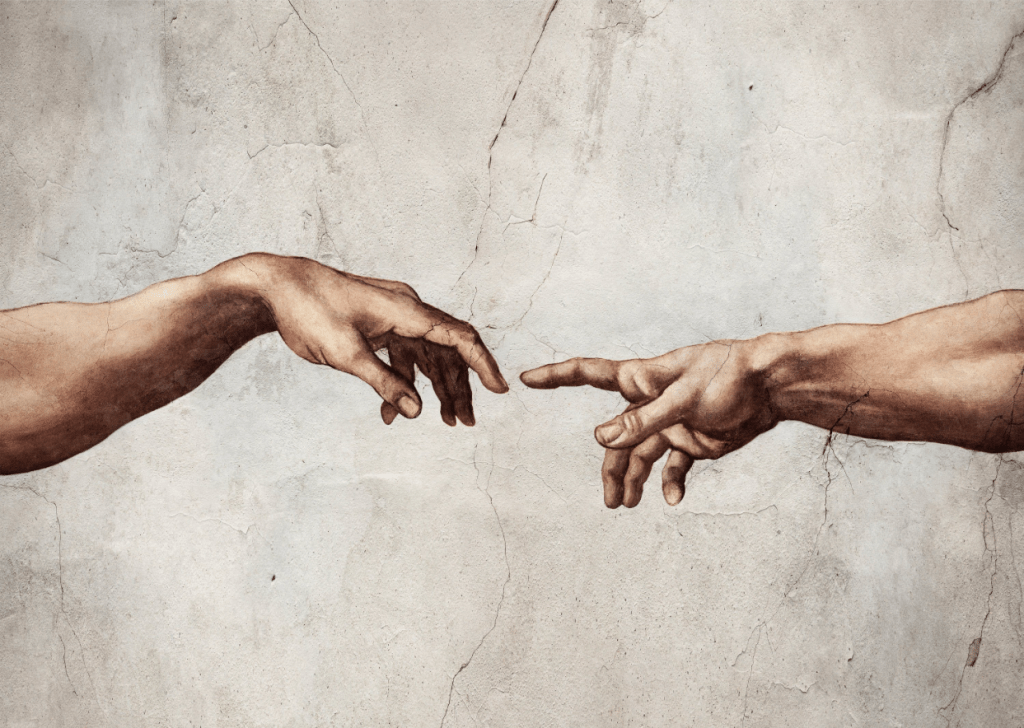
God is the standard to strive for, but He is also the activating agent that makes the striving possible. God lives outside of us, but also part of Him lives inside of us. Thus, it is God that reaches for God and God that raises God, and we simply are pulled along by the part of Him that is inside us.

Scriptural Analysis- Genesis 40:20-23

20 And it came to pass the third day, which was Pharaoh’s birthday, that he made a feast unto all his servants: and he lifted up the head of the chief butler and of the chief baker among his servants.

21 And he restored the chief butler unto his butlership again; and he gave the cup into Pharaoh’s hand:

22 But he hanged the chief baker: as Joseph had interpreted to them.

23 Yet did not the chief butler remember Joseph, but forgat him.

Just as Joseph foretold, three days later the fate of the chief butler and the chief baker were forever changed. It happened to be Pharaoh’s birthday, a time for refreshing, and the ruler turned to the cases of these two men and brought each to their final conclusion. One was elevated back to Pharaoh’s good graces, the other consigned to death.

This idea of judgment and dichotomy is a powerful image in our society. It immediately calls to mind the great judgment that awaits us all after we die, on the one hand to the justifying and redeeming of the innocent, and on the other to condemning and damning of the guilty.

As for Joseph, though, he remains in purgatory, forgotten in prison and still awaiting his own judgment. He knows that in the day of evaluation that he will be worthy, but that time has not yet arrived. After all the other virtues he had already displayed, he still must exercise the one of patience.

The Need for Law- Summary

When one wishes to have the gospel in their lives, but not its laws, it is often due to an image of an exacting and punishing taskmaster God versus that of a loving and forgiving father. There is no question that the law of Moses given in the Old Testament was strict and severe, and yet we say that it was given by the same God who stated “as I have loved you, so you must love one another.” One tries to resolve these two images, and finds themselves asking so does God hate the sinner? Or does He love His wayward child?
In the process of this study I have come to the conclusion that this is a false dilemma. Strict commandments do not preclude the caring compassion of a father, and the giving of commandments is a greater act of love than sweeping misdeeds under the rug. There is probably more to be explored on the matter, but for the topic of this study it is enough to know that the laws of God are given as an act of kindness.
Having a proper understanding of these laws puts to rest so many of the fears related to them. Our concerns stem more from misinterpretation than disagreement. Let’s take a look at some of the fundamental principles of law, and how they truly are designed for our benefit.

Law is Inevitable

Societies have experimented with anarchy from time to time, and always to disastrous effect. Notably, anarchy does not survive. There never has been a successful and lasting nation that was not structured on some sort of government or law. Even on the most basic level, it is in our nature to band together under clans and tribes, to submit to a set of rules, and to function as a society.
Even more than this, though, we belong to a world of order and rigidity. Physical laws govern every material interaction of our lives, and provide us a sense of dependability. Were it not for the presence of natural law, all would be chaos, and life would be impossible. Our very existence depends on there being a set of universal rules.
And there is still more. For we are not only material bodies, but also composed of an immortal spirit. These spirits are the creation of God, and therefore inherently bound to the laws of heaven. That is their natural place to dwell, and so must adhere to its commandments or else divorce themselves from it.
Thus it is necessary for us, first and foremost, to recognize the parts that we are made of, and from the recognition of our nature, then accept the laws that inevitably apply to us. To live without law would be to stop being what we fundamentally are.
John 3:5-6- Jesus answered, Verily, verily, I say unto thee, Except a man be born of water and of the Spirit, he cannot enter into the kingdom of God. That which is born of the flesh is flesh; and that which is born of the Spirit is spirit.
Mark 12:14, 17- And when they were come, they say unto him, Master, we know that thou art true, and carest for no man: for thou regardest not the person of men, but teachest the way of God in truth: Is it lawful to give tribute to Cæsar, or not?
And Jesus answering said unto them, Render to Cæsar the things that are Cæsar’s, and to God the things that are God’s. And they marvelled at him.

Laws Inherently Divide

Inherent in law is the division between those that adhere to its commandments, and those that defy them. To be a law, there must be two states of recompense defined and exacted: reward for those that obey the law, and penalty for those that do not. If these qualities are absent, then there are not any laws, only a list of suggestions.
Thus the laws of our government have punishments defined for those that break them, and securities promised to those that follow. Those that respect the laws of physics will enjoy a life far freer from pain than those that pay them no mind. And so, too, our spirits suffer or thrive dependent on our adherence to divine law.
Our problem, of course, is that we are all doomed to fall on the wrong side of natural and divine law. If we possessed a never-ending source of power we could stave off entropy, and maintain our body’s vitality forever. But we do not. And if we had perfect self control we could resist every temptation, and maintain our spirit’s purity forever. But we do not. Instead we are all bound for the grave and bound for hell. The temporary benefits of predictability and structure that these laws give us in mortal life, come at the cost of eternal woe afterwards.
2 Nephi 2:5- And men are instructed sufficiently that they know good from evil. And the law is given unto men. And by the law no flesh is justified; or, by the law men are cut off. Yea, by the temporal law they were cut off; and also, by the spiritual law they perish from that which is good, and become miserable forever.
2 Nephi 2:13- And if ye shall say there is no law, ye shall also say there is no sin. If ye shall say there is no sin, ye shall also say there is no righteousness. And if there be no righteousness there be no happiness. And if there be no righteousness nor happiness there be no punishment nor misery. And if these things are not there is no God. And if there is no God we are not, neither the earth; for there could have been no creation of things, neither to act nor to be acted upon; wherefore, all things must have vanished away.

The Law of Christ Spares Us

However, if the terms of these first laws have been satisfied, then a new law can be erected in their place. Thus, to our fallen state came Jesus Christ, sent to atone for our sins, sent to die the death of our mortality, who then turned and offered us resurrection and forgiveness instead. He did so, under the domain of a new law, his law.
But as we have already noted, for this to be a law it must have terms and commandments, which provide reward for their fulfillment, and punishment for their transgression. The rewards for Christ’s law are resurrection and forgiveness, the punishment is simply to default back to the hell required by our inability to perfectly follow divine law.
But this new law could only be beneficial to us if we are aware of it, and knew how to make use of it. And thus the gospel was written out and given to us in the form of scripture. Thus our conscience was instilled in our hearts. Thus teachers and guides were inspired to direct and educate us. All of these were provided for the express purpose of teaching us us the terms and conditions of this new law. In these sources we find every stipulation laid out in exhaustive detail. We learn over and over again that the law of Christ requires us to have faith in him, to repent of our sins, to enter into a covenant by baptism, and ever recommit to following him when we fall short of his example.
If we do these few things, then the saving of our souls is sure.
Luke 4:18- The Spirit of the Lord is upon me, because he hath anointed me to preach the gospel to the poor; he hath sent me to heal the brokenhearted, to preach deliverance to the captives, and recovering of sight to the blind, to set at liberty them that are bruised.
Isaiah 51:4-5- Hearken unto me, my people; and give ear unto me, O my nation: for a law shall proceed from me, and I will make my judgment to rest for a light of the people.
My righteousness is near; my salvation is gone forth, and mine arms shall judge the people; the isles shall wait upon me, and on mine arm shall they trust.

Romans 8:2- For the law of the Spirit of life in Christ Jesus hath made me free from the law of sin and death.