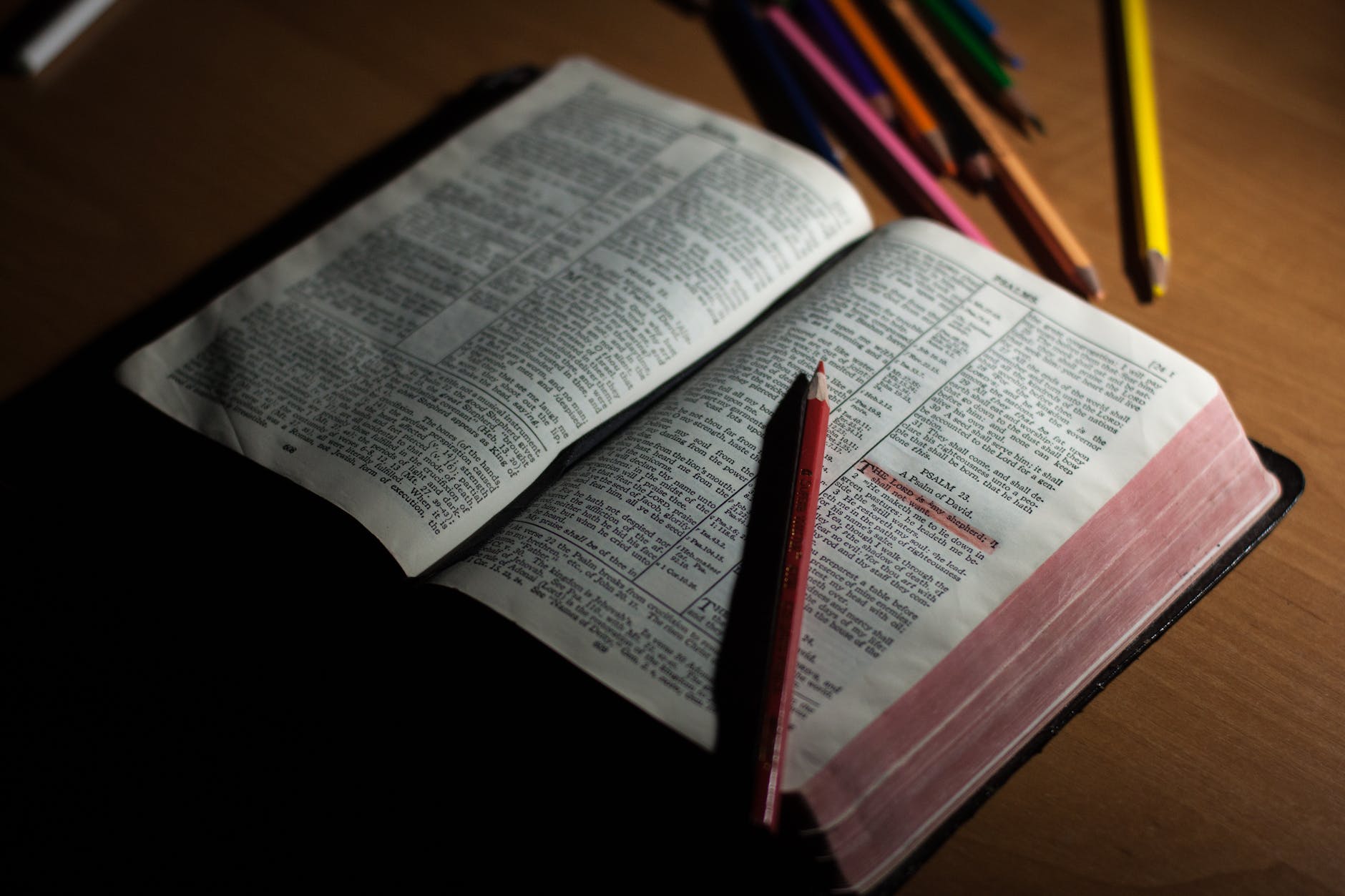
Bring Your Worst Fears to Reality and be Free: Part Four

Doctrine, Wisdom, and Example)

Thus far I have appealed to the mind and to the heart for why the addict needs to bring his secret shame to light through confession. I have shared how my own self-delusions prevented me from confessing for a time and how I was saved after I finally broke through them.

My testimony would be incomplete, however, if I did not bring up what the words of scripture have said upon the matter. It is not only good philosophy and psychology to confess, it is good religion.

And it shall be, when he shall be guilty in one of these things, that he shall confess that he hath sinned in that thing: - Leviticus 5:5

He that covereth his sins shall not prosper: but whoso confesseth and forsaketh them shall have mercy. - Proverbs 28:13

And I set my face unto the Lord God, to seek by prayer and supplications, with fasting, and sackcloth, and ashes: And I prayed unto the Lord my God, and made my confession, and said, O Lord, the great and dreadful God...we have sinned, and have committed iniquity, and have done wickedly, and have rebelled, even by departing from thy precepts and from thy judgments: - Daniel 3:3-5

In Leviticus, the book of the law, the Israelites were commanded to confess. It was one of the key steps towards forgiveness, and it was meant to be understood that cleansing would not occur until this ritual had been observed. Thus, by doctrine itself we are shown that we must confess.

Then, in the book of Proverbs we are told that he who does not confess shall not prosper. The book of Proverbs is not a statue of law like Leviticus. It is a collection of wisdoms observed from Solomon’s life experience. Thus, by the words of wise counsel we are again told that we must confess.

And finally, in the book of Daniel, we see the prophet in a moment of personal spiritual practice. Daniel is not performing a formal ritual or giving an address to others, he is being compelled by his own conscience in a personal act. Something in his heart just tells him that he needs to be “confessing my sin and the sin of my people” (verse 20). Thus, by the example of righteous people we also see that we must confess.

By doctrine, by wisdom, and by example, the scriptures make clear that the sinner who wishes to be clean must make their confession.

“But,” one might say, “couldn’t this only mean confession to God? Do the scriptures really say that I have to bring imperfect human beings into the matter? I’ll just work things out with God and that should be enough.” Well, let’s see if the scriptures do have anything to say on that matter.

Confession to Others)

Then went out to him Jerusalem, and all Judæa, and all the region round about Jordan, and were baptized of him in Jordan, confessing their sins. - Matthew 3:5-6

Confess your faults one to another, and pray one for another, that ye may be healed. - James 5:16

Many of those who believed now came and openly confessed what they had done. - Acts 19:18

Here we have three verses that speak to the need for confession to others is addition to God. The passage in Matthew definitely seems to be suggesting that those who were baptized of John the Baptist were making known to him exactly what wrongs they were having washed away by his baptism. The passages in James and Acts make even more explicit the fact that the early saints were confessing “one to another,” and doing so “openly.”

In my personal experience, the need to confess to another human soul is due to our misconception that our faults make us incapable of being loved by another person. We need to break that illusion, and the only way to do so is to confess to another and see how they respond. Some of the most powerful moments of my life have been sitting in a twelve-step group where I have shared the deepest, most vulnerable parts of myself, and then had my brothers look me in the eye and say “Abe, me too. I’ve been right there myself and I want you to know that I still love you. You may still be in the ugly parts of your journey, but I absolutely respect you for taking this step in the right direction.”

Yes, these are messages that we need to hear from God directly, and at special moments He does say them directly to us. But in my experience, He usually reminds me of these messages through His living angels, the brothers and sisters all around me. When I find a safe place, among godly people, and I make my confession to them, then they are flooded with the love of God and speak to me the words that He gives them.

The Promises of Christ)

We have looked at the words and examples of prophets and apostles, both in the Old Testament and in the New. We have considered my personal experiences as well. But what of the words of Christ, himself? What promises has he made to those who come forward and make confession?

Whosoever shall seek to save his life shall lose it; and whosoever shall lose his life shall preserve it. - Luke 17:33

A new heart also will I give you, and a new spirit will I put within you: and I will take away the stony heart out of your flesh, and I will give you an heart of flesh. - Ezekiel 36:26

No doubt these verses have several applications, but one of them is most certainly to this matter of confession. I have already mentioned how the addict tries to hide his shame because he is trying to preserve his sham life. Christ assures us that the preservation of the old will ironically end in its destruction. The only way forward is to give up the old life. Once we shine a light on the secret, then the secret life dies, replaced with one of authenticity. Lose your life of fearful self-management and give birth to a new one of faithful surrender. The stony heart comes out and one of flesh takes its place.

And he said to them all, If any man will come after me, let him deny himself, and take up his cross daily, and follow me. - Luke 9:23 

What a fitting description for the addict who overcomes his fears and rationalizations and embraces confession! To do this he must overcome his every basic nature, the pattern he has lived his whole life by, the very reasoning of his own mind. He must “deny himself,” take up the cross of the thing he dreads most, confession, and follow Jesus into that crucible.

Paul communicated this same idea to the Galatians when he wrote “I am crucified with Christ: nevertheless I live; yet not I, but Christ liveth in me:” (Galatians 2:20). Denying ourselves and taking up our cross leads to being “crucified with Christ.” Many the addict has said that he felt like making his confession would kill himself. That sounds like hyperbole until you consider it in this spiritual sense. They were actually right; it would kill them. The carnal them! But in that crucifixion, they discovered Christ living within them. Through and in and of him, they were saved.

For my yoke is easy, and my burden is light. - Matthew 11:30

I mentioned in my last post that as terrible as the consequences of confession might seem, they end up being miraculously less than what we expect. First, because almost every addict finds that the world and nature are kinder and more forgiving than they had given them credit for. Their sins had made them cynical, and they had then projected that cynicism onto the world. And secondly, because even when a burden does come, it is tremendously alleviated by the sense of new life within.

And this is exactly what Christ promises us in this verse from Matthew. His yoke and his burden may have some weight, but they are easy and light, certainly far more so than the iron shackles we’ve been dragging around thus far!

***

In the end, I did not make the decision to confess because I was convinced of the promises in these scriptures. I had heard them, and at times they did stir something within me, but I was far beyond faith when I finally gave in to the truth. I did not unveil my shame because I expected salvation, I did it because I was finally willing to accept damnation.

But, as it turns out, these verses make no requirement for the disciple to have the right expectations when he makes his confession. I found out for myself that you can take this step for virtually none of the right reasons, and mercy will still swoop down and make its claim upon you. It was only in hindsight, after I had already had the reality of these promises come true in my life, that I read these verses and realized that I had engaged in a contract with God without ever realizing it. In hindsight I can testify with all my heart that these promises are true. They were true for me, right down to the smallest detail, and they will be true for you!

Who Am I?- Summary

This study felt like it had two distinct halves. The first was captured in the title: Who am I? The other was: And what does that have to do with God? An unanticipated follow-up question that came up for me was: Does being God’s creation compromise by individuality?
One dynamic from my life is that I am the fourth of nine children. And many times I really felt just like that: the fourth of nine. I wasn’t sure what my personal identity was, separate from the mass. As a result, my pattern for life has not been to choose an identity for myself, but to let identities choose me. And that has led to some unfortunate results.
It is not unusual to yearn to understand oneself better, I would say it is a fundamental need that we all feel. After concluding this study, I am convinced that that need cannot be satisfied without God. Let’s examine why.

We Want There to Be an Us

There is inherent in each of us a desire to be a real person. That might seem a strange thing to say, obviously we’re all real people, aren’t we? But yet we all have experiences where we feel that we are non-persons. We feel overlooked, or lumped in as just part of a larger conglomerate, or not worth personal consideration. In times like these we receive a message that we might occupy a space, but we are not a seen, validated identity.
Being a person is essential to being a person. We cannot abide the contradiction of feeling that we aren’t what we obviously are. We feel hurt when a sense of non-personness arises in us because it is contrary to our very nature. Just as the pain in our hand teaches that touching the hot stove is wrong, the pain in our heart teaches that accepting the role of “nobody” is wrong as well.
And this is healthy and natural. When we were formed, we were designed to have this need for the self. It is neither a mistake nor a selfishness to demand that we are full individuals, that we are distinct and totally real persons, that we are our very own soul. This sense exists in us because He is a very real person, and He made us in His image.
Genesis 1:27- So God created man in his own image, in the image of God created he him; male and female created he them.
Luke 4:13- And the devil said unto him, If thou be the Son of God, command this stone that it be made bread.

We Get Lost Looking For Us

Perhaps the greatest paradox of all: no one is so lost as when searching for themself. Unfortunately we most often respond to those moments of doubting ourselves by trying to build up artificial identities instead. We try to win the attention of those that overlooked us, which most often leads to either radical conformity or radical defiance. Whether they see us because they love us or see us because they hate us, we intend to make them see us.
Of course playing for the attention of the very ones who ignored us is a losing game. The fact that we try to prove our somethingness instead proves how deeply we feel our sense of nothingness. The more we try to pour into these facades, the less real us we have to work with.
In the end the only point we prove is our sense of having no worth. We would rather be something bad than to not be anything at all. But the lie is in believing that those are our only two options.
Luke 15:18-19- Father, I have sinned against heaven, and before thee, And am no more worthy to be called thy son: make me as one of thy hired servants.
Exodus 3:11- And Moses said unto God, Who am I, that I should go unto Pharaoh, and that I should bring forth the children of Israel out of Egypt?

God Rescues Us From Ourselves

But because we have claimed these identities as our own, we often find it difficult when we hear that God refutes them. To be sure, the statement that “God loves me just the way that I am” is 100% true. But that doesn’t mean He wants me to stay just the way that I am. He isn’t that cruel.
God does not come to save me because He despised who I was. He comes because I despised myself, and He wants to prove to me that I am still worthy of love. I hated myself, and He came to help me see that what I thought was myself was not myself. What I hated was but a shroud, while my actual self has been preserved just the way it should be.
He invites me to let go of the artificial identities that gave me no pleasure. He says that it is time to stop letting these identities choose me, to let Him choose for me instead. He tells me that in His family I am neither four of nine, nor one of billions. I am just me. The only one of me that He has. And He proceeds to teach me to myself.
It goes against the grain to admit it, but there is no real me without God. It takes humility to say that I do not define myself, that He does. It hurts my pride to confess my nothingness. But as I do, I finally find my somethingness.
John 15:16- Ye have not chosen me, but I have chosen you.
Luke 15:24- For this my son was dead, and is alive again; he was lost, and is found.

Genesis 17:5- Neither shall thy name any more be called Abram, but thy name shall be Abraham.

Who Am I?- Matthew 4:21, John 15:16

And going on from thence, he saw other two brethren, James the son of Zebedee, and John his brother, in a ship with Zebedee their father, mending their nets; and he called them.

Ye have not chosen me, but I have chosen you, and ordained you, that ye should go and bring forth fruit, and that your fruit should remain: that whatsoever ye shall ask of the Father in my name, he may give it you.

COMMENTARY

James, and John his brother, in a ship , mending their nets; and he called them
Ye have not chosen me, but I have chosen you
Yesterday we considered how Moses was not a prophet when God called him to be a prophet. Now that might seem stupidly obvious, but it is actually a very important lesson for our own journey of self-identity and it is a pattern that was later repeated when Jesus called his disciples.
They were not disciples originally. They were fishermen and tax collectors, individuals that had already carved out a definition for themselves and had their own lives, which he came along to disrupt. And Jesus didn’t limit the surprise callings to his lifetime, either. After his death and resurrection he came to Saul, who had defined himself as being against the church, and called him to be a disciple instead. It frankly didn’t matter who the disciples were, only who they were to be.
And sometimes they didn’t measure up to the identity he gave them, but still he gave it to them, and did so repeatedly. Whether they were ready for it or not, whether they would perform it well or poorly, whether they even wanted the identity or not…they were all still called, named, and given who to be.

Who Am I?- Exodus 3:10-11

Come now therefore, and I will send thee unto Pharaoh, that thou mayest bring forth my people the children of Israel out of Egypt.
And Moses said unto God, Who am I, that I should go unto Pharaoh, and that I should bring forth the children of Israel out of Egypt?

COMMENTARY

And Moses said unto God, Who am I, that I should go unto Pharaoh, and that I should bring forth the children of Israel out of Egypt?
When God extended His calling to Moses, Moses showed surprise. “Who am I, that I should go?” he asked, believing that he wasn’t the right person for the job. His doubt is understandable, because who Moses was at that time was not the person that God was calling him to be. But then, who exactly Moses was had been a very fluid concept his whole life long.
Moses had been born a Hebrew slave. But that was not who he was meant to be. He was liberated from that position and instead given the role of an Egyptian prince. But that was not who he was meant to be either. Moses rejected the identity he had been given, and finally chose one for himself, that of a shepherd in the desert.
But that was not who he was meant to be either. In the end, Moses’s identity was not to be defined by the situation of his birth, or the titles others tried to put on him, or by the vocation he, himself had chosen. In the end, his identity was to be the one that God alone gave to him.

Who Am I?- Genesis 1:27, Matthew 23:9, John 15:15, John 13:14, Mark 10:45

So God created man in his own image, in the image of God created he him; male and female created he them.

And call no man your father upon the earth: for one is your Father, which is in heaven.

Henceforth I call you not servants; for the servant knoweth not what his lord doeth: but I have called you friends; for all things that I have heard of my Father I have made known unto you.

If I then, your Lord and Master, have washed your feet; ye also ought to wash one another’s feet.

For even the Son of man came not to be ministered unto, but to minister, and to give his life a ransom for many.

COMMENTARY

So God created man in his own image
For one is your Father, which is in heaven
But I have called you friends

If I then, your Lord and Master, have washed your feet
For even the Son of man came not to be ministered unto, but to minister
Tied up with the question of who we are is the question of our relationship to divinity. For if God created us, and Christ re-creates us, then who we are depends upon the interaction that we have with them.
I have heard it argued that many Christians come into trouble by trying to have the “wrong” relationship with God or Jesus. But I have heard that same argument being argued in both directions.

  • This generation wants to be all buddy-buddy with Jesus, and have forgotten He is their master.
  • The real problem is that you’re so concerned with fearing God, that you don’t have any more space for Him to love you!
  • You need to respect Christ, not be coddled by Him.
  • God’s grace is more abundant than most of us are comfortable accepting. He wants to save us, and we just need to let that in.

So which voice is correct? Who is God to us? Is He our creator or our father? Should we fear Him or worship Him? And who is Christ? A brother or a friend? A master or a servant?
Well, if the verses that I’ve shared above are any indication…all of the above. Divinity represents the most transcendent and complex beings in the universe. Would not our relationship with them have to be complex and multi-faceted as well?
The simple truth is that if we can only be friends with God, but never respect Him as our Lord, then our discipleship will suffer for it….And vice versa. And if we can only serve Christ, but never be served by Him, we’ll never reach that relationship’s full potential either….And vice versa.
But that’s where many of us are: only comfortable with a partial connection to divinity. I was always ready to serve a Lord and Master, but struggled to accept the love of a kindly friend. The solution was not for me to try to fence off those difficult parts of God, though, that would have handicapped me for the rest of my life. The only way to progress was to start opening myself to receiving all that my God, my Father, my Savior, my brother, my master, my minister, my friend, and my advocate have to offer.

Who Am I?- 1 Corinthians 12:12-14, 18-20

For as the body is one, and hath many members, and all the members of that one body, being many, are one body: so also is Christ.
For by one Spirit are we all baptized into one body, whether we be Jews or Gentiles, whether we be bond or free; and have been all made to drink into one Spirit.
For the body is not one member, but many.
But now hath God set the members every one of them in the body, as it hath pleased him.
And if they were all one member, where were the body?
But now are they many members, yet but one body.

COMMENTARY

For as the body is one, and hath many members, and all the members of that one body, being many, are one body: so also is Christ
For the body is not one member, but many.
Yesterday we examined how we are all creations of God. Our identity begins with what He made it to be. I believe part of the reason why our society resists this notion of being another’s creation, though, is because they fear that it takes away their individuality. There seems to be a sense that we are defined by our flaws, and smoothing them out would just leave us as generic good person #2167. Or in other words, if God is my creator me, and He made me to be like Christ, then following Him will just turn me into a carbon copy of Jesus, no longer myself.
But this is a misconception, a lie of the adversary, one that breaks down as soon as you take an honest look at genuinely good people and recognize how distinct they still are. Even if you are a creation of God, you can still be a unique creation. As Paul attests, the word “body” is singular, but it is composed of “members” which are plural and distinct.

But now hath God set the members every one of them in the body, as it hath pleased him.
Saying that we seek unity in Christ does not mean that we all become Jesus. It means uniting with one another under a common banner, but still retaining and exercising our individuality. Yes God made you and set you, but He made you and set you to be and do something that only you could be and do. The reason that He even made you was because among all His other children He still didn’t have a you, and He very much needed a you. There is a you-sized hole in the body of the Christ that not I, not your neighbor, and not even your identical twin is shaped rightly to fill. God was the one that first baked your individuality into your bones and He isn’t about to take that way. The loss of your sins and misconceptions, will not be the loss of yourself.
In short, what the gospel intends for us is a unified diversity. If that sounds like an oxymoron, so be it. God loves to work in the impossible!

Who Am I?- Psalm 139:13-14 (ESV), Jeremiah 1:5

For you formed my inward parts; you knitted me together in my mother’s womb.
I praise you, for I am fearfully and wonderfully made. Wonderful are your works; my soul knows it very well.

Before I formed thee in the belly I knew thee; and before thou camest forth out of the womb I sanctified thee, and I ordained thee a prophet unto the nations.

COMMENTARY

For you formed my inward parts; you knitted me together in my mother’s womb
I praise you, for I am fearfully and wonderfully made
Before I formed thee in the belly I knew thee
The question of who we are must eventually come to terms with the truths proclaimed in these verses: that we are creations of God. I say “come to terms” because this notion of being someone else’s creation rubs against the grain of our modern culture. Each of us crave to be a self-made man or woman, one who doesn’t owe anything to anyone, someone who no one else has any claim on. To suggest that that we might be a creation offends a part of us.
But…it also makes another part of us very excited. For we also speak longingly of finding somewhere where we feel we belong, a calling that we were meant to fill, a situation that we were uniquely fitted for. But how do we belong, or are meant to fill, or are uniquely fitted, unless we were designed–created–by another to be so?
There is no shame in saying that we are another’s creation, but there is a humility in it.

Who Am I?- Genesis 17:5, Genesis 32:28, John 1:42

Neither shall thy name any more be called Abram, but thy name shall be Abraham; for a father of many nations have I made thee.

And he said, Thy name shall be called no more Jacob, but Israel: for as a prince hast thou power with God and with men, and hast prevailed.

And he brought him to Jesus. And when Jesus beheld him, he said, Thou art Simon the son of Jona: thou shalt be called Cephas, which is by interpretation, A stone.

COMMENTARY

Neither shall thy name any more be called Abram, but thy name shall be Abraham
Thy name shall be called no more Jacob, but Israel
Thou art Simon the son of Jona: thou shalt be called Cephas

There is a theme in the scriptures of people being given a new name in association with finding their calling in life. This is a moment of extreme importance, usually based around a turning point, where the old person is remade into something greater.
Especially important is who it is that is giving out these new names: God or Jesus Christ, the same individuals who seek to give us a new life, a new identity, a new purpose to follow. These are the original creators of our souls, and also the creators of our new soul, after we choose to come to them.
Therefore, the question of “who am I?” can be replaced with another question, that of “who will God make me into?” Though it goes entirely against the grain of worldly philosophy, we do not make ourselves. Perhaps we choose our own destiny, but we choose it from the options that He gives us. If you ever want to really know who you are, you have to start asking Him who He thinks you are.

Who Am I?- Moses 1:6, 13

And I have a work for thee, Moses, my son; and thou art in the similitude of mine Only Begotten; and mine Only Begotten is and shall be the Savior, for he is full of grace and truth; but there is no God beside me, and all things are present with me, for I know them all.
And it came to pass that Moses looked upon Satan and said: Who art thou? For behold, I am a son of God, in the similitude of his Only Begotten; and where is thy glory, that I should worship thee?

COMMENTARY

And I have a work for thee, Moses, my son; and thou art in the similitude of mine Only Begotten
And Moses looked upon Satan and said: Who art thou? For behold, I am a son of God, in the similitude of his Only Begotten;
I know that I shared this passage just a few days ago with my last study, but it was these verses that inspired my new research topic, so I felt it would be worth revisiting them again under this context. In these verses we see Moses receiving an identity and taking ownership of it. That identity, though, is interestingly dual-natured.
Moses is told that he is “in the similitude” of the Savior. “Similitude” does not mean carbon copy. It does not mean a clone. It does not mean a personification of the exact same being. All that it means is to be similar to Jesus, to be like Him.
We often speak of our discipleship as us “becoming more like Jesus.” But though we aspire to be like Jesus, I do not think we are supposed to be Jesus. Perhaps we need to become the same sort of fruit as him, but just as how one apple may be unique from other all apples, so we, too, retain our own individuality.
If this were not the case, then how would we account for the diverse personality traits that we see in all the prophets and apostles? Peter, Paul, Moses were each very distinct from each other…but each was also like Jesus, too.

The Virtue of Remembering- Summary

This has been one of the longest studies that I’ve done for this blog. I didn’t plan it that way, I just kept finding “one more” scripture to review, another after another, until it had gone on for nearly three weeks!

I often find with these studies that I begin by exploring the periphery, doing a search on key phrases, laying out verses side-by-side, and just seeing what sort of themes are consistent across them. Then, as I muddle about I start to see the actual principles and systems at play. I move inward from the periphery and start to see the heart of the matter.

This study on remembrance followed that pattern exactly. At first it was just random verses about how it is good to remember the Lord and the work that He does. Then it moved inwards, to considering our fundamental state as mortal beings, and why an active practice of remembering is essential to perfect our natures. Let us consider the core lessons we’ve discovered along the way.

We Forget

Fundamental to understanding why God so often encourages us to remember Him, is to recognize that we are a forgetful people. This is not a cultural issue, it is a direct consequence of being temporal beings. Our nature is that we cannot conceive of anything directly, except for what is in the immediate present. I can see you and know that you exist, but as soon as you walk around the corner I am dependent upon belief and memory to remain convinced of your existence. After time I might forget you entirely, and any mention of your name brings up only a void in me.
Many times I have a spiritual experience, and in that moment I know the reality of God. I cannot question His existence, for it is manifesting to me directly. But then, the next day, I look out the window and I see cars, and lamp-posts, and door-mats…but not God anywhere. And though I knew He was totally real just the day prior, I find myself wondering how I can still believe in Him right now, when I cannot feel His reality any longer.
Which brings us to another key point. Remembering things intellectually is not what really matters. Knowing in my mind that I felt God speak to me just doesn’t cut it. I need to be able to remember things in my heart, I need to not just know that He loved me yesterday, I need to feel that He loved me yesterday, and that He still does today. If I cannot remember mentally, spiritually, and emotionally, then I am left to doubt.
Isaiah 53:6- All we like sheep have gone astray; we have turned every one to his own way.
Psalm 106:21- They forgat God their saviour, which had done great things in Egypt;

We Can Remember

But though it can be difficult for us to remember things down in our souls, it is not impossible. We can only experience the present, but in the present, we can once again feel what we felt before.
How to accomplish that used to befuddle me. I would say to myself “yes, I remember that I felt really good that time I prayed when I was seven…so what now?” No matter of replaying the experience in my mind was enough to make it come alive in my heart. I wanted to remember it in my soul, but I didn’t know the right way to make it happen.
And what I did not understand was that we don’t make the remembering happen. Our ability to feel afresh the miracles of before is, itself, a miracle. We do not have the spiritual witness in the first place except by the grace of God, and we do not have the heartfelt remembrance of it except by His grace again. My spiritual remembering took a far better turn once I stopped trying to make myself feel things, and instead asked Him to put the feelings in my heart for me.
John 14:26- But the Comforter, which is the Holy Ghost, whom the Father will send in my name, he shall teach you all things, and bring all things to your remembrance, whatsoever I have said unto you.
John 14:14- If ye shall ask any thing in my name, I will do it.

What We Must Remember

This is not to say that our actions are useless, though. Indeed, asking God to grant us His Spirit is an action. And what is more, I find that I very much invite the remembrance of God’s love into my life, when I do whatever my conscience is pricking me to do today. It is still God’s miracle that my obedient actions will be met with a spiritual witness, but I did do my part to make space for that miracle.
And when I do what is right, though it is hard to do, I feel that I not only gain a remembrance of God’s reality, of God’s love, and of God’s spirit…I also gain a remembrance of myself. My authentic, son-of-God-self feels the glory of his Father constantly. But sometimes I am not in that authentic self, and so I do not feel it. But when I return to that identity, when I put it on me anew, I remember both Father and self at once.
These are the things that we must remember, these are the things that we must ever keep fresh within us. The longer we go between remembering our Holy Father and our own self, the more likely we are to stumble and be lost. I want to return to that place continually, until at last I never stray from it again.
Hebrews 10:16- This is the covenant that I will make with them after those days, saith the Lord, I will put my laws into their hearts, and in their minds will I write them;
John 17:26- And I have declared unto them thy name, and will declare it: that the love wherewith thou hast loved me may be in them, and I in them.