The Death of the False Self

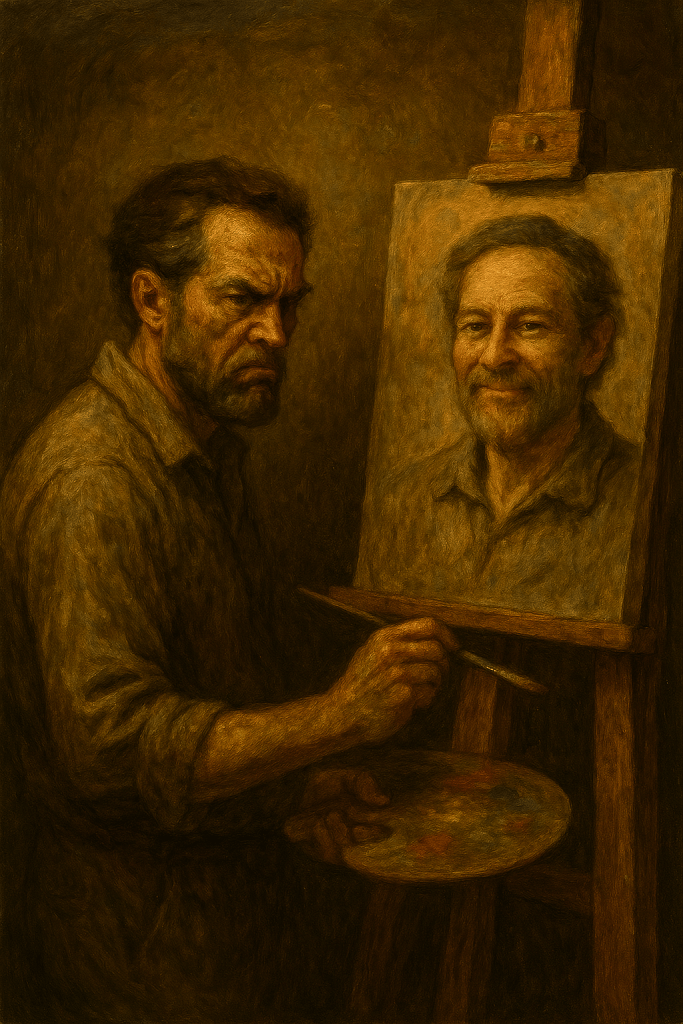
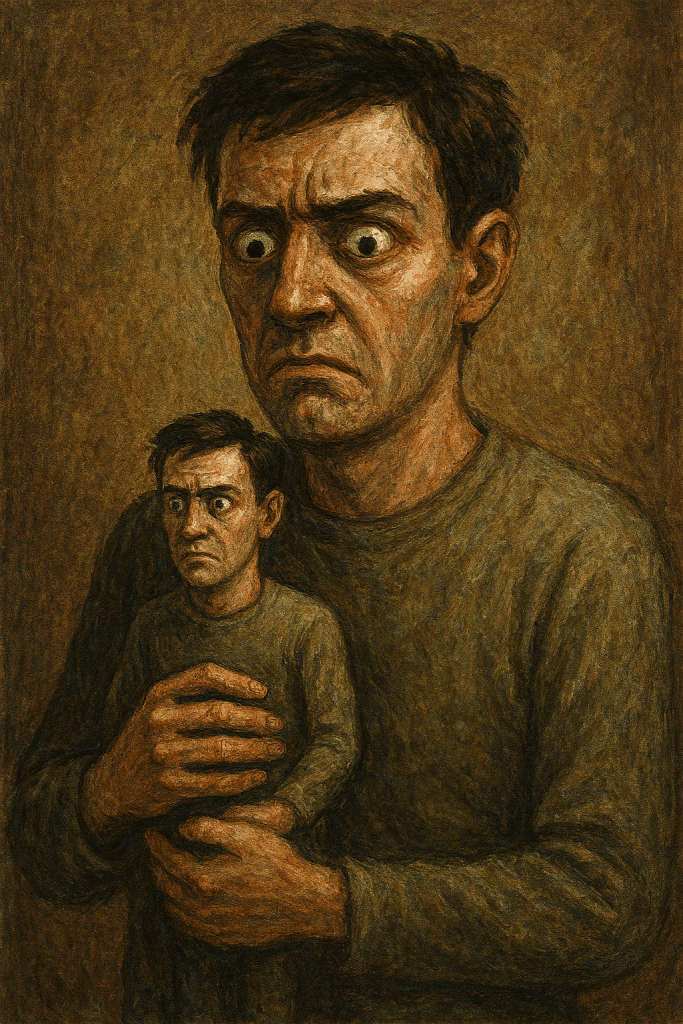
Perhaps the greatest obstacle to God winning our souls is that true conversion requires an interaction with the genuine self. And we, being a highly social and impressionable species, very rarely exist as our genuine self. Most of us spend our lives as a collage of other people’s thoughts and beliefs and attitudes. We hear a question, and we immediately know the pre-scripted answer that we have been told by others. God reaches out to us, but all He finds is fragments of Darwin, Nietzsche, and Oprah.

And so, before God corrects the false image we have of Him, He first must shake loose the false image we have of our own self. He thwarts our pretend identity. He puts us in situations where our pale imitations and our tired platitudes fail spectacularly. He does for us what He did for Abram, and Jacob, and Saul, stripping us down and leaving us barren, and lame, and blind.

Seek the death of the false self. Unearth the real you. Learn how to think outside the catechisms that you have been given. Only then will you be able to find your real identity, like Abraham, and Israel, and Paul. Only when you have the real you can a proper introduction be made between you and the Father.

Stop Trying to Change the World

Stop trying to change the world. When people use that term today, all they mean is finding fault elsewhere and making others change.

Which doesn’t work, because they are doing the same thing, finding fault in you, and trying to make you change.

And in this cycle no one actually changes. They only become more entrenched.

So, stop trying to change the world.

Just change yourself.

Identity as God

If you insist on a God that accepts a certain part of your identity
Then you worship that identity, not God

How the World Can Ever Change

Maybe even if I change
The world will stay the same
But on the other hand,
How can the world ever change
If I’m still staying the same

Taking Accountability- Conclusion

Big Problems)

In this little series of posts, it was my sole intention to act out the principle I had recently espoused, to put my behavior where my belief was. And so, in the aftermath of Charlie Kirk’s death I identified a way that I contributed to the culture that got him killed, and I took steps to change my behavior accordingly.

But that wasn’t all that came out of these posts. By going through this exercise, I was able to more fully flesh out some of the vague ideas that originally inspired my call for us to find our own personal responsibility in every ill that besets us.

I realized that a major reason for us all to seek out our own slice of responsibility is because that is the only way that the world will ever be healed. Some problems are just too big for some of us to solve it for everyone else. Everyone has to tackle the part that is directly in front of them.

We must not have the arrogance to think that we can divide ourselves into fixers and problems. We all have to see that we are each a fixer, and we are each a problem in and of ourselves. And so, we must take our fixer part and use it on our own problem part, and only by doing this individually can we heal collectively.

A Call Inward)

I invite all of us to start looking at the big problems of the world in this way. I suspect it will be best if we look at the deepest problems, things much more fundamental than politics or ideological divides. Let us consider the hate, the poverty, the deceit, the confusion, and the loneliness. For once, let us set aside who is most responsible for these issues, and just ask, “to what extent am I responsible?”

Is there something negative that we are doing that we could stop? Is there something positive that we should be doing that we are shirking? Can we truly say that we have a clean conscience? That we have contributed nothing to the problem? That we have done our part to contribute to the solution? Or is there room for improvement, room for taking the beam out of our own eyes, room to re-establish heaven in our little corner of the world?

Accountability

May my first reaction to every problem in the world
And every problem in my personal life
Be “What did I do to contribute to this?”

Grit vs Surrender- The Consequences of Refusing to Surrender

A Scriptural Condemnation)

I have spoken at length about the importance of surrender in the gospel of Jesus Christ. To put things simply, there is no such thing as being a true disciple of Jesus Christ and also not surrendering your will and autonomy to the Lord. Jesus surrendered himself to the Father, and every follower of him must do the same, or they are not really his follower.

But why is surrender such an essential part of the gospel? Why did Jesus need to do it, and why do we need to? What cosmic or fundamental principle requires it? That’s an excellent subject for another series, one that I may try to tackle later. Today, though, I want to point out how the scriptures make clear the negative consequences that follow if we will not surrender our autonomy to the Lord. Let us look at a few verses.

For where you have envy and selfish ambition, there you find disorder and every evil practice. 
-James 3:15 (NIV)
Whoever isolates himself seeks his own desire; he breaks out against all sound judgment.
-Proverbs 18:1 (ESV)
For men shall be lovers of their own selves, covetous, boasters, proud, blasphemers, disobedient to parents, unthankful, unholy, without natural affection, trucebreakers, false accusers, incontinent, fierce, despisers of those that are good, traitors, heady, highminded, lovers of pleasures more than lovers of God;
-2 Timothy 3:2-4

Each of these passages begins with those who set their own, autonomous self above all else. They are focused on their own desires, their own love, and their own ambition. Rather than surrendering their will they have set it upon the highest pedestal, and in each of these passages it is clear that what follows is harm and evil. The unmistakable message of the scriptures is that those who do not surrender will inevitably cause hurt and suffering.

We live in a society where people constantly speak of waking up to the notion that they “need to put themselves first.” That may sound nice and affirming, but anyone that follows it should know that they are embarking on a path that the scriptures have declared to be ruinous. One may, of course, reject that assertion, but if they do, at least they will know that the consequences that follow were foretold.

NOTE: In the process of editing this post, I accidentally published it twice before it was ready. I apologize for any confusion caused to my email subscribers.

Held to Another’s Standards

No one wants to be held to another’s standards,
But they do want the rest of the world held to theirs.

Perpetually Frustrated

Living according to how we think God ought to have designed us
Is to live in perpetual frustration and impotence

A Foundation Built on God- Life Defined by Faith

Jesus foretold that, “Many will say to me in that day, Lord, Lord, have we not prophesied in thy name? and in thy name have cast out devils? and in thy name done many wonderful works? And then will I profess unto them, I never knew you: depart from me, ye that work iniquity,” (Matthew 7:23). This is a sobering warning to Christians everywhere that many who think they are in alignment with the Lord are actually offensive to Him.

There are multiple conceivable ways that Christians would find themselves on the left hand of the Lord. Perhaps they are hypocrites, professing Christ’s name but still harboring secret sin. Perhaps they treat Christianity as a political cudgel, using it to condemn those that they have no right to. Perhaps they are social Christians only, going to church and saying prayers, but more dedicated to the false churches of social trends.

I believe there are many in that last category. People that treat Christianity as a garnishment to the rest of their life, not the foundation and basis of the entire thing. It is, frankly, a way of being that I continually struggle with also. Most especially I lapse in my prayers because I am just too preoccupied with the distractions of the world, too concerned what I might miss out on if I make time “just” for connecting to God.

Obviously, I do perform a scriptural/spiritual study each weekday, and I do believe that that has helped a good deal in keeping God elevated in my mind, but I do crave more. With this short study I am going to try and identify for myself how I might do better in this aspect of daily prayer.