Layers of Man- Shame

And he said, I heard thy voice in the garden, and I was afraid, because I was naked; and I hid myself. - Genesis 3:10

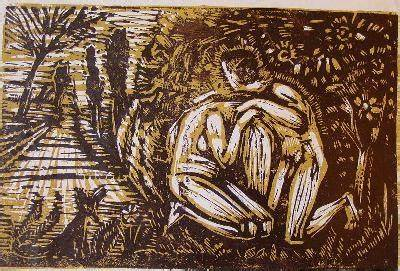
The story of Adam and Eve is strange and fantastic, and at first glance it may seem difficult to relate to. Or at least, it seems difficult until Adam and Eve discover shame. When we hear of them scrambling to hide from God the story suddenly becomes all too familiar. Each of us knows that moment of uncomfortable exposure where we wish we could sink into the floor and disappear from the disapproving glare of another.

Like Adam and Eve, shame is a developed emotion within us. Infants and babies do not exhibit it to any degree, but starting around the age of two or three they start to recognize when they have been caught behaving naughtily and will sometimes cry because of it. Though shame is not present at the beginning, it is inevitable. Like sexual feelings, the fact that it isn’t present from birth does not mean that it is any less real or certain.

Shame is an essential, if unpleasant, part of learning how to conduct oneself within a society. Every child develops it alongside their need for friends and social identity. When properly handled, all of these will guide is into becoming a healthy, well-adjusted individual. But that requires us to embrace shame’s pain, and too often we try to find ways to short-circuit it instead. This, of course, means hiding our shame and crafting the façade to cover it, and this means splitting ourselves into two realities.

For the good that I would I do not: but the evil which I would not, that I do. - Romans 7:19

Watch and pray, that ye enter not into temptation: the spirit indeed is willing, but the flesh is weak. - Matthew 26:41

Literature and theater have long been fascinated with the dual nature of man. The Phantom of the Opera shows us a man both hideous and beautiful. The Strange Case of Dr Jekyll and Mr Hyde features a man who is one part kind and one part violent. The Brothers Karamazov is full of characters who believe they are one way but then discover an opposite side to themselves.

Yesterday we discussed the part of our personality that we wear like a mask, a façade that we use to cover the shameful ways we feel inside. Many the addict has confessed to a dual life, trying to sustain two completely opposite existences. If the façade is intended to attract the people that we want to like us, then the inner shame tends is all the qualities that we think would repulse those same people. Addicts express sentiments such as “people think I’m so great, but if they knew who I really was, they’d run for the hills.” Shame represents all the qualities that we think make us unlovable.

And this makes our shame very difficult to expose. It is literally the things that we feel will make people abhor and reject us, so how are we to willingly unveil those very parts to other people? It feels like an act of social suicide!

Woe unto them that call evil good, and good evil; that put darkness for light, and light for darkness; that put bitter for sweet, and sweet for bitter! - Isaiah 5:20

For the time will come when they will not endure sound doctrine; but after their own lusts shall they heap to themselves teachers, having itching ears; - 2 Timothy 4:3

Of course, there is not only shame, but shamelessness. There are those whose answer to unpleasant feelings of embarrassment and exposure is to reject those feelings and put gross excess and inappropriate behavior on a pedestal.

Just as excessive heat and sharpness should cause pain, excessive indulgence and immorality should cause shame. Those that live shamelessly may think that they are living a truer existence because they have thrown away the phony outer layer of the façade, but in reality they have made their shame into their façade. Being accepting of the unacceptable is not authentic, it is just as much a fraud as the person trying to live a dual life.

There are also those who admit to their shameful deeds, and admit that they are indeed shameful, but pitifully conclude that there is nothing they can do about it. They are just no good, and that’s that.

Thus, just as how those who self-identify with their façade stunt themselves by living a lie, so too do those who self-identify with their shame. Because while shame is a deeper layer of our psyche, it is still not the true us. Stopping our progression at this level will still prevent us from living with fulness and joy.

***

Yesterday I explained my own façade, the way I try to put on an intelligent and kind face to everyone I meet. But what is beneath that layer? What is my shame? What are the secret behaviors I always felt rendered me unlovable?

Well, as one might expect, they tend to be the opposite of the façade that I project. They are my lack of intelligence and my selfishness.

For lack of intelligence, I have always felt that I am lagging behind the curve. I have always been terrified to have my knowledge tested, and for the first several years of college I cheated in every test that I could. Eventually I was caught and brought before a school counselor. I thought I would try to lie my way out of it, admitting to my dishonest behavior would be social suicide after all, but something came over me as I sat down with the counselor, and I peeled back the façade and showed my shame instead. I admitted that the accusation was completely true, that I had cheated, and that I had been doing so for quite some while. And, most unexpectedly, I actually felt relieved to have finally been discovered.

Fortunately for me, the school showed mercy. I did not die socially, I was not expelled, and from that moment on I never cheated on a test again. But the temptation to do so was always there. I still dreaded having my knowledge measured, because I was never able to be confident that my intelligence on its own could ever be enough. But a change had finally occurred, where I was willing to accept failure and embarrassment rather than pretend to something false.

For selfishness, I have my addictions. Compulsive behaviors that are based around getting what instantaneous pleasure I want. My addictions primarily take the form of lust, overeating, and excessive media use.

Of these three, lust is certainly the one that has brought me the most shame. I have felt absolutely disgusted with myself for using women for my own gratification, viewing pornography and typing away in chat rooms, all the while pretending to be a loving husband and an attentive father. I told myself for years that I could not break the façade, that I could not ruin the image of a shining knight that my wife and son had for me. As with the cheating in school, I really believed that I could never tell the truth, and unlike with academic cheating, I knew how to cover my tracks well enough that I likely would have never been caught. I lived the lie and I never let the mask slip.

Until, one day, I did something different. One day I had had enough, and I wrote my wife a letter and left it on our doorstep. In the next two days I met with my ecclesiastical leader and scheduled an appointment with an addiction recovery program. Since that moment, my secret shame has been out in the open, and I have shared my absolute worst moments with therapy and twelve step groups. Much to my surprise, revealing my shame has not made me unlovable. In fact, it has drawn people closer.

However, accepting that we have this layer of shame and bringing it to the light is still not the end of the road. There is a reason why we do the things that we are ashamed of, and that reason emanates from deeper down. Tomorrow we will approach the next layer, which is our wounds. We will come to understand their pain and how we mishandle them with shame and façade. I’ll see you then.

Layers of Man- The Façade

And the eyes of them both were opened, and they knew that they were naked; and they sewed fig leaves together, and made themselves aprons. - Genesis 3:7

You will never know most of the people you meet.

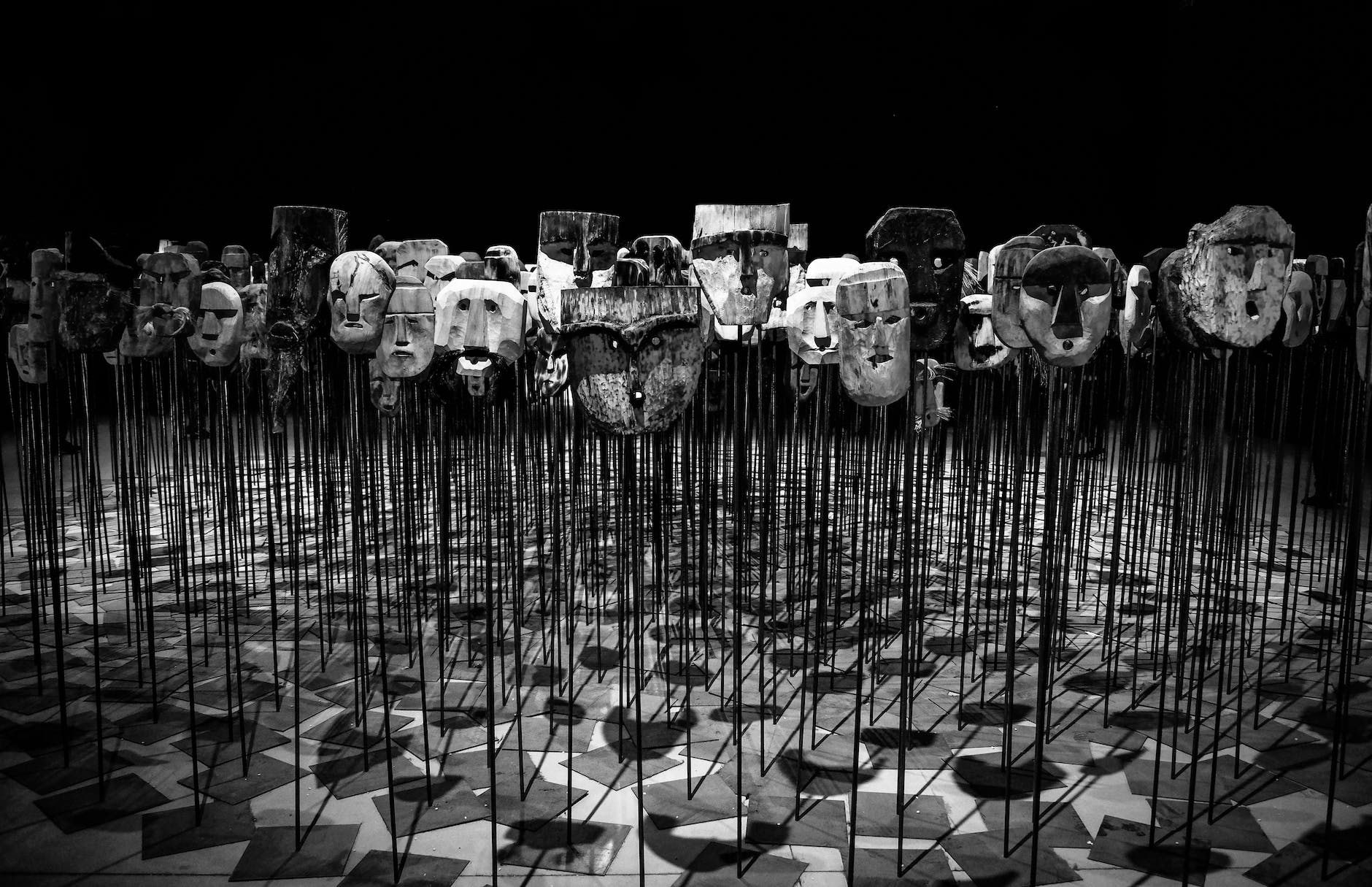
A strange sentiment perhaps, seemingly paradoxical, but it is completely true. Put another way, for most of the people in your life, you will never interact with the actual them, only with their mask. You will only ever know the surface-level, carefully-doctored, phony personality that they are making a conscious effort to project.

Like Adam and Eve, we make aprons. We hide who we really are behind a layer of fashion. A fashion that we hope will make us attractive to the people that we want to like us.

And this phenomenon hasn’t gone unnoticed. We so often complain about how fake everybody seems and how we crave relationships that are more real. But at the same time, we tend to downplay how much we’re playing the exact same game ourselves. Even criticizing the phoniness in others can itself be a social fashion.

Every way of a man is right in his own eyes - Proverbs 21:2

Or how wilt thou say to thy brother, Let me pull out the mote out of thine eye; and, behold, a beam is in thine own eye? - Matthew 7:4

The reason why so many of us don’t realize how much we are projecting our own façade is because we are the ones being fooled the most by it! We pretend to be a particular way for so long that we actually start to believe that is who we really are!

And then we must defend whatever principles and ideologies our delusion is based upon, as any challenge to them might tumble down our entire house of cards. This is what divides our culture into isolated echo chambers, where we surround ourselves with people that show the same façade we are trying to project, we become saturated with their dogma, and then we attack anyone whose façade is at odds with our own. We’ll pick apart all their flaws while ignoring our own, and the whole time we’ll believe that we are standing for what is right and virtuous. In reality, it is only self-preservation.

This cycle, unfortunately, can continue forever. All of our façades are fundamentally flawed in one way or another, and thus each is deserving of criticism, and thus there will always be an easy avenue to tear one another down. The only way to break out of this cycle is to finally admit that our façade is a façade and that it is beneath us.

Because the foolishness of God is wiser than men; and the weakness of God is stronger than men. - 1 Corinthians 1:25

And he looked up, and saw the rich men casting their gifts into the treasury. And he saw also a certain poor widow casting in thither two mites. - Luke 21:1-2

One of the greatest curses that could ever be wished upon someone is that their façade would be good enough and consistent enough for them to never have to challenge it. Continuing to identify with this superficial layer, believing that this who they really and truly are, will stunt any person’s growth. Most of us will never call it quits on our game of pretend until it completely and utterly fails us, so as long as we’re able to be somewhat happy, somewhat secure, and somewhat wealthy we will never have a reason to disrupt the status quo.

And what a terrible fate that would be, for it would forever keep us living in the lower echelons of existence. The wisest and strongest we could ever make ourselves is still superseded by the most simple and weak of God. The uneducated and frail woman who gave her two mites was living a more complete and joyful life than the learned and powerful rulers who made a great show of giving their riches. Authentic living, even of the humblest variety, trumps inauthentic living, even at its most extravagant.

Many the addict has learned to be grateful for their life-destroying vice, because hitting rock bottom was what finally brought them to drop their façade and start living with actual authenticity. To have not been destroyed might have meant to never truly live.

***

But what about for me personally? What has been my go-to façade, what are its strengths and weaknesses, and why wasn’t it enough to keep me content in life? The way I try to come across is extremely intelligent and incredibly nice. Let’s look at each of these qualities one at a time.

Intelligent)

I want people to know that I know things, and I will absolutely pretend to know more than I really do. I will also carefully avoid conversations that might reveal my ignorance in a particular area.

I work in a highly technical field, and when other people start throwing out jargon that I don’t know, I feel very uncomfortable about my ignorance. I try to glean enough context to give an intelligible response, all the while terrified of being found out as a fraud. My great hope is that I will be able to continue the illusion of knowing everything that I need to know and having many wise insights to offer.

Nice)

But I don’t want to be seen as too full of myself. I want to be recognized as smart, but not conceited. So, I also make myself into quite the people-pleaser. I defer on my own preferences and opinions, give everyone the benefit of the doubt, and never say a bad word about anyone.

I’m also very careful to do all of the things I’m supposed to be doing as a good person. I go to church, I pay my taxes, and I am never to be seen in a disreputable establishment! I want people to know that they can depend on me to be just the sort of guy that they think I am. The sort who quietly handles all his own struggles without being a bother to anyone.

Now obviously, not all of these qualities are bad things, and not all of them are totally fake. In some areas of life, I really am intelligent, and I really can be very kind. But I’ve taken these natural qualities and I’ve overinflated them. At some points I’ve embellished them with outright lies.

Some of these behaviors are outright unhealthy, such as always deferring my own preferences. Some of them are unhealthy simply because they are coming from an inauthentic place, such as when I listen closely to what someone else is saying and give a meaningful response, but only so they will know what a great guy I really am.

But if I genuinely do have some good qualities, why do I feel the need to exaggerate and pretend? We’ll get more into that as we continue this study, but the short answer is because my basic goodness was wounded at some point, and I concluded that it wasn’t good enough. I was smart, but not smart enough. I was thoughtful, but I wasn’t thoughtful enough. Someone told me I had failed to measure up and I had to do better.

Not only that, but hidden away, beneath my phony exterior, my vices were rapidly growing. The façade had to stretch to cover all the parts I didn’t want to be seen. The more secret shame I had, the more I had to shore it up with pretended goodness on the other side.

And this, of course, brings us to the next layer of the human soul: shame. When a person makes a decision to start living an authentic life, the first thing they usually bring to light is the naked shame that hides beneath the fancy costume. Tomorrow we will uncover this layer, but we will do so with kindness and understanding.

Layers of Man- Overview

But the LORD said unto Samuel, Look not on his countenance, or on the height of his stature; because I have refused him: for the LORD seeth not as man seeth; for man looketh on the outward appearance, but the LORD looketh on the heart. - 1 Kings 16:7

In his excellent series Restoring the Shack, author William Paul Young discusses the different layers that there are to a person. He points out that what most of us present to the world is nothing more than a façade, a carefully-constructed window dressing that reveals how we want to be seen, but which is far removed from who we actually are inside. He explains that behind the façade there is an inner layer which may appear more like a broken-down shack. And while we may feel that it would kill us to reveal that part to another person, we will never have any true connection until we do.

John Eldredge also speaks of this idea of layers in his book Wild at Heart. He illustrated how we create a “poser,” a carefully crafted image, whose primary function to is protect an inner wound. The poser prevents anyone from getting to a place that is vulnerable and tender, but as William Paul Young suggests, this again means never having any true connection.

Both Young and Eldredge identify a fake, outer layer, and also a sensitive inner one. Personally I feel that they identify two different inner layers, though. There is the shame, that William Paul Young discusses at great length, and there is the wound, which Eldredge focuses on. But these inner layers cannot represent the entire self either. There must still be a deeper layer, the one that feels hurt by the wound, the one that feels ashamed of the misbehavior.

As I have examined my own life I have found this notion of layers to be absolutely true, and I have recognized the hierarchy that they organize themselves into. Within my life, and I suspect many others, there is

  1. Façade
  2. Shame
  3. Wound
  4. Divine

This sequence of these layers is not random, either. I have presented them in order of intimacy and truth. The deeper you go into the layers, the more secret and sacred of a space you come into.

Over the next few days I will explore each of these layers in turn, and what each specifically represents for me. I will consider how these layers are formed, how they help or hurt us, and how we return to our core self after we recognize the falsehoods of the others. If these notions are new to you they may bring up some difficult realizations. I can understand anyone that doesn’t want to see these intimate parts uncovered, I certainly did not want to go to these places for the first few decades of my life. And for good reason.

But I can also attest that one will never be fully alive until this work is gone through. This is the most important work any of us can do for ourselves, the work of discovering our true, divine heart. Make no mistake, there are dragons ahead, but dragons must be faced!

Next Steps

I have just finished my study of Genesis. Over the past week, as I’ve been approaching this milestone, I’ve been thinking about what it is I want to do next. I could move on to a study of Exodus, or I could go back to doing topical studies, or I could try something else.

And as I’ve thought about it, I feel that I would like to be more open about my personal journey. I’d like to share about the spiritual journey I’ve taken thus far in life, and where I am trying to go with it now. I want to talk about the principles and practices that mean a great deal to me, and which ones I am still working on. I want to discuss how I have felt my soul saved by Christ, and how I have tried to become a genuine disciple as a result.

In order to explain my journey, it will be necessary to explain more of who I am and who I was before Christ rescued me. That means shining a light on private areas of my life, such as my wounds and shame. I don’t intend to go into excessive detail about every thing that I regret in life, but I do think it is important to admit at least their general nature, in order to provide hope to others who can relate to those experiences.

As such, these next episodes are going to put me in quite a vulnerable position, and I hope that you will receive what I share with compassion. I’m going to first lay out a little groundwork, though. Tomorrow I will give the roadmap for what the next several days will cover. Thank you, and I’ll see you then.

Thought for the Day- Deserve to Do Better

When I do something that I know better than to do, I do not shame myself with messages like “I’m not any good” or “I’m no longer worthy of love.”

I do, however, remind myself that because I am still good and worthy of love, I deserve to do better.

Scriptural Analysis- Genesis 6:11-13

11 The earth also was corrupt before God, and the earth was filled with violence.

12 And God looked upon the earth, and, behold, it was corrupt; for all flesh had corrupted his way upon the earth.

13 And God said unto Noah, The end of all flesh is come before me; for the earth is filled with violence through them; and, behold, I will destroy them with the earth.

In these verses we get a little insight as to what was wrong with humanity at this point: they were filled with violence. Flesh had corrupted itself to the point of destroying itself! What a strange and horrifying phenomenon this is in humanity: that we reach the point of self destruction.

We do this on an individual basis, when we intentionally do the very things that we know will cause us harm, sometimes to the most extreme degree of taking our own life! We also destroy ourselves on a global basis, with the genocide of entire societies and the threat of mutually assured destruction.

These behaviors are the final and great insanity! What other form of life is there that intentionally destroys itself? In fact, as I’ve awoken to the state of my own soul, I’ve spent far less time praying to be saved from others, and far more praying to be saved from myself!

Leading to Water- Question

Doing this blog has been very helpful for me. I began it because I needed to have a more regular practice for studying the gospel, a place to preserve the things that I have learned, and the social motivation to be consistent.

I also hoped that this blog would be a positive resource for you, the reader. Ideally it would be a way to raise questions of your own and lead you to some important self-realizations. And I intend to keep this blog public in the hope that it can have some impact for good.

But at the same time, the greatest value in research comes when we conduct it ourselves, not when we merely read of it from others. And while I am grateful for many mentors who taught me many true things, the fullest conversion has always come when I relearn those same lessons on my own. It is good for us to share and to teach, but one of the most important lessons to convey is the need to find out for oneself.

With this study I would like to consider how we do this. Where is the line between supporting a friend in their first steps versus becoming their crutch? When is it better to not answer a question so that one can find things out themselves? How do we start relying on our own spiritual study instead of taking other’s beliefs as our own?

As always, I would be very curious to hear about your own experiences with this, too. Can you pick out the moment where you began to stand on your own, personal testimony? What was it that convinced you depending on someone else’s foundation wouldn’t cut it anymore? What was the difference between believing what another told you versus having learned it for yourself?

Dealing With Failure- Galatians 6:1

Brethren, if a man be overtaken in a fault, ye which are spiritual, restore such an one in the spirit of meekness; considering thyself, lest thou also be tempted.

COMMENTARY

If a man be overtaken in a fault, restore such an one in the spirit of meekness
I spoke yesterday of how self-correction can be an act of love and protection, where I endeavor to preserve my delicate and spiritual nature from the more callous and worldly part of me. However I have also learned that rushing to the defense of the spiritual does not mean that I must become harsh with the flesh. When one shouts at oneself, one tends to shout at all of oneself, both the offender and the offended.
Yes, the flesh does need to be subdued and bridled. And yes, when I stand between it and the spirit, I must be firm and direct. But as this verse suggests, I can also have a spirit of meekness and compassion during that stance.
This might seem like a contradiction of terms, but it makes sense when I remember the times I have corrected my own children from a healthy, grounded state. A good parent will firmly enforce rules and boundaries to a child, but in the same moment will hold them, express love, and patiently explain the reasons for the rule.
Because in the end, my worldly, misbehaving self often feels like a small child himself. A young, naïve boy who is trying to get what he wants by misguided means. He is a manipulative boy, even a bully of a boy, but rather than be hated for it, he just needs someone to instruct and correct him. Firmly and directly, but also compassionately.

Dealing With Failure- Psalm 82:3-4, Matthew 18:10

Defend the poor and fatherless: do justice to the afflicted and needy.
Deliver the poor and needy: rid them out of the hand of the wicked.

Take heed that ye despise not one of these little ones; for I say unto you, That in heaven their angels do always behold the face of my Father which is in heaven.

COMMENTARY

Deliver the poor and needy: rid them out of the hand of the wicked
Take heed that ye despise not one of these little ones
These verses have an obvious literal interpretation: to protect and defend the helpless and the young. But also, as I considered the topic of this study, I thought of a figurative interpretation for them also.
The fact is, when I do something that I know is wrong, something that causes harm to my heart, I have a sense like that of a child crying inside. There is a youthful and needy soul within me, delicate and sensitive, and it has to be protected.
Indeed, every wrong action is an act of self-harm in some way, for we are fundamentally composed of a divine spirit, that cannot help but be wounded at the presence of vice. Self-correction, therefore, ought to be considered an act of self-protecting love.