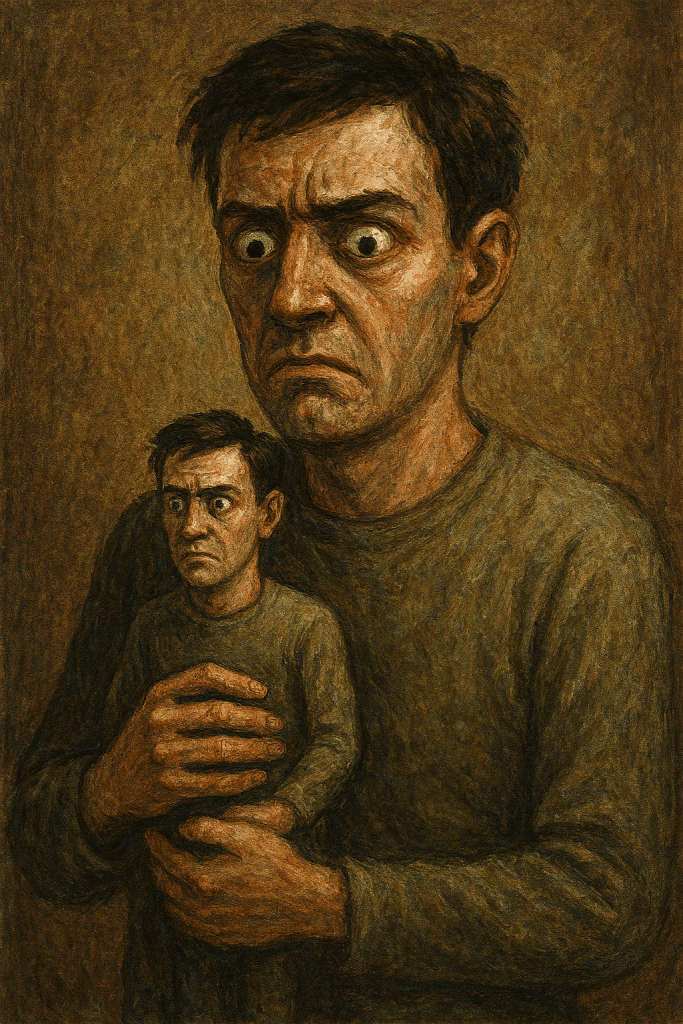
Thy Sins Are Forgiven

One of the most common phrases of Jesus’s ministry was “thy sins are forgiven thee.” When the paralytic man was lowered to him through the roof, Jesus first forgave the man’s sins, then healed his body. When the woman of many sins wept on his feet and anointed them with ointment, he also told her that her many sins were forgiven. The woman taken in adultery he did not directly forgive, but he did provide her a stay of execution and implored her to sin no more, implying that he was giving her time to seek the same forgiveness that the others had received.

Even as he was dying on the cross, Jesus had two famous moments of forgiveness. He interceded for the Romans who were carrying out his execution, observing that they were acting without understanding. He also promised the repentant thief that the two of them would see each other in paradise, implicitly forgiving him of the very sins that the man was being put to death for.

These are nice moments to think on, times where Jesus gave the greatest gift that we can experience in this life. I can’t imagine reading these stories and not being moved with happiness and hope.

But I think it also worth noting the deep gravity behind them also. I think we should always remember that when Jesus said, “thy sins are forgiven thee,” that forgiveness did not pop out of nowhere. Yes, it was given freely, but it was not acquired freely. Every time Jesus uttered those words an implication followed, “thy sins are forgiven thee, because I will die for them.”

In Hebrews it states:

For where a testament is, there must also of necessity be the death of the testator.
For a testament is of force after men are dead: otherwise it is of no strength at all while the testator liveth.
Hebrews 9:16-17

Surely, part of the reason why the death of the testator, Jesus, was necessary, was because his New Testament would take the place of the death penalties in the Old Testament. Thus, when Jesus let the woman taken in adultery go free…it was only because he was going to be killed in her place. And in all the other cases where Jesus pronounced “thy sins are forgiven thee,” those were only words until he paid the price that would give them actual force. The wages of sin are death, and so forgiveness of sin could only be real after his death for them.

We rejoice whenever Jesus’s words of forgiveness, mercy, and healing come upon us, and well we should. We marvel at how freely we receive them, how they seem to come from out of nowhere. But in the midst of our joy, we should remember that the freeness of them is only an illusion from our perspective. In reality, with every word of forgiveness Jesus gives to us, he is agreeing to die for them also.

God Reaching for God

God is the standard to strive for, but He is also the activating agent that makes the striving possible. God lives outside of us, but also part of Him lives inside of us. Thus, it is God that reaches for God and God that raises God, and we simply are pulled along by the part of Him that is inside us.

Hell Within

If you live every day with a level of physical comfort, security, wealth, and peace that almost no one in history has ever enjoyed, yet every day is filled with anger, anxiety, and despair, then perhaps it is time to consider that your hell comes from within.

Prepared to Fail- Martyr or Traitor

Silence)

In yesterday’s post I examined how torture and threats of violence to loved ones are used as tropes in Hollywood to transfer power and knowledge from the hero to the villain. I suggested that the frequency of this pattern might make us believe that these are foregone conclusions, it might train us to give the same response if ever we face the same pressure in our own lives.

One might argue, these are simply narrative tricks, and all they are looking to do is move the story along, not influence personal perceptions in the real world. I would agree that these films may not have the intention of cultivating a defeatist mentality in their viewers, but that can still be their effect when compounded all together. And what’s more, there are examples that are much more explicit in their message.

Silence is a film based on a 1966 novel where Jesuit priests witness the torture and killing of Christian converts in 17th century Japan. While the priests do not actually have their faith broken, two of them ultimately decide to renounce Christ as it is the only way to get the Japanese officials to stop murdering the people. In the film and novel this denial of faith is presented as a morally correct choice, and one that Christ would approve of. However, that argument is not rooted in any actual words of the Savior, it is justified by inventing a message from Christ within its fiction.

I certainly would never dismiss the seriousness of such a situation in real life, and if I ever met a person who abandoned their faith in such a moment, I would firmly leave the judgment for that in the hands of God. But I will judge fictional and solipsistic media that tries to say that sometimes the right thing to do is the wrong thing to do.

Joan of Arc)

Let us look at another example actually from history, one that is actually encouraging. Joan of Arc lived in 15th century France, and she proclaimed to have had visions with angels, which called her to fight for France’s liberation from England. While she went to battle and achieved great victories, ultimately, she was captured and stood trial before the English church.

Joan was found guilty of various sins, including heresy, and brought to the Tower of Rouen and shown the instruments of torture that would be used on her if she did not recant her spiritual claims. She bravely refused, and the judges thought it unwise to actually go through with the torture, so she was spared. Two weeks later, though, she was brought to the execution platform and told she would be burned at the stake that very day. This time they meant it, and this time her conviction wavered. She signed a confession that all her claims had been false.

But that was not the end of her story or her convictions. Only a few days later, pained by her false confession, she reasserted all her previous claims, and accepted the consequences that would follow. On May 30 she was put to the flames, and as she burned to death she called out to Jesus. Today she is considered a saint.

As I said yesterday, I cannot know whether I would prove faithful or not in such a trial. And as I said today, I leave to God the judgment of those who cannot hold to their convictions in such moments. But what I can do and say is that faithfulness to the truth is always the right answer. I can say that I hope to always be true to my Lord. I can say that we have sufficient evidence that people really can remain faithful, even in the face of torture, death, and the loss of loved ones. When evil comes in all its power, there is no foregone conclusion that we must fall to it. We may yet prove faithful and true; we may be martyrs rather than traitors.

Prepared to Fail- Convenient Plot Devices

Movie Tropes)

A movie trope is a recurring plot element that is seen across many different titles. They are a quick and easy way for a writer to reuse patterns that have worked before, and a movie that is full of them is considered lazy and unoriginal.

Tropes provide easy answers to moments of necessary transformation. One common transformation in movies is where the villain needs to gain knowledge to foil the hero’s plan. Another is where the hero has the upper hand, but then that dynamic is flipped, putting the villain in the position of power. In both of these cases, the hero and his allies have something important, knowledge or power, and there needs to be a way for the villain to take that from them.

Common tropes to quickly achieve both of these transformations are to have the villain torture a member of the hero’s group, or to threaten the loved ones of the hero.

You can see this in Pan’s Labyrinth, where Captain Vidal tortures a member of the Spanish Maquis to extract the location of the rebel group. You can see this in Gladiator, where Commodus threatens Lucilla’s son to get her to divulge the plot to overthrow him. And these tropes show up again and again in many, many other stories.

These serve as a narrative shorthand, but what sort of message do they send to society when used so constantly?

A Different Story)

The truth is that torture and threats to loved ones have been used throughout history to try and break the convictions of real people. Early Christian families were burned at the stake, or had their bodies mangled, rather than deny their fealty to their Lord. I’m not saying that such firmness of character is common, or that all of us would hold up under that pressure, but I do think it is important to recognize that the way movies portray such moments as an already foregone conclusion is untruthful.

Whether I could withstand torture or threats to my loved ones, I do not know, but it is good for me to remember that with God people have been able to endure these things and more. Rather than let these fictions poison me with the notion that everyone has a limit on their faithfulness, I’d rather be encouraged by true stories that show that the determination of the soul can be immeasurable.

Tomorrow I’ll conclude this little study by looking at two more examples of conviction and those that surrender them and those that hold on to them.

Prepared to Fail- Common Patterns

I recently concluded a study related to false moral dilemmas, where I sought to dispel the notion that there might ever be a time where we have to make a morally compromising choice. I asserted that there are always the options for finding an outside-the-box moral solution, or the ability to refused to engage with the situation entirely and still keep one’s conscience intact.

As I did this study, I started to notice something else, something that I was going to write about then and there, but I realized it warranted a study all its own. It is a theme that is even larger and broader, something that false moral dilemmas is but a subset of. What I have noticed is that our Western culture and media seem to be preparing us to give up on our ideals when certain triggers are met. Not only the false moral dilemmas that I already explored, but any time that there is a threat of torture or harm to a loved one.

Usually when either of these occur in our modern stories, the victim gives in to what the villains want. Obviously, it serves a narrative purpose to have a way for the villains to obtain their desire at certain points of the story, but the fact that it so commonly comes as a result of these specific methods is very interesting. We may view these sorts of stories passively, but each time we see the pattern repeated it is as if our minds are rehearsing that trigger and response, training itself to make the same surrender if we ever face the same sort of opposition.

In my next post I will examine these movie tropes of how the hero is forced to surrender his ideals, and what the long-term effects of repeated exposure to this pattern might spell for us. I’ll see you there.

False Moral Dilemmas- Conclusion

Summary)

In this series I explored the world’s strange fascination with moral dilemmas, noted how many of them are unbelievable and contrived, and how even the ones with a historical precedent always had a moral option, even if you have to look outside the box to find it. Another key point that I mentioned was the importance of recognizing disengagement as an option. If you are presented options A and B, and both would compromise your conscience, you could always just do nothing at all.

I also pointed out how both outside-the-box thinking and moral inaction are demonstrated in the life of Jesus. It is from him that we see that the perfect path, with no moral compromise, is actually possible.

At least, it is possible in theory. I also acknowledged that each of us will, of course, compromise ourselves at some point, but that we need to accept and confess that failure, not try to sweep it under the rug by saying we had no choice but to do wrong. We can both have grace for our poor choices while admitting that they were, indeed, poor choices.

The Uncomfortable Truth)

Accepting these truths can be uncomfortable as they leave us no way to hide from the reality of difficult moral choices. Believing that there is no good choice is the easier option, as it justifies us in shrinking from painful consequences. Once we accept that there is always a good path, then we can no longer betray God in ignorance. Then, any time that we do something to get what we want or to avoid pain, we do it with eyes wide open, and we know that we will have to account for it someday.

It is, therefore, both a blessing and a burden to know that choosing good is always an option. That knowledge might condemn us to dissatisfaction or pain in the short term, but it is also the path to ultimate redemption.