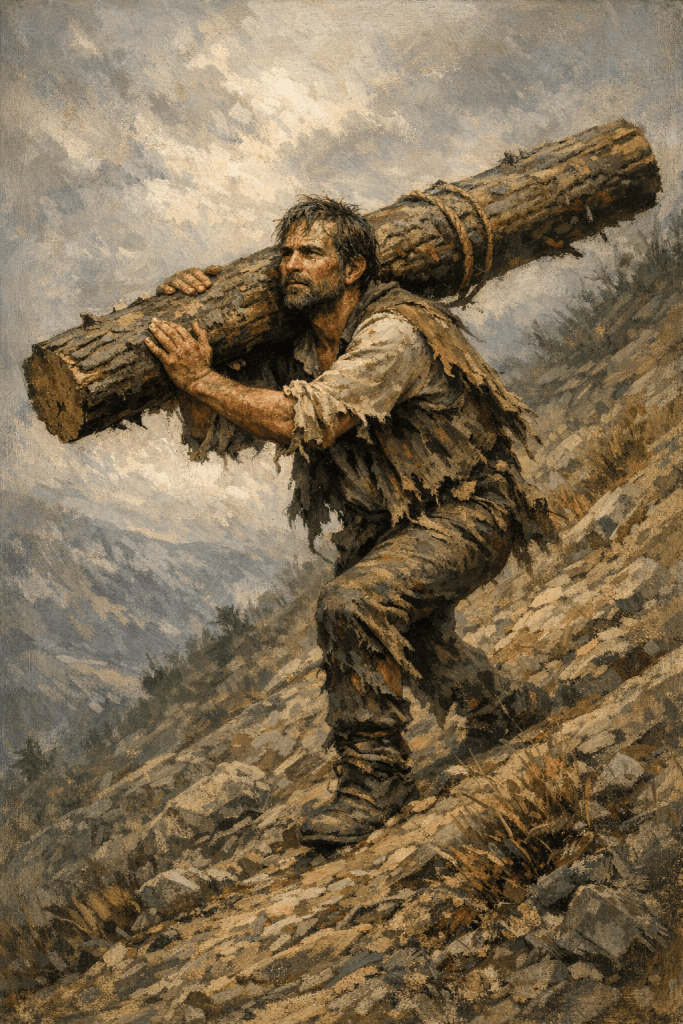
Faith vs Works- Two More Common Myths

In the last post we broke down two of the common myths in the faith vs works debate. Arguments that would have us believe that it really has to be just one or the other. Today I want to address two more, to really make clear that the scriptures do not teach us to take part in this feud.

Myth #1: All you have to do is confess the name of Jesus, accept him as your Lord and Savior, and then you are saved.

It is remarkable that people can say this, when Jesus, himself, explicitly denounced it!

“Not every one that saith unto me, Lord, Lord, shall enter into the kingdom of heaven; but he that doeth the will of my Father which is in heaven,” (Matthew 7:21).

In that one passage, Jesus makes it clear that calling on his name is not enough, and he immediately follows it up by calling for actual works, doing the will of the Father.

Consider what this myth would say of the Good Samaritan. Obviously, he is a fictional character but think how this principle would apply to the man if he were real. The Good Samaritan is, as his name suggests, good. And he is good because he does good. Because he stops to save the life of a stranger. He is not called good because of his faith in the accepted theology, though. Being a Samaritan, it is implied that he holds heretical beliefs. Thus, the Good Samaritan did good works, even though he believed wrong things. Would we really say that such a man couldn’t be saved because he lacked the correct faith?

Myth #2: Those that have died without performing the essential rituals are damned, even if they had no opportunity to do so.

This is the extreme that works-focused theology can go to. A theology that would deny salvation for the vast majority of God’s children for no other reason than that they lived in the wrong time or place, and thus never even heard the name of Jesus, and therefore never took part in the necessary ordinances or sacraments. It discounts every saintly person who served the greater good in their heart, but never through the proper channels.

This theology would also deny salvation to the Good Samaritan. It might applaud the good works that he did, but he still didn’t do perform the correct ordinances, so that isn’t enough.

Now, to be clear, I actually do think that there are ordinances that are required for salvation, but rather than assuming the damnation of all those that lacked the opportunity to take part, I assume that there must be some divine plan, some grace and allowance that will bridge that gap to those who never had the gospel but would have accepted it.

Unholy Agreement)

We have looked at the most egregious outcomes faith-only and works-only models for salvation. The two at first seemed to be polar opposites but note how they actually come to the same conclusion. Each could look at a great person, one who had devoted his life to serving truth and good, who had served his fellowman all his days, “yes, you were very good, but you were not good in the right way, so you are going to hell.” Each tries to gatekeep heaven in the most uncharitable way.

I think that there is just one more point of clarification that I would like to make on the nature of good works tomorrow, and then after that we will start to explore a theological explanation that satisfies all of the scriptures we have seen. One that both allows God to make mandatory requirements of us, but which acknowledges that we all need grace, and which offers mercy to those who never had an opportunity to worship God “the right way.”

Faith vs Works- Two Common Myths

Over the past two days I have shared a collection of verses that establish both that salvation is by grace, through faith, and also that works and ordinances are essential to our salvation. Too often I hear people take up just one side or the other, sharing the verses that support that view, and ignoring those for the other side.

Over the next two days, I would like to further break down the walls between these two camps by dispelling the common myths that each one makes. By the end of this, I hope to have established an understanding that we must seek a theology that embraces all of God’s word, not just half of it. Let us look at two of the broader myths today and focus on two othes tomorrow.

Myth #1: The reason for the different perspectives in the Bible is because this was one of the first schisms in the early church. Paul and James had different theologies, and we must align with whichever one of them was “right” and abandon the other.

It is true that Paul leans much more heavily on faith in his teachings, and James on works, but it would not be accurate to say that Paul denies the need for good works, or that James denies the need for faith. People have cherry-picked their verses to create the illusion of opposing sides, but both apostles held a wider view of the gospel that encompassed both perspectives.

From James: And the prayer of faith shall save the sick, and the Lord shall raise him up; and if he have committed sins, they shall be forgiven him, (James 5:15).

From Paul: For we are his workmanship, created in Christ Jesus unto good works, which God hath before ordained that we should walk in them (Ephesians 2:10).

Not only this, but if we just look at the words of Christ, himself, we find statements that make clear the primacy of both faith and works.

If ye love me, keep my commandments (John 14:15).

And he said to the woman, Thy faith hath saved thee; go in peace, (Luke 7:50).

So never matter what differing opinions the early church fathers did or didn’t have, even Jesus put top emphasis on both faith and works. There is no way to be in alignment with him unless we are willing to fully embrace both.

Myth #2: We are saved by faith/grace, but the evidence of it is in our works. Thus, both will be present in the truly saved soul, but one takes precedent over the other.

While it is certainly true that both faith and works must be present in the saved soul, it does not seem appropriate to put faith in a more fundamental place than works, or to say that works merely follow faith.

If this were the case, then no specific work would be considered essential for salvation. If you had sincere faith and did good works generally, that would be enough. But that is not what we see in the words of Jesus. He called people to do specific works as direct requirements for their salvation.

Jesus told the rich ruler that the one thing he lacked was selling all of his belongings, giving to the poor, and following him. Clearly the man already had faith, but Jesus prescribed for him a specific work to make his journey complete.

Jesus told his disciples that “he that believeth and is baptized shall be saved” (Mark 16:16). That is clearly a requirement for faith and an ordinance. He did not say, “he that believeth and does something good, like being baptized for example, shall be saved.” He is specific on both belief and baptism, suggesting that each is a necessary part of one’s spiritual foundation. We must have a theology that elevates both equally.

Tomorrow we will look at a couple more myths that do not agree with the written word of God. We will put them to rest, and then we can move on to finding a solution that actually satisfies all of our theological needs.

Faith vs Works- The Argument for Works

In the last post I made the case for salvation by grace through faith, and I provided what I consider to be the strongest verses to support that view. I absolutely believe in salvation by grace. That being said, I also believe in salvation through works, and again the scriptures give clear evidence for this. Let us look at the verses that demonstrate this most effectively.

Good Works)

Not every one that saith unto me, Lord, Lord, shall enter into the kingdom of heaven; but he that doeth the will of my Father which is in heaven (Matthew 7:21).

Then shall the King say unto them on his right hand, Come, ye blessed of my Father, inherit the kingdom prepared for you from the foundation of the world: For I was an hungred, and ye gave me meat: I was thirsty, and ye gave me drink: I was a stranger, and ye took me in: Naked, and ye clothed me: I was sick, and ye visited me: I was in prison, and ye came unto me, (Matthew 25:34-36).

And he said unto them, Go ye into all the world, and preach the gospel to every creature. He that believeth and is baptized shall be saved; but he that believeth not shall be damned, (Mark 16:15-16)

If ye love me, keep my commandments (John 14:15).

What doth it profit, my brethren, though a man say he hath faith, and have not works? can faith save him? Even so faith, if it hath not works, is dead, being alone. (James 2:14, 17).

For we are his workmanship, created in Christ Jesus unto good works, which God hath before ordained that we should walk in them (Ephesians 2:10).

My Own Growth)

The message of these verses is clear: It is not enough to only believe the right things or say the right words. We may never be able to earn our way into heaven, but we do become suited to it by the acts of devotion and good that we do. Jesus, himself, called on his followers to do certain works (follow the commandments) and to enter certain ordinances (be baptized), and he went so far as to say that being saved was contingent upon it.

To all this scriptural evidence, allow me to add my personal testimony that entering into God’s ordinances, and taking part in His work, has been essential to my path of salvation. The fact is, I was not naturally well-suited to heaven. It is my nature to be selfish, to be slothful, to be lustful, and to be mean. It has been through the effort of surrendering my will to the Father and doing His work, instead of my work, that I have cultivated some improvements to my heart. It isn’t about carrying myself to heaven, it is about reshaping myself to fit when I get there. Given my personal experience, I can only accept a theology that teaches the necessity of good works in our salvation.

Now that we’ve made a strong case for both salvation through faith/grace and also through works/ordinances, let us dispel some of the false teachings and myths related to both. We will begin that work with our next post.

Faith vs Works- The Argument for Faith

I shared in the last post how Christians have argued for ages as to whether man is saved by grace through faith, or whether he is saved by works. I suggested that this may be a false dichotomy, that there may be a way to put both faith and works into a position of primacy, even if that initially sounds like a contradiction. Thus, I am not here to diminish the importance of either, but rather to fully embrace both. So let us begin by reflecting on scriptures that express the preeminent quality of each. Today we focus on the ones that emphasize grace and faith.

Grace and Faith)

For by grace are ye saved through faith; and that not of yourselves: it is the gift of God: Not of works, lest any man should boast, (Ephesians 2:8-9).

Therefore we conclude that a man is justified by faith without the deeds of the law, (Romans 3:28).

And if by grace, then is it no more of works: otherwise grace is no more grace. But if it be of works, then is it no more grace: otherwise work is no more work, (Romans 11:6).

Knowing that a man is not justified by the works of the law, but by the faith of Jesus Christ, even we have believed in Jesus Christ, that we might be justified by the faith of Christ, and not by the works of the law: for by the works of the law shall no flesh be justified, (Galatians 2:16).

Not by works of righteousness which we have done, but according to his mercy he saved us, by the washing of regeneration, and renewing of the Holy Ghost; (Titus 3:5).

My Own Reclamation)

The message of these verses is clear: salvation comes by grace, through faith. And to these ancient words let me also add my own testimony. I have shared before how I walked a dark path of addiction, how I eventually turned my life over to Christ, and how he reclaimed my soul immediately, long before I had done anything to deserve it, and since that time I have known that I am truly saved by grace. The only action that I really did was to put my faith in him. I didn’t earn redemption, I didn’t fill a quota before he accepted me, I just trusted him, and he saved me because he wanted to.

Having had this personal experience, I would not accept any theology that denied this reality. Salvation comes by grace to those that exercise faith. This is a fact. And now, still keeping that in mind, we will dedicate tomorrow to seeing how it is also true that salvation comes through our works.

Faith vs Works- The Problem

A Seeming Contradiction)

Jesus taught, “Not every one that saith unto me, Lord, Lord, shall enter into the kingdom of heaven; but he that doeth the will of my Father which is in heaven,” (Matthew 7:21). Clearly, simply confessing Jesus as your savior and relying on faith is not sufficient to be saved. As Jesus says, we have to do the will of his Father. We must rely on good works.

Oh wait, but in the very next verses Jesus says, “Many will say to me in that day, Lord, Lord, have we not prophesied in thy name? and in thy name have cast out devils? and in thy name done many wonderful works? And then will I profess unto them, I never knew you: depart from me, ye that work iniquity,” (Matthew 7:22-23). In these verses, the people are describing the good works that they did in his name, yet they too are rejected. So maybe the works aren’t that important?

It does occur to me, that Jesus might possibly be describing two different groups of people here. Perhaps he saw our very day, where we have people that claim salvation by faith alone, and other people who claim salvation by their works, and in these verses, he calls both out as hypocrites and refutes both their theologies.

It certainly does not seem a good thing how this faith vs works debate has divided believers for thousands of years. Could it be that Satan fosters divisions such as this between the believers, goading each side to entrench more firmly on their own false belief, while all the while there was a simple truth that could have unified both camps?

Both Essential)

In this study, I will consider the scriptures that have caused the most confusion and division on the matter, the insufficient attempts that have been made to reconcile them, and finally I will illustrate how the LDS practice of proxy ordinances for the dead fully accounts for both views. I should point out that not every reader will be able to accept that solution, due to theological differences. Even so, I do think it will still be instructive for those readers to dive into this conundrum and start to wonder whether it is possible for there to be some solution to it.

I do believe that God’s word is true, and that if Jesus and his disciples made two different assertions, then we should assume that both of those assertions are true. If the two assertions seem contradictory, then rather than assume that one of them is wrong, we should assume that it is our perspective and interpretation of them that is off. Perhaps we need to think bigger, or change our view, or look through a different lens, that we may properly see how the two truths align in one.

Hatred or Love of Self

Over the past few decades, deaths of despair have climbed steadily in the United States. We seem to be a culture progressing into deeper and broader levels of hopelessness and personal anguish.

Many have pointed out how more and more people seem to hold an intense self-hatred also, the most likely cause of these increasing deaths. Naturally, it is assumed that the cure would be more self-love. More self-affirmation. More “me time.” But this assumes that self-hatred and self-love are mutually exclusive, and that they cannot exist in the same body.

In my experience, that assumption could not be further from the truth. Indeed, I have seen in my own life how the times of overabundant “self-love” have fueled the self-hatred that followed. Urging people to pursue more self-love might be like seeing someone who is drowning and bringing them a helpful glass of water.

In my experience, love is the cure to despair, but not self-love, divine love. I don’t need to find myself, I need to find Him. I don’t need to give myself what I want, I need to give myself what He wants for me. The true self-love that actually drives out self-hatred is only found in the love that we cultivate with our Creator.

Overwhelming Passion

We have many stories of people who are in want of strength, who plead for the Lord to empower them for the task ahead, and so it is in some cases. However, many of us carry a burden that is exactly the opposite. We have been given a passion that is too powerful for us to handle on their own.

If we turn that passion to self-indulgence it damages us with its overpowering stream. if we try to ignore it, it builds up pressure until it bursts out in painful ways. This passion could be a great gift, but it will instead be a great danger if we never learn what to do with it.

God gave us this passion so that we are meant to do with it is pour it back into Him. He is not only the well that forever gives He is also the well that can forever take. Only into Him can we safely disperse our passion, our energy, and our drive, and not be harmed by the flowing power.

We were never designed to operate on our own. God made us with oversized hearts so that we can fit the extra parts into Him.

Scriptural Analysis- Leviticus 3:16-17

16 And the priest shall burn them upon the altar: it is the food of the offering made by fire for a sweet savour: all the fat is the Lord’s.

17 It shall be a perpetual statute for your generations throughout all your dwellings, that ye eat neither fat nor blood.

This chapter ends with an interesting aside, where the Lord gives a commandment to the Israelites. Parts of these animals were never to be consumed by the Israelites. The Israelites were forbidden from consuming the blood of the animal, and from eating the fat. And it doesn’t seem to be because these parts were unclean or evil, but because they instead belonged to the Lord.

From other verses it is made clear that the blood was seen as containing the life itself of the animal. It was the sacred, animating factor that turned the creature from a heap of flesh and bones to a moving, acting thing. The fat, being the richest part of the animal, represented passion, energy, and drive. Thus, the animating factor in our lives, and our passion, energy, and drive, are to be seen as belonging to the Lord, not ourselves. We should not give our passion and life to our own desires, but reserve them for the higher purposes of God.

I don’t think that is just about reserving the best of ourselves for God. That could certainly be a part of it, but I believe it is also because the forces of life and passion are too strong for us to handle on our own. They are simply too potent, too powerful. We become drunk on our own passion and we flail about, trying to find some well that is deep enough to hold them. And so, we end up indulging in addiction, gambling, unsafe sex, vanity, greed, endless partying, and false causes. They are attractive to us because they are bottomless pits that we can pour our life and passion into forever, never mind the fact that they are unworthy vessels.

Thousands of years ago God showed His people a different endless well that we could pour their lives and passion into: Him. Just as the Israelites were warned not to try and stomach the fat and blood of the animal, but to surrender it to God instead, we are meant to direct our greatest energy and vitality to His cause, and it will be for our own good.

SacrificeEligible oblationStepsExplanation
Peace OfferingCattle, Lamb, GoatGratitude for reconciliation
Animal is slainGiving up old life for one of unity with another
Fat burned on altarGiving up old plans, passions, and drives

Full table.

Scriptural Analysis- Leviticus 3:12-16

12 And if his offering be a goat, then he shall offer it before the Lord.

13 And he shall lay his hand upon the head of it, and kill it before the tabernacle of the congregation: and the sons of Aaron shall sprinkle the blood thereof upon the altar round about.

14 And he shall offer thereof his offering, even an offering made by fire unto the Lord; the fat that covereth the inwards, and all the fat that is upon the inwards,

15 And the two kidneys, and the fat that is upon them, which is by the flanks, and the caul above the liver, with the kidneys, it shall he take away.

16 And the priest shall burn them upon the altar: it is the food of the offering made by fire for a sweet savour: all the fat is the Lord’s.

We heard the process of offering cattle, and sheep, and now a goat. And the instructions for doing so have been essentially identical all the way through.

This sort of repetition and redundancy in the Bible is well-known and has even been the target of mockery. Why doesn’t the record just give the instructions once, and then say that it applies to all three animal types?

Perhaps it is because the sacrifices were individual, so the descriptions for them were also. There are many things that we do in life that are repetitive, yet we describe them in detail because they are also individual. When a child is born, we don’t just say, “yeah, the birth went like all the other birth stories you’ve ever heard.” No, we still share about the contractions, and the water breaking, and the drive to the hospital, and the delivery, because these moments, though common to many people, still occur to us on an individual level. And this child’s birth is not the same thing as that child’s birth. So, too, every animal that was slain at the altar was an individual process. Every time that a person has made an offering of their heart to the Lord, it is not the same thing as another person’s offering of the heart. Each of us walk a path that sounds like many others, but it is also a path that no one else has ever walked before.

SacrificeEligible oblationStepsExplanation
Peace OfferingCattle, Lamb, GoatGratitude for reconciliation
Animal is slainGiving up old life for one of unity with another
Fat burned on altarGiving up old plans, passions, and drives

Full table.

Scriptural Analysis- Leviticus 3:6-11

6 And if his offering for a sacrifice of peace offering unto the Lord be of the flock; male or female, he shall offer it without blemish.

7 If he offer a lamb for his offering, then shall he offer it before the Lord.

8 And he shall lay his hand upon the head of his offering, and kill it before the tabernacle of the congregation: and Aaron’s sons shall sprinkle the blood thereof round about upon the altar.

9 And he shall offer of the sacrifice of the peace offering an offering made by fire unto the Lord; the fat thereof, and the whole rump, it shall he take off hard by the backbone; and the fat that covereth the inwards, and all the fat that is upon the inwards,

10 And the two kidneys, and the fat that is upon them, which is by the flanks, and the caul above the liver, with the kidneys, it shall he take away.

11 And the priest shall burn it upon the altar: it is the food of the offering made by fire unto the Lord.

Yesterday we heard of cattle being acceptable for the peace offering, and now we read that sheep were also. Tomorrow we will hear about goats. The descriptions of how each should be offered were virtually identical to one another. One thing that is unique in today’s passages is that the sheep had to be a lamb. Neither cattle nor goats are described with that same young age requirement.

We do not have a clear explanation for this difference. Perhaps there actually was no difference, and a young animal was the expectation for all animal types. If that was the case, then either it was simply understood in that culture, or the original records were more explicit than the ones we have today.

Or, on the other hand, perhaps there really was only an age requirement for the sheep, which may have been done to help define a hierarchy of sacrifice. We saw in the last chapter that for some sacrifices fruit of the field could be an acceptable offering, but more often it was a living sacrifice. In the chapter before that, we saw how sometimes a bird could be the animal sacrificed, but more commonly it was a livestock animal. And of all the livestock, sheep were the quintessential sacrifice animal. And among sheep, obviously the lamb is the most pure and unblemished. Indeed, in some cases a lamb was the only sacrificial option, such as when the Israelites used its blood on their doorposts in Egypt to dispel the angel of death.

Thus, if there was an age requirement for sheep only, it might have been part of this hierarchy: belonging → animal → livestock → sheep → lamb. This hierarchy shows a clear progression, one that naturally draws the mind one step further, to the ultimate sacrifice, even the Lamb of God.

SacrificeEligible oblationStepsExplanation
Peace OfferingCattle, LambGratitude for reconciliation
Animal is slainGiving up old life for one of unity with another
Fat burned on altarGiving up old plans, passions, and drives

Full table.