Scriptural Analysis- Exodus 40:30-33

30 And he set the laver between the tent of the congregation and the altar, and put water there, to wash withal.

31 And Moses and Aaron and his sons washed their hands and their feet thereat:

32 When they went into the tent of the congregation, and when they came near unto the altar, they washed; as the Lord commanded Moses.

33 And he reared up the court round about the tabernacle and the altar, and set up the hanging of the court gate. So Moses finished the work.

The final element of the physical structure of the tabernacle was the water basin, which led directly to the preparation of the men who would serve there as priests. Interestingly, not only Aaron and his sons washed their hands and feet, but also Moses. Similarly, we heard in yesterday’s verses that he offered the first offerings upon the golden and brazen altars. Moving forward, we do not hear of him continuing to function in the role of the priest, but it seems that in this first instance he did.

My assumption is that Moses performed these rituals as the first priest, so that he could then transfer that authority and responsibility to Aaron and his sons. As has been previously discussed, it was as if Moses were the Lord, Himself. He was God’s approved representative, so he alone he was authorized to function in these sacred rituals. But after having once functioned in that role, and thus claimed them, he could then pass them on to others that the Lord had chosen: Aaron and his sons.

This idea is echoed by what verse 33 states: that “Moses finished the work.” Obviously, many hands were involved in the labor of creating the tabernacle, but all of them were only able to perform this service as an extension of Moses, who was the extension of God, Himself. Everything was fulfilled under the stewardship of Moses, and now he could hand its continuation to those who would remain after he was gone.

Scriptural Analysis- Exodus 40:20-29

20 And he took and put the testimony into the ark, and set the staves on the ark, and put the mercy seat above upon the ark:

21 And he brought the ark into the tabernacle, and set up the veil of the covering, and covered the ark of the testimony; as the Lord commanded Moses.

22 And he put the table in the tent of the congregation, upon the side of the tabernacle northward, without the veil.

23 And he set the bread in order upon it before the Lord; as the Lord had commanded Moses.

24 And he put the candlestick in the tent of the congregation, over against the table, on the side of the tabernacle southward.

25 And he lighted the lamps before the Lord; as the Lord commanded Moses.

26 And he put the golden altar in the tent of the congregation before the veil:

27 And he burnt sweet incense thereon; as the Lord commanded Moses.

28 And he set up the hanging at the door of the tabernacle.

29 And he put the altar of burnt offering by the door of the tabernacle of the tent of the congregation, and offered upon it the burnt offering and the meat offering; as the Lord commanded Moses.

As mentioned recently, this description of the tabernacle’s parts is different from every run-through that we’ve had thus far. This time, in addition to hearing all of the items and their placement, we are also hearing each of their functions being exercised. The Ark of the Covenant is a container, and so the testimony is now placed into it. The table is to hold the shewbread, and so now the bread is baked and placed thereon. The candlestick is to provide light, and so now its lamps are lighted. The golden altar is for offering incense, and so now the incense is burned upon it. The brass altar is for animal sacrifice, so now a meat offering is made.

Everything is fulfilling its purpose, filling the measure of its creation, made complete by being allowed to do the thing that it was made to do. Everything in God’s world has a purpose and a function. Plants and animals, mountains and valleys, fire and water, gravity and buoyancy, soil and sky. None of these are just an adornment, they all are made to serve a necessary function. Their systems combine to make life, complexity, and beauty possible.

And if such is true for the tabernacle and all the earth, surely it is true of us as well. We are made for a purpose. Fulfilling that purpose is the difference between merely existing and truly living. It takes us from saying, “I just am,” to “I am for a reason.”

Scriptural Analysis- Exodus 40:18-19

18 And Moses reared up the tabernacle, and fastened his sockets, and set up the boards thereof, and put in the bars thereof, and reared up his pillars.

19 And he spread abroad the tent over the tabernacle, and put the covering of the tent above upon it; as the Lord commanded Moses.

The verse here says that “Moses reared the tabernacle.” However, it seems certain that some of these tasks would be beyond the capacity of a single man alone, particularly one in his eighties. Indeed, the very first step involved lifting and placing fifteen-foot boards into their sockets, and after they were all placed, massive coverings had to be run over the top of them! It seems that today’s verses must mean that Moses oversaw the rearing of the tabernacle, and so the responsibility for it is attributed to him.

Interestingly, this would mean Moses assuming the role of a divinely sanctioned foreman. Israel had just come from a land where they labored as slaves, under the direction of wicked masters. Now they labored voluntarily, for a Lord who had redeemed them, under the guidance of an overseer who had risked everything to secure their freedom. They still served, but the nature of that service was fundamentally changed from evil to good.

Also, this final act of rearing the tabernacle would complete Moses’s responsibility to see that all was done as the Lord has instructed. He had already confirmed that the parts were made correctly on an individual basis, now he would verify that they were put together correctly also. After that, direct responsibility could be handed over to the priests.

Scriptural Analysis- Exodus 40:17

17 And it came to pass in the first month in the second year, on the first day of the month, that the tabernacle was reared up.

The tabernacle was fully established on the first day of the new year. This was the beginning of Year 2, the Israelites having reset their calendars when God broke the pride of the Egyptians and led His people out of the land. Thus, the Israelites had been on this sojourn for exactly one year. The feast of the Passover would be happening in just over a week, the first one since Israel’s liberation, and the tabernacle would be ready for that holy day.

I assume that it took a few months for the Israelites to travel through the wilderness and reach Mount Sinai. Once there, we know that the process of obtaining the Lord’s law took two periods of forty days each, so nearly three months, and construction on the tabernacle began after that. Thus, I would assume that at most the Israelites had only half a year to complete construction on the Lord’s dwelling. It may have been considerably less. That seems like a remarkably short time for such a large and complex undertaking, but somehow it was accomplished.

Thus far, we have heard God’s initial description of the tabernacle to Moses, Moses’s retelling of those instructions to the Israelites, the work of the Israelites in creating each part, and the presentation of the completed elements to Moses. Thus, we have run through all the different elements of the tabernacle four times already, and now we will do so for a fifth time to describe how Moses had each element assembled for the full construction. This description will be a little different, though, as we will hear function and life being instilled into each component along the way. Bread will be placed for the first time on the table, fire lit for the first time in the lamp, incense offered for the first time on the incense altar, and so on. At long last, it is all coming alive.

Scriptural Analysis- Exodus 40:12-16

12 And thou shalt bring Aaron and his sons unto the door of the tabernacle of the congregation, and wash them with water.

13 And thou shalt put upon Aaron the holy garments, and anoint him, and sanctify him; that he may minister unto me in the priest’s office.

14 And thou shalt bring his sons, and clothe them with coats:

15 And thou shalt anoint them, as thou didst anoint their father, that they may minister unto me in the priest’s office: for their anointing shall surely be an everlasting priesthood throughout their generations.

16 Thus did Moses: according to all that the Lord commanded him, so did he.

As the final step of preparation, Aaron and his sons would be dressed, anointed, and sanctified. These were the priests that God had chosen, and they had to be prepared in just the same manner as all the other elements of the tabernacle. This suggests that they are as much a part of the place as every altar and curtain. Living vessels for the Lord.

Verse 15 is the first time that we see the word “priesthood” in the KJV Bible, though the Hebrew word that is derived from, כְּהֻנָּה (kehunnah), appeared once before in Exodus 29:9, where it was rendered as “the priest’s office.” At different times, God called different categories of men to bear the priesthood, but always men. This may not actually mean anything, but it interesting to note that nouns are gendered in Hebrew, and “priesthood,” as well as most other abstract nouns, is feminine.

This may simply be a coincidence of linguistics, or perhaps the language was formed around the cosmological perception of the people who used it. Perhaps the abstract and conceptual was seen as the domain of the divine feminine, and the calling of men to it was a deliberate unification of the feminine to the masculine. Perhaps the ancient Hebrew view was that the man represented the concretization of the abstract. That the priesthood had both a feminine and masculine side, feminine in its unseen authority and masculine in the priest that utilized it.

Scriptural Analysis- Exodus 40:9-11

9 And thou shalt take the anointing oil, and anoint the tabernacle, and all that is therein, and shalt hallow it, and all the vessels thereof: and it shall be holy.

10 And thou shalt anoint the altar of the burnt offering, and all his vessels, and sanctify the altar: and it shall be an altar most holy.

11 And thou shalt anoint the laver and his foot, and sanctify it.

All the different elements of the tabernacle were in place, but before they could be used, they had to be anointed with oil. Every part of it, inside and out, was to be anointed, which is said to be for the sake of “sanctifying” them.

To sanctify something has a dual meaning. It is used both to mean the cleansing and purifying of something, as well as to choose and set apart something for a holy purpose. Presumably both of those meanings are meant here. Every time the tabernacle was set up, they would be anointed to cleanse them of the world’s detritus, and to consecrate them once again to the service of the Lord.

Scriptural Analysis- Exodus 40:6-8

6 And thou shalt set the altar of the burnt offering before the door of the tabernacle of the tent of the congregation.

7 And thou shalt set the laver between the tent of the congregation and the altar, and shalt put water therein.

8 And thou shalt set up the court round about, and hang up the hanging at the court gate.

We now read the order in which the courtyard is to be erected. First the sacrificial altar, then the washing basin, and finally the courtyard walls and gate. With that, all of the elements would be properly in place, though not yet anointed and ready for use.

One thing that stands out to me is that the sacrificial altar is to be placed in line with the door of the tabernacle. Not off to one side, or at a bit of an angle, but directly on the path to it. The symbolism clearly being that there is no approaching the sacred inner places without first making a sacrifice. It might seem easier if we could obtain God’s full glory before we gave up our beasts of the flesh that hold us back, but that simply isn’t how it works. The offering must come first, the presence of God must come after. For this very reason, God remains inaccessible to any who try to reverse the order and say they will only make sacrifice after they first witness God’s presence.

But for those that do make offering, the washing presents itself next. The washing comes because of the sacrifice. We are made holy and clean, and now we are ready to enter God’s glory. That is the order, and it cannot be short-circuited or rearranged. We come by that path, or we don’t come at all.

Scriptural Analysis- Exodus 40:2-5

2 On the first day of the first month shalt thou set up the tabernacle of the tent of the congregation.

3 And thou shalt put therein the ark of the testimony, and cover the ark with the veil.

4 And thou shalt bring in the table, and set in order the things that are to be set in order upon it; and thou shalt bring in the candlestick, and light the lamps thereof.

5 And thou shalt set the altar of gold for the incense before the ark of the testimony, and put the hanging of the door to the tabernacle.

The tabernacle was to be constructed from the inside out. First the tabernacle and all of its elements would be placed, and then the elements of the courtyard and its walls. Thus, the first step is to erect the tabernacle with its pillars and walls and curtains and coverings of linen and skin. Apparently, though, the curtain door was not yet to be added. Next came the Ark of the Testimony in the most holy place, and on the other side of the inner veil the table of shewbread, the menorah, and the incense altar. Now that the interior was complete, the curtain door was added, and the tabernacle portion was complete.

When we first read about the structure of the tabernacle with its bones of wood and its outer coverings of hair and skin, it seemed clear to me that it was meant to represent a person’s body. It is a symbol for each of us individually. With that in mind, the bringing in of the spiritual artifacts represents the introduction of spirituality to our own person. First comes in the Ark of the Covenant, which represents the presence of God within us, the spark of divinity that all of us are born with. The table of shewbread is spiritual nourishment, the menorah is spiritual light, and the incense altar is our continual prayers. We must maintain in our dead flesh a living spirit, nourishing it by light and prayer, and we must set a door before us that keeps the material out so that the inner spiritual is uncorrupted.

Scriptural Analysis- Exodus 40:1-2

1 And the Lord spake unto Moses, saying,

2 On the first day of the first month shalt thou set up the tabernacle of the tent of the congregation.

The Israelites have now completed a great work, the creation of a beautiful tabernacle! It is incredible that they produced something like this having just come out of slavery and now living in the middle of the wilderness. Currently, the tabernacle is disassembled in its several parts, and now those parts need to come together in the desired form.

This again brings to mind the creation of the Earth at the beginning of Genesis. There, each day of creation was focused on its own element, each treated as an individual unit. But when we walk around the earth today, we see all these individual elements combined together in harmony. Land and water and animals and plants and stars and sun and people all overlapping in their systems and functions, all combined to the glory of God. So, too, the individually magnificent Ark of the Covenant, and brass altar, and golden menorah, and woven tapestries would all be assembled to one higher whole.

In the following verses, God will describe the correct order for all these separate parts to come together. This sequence would not only apply to this initial assembly, but every time that the Israelites traveled to a new destination and there reared the tabernacle. This repeated assembly is symbolic of how divine creation is not a singular event, but one that must be repeated and refreshed. We see this in God’s creation, where the elements of the earth are cyclically reassembled into the bodies of the new generation of people, animals, and plants. We see it in the hearts of the disciples that are continually refreshed, renewed, and recommitted as they toil through life’s distractions and sorrows.

Forced to Fit- Part Two

Accepting God as He Is)

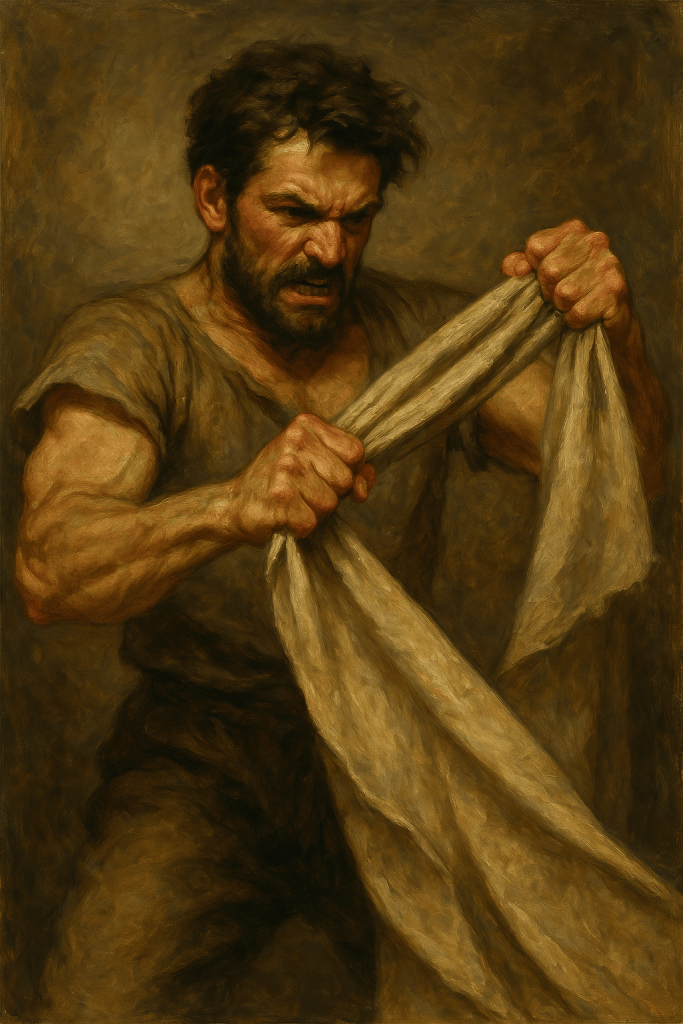
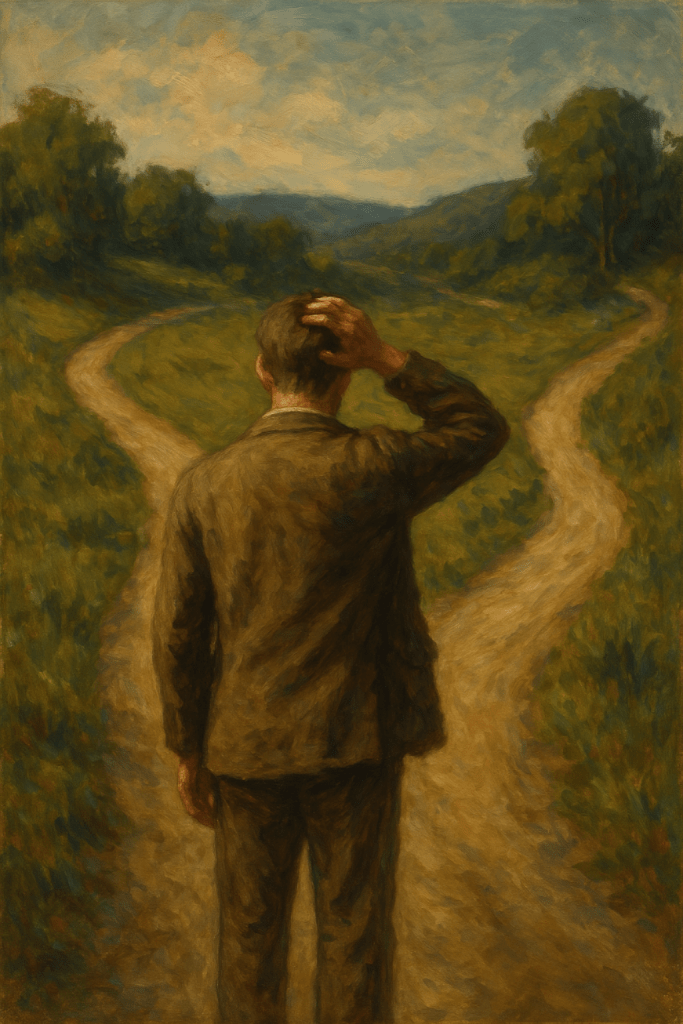
Yesterday I shared the observation that our culture raises us with certain preconceptions about what is good and ideal. When we then engage with the idea of God, we find aspects of His revealed character that do not comport with our preconceptions. Either we discard Him, try to make Him fit our own ideals, or sacrifice our own values to embrace His.

If we elect that third option, this will likely see us surrendering to a God that we don’t fully understand or agree with. Based on our unrecognized bias, we might think that God is sexist, or unmerciful, or discriminatory, or antiquated. But if we surrender to Him even so, living according to His word in spite of our uncertainty, in time we will see our secret prejudices for what they are, and be able to let them go.

A Dangerous Justification)

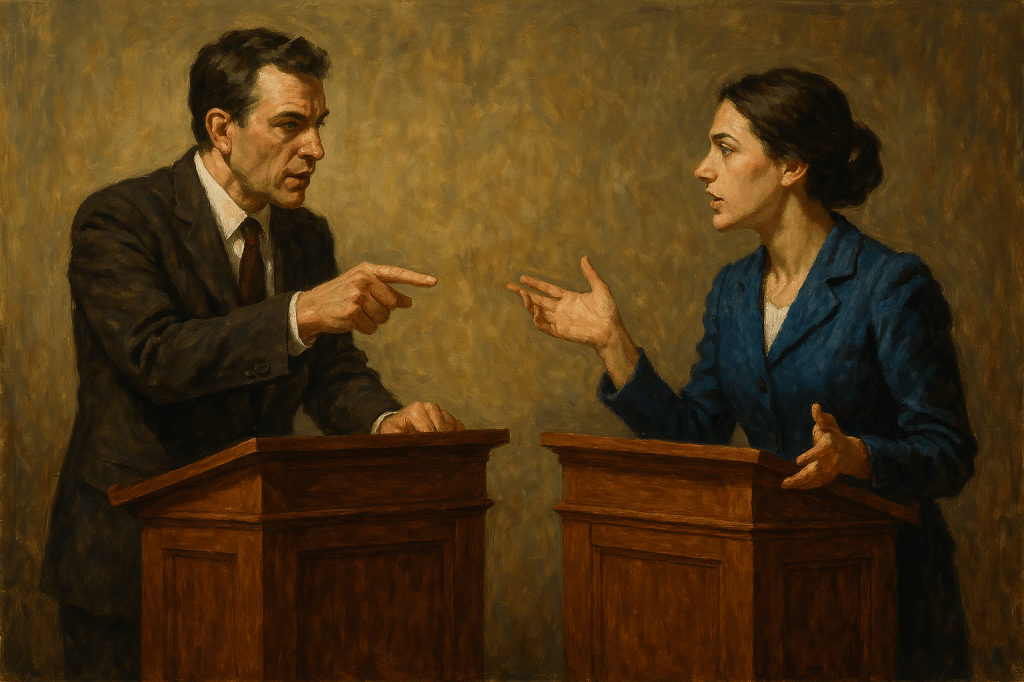
For those that elect the second option, to try and change God, they often justify it by saying that the ancient records of Him were biased by the culture of their time. The irony of this generational snobbery is obvious. If you accuse another person of misrepresenting God according to his bias, how do you know that you are not doing exactly the same?

Another justification might be that the description of God’s standards was appropriate for that time, but there is a precedent for it to be updated now. After all, we do not still perform animal sacrifices or abstain from eating pork, so why couldn’t God update His opinion on certain social constructs today?

However, this argument ignores the fact that all of the aforementioned changes were never instituted by popular vote, only by those who carried divine investiture from God, Himself. Jesus was God incarnate when he approved of his cousin John’s use of baptism, when he corrected the Israelite conception of the sabbath, and when he began the practice of the sacrament. The twelve apostles were divinely appointed by Jesus with his authority, and guided by revelation, when they changed the sabbath to Sunday, opened the gospel to the gentiles, called for an end to animal sacrifice, and approved the eating of previously unclean animals.

It is not the Christian view that we can change any of God’s commands or practices at will. We have not instituted the changes from Mosaic law to Christian values at random, or due to popular preference. Every change that we observe is founded in a heavenly mandate, not in popularity. In contrast, where is the divinely invested steward who declares God’s approval of our modern social ideals? Where is the heavenly vision that roots our “progressivism” in God and not the earth?

Rejection)

This leaves the final possible response to our personal ideals differing from God’s: rejection. We can say, “yes, the God of the Bible is that particular way, and I will never be okay with that, so I will reject Him.” This, at least, is a more honest response than trying to change the divine.

But to the person making this decision I would encourage them to consider the origin of your values. Are they not directly from the society around you? Are they not from the material, fallen world? Ideals based in the world are doomed to the same fate as all the rest of mortality. These ideals will go out of fashion, and those that lived by them will similarly perish and fade. It is the natural endpoint of every worldly path. If you reject the transcendent, transcendence will respect that decision and similarly abandon you. If you wish to have no more reality than materialism and popularity, then you will have no more than them, and you will die with them.

If, on the other hand, you wish to have a hope for life, and renewal, and the transcendent ideal, and ultimate truth, if you wish to belong to those things and be transfigured by them, you should only expect to do so by embracing a message and a perspective that transcends from on high. One that comes from an ancient God, whose long-standing ways you should naturally expect to contradict many of the messages in our modern, constantly changing world. If you reject that God, then you must realize you have rejected your only option for eternal life, and you must accept the nihilistic void in His place.