The Impasse of Release and Guilt: Part Three

In my last two posts I have described two parts of a paradox in addiction recovery. Part one was that we have the greatest success when we do not ruminate on our failures, but simply let them go. Part two was that the addict who breaks beautiful things and hurts loved ones feels it is too flippant to just let those things go. It seems necessary that the addict should be devastated about his failure for some time.

Thus, the addict finds himself caught between the surrender of guilt that would give him the best chance of recovery, and the sense of justice that demands he pays for what he has done. Thankfully, there is a third element that comes to bridge this terrible gulf, to provide a ladder from the darkness to the light.

The Need for a Savior)

At the core of the addict saying that it is right and appropriate to feel devastated for his failures is a recognition that he has broken a moral crime, and so justice ought to be carried out on him. But once we recognize that this is a matter of paying the price for a moral crime, Jesus Christ steps into the picture. The whole point of Jesus Christ is that he, himself, paid the price for these crimes so that we wouldn’t have to.

If I responded to my most shameful acts with nothing more than a “yeah, that happened, but moving on…” then yes, that would be too flippant. But there’s nothing flippant about saying “My best friend died for what I did, so that I could go free.” If anything, that adds even greater gravity and weight to the situation, while also justifying me in letting go of my shame and moving on.

Yes, it is appropriate to be devastated about the seriously wrong things that we do, but Christ offers to feel that devastation for us. When we take him up on that offer, and surrender the weight to him, then it is entirely appropriate for us to get right back in the saddle and try again.

I think this is why having a Higher Power, and more specifically a Savior, is essential to recovery, because when I don’t account for the fact that someone paid for the price for me, I get stuck at an impasse between parts one and two. I need this final part to bridge the gap and bring it all home. It allows me to live as if I had never done anything wrong, while also not minimizing the very real wrong that I really did do. Bringing Christ into the recovery allows us to exchange our worst for his best, and thus the captive may go free.


The Impasse of Release and Guilt: Part Two

A Proper Devastation)

Yesterday I considered how obsession with failure only tends to yield further failure. In order to change our lives and habits, we have to let go of our tendency to punish ourselves, we have to forgive ourselves for falling short, we have to get right back up and resume living our commitments.

Speaking for myself, just by understanding this fact I do find it easier to let go of my more minor indiscretions. If I eat too much at a party, if I stay up too late playing games, if I find myself distracted at work, I find it within my reach to set aside the self-resentment and instead say, “yes, that happened, but I should get right back to living my commitments, hopeful and trusting that I’ve still got this.”

But not every wrong fits into that “minor indiscretion” category. We addicts are defined by how consistently and repeatedly do heavy and major wrongs. We do things that not only hurt ourselves, but those we care about most. We break beautiful things and cause irreversible damage. And just letting go of that doesn’t feel so easy. In fact, it feels disrespectful and inappropriate to just let it go. It seems too flippant to say “yes, that happened, but moving on…”

And yes, focusing on the guilt and failure of our major wrongs is still the surest way to end up repeating those painful behaviors. Pragmatically we ought to just let them go, but in our hearts it feels like we should be distressed and devastated for a time.

This is a great conundrum then. It is the impassable gulf, the catch-22 of recovery. How are we to do make the surrender that help us get better when doing so feels actively wrong? This is the gordian know we will untangle tomorrow.

The Impasse of Release and Guilt: Part One

In my spiritual journey, through my experiences of addiction and recovery, I have seen a difficult impasse that many addicts have grappled with, myself included. There are two aspects that seem to be fundamentally at odds with one another, creating what at first appears to be an unfixable situation. We’ll look at the first point today, the second one tomorrow, and the surprising resolution after that.

The Need to Move On)

One thing that psychological research has found, and that I have seen within my own self, is that dwelling on one’s failures is the surest way to repeat them. The more we obsess over what we’ve done wrong, the more we are aligned to returning to that polluted well again and again.

I have many times found myself repeatedly and profusely apologizing, spelling out every reason why what I did was wrong, and focusing on how fundamentally selfish all my actions were. The result? All of that self-flagellation sent a message to myself that I was fundamentally no good, hell-bent on doing the wrong things, and so that’s exactly what continued to happen. I continued to do the same things again and again, because that was just the garbage sort of person that I was.

On the other hand, being willing to set aside my shame and believe in myself in spite of my failings was fundamental to overcoming these negative habits. I had to sincerely believe there was a better, truer me beneath the bad actions before he could come forward into reality.

There is a caveat to this. One who is in complete denial, who is constantly minimizing his wrongs, who is dismissive of the pain he causes, he may require a sharp wake up call to really face how messed up his behavior really is. But for any self-admitting addict who is genuinely remorseful, the pragmatic next step for him would be to set aside every failure and just keep moving forward.

There is an obstacle to doing this, though, which we will discuss in the next post.

The Day Without Christ

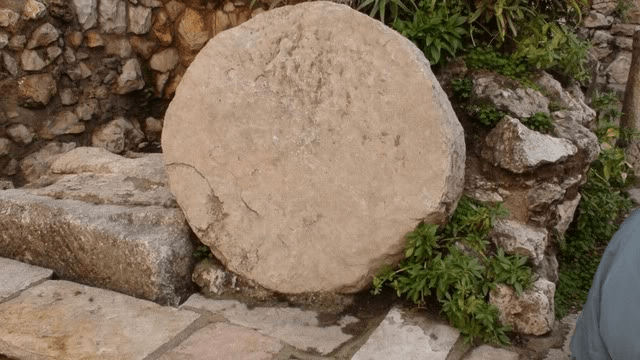
Jesus was crucified just before the sabbath, hastily laid to rest in an empty tomb, and remained shut out of sight for the next 24 hours. The following day he appeared, newly resurrected, and was witnessed by one group of followers after another, including all eleven apostles. Eventually he was even seen by 500 disciples at one time.

Thus, there was the last day of Jesus’s mortal life, the first day of his glorified life, and in between one day without Christ at all. What a bitter sabbath that must have been for Jesus’s disciples, the one day where they didn’t have their Lord to be there with them, and didn’t know that he would ever be with them again. A day of darkness, a day without the Lord.

But where was Jesus during that day away from the world? What was he gone to when he departed from his people?

He was gone conquering.

As the children are partakers of flesh and blood, he also himself likewise took part of the same; that through death he might destroy him that had the power of death, that is, the devil; And deliver them who through fear of death were all their lifetime subject to bondage. He led captivity captive, and hath put all things under his feet. (Hebrews 2:14-15, Ephesians 4:8, and Ephesians 1:22).

Jesus might have been missing, but hardly had he abandoned his people. The time when Jesus was absent in the lives of his disciples, he was gone destroying their greatest enemies: death and hell. He fought with mankind’s greatest evils, and his ability to rise back to life the next day shows that he was triumphant in that battle. He came back having won for them the greatest gifts they would ever receive.

Each of us similarly faces days where Christ appears to be missing in our lives. We feel his spirit beforehand, but then for a spell it seems that he has gone away from us. We are left alone in the dark, much like his ancient disciples. At such times, might not he have gone to conquer our greatest enemies also? Our days without Christ might be a sign that the greatest victories are about to come.

Trending Towards Death

It is a terrible thing to be faithless, nihilistic, cynical, and depressed. There are many that find themselves in a state where effort seems ineffectual, the future appears bleak, and life itself feels meaningless. Too long in such a state can be a very dangerous thing, as the broken person may begin to consider ways to expedite the end of their miserable existence. Even if not, though, they will continue forward in a sort of waking death, unmotivated to do any of the things worth living for, isolating and numbing, and just letting themselves go. They may reach a “natural end,” but one that was premature and avoidable.

On the other hand, though, one might love life to the point of debauchery. They might become carnal, sensual, eagerly pursuing every pleasant, vibrant experience, trying to live as full and varied a life as possible. But gross hedonism is just as tended towards death as depression. Promiscuous sexuality, drunkenness, risk-taking, late-night parties, and gluttony do not prolong life, rather they burn it out faster, resulting in either an accidental death, or once again, a demise that might be considered natural, though premature and avoidable.

The soul cleaved from its purpose becomes depressed and gravitates towards death, but also the soul that makes its purpose the pleasures of life also gravitates to death. Survival itself is contingent upon finding the true life worth living, and committing ourselves wholeheartedly to it.

Scriptural Analysis- Exodus 15:26-27

26 And said, If thou wilt diligently hearken to the voice of the Lord thy God, and wilt do that which is right in his sight, and wilt give ear to his commandments, and keep all his statutes, I will put none of these diseases upon thee, which I have brought upon the Egyptians: for I am the Lord that healeth thee.

27 And they came to Elim, where were twelve wells of water, and threescore and ten palm trees: and they encamped there by the waters.

Along with the tree that healed the bitter waters, God gave the Israelites a covenant that He would heal them and keep them from the plagues of Egypt, so long as they obeyed His commandments. This making of covenants out in the wilderness brings to mind a similar scene with their namesake, Jacob/Israel, after he had fled the home of his birth and was on his way to a new land. It seems being out in the wild, untethered from all prior patterns and support is an ideal place to establish new commitments with God. When an individual or a people are at their lowest and barest is when God can finally pour a new foundation in their heart.

I also want to draw attention to the different ways that Israel is commanded to follow God. They are to “hearken to the voice of the Lord,” then “do that which is right in his sight.” This is then repeated in another way as, “give ear to his commandments,” and then “keep all his statues.” Twice we are shown that the pattern for obeying is both listening/hearkening, as well as doing/keeping. There is an element of discovering God’s will, and an element of doing it. And make no mistake, it is His will. “Do that which is right in his sight,” was the command, not what is right in our sight, or according to our own biased interpretation of His will. None of us can do any good if it isn’t God’s good.

Then, after offering this covenant to Israel, God then gave them a great gift: twelve wells of water and seventy palm trees. A literal oasis in the desert, a flowing refuge from the thirst that had troubled them, a sign that God was more than equipped to care for their every need. If Israel would bring the faithful obedience, God would bring all the healing, life-sustaining waters.

Scriptural Analysis- Exodus 15:25

25 And he cried unto the Lord; and the Lord shewed him a tree, which when he had cast into the waters, the waters were made sweet: there he made for them a statute and an ordinance, and there he proved them,

In the previous verses Israel had found themselves without any fresh water, and had murmured to Moses, asking what they were supposed to drink. I compared this to the sinner who leaves the enslavement of his vices, only to find himself in a hard and trying world, with none of his old coping mechanisms to soothe his aches.

In verse 25 we hear God’s solution, which is that He had planted a tree, and when the tree was cut down and cast into the waters it counteracted the bitterness, making the water sweet to the Israelites. I do wonder whether “bitter” and “sweet” are only referring to the taste of the water, or whether “bitter” actually “poisonous” and “sweet” actually “safe to drink.”

To me, the symbolism of this moment is clear. Consider that the tree was apparently able to draw in the bitter waters that the Israelites could not drink and still remain live, but by its death it also sustained life for all the people. Christ is the tree that is able to take in all the bitterness, all the sin and evil, of this world. He takes it into his own person and remains perfect, yet he was cut down and killed, buried in the waters of death, and by his virtue dispelled the curse of mortality for us all. He takes all of our trials and travails and sweetens them, counteracting their effects by providing forgiveness for sin and resurrection from death. All wrongs are made right in him, all setbacks are made to our own benefit.

Going back to the idea of the addict beset by the afflictions that normally would cause him to relapse, recovery is found through a higher power that makes the intolerable tolerable. Surrendering the bitter moments to the group, the sponsor, and the higher power causes them to lose their power. The bitterness is taken out of the pain and what remains is a growing opportunity. The addict finds respite and soothing through this new process, and he is able to continue onward, not going back to the comfort of his old slavers.

Scriptural Analysis- Exodus 15:22-24

22 So Moses brought Israel from the Red sea, and they went out into the wilderness of Shur; and they went three days in the wilderness, and found no water.

23 And when they came to Marah, they could not drink of the waters of Marah, for they were bitter: therefore the name of it was called Marah.

24 And the people murmured against Moses, saying, What shall we drink?

There was a rich symbolism in the plagues that befell Egypt, each one corresponding to the effects of sin upon mankind, mirroring the natural consequences that we face for our evil deeds. Unsurprisingly, that same rich symbolism is present in the account of Israel’s journey into the wilderness. As we encounter each setback the Israelites faced, hear their reaction to it, and see God’s solution, I will pay close attention to how it is a type for the hardships that we, who are faithful, also face in our journeys.

Indeed, if there is any lesson to be learned from the stories of Israel in the wilderness, it is that hardship is not only for the wicked. Yes, the Egyptians received a singular sort of suffering for their crimes, but the Israelites would be tried by fire as well!

And so, in today’s verses, the Israelites found themselves finally free, out on their own, but there wasn’t any water to be found. They pressed on a little further, and there the water was bitter, so much so that they could not drink of it.

As a person who has been a slave of addiction, and associated with many others in the same boat, I have seen the euphoria that befalls a freed soul when he leaves his captor by making a confession of his sins. All at once, that man is out of the place he thought he would never leave, just like the Israelites, and he is sure that the worst is behind him. But now he faces the world without his drug of choice. He still faces difficult relationships, financial pressure, feelings of inadequacy, long spells of boredom, and he has none of his sinful wine to slake his thirst. He is in the bare, open desert, a man alone, and he can see no water.

Then the man might murmur to his mentor, much like Israel did to Moses, “well what am I supposed to do now?” Our slave masters might have been evil, but they also provided a structure that protected us from the harshness of the world. Who will protect and provide for us now?

Scriptural Analysis- Exodus 15:20-21

20 And Miriam the prophetess, the sister of Aaron, took a timbrel in her hand; and all the women went out after her with timbrels and with dances.

21 And Miriam answered them, Sing ye to the Lord, for he hath triumphed gloriously; the horse and his rider hath he thrown into the sea.

We have not heard of Miriam since she followed baby Moses floating down the river as a baby (the common assumption being that Miriam was the unnamed sister in that story). Now we hear that she had grown to be a prophetess in her own right, and apparently a leader of women. At her example, all of the women joined in music and song and dance. I would assume the song that they sang was the same one we were given over the last nineteen verses.

I find something very appropriate in it being the voices of women that sang praises for the miraculous avoidance of war. War is antithetical to the female instinct to put down roots and build a home. War undoes the miracle of life that emerges from the body of the woman. War and womanhood are completely at odds to one another, so it is very fitting that it was the voices of women praising that war, itself, had been defeated that day.