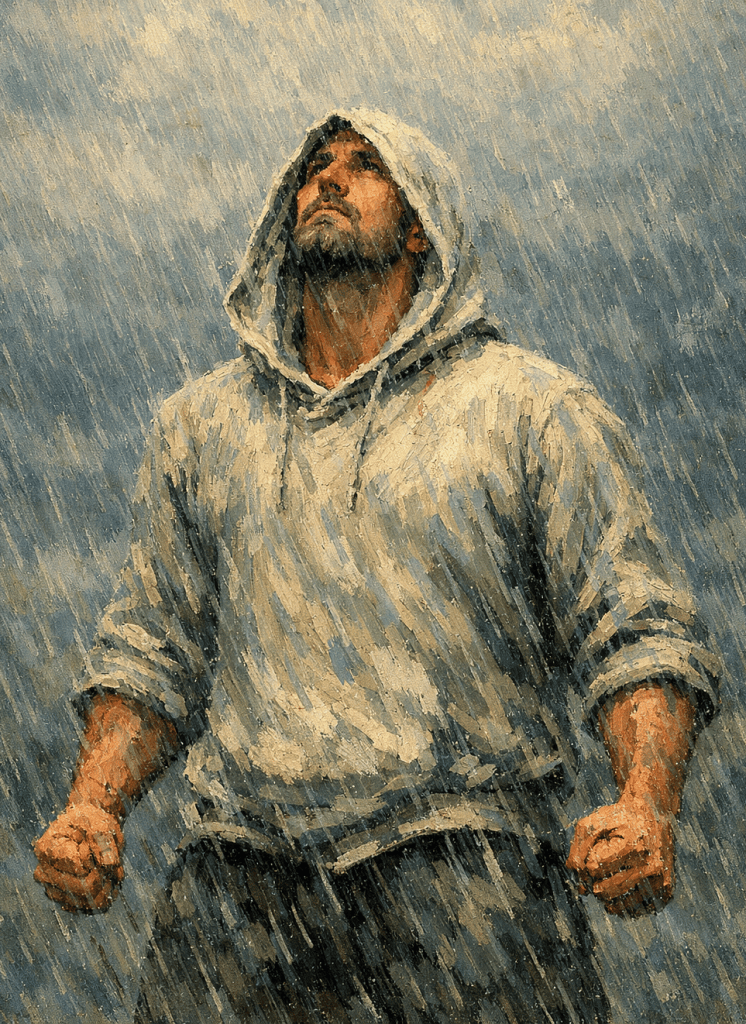
No one tells the story of the man who never struggled
No one tells the story of the man who never struggled
I had long been aware that I felt different from many people, Christians included, in the fact that I did not struggle with the terrible suffering in this world combined with the belief in a powerful and loving God. Frankly, I was glad that I didn’t see a paradox in this and assumed that the paradox wasn’t even real. I assumed that people were distressed by this conundrum for purely emotional reasons, which would certainly be understandable, just not justifiable by logic or reason.
And, as I learned in my study of the matter, that assumption of mine is true for many individuals out there. Many don’t understand the very argument that they use, don’t recognize that it only applies in some contexts and not in others. There are also those who see that the Problem of Evil is only an argument against a very specific conception of God and reality, and I am very grateful to them for expanding my horizons so I could see what that conception was.
Yesterday I shared about faiths that bypass the argument entirely by not holding to the presuppositions that it depends on. Today I wanted to conclude by exploring some of the thoughts that came up when I imagined how it would be to live as one of those Christians to whom those presuppositions do still apply.
At the root of everything, it comes down to just what we mean when we say that God is all-powerful and that He is sovereign over all. In most conversations, I find that even people who believe in the strongest conceptions of God’s power, still assume that to some degree He imposes restrictions upon Himself. They might say that God has the power to slam Jupiter into the Sun, causing a sudden burst of heat and energy that would consume the Earth and eradicate all life in an instant…but He doesn’t, because He is checked by His goodness and compassion. The fact that God does not do something, is not evidence that He cannot do something. It can merely be a sign that His nature bounds itself. God must wield all power, but not at the expense of being all-benevolent.
And then other attributes can be applied to that. Such as logic and truth. These are principles that exist on the same plane of existence as Him, and many Christians would argue are a part of Him, and as such He would operate according to their principles. Just as God would not show His power in a way that contradicts His benevolence, He would not show it in a way that contradicts His logic. If He did, He would be uncoupling His own parts and cease to be Himself.
Thus, could the suffering in this world be a logical necessity, even under the hands of an all-powerful and all-benevolent God?
Is God still all-powerful if that power is bounded by His benevolence and His logic? Is He still all-benevolent if that benevolence is bounded by His justice and His logic?
And if God does need to balance all of these criteria with one another, then perhaps there is space to say that a world of suffering, and a species of man who become heroic by overcoming great opposition, is a logical necessity. In our own lives we know that victory is only a virtue in the face of genuine possible defeat, and maybe that isn’t just an illusion of our reality, but an eternal principle, as true as the principles of mathematics. Perhaps life is the way that it is, because it was the only way that it could be.
This may not answer every concern found in the Problem of Evil, but I think it does open the door to deeper conversation.
In my last post I showed how certain faiths do not hold the same presuppositions that the Problem of Evil argument depends on, and which explains why I never found it to be a conundrum. Today I explored the experience of one who did assume those presuppositions, and what arguments could still allow for the existence of both suffering and God.
This brings me to the end of this study, and I have certainly learned a lot through the process. I now understand where the strength of the Problem of Evil argument resides, what presuppositions it depends on, and what my responses to it are, both with and without sharing those presuppositions. It has been helpful for me, and I hope it can be helpful for you, too.
The Problem of Evil is a famous argument that the existence of evil causes a logical contradiction with the existence of God. The argument goes all the way back to the Epicurus, the Ancient Greek philosopher, and it goes as follows:
Is God willing to prevent evil, but not able? Then he is not omnipotent. Is he able, but not willing? Then he is malevolent. Is he both able and willing? Then whence cometh evil? Is he neither able nor willing? Then why call him God?
Clearly, this argument is specific to a certain popular conception of God, the “triple-omni” creator who is omnipotent, omnibenevolent, and omniscient. Critics who use this argument often say that it would therefore be possible to accept a God who is missing one of those characteristics, but not a God who has all three. Maybe He really is good but doesn’t have the power to totally eradicate evil? Maybe He really is all-powerful, but He isn’t totally good?
I wanted to explore this concept more, because frankly this argument has never had any sway over me. People point to the existence of terrible suffering and evil in the world, and how it tries their faith, and I’ve never been able to sympathize with that conundrum. I simply didn’t see why the existence of one the precluded the existence of the other. To me it always felt like there was a premise missing:
Premise #1: God is all-powerful, all-caring, and all-good.
Premise #2: There is suffering in the world, including of innocent people.
Premise #3: ???
Conclusion: Therefore, premise number 1 and 2 are in contradiction. The existence of premise #2 is plainly observable, so premise #1 must be the falsehood.
Obviously, I can understand that because God is powerful and good people want the evidence of that to be a perfect, peaceful world…but isn’t that what He created? That describes the Garden of Eden exactly. He really did make a perfect world, and it was only when His children performed evil therein did it transform into a fallen world. It didn’t fall because God didn’t have the power to keep it there. It fell because He willingly handed the creation to man to “have dominion” over it, and man caused the fall. This was a choice, not a lack of power.
And now, one might say, since man did take that perfect creation and corrupt it, and now there is suffering, why wouldn’t a powerful and loving God save and redeem it? But once again…isn’t that exactly what He is doing? Isn’t the message of the gospel, that He sent His son to die for the sins of the world, unlocking the capacity to restore paradise from within our hearts, reclaiming us, one soul at a time? And obviously some may prefer that He would redeem it more immediately, not by this slow, gradual process, but I think we see in the story of Noah how that would not be an act of kindness. God did stamp out all evil on a large scale once before, and hardly anyone was able to survive it. Is that really the more immediate method that we would like Him to use on us today? It seems clear that the slow, deliberate method of winning souls is due to God’s mercy towards us, not due to a limitation of His power.
However, this Problem of Evil argument still bears real sway over many people in our society, atheists and Christians alike, and I decided I wanted to understand it better. I wanted to see if there was something that I was missing. A piece of the logical formula that I hadn’t appreciated before. So, I created a few posts online, both directed towards believers who struggle with this conundrum, and atheists who subscribe to it. I explained my inability to understand the validity of the argument and asked them to enlighten me.
I evaluated the logic of what they said and pushed back in many cases, because most arguments amounted to little more than an emotional desire for peace today. That is a totally understandable feeling, but hardly a logical contradiction of God.
To my delight, though, I was able to find some commentators who gradually led me to understand what I was missing. It took a bit, because these commentators had presumptions they didn’t even recognize, which were presumptions I didn’t even have. Recognizing what these were, and how if I did have those same presumptions, it would similarly test my faith, I finally felt like I understood the argument. I still didn’t agree with it personally, but I saw the valid points that it raised. In my next post I will explain what these critical presumptions are, and why they don’t apply to me.
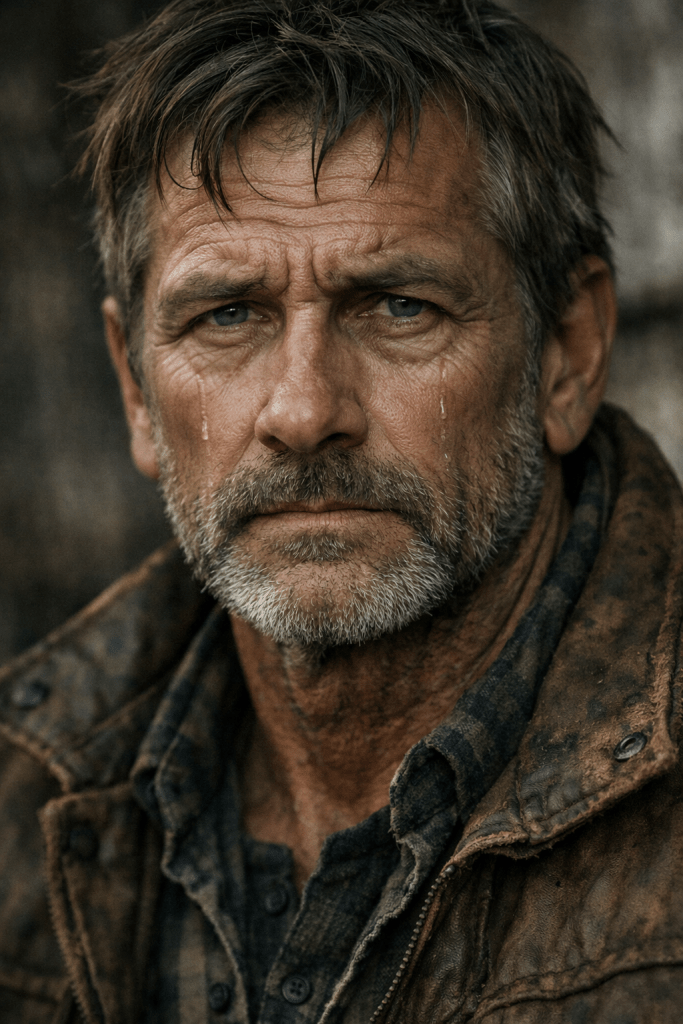
Much of what we call “suffering” is simply going through pain that we don’t think we’re supposed to. We had a plan or an expectation for life, and the pain is ruining all of that, and it can be a crippling disappointment that some never grow past.
Growth comes in accepting. It comes in saying, “Well maybe this is the right pain for me. Maybe this is here for me to learn how to get through it. Maybe this is exactly the path my quest was meant to follow.” Purposeful pain yields growth, meaningless suffering only yields agony.
Our culture struggles deeply with the idea of bad things happening to good people. It is often cited as an obstacle to having faith in God. To be honest, I have never struggled with this concept myself. I simply do not see why the existence of an all-knowing, all-loving, all-powerful God is mutually exclusive to suffering in our world. I see it as a non-sequitur, requiring several subconscious assumptions to try and bring those two ideas together.
But as I have thought about it, I wonder if the connection is simply this: Bad things shouldn’t happen to good people because that is unjust. I certainly agree with the second part of this sentence, which states that it is unjust for the good to suffer, but I become a lot less confident about the first part that says it shouldn’t happen. That depends on what one means by “should.” After all, why shouldn’t things be unjust in an unjust world? Isn’t that exactly the pattern that you should see given our mortal context?
I think the difficulty that so many in our society wrestle with might come down to there being two different meanings of the word “should,” and we, having lost an appreciation for the nuance between those meanings conflate them into one and draw erroneous conclusions. The first use of “should” is a moral statement. It describes the world as it ought to be, in a way that would be just and fair. Spouses should have the loyalty of one another. A defenseless woman should be able to walk down a dark alley without fear. The guilty should be held accountable for their crimes. The world should behave according to moral principles.
The other “should,” however, simply means “appropriate to the context.” It describes the expected effects of a certain condition. The visible constellations should be different from different latitudes if the Earth is round. A species in a favorable environment should thrive. A patient with malaria should have an exceedingly high temperature.
With that last one, are we saying that it is “good” for the patient to have a dangerously high fever? Of course, not. But it is the natural and fitting state for that condition. The suffering is tragic, but it follows the proper order of the thing.
So, should the innocent suffer in a moral sense? Of course, not. But should we expect to see such injustices in a world that isn’t moral? Yes. The sad truth is we live in a fallen world that has largely rejected God and elevated selfishness and sin over love and virtue. What should such a world look like? Should it be the image of justice and fairness, or is the logical order that it would be a place of tragedy, unjust suffering, and a reality far removed from the moral ideal?
An ideology predicated upon a lie is perhaps the most destructive force in the world. More than nuclear weapons, more than natural disasters, a false agenda that takes hold will fracture an entire society, kill millions of innocents, and leave the survivors in disarray.
The danger of a misaligned belief system is our innate understanding that suffering is justified for the greater good. Under normal conditions, this instinct is a wonderful good, a necessity for overcoming the evil of the world. Being able to stand up for what is right, no matter the cost, has seen the end of slavery, the birth of liberty, and the restoration of spiritual truth.
But now see how that virtue is twisted when applied to a false cause. Because the cause is false, meaning it is contrary to what is true and right, it will inevitably tear large gashes into society as it is pushed forward. But because it has already been decided to be the right thing to do, the painful consequences are excused as the necessary cost for progress. Thus, we gravely wound our society, and don’t even end up getting something good out of it!
Perhaps the most recent example of this in western culture has been the feminist movement. First, the ideology was established by the twisting of a truth. It was correctly noted that men and women are created equal, sharing the same promise in Christ, exactly as taught by Paul:
There is neither Jew nor Greek, there is neither bond nor free, there is neither male nor female: for ye are all one in Christ Jesus. And if ye be Christ’s, then are ye Abraham’s seed, and heirs according to the promise.
Galatians 3:28-29
But then the metrics of equality were dragged down to earthly standards. First, the stations of men were inappropriately exalted. Leadership offices were seen as positions of power, not of service and obligation. The making of money and acquiring of fame became markers of success, rather than the creation and cultivation of the family.
Next, it became the agenda that women should be elevated to the same levels of power idolatry as men. It became the “greater good,” worthy of inflicting damage and suffering to achieve it. Ever since, we have paid the terrible costs of the family system being completely deconstructed, men and women competing as enemies to one another, the cratering of the birth rate, the collapse of civil society, and the murder of millions of unborn children! We have suffered all of this, and all to gain progress in a false agenda!
This is worse than short-term gains for long-term losses, for there aren’t even the short-term gains! What we should have done is re-established the notion of servant leadership demonstrated by our Savior, eschewed the temptations of fame and fortune, and preserved the cooperative union of men and women as intended by God.
Now things are twisted, hurting, and many more false beliefs have been sown in the cracks of our society. The potential for continued false agendas, which further push suffering and confusion on the world, is great. The path back to genuine truth and healing is growing smaller and harder by the day. If we are not at that point already, soon only an act of God will be able to get us back to what is right. Thank heaven that acts of God remain the one thing we can always rely on!

If you were an all-knowing God,
And aware that harder and more dangerous times were ahead,
It would be an act of unkindness
To not prepare your people with progressive trials and hardship.

In times of comfort, we are able to derive ideals based on pure principles, our logic uncompromised by the instincts of self-preservation or self-advantage that might possess us in times of trouble. But it is only in times of suffering that those ideals are actually tested, transformed from theoretical belief to lived reality. Thus, perfect theory becomes raw conviction, all according to the seasons and wisdom of God.
Yesterday I spoke briefly about Western philosophy and its emphasis on individualism, and Eastern philosophy and its emphasis on collectivism. I spoke of benefits and drawbacks to each, and today I will present another unique effect of Western Individualism. First, though, let us address a problem that everyone will face whatever philosophy they live by.
When a large culture adopts a particular philosophy, it quickly becomes ingrained in their lives and shapes the way that they think. Certain perceptions and reactions will be culled from their range of possible responses. Thus, their view is controlled by their philosophy, but they are blind to the fact that they are being influenced at all. They just think their view is self-evident and are incredulous that anyone could feel otherwise.
As I say, this is common for any culture. All people have assumed premises, regardless of their background. This idea is captured very well in the famous joke of a fish that does not realize it is in water, because the water is so ubiquitous that the fish has ceased to perceive it.
Let us keep that idea of cultural blind spots in mind as we consider what is arguably the most controversial aspect of God in Western culture: Him commanding the destruction of certain civilizations. Throughout the Bible there are some instances where God either wipes out a people by His own hand, or He orders the Israelites to carry out the extermination of another kingdom. I recently devoted an entire study to examining this matter, and how I wrestled to resolve my discomfort with these passages.
But the criticism of God goes even deeper. Just the fact that He allows tragic things to happen, even if not by His own hand, is greatly distressing to many. We often hear the example of childhood cancer as the sort of thing that a loving God simply wouldn’t allow. This complaint is so prevalent that renowned Christian author C. S. Lewis dedicated an entire book to it entitled The Problem of Pain.
And this logic seems to be entirely self-evident to us in the Western world, a matter that every religious person would have to deal with, no matter their conception of the divine. I was surprised, then, to learn that this matter is actually not a great concern to people of other cultures. There seems to be evidence that this moral dilemma is a product of our Western philosophical blind spot as opposed to an obvious universal truth.
But how could anyone actually believe that it is acceptable for God to be good and also allow suffering? Why would our Western Individualism cause us to feel this discomfort, and how could another philosophical view dispel it? I’ll answer these questions in my next post.

A life of great suffering often comes by avoiding all the small sufferings

